Chapter – 11
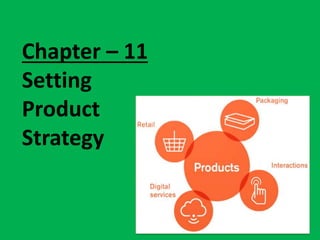
Setting
Product
Strategy
Product
Characteristics
and
Classifications
Product Levels:
The Customer-Value Hierarchy
FIVE PRODUCT LEVELS
Product Classification
Classification of products by marketers, on the basis of :
Durability And Tangibility
Consumer-Goods Classification
Industrial-Goods Classification
Non-durable
Goods
Tangible goods
consumed frequently
Durable
Goods
Tangible goods that
survive many uses
Services
Intangible, inseparable
Variable & perishable
Durability And Tangibility
Convenience
Goods
Purchased
frequently and with
minimal effort
Shopping
Goods
Compared on
bases as price,
quality & style.
Specialty
Goods
Having unique
features &
brand value
Unsought
Goods
Unaware or
hardly thinks of
buying these.
Consumer-Goods Classification
Industrial-Goods
Classification
Materials
& Parts
Capital
Items
Supplies
& Business
Services
Raw
Materials
Mfg.
Materials
Installation Equipment
Repair &
Maintenan
ce
Operating
Supplies
1.Materials & Parts:
Goods that enter the manufacturer’s product completely.
2. Capital Items:
Long-lasting goods that facilitate developing or managing the
finished product.
3.Supplies and Business Services
Short-term goods and services that facilitate developing
or managing the finished product.
Product
And
Services
Differentiation
Product
Differentiation
FORM
Size, shape or
physical structure of
a product helps in
differentiating it
from others.
FEATURES
Most products can
be offered with
varying features that
supplement their
basic function.
CUSTOMIZATION
Companies have increased
their ability to individualize
market offerings, messages
and media.
PERFORMANCE
QUALITY
The level at which the
product’s primary
characteristics operate.
DURABILITY
A measure of the
product’s expected
operating life under
natural or stressful
conditions.
CONFORMANCE
QUALITY
The degree to which all the
produced units are
identical and meet
promised specifications.
RELIABILITY
Measure of the
probability that a product
will not malfunction or
fail within a specified
time period.
REPAIRABILITY
Measures the ease of
fixing a product when it
malfunctions or fails.
STYLE
Describes the product’s
look and feel to the
buyer. It creates
distinctiveness that is
hard to copy.
Services
Differentiation
ORDERING EASE
Refers to how easy it is for
the customer to place an
order with the company.
DELIVERY
Refers to how well
the product or
service is brought to
the customer.
Includes speed ,
accuracy and care
throughout the
process.
INSTALLATION
Refers to the work done to
make a product operational
in its planned location.
CUSTOMER
TRAINING
Helps the employee’s
customers use the
vendor’s equipment
properly and
efficiently.
CUSTOMER
CONSULTING
Includes data , information
systems and advice services
the seller offers to buyers in
firms like IBM .
RETURNS
It is an un-avoidable
reality of doing
business these
days, especially
with online
purchases.
MAINTENANCE
AND REPAIR
Help customers keep
purchased products in
the good working order.
Design
Design is the totality of
features that affect how a
product looks , feels and
functions to a customer.
IMPORTANCE OF DESIGN IN MARKETING
For a company, a well-designed product is
easy to manufacture and distribute.
To the customer, a well-designed product
is pleasant to look at and easy to install ,
use and repair.
Customers
are willing
to pay $204
more for a
well-
designed
high-end
laptop!!!
Design can
shift consumer
perceptions to
make brand
experiences
more
rewarding.
Well-designed
features can help
differentiate a
product from
others in the
market.
Each Design should reflect
Bold Simplicity
Real Authenticity
“Familiar yet Surprising ” Nature
DESIGN THINKING
Requires intensive ethnographic
studies of consumers
Involves creative brainstorming
sessions
Requires collaborative teamwork
to bring ideas to reality.
Product
And
Brand
Relationship
PRODUCT LINE
A group of products
manufactured by a
company that are
closely related
because they
perform functions
in a compatible
manner, sold to
same customer
group or fall within
a price range.
PRODUCT MIX
The complete
set of all
products and
items a
particular
company offers
for sale.
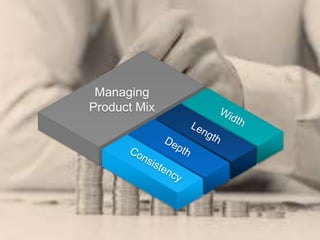
Managing
Product Mix
Width : No. of different product lines
the company carries.
Depth : The number of variants offered
of each product in a product line.
Product Mix Width
ProductMixDepth
Length : The total number of items in a
company’s product mix.
Consistency : This describes how closely
related the various products lines are.
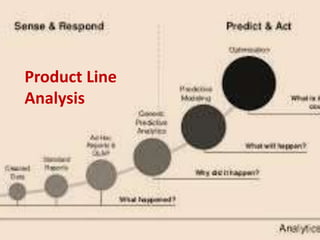
Product Line
Analysis
Managing ‘Sales & Profits’ of each item in
company’s line helps in determining which
items to build, maintain , harvest or divest.
Product line managers must review how the
line is positioned against competitor’s line to
enhance ‘Market Profile’.
Inferences
from
Product Line
Analysis
Product
Mix
Pricing
Product
Line
Length
Line
Stretching
Line
Filling
Product Line
Length
‘Line Stretching’ refers to
lengthening the product line beyond
its current range (whether up, down
or both markets) to attract buyers
from all the segments
‘Line Filling’ means adding
more items within the present
range to ensure tight grip in
the market and keep out the
competitors.
Product
Mix
Pricing
Product Line Pricing
Optional-Feature Pricing
Captive-Product Pricing
Two-Part Pricing
By-Product Pricing
Product-Bundling Pricing
Co-Branding
And
Ingredient
Branding
CO-BRANDING
Two or more well-known
brands are combined into a
joint product or marketed
together in the same
fashion. Also known as
‘Dual Branding’ or ‘Brand
Bundling.’
COMPANY CO-BRANDING
Gillette India
promotes its Gillette
Mach 3 Turbo shaving
system and Gillette
Shaving Gel together.
JOINT-VENTURE CO-BRANDING
The Nike + IPod Sport
kit turned out to be a
huge hit, when
famous brands Apple
and Nike decided to
collaborate.
RETAIL CO-BRANDING
‘Coke Studio’ is a great
example, produced by
the Coca-Cola
Company along with
Viacom India, which has
been popular throughout
the country, receiving
critical acclaim .
Characteristics of Co-Branding
1. Generate greater sales from existing market.
2.Open opportunities for new consumers and channels.
3. Reduce the cost of product introduction.
4. Loss of control
5. Risk of Brand Equity Dilution
6. Higher expectations may result in unsatisfactory
performance that could have negative impact on both
brands.
INGREDIENT
BRANDING
A special case of co-
branding, where a
company creates brand
equity for components
that are contained within
the other branded
products.
‘Intel inside’ forced
the major PC
manufactures like
IBM, Dell etc. to
purchase their chips
from Intel at a
premium price.
It must have a
distinctive
logo which
must signal
that the host
product
contains the
ingredient.
It should make the
customers believe
that ingredient
matters to the
performance and
success of the end
product.
Packaging,
Labeling,
Warranties
And
Guarantees
PACKAGING
It include all the activities of
designing and producing the
container for a product.
Often known as fifth ’P’ of
the marketing mix.
Packaging
As
Marketing
Tool
They can act as “five-second
commercials” and attract
customer attention during self-
service purchases.
Convenience , appearance ,
dependability and prestige
of better packaging can help
in convincing customers to
spend more.
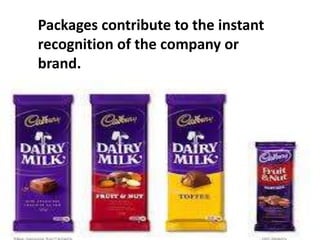
Packages contribute to the instant
recognition of the company or
brand.
Unique or Innovative packaging can bring
huge benefits to customers and profits to
producers.
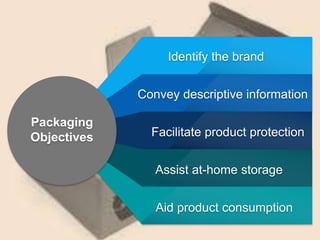
Packaging
Objectives
Identify the brand
Convey descriptive information
Facilitate product protection
Assist at-home storage
Aid product consumption
Visual , dealer and consumer
tests ensure that the
packaging stands up under
normal conditions.
LABELING
Label is a simply attached
tag or an elaborately
designed graphic that is
part of the package.
A LABEL CAN
Help to
identify
the brand.
Grade
the
product
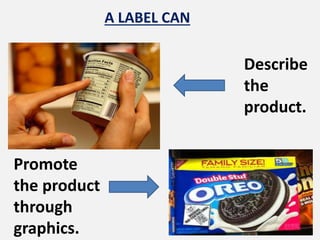
A LABEL CAN
Describe
the
product.
Promote
the product
through
graphics.
Warranties
A warranty is a formal
statements of expected
product performance by
the manufacturer.
Guarantees
A Guarantee is an
assurance that the
product is of high quality
and dependability.
Extended warranties
and specific
guarantees can
increase customer
confidence and
reliability on the
product !!!
Created by Niharika Gujela, Delhi Technological University, during an internship by
Prof. Sameer Mathur, IIM Lucknow.
www.IIMInternship.com

Chapter 11 - Setting Product Strategy