
Positioning Definition
It is to place the brand on shelf, and
making it available in shops, where
the customer can buy it easily.
Positioning Definition
• Positioning is the art of designing the
company’s offering and image to
occupy a distinctive place in the
target market.
Positioning
• Positioning is not what you do to your
product . It is what you do to the
mind of the customer.
All products are different to some extent. But not all brand
differences are worthwhile or meaningful. A difference is worth
establishing to the extent that it satisfies any of the following:
 Important: the differences is delivered highly valued benefit to a
sufficient number of buyers.
 Distinctive: the differences is delivered in a distinctive way.
 Superior: the differences is superior to the other ways of obtaining
the benefit.
 Preemptive: the differences can’t be easily copied by competitors.
 Affordable: the buyer could afford to pay for the difference.
 Profitable: the company would find it profitable to introduce the
differences
Principles of Positioning
Some of the Principles of Positioning are:
1. It is better to be the first to be late.
2. In case it is not the first, Create the new category
by making at least a small change in the marketing
. create a pricing strategy through replacement
market and got into the mind of the consumer.
3. It is important to understand the position and
strategy of the competitors.
4. Positioning using an easy name is very important
in this context.
positioning errors
There are various positioning errors, such as-
Under positioning
Over positioning
Confused positioning
Double Positioning
Under positioning
some companies discover that the buyers have only
a vague idea of the brand..
occurs when customers cannot readily identify the
brand or the brand´s features. The product must
stand out in the mind of the consumer
Example: solar lamp
Over positioning
buyers have too narrow an image of the brand.
It means that buyers believe that the product is
meant for a very select audience because it is
premium priced.
Example: diamond ring
Confused positioning
Buyers might have a confused image of the brand
resulting from the company making too many claims
or changing the brand positioning too frequently
Example: NEXT computers
Doubtful Positioning
• Buyers find it hard to believe the claim of the brand
in view of the product’s features, price, or
manufacture.
Example: hair care products
Positioning Strategies
The different types of the Positioning Strategies:
Attribute Positioning
Benefit Positioning
Use or application positioning
Competitor Based Positioning
Product Category Positioning
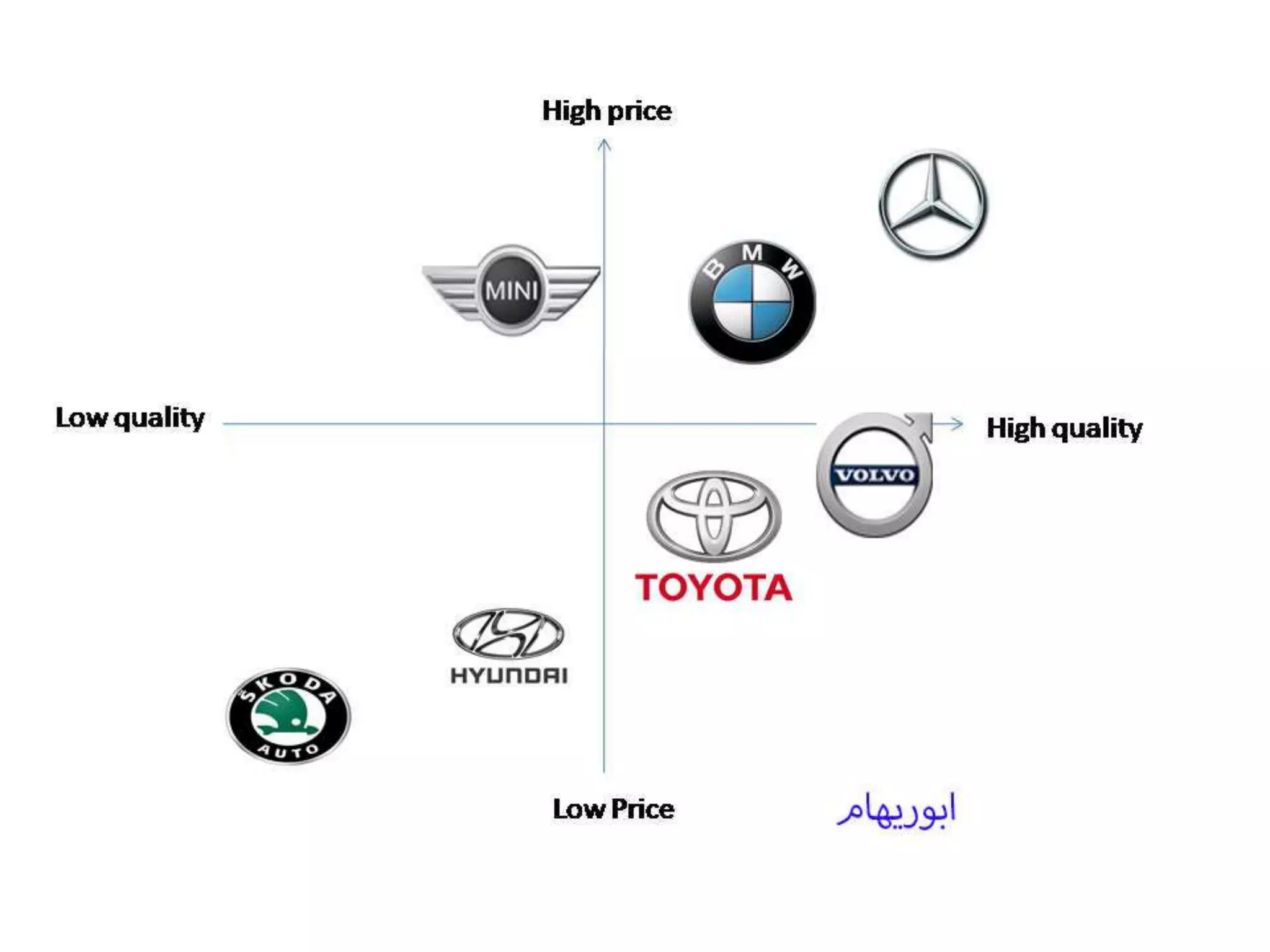
Quality or Price Positioning
Positioning in Relation to a Target Market
Attribute Positioning
A company position itself on attribute, such as seize or
number of years in existence
Example: Nestle company
Benefit Positioning
The product is positioned as the leader in a certain benefits
Example: Nido Production
Use or application positioning
Positioning the product as the best for some use or
application .
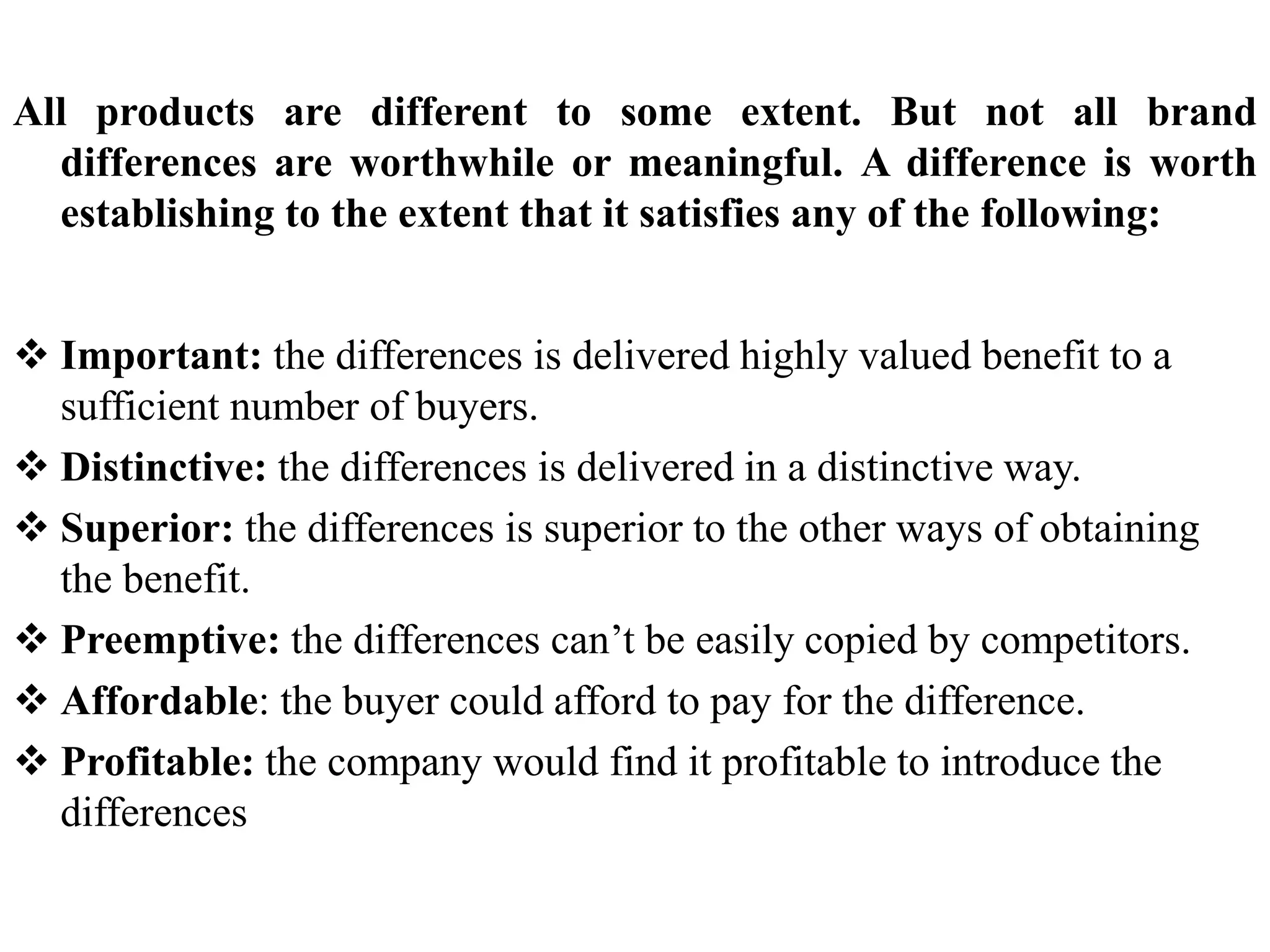
Example: Rado watches
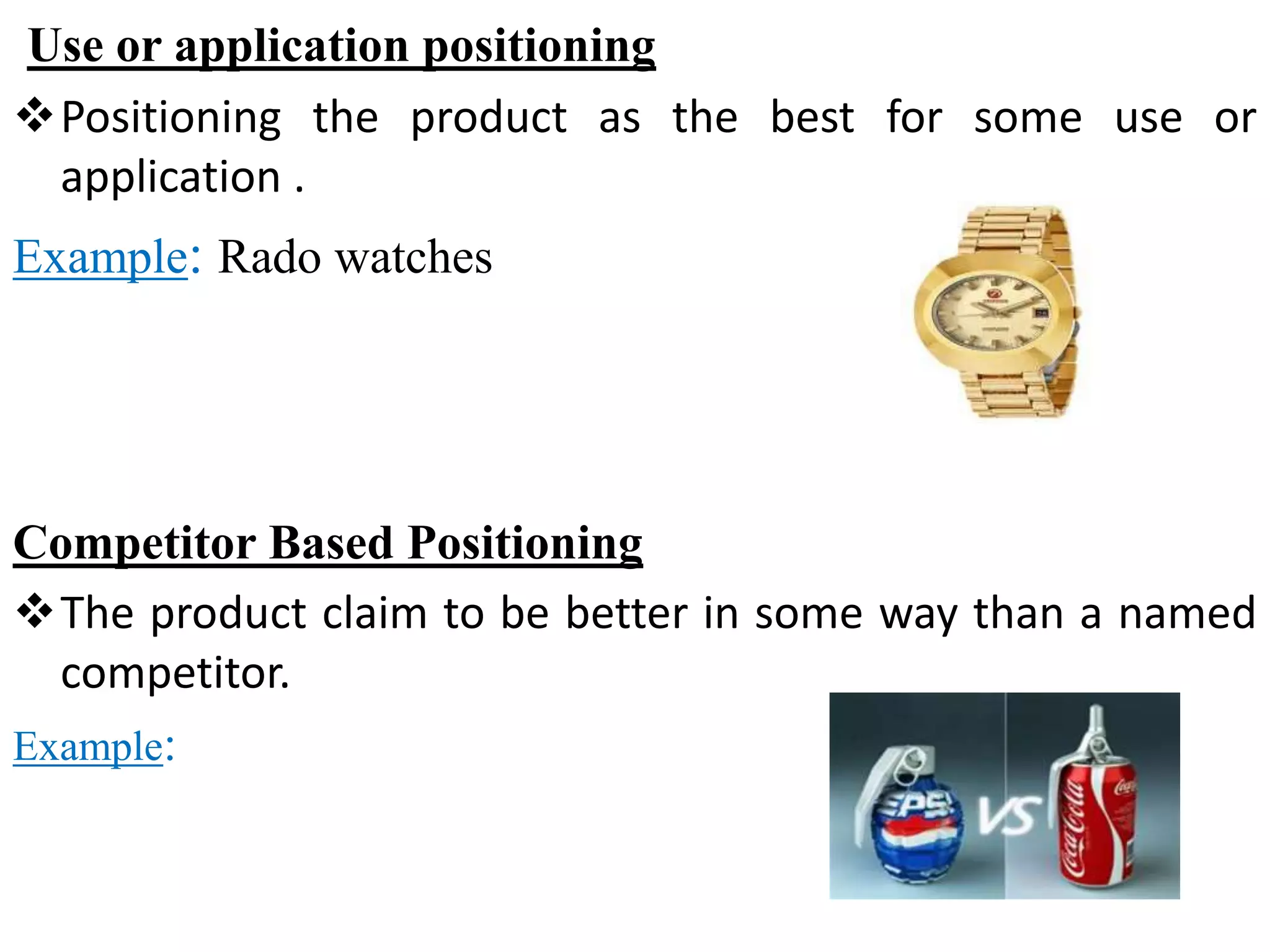
Competitor Based Positioning
The product claim to be better in some way than a named
competitor.
Example:
Product Category Positioning
The product is positioned, as the leader in a certain product
category.
Example: Aquafresh
Quality or Price Positioning
The product is positioned, as offering the best value.
Example: Rolls Royce
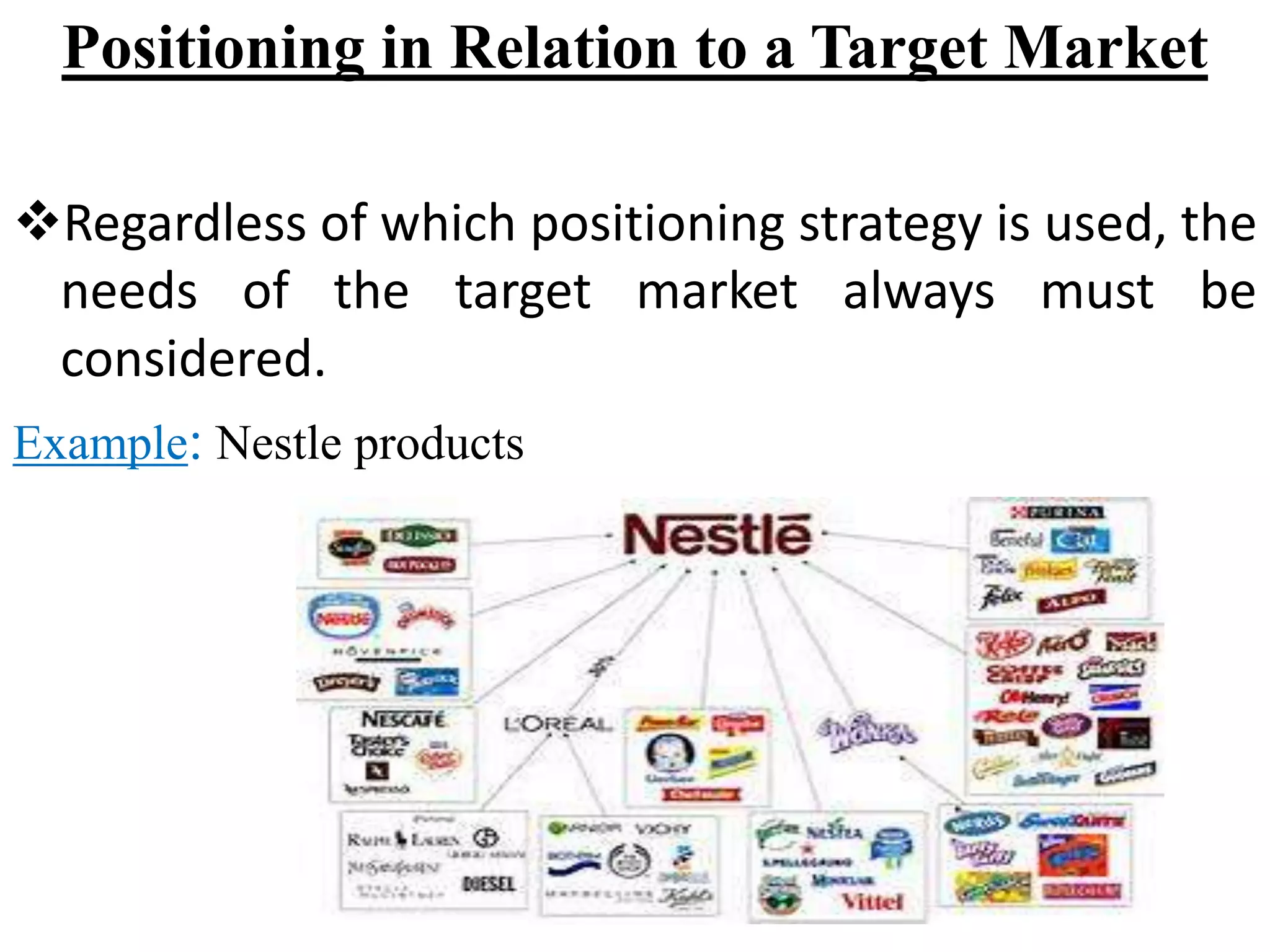
Positioning in Relation to a Target Market
Regardless of which positioning strategy is used, the
needs of the target market always must be
considered.
Example: Nestle products
How to Position the Brand
Studying the ideal product perception- this involves
studying both tangible and intangible attributes that
a customer looks for while buying a product.
Get the customers to rank these attributes in the
order of importance to them.
Customers knowledge of the competitive brands.
How the competitors’ brands specify how close or
far they are on each attribute to the ideal product.
Based on the assessment of the competitors brands
on the ideal product map, product managers identify
vacant slots and then build the positioning strategy .
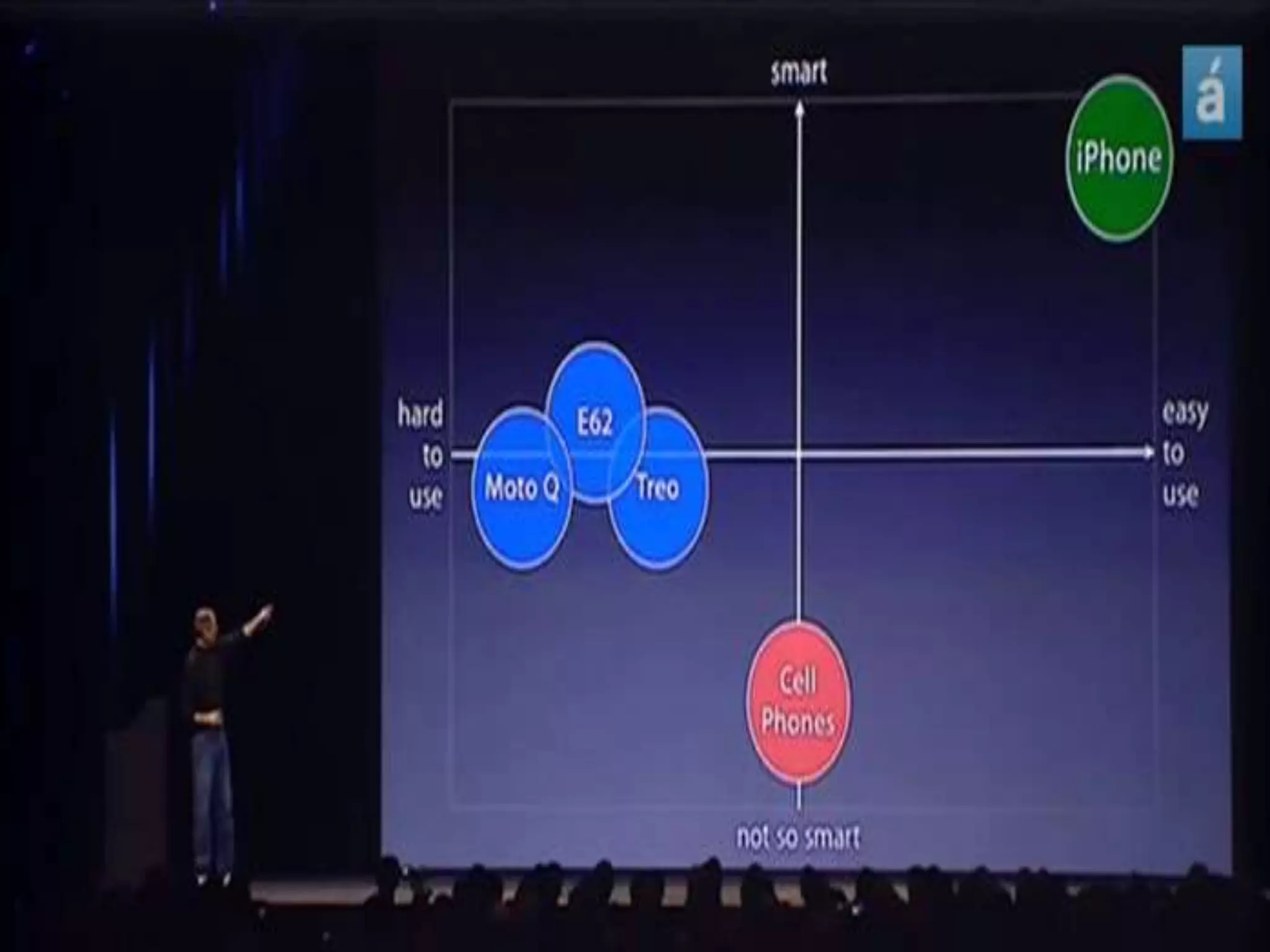
Perceptual Mapping
Perception is the meaning added by an
individual to the information that has been
obtained from the environment . This forces a
consumer to create his own ideas or, perception
about the brand or product. If consumer feels
that branded footwear are costly, he or she
always tried to buy it from the unorganized
market.
Thank you

Positioning

  • 2.
    Positioning Definition It isto place the brand on shelf, and making it available in shops, where the customer can buy it easily.
  • 3.
    Positioning Definition • Positioningis the art of designing the company’s offering and image to occupy a distinctive place in the target market.
  • 4.
    Positioning • Positioning isnot what you do to your product . It is what you do to the mind of the customer.
  • 5.
    All products aredifferent to some extent. But not all brand differences are worthwhile or meaningful. A difference is worth establishing to the extent that it satisfies any of the following:  Important: the differences is delivered highly valued benefit to a sufficient number of buyers.  Distinctive: the differences is delivered in a distinctive way.  Superior: the differences is superior to the other ways of obtaining the benefit.  Preemptive: the differences can’t be easily copied by competitors.  Affordable: the buyer could afford to pay for the difference.  Profitable: the company would find it profitable to introduce the differences
  • 6.
    Principles of Positioning Someof the Principles of Positioning are: 1. It is better to be the first to be late. 2. In case it is not the first, Create the new category by making at least a small change in the marketing . create a pricing strategy through replacement market and got into the mind of the consumer. 3. It is important to understand the position and strategy of the competitors. 4. Positioning using an easy name is very important in this context.
  • 7.
    positioning errors There arevarious positioning errors, such as- Under positioning Over positioning Confused positioning Double Positioning
  • 8.
    Under positioning some companiesdiscover that the buyers have only a vague idea of the brand.. occurs when customers cannot readily identify the brand or the brand´s features. The product must stand out in the mind of the consumer Example: solar lamp
  • 9.
    Over positioning buyers havetoo narrow an image of the brand. It means that buyers believe that the product is meant for a very select audience because it is premium priced. Example: diamond ring
  • 10.
    Confused positioning Buyers mighthave a confused image of the brand resulting from the company making too many claims or changing the brand positioning too frequently Example: NEXT computers
  • 11.
    Doubtful Positioning • Buyersfind it hard to believe the claim of the brand in view of the product’s features, price, or manufacture. Example: hair care products
  • 12.
    Positioning Strategies The differenttypes of the Positioning Strategies: Attribute Positioning Benefit Positioning Use or application positioning Competitor Based Positioning Product Category Positioning Quality or Price Positioning Positioning in Relation to a Target Market
  • 13.
    Attribute Positioning A companyposition itself on attribute, such as seize or number of years in existence Example: Nestle company Benefit Positioning The product is positioned as the leader in a certain benefits Example: Nido Production
  • 14.
    Use or applicationpositioning Positioning the product as the best for some use or application . Example: Rado watches Competitor Based Positioning The product claim to be better in some way than a named competitor. Example:
  • 15.
    Product Category Positioning Theproduct is positioned, as the leader in a certain product category. Example: Aquafresh Quality or Price Positioning The product is positioned, as offering the best value. Example: Rolls Royce
  • 16.
    Positioning in Relationto a Target Market Regardless of which positioning strategy is used, the needs of the target market always must be considered. Example: Nestle products
  • 17.
    How to Positionthe Brand Studying the ideal product perception- this involves studying both tangible and intangible attributes that a customer looks for while buying a product. Get the customers to rank these attributes in the order of importance to them. Customers knowledge of the competitive brands. How the competitors’ brands specify how close or far they are on each attribute to the ideal product. Based on the assessment of the competitors brands on the ideal product map, product managers identify vacant slots and then build the positioning strategy .
  • 18.
    Perceptual Mapping Perception isthe meaning added by an individual to the information that has been obtained from the environment . This forces a consumer to create his own ideas or, perception about the brand or product. If consumer feels that branded footwear are costly, he or she always tried to buy it from the unorganized market.
  • 21.