Product & Brand
Building Customer Value
Product
“Anything that can be offered to a market for attention, acquisition, use
or consumption that might satisfy a want or need. It includes physical
objects, services, persons, places, organizations and ideas”.
- Kotler, Wong, Saunders, Armstrong
Product
Products are a key element in the overall market offering.
Marketing-mix planning begins with building an offering
that brings value to target customers.
products and services become more commoditized
companies are moving to a new level in creating value for
their customers.
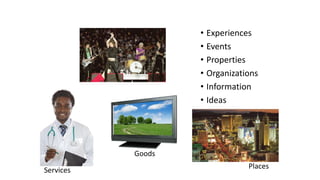
• Experiences
• Events
• Properties
• Organizations
• Information
• Ideas
Places
Persons
Services
Goods
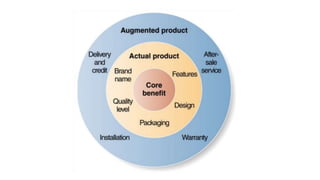
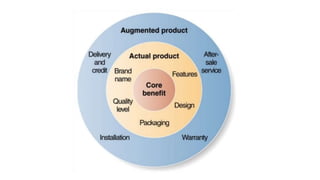
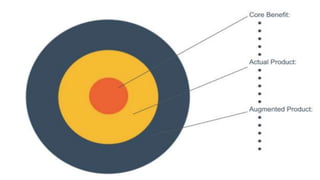
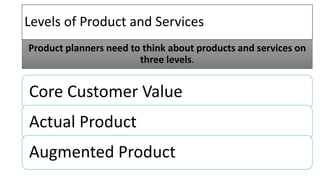
Levels of Product and Services
Core Customer Value
Actual Product
Augmented Product
Product planners need to think about products and services on
three levels.
Core Customer Value
 The most basic level is the core customer value, which addresses the
question What is the buyer really buying?
 When designing products, marketers must first define the core,
problem-solving benefits or services that consumers seek.
For example: The core value of Mobile Phone is “Communication”
Augmented Product
 augmented product around the core benefit and actual product by
offering additional consumer services and benefits.
 Consumers see products as complex bundles of benefits that satisfy
their needs.
For example: when consumers buy a I-phone, the company and
its dealers also might give buyers a warranty on parts and
workmanship, instructions on how to use the device, quick repair
services when needed, and a toll-free telephone number and Web
site to use if they have problems or questions.
Actual Product
 Product planners must turn the core benefit into an actual product.
They need to develop product and service features, design, a quality
level, a brand name, and packaging.
For example: the I-phone is an actual product. Its name, parts,
styling, features, packaging, and other attributes have all been
carefully combined to deliver the core customer value of staying
connected.”
Product & Services Classification
Consumer & Industrial Product
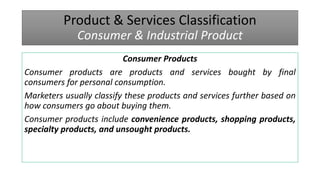
Consumer Products
Consumer products are products and services bought by final
consumers for personal consumption.
Marketers usually classify these products and services further based on
how consumers go about buying them.
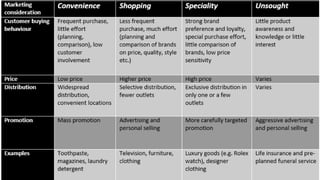
Consumer products include convenience products, shopping products,
specialty products, and unsought products.
Convenience products are consumer products and
services that the customer usually buys frequently,
immediately, and with a minimum comparison and
buying effort
1.Newspapers
2.Candy
3.Fast food
Unsought products are consumer products that the
consumer does not know about or knows about but
does not normally think of buying
•Life insurance
•Funeral services
•Blood donations
Shopping products are consumer products and services
that the customer compares carefully on suitability,
quality, price, and style
•Furniture
•Cars
•Appliances
Specialty products are consumer products and services with
unique characteristics or brand identification for which a
significant group of buyers is willing to make a special
purchase effort
• Medical services
• Designer clothes
• High-end electronics
Industrial products are products purchased for further
processing or for use in conducting a business
• Classified by the purpose for which the product is purchased
• Materials and parts
• Capital
• Raw materials
Industrial Product
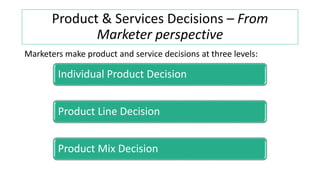
Product & Services Decisions – From
Marketer perspective
Marketers make product and service decisions at three levels:
Individual Product Decision
Product Line Decision
Product Mix Decision
Individual Product Decision – Product & Services
attributes
Developing a product or service involves defining the benefits that it
will offer. These benefits are communicated and delivered by product
attributes such as quality, features, and style and design.
Quality
• Quality has a direct impact on product or service performance; thus, it is
closely linked to customer value and satisfaction.
• In the narrowest sense, quality can be defined as “freedom from
defects.” or
• “Quality is when our customers come back and our products don’t”.
Product quality has two dimensions: level and consistency
(Conformance Quality)
quality level means performance quality—the ability of a product to
perform its functions.
Conformance quality - freedom from defects and consistency in
delivering a targeted level of performance
….Quality
A product can be offered with varying features.
Features are a competitive tool for differentiating the company’s
product from competitors’ products.
Help in competing other Businesses.
Product Features
Product features are characteristics of your product that describe its appearance,
components, and capabilities.
Product Style & Design
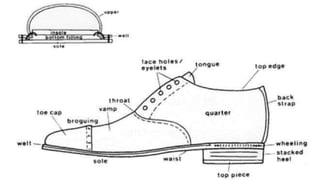
Style Simply describes the appearance of product.
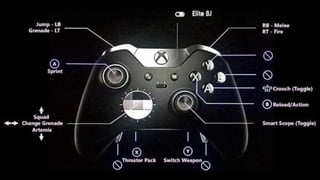
Designs more than skin deep—it goes to the very heart of a product.
Good design contributes to a product’s usefulness as well as to its looks.
Product designers shall less worry about technical attributes and focus on how
customer will use product.
BRAND
Brand is a name, term, sign, symbol, or design, or a combination of
these, that identifies the maker or seller of a product or service.
Consumers view a brand as an important part of a product, and
branding can add value to a product. Customers attach mean- ings to
brands and develop brand relationships
Packaging
Packaging involves designing and producing the container or wrapper
for a product.
Traditionally, the primary function of the package was to hold and
protect the product.
Numerous factors have made packaging an important marketing tool as
well.
Increased competition and clutter on retail store shelves means that
packages must now perform many sales tasks from attracting
attention, to describing the product, to making the sale.
Labelling
Labels range from simple tags attached to products to complex graphics that
are part of the packaging.
The label identifies the product or brand.
The label might also describe several things about the product who made it,
where it was made, when it was made, its contents, how it is to be used,
and how to use it safely.
The label might help to promote the brand, support its positioning, and
connect with customers.
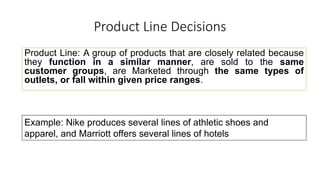
Product Line Decisions
Product Line: A group of products that are closely related because
they function in a similar manner, are sold to the same
customer groups, are Marketed through the same types of
outlets, or fall within given price ranges.
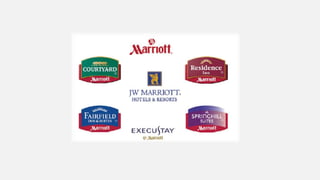
Example: Nike produces several lines of athletic shoes and
apparel, and Marriott offers several lines of hotels
Product Line Decisions
The major product line decision involves product line length—the
number of items in the product line.
The line is too short if the manager can increase profits by adding items;
the line is too long if the manager can increase profits by dropping
items.
Product line length is influenced by company objectives and resources.
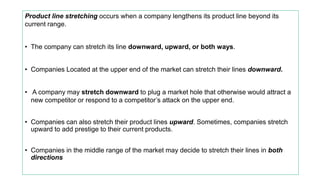
Product line stretching occurs when a company lengthens its product line beyond its
current range.
• The company can stretch its line downward, upward, or both ways.
• Companies Located at the upper end of the market can stretch their lines downward.
• A company may stretch downward to plug a market hole that otherwise would attract a
new competitor or respond to a competitor’s attack on the upper end.
• Companies can also stretch their product lines upward. Sometimes, companies stretch
upward to add prestige to their current products.
• Companies in the middle range of the market may decide to stretch their lines in both
directions
Product Mix
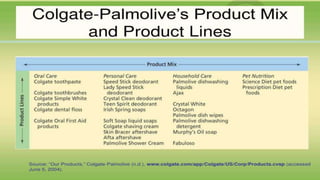
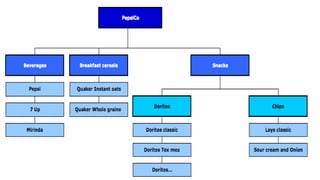
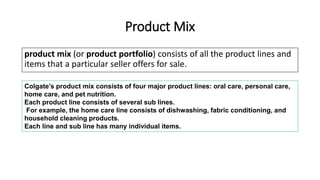
product mix (or product portfolio) consists of all the product lines and
items that a particular seller offers for sale.
Colgate’s product mix consists of four major product lines: oral care, personal care,
home care, and pet nutrition.
Each product line consists of several sub lines.
For example, the home care line consists of dishwashing, fabric conditioning, and
household cleaning products.
Each line and sub line has many individual items.
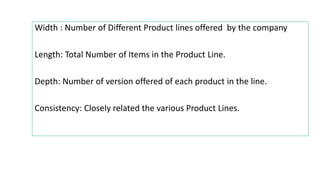
Dimension of Product Mix
Width Length Depth Consistency
Width : Number of Different Product lines offered by the company
Length: Total Number of Items in the Product Line.
Depth: Number of version offered of each product in the line.
Consistency: Closely related the various Product Lines.
Product & brand
Product & brand

Product & brand

  • 1.
  • 2.
    Product “Anything that canbe offered to a market for attention, acquisition, use or consumption that might satisfy a want or need. It includes physical objects, services, persons, places, organizations and ideas”. - Kotler, Wong, Saunders, Armstrong
  • 3.
    Product Products are akey element in the overall market offering. Marketing-mix planning begins with building an offering that brings value to target customers. products and services become more commoditized companies are moving to a new level in creating value for their customers.
  • 4.
    • Experiences • Events •Properties • Organizations • Information • Ideas Places Persons Services Goods
  • 5.
    Levels of Productand Services Core Customer Value Actual Product Augmented Product Product planners need to think about products and services on three levels.
  • 6.
    Core Customer Value The most basic level is the core customer value, which addresses the question What is the buyer really buying?  When designing products, marketers must first define the core, problem-solving benefits or services that consumers seek. For example: The core value of Mobile Phone is “Communication”
  • 7.
    Augmented Product  augmentedproduct around the core benefit and actual product by offering additional consumer services and benefits.  Consumers see products as complex bundles of benefits that satisfy their needs. For example: when consumers buy a I-phone, the company and its dealers also might give buyers a warranty on parts and workmanship, instructions on how to use the device, quick repair services when needed, and a toll-free telephone number and Web site to use if they have problems or questions.
  • 8.
    Actual Product  Productplanners must turn the core benefit into an actual product. They need to develop product and service features, design, a quality level, a brand name, and packaging. For example: the I-phone is an actual product. Its name, parts, styling, features, packaging, and other attributes have all been carefully combined to deliver the core customer value of staying connected.”
  • 10.
    Product & ServicesClassification Consumer & Industrial Product Consumer Products Consumer products are products and services bought by final consumers for personal consumption. Marketers usually classify these products and services further based on how consumers go about buying them. Consumer products include convenience products, shopping products, specialty products, and unsought products.
  • 11.
    Convenience products areconsumer products and services that the customer usually buys frequently, immediately, and with a minimum comparison and buying effort 1.Newspapers 2.Candy 3.Fast food
  • 12.
    Unsought products areconsumer products that the consumer does not know about or knows about but does not normally think of buying •Life insurance •Funeral services •Blood donations
  • 13.
    Shopping products areconsumer products and services that the customer compares carefully on suitability, quality, price, and style •Furniture •Cars •Appliances
  • 14.
    Specialty products areconsumer products and services with unique characteristics or brand identification for which a significant group of buyers is willing to make a special purchase effort • Medical services • Designer clothes • High-end electronics
  • 15.
    Industrial products areproducts purchased for further processing or for use in conducting a business • Classified by the purpose for which the product is purchased • Materials and parts • Capital • Raw materials Industrial Product
  • 17.
    Product & ServicesDecisions – From Marketer perspective Marketers make product and service decisions at three levels: Individual Product Decision Product Line Decision Product Mix Decision
  • 18.
    Individual Product Decision– Product & Services attributes Developing a product or service involves defining the benefits that it will offer. These benefits are communicated and delivered by product attributes such as quality, features, and style and design. Quality • Quality has a direct impact on product or service performance; thus, it is closely linked to customer value and satisfaction. • In the narrowest sense, quality can be defined as “freedom from defects.” or • “Quality is when our customers come back and our products don’t”.
  • 19.
    Product quality hastwo dimensions: level and consistency (Conformance Quality) quality level means performance quality—the ability of a product to perform its functions. Conformance quality - freedom from defects and consistency in delivering a targeted level of performance ….Quality
  • 20.
    A product canbe offered with varying features. Features are a competitive tool for differentiating the company’s product from competitors’ products. Help in competing other Businesses. Product Features Product features are characteristics of your product that describe its appearance, components, and capabilities.
  • 21.
    Product Style &Design Style Simply describes the appearance of product. Designs more than skin deep—it goes to the very heart of a product. Good design contributes to a product’s usefulness as well as to its looks. Product designers shall less worry about technical attributes and focus on how customer will use product.
  • 24.
    BRAND Brand is aname, term, sign, symbol, or design, or a combination of these, that identifies the maker or seller of a product or service. Consumers view a brand as an important part of a product, and branding can add value to a product. Customers attach mean- ings to brands and develop brand relationships
  • 26.
    Packaging Packaging involves designingand producing the container or wrapper for a product. Traditionally, the primary function of the package was to hold and protect the product. Numerous factors have made packaging an important marketing tool as well. Increased competition and clutter on retail store shelves means that packages must now perform many sales tasks from attracting attention, to describing the product, to making the sale.
  • 27.
    Labelling Labels range fromsimple tags attached to products to complex graphics that are part of the packaging. The label identifies the product or brand. The label might also describe several things about the product who made it, where it was made, when it was made, its contents, how it is to be used, and how to use it safely. The label might help to promote the brand, support its positioning, and connect with customers.
  • 31.
    Product Line Decisions ProductLine: A group of products that are closely related because they function in a similar manner, are sold to the same customer groups, are Marketed through the same types of outlets, or fall within given price ranges. Example: Nike produces several lines of athletic shoes and apparel, and Marriott offers several lines of hotels
  • 32.
    Product Line Decisions Themajor product line decision involves product line length—the number of items in the product line. The line is too short if the manager can increase profits by adding items; the line is too long if the manager can increase profits by dropping items. Product line length is influenced by company objectives and resources.
  • 33.
    Product line stretchingoccurs when a company lengthens its product line beyond its current range. • The company can stretch its line downward, upward, or both ways. • Companies Located at the upper end of the market can stretch their lines downward. • A company may stretch downward to plug a market hole that otherwise would attract a new competitor or respond to a competitor’s attack on the upper end. • Companies can also stretch their product lines upward. Sometimes, companies stretch upward to add prestige to their current products. • Companies in the middle range of the market may decide to stretch their lines in both directions
  • 35.
    Product Mix product mix(or product portfolio) consists of all the product lines and items that a particular seller offers for sale. Colgate’s product mix consists of four major product lines: oral care, personal care, home care, and pet nutrition. Each product line consists of several sub lines. For example, the home care line consists of dishwashing, fabric conditioning, and household cleaning products. Each line and sub line has many individual items.
  • 37.
    Dimension of ProductMix Width Length Depth Consistency
  • 38.
    Width : Numberof Different Product lines offered by the company Length: Total Number of Items in the Product Line. Depth: Number of version offered of each product in the line. Consistency: Closely related the various Product Lines.

Editor's Notes

  • #5 Experiences include a trip to Disney World, Fantasy baseball camp, a cruise. Events can include trade shows, the Olympics, Super Bowl, etc. Properties include real estate as well as stocks and bonds. Organizations use marketing to connect with their target market. Information is marketed by universities, textbook publishers, newspapers, etc. Ideas include “Friends don’t let friends drive drunk”