Unit 3
Drugs
What are drugs?
 Any substance that causes a change in a
person’s physical or psychological state
What is medicine?
 Any drug used to cure, prevent or treat
illness or discomfort
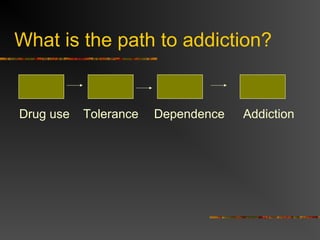
What is the path to addiction?
Drug use Tolerance Dependence Addiction
What is drug abuse?
 The intentional improper or unsafe use
of a drug.
What are Psychoactive drugs?
 Drugs that affect a person’s mood or
behavior.
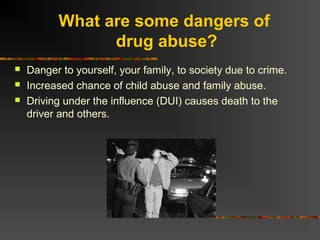
What are some dangers of
drug abuse?
 Danger to yourself, your family, to society due to crime.
 Increased chance of child abuse and family abuse.
 Driving under the influence (DUI) causes death to the
driver and others.

When is a person addicted
to a drug?
 When his/her body
has grown so used to
having the drug that it
cannot function
without it.
 Addiction is a
physical process.
When a person is
addicted they become
physically dependent
on the drug. Their
body must have it.
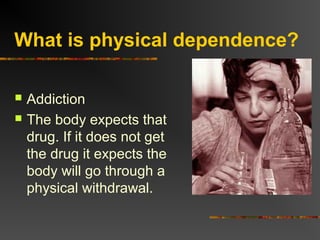
What is physical dependence?
 Addiction
 The body expects that
drug. If it does not get
the drug it expects the
body will go through a
physical withdrawal.
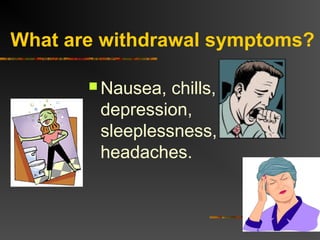
What are withdrawal symptoms?
 Nausea, chills,
depression,
sleeplessness,
headaches.
What are withdrawal symptoms?
(continued)
 Some people who have developed a
very high tolerance for a drug may
suffer more serious and dangerous
withdrawal symptoms, such as
seizures.
 In general the more addictive and
powerful a drug is, the more serious its
withdrawal will be.
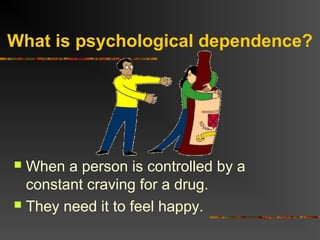
What is psychological dependence?
 When a person is controlled by a
constant craving for a drug.
 They need it to feel happy.
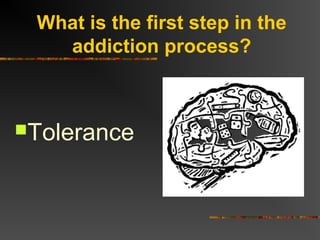
What is the first step in the
addiction process?
Tolerance
What is Tolerance?
 Needing more and more of the drug to get
the same effect.
 Example:
Regular Tylenol works, then you need
2, then you need 1 extra strength,
then 2 extra strength, then you call a
doctor for something stronger.
How do drugs enter the body?
 Implanted pumps
 Dr. surgically implants
 Inhalation
 Through blood vessels in the lungs
 Injection
 Needles
 Transdermal patches
 Patch placed on skin (nicotine patch)
 Ingestion
 Swallowing
 Topical application
 Ointment, cream
What is drug dependence?
 Drug user experiences uncomfortable
withdrawal symptoms if he or she tries to
stop using the drug
What is addiction?
 Drug user has lost control of his or her
drug taking habit
What is a Stimulant?
A drug that causes alertness
and speeds up the activity of
the body.
What are some Stimulants?
 Caffeine
Naturally occurring
Interferes with chemical called
adenosine in the brain
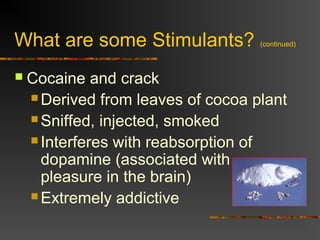
What are some Stimulants? (continued)
 Cocaine and crack
 Derived from leaves of cocoa plant
 Sniffed, injected, smoked
 Interferes with reabsorption of
dopamine (associated with
pleasure in the brain)
 Extremely addictive
What are some Stimulants? (continued)
 Amphetamines
Synthetic drug (made in
laboratories)
One dangerous form is “ice”
What is a Hallucinogen?
A drug that distorts a person’s
senses.
What are some Hallucinogens?
 LSD
 Made from fungus
 Sometimes acts as a depressant
 Flashbacks may occur: return to an
unpleasant experience after using
LSD (can be months later)
What are some Hallucinogens?
(continued)
 PCP
 Also known as “angel dust”
 Can cause severe mental disturbances
 Can last a few hours to a few weeks
 People using PCP can be very violent
What are some Hallucinogens?
(Continued)
 Peyote and Mushrooms
 Derived from peyote cactus
 Contains drug mescaline
 Can cause vomiting and cramping followed by
hallucinations
 People claim they can hear colors
What are Designer Drugs?
 Synthetic drugs that are similar in
chemistry to certain illegal drugs.
What is an example of a Designer
Drug?
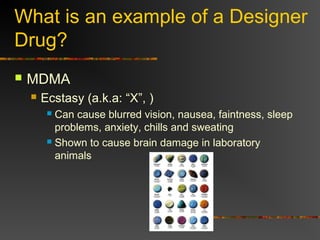
 MDMA
 Ecstasy (a.k.a: “X”, )
 Can cause blurred vision, nausea, faintness, sleep
problems, anxiety, chills and sweating
 Shown to cause brain damage in laboratory
animals
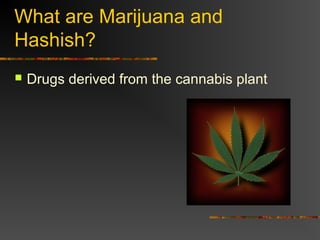
What are Marijuana and
Hashish?
 Drugs derived from the cannabis plant
What kinds of problems are
associated with Marijuana and
Hashish?
 Loss of coordination and difficulty
concentrating
 Can cause anxious feelings or paranoia
 Toxins can damage lungs, reproductive
system and immune system
 Marijuana today contains more THC than in
the 1960’s
What are Inhalants?
 Chemicals that produce strong
psychoactive effects when they are
inhaled.
What are Inhalants? (continued)
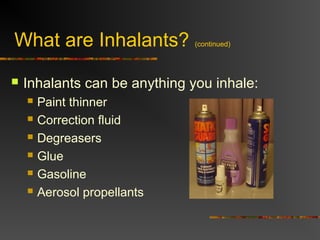
 Inhalants can be anything you inhale:
 Paint thinner
 Correction fluid
 Degreasers
 Glue
 Gasoline
 Aerosol propellants
What are the dangers of
Inhalants?
 Enter the bloodstream and travel to the
brain immediately
 Initial feeling of lightheadedness followed
by nausea and headache
 Repeated use can cause hearing loss,
brain and nerve damage, liver damage,
kidney damage, etc.
 Can cause suffocation and heart failure
 If you begin to feel these symptoms go
outside immediately and get fresh air!
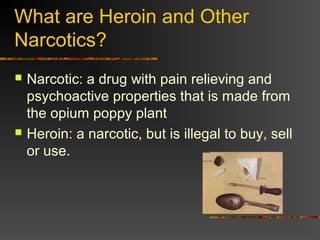
What are Heroin and Other
Narcotics?
 Narcotic: a drug with pain relieving and
psychoactive properties that is made from
the opium poppy plant
 Heroin: a narcotic, but is illegal to buy, sell
or use.
What are some Narcotics?
 Morphine and Codeine
 Used in hospitals for patients with severe pain
 Most physically addictive drug of abuse
 Overdose (a serious, sometimes fatal,
reaction to a large dose of a drug) very
common
 Large doses of heroin can severely depress
respiratory system which leads to loss of
consciousness, coma and even death
What are Sedative-Hypnotics?
 Drugs that depress the body systems and
cause sleepiness
 Two major types:
 Barbiturates
 Prescribed for prevention of seizures
 Benzodiazepines
 Prescribed to relieve minor anxiety and insomnia
How can you treat addiction and
abuse?
 Talk to an adult
 See the school nurse
 Tarzana treatment center
The End

Drugs

  • 1.
  • 2.
    What are drugs? Any substance that causes a change in a person’s physical or psychological state
  • 3.
    What is medicine? Any drug used to cure, prevent or treat illness or discomfort
  • 4.
    What is thepath to addiction? Drug use Tolerance Dependence Addiction
  • 5.
    What is drugabuse?  The intentional improper or unsafe use of a drug.
  • 6.
    What are Psychoactivedrugs?  Drugs that affect a person’s mood or behavior.
  • 7.
    What are somedangers of drug abuse?  Danger to yourself, your family, to society due to crime.  Increased chance of child abuse and family abuse.  Driving under the influence (DUI) causes death to the driver and others.
  • 8.
    When is aperson addicted to a drug?  When his/her body has grown so used to having the drug that it cannot function without it.  Addiction is a physical process. When a person is addicted they become physically dependent on the drug. Their body must have it.
  • 9.
    What is physicaldependence?  Addiction  The body expects that drug. If it does not get the drug it expects the body will go through a physical withdrawal.
  • 10.
    What are withdrawalsymptoms?  Nausea, chills, depression, sleeplessness, headaches.
  • 11.
    What are withdrawalsymptoms? (continued)  Some people who have developed a very high tolerance for a drug may suffer more serious and dangerous withdrawal symptoms, such as seizures.  In general the more addictive and powerful a drug is, the more serious its withdrawal will be.
  • 12.
    What is psychologicaldependence?  When a person is controlled by a constant craving for a drug.  They need it to feel happy.
  • 13.
    What is thefirst step in the addiction process? Tolerance
  • 14.
    What is Tolerance? Needing more and more of the drug to get the same effect.  Example: Regular Tylenol works, then you need 2, then you need 1 extra strength, then 2 extra strength, then you call a doctor for something stronger.
  • 15.
    How do drugsenter the body?  Implanted pumps  Dr. surgically implants  Inhalation  Through blood vessels in the lungs  Injection  Needles  Transdermal patches  Patch placed on skin (nicotine patch)  Ingestion  Swallowing  Topical application  Ointment, cream
  • 16.
    What is drugdependence?  Drug user experiences uncomfortable withdrawal symptoms if he or she tries to stop using the drug
  • 17.
    What is addiction? Drug user has lost control of his or her drug taking habit
  • 18.
    What is aStimulant? A drug that causes alertness and speeds up the activity of the body.
  • 19.
    What are someStimulants?  Caffeine Naturally occurring Interferes with chemical called adenosine in the brain
  • 20.
    What are someStimulants? (continued)  Cocaine and crack  Derived from leaves of cocoa plant  Sniffed, injected, smoked  Interferes with reabsorption of dopamine (associated with pleasure in the brain)  Extremely addictive
  • 21.
    What are someStimulants? (continued)  Amphetamines Synthetic drug (made in laboratories) One dangerous form is “ice”
  • 22.
    What is aHallucinogen? A drug that distorts a person’s senses.
  • 23.
    What are someHallucinogens?  LSD  Made from fungus  Sometimes acts as a depressant  Flashbacks may occur: return to an unpleasant experience after using LSD (can be months later)
  • 24.
    What are someHallucinogens? (continued)  PCP  Also known as “angel dust”  Can cause severe mental disturbances  Can last a few hours to a few weeks  People using PCP can be very violent
  • 25.
    What are someHallucinogens? (Continued)  Peyote and Mushrooms  Derived from peyote cactus  Contains drug mescaline  Can cause vomiting and cramping followed by hallucinations  People claim they can hear colors
  • 26.
    What are DesignerDrugs?  Synthetic drugs that are similar in chemistry to certain illegal drugs.
  • 27.
    What is anexample of a Designer Drug?  MDMA  Ecstasy (a.k.a: “X”, )  Can cause blurred vision, nausea, faintness, sleep problems, anxiety, chills and sweating  Shown to cause brain damage in laboratory animals
  • 28.
    What are Marijuanaand Hashish?  Drugs derived from the cannabis plant
  • 29.
    What kinds ofproblems are associated with Marijuana and Hashish?  Loss of coordination and difficulty concentrating  Can cause anxious feelings or paranoia  Toxins can damage lungs, reproductive system and immune system  Marijuana today contains more THC than in the 1960’s
  • 30.
    What are Inhalants? Chemicals that produce strong psychoactive effects when they are inhaled.
  • 31.
    What are Inhalants?(continued)  Inhalants can be anything you inhale:  Paint thinner  Correction fluid  Degreasers  Glue  Gasoline  Aerosol propellants
  • 32.
    What are thedangers of Inhalants?  Enter the bloodstream and travel to the brain immediately  Initial feeling of lightheadedness followed by nausea and headache  Repeated use can cause hearing loss, brain and nerve damage, liver damage, kidney damage, etc.  Can cause suffocation and heart failure
  • 33.
     If youbegin to feel these symptoms go outside immediately and get fresh air!
  • 34.
    What are Heroinand Other Narcotics?  Narcotic: a drug with pain relieving and psychoactive properties that is made from the opium poppy plant  Heroin: a narcotic, but is illegal to buy, sell or use.
  • 35.
    What are someNarcotics?  Morphine and Codeine  Used in hospitals for patients with severe pain  Most physically addictive drug of abuse  Overdose (a serious, sometimes fatal, reaction to a large dose of a drug) very common  Large doses of heroin can severely depress respiratory system which leads to loss of consciousness, coma and even death
  • 36.
    What are Sedative-Hypnotics? Drugs that depress the body systems and cause sleepiness  Two major types:  Barbiturates  Prescribed for prevention of seizures  Benzodiazepines  Prescribed to relieve minor anxiety and insomnia
  • 37.
    How can youtreat addiction and abuse?  Talk to an adult  See the school nurse  Tarzana treatment center
  • 38.