Alcoholism
Presented by:
Group 4
What is
Alcoholis
m?
Kinds of
Alcoholis
m
History
What is
Alcoholism?• A chronic and often progressive disease that
includes problems controlling your drinking
- being preoccupied with alcohol
- continuing to use alcohol even when it causes
problems
- having to drink more to cause the same effect
-having withdrawal symptoms when you rapidly
decrease or stop drinking.
• Alcoholism is also known as “alcohol dependence”
• If you have alcoholism, you can’t consistently
predict how much you’ll drink, how long you’ll
drink or what consequences will occur from your
drinking
• It is possible to have a problem with alcohol, even
when it has progressed to the point of alcoholism
• If you have alcoholism, or you have problem with
alcohol, you may not be able to cut back or quit
without help
• Denying that you have a problem is usually part of
alcoholism and other types of excessive drinking
• Many people wonder why some individuals can
use alcohol without problems but others cannot.
• One important reason has to do with genetics.
Scientists have found that having an alcoholic
family member makes it more likely that if you
choose to drink you too may develop alcoholism.
What is
Alcoholis
m?
Kinds of
Alcoholis
m
History
HISTORY
• Historically the name "dipsomania" was coined
by German physician Dr. C. W. Hufeland in 1819
before it was superseded by "alcoholism“
• The term "alcoholism" was first used in 1849 by
the Swedish physician Magnus Huss to describe
the systematic adverse effects of alcohol.
• In some ancient cultures alcohol was worshiped
and in others its abuse was condemned
• Excessive alcohol misuse and drunkenness were
recognized as causing social problems even
thousands of years ago
• In 1647 a Greek monk named Agapios was the
first to document that chronic alcohol misuse
was associated with toxicity to the nervous
system and body which resulted in a range of
medical disorders such as seizures, paralysis and
internal bleeding
• In 1920 the effects of alcohol abuse and chronic
drunkenness led to the failed prohibition of
alcohol being considered and eventually
enforced briefly in America
• In 2005 the cost of alcohol dependence and
abuse was estimated to cost the US economy
approximately 220 billion dollars per
year, more than cancer and obesity
What is
Alcoholis
m?
Kinds of
Alcoholis
m
History
Kinds of
Alcoholism• Young adult subtype
• young antisocial subtype
• Functional subtype
• Intermediate familiar subtype
• Chronic severe subtype
• Acute subtype
Young adult subtype
• The young adult subtype accounts
for about 32% of U.S. alcoholics.
• They're young adults who rarely
seek help for alcohol
dependence.
• About 24 years old, they
became alcoholics by age
20, on average.
• They drink less frequently than
other alcoholics, but they tend
to binge drink when they drink.
This is the largest subtype
Young antisocial subtype
• The young antisocial subtype
comprises 21% of U.S. alcoholics
• they are 26 years old, on average
• More than half have antisocial
personality disorder. They
tended to start drinking at 15
and became alcoholics by 18 --
earlier than other subtypes.
They are more likely to smoke
tobacco and pot.
Functional
Subtype• he functional subtype accounts
for about 19% of U.S. alcoholics
• they're generally middle-
aged, working adults who tend
to have stable
relationships, more
education, and higher incomes
than other alcoholics
• They tend to drink every other
day, often consuming five or
more drinks on drinking days.
Intermediate Familiar
Subtype• The intermediate familial
subtype makes up nearly 19%
of U.S alcoholics
• Nearly half have close relatives
who are alcoholics. Alcoholics
in this subtype typically began
drinking by 17 and became
alcoholics in their early 30s.
Chronic severe
subtype
• The chronic severe subtype is
the rarest subtype, accounting
for about 9% of U.S. alcoholics
• This subtype mainly includes
men, has the highest divorce
rate, and frequently includes
users of illicit drugs.
Acute subtype
• an acute syndrome resulting
from intoxication by excessive
consumption of alcoholic drinks
that is characterized by
depression of higher nervous
centers with uncontrolled
excitement
How can
you tell
if you
are
alcoholic
Symptom
s
Caus
es
Symptoms
• Craving
• Lost of control
• Physical dependence
• Tolerance
• Craving – a strong need or compulsion to drink
• Lost of control - The inability to limit one's drinking
on any given occasion.
• Physical dependence - Withdrawal symptoms, such
as nausea, sweating, shakiness, and anxiety, occur
when alcohol use is stopped after a period of heavy
drinking.
• Tolerance: The need to drink greater amounts of
alcohol in order to "get high."
• The risk of alcohol dependence begins at low
levels of drinking and increases directly with
both the volume of alcohol consumed and a
pattern of drinking larger amounts on an
occasion. Young adults are particularly at risk
How can
you tell
if you
are
alcoholic
Symptom
s
Caus
es
Causes
• A complex mixture of genetic and environmental
factors influences the risk of the development of
alcoholism
• Genes that influence the metabolism of alcohol
also influence the risk of alcoholism, and may be
indicated by a family history of alcoholism
• One paper has found that alcohol use at an
early age may influence the expression of genes
which increase the risk of alcohol dependence
• Individuals who have a genetic disposition to
alcoholism are also more likely to begin drinking
at an earlier age than average
• a younger age of onset of drinking is associated
with an increased risk of the development of
alcoholism, and about 40 percent of alcoholics
will drink excessively by their late adolescence
• A high testosterone concentration during
pregnancy may be a risk factor for later
development of alcohol dependence
• Lack of peer and family support is associated with
an increased risk of alcoholism developing
• Genetics and adolescence are associated with an
increased sensitivity to the neurotoxic effects of
chronic alcohol abuse
How can
you tell
if you
are
Symptom
s
Caus
es
How can you tell
• Have you ever felt you should
cut down on your drinking?
• Have people annoyed you by
criticizing your drinking?
• Have you ever felt bad or
guilty about your drinking?
• Have you ever had a drink
first thing in the morning (as
an "eye opener") to steady
your nerves or get rid of a
hangover?
• One "yes" answer suggests a
possible alcohol problem
• If you answered "yes" to more
than one question, it is highly
likely that a problem exists
Effect to
Human
Body
Alcohol
Tolerance
end
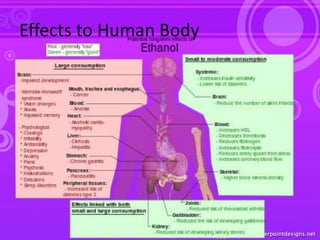
Effects to Human Body
Brain
– Impaired development
– Impaired memory
– Vitiation changes
Psychological
• Cravings
• Imitability
• Depression
• Anxiety
• Panic
• Hallucinations
Disease
• Mouth, trachea and esophagus - cancer
• Blood – Anemia
• Heart – alcoholic cardiomyopathy
• Liver - Cintosis, Hepatitis
• Stomach – Chronic Gastritis
• Pancreas - pancreatitis
• Peripheral tissues – increase of diabetes type 2
Social Effects
• The social problems arising from alcoholism are
serious, caused by the pathological changes in the
brain and the intoxicating effects of alcohol
• Alcohol abuse is associated with an increased risk
of committing criminal offences, including child
abuse, domestic violence, rape, burglary and
assault
• Alcoholism is associated with loss of
employment, which can lead to financial
problems. Drinking at inappropriate times, and
behavior caused by reduced judgment, can lead
to legal consequences, such as criminal charges
for drunk driving or public disorder, or civil
penalties for tortious behavior, and may lead to
a criminal sentence.
Effect to
Human
Body
Alcohol
Tolerance
end
Alcohol Tolerance
• Alcohol tolerance refers to the bodily
responses to the functional effects of ethanol
in alcoholic beverages. This includes direct
tolerance, speed of recovery from insobriety
and resistance to the development of
alcoholism.
Effect to
Human
Body
Alcohol
Tolerance
end
Sources
• http://www.medicinenet.com/script/
main/art.asp?articlekey=52888
• http://en.wikipedia.org/wiki/Alcoholi
sm
• http://en.wikipedia.org/wiki/Alcohol
_tolerance
• http://www.webmd.com/mental-
health/alcohol-
abuse/news/20070629/5-alcoholic-
types-in-alcoholism-study
Thank you 

Alcoholism Preapared by Group 4

  • 1.
  • 2.
  • 3.
    What is Alcoholism?• Achronic and often progressive disease that includes problems controlling your drinking - being preoccupied with alcohol - continuing to use alcohol even when it causes problems - having to drink more to cause the same effect -having withdrawal symptoms when you rapidly decrease or stop drinking.
  • 4.
    • Alcoholism isalso known as “alcohol dependence” • If you have alcoholism, you can’t consistently predict how much you’ll drink, how long you’ll drink or what consequences will occur from your drinking
  • 5.
    • It ispossible to have a problem with alcohol, even when it has progressed to the point of alcoholism • If you have alcoholism, or you have problem with alcohol, you may not be able to cut back or quit without help • Denying that you have a problem is usually part of alcoholism and other types of excessive drinking
  • 6.
    • Many peoplewonder why some individuals can use alcohol without problems but others cannot. • One important reason has to do with genetics. Scientists have found that having an alcoholic family member makes it more likely that if you choose to drink you too may develop alcoholism.
  • 7.
  • 8.
    HISTORY • Historically thename "dipsomania" was coined by German physician Dr. C. W. Hufeland in 1819 before it was superseded by "alcoholism“ • The term "alcoholism" was first used in 1849 by the Swedish physician Magnus Huss to describe the systematic adverse effects of alcohol.
  • 9.
    • In someancient cultures alcohol was worshiped and in others its abuse was condemned • Excessive alcohol misuse and drunkenness were recognized as causing social problems even thousands of years ago
  • 10.
    • In 1647a Greek monk named Agapios was the first to document that chronic alcohol misuse was associated with toxicity to the nervous system and body which resulted in a range of medical disorders such as seizures, paralysis and internal bleeding
  • 11.
    • In 1920the effects of alcohol abuse and chronic drunkenness led to the failed prohibition of alcohol being considered and eventually enforced briefly in America
  • 12.
    • In 2005the cost of alcohol dependence and abuse was estimated to cost the US economy approximately 220 billion dollars per year, more than cancer and obesity
  • 13.
  • 14.
    Kinds of Alcoholism• Youngadult subtype • young antisocial subtype • Functional subtype • Intermediate familiar subtype • Chronic severe subtype • Acute subtype
  • 15.
    Young adult subtype •The young adult subtype accounts for about 32% of U.S. alcoholics. • They're young adults who rarely seek help for alcohol dependence.
  • 16.
    • About 24years old, they became alcoholics by age 20, on average. • They drink less frequently than other alcoholics, but they tend to binge drink when they drink. This is the largest subtype
  • 17.
    Young antisocial subtype •The young antisocial subtype comprises 21% of U.S. alcoholics • they are 26 years old, on average
  • 18.
    • More thanhalf have antisocial personality disorder. They tended to start drinking at 15 and became alcoholics by 18 -- earlier than other subtypes. They are more likely to smoke tobacco and pot.
  • 19.
    Functional Subtype• he functionalsubtype accounts for about 19% of U.S. alcoholics • they're generally middle- aged, working adults who tend to have stable relationships, more education, and higher incomes than other alcoholics
  • 20.
    • They tendto drink every other day, often consuming five or more drinks on drinking days.
  • 21.
    Intermediate Familiar Subtype• Theintermediate familial subtype makes up nearly 19% of U.S alcoholics • Nearly half have close relatives who are alcoholics. Alcoholics in this subtype typically began drinking by 17 and became alcoholics in their early 30s.
  • 22.
    Chronic severe subtype • Thechronic severe subtype is the rarest subtype, accounting for about 9% of U.S. alcoholics • This subtype mainly includes men, has the highest divorce rate, and frequently includes users of illicit drugs.
  • 23.
    Acute subtype • anacute syndrome resulting from intoxication by excessive consumption of alcoholic drinks that is characterized by depression of higher nervous centers with uncontrolled excitement
  • 24.
    How can you tell ifyou are alcoholic Symptom s Caus es
  • 25.
    Symptoms • Craving • Lostof control • Physical dependence • Tolerance
  • 26.
    • Craving –a strong need or compulsion to drink • Lost of control - The inability to limit one's drinking on any given occasion. • Physical dependence - Withdrawal symptoms, such as nausea, sweating, shakiness, and anxiety, occur when alcohol use is stopped after a period of heavy drinking. • Tolerance: The need to drink greater amounts of alcohol in order to "get high."
  • 27.
    • The riskof alcohol dependence begins at low levels of drinking and increases directly with both the volume of alcohol consumed and a pattern of drinking larger amounts on an occasion. Young adults are particularly at risk
  • 28.
    How can you tell ifyou are alcoholic Symptom s Caus es
  • 29.
    Causes • A complexmixture of genetic and environmental factors influences the risk of the development of alcoholism
  • 30.
    • Genes thatinfluence the metabolism of alcohol also influence the risk of alcoholism, and may be indicated by a family history of alcoholism • One paper has found that alcohol use at an early age may influence the expression of genes which increase the risk of alcohol dependence
  • 31.
    • Individuals whohave a genetic disposition to alcoholism are also more likely to begin drinking at an earlier age than average • a younger age of onset of drinking is associated with an increased risk of the development of alcoholism, and about 40 percent of alcoholics will drink excessively by their late adolescence
  • 32.
    • A hightestosterone concentration during pregnancy may be a risk factor for later development of alcohol dependence • Lack of peer and family support is associated with an increased risk of alcoholism developing
  • 33.
    • Genetics andadolescence are associated with an increased sensitivity to the neurotoxic effects of chronic alcohol abuse
  • 34.
    How can you tell ifyou are Symptom s Caus es
  • 35.
    How can youtell • Have you ever felt you should cut down on your drinking? • Have people annoyed you by criticizing your drinking?
  • 36.
    • Have youever felt bad or guilty about your drinking? • Have you ever had a drink first thing in the morning (as an "eye opener") to steady your nerves or get rid of a hangover?
  • 37.
    • One "yes"answer suggests a possible alcohol problem • If you answered "yes" to more than one question, it is highly likely that a problem exists
  • 38.
  • 39.
  • 40.
    Brain – Impaired development –Impaired memory – Vitiation changes
  • 41.
    Psychological • Cravings • Imitability •Depression • Anxiety • Panic • Hallucinations
  • 42.
    Disease • Mouth, tracheaand esophagus - cancer • Blood – Anemia • Heart – alcoholic cardiomyopathy • Liver - Cintosis, Hepatitis • Stomach – Chronic Gastritis • Pancreas - pancreatitis • Peripheral tissues – increase of diabetes type 2
  • 43.
    Social Effects • Thesocial problems arising from alcoholism are serious, caused by the pathological changes in the brain and the intoxicating effects of alcohol • Alcohol abuse is associated with an increased risk of committing criminal offences, including child abuse, domestic violence, rape, burglary and assault
  • 44.
    • Alcoholism isassociated with loss of employment, which can lead to financial problems. Drinking at inappropriate times, and behavior caused by reduced judgment, can lead to legal consequences, such as criminal charges for drunk driving or public disorder, or civil penalties for tortious behavior, and may lead to a criminal sentence.
  • 45.
  • 46.
    Alcohol Tolerance • Alcoholtolerance refers to the bodily responses to the functional effects of ethanol in alcoholic beverages. This includes direct tolerance, speed of recovery from insobriety and resistance to the development of alcoholism.
  • 47.
  • 48.
    Sources • http://www.medicinenet.com/script/ main/art.asp?articlekey=52888 • http://en.wikipedia.org/wiki/Alcoholi sm •http://en.wikipedia.org/wiki/Alcohol _tolerance • http://www.webmd.com/mental- health/alcohol- abuse/news/20070629/5-alcoholic- types-in-alcoholism-study
  • 49.