Vitamins, Minerals, and Water
Chp. 7.2
Pg. 161-166
What are vitamins?
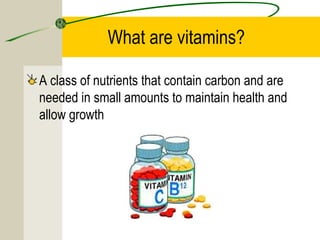
A class of nutrients that contain carbon and are
needed in small amounts to maintain health and
allow growth
What kinds of vitamins are there?
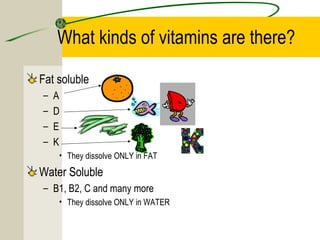
Fat soluble
– A
– D
– E
– K
• They dissolve ONLY in FAT
Water Soluble
– B1, B2, C and many more
• They dissolve ONLY in WATER
Vitamins
C- promotes healthy gums and teeth. Healing of
wounds and the absorption (to take from-
absorb) of iron.
B12- form cells (red blood cells) helps nervous
system
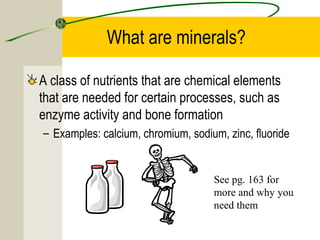
What are minerals?
A class of nutrients that are chemical elements
that are needed for certain processes, such as
enzyme activity and bone formation
– Examples: calcium, chromium, sodium, zinc, fluoride
See pg. 163 for
more and why you
need them
minerals
Calcium – milk, dairy products, veggies, tofu
– Helps keeps bones and teeth strong; lack of calcium can lead to
osteoporosis
Iron- red meat, eggs, beans, peas, dark-green veggies:
– produce hemoglobin (blood)
– Too little iron can lead to anemia
Potassium- meat, poultry, fish, bananas, oranges, dried fruits,
potatoes, green leafy veggies, peas, beans:
– helps maintain fluid balance, transmission of nerve impulses, muscle
contraction
Sodium- table salt, processed foods: baked good, snack foods,
canned good, lunch meat, tapatio, cup’noodle
– Too much salt can lead to high blood pressure
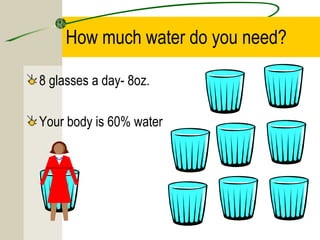
How much water do you need?
8 glasses a day- 8oz.
Your body is 60% water
Why is water important?
1. It transports nutrients and oxygen through the
body and helps to get rid of wastes from the
body
2. It provides the proper environment for the
body’s chemical reactions to occur.
3. It helps regulate body temperature.
Why is dehydration dangerous?
Interferes with mental and physical performance
YOU CAN DIE!
What are the early symptoms of
dehydration?
Headache
Fatigue
Loss of appetite
Dry eyes and mouth
Dark colored urine
– Dehydration is the LAST sign of you needing
water!!!!
Thirst
CLASSwork
Pg. 166
#1-5
WRITE COMPLETE SENTENCES
1. Name the term for “a class of nutrient that contain
carbon and are needed in small amounts to maintain
health and allow growth”
2. Identify the term for “chemical elements that are
needed for enzyme activity and bone formation”
– A. vitamin C. mineral
– B. protein D. water
3. Name the term for “not having enough of a nutrient to
maintain good health”
4. List the functions of Vitamin A, C and D.
5. Name the nutrient that may be related to each of the
following
– A. iron-deficiency anemia
– B. osteoporosis
– C. dehydration
– D. high blood pressure

Chp7.2vitamins,minerals,water

  • 1.
    Vitamins, Minerals, andWater Chp. 7.2 Pg. 161-166
  • 2.
    What are vitamins? Aclass of nutrients that contain carbon and are needed in small amounts to maintain health and allow growth
  • 3.
    What kinds ofvitamins are there? Fat soluble – A – D – E – K • They dissolve ONLY in FAT Water Soluble – B1, B2, C and many more • They dissolve ONLY in WATER
  • 4.
    Vitamins C- promotes healthygums and teeth. Healing of wounds and the absorption (to take from- absorb) of iron. B12- form cells (red blood cells) helps nervous system
  • 5.
    What are minerals? Aclass of nutrients that are chemical elements that are needed for certain processes, such as enzyme activity and bone formation – Examples: calcium, chromium, sodium, zinc, fluoride See pg. 163 for more and why you need them
  • 6.
    minerals Calcium – milk,dairy products, veggies, tofu – Helps keeps bones and teeth strong; lack of calcium can lead to osteoporosis Iron- red meat, eggs, beans, peas, dark-green veggies: – produce hemoglobin (blood) – Too little iron can lead to anemia Potassium- meat, poultry, fish, bananas, oranges, dried fruits, potatoes, green leafy veggies, peas, beans: – helps maintain fluid balance, transmission of nerve impulses, muscle contraction Sodium- table salt, processed foods: baked good, snack foods, canned good, lunch meat, tapatio, cup’noodle – Too much salt can lead to high blood pressure
  • 7.
    How much waterdo you need? 8 glasses a day- 8oz. Your body is 60% water
  • 8.
    Why is waterimportant? 1. It transports nutrients and oxygen through the body and helps to get rid of wastes from the body 2. It provides the proper environment for the body’s chemical reactions to occur. 3. It helps regulate body temperature.
  • 9.
    Why is dehydrationdangerous? Interferes with mental and physical performance YOU CAN DIE!
  • 10.
    What are theearly symptoms of dehydration? Headache Fatigue Loss of appetite Dry eyes and mouth Dark colored urine – Dehydration is the LAST sign of you needing water!!!! Thirst
  • 11.
  • 12.
    1. Name theterm for “a class of nutrient that contain carbon and are needed in small amounts to maintain health and allow growth” 2. Identify the term for “chemical elements that are needed for enzyme activity and bone formation” – A. vitamin C. mineral – B. protein D. water 3. Name the term for “not having enough of a nutrient to maintain good health” 4. List the functions of Vitamin A, C and D. 5. Name the nutrient that may be related to each of the following – A. iron-deficiency anemia – B. osteoporosis – C. dehydration – D. high blood pressure