Alcohol –
the Body
& Health
Effects
A brief overview
3
Acknowledgements
The Alcohol Advisory Council of New Zealand (ALAC) would like to thank Dr Fiona Imlach Gunasekara, Public
Health Medicine Specialist, for preparing the summaries of the health and body effects of alcohol in this resource.
ISBN	 978–1–927138–41–0 (print)
	 978–1–927138–42–7 (online)
5	 Introduction
5	 What is alcohol?
6	 Body effects of alcohol
9	 Overall body effects
9	 Blood and immune system
9	 Bones and muscles	
9	 Brain and nervous system
10	 Breasts – women
10	 Eyes
10	 Heart and blood pressure
11	 Intestines
11	 Kidneys and fluid balance
11	 Liver
12	 Lungs
12	 Mental health
12	 Mouth and throat
13	 Pancreas and digestion of sugar
13	 Sexual health – men
13	 Sexual health – women
14	 Skin and fat
14	 Stomach and food pipe (oesophagus)	
15	 Health effects of acute alcohol use
15	 Alcohol poisoning
17	 Hangover
18	 Health conditions related to chronic alcohol use
20	 Cancers
20	 Cardiovascular disease
21	 Existing health conditions – impact of alcohol
21	 Diabetes mellitus
21	 Mental health conditions
22	 Alcohol and drug interactions
23	 Effects of alcohol on other people
23	 The unborn child
23	 Children and families
24	 Effects of alcohol on population groups
24	 Women
24	 Men
25	 Young people
25	 Older people
26	 Low-risk alcohol drinking advice
26	 How much?
27	 Advice for parents of children and
young people under 18 years
27	 What is a standard drink?
28	 When not to drink
28	 Tips for low-risk drinking
28	 Background to drinking advice
29	 Where to find support and further information
30	 Glossary
32	 References
TABLES
7 	 Table 1: Symptoms of drunkenness at different
levels of blood alcohol concentration (BAC)
16 	 Table 2: Potential symptoms and complications
of acute intoxication or alcohol poisoning, by
body part affected
19 	 Table 3: Potential conditions and complications
of chronic and/or heavy episodic alcohol use,
by body part affected
Contents
Alcohol Advisory Council of New Zealand
Kaunihera Whakatupato Waipiro o Aotearoa
PO Box 5023
Wellington
New Zealand 6145
alac.org.nz  | waipiro.org.nz | June 2012
5
This resource provides a brief
overview of the health and body
effects of alcohol. It is a series
of short summaries based on
available evidence rather than
a comprehensive literature
review. Areas covered include
the effects of alcohol on body
parts, the health effects of
acute alcohol use, the health
conditions related to chronic
alcohol use, and the effects of
alcohol on other people and
populations. Low-risk drinking
advice is also outlined in this
resource along with information
about where to find support and
further information.
What is alcohol?
Alcohol (ethanol or ethyl alcohol) is the ingredient
found in beer, wine and spirits which causes
drunkenness. Alcohol is formed when yeast ferments
(breaks down without oxygen) the sugars in different
foods; for example wine is made from the sugar in
grapes, beer from the sugar in malted barley (a type of
grain), cider from the sugar in apples, and vodka from
the sugar in potatoes, beets or other plants.[1]
Introduction
Introduction
Body
Effects
Health
Effects
&
Conditions
Impact
of
Alcohol
Effects
of
Alcohol
Drinking
Advice
Support
&
Information
7
6
Introduction
Body
Effects
Health
Effects
&
Conditions
Impact
of
Alcohol
Effects
of
Alcohol
Drinking
Advice
Support
&
Information
Alcohol is classed as a ‘sedative
hypnotic’drug,[2] which means
it acts to depress the central
nervous system at high doses.
At lower doses, alcohol can act as a stimulant,[3]
inducing feelings of euphoria and talkativeness,
but drinking too much alcohol at one session can
lead to drowsiness, respiratory depression (where
breathing becomes slow, shallow or stops entirely),
coma or even death.[4–6]
As well as its acute and potentially lethal sedative
effect at high doses, alcohol has effects on every
organ in the body, and these effects depend on
the blood alcohol concentration (BAC) over time.[7]
After a drink is swallowed, the alcohol is rapidly
absorbed into the blood (20 percent through the
stomach and 80 percent through the small intestine),
with effects felt within 5 to 10 minutes after drinking.[6]
It usually peaks in the blood after 30 to 90 minutes,[6]
and thus is carried through all the organs of the body.
Most (90 percent) of the metabolism, or breaking
down, of alcohol from a toxic substance to water
and carbon dioxide is performed by the liver,[6]
with the rest excreted through the lungs (allowing
alcohol breath tests), through the kidneys (into urine)
and in sweat.[8]
The liver can break down only a certain amount
of alcohol per hour, which for an average person
is around one standard drink (which raises the
BAC about 15 to 20 mg/dL[8] – the current limit
for driving in New Zealand is 80 mg/dL).
The BAC rises, and the feeling of drunkenness occurs,
when alcohol is drunk faster than the liver can break
it down. Table 1 shows the relationship between BAC
and symptoms of drunkenness – the higher the BAC,
the greater the effects on the body. However, BAC does
not correlate exactly with symptoms of drunkenness
and different people have different symptoms even
after drinking the same amount of alcohol. The BAC
level, and every individual’s reaction to alcohol, is
influenced by: [1,2,7]
•	 the ability of the liver to metabolise alcohol (which
varies due to genetic differences in the liver enzymes
that break down alcohol)[7]
•	 the presence or absence of food in the stomach
(food dilutes the alcohol and dramatically slows
its absorption into the bloodstream by preventing
it from passing quickly into the small intestine)
•	 the concentration of alcohol in the beverage
(highly concentrated beverages such as spirits
are more quickly absorbed)
•	 how quickly alcohol is drunk
•	 body type (heavier and more muscular people have
more fat and muscle to absorb the alcohol)[2]
•	 age, sex, ethnicity (e.g. women have a higher BAC
after drinking the same amount of alcohol than men
due to differences in metabolism and absorption –
since men have on average more fluid in their body
to distribute alcohol around than women do; some
ethnic groups have different levels of a liver enzyme
responsible for the breakdown of alcohol)
•	 how frequently a person drinks alcohol (someone
who drinks often can tolerate the sedating effects
of alcohol more than someone who does not
regularly drink).[6]
Body effects
of alcohol
Table 1: Symptoms of drunkenness at different levels of blood alcohol concentration (BAC)
BAC Symptoms
<50 mg/dL Some impairment in motor coordination and thinking ability
Talkativeness
Relaxation
50-150 mg/dL Altered mood (increased well-being or unhappiness)
Friendliness, shyness or argumentativeness
Impaired concentration and judgement
Sexual disinhibition
150-250 mg/dL Slurred speech
Unsteady walking
Nausea
Double vision
Increased heart rate
Drowsiness
Mood, personality and behaviour changes which may be
sudden, angry and antisocial
300 mg/dL Unresponsive/extremely drowsy
Speech incoherent/confused
Memory loss
Vomiting
Heavy breathing
>400 mg/dL Breathing slowed, shallow or stopped
Coma
Death
Adapted from: Table 163.1 in Brust, J. C. M. (2005). Alcoholism. In L. P. Rowland (Ed.), Merritt’s neurology (11th ed.).
Philadelphia: Lippincott Williams & Wilkins.[4] and Table 1 in Vonghia, L., Leggio, L., Ferrulli, A., Bertini, M., Gasbarrini,
G., Addolorato, G., et al. (2008). Acute alcohol intoxication. European Journal of Internal Medicine, 19(8), 561–567.[5]
9
Introduction
Body
Effects
Health
Effects
&
Conditions
Impact
of
Alcohol
Effects
of
Alcohol
Drinking
Advice
Support
&
Information
Overall body effects
> Alcohol affects all parts of the body including:
•	 blood and immune system
•	 bones and muscles
•	 brain and nervous system
•	 breasts (in women)
•	 eyes
•	 heart and blood pressure
•	 intestines
•	 kidneys and fluid balance
•	 liver
•	 lungs
•	 mental health
•	 mouth and throat
•	 pancreas and digestion of sugar
•	 sexual and reproductive system – men
•	 sexual and reproductive system – women
•	 skin and fat
•	 stomach and food pipe (oesophagus).
As well as potentially affecting the physical and mental
health of individuals in many ways, chronic and heavy
alcohol use can increase the risk of death[9] either
directly, for example through acute alcohol poisoning
or because alcohol causes a fatal disease such as
cancer,[10] or indirectly, such as alcohol being a factor
in violent death or suicide. Alcohol contributes to a
high burden of disease in society in terms of years that
people spend with disability or in poor health because
of alcohol-related illnesses or injuries.[11,12] Unintentional
injuries from alcohol use often result from falls, burns,
motor vehicle accidents, assaults and drowning.[9]
Blood and immune system
Long-term effects of alcohol use
Chronic heavy alcohol use can cause abnormalities
in the blood, leading to anaemia (low haemoglobin,
the component of blood that carries oxygen around
the body) and low platelets (platelets help prevent
bleeding).[13] Chronic heavy alcohol use also suppresses
the immune system (such as affecting the white blood
mouth and throat
Being drunk can cause
slurred speech.
stomach and
food pipe
Too much alcohol can have
short- and long-term effects
on the oesophagus (food
pipe) and the stomach.
intestines
Both the small intestine and
large intestine can be affected
by long-term alcohol use,
including cancer risk.
liver
Long-term alcohol use
can cause damage to the
liver in a variety of ways.
pancreas
Alcohol use,particularly
when heavy,can cause
acute or chronic pancreatitis
(inflammation and damage
to the pancreas).
kidneys
Alcohol has an effect on
the kidneys’functions.
heart
Alcohol use at low levels may
be beneficial for the heart in
some people but is harmful for
everyone at high levels.
blood
Alcohol is absorbed into the
bloodstream and can have
some long-term effects.
mental health
Alcohol can be used to
relax but it is also addictive
and can lead to dependency.
sexual health
Alcohol use can affect
judgment and increases the
chance of unwanted sexual
experiences.It can also affect
sexual performance in men.
breasts
(in women)
Long-term alcohol
use increases the
risk of breast cancer.
bones and muscles
Alcohol immediately affects
coordination and increases
the likelihood of injury,while
ongoing heavy alcohol use
can have other health effects.
eyes
Being drunk can
cause blurred vision.
skin
Alcohol use can have direct and
indirect effects on the skin.
Alcohol affects all parts
of the body including:
Summary of main effects
Body effects of alcohol cells that fight infections), making it more difficult for
the body to fight off both viral and bacterial infections.
People who drink heavily over a long time are more
likely to suffer from infections after surgery, burns,
trauma, hepatitis C infection, HIV/AIDS, meningitis,
tuberculosis and pneumonia (acute inflammation
of the lung, usually due to infection).[4,14,15]
Bones and muscles
Immediate effects of alcohol use
Alcohol use causes many different types of injuries,
including injuries from road traffic accidents, assaults
and falls.[9] This is usually because high levels of blood
alcohol impair the brain’s thought processes and
the coordination of muscles, causing clumsiness and
difficulty walking.[16] Common injuries seen at the
emergency department include cuts, bruises, sprains
and broken bones.[17,18] The risk of injury in the six
hours after drinking doubles with four standard drinks
and increases rapidly the more alcohol is drunk on
a single occasion.[19]
Long-term effects of alcohol use
Moderate alcohol use may protect against osteoporosis
(thinning of the bones, which makes the bones more
likely to break).[20] However, chronic heavy alcohol
use interferes with the absorption of calcium and bone
formation and can actually lead to osteoporosis.[20,21]
Chronic heavy use is also associated with a painful
condition where bone tissue dies (osteonecrosis),[22]
gout (a type of arthritis or inflammation of the joints,
often affecting the joint of the big toe),[13] and muscle
wasting and weakness.[4,23]
Brain and nervous system
Immediate effects of alcohol use
Being drunk impairs judgment, inhibitions and
concentration, and in increasing amounts leads
to drowsiness and coma.[4] The loss of memory
for a period of drunkenness (alcoholic blackout)
can occur in occasional as well as regular heavy
drinkers, and is due to alcohol interfering with
the laying down of memories.[4,8]
brain and
nervous system
Alcohol impairs judgement
and concentration.Long-term
alcohol use can damage the
brain and nerves.
lungs
Being drunk and chronic
heavy alcohol use can
increase the risk of
infections of the lungs.
11
10
Long-term effects of alcohol use
Chronic heavy alcohol use can damage the brain and
nerves in a variety of ways. Some damage to the brain,
from mild to severe, occurs in around half of chronic
heavy alcohol drinkers.[24] This may be a result of
thiamine (vitamin B1) deficiency (secondary to alcohol
use, either because of poor diet or because alcohol
reduces the absorption of thiamine from the gut and
interferes with how thiamine is used in the body).[25]
Thiamine deficiency can cause an acute, severe, life-
threatening disorder called Wernicke’s encephalopathy,
which usually presents with symptoms of abnormal
or paralysed eye movements, difficulty walking
and confusion. It also causes a chronic condition of
memory loss (variously called Korsakoff’s syndrome,
psychosis or dementia), where loss of old memories
occurs and difficulties in laying down new memories
may be profound.[4,24,25] Both of these disorders are
ultimately fatal without treatment with thiamine.[4]
Chronic heavy alcohol use can also damage the part
of the brain responsible for balance and coordination
(the cerebellum), leading to instability and problems
with walking.[4,25] It can also damage peripheral nerves
in the body, leading to pain, weakness, numbness and
the inability to sense touch.[4,26] In rare cases it can
damage specific centres in the brain, leading to loss
of mental function, inability to walk and death[8] and
can lead to the development of epilepsy (chronic fits)[9]
and sleep disturbances. Although individuals suffering
from insomnia sometimes use alcohol to treat the
insomnia, tolerance to the sedating effect of alcohol
is likely to occur, increasing the risk of excessive use.[3]
Also, if more than one or two drinks are taken in
the evening, sleep can be disrupted, increasing the
chances of a person waking in the night and finding
it hard to fall back asleep.[8]
The relationship between alcohol use and stroke,
where there is a sudden paralysis, loss of sensation or
inability to talk because the blood supply to the brain
is interrupted, is complex. Alcohol increases the risk
of hemorrhagic stroke, where the stroke is caused
by bleeding in the brain. However, low to moderate
alcohol use (one to two drinks a day) reduces the risk
of ischaemic stroke, which is caused by blockage of the
blood vessels in the brain, but higher levels of alcohol
use increase the risk of ischaemic stroke.[9]
Breasts – Women
Long-term effects of alcohol use
Long-term alcohol use increases the risk of breast
cancer, with higher use resulting in a higher risk of
cancer.[9,27,28] A significantly elevated risk is seen
from drinking even one or two drinks of alcohol a day.
[10] The risk increases on average by about 10 percent
for every one standard drink of alcohol per day.[29]
Eyes
Immediate effects of alcohol use
Being drunk can cause blurred or double vision.[4]
Long-term effects of alcohol use
Chronic heavy alcohol use, when coupled with a diet low
in vitamin B1 and B12, may lead to decreased vision.[4,30]
Heart* and blood pressure
Long-term effects of alcohol use
The evidence for the effect of alcohol on the heart
is mixed. There is an opinion that light to moderate
alcohol use (up to one standard drink per day for
women and up to two standard drinks per day for
men) can, in older age groups, reduce the risk of
developing and dying from coronary artery disease
(narrowing and blockage of the arteries supplying
blood to the heart resulting from the build-up
of fatty deposits inside the walls of the arteries
(atherosclerosis), which can cause angina and heart
attacks). This appears to be because small quantities
of alcohol alter the lipids and clotting factors in the
blood to make them protective against heart disease.
[9,31,32,33]
However, heavy drinking (both chronic and a pattern of
heavy drinking sessions) increases the risk of coronary
artery disease.[9,34] Heavy drinking (chronic and/or
at a single session) is also associated with sudden
death from heart failure, with irregular heartbeats
and with chronic disease of the heart muscle (dilated
cardiomyopathy). Dilated cardiomyopathy leads
to heart failure, where the heart can no longer pump
blood around the body effectively.[9,27,32,34]
Heavy chronic alcohol use is also linked to high blood
pressure, particularly in men.[9,34,35] Blood pressure
increases with drinking more than two or three drinks
a day on average and restriction of alcohol lowers the
blood pressure.[35]
Drinking alcohol in order to ‘protect the heart’ is not
advisable, since alcohol is an addictive drug that causes
cancer, increases the risk of injury and causes damage to
the fetus in pregnant women. People can find it difficult
to limit their drinking to one or two standard drinks a day
and heavy drinking actually increases the risk of heart
disease and.[34] People who have risk factors for or
have established heart disease should focus on other
factors such as cigarette smoking, high cholesterol,
high blood pressure, diabetes, overweight and physical
inactivity. Young and middle-aged adults, especially
women, are more likely to experience harm than
benefit from alcohol use due to risk from injury and,
for women, increased risk from breast cancer.[36,37]
Intestines
Long-term effects of alcohol use
Long- term alcohol use can cause cancer of the large
bowel/intestines and rectum.[9,38,39] Alcohol can
lead to malnutrition and diseases due to low vitamin
levels, as it blocks the absorption of many important
vitamins and nutrients in the gut.[23]
Kidneys and fluid balance
Immediate effects of alcohol use
Alcohol is a diuretic, meaning that it causes water to
be lost from the body through the kidneys (into urine),
which can lead to dehydration.[35] Alcohol can also
cause the loss of important minerals and salts from
the body such as magnesium, calcium, phosphate,
sodium and potassium,[13] either directly or because
alcohol induces vomiting. Low levels of these elements
can cause many problems ranging from irregular
heartbeats to seizures.[5]
Liver
Long-term effects of alcohol use
Chronic heavy alcohol use can damage the liver,
causing alcoholic liver disease. This occurs across
a spectrum from fatty liver, to acute alcoholic
hepatitis, to cirrhosis.[1]
Fatty liver, where fat builds up in the liver cells, is very
common in heavy drinkers and is reversible if drinking
is reduced. However, a small percentage of people with
fatty liver will develop alcoholic hepatitis, cirrhosis
or liver cancer.
Alcoholic hepatitis develops in 10 to 35 percent of
heavy drinkers and is an acute injury to the liver
which can present with symptoms of feeling unwell,
tiredness, jaundice (yellow skin and whites of eyes),
swollen stomach and enlarged, tender liver. Death
from liver failure can occur in severe cases.
Cirrhosis of the liver develops in 5 to 15 percent of
heavy drinkers and is where the liver is permanently
damaged and cells are replaced by scar tissue, so the
liver can no longer function (to detoxify the body,
make vital proteins, store vitamins and sugars,
and make chemicals necessary for digestion).
Cirrhosis can also lead to death from liver failure.
Treatment for alcoholic liver disease must include
stopping the drinking of alcohol. Alcohol also causes
liver cancer, and treatment options are often limited
if alcoholic liver disease is present or the cancer has
spread widely by the time of diagnosis. This means
liver cancer is often quickly fatal.[9,40,41]
*The evidence for the effects of alcohol on the heart is mixed and often
controversial. This section is a brief summary of the evidence available
at the time of publication.
Introduction
Body
Effects
Health
Effects
&
Conditions
Impact
of
Alcohol
Effects
of
Alcohol
Drinking
Advice
Support
&
Information
13
12
Lungs
Immediate effects of alcohol use
Being drunk[9] increases the risk of pneumonia
(inflammation of the lungs, usually caused by
infection from bacteria or viruses).[5] This is because,
at high blood concentrations, alcohol is sedating
and relaxes the mouth and throat, suppresses reflexes
(like the gag and cough reflexes), and reduces the
ability of the lungs to clear mucus and foreign matter,
so that vomit, saliva or other substances may enter
the lungs and cause inflammation and infection
(bronchitis or pneumonia).
Long-term effects of alcohol use
Chronic heavy alcohol use is also associated with
higher rates of pneumonia, tuberculosis (an infectious
disease that affects primarily the lungs but also any
other part of the body),[9] and acute respiratory
distress syndrome (ARDS – a life-threatening condition
in which the lungs fill with fluid, which occurs as a
rare complication of pneumonia, trauma and severe
infections).[42] In addition to the ways in which acute
alcohol use can cause pneumonia, chronic heavy
alcohol use also impairs the immune system and
changes the bacteria present in the mouth to those
more likely to cause infections, making people more
vulnerable to pneumonia.[9]
Mental health
Immediate effects of alcohol use
Many people use low doses of alcohol for relaxation
and to relieve tension, nervousness and stress.[2,8]
However, in some people alcohol creates rather than
reduces stress through stimulating stress hormones.[43]
Alcohol affects mood in a variety of ways, and can
make people feel happy, sad or aggressive, and can
also cause moods swing.[4,8] However, there is a risk
of becoming dependent on alcohol if it is used as a
primary means to relieve stress and anxiety without
addressing the underlying causes. Because it removes
inhibitions and increases aggression and recklessness,
alcohol is often found in the blood of people who self-
harm, or attempt or complete suicide.[44]
Long-term effects of alcohol use
Alcohol is addictive and can lead to dependency. This
is where the body requires more alcohol to achieve the
desired effect (e.g. altered mood), where use of alcohol
interferes with a person’s life (causing legal, work/
study, relationship or social problems), where a person
continues to use alcohol despite it causing physical
or mental problems, and where, if alcohol is not taken,
withdrawal symptoms occur.
The severity of withdrawal symptoms depends on
the quantity of alcohol consumed and the length of
the drinking session. Symptoms include shaking of the
hands, which commonly occurs the morning after the
drinking session and may be relieved by more alcohol.
If alcohol is not taken, symptoms can progress to
insomnia, increased heart rate, temperature and blood
pressure, sweating, agitation, nausea, flushing of the
face, nightmares, hallucinations (seeing, hearing or
feeling things that are not present) and fits.[4,13,45,46]
The most serious withdrawal syndrome is ‘delirium
tremens’, which develops in about 5 percent of people
with alcohol withdrawal (more if fits are not treated)
and by definition includes the symptom of delirium
(an altered and confused state of mind).[46] This
syndrome has a death rate of around 5 percent.[46]
In people who drink heavily, alcohol commonly causes
mood disorders, including depression, anxiety and
psychosis (a mental illness defined by changes in
personality, a distorted sense of reality, and delusions).
[8] If these disorders only occur during drinking
sessions or withdrawal, they will usually resolve once
drinking is stopped.[8] Alcohol abuse and dependency
are also common in people with pre-existing mental
health conditions.
Mouth and throat
Immediate effects of alcohol use
Being drunk can have various effects on speech, such
as making people more friendly, talkative, unreserved,
relaxed or argumentative. Increasing amounts of
alcohol can cause aggressive, antisocial, angry, slurred
and confused speech.[4,5]
Long-term effects of alcohol use
Alcohol is a carcinogen, meaning that it causes cancers
in humans. Regular alcohol use increases the risk of
cancers of the mouth, throat and voicebox.[9,29,47]
Drinking around 50g of alcohol a day (five standard
drinks) increases the risk of these cancers by two
to three times compared with non-drinkers, but for
people who smoke, this risk is increased much more.
[10,47] Drinking more increases the risk of cancers, and
drinking less decreases the risk of cancers.
Pancreas and
digestion of sugar
Immediate effects of alcohol use
Heavy alcohol use on a single occasion can lead to
dangerously low blood sugar (hypoglycaemia), which
can cause symptoms of shaking, sweating, dizziness,
blurred vision and, if not treated, brain damage.[4,5]
Long-term effects of alcohol use
The pancreas is a gland that secretes digestive
enzymes and releases insulin, which regulates sugar
levels in the blood.[48]
Chronic heavy alcohol use can cause acute pancreatitis
(sudden inflammation of and damage to the pancreas
that resolves over several days)[9,48] and chronic
pancreatitis (inflammation of the pancreas that
does not heal and worsens over time).[48,49] Acute
pancreatitis typically causes abdominal and back pain,
nausea and fever[49] and may occur a few hours or
up to two days after drinking alcohol.[48] In 20 to 30
percent of people, acute pancreatitis is a severe, life-
threatening condition, which requires treatment in
hospital.[50]
Chronic pancreatitis typically occurs in people aged
30 to 40 years and can cause abdominal pain, weight
loss, diabetes, malnutrition and oily bowel motions
(because the pancreas helps to digest fat and when
the pancreas is damaged, fats are excreted out of the
bowel instead of being absorbed into the body).[48]
The risk of acute and chronic pancreatitis increases
with higher alcohol use.[9]
Moderate alcohol use is associated with a reduced
risk of developing type 2 diabetes, although the exact
reason for this is not certain.[9]
Sexual health – Men
Immediate effects of alcohol use
Being drunk increases the chances of having unsafe
sex (without a condom), having sex that is later
regretted or experiencing sexual assault [51,52] as
alcohol impairs judgment and lowers inhibitions.
[4] These factors are also likely to increase the risk of
getting a sexually transmitted infection.[53]
Long-term effects of alcohol use
Chronic heavy alcohol use can lead to impotence,
loss of sex drive, wasting of the testicles and reduced
fertility.[35,54] This is primarily because alcohol affects
testosterone levels. 
Sexual health – Women
Immediate effects of alcohol use
Being drunk increases the chances of having unsafe
sex (without a condom), having sex that is later
regretted or experiencing sexual assault [51,52] as
alcohol impairs judgment and lowers inhibitions.[4]
Such sexual experiences are also likely to increase
the risk of getting a sexually transmitted infection
[53] or having an unplanned pregnancy.
Long-term effects of alcohol use
Chronic heavy alcohol use can lead to reduced fertility
and can make periods heavy or irregular or stop
altogether.[19,35] Consuming alcohol while pregnant
may increase the risk of miscarriage,[55,56] low birth
weight,[13] stillbirth and premature birth.[9,57] It can
also cause significant abnormalities in the unborn,
developing baby (fetal alcohol spectrum disorder).
[4,13,57,58]
Introduction
Body
Effects
Health
Effects
&
Conditions
Impact
of
Alcohol
Effects
of
Alcohol
Drinking
Advice
Support
&
Information
15
14
Skin and fat+
Immediate effects of alcohol use
Acute alcohol use can lead to skin flushing and
worsen the appearance of skin conditions such
as rosacea (a chronic facial skin rash).[59]
Long-term effects of alcohol use
Chronic heavy alcohol use, when associated with
serious liver disease and liver failure, can also cause
yellowing of the skin, decreased body hair and spider
veins.[40,60]
Alcohol is a high-calorie beverage. One standard drink
(100ml of wine, 30ml of spirits or 280ml of standard
beer) contains 290kJ, close to half the energy of a
can of fizzy drink. Alcohol is also an appetite stimulant,
and people tend to eat more when consuming
alcohol with their meals.[61] However, while
theoretically the potential for alcohol to increase
weight is clear, and some studies find that alcohol
use is associated with increased weight,[62,63]
others find the opposite result.[64,65]
Alcohol seems more likely to cause weight gain in
those who drink intermittently (moderately to heavily),
in those who are already overweight, in those eating
a high-fat diet, and in men.[63,66,67] For people
concerned about their weight, nutritionists advise
people to take into account how much energy alcohol
is contributing to their diet.[68]
Chronic heavy drinkers are likely to be malnourished
as alcohol has little nutritional value and replaces
nutritious food in the diet.[23]
Stomach and food pipe
(oesophagus)
Immediate effects of alcohol use
Being drunk can lead to nausea and vomiting,
diarrhoea, heartburn (when acid from the stomach
rises up into the food pipe, due to alcohol causing the
muscle around the outlet of the stomach to relax)
and acute gastritis (inflammation of the lining of the
stomach, which causes stomach pain, nausea, loss
of appetite and indigestion).[4,5,23,38] Vomiting and
diarrhoea can result in dehydration, salt imbalances
and the build-up of acids in the body, especially in
combination with excessive alcohol intake.[5] Inhaling
vomit can lead to bronchitis or pneumonia (infection
of the lungs). Vomit can block the airway and windpipe
when blood alcohol is very high and breathing and
consciousness are impaired.[5]
Persistent vomiting and retching after heavy use
on a single occasion can sometimes (but only rarely)
rip the food pipe (a Mallory Weiss tear), which leads
to vomiting of blood.
Long-term effects of alcohol use
Long-term alcohol use can cause cancer of the food
pipe (oesophagus) and drinking 50g of alcohol a day
(five standard drinks) doubles the risk compared with
a non-drinker.[9,29,69] However, the risk is much
greater in people who drink alcohol who are also
deficient in a liver enzyme that metabolises alcohol
(East Asian populations are commonly deficient in this
enzyme).[7,29] The risk is also increased in smokers.
[70] Chronic heavy alcohol use can also lead to chronic
gastritis but alcohol may protect against infection
from Helicobacter pylori, the bacteria that cause ulcers
of the stomach.[16,38,71] In cases of advanced liver
disease due to prolonged heavy alcohol use, the veins
to the stomach and oesophagus can swell and may
burst, causing life-threatening bleeding.
The relationship between
alcohol use and some health
conditions is complex.
For example, drinking a small amount of alcohol may
be beneficial in preventing heart disease in older
adults, but drinking a lot of alcohol can also damage
the heart. For other health conditions, alcohol is
the single cause of the condition, such as alcoholic
cirrhosis of the liver, fetal alcohol spectrum disorder
(FASD) and alcohol-induced pancreatitis. For many
other health conditions, alcohol is one cause, among
others, of the condition – for example, cancers and
pneumonia.[9] Overall, alcohol is a cause of more
than 60 different health conditions and, for almost all
conditions, heavier alcohol use means higher risk of
disease or injury.[9,27]
Alcohol poisoning
Alcohol poisoning, known in emergency departments
as acute intoxication, is when a large amount of
alcohol is drunk, followed shortly afterwards by
changes in mood or behaviour, impaired judgment
or social functioning, and one or more physical signs
of drunkenness, such as slurred speech, unsteadiness,
lack of coordination, impaired attention or loss of
consciousness.[5]
The physical effects of alcohol poisoning are many,
from nausea, vomiting and dehydration, which
are familiar symptoms to those who may have
drunk too much on one occasion, to the worst
complication – death.
The term ‘alcohol poisoning’ is sometimes used
to describe the most serious and life-threatening
complications of alcohol overdose, such as slowed
breathing and loss of consciousness.
The lethal dose of alcohol is 5 to 8g/kg (3g/kg
for children)[6] – that is, for a 60kg person, 300g
of alcohol can kill, which is equal to 30 standard
drinks (about 1 litre of spirits or four bottles of wine).
Table 2 summarises, by body part affected, the various
symptoms and complications that can occur from
drinking too much alcohol on a single occasion. This
includes symptoms caused directly by the excess
alcohol, such as nausea, slurred speech and mood
changes, but also health problems caused indirectly
by alcohol, such as injuries and unsafe sex.
Introduction
Body
Effects
Health
Effects
&
Conditions
Impact
of
Alcohol
Effects
of
Alcohol
Drinking
Advice
Support
&
Information
Health effects
of acute
alcohol use
+ The evidence related to alcohol and fat is evolving. This section is
a brief summary of the evidence available at the time of publication.
17
16
Hangover
A hangover can occur in anyone after a single episode
of heavy alcohol use. Symptoms include headache,
nausea, vomiting, sweating, fatigue, shakiness,
sensitivity to light, and irritability.[4] Typically,
symptoms start a few hours after drinking stops, when
blood alcohol is falling, and peak at the time the blood
alcohol concentration is zero, but may continue for 24
hours after this. Alcohol causes hangover symptoms
through dehydration (which causes thirst, dizziness
and weakness), irritation of the stomach and liver
(which causes nausea, vomiting and stomach pain),
low blood sugar (which causes fatigue and mood
changes), and disturbance of sleep (which causes
‘jet lag’ symptoms).[72]
The type of alcohol drunk may increase the chance
of getting a hangover. Alcoholic drinks include
compounds called congeners that add to the taste,
smell or colour of the drink. Alcohol with fewer
congeners, such as gin and vodka, may cause fewer
hangover effects than alcohol with more congeners,
such as brandy, whisky and red wine.[72]
The only cure for a hangover is time, although drinking
water or fruit juice and eating bland food such as
toast or crackers may help with dehydration and low
blood sugar. Paracetamol should be avoided as this
can be toxic to the liver during a hangover. Aspirin
and anti-inflammatory medicines should also be
avoided if nausea or stomach pain is present, as these
can aggravate acute gastritis caused by alcohol, but
antacids can be useful.[72]
Table 2: Potential symptoms and complications of acute intoxication 	
or alcohol poisoning, by body part affected
Body part affected Symptoms
Mouth Slurred/confused speech
Stomach
and food pipe
Nausea, vomiting
Heartburn
Gastritis
Intestines Diarrhoea
Pancreas and
sugar digestion
Pancreatitis
Hypoglycaemia
Kidneys and
fluid balance
Dehydration
Depleted salts and minerals
Heart and
blood pressure
Increased heart rate
Irregular heart rate
Lungs Slowed rate and depth of breathing (respiratory depression)
Pneumonia/bronchitis
Brain and
nervous system
Impaired concentration/attention
Blackouts/memory loss
Impaired consciousness/coma
Mental health Mood and personality changes
Aggression/antisocial behaviour
Suicide and self-harm
Sexual health Unsafe sex/STI/sexual assault
Unplanned pregnancy (females)
Bones and muscles Injuries
Eyes Blurred/double vision
Whole body Injuries
Death
Introduction
Body
Effects
Health
Effects
&
Conditions
Impact
of
Alcohol
Effects
of
Alcohol
Drinking
Advice
Support
&
Information
19
18
Potential complications of chronic alcohol use
For some people, alcohol is a regular or occasional drink enjoyed
at social occasions that causes no apparent harm. However, even
moderate alcohol use carries some risks, as alcohol causes breast
cancer even at low doses, can damage the developing fetus before
a woman even knows she is pregnant and can lead to addiction
and dependence in any individual.
When drunk regularly over time and/or drunk in a pattern of
heavy single drinking sessions, alcohol can cause a variety of
health conditions. These include cancers and other conditions
such as alcoholic liver disease, which can range from reversible to
permanent liver damage due to alcohol. The risks of alcohol-related
cancers and other health conditions caused by alcohol are greatest
in those who are dependent on alcohol or drink heavily, and the
risks increase with the average amount of alcohol drunk.
Table 3 lists some of the conditions and complications of
chronic and/or heavy episodic alcohol use.[9]
Introduction
Body
Effects
Health
Effects
&
Conditions
Impact
of
Alcohol
Effects
of
Alcohol
Drinking
Advice
Support
&
Information
Health conditions
related to chronic
alcohol use
Table 3: Potential conditions and complications of chronic and/or heavy episodic alcohol use, by body part affected
Body part affected Symptoms
Mouth Cancer of mouth, voicebox and throat
Stomach
and food pipe
Cancer of food pipe (oesophagus)
Chronic gastritis
Intestines Cancer of bowel
Liver Cancer of liver
Alcoholic liver disease (fatty liver, hepatitis, cirrhosis)
Pancreas and
sugar digestion
Acute and chronic pancreatitis
Heart and blood
pressure
Coronary heart disease
Hypertension
Heart failure due to cardiomyopathy
Irregular heartbeat
Blood and
immune system
Anaemia
HIV/AIDS
Hepatitis C
Tuberculosis
Infections
Lungs Pneumonia
Brain and
nervous system
Brain damage (Wernicke’s encephalopathy, Korsakoff’s dementia, etc)
Nerve damage
Epilepsy
Sleep disturbances
Stroke
Mental health Addiction/dependence
Mood disorders
Withdrawal symptoms
Sexual health Impotence
Infertility
Fetal alcohol spectrum disorder (in children born to women who drink while pregnant)
Premature birth/low birth weight (in babies born to women who drink while pregnant)
Breasts (women) Cancer of breast
Bones and muscles Muscle weakness
Gout
Eyes Decreased vision
Skin and fat Malnutrition
Whole body Death
21
20
Cardiovascular disease#
The relationship between alcohol and cardiovascular
disease (coronary artery disease and strokes) is
complex. In summary, low to moderate alcohol
use (one to two drinks per day) can reduce the risk
of coronary artery disease (where the coronary arteries,
which supply blood to the heart, become narrowed
or blocked, which leads to angina and heart attacks)
and the risk of ischaemic stroke (stroke caused by
blocked arteries in the brain)[31].
However, higher alcohol use increases the risk of
coronary artery disease and ischaemic stroke [9].
In addition, any alcohol use increases the risk of
hemorrhagic stroke (stroke caused by bleeding
arteries in the brain) [9]. Both single episodes
of heavy alcohol use and chronic heavy use can
also increase the risk of hypertension, developing
irregular heartbeats and suffering sudden death
from a cardiac cause.[9,27,32,34]
The benefit of alcohol in reducing heart disease
is primarily for those at risk of heart disease
– particularly older people and those with a family
history of heart disease.[36]
The treatment of alcohol-
related liver disease, alcohol-
related pancreatitis, alcohol-
related mood disorders, alcohol
dependence, or brain damage
due to alcohol involves
stopping alcohol use.
Alcohol may also worsen other health conditions not
related to alcohol and temporary reduction or stopping
of alcohol use is recommended. These include any
disease of the liver, which can be worsened by alcohol
use, infections, as heavy alcohol use can impair the
immune system, and sleep disorders, as alcohol
interferes with the sleep cycle.[19]
Diabetes mellitus
People with diabetes are advised to discuss alcohol use
with their health professional.[19] Those with well-
controlled diabetes can safely drink alcohol, although
the risk of low blood sugar is increased if alcohol is
drunk without food and insulin is used.[19,73] People
with diabetes are advised to monitor blood sugars
when drinking and to wear an alert bracelet or similar
identification (alerting others of their diabetes in an
emergency) because the symptoms of low blood sugar,
which is life threatening but quickly treatable, and
drunkenness are very similar.[74]
Cancers
Alcohol is now recognised as a carcinogen – it is known
to increase the risk of several different types of cancer.
This is based on assessments from the World Health
Organization International Agency for Research on
Cancer (IARC) Monograph Working Group, a group
of expert scientists who review published studies
and evaluate the evidence that alcohol increases
the risk of cancer.[10,29,70]
Alcohol increases the risk of developing cancers of the:
•	 mouth, throat and voicebox
•	 oesophagus (food pipe)
•	 large bowel and rectum
•	 breast (in women)
•	 liver.
The risk of developing cancer increases
with a higher use of alcohol.
In contrast, there is evidence that use of alcohol
does not cause cancer of the kidney or non-Hodgkin
lymphoma (a cancer of the lymph cells).
# Note that the evidence of the relationship between alcohol and
cardiovascular disease is mixed and often controversial. This section
is a brief summary of the evidence available at the time of publication.
Existing health
conditions –
impact of alcohol
Mental health conditions
The relationship between alcohol use and mental
health conditions is somewhat complicated in that
heavy or problem drinking can cause some mental
health conditions; and conversely, some mental
health conditions may cause problematic drinking.[43]
People with mental health conditions are more likely
to use alcohol than those without. Alcohol is strongly
associated with social phobias and anxiety, as it can
help people with anxiety to feel they function better
in social situations, but this is also associated with
a risk of alcohol dependence. Alcohol problems are
more common in people who are depressed and
heavy alcohol use in people with depression is
associated with higher risk of suicide, self-harm
and poor outcomes. Alcohol use worsens the severity
of bipolar disorder. Heavy alcohol use is common
among people with schizophrenia and may increase
the severity of symptoms.
All people with a mental health condition are
advised to discuss their alcohol use with their health
professionals, as it may have a negative impact on
their illness and/or interact with medication that is
taken to treat their illness.[19]
Introduction
Body
Effects
Health
Effects
&
Conditions
Impact
of
Alcohol
Effects
of
Alcohol
Drinking
Advice
Support
&
Information
23
22
Alcohol interacts with many
drugs, including prescribed
and over-the-counter medicines,
herbal medicines and
illegal drugs.
Alcohol can react with different medicines and drugs
in different ways, such as increasing the sedating
effect of sleeping tablets and opiate-based pain relief,
increasing the potential for aspirin to irritate the
stomach or increasing the potential of paracetamol to
damage the liver. Also, chronic and/or heavy episodic
drinking activates the liver enzymes that are involved
in breaking down prescription medicines, which can
lead to these medicines being metabolised faster than
usual and being less effective.[7]
Prescription drugs that interact with alcohol
include benzodiazepines, opiates, paracetamol,
antidepressants, antibiotics, antihistamines,
anti-inflammatory drugs, hypoglycaemic agents,
warfarin, barbiturates and some heart medicines.
Anyone starting or using one of these medicines
should seek advice from their health professional
about how alcohol may interact with the drug and
whether reduction or temporary stopping of alcohol is
necessary. People who are driving a motor vehicle or
operating heavy machinery must take particular care
when starting a new medicine that has a potential
interaction with alcohol.[2,19]
When combined with illegal drugs, alcohol can have
various effects depending on the type of illegal drug.
It may increase the risk of sedation when mixed with
other sedating drugs, or counteract the effect of
stimulant drugs. When alcohol is taken with cannabis,
driving ability is significantly impaired, even more than
when alcohol is drunk alone.[75]
Introduction
Body
Effects
Health
Effects
&
Conditions
Impact
of
Alcohol
Effects
of
Alcohol
Drinking
Advice
Support
&
Information
Alcohol
and drug
interactions
Drinking alcohol can affect
other people, in particular
unborn children and children
and families.
Alcohol also impacts on other people through
crime, assault and sexual assault.
It features in many statistics relating to crime,
assault and sexual assault in New Zealand and
overseas and alcohol has been shown to impair
judgment and increase aggression in some people.[27]
The unborn child
Drinking alcohol at any stage during pregnancy
can affect the development of the unborn baby
(the fetus) as alcohol passes through the placenta
from the blood of the mother to the fetus. The most
extreme consequence of alcohol affecting the fetus
is a miscarriage or stillbirth. In other cases, the baby
can be born with significant permanent effects.[57]
The range of effects on a child caused by alcohol is
called fetal alcohol spectrum disorder (FASD). These
effects include premature birth, restricted growth,
birth defects, brain damage, developmental delay, and
social, emotional, behavioural and mental deficits.
[35,57] In an older child, this can manifest as low IQ,
poor social skills, inattention, and problems with
aggressive and impulsive behaviour.
As there is no known safe level for using alcohol during
any stage of pregnancy, it is advised that any woman
who is pregnant or wishing to get pregnant should
Effects of
alcohol on
other people
not drink alcohol. Alcohol is also best avoided while
breastfeeding, as alcohol can pass through the milk
to the baby and affect development.[57]
Children and families
Children in families where an adult abuses alcohol
or drinks heavily are known to be vulnerable to a
variety of negative effects. As well as the risk of being
affected by FASD, these children, compared with
children in families without a parent or caregiver who
drinks heavily, are at higher risk of injury, poisoning
and hospitalisation, eating disorders (for females),
depression and anxiety, conduct disorders, aggression,
attention deficit/hyperactivity, lower educational
achievement and heavy alcohol use in adolescence.
Some of the reasons for these negative effects include
higher rates of conflict between parents, greater
absence of parents, violence against children, higher
stress and economic deprivation, and less parental
supervision.[76]
Alcohol, especially when drunk in large amounts,
can also contribute to domestic violence. It seems to
do this by increasing aggressiveness, particularly in
people already feeling hostile towards their partners,
although whether alcohol leads to violence depends
on personality, cultural and situational factors.[77,78]
Alcohol abuse has featured in a significant number of
homicides involving couples and children in
New Zealand.[79]
25
24
Women
Women have higher blood alcohol levels
after drinking the same amount of alcohol
as men, so can get drunk faster and can
suffer the toxic and lethal effects of alcohol
poisoning at a lower dose. This is because
women on average:
•	 are  smaller than men so have less fluid in
their bodies to distribute alcohol around
(having a higher fat to water ratio)
•	 probably have less of the enzyme needed
to break down alcohol in the liver.[37]
Women who drink alcohol are at increased
risk of developing breast cancer[9] and
drinking while pregnant increases the risk
of harm to the unborn baby.[35,57]
Men
Patterns of alcohol use differ between men
and women in New Zealand, with men still
being overall more likely to drink compared
with women. Among drinkers, men are more
likely to drink daily or several times a week,
drink heavily on a single occasion and drink
heavily more often.[80] Men are at higher
risk of experiencing harm from their own
drinking and physical assault related to
alcohol [80,81] and experience more deaths
from alcohol-related causes.[82]
Effects of alcohol
on population
groups
Introduction
Body
Effects
Health
Effects
&
Conditions
Impact
of
Alcohol
Effects
of
Alcohol
Drinking
Advice
Support
&
Information
Young People
Children and young adults are more
vulnerable to negative impacts of alcohol
on memory and learning, as the brain is still
developing up until the 20s.[82]
Young people up to the age of 25 years are at
a higher risk of harm from alcohol use than
older adults. This is because young adults
have the greatest risk of injury and accidents
related to alcohol use, an increased risk of
alcohol dependence and a lower tolerance
to alcohol than older adults.[19] Other
harms that affect young people more than
adults include unprotected and unwanted
sex, assault, arrests, and harmful effects on
social life, finances or work/study.[80,82]
Older People
Alcohol use often declines in older age but
older people may be at risk of developing
problem drinking – alcohol abuse or
dependency – often triggered by significant
life events such as loss of a loved one,
loneliness, retirement, insomnia, illness
or pain.
Older people are less tolerant to the effects
of alcohol. As a result of aging, alcohol is not
broken down by the body as efficiently. The
ratio of body water to fat tends to fall and
alcohol has a faster effect on the brain,
meaning it takes less alcohol to become
drunk and this increases the risk of falls
and injury.
Older people who drink alcohol and drive are
at much higher risk of traffic accidents than
those who do not drink. Alcohol interacts
with many common prescription medicines
and this may be a reason for many older
people to avoid or restrict their alcohol use.[83]
27
26
The Alcohol Advisory Council
of New Zealand’s (ALAC) alcohol
drinking advice is designed to
help people make an informed
choice and help keep their risk
of alcohol-related accidents,
injuries, diseases and death low.
Low risk is not, however, no risk. Even when drinking
within the low-risk limits, a range of factors can affect
your level of risk, including drinking too quickly, your
body type or genetic makeup, your gender, existing
health problems, and your age.
Advice for parents
of children and young people
under 18 years
For children and young people under 18 years,
not drinking alcohol is the safest option.
•	 Those under 15 years of age are at the greatest risk
of harm from drinking alcohol and not drinking in
this age group is especially important.
•	 For young people aged 15 to 17 years, the safest
option is to delay drinking for as long as possible.
If 15 to 17 year olds do drink alcohol, they should
be supervised, drink infrequently and drink at
levels usually below and never exceeding the
adult daily limits.
What is a standard drink?
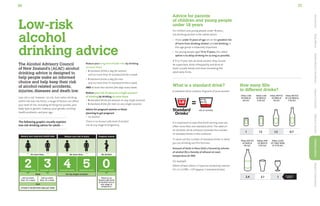
A standard drink contains 10 grams of pure alcohol.
It is important to note that drink serving sizes are
often more than one standard drink. The label on
an alcoholic drink container provides the number
of standard drinks in the container.
To work out the number of standard drinks in what
you are drinking use this formula:
Amount of drink in litres (Vol) x Percent by volume
of alcohol (%) x Density of ethanol at room
temperature (0.789)
For example:	
500ml of beer which is 5 percent alcohol by volume:
0.5 x 5 x 0.789 = 1.97 (approx 2 standard drinks)
Introduction
Body
Effects
Health
Effects
&
Conditions
Impact
of
Alcohol
Effects
of
Alcohol
Drinking
Advice
Support
&
Information
Low-risk
alcohol
drinking advice
Low risk alcohol
drinking advice
For adults
What is a standard drink?
Daily On any single occasion
There is no
known safe level
of alcohol use at
any stage of
pregnancy
Reduce your long-term health risks Reduce your risk of injury Pregnant women
2 3 4 5
No more than... No more than... No alcohol
STANDARD DRINKS STANDARD DRINKS STANDARD DRINKS STANDARD DRINKS
and no more
than 10 a week
and no more
than 15 a week
0
STANDARD DRINKS
Standard drinks measure
the amount of pure alcohol
*rtd (ready to drink)
And
at least 2 alcohol-free days per week
Reduce your long-term health risks by drinking
no more than:
• 
2 standard drinks a day for women
and no more than 10 standard drinks a week
• 
3 standard drinks a day for men
and no more than 15 standard drinks a week.
AND at least two alcohol-free days every week.
Reduce your risk of injury on a single occasion 	
of drinking by drinking no more than:
• 4 standard drinks for women on any single occasion
• 5 standard drinks for men on any single occasion.
Advice for pregnant women or those 	
planning to get pregnant	
• no alcohol.
There is no known safe level of alcohol
use at any stage of pregnancy.
The following graphic visually explains	
low-risk drinking advice for adults
How many SDs
in different drinks?
330ml CAN
OF BEER @
4% ALC
440ml CAN
OF BEER @
4.2% ALC
330ml BOTTLE
OF BEER @
5% ALC
330ml BOTTLE
OF LITE BEER @
2.5% ALC
1 1.5 1.3 0.7
750ml BOTTLE
OF BEER @
4% ALC
600ml pint
of beer @
4.5% ALC
100ml GLASS
OF TABLE WINE
@ 12.5% ALC
2.4 2.1 1 standard
drinks
29
28
For further information and resources
about alcohol, including an online version
of this resource, visit alac.org.nz
The Alcohol Drug Helpline
provides free and confidential
information and self-help
material, advice and referrals to
local drug and alcohol services.
When not to drink
It’s advisable not to drink if you:
•	 are pregnant or planning to get pregnant
•	 are on medication that interacts with alcohol
•	 have a condition that could be made worse
by drinking alcohol
•	 feel unwell, depressed, tired or cold, as alcohol
could make things worse
•	 are about to operate machinery or a vehicle 	
or do anything that is risky or requires skill.
If you are not sure or are concerned, 
check with your doctor.
Tips for low-risk drinking
It is possible to drink at a level that is less risky, while
still having fun. There are a number of things you can
do to make sure you stay within low risk levels and
don’t get to a stage where you are no longer capable
of controlling your drinking.
These include:
•	 Know what a standard drink is
•	 Keep track of how much you drink – daily and weekly
•	 Set limits for yourself and stick to them
•	 Start with non-alcoholic drinks and
alternate with alcoholic drinks
•	 Drink slowly
•	 Try drinks with a lower alcohol content
•	 Eat before or while you are drinking
•	 Never drink and drive
•	 Be a responsible host
•	 Talk to your kids about alcohol.
Background to
drinking advice
ALAC’s alcohol drinking advice was revised in 2011.
The revised advice is based on the most current and
best available scientific research and evidence using
the primary resource material, including:
•	 Australian Guidelines to Reduce Health Risks from
Drinking Alcohol (published in February 2009)
(http://www.nhmrc.gov.au/your-health/alcohol-
guidelines)[19]
•	 Alcohol and Health in Canada: A Summary of
Evidence and Guidelines for Low-risk Drinking
(completed in November 2010 and published
in November 2011) (http://www.ccsa.ca/2011%20
CCSA%20Documents/2011-Summary-of-Evidence-
and-Guidelines-for-Low-Risk%20Drinking-en.pdf).
[84]
Both these guidelines were developed by a committee
of experts, informed by research literature reviews and
studies conducted by Dr Jurgen Rehm and colleagues
[9,12,16], peer reviewed by international experts and
informed by consultation.
The 2009 Australian guidelines have the same limits
for both men and women.[19] ALAC’s drinking advice,
like the Canadian guidelines,[84] has different limits
for men and women. These gender differences reflect
the impact of alcohol on women, due to factors such
as body size and composition, ability to metabolise
alcohol, and the higher risk of developing a range of
health conditions.
ALAC’s revised drinking advice about children and
young people under 18 years also draws on the UK
Department of Health’s guidance document: Guidance
on the Consumption of Alcohol by Children and Young
People (published in December 2009).[85]
ALAC’s previous ‘upper limits for responsible drinking’
were developed in 1994 by a group consisting of
alcohol producers, health promoters and problem
intervention and treatment workers that sought
a consensus approach. The upper limits, which are
frequently referred to as ‘ALAC guidelines’, were
reviewed and replaced by revised drinking
advice because:
•	 considerably more evidence has emerged
since 1994, particularly for the effect of alcohol
on the developing brain of adolescents
•	 ALAC has a legislated responsibility to provide
up-to-date scientific evidence on the risks
of drinking alcohol
•	 a corresponding change to guidelines has
been made in comparable jurisdictions such
as Australia and Canada.
Introduction
Body
Effects
Health
Effects

Conditions
Impact
of
Alcohol
Effects
of
Alcohol
Drinking
Advice
Support

Information
Where to
find support
and further
information
For support and treatment
to reduce alcohol intake, talk
to your doctor or call the
Alcohol Drug Helpline:
0800 787 797
31
30
Alcohol dependency A physical or psychological dependence on alcohol, where the body requires more
alcohol to achieve the desired effect (e.g. of altered mood): use of alcohol interferes
with a person’s life (causing legal, work/study, relationship or social problems); a person
continues to use alcohol despite alcohol causing physical or mental problems; and, if
alcohol is not taken, withdrawal symptoms occur.
Alcohol poisoning When a lot of alcohol has been drunk in a short time, blood levels of alcohol are high
and symptoms of extreme drunkenness are present, such that breathing has slowed,
the individual is only partially conscious or is unconscious, or some other complication is
present that presents a serious danger to health. Also known as ‘Acute intoxication’.
Alcoholic hepatitis An acute injury to the liver from chronic heavy drinking which can present with
symptoms of feeling unwell, tiredness, jaundiced (yellow skin and whites of eyes),
swollen stomach and enlarged, tender liver.
Anaemia Low haemoglobin, the component of blood that carries oxygen around the body, which
causes symptoms of tiredness and weakness.
Acute respiratory distress
syndrome (ARDS)
A life-threatening condition in which the lungs fill with fluid, which occurs as a rare
complication of pneumonia, trauma and severe infections.
Blood alcohol concentration
(BAC)
Concentration of alcohol in the blood, used to determine level of drunkenness for legal
or medical purposes. The current limit for driving in New Zealand is 80 mg/dL.
Burden of disease The impact of diseases, health problems, injuries, etc measured by economic cost,
mortality, morbidity, years of life lost to disability or ill health or other indicators.
Carcinogen A substance that has been shown to cause cancer.
Cirrhosis Disease of the liver where cells are permanently damaged and replaced by scar tissue, so
the liver can no longer function (to detoxify the body, make vital proteins, store vitamins
and sugars, and make chemicals necessary for digestion).
Congeners Compounds added to alcohol that adds to the taste, smell or colour of the drink.
Coronary artery disease A condition where the coronary arteries, which supply blood to the heart, become
narrowed or blocked because of the build-up of fatty deposits inside the walls of the
arteries (atherosclerosis). This leads to angina and heart attacks.
Delirium tremens The most severe alcohol withdrawal syndrome, which by definition includes the
symptom of delirium (altered and confused state of mind) and usually also sweating,
tremors, anxiety and sometimes fits.
Dilated cardiomyopathy Chronic disease of the heart muscle that leads to heart failure, where the heart can no
longer pump blood around the body effectively.
Diuretic An agent that causes fluid to be lost from the body through the kidneys.
Fatty liver Disorder of the liver where fat builds up in the liver cells, which is reversible and usually
causes no symptoms but may progress to other forms of alcoholic liver disease.
Glossary Fetal alcohol spectrum
disorder (FASD)
Disorder caused by alcohol passing from a pregnant woman to her unborn child and
resulting in a range of possible effects on the child including premature birth, restricted
growth, birth defects, brain damage, developmental delay and social, emotional,
behavioural and mental deficits.
Gastritis Inflammation (irritation and swelling) of the lining of the stomach, leading to symptoms
of stomach pain, nausea, loss of appetite and indigestion.
Heartburn Burning pain in the chest caused by acid from the stomach entering the food pipe. Also
known as reflux (gastro-oesophageal reflux).
Hypoglycaemia Low blood sugar.
Korsakoff’s syndrome,
psychosis or dementia
A chronic condition of memory loss where loss of old memories occurs and difficulties in
laying down new memories may be profound.
Mallory Weiss tear A tear in the join between the stomach and the food pipe due to prolonged or violent
retching or vomiting.
Oesophagus Food pipe, which takes food and fluid from the back of the mouth to the stomach.
Osteoporosis Thinning of the bones which makes them more likely to break.
Pancreatitis Inflammation of the pancreas, an organ that helps in digestion, which can be an acute,
sudden or chronic, longstanding condition.
Pneumonia Inflammation of the lungs usually caused by infection with bacteria or a virus, which
causes shortness of breath, cough and fever.
Psychosis A mental illness defined by changes in personality, a distorted sense of reality and
delusions.
Respiratory depression Slowing of the rate and/or depth of breathing to a point where breathing is insufficient
to supply oxygen around the body.
Sedative A type of drug that calms, and reduces excitability and anxiety.
Standard drink Different types of alcoholic drinks contain different concentrations of alcohol. The
standard drink measures the amount of pure alcohol in a drink so the amount of alcohol
across different volumes and concentrations of alcoholic drink can be compared. One
standard drink equals 10 grams (g) of pure alcohol. For example, a 330ml can of 4 percent
alcohol beer, 30ml of straight spirits and 100ml glass of table wine are all approximately
10g of alcohol and one standard drink.
Stroke Sudden damage to brain cells due to the interruption of the blood supply to
the brain, causing loss of function, such as paralysis or loss of speech. Also known
as cerebrovascular accident (CVA).
Teratogen A substance that can damage the fetus while it is developing inside a pregnant woman.
Alcohol is a teratogen or is teratogenic.
Wernicke’s encephalopathy An acute, severe, life-threatening disorder that usually presents with symptoms
of abnormal or paralysed eye movements, difficulty walking and confusion caused
by thiamine deficiency (secondary to chronic heavy alcohol use).
33
32
1.	 Centers for Disease Control and Prevention.
(2010). Alcohol and public health:
Frequently asked questions. 2010. From
http://www.cdc.gov/alcohol/faqs.htm.
2.	 Alcohol. (2008). In C. Kuhn, S. Swartzwelder 
W. Wilson (Eds.), Buzzed: The straight facts about
the most used and abused drugs from alcohol to
ecstasy (3rd ed., pp. 33–61). New York: WW Norton.
3.	 Roehrs, T.,  Roth, T. (2001). Sleep, sleepiness,
and alcohol use. Alcohol Research  Health, 25(2),
101–109.
4.	 Brust, J. C. M. (2005). Alcoholism. In L. P. Rowland
(Ed.), Merritt’s neurology (11th ed.). Philadelphia:
Lippincott Williams  Wilkins.
5.	 Vonghia, L., Leggio, L., Ferrulli, A., Bertini, M.,
Gasbarrini, G., Addolorato, G., et al. (2008). Acute
alcohol intoxication. European Journal of Internal
Medicine, 19(8), 561–567.
6.	 Lohr, R. H. (2005). Acute alcohol intoxication and
alcohol withdrawal. In R. M. Wachter, L. Goldman
 H. Hollander (Eds.), Hospital medicine (2nd ed.).
Philadelphia: Lippincott Williams  Wilkins.
7.	 Zakhari, S. (2006). Overview: How is alcohol
metabolized by the body? Alcohol Research 
Health, 29(4), 245–254.
8.	 Schuckit, M. A. (2005). Alcohol-related disorders.
In B. J. Sadock  V. A. Sadock (Eds.), Kaplan and
Sadock’s comprehensive textbook of psychiatry (7th
ed.). Philadephia: Lippincott Williams  Wilkins.
9.	 Rehm, J., Baliunas, D., Borges, G. L., Graham, K.,
Irving, H., Kehoe, T., et al. (2010). The relation
between different dimensions of alcohol
consumption and burden of disease: An overview.
Addiction, 105(5), 817–843.
10.	 Baan, R., Straif, K., Grosse, Y., Secretan, B.,
Ghissassi, F. E., Bouvard, V., et al. (2007).
Carcinogenicity of alcoholic beverages. The Lancet
Oncology, 8(4), 292–293.
11.	 Connor, J., Broad, J., Jackson, R., Vander Hoorn, S.,
 Rehm, J. (2005). The burden of death, disease
and disability due to alcohol in New Zealand.
New Zealand Medical Journal, 118(1213).
12.	 Rehm, J., Mathers, C., Popova, S.,
Thavorncharoensap, M., Teerawattananon,
Y.,  Patra, J. (2009). Global burden of disease and
injury and economic cost attributable to alcohol
use and alcohol-use disorders.
The Lancet, 373(9682), 2223–2233.
13.	 Fingerhood, M. I. (2007). Alcoholism and
associated problems. In N. H. Fiebach, L. R.
Barker, J. R. Burton  P. D. Zieve (Eds.), Principles
of ambulatory medicine (7th ed.). Philadelphia:
Lippincott Williams  Wilkins.
14.	 Molina, P. E., Happel, K. I., Zhang, P., Kolls, J. K.,
 Nelson, S. (2010). Focus on: Alcohol and the
immune system. Alcohol Research  Health, 33
(1–2), 97–108.
15.	 Desai, N. G., Nawamongkolwattana, B.,
Ranaweera, S., Shrestha, D. M.,  Sobhan, M.
A. (2003). Prevention of harm from alcohol use:
Get high on life without alcohol. New Delhi:
Regional Office for South-East Asia, World Health
Organization.
16.	 Rehm, J. (2003). The relationship of average
volume of alcohol consumption and patterns
of drinking to burden of disease: An overview.
Addiction, 98(9), 1209–1228.
17.	 Humphrey, G., Casswell, S.,  Han, D. Y. (2003).
Alcohol and injury among attendees at a New
Zealand emergency department. New Zealand
Medical Journal, 116(1168).
18.	 Lee, K. H.,  Snape, L. (2008). Role of alcohol in
maxillofacial fractures. New Zealand Medical
Journal, 121(1271).
19.	 National Health and Medical Research Council.
(2009). Australian guidelines to reduce health risks
from drinking alcohol. Canberra: NHMRC.
20.	 Dawson-Hughes, B. (2006). Osteoporosis. In M. E.
Shils (Ed.), Modern nutrition in health and disease
(10th ed.). Philadelphia: Lippincott Williams 
Wilkins.
21.	 Maria, N. D., Colantoni, A.,  Van Thiel, D. H. (2001).
The liver and endocrine function. In K. L. Becker
(Ed.), Principles and practice of endocrinology and
metabolism (3rd ed.). Philadelphia: Lippincott
Williams  Wilkins.
22.	 Derk, C. T.,  De Horatius, R. J. (2005).
Osteonecrosis. In W. J. Koopman  L. W. Moreland
(Eds.), Arthritis and allied conditions: A textbook of
rheumatology (15th ed.). Philadelphia: Lippincott
Williams  Wilkins.
23.	 Lieber, C. S. (2006). Nutrition in liver disorders
and the role of alcohol. In M. E. Shils (Ed.),
Modern nutrition in health and disease (10th ed.).
Philadelphia: Lippincott Williams  Wilkins.
24.	 Oscar-Berman, M.,  Marinkovic, K. (2003).
Alcoholism and the brain: An overview. Alcohol
Research  Health, 27(2), 125–133.
25.	 Martin, P. R., Singleton, C. K.,  Hiller-Sturmhöfel,
S. (2003). The role of thiamine deficiency in
alcoholic brain disease. Alcohol Research 
Health, 27(2), 134–142.
26.	 Charness, M. E. (2010). Overview of the chronic
neurologic complications of alcohol. Waltham,
MA: Up-to-date. From http://www.uptodate.com/
contents/overview-of-the-chronic-neurologic-
complications-of-alcohol.
27.	 Room, R., Babor, T.,  Rehm, J. (2005). Alcohol and
public health. The Lancet, 365(9458), 519–530.
28.	 Kopans, D. B. (2007). Epidemiology, etiology,
risk factors, and survival from breast cancer. In
Breast imaging (3rd ed.). Philadelphia: Lippincott
Williams  Wilkins.
29.	 Secretan, B., Straif, K., Baan, R., Grosse, Y.,
Ghissassi, F. E., Bouvard, V., et al. (2009). A review
of human carcinogens – Part E: Tobacco, areca nut,
alcohol, coal smoke, and salted fish. The Lancet
Oncology, 10(11), 1033–1034.
30.	 Junk, A. K.,  Morris, D. A. (2007). Cataracts and
systemic disease. In W. Tasman  E. A. Jaeger
(Eds.), Duane’s clinical ophthalmology (Vol. 5).
Philadelphia: Lippincott Williams  Wilkins.
31.	 Ronksley, P. E., Brien, S. E., Turner, B. J., Mukamal,
K. J.,  Ghali, W. A. (2011). Association of alcohol
consumption with selected cardiovascular disease
outcomes: A systematic review and meta-analysis.
BMJ, 342, d671.
32.	 Bhatt, D. L., Francis, G. S.,  Tadros, T. M. (2007).
Alcohol and the heart. In J. V. Nixon, J. S. Alpert,
G. P. Aurigemma, A. F. Bolger  B. R. Chaitman
(Eds.), The AHA clinical cardiac consult (2nd ed.).
Philadelphia: Lippincott Williams  Wilkins.
33.	 Mukamal, K. J.,  Rimm, E. B. (2001). Alcohol’s
effects on the risk for coronary heart disease.
Alcohol Research  Health, 25(4), 255–261.
34.	 Kloner, R. A.,  Rezkalla, S. H. (2007). Substance
abuse and the heart. In Textbook of cardiovascular
medicine (3rd ed.). Philadelphia: Lippincott
Williams  Wilkins.
35.	 Noth, R. H.,  Swislocki, A. L. M. (2001). Endocrine-
metabolic effects of alcohol. In K. L. Becker (Ed.),
Principles and practice of endocrinology and
metabolism (3rd ed.). Philadelphia: Lippincott
Williams  Wilkins.
36.	 Mukamal, K. J. (2010). Overview of the risks
and benefits of alcohol consumption. Waltham,
MA: Up-to-date. From http://www.uptodate.com
/contents/overview-of-the-risks-and-benefits-
of-alcohol-consumption?source=search_
resultselectedTitle=1%7E150.
References
35
34
37.	 Institute of Alcohol Studies. (2008). Women and
alcohol. London: Institute of Alcohol Studies.
38.	 Bujanda, L. (2000). The effects of alcohol
consumption upon the gastrointestinal tract.
American Journal of Gastroenterology, 95(12),
3374–3382.
39.	 Libutti, S. K., Tepper, J. E.,  Saltz, L. B. (2005).
Cancers of the gastrointestinal tract. Section 8.
Cancer of the colon. In V. T. Devita, S. Hellman 
S. A. Rosenberg (Eds.), Cancer, principles  practice
of oncology (7th ed.). Philadelphia: Lippincott
Williams  Wilkins.
40.	 Dasarathy, S.,  McCullough, A. J. (2007). Alcoholic
liver disease. In E. R. Schiff, M. F. Sorrell  W. C.
Maddrey (Eds.), Schiff’s diseases of the liver (10th
ed.). Philadelphia: Lippincott Williams  Wilkins.
41.	 Cheng, S. H.,  Huang, A. T. (2008). Liver and
hepatobiliary tract. In E. C. Halperin, C. A. Perez
 L. W. Brady (Eds.), Perez and Brady’s principles
and practice of radiation oncology (5th ed.).
Philadelphia: Lippincott Williams  Wilkins.
42.	 Kershaw, C. D.,  Guidot, D. M. (2008). Alcoholic
lung disease. Alcohol Research  Health, 31(1),
66–75.
43.	 Institute of Alcohol Studies. (2007). Alcohol
and mental health. London: Institute of Alcohol
Studies.
44.	 Sher, L. (2006). Alcohol consumption and suicide.
QJM, 99(1), 57–61.
45.	 Aminoff, M. J.,  Parent, J. M. (2008). Comorbidity
in adults. In J. Engel  T. A. Pedley (Eds.), Epilepsy:
A comprehensive textbook (2nd ed.). Philadelphia:
Lippincott Williams  Wilkins.
46.	 Su, M. (2005). Alcohol withdrawal. In A. B. Wolfson,
G. W. Hendey, P. L. Henry, C. H. Linden, C. L. Rosen
 J. Schaider (Eds.), Harwood-Nuss’ clinical practice
of emergency medicine (4th ed.). Philadelphia:
Lippincott Williams  Wilkins.
47.	 Spitz, M. R., Sturgis, E. M.,  Wei, Q. (2004).
Molecular epidemiology and genetic
predisposition for head and neck cancer. In L. B.
Harrison, R. B. Sessions  W. K. Hong (Eds.), Head
and neck cancer: A multidisciplinary approach (2nd
ed.). Philadelphia: Lippincott Williams  Wilkins.
48.	 National Digestive Diseases Information
Clearinghouse. (2008). Pancreatitis. Bethesda, MD:
National Institutes of Health, U.S. Dept of Health
and Human Services. From http://digestive.niddk.
nih.gov/ddiseases/pubs/pancreatitis/index.htm.
49.	 Whang, E. E. (2006). Acute pancreatitis. In M.
W. Mulholland, K. D. Lillemoe, G. M. Doherty,
R. V. Maier  G. R. Upchurch (Eds.), Greenfield’s
surgery: Scientific principles and practice (4th ed.).
Philadelphia: Lippincott Williams  Wilkins.
50.	 Flint, R., Windsor, J.,  Bonham, M. (2004). Trends
in the management of severe acute pancreatitis:
Interventions and outcome. ANZ Journal of
Surgery, 74(5), 335–342.
51.	 Connor, J., Gray, A.,  Kypri, K. (2010). Drinking
history, current drinking and problematic sexual
experiences among university students. Australian
and New Zealand Journal of Public Health, 34(5),
487–494.
52.	 Cashell-Smith, M., Connor, J.,  Kypri, K. (2007).
Harmful effects of alcohol on sexual behaviours
in a New Zealand university community. Drug and
Alcohol Review, 26(6), 645–651.
53.	 Cook, R. L.,  Clark, D. B. (2005). Is there an
association between alcohol consumption and
sexually transmitted diseases? A systematic
review. Sexually Transmitted Diseases, 32(3),
156–164.
54.	 Mendiola, J., Torres-Cantero, A. M.,  Agarwal, A.
(2009). Lifestyle factors and male infertility: An
evidence-based review. Archives of Medical Science,
5(1A), S3–S12.
55.	 Abel, E. L. (1997). Maternal alcohol consumption
and spontaneous abortion. Alcohol and
Alcoholism, 32(3), 211–219.
56.	 Henriksen, T. B., Hjollund, N. H., Jensen, T. K.,
Bonde, J. P., Andersson, A.-M., Kolstad, H., et
al. (2004). Alcohol consumption at the time of
conception and spontaneous abortion. American
Journal of Epidemiology, 160(7), 661–667.
57.	 Ministry of Health. (2010). Alcohol and pregnancy:
A practical guide for health professionals.
Wellington: Ministry of Health.
58.	 de Melo, A. N.,  Niedermeyer, E. (2005).
The EEG in infantile brain damage, cerebral
palsy, and minor cerebral dysfunctions of
childhood. In E. Niedermeyer  F. L. da Silva
(Eds.), Electroencephalography: Basic principles,
clinical applications, and related fields (5th ed.).
Philadelphia: Lippincott Williams  Wilkins.
59.	 Crawford, G. H., Pelle, M. T.,  James, W. D. (2004).
Rosacea: I. Etiology, pathogenesis, and subtype
classification. Journal of the American Academy of
Dermatology, 51(3), 342–344.
60.	 Marvin, M. R.,  Emond, J. C. (2006). Cirrhosis
and portal hypertension. In M. W. Mulholland,
K. D. Lillemoe, G. M. Doherty, R. V. Maier  G. R.
Upchurch (Eds.), Greenfield’s surgery: Scientific
principles and practice (4th ed.). Philadelphia:
Lippincott Williams  Wilkins.
61.	 Yeomans, M. R. (2004). Effects of alcohol on food
and energy intake in human subjects: Evidence for
passive and active over-consumption of energy.
British Journal of Nutrition, 92(Suppl 1), S31–S34.
62.	 Wannamethee, S. G.,  Shaper, A. G. (2003).
Alcohol, body weight, and weight gain in middle-
aged men. American Journal of Clinical Nutrition,
77(5), 1312–1317.
63.	 Breslow, R. A.,  Smothers, B. A. (2005). Drinking
patterns and body mass index in never smokers:
National Health Interview Survey, 1997–2001.
American Journal of Epidemiology, 161(4), 368–376.
64.	 Arif, A. A.,  Rohrer, J. E. (2005). Effect of alcohol
consumption on obesity among non-smokers.
Annals of Epidemiology, 15(8), 642–643.
65.	 Wang, L., Lee, I. M., Manson, J. E., Buring, J. E., 
Sesso, H. D. (2010). Alcohol consumption, weight
gain, and risk of becoming overweight in middle-
aged and older women. Archives of Internal
Medicine, 170(5), 453–461.
66.	 Suter, P. M. (2005). Is alcohol consumption a risk
factor for weight gain and obesity? Critical Reviews
in Clinical Laboratory Sciences, 42(3), 197–227.
67.	 Gutiérrez-Fisac, J. L., Rodríguez-Artalejo, F.,
Rodríguez-Blas, C.,  del Rey-Calero, J. (1995).
Alcohol consumption and obesity in the adult
population of Spain. Journal of Epidemiology and
Community Health, 49(1), 108–109.
68.	 NZ Nutrition Foundation. (2011). Energy. From
http://www.nutritionfoundation.org.nz/nutrition-
facts/energy. Auckland: NZ Nutrition Foundation.
69.	 Posner, M. C., Forastiere, A. A.,  Minsky, B. D.
(2005). Cancers of the gastrointestinal tract.
Section 1. Cancer of the oesophagus. In V. T.
Devita, S. Hellman  S. A. Rosenberg (Eds.),
Cancer, principles  practice of oncology (7th ed.).
Philadelphia: Lippincott Williams  Wilkins.
70.	 International Agency for Research on Cancer.
(2010). Alcohol consumption and ethyl carbamate
(Vol. 96). Lyon: IARC, World Health Organization.
71.	 Elta, G. H. (2003). Approach to the patient with
gross gastrointestinal bleeding. In T. Yamada, D.
H. Alpers, N. Kaplowitz, L. Laine, C. Owyang  D.
W. Powell (Eds.), Textbook of gastroenterology (4th
ed.). Philadelphia: Lippincott Williams  Wilkins.
36
72.	 Swift, R.,  Davidson, D. (1998). Alcohol hangover:
Mechanisms and mediators. Alcohol Health 
Research World, 22(1), 54–60.
73.	 Beebe, C. (2004). Diet therapy in Type 1 diabetes
mellitus. In D. Le Roith, S. I. Taylor  J. M. Olefsky
(Eds.), Diabetes mellitus: A fundamental and
clinical text. (3rd ed). Philadelphia: Lippincott
Williams  Wilkins.
74.	 Chalmers, K. (2005). Medical nutrition therapy. In
C. R. Kahn, G. Weir, G. King, A. Jacobson, R. Smith 
A. Moses (Eds.), Joslin’s diabetes mellitus (14th ed.).
Philadelphia: Lippincott Williams  Wilkins.
75.	 Ashton, C. H. (2001). Pharmacology and effects
of cannabis: A brief review. British Journal of
Psychiatry, 178, 101–106.
76.	 Girling, M., Huakau, J., Casswell, S.,  Conway, K.
(2006). Families and heavy drinking: Impacts on
children’s wellbeing: Systematic review. Wellington:
Families Commission.
77.	 Leonard, K. E. (2005). Alcohol and intimate partner
violence: When can we say that heavy drinking is
a contributing cause of violence? Addiction, 100(4),
422–425.
78.	 Babor, T. F., Caetano, R., Casswell, S., Edwards, G.,
Giesbrecht, N., Graham, K. M., et al. (2010). Alcohol:
No ordinary commodity: Research and public policy
(2nd ed.). Oxford: Oxford University Press.
79.	 Ministry of Social Development. (2010). Learning
from tragedy: Homicide within families in New
Zealand 2002–2006. Wellington: Ministry of Social
Development.
80.	 Ministry of Health. (2009). Alcohol use in New
Zealand: Key results of the 2007/08 New Zealand
Alcohol and Drug Use Survey. Wellington: Ministry
of Health.
81.	 Connor, J., You, R.,  Casswell, S. (2009). Alcohol-
related harm to others: A survey of physical and
sexual assault in New Zealand. New Zealand
Medical Journal, 122(1303).
82.	 Law Commission. (2010). Alcohol in our lives:
Curbing the harm: A report on the review of the
regulatory framework for the sale and supply of
liquor. Wellington: Law Commission.
83.	 Institute of Alcohol Studies. (2010). Alcohol and the
elderly. London: Institute of Alcohol Studies.
84.	 Butt, P., Gliksman, L., Beirness, D., Paradis, C., Cesa,
F.,  Stockwell, T. (2011). Alcohol and health in
Canada: A summary of evidence and guidelines
for low-risk drinking. Ottawa: Canadian Centre
on Substance Abuse. From http://www.ccsa.
ca/2011%20CCSA%20Documents/2011-Summary-
of-Evidence-and-Guidelines-for-Low-Risk%20
Drinking-en.pdf.
85.	 Donaldson, L. (2009). Guidance on the
consumption of alcohol by children and young
people. London: Department of Health.
AL802 | June 2012
Printed with mineral-oil-free, soy-based vegetable inks on paper from well managed forests
that comply with environmentally sustainable practice and principles. Please recycle.
Wellington
ALAC National Office
PO Box 5023, Wellington 6145
phone 04 917 0060
fax 04 473 0890
email central@alac.org.nz
Auckland
ALAC Northern Office
PO Box 11791, Ellerslie, Auckland 1542
phone 09 916 0330
fax 09 916 0339
email northern@alac.org.nz
Christchurch
c/o ALAC National Office
PO Box 5023, Wellington 6145
phone 04 917 0060
fax 04 473 0890
email central@alac.org.nz
Freephone 0508 258 258
Visit alac.org.nz

HealthEffects.pdf

  • 1.
    Alcohol – the Body &Health Effects A brief overview
  • 2.
    3 Acknowledgements The Alcohol AdvisoryCouncil of New Zealand (ALAC) would like to thank Dr Fiona Imlach Gunasekara, Public Health Medicine Specialist, for preparing the summaries of the health and body effects of alcohol in this resource. ISBN 978–1–927138–41–0 (print) 978–1–927138–42–7 (online) 5 Introduction 5 What is alcohol? 6 Body effects of alcohol 9 Overall body effects 9 Blood and immune system 9 Bones and muscles 9 Brain and nervous system 10 Breasts – women 10 Eyes 10 Heart and blood pressure 11 Intestines 11 Kidneys and fluid balance 11 Liver 12 Lungs 12 Mental health 12 Mouth and throat 13 Pancreas and digestion of sugar 13 Sexual health – men 13 Sexual health – women 14 Skin and fat 14 Stomach and food pipe (oesophagus) 15 Health effects of acute alcohol use 15 Alcohol poisoning 17 Hangover 18 Health conditions related to chronic alcohol use 20 Cancers 20 Cardiovascular disease 21 Existing health conditions – impact of alcohol 21 Diabetes mellitus 21 Mental health conditions 22 Alcohol and drug interactions 23 Effects of alcohol on other people 23 The unborn child 23 Children and families 24 Effects of alcohol on population groups 24 Women 24 Men 25 Young people 25 Older people 26 Low-risk alcohol drinking advice 26 How much? 27 Advice for parents of children and young people under 18 years 27 What is a standard drink? 28 When not to drink 28 Tips for low-risk drinking 28 Background to drinking advice 29 Where to find support and further information 30 Glossary 32 References TABLES 7 Table 1: Symptoms of drunkenness at different levels of blood alcohol concentration (BAC) 16 Table 2: Potential symptoms and complications of acute intoxication or alcohol poisoning, by body part affected 19 Table 3: Potential conditions and complications of chronic and/or heavy episodic alcohol use, by body part affected Contents Alcohol Advisory Council of New Zealand Kaunihera Whakatupato Waipiro o Aotearoa PO Box 5023 Wellington New Zealand 6145 alac.org.nz | waipiro.org.nz | June 2012
  • 3.
    5 This resource providesa brief overview of the health and body effects of alcohol. It is a series of short summaries based on available evidence rather than a comprehensive literature review. Areas covered include the effects of alcohol on body parts, the health effects of acute alcohol use, the health conditions related to chronic alcohol use, and the effects of alcohol on other people and populations. Low-risk drinking advice is also outlined in this resource along with information about where to find support and further information. What is alcohol? Alcohol (ethanol or ethyl alcohol) is the ingredient found in beer, wine and spirits which causes drunkenness. Alcohol is formed when yeast ferments (breaks down without oxygen) the sugars in different foods; for example wine is made from the sugar in grapes, beer from the sugar in malted barley (a type of grain), cider from the sugar in apples, and vodka from the sugar in potatoes, beets or other plants.[1] Introduction Introduction Body Effects Health Effects & Conditions Impact of Alcohol Effects of Alcohol Drinking Advice Support & Information
  • 4.
    7 6 Introduction Body Effects Health Effects & Conditions Impact of Alcohol Effects of Alcohol Drinking Advice Support & Information Alcohol is classedas a ‘sedative hypnotic’drug,[2] which means it acts to depress the central nervous system at high doses. At lower doses, alcohol can act as a stimulant,[3] inducing feelings of euphoria and talkativeness, but drinking too much alcohol at one session can lead to drowsiness, respiratory depression (where breathing becomes slow, shallow or stops entirely), coma or even death.[4–6] As well as its acute and potentially lethal sedative effect at high doses, alcohol has effects on every organ in the body, and these effects depend on the blood alcohol concentration (BAC) over time.[7] After a drink is swallowed, the alcohol is rapidly absorbed into the blood (20 percent through the stomach and 80 percent through the small intestine), with effects felt within 5 to 10 minutes after drinking.[6] It usually peaks in the blood after 30 to 90 minutes,[6] and thus is carried through all the organs of the body. Most (90 percent) of the metabolism, or breaking down, of alcohol from a toxic substance to water and carbon dioxide is performed by the liver,[6] with the rest excreted through the lungs (allowing alcohol breath tests), through the kidneys (into urine) and in sweat.[8] The liver can break down only a certain amount of alcohol per hour, which for an average person is around one standard drink (which raises the BAC about 15 to 20 mg/dL[8] – the current limit for driving in New Zealand is 80 mg/dL). The BAC rises, and the feeling of drunkenness occurs, when alcohol is drunk faster than the liver can break it down. Table 1 shows the relationship between BAC and symptoms of drunkenness – the higher the BAC, the greater the effects on the body. However, BAC does not correlate exactly with symptoms of drunkenness and different people have different symptoms even after drinking the same amount of alcohol. The BAC level, and every individual’s reaction to alcohol, is influenced by: [1,2,7] • the ability of the liver to metabolise alcohol (which varies due to genetic differences in the liver enzymes that break down alcohol)[7] • the presence or absence of food in the stomach (food dilutes the alcohol and dramatically slows its absorption into the bloodstream by preventing it from passing quickly into the small intestine) • the concentration of alcohol in the beverage (highly concentrated beverages such as spirits are more quickly absorbed) • how quickly alcohol is drunk • body type (heavier and more muscular people have more fat and muscle to absorb the alcohol)[2] • age, sex, ethnicity (e.g. women have a higher BAC after drinking the same amount of alcohol than men due to differences in metabolism and absorption – since men have on average more fluid in their body to distribute alcohol around than women do; some ethnic groups have different levels of a liver enzyme responsible for the breakdown of alcohol) • how frequently a person drinks alcohol (someone who drinks often can tolerate the sedating effects of alcohol more than someone who does not regularly drink).[6] Body effects of alcohol Table 1: Symptoms of drunkenness at different levels of blood alcohol concentration (BAC) BAC Symptoms <50 mg/dL Some impairment in motor coordination and thinking ability Talkativeness Relaxation 50-150 mg/dL Altered mood (increased well-being or unhappiness) Friendliness, shyness or argumentativeness Impaired concentration and judgement Sexual disinhibition 150-250 mg/dL Slurred speech Unsteady walking Nausea Double vision Increased heart rate Drowsiness Mood, personality and behaviour changes which may be sudden, angry and antisocial 300 mg/dL Unresponsive/extremely drowsy Speech incoherent/confused Memory loss Vomiting Heavy breathing >400 mg/dL Breathing slowed, shallow or stopped Coma Death Adapted from: Table 163.1 in Brust, J. C. M. (2005). Alcoholism. In L. P. Rowland (Ed.), Merritt’s neurology (11th ed.). Philadelphia: Lippincott Williams & Wilkins.[4] and Table 1 in Vonghia, L., Leggio, L., Ferrulli, A., Bertini, M., Gasbarrini, G., Addolorato, G., et al. (2008). Acute alcohol intoxication. European Journal of Internal Medicine, 19(8), 561–567.[5]
  • 5.
    9 Introduction Body Effects Health Effects & Conditions Impact of Alcohol Effects of Alcohol Drinking Advice Support & Information Overall body effects >Alcohol affects all parts of the body including: • blood and immune system • bones and muscles • brain and nervous system • breasts (in women) • eyes • heart and blood pressure • intestines • kidneys and fluid balance • liver • lungs • mental health • mouth and throat • pancreas and digestion of sugar • sexual and reproductive system – men • sexual and reproductive system – women • skin and fat • stomach and food pipe (oesophagus). As well as potentially affecting the physical and mental health of individuals in many ways, chronic and heavy alcohol use can increase the risk of death[9] either directly, for example through acute alcohol poisoning or because alcohol causes a fatal disease such as cancer,[10] or indirectly, such as alcohol being a factor in violent death or suicide. Alcohol contributes to a high burden of disease in society in terms of years that people spend with disability or in poor health because of alcohol-related illnesses or injuries.[11,12] Unintentional injuries from alcohol use often result from falls, burns, motor vehicle accidents, assaults and drowning.[9] Blood and immune system Long-term effects of alcohol use Chronic heavy alcohol use can cause abnormalities in the blood, leading to anaemia (low haemoglobin, the component of blood that carries oxygen around the body) and low platelets (platelets help prevent bleeding).[13] Chronic heavy alcohol use also suppresses the immune system (such as affecting the white blood mouth and throat Being drunk can cause slurred speech. stomach and food pipe Too much alcohol can have short- and long-term effects on the oesophagus (food pipe) and the stomach. intestines Both the small intestine and large intestine can be affected by long-term alcohol use, including cancer risk. liver Long-term alcohol use can cause damage to the liver in a variety of ways. pancreas Alcohol use,particularly when heavy,can cause acute or chronic pancreatitis (inflammation and damage to the pancreas). kidneys Alcohol has an effect on the kidneys’functions. heart Alcohol use at low levels may be beneficial for the heart in some people but is harmful for everyone at high levels. blood Alcohol is absorbed into the bloodstream and can have some long-term effects. mental health Alcohol can be used to relax but it is also addictive and can lead to dependency. sexual health Alcohol use can affect judgment and increases the chance of unwanted sexual experiences.It can also affect sexual performance in men. breasts (in women) Long-term alcohol use increases the risk of breast cancer. bones and muscles Alcohol immediately affects coordination and increases the likelihood of injury,while ongoing heavy alcohol use can have other health effects. eyes Being drunk can cause blurred vision. skin Alcohol use can have direct and indirect effects on the skin. Alcohol affects all parts of the body including: Summary of main effects Body effects of alcohol cells that fight infections), making it more difficult for the body to fight off both viral and bacterial infections. People who drink heavily over a long time are more likely to suffer from infections after surgery, burns, trauma, hepatitis C infection, HIV/AIDS, meningitis, tuberculosis and pneumonia (acute inflammation of the lung, usually due to infection).[4,14,15] Bones and muscles Immediate effects of alcohol use Alcohol use causes many different types of injuries, including injuries from road traffic accidents, assaults and falls.[9] This is usually because high levels of blood alcohol impair the brain’s thought processes and the coordination of muscles, causing clumsiness and difficulty walking.[16] Common injuries seen at the emergency department include cuts, bruises, sprains and broken bones.[17,18] The risk of injury in the six hours after drinking doubles with four standard drinks and increases rapidly the more alcohol is drunk on a single occasion.[19] Long-term effects of alcohol use Moderate alcohol use may protect against osteoporosis (thinning of the bones, which makes the bones more likely to break).[20] However, chronic heavy alcohol use interferes with the absorption of calcium and bone formation and can actually lead to osteoporosis.[20,21] Chronic heavy use is also associated with a painful condition where bone tissue dies (osteonecrosis),[22] gout (a type of arthritis or inflammation of the joints, often affecting the joint of the big toe),[13] and muscle wasting and weakness.[4,23] Brain and nervous system Immediate effects of alcohol use Being drunk impairs judgment, inhibitions and concentration, and in increasing amounts leads to drowsiness and coma.[4] The loss of memory for a period of drunkenness (alcoholic blackout) can occur in occasional as well as regular heavy drinkers, and is due to alcohol interfering with the laying down of memories.[4,8] brain and nervous system Alcohol impairs judgement and concentration.Long-term alcohol use can damage the brain and nerves. lungs Being drunk and chronic heavy alcohol use can increase the risk of infections of the lungs.
  • 6.
    11 10 Long-term effects ofalcohol use Chronic heavy alcohol use can damage the brain and nerves in a variety of ways. Some damage to the brain, from mild to severe, occurs in around half of chronic heavy alcohol drinkers.[24] This may be a result of thiamine (vitamin B1) deficiency (secondary to alcohol use, either because of poor diet or because alcohol reduces the absorption of thiamine from the gut and interferes with how thiamine is used in the body).[25] Thiamine deficiency can cause an acute, severe, life- threatening disorder called Wernicke’s encephalopathy, which usually presents with symptoms of abnormal or paralysed eye movements, difficulty walking and confusion. It also causes a chronic condition of memory loss (variously called Korsakoff’s syndrome, psychosis or dementia), where loss of old memories occurs and difficulties in laying down new memories may be profound.[4,24,25] Both of these disorders are ultimately fatal without treatment with thiamine.[4] Chronic heavy alcohol use can also damage the part of the brain responsible for balance and coordination (the cerebellum), leading to instability and problems with walking.[4,25] It can also damage peripheral nerves in the body, leading to pain, weakness, numbness and the inability to sense touch.[4,26] In rare cases it can damage specific centres in the brain, leading to loss of mental function, inability to walk and death[8] and can lead to the development of epilepsy (chronic fits)[9] and sleep disturbances. Although individuals suffering from insomnia sometimes use alcohol to treat the insomnia, tolerance to the sedating effect of alcohol is likely to occur, increasing the risk of excessive use.[3] Also, if more than one or two drinks are taken in the evening, sleep can be disrupted, increasing the chances of a person waking in the night and finding it hard to fall back asleep.[8] The relationship between alcohol use and stroke, where there is a sudden paralysis, loss of sensation or inability to talk because the blood supply to the brain is interrupted, is complex. Alcohol increases the risk of hemorrhagic stroke, where the stroke is caused by bleeding in the brain. However, low to moderate alcohol use (one to two drinks a day) reduces the risk of ischaemic stroke, which is caused by blockage of the blood vessels in the brain, but higher levels of alcohol use increase the risk of ischaemic stroke.[9] Breasts – Women Long-term effects of alcohol use Long-term alcohol use increases the risk of breast cancer, with higher use resulting in a higher risk of cancer.[9,27,28] A significantly elevated risk is seen from drinking even one or two drinks of alcohol a day. [10] The risk increases on average by about 10 percent for every one standard drink of alcohol per day.[29] Eyes Immediate effects of alcohol use Being drunk can cause blurred or double vision.[4] Long-term effects of alcohol use Chronic heavy alcohol use, when coupled with a diet low in vitamin B1 and B12, may lead to decreased vision.[4,30] Heart* and blood pressure Long-term effects of alcohol use The evidence for the effect of alcohol on the heart is mixed. There is an opinion that light to moderate alcohol use (up to one standard drink per day for women and up to two standard drinks per day for men) can, in older age groups, reduce the risk of developing and dying from coronary artery disease (narrowing and blockage of the arteries supplying blood to the heart resulting from the build-up of fatty deposits inside the walls of the arteries (atherosclerosis), which can cause angina and heart attacks). This appears to be because small quantities of alcohol alter the lipids and clotting factors in the blood to make them protective against heart disease. [9,31,32,33] However, heavy drinking (both chronic and a pattern of heavy drinking sessions) increases the risk of coronary artery disease.[9,34] Heavy drinking (chronic and/or at a single session) is also associated with sudden death from heart failure, with irregular heartbeats and with chronic disease of the heart muscle (dilated cardiomyopathy). Dilated cardiomyopathy leads to heart failure, where the heart can no longer pump blood around the body effectively.[9,27,32,34] Heavy chronic alcohol use is also linked to high blood pressure, particularly in men.[9,34,35] Blood pressure increases with drinking more than two or three drinks a day on average and restriction of alcohol lowers the blood pressure.[35] Drinking alcohol in order to ‘protect the heart’ is not advisable, since alcohol is an addictive drug that causes cancer, increases the risk of injury and causes damage to the fetus in pregnant women. People can find it difficult to limit their drinking to one or two standard drinks a day and heavy drinking actually increases the risk of heart disease and.[34] People who have risk factors for or have established heart disease should focus on other factors such as cigarette smoking, high cholesterol, high blood pressure, diabetes, overweight and physical inactivity. Young and middle-aged adults, especially women, are more likely to experience harm than benefit from alcohol use due to risk from injury and, for women, increased risk from breast cancer.[36,37] Intestines Long-term effects of alcohol use Long- term alcohol use can cause cancer of the large bowel/intestines and rectum.[9,38,39] Alcohol can lead to malnutrition and diseases due to low vitamin levels, as it blocks the absorption of many important vitamins and nutrients in the gut.[23] Kidneys and fluid balance Immediate effects of alcohol use Alcohol is a diuretic, meaning that it causes water to be lost from the body through the kidneys (into urine), which can lead to dehydration.[35] Alcohol can also cause the loss of important minerals and salts from the body such as magnesium, calcium, phosphate, sodium and potassium,[13] either directly or because alcohol induces vomiting. Low levels of these elements can cause many problems ranging from irregular heartbeats to seizures.[5] Liver Long-term effects of alcohol use Chronic heavy alcohol use can damage the liver, causing alcoholic liver disease. This occurs across a spectrum from fatty liver, to acute alcoholic hepatitis, to cirrhosis.[1] Fatty liver, where fat builds up in the liver cells, is very common in heavy drinkers and is reversible if drinking is reduced. However, a small percentage of people with fatty liver will develop alcoholic hepatitis, cirrhosis or liver cancer. Alcoholic hepatitis develops in 10 to 35 percent of heavy drinkers and is an acute injury to the liver which can present with symptoms of feeling unwell, tiredness, jaundice (yellow skin and whites of eyes), swollen stomach and enlarged, tender liver. Death from liver failure can occur in severe cases. Cirrhosis of the liver develops in 5 to 15 percent of heavy drinkers and is where the liver is permanently damaged and cells are replaced by scar tissue, so the liver can no longer function (to detoxify the body, make vital proteins, store vitamins and sugars, and make chemicals necessary for digestion). Cirrhosis can also lead to death from liver failure. Treatment for alcoholic liver disease must include stopping the drinking of alcohol. Alcohol also causes liver cancer, and treatment options are often limited if alcoholic liver disease is present or the cancer has spread widely by the time of diagnosis. This means liver cancer is often quickly fatal.[9,40,41] *The evidence for the effects of alcohol on the heart is mixed and often controversial. This section is a brief summary of the evidence available at the time of publication. Introduction Body Effects Health Effects & Conditions Impact of Alcohol Effects of Alcohol Drinking Advice Support & Information
  • 7.
    13 12 Lungs Immediate effects ofalcohol use Being drunk[9] increases the risk of pneumonia (inflammation of the lungs, usually caused by infection from bacteria or viruses).[5] This is because, at high blood concentrations, alcohol is sedating and relaxes the mouth and throat, suppresses reflexes (like the gag and cough reflexes), and reduces the ability of the lungs to clear mucus and foreign matter, so that vomit, saliva or other substances may enter the lungs and cause inflammation and infection (bronchitis or pneumonia). Long-term effects of alcohol use Chronic heavy alcohol use is also associated with higher rates of pneumonia, tuberculosis (an infectious disease that affects primarily the lungs but also any other part of the body),[9] and acute respiratory distress syndrome (ARDS – a life-threatening condition in which the lungs fill with fluid, which occurs as a rare complication of pneumonia, trauma and severe infections).[42] In addition to the ways in which acute alcohol use can cause pneumonia, chronic heavy alcohol use also impairs the immune system and changes the bacteria present in the mouth to those more likely to cause infections, making people more vulnerable to pneumonia.[9] Mental health Immediate effects of alcohol use Many people use low doses of alcohol for relaxation and to relieve tension, nervousness and stress.[2,8] However, in some people alcohol creates rather than reduces stress through stimulating stress hormones.[43] Alcohol affects mood in a variety of ways, and can make people feel happy, sad or aggressive, and can also cause moods swing.[4,8] However, there is a risk of becoming dependent on alcohol if it is used as a primary means to relieve stress and anxiety without addressing the underlying causes. Because it removes inhibitions and increases aggression and recklessness, alcohol is often found in the blood of people who self- harm, or attempt or complete suicide.[44] Long-term effects of alcohol use Alcohol is addictive and can lead to dependency. This is where the body requires more alcohol to achieve the desired effect (e.g. altered mood), where use of alcohol interferes with a person’s life (causing legal, work/ study, relationship or social problems), where a person continues to use alcohol despite it causing physical or mental problems, and where, if alcohol is not taken, withdrawal symptoms occur. The severity of withdrawal symptoms depends on the quantity of alcohol consumed and the length of the drinking session. Symptoms include shaking of the hands, which commonly occurs the morning after the drinking session and may be relieved by more alcohol. If alcohol is not taken, symptoms can progress to insomnia, increased heart rate, temperature and blood pressure, sweating, agitation, nausea, flushing of the face, nightmares, hallucinations (seeing, hearing or feeling things that are not present) and fits.[4,13,45,46] The most serious withdrawal syndrome is ‘delirium tremens’, which develops in about 5 percent of people with alcohol withdrawal (more if fits are not treated) and by definition includes the symptom of delirium (an altered and confused state of mind).[46] This syndrome has a death rate of around 5 percent.[46] In people who drink heavily, alcohol commonly causes mood disorders, including depression, anxiety and psychosis (a mental illness defined by changes in personality, a distorted sense of reality, and delusions). [8] If these disorders only occur during drinking sessions or withdrawal, they will usually resolve once drinking is stopped.[8] Alcohol abuse and dependency are also common in people with pre-existing mental health conditions. Mouth and throat Immediate effects of alcohol use Being drunk can have various effects on speech, such as making people more friendly, talkative, unreserved, relaxed or argumentative. Increasing amounts of alcohol can cause aggressive, antisocial, angry, slurred and confused speech.[4,5] Long-term effects of alcohol use Alcohol is a carcinogen, meaning that it causes cancers in humans. Regular alcohol use increases the risk of cancers of the mouth, throat and voicebox.[9,29,47] Drinking around 50g of alcohol a day (five standard drinks) increases the risk of these cancers by two to three times compared with non-drinkers, but for people who smoke, this risk is increased much more. [10,47] Drinking more increases the risk of cancers, and drinking less decreases the risk of cancers. Pancreas and digestion of sugar Immediate effects of alcohol use Heavy alcohol use on a single occasion can lead to dangerously low blood sugar (hypoglycaemia), which can cause symptoms of shaking, sweating, dizziness, blurred vision and, if not treated, brain damage.[4,5] Long-term effects of alcohol use The pancreas is a gland that secretes digestive enzymes and releases insulin, which regulates sugar levels in the blood.[48] Chronic heavy alcohol use can cause acute pancreatitis (sudden inflammation of and damage to the pancreas that resolves over several days)[9,48] and chronic pancreatitis (inflammation of the pancreas that does not heal and worsens over time).[48,49] Acute pancreatitis typically causes abdominal and back pain, nausea and fever[49] and may occur a few hours or up to two days after drinking alcohol.[48] In 20 to 30 percent of people, acute pancreatitis is a severe, life- threatening condition, which requires treatment in hospital.[50] Chronic pancreatitis typically occurs in people aged 30 to 40 years and can cause abdominal pain, weight loss, diabetes, malnutrition and oily bowel motions (because the pancreas helps to digest fat and when the pancreas is damaged, fats are excreted out of the bowel instead of being absorbed into the body).[48] The risk of acute and chronic pancreatitis increases with higher alcohol use.[9] Moderate alcohol use is associated with a reduced risk of developing type 2 diabetes, although the exact reason for this is not certain.[9] Sexual health – Men Immediate effects of alcohol use Being drunk increases the chances of having unsafe sex (without a condom), having sex that is later regretted or experiencing sexual assault [51,52] as alcohol impairs judgment and lowers inhibitions. [4] These factors are also likely to increase the risk of getting a sexually transmitted infection.[53] Long-term effects of alcohol use Chronic heavy alcohol use can lead to impotence, loss of sex drive, wasting of the testicles and reduced fertility.[35,54] This is primarily because alcohol affects testosterone levels.  Sexual health – Women Immediate effects of alcohol use Being drunk increases the chances of having unsafe sex (without a condom), having sex that is later regretted or experiencing sexual assault [51,52] as alcohol impairs judgment and lowers inhibitions.[4] Such sexual experiences are also likely to increase the risk of getting a sexually transmitted infection [53] or having an unplanned pregnancy. Long-term effects of alcohol use Chronic heavy alcohol use can lead to reduced fertility and can make periods heavy or irregular or stop altogether.[19,35] Consuming alcohol while pregnant may increase the risk of miscarriage,[55,56] low birth weight,[13] stillbirth and premature birth.[9,57] It can also cause significant abnormalities in the unborn, developing baby (fetal alcohol spectrum disorder). [4,13,57,58] Introduction Body Effects Health Effects & Conditions Impact of Alcohol Effects of Alcohol Drinking Advice Support & Information
  • 8.
    15 14 Skin and fat+ Immediateeffects of alcohol use Acute alcohol use can lead to skin flushing and worsen the appearance of skin conditions such as rosacea (a chronic facial skin rash).[59] Long-term effects of alcohol use Chronic heavy alcohol use, when associated with serious liver disease and liver failure, can also cause yellowing of the skin, decreased body hair and spider veins.[40,60] Alcohol is a high-calorie beverage. One standard drink (100ml of wine, 30ml of spirits or 280ml of standard beer) contains 290kJ, close to half the energy of a can of fizzy drink. Alcohol is also an appetite stimulant, and people tend to eat more when consuming alcohol with their meals.[61] However, while theoretically the potential for alcohol to increase weight is clear, and some studies find that alcohol use is associated with increased weight,[62,63] others find the opposite result.[64,65] Alcohol seems more likely to cause weight gain in those who drink intermittently (moderately to heavily), in those who are already overweight, in those eating a high-fat diet, and in men.[63,66,67] For people concerned about their weight, nutritionists advise people to take into account how much energy alcohol is contributing to their diet.[68] Chronic heavy drinkers are likely to be malnourished as alcohol has little nutritional value and replaces nutritious food in the diet.[23] Stomach and food pipe (oesophagus) Immediate effects of alcohol use Being drunk can lead to nausea and vomiting, diarrhoea, heartburn (when acid from the stomach rises up into the food pipe, due to alcohol causing the muscle around the outlet of the stomach to relax) and acute gastritis (inflammation of the lining of the stomach, which causes stomach pain, nausea, loss of appetite and indigestion).[4,5,23,38] Vomiting and diarrhoea can result in dehydration, salt imbalances and the build-up of acids in the body, especially in combination with excessive alcohol intake.[5] Inhaling vomit can lead to bronchitis or pneumonia (infection of the lungs). Vomit can block the airway and windpipe when blood alcohol is very high and breathing and consciousness are impaired.[5] Persistent vomiting and retching after heavy use on a single occasion can sometimes (but only rarely) rip the food pipe (a Mallory Weiss tear), which leads to vomiting of blood. Long-term effects of alcohol use Long-term alcohol use can cause cancer of the food pipe (oesophagus) and drinking 50g of alcohol a day (five standard drinks) doubles the risk compared with a non-drinker.[9,29,69] However, the risk is much greater in people who drink alcohol who are also deficient in a liver enzyme that metabolises alcohol (East Asian populations are commonly deficient in this enzyme).[7,29] The risk is also increased in smokers. [70] Chronic heavy alcohol use can also lead to chronic gastritis but alcohol may protect against infection from Helicobacter pylori, the bacteria that cause ulcers of the stomach.[16,38,71] In cases of advanced liver disease due to prolonged heavy alcohol use, the veins to the stomach and oesophagus can swell and may burst, causing life-threatening bleeding. The relationship between alcohol use and some health conditions is complex. For example, drinking a small amount of alcohol may be beneficial in preventing heart disease in older adults, but drinking a lot of alcohol can also damage the heart. For other health conditions, alcohol is the single cause of the condition, such as alcoholic cirrhosis of the liver, fetal alcohol spectrum disorder (FASD) and alcohol-induced pancreatitis. For many other health conditions, alcohol is one cause, among others, of the condition – for example, cancers and pneumonia.[9] Overall, alcohol is a cause of more than 60 different health conditions and, for almost all conditions, heavier alcohol use means higher risk of disease or injury.[9,27] Alcohol poisoning Alcohol poisoning, known in emergency departments as acute intoxication, is when a large amount of alcohol is drunk, followed shortly afterwards by changes in mood or behaviour, impaired judgment or social functioning, and one or more physical signs of drunkenness, such as slurred speech, unsteadiness, lack of coordination, impaired attention or loss of consciousness.[5] The physical effects of alcohol poisoning are many, from nausea, vomiting and dehydration, which are familiar symptoms to those who may have drunk too much on one occasion, to the worst complication – death. The term ‘alcohol poisoning’ is sometimes used to describe the most serious and life-threatening complications of alcohol overdose, such as slowed breathing and loss of consciousness. The lethal dose of alcohol is 5 to 8g/kg (3g/kg for children)[6] – that is, for a 60kg person, 300g of alcohol can kill, which is equal to 30 standard drinks (about 1 litre of spirits or four bottles of wine). Table 2 summarises, by body part affected, the various symptoms and complications that can occur from drinking too much alcohol on a single occasion. This includes symptoms caused directly by the excess alcohol, such as nausea, slurred speech and mood changes, but also health problems caused indirectly by alcohol, such as injuries and unsafe sex. Introduction Body Effects Health Effects & Conditions Impact of Alcohol Effects of Alcohol Drinking Advice Support & Information Health effects of acute alcohol use + The evidence related to alcohol and fat is evolving. This section is a brief summary of the evidence available at the time of publication.
  • 9.
    17 16 Hangover A hangover canoccur in anyone after a single episode of heavy alcohol use. Symptoms include headache, nausea, vomiting, sweating, fatigue, shakiness, sensitivity to light, and irritability.[4] Typically, symptoms start a few hours after drinking stops, when blood alcohol is falling, and peak at the time the blood alcohol concentration is zero, but may continue for 24 hours after this. Alcohol causes hangover symptoms through dehydration (which causes thirst, dizziness and weakness), irritation of the stomach and liver (which causes nausea, vomiting and stomach pain), low blood sugar (which causes fatigue and mood changes), and disturbance of sleep (which causes ‘jet lag’ symptoms).[72] The type of alcohol drunk may increase the chance of getting a hangover. Alcoholic drinks include compounds called congeners that add to the taste, smell or colour of the drink. Alcohol with fewer congeners, such as gin and vodka, may cause fewer hangover effects than alcohol with more congeners, such as brandy, whisky and red wine.[72] The only cure for a hangover is time, although drinking water or fruit juice and eating bland food such as toast or crackers may help with dehydration and low blood sugar. Paracetamol should be avoided as this can be toxic to the liver during a hangover. Aspirin and anti-inflammatory medicines should also be avoided if nausea or stomach pain is present, as these can aggravate acute gastritis caused by alcohol, but antacids can be useful.[72] Table 2: Potential symptoms and complications of acute intoxication or alcohol poisoning, by body part affected Body part affected Symptoms Mouth Slurred/confused speech Stomach and food pipe Nausea, vomiting Heartburn Gastritis Intestines Diarrhoea Pancreas and sugar digestion Pancreatitis Hypoglycaemia Kidneys and fluid balance Dehydration Depleted salts and minerals Heart and blood pressure Increased heart rate Irregular heart rate Lungs Slowed rate and depth of breathing (respiratory depression) Pneumonia/bronchitis Brain and nervous system Impaired concentration/attention Blackouts/memory loss Impaired consciousness/coma Mental health Mood and personality changes Aggression/antisocial behaviour Suicide and self-harm Sexual health Unsafe sex/STI/sexual assault Unplanned pregnancy (females) Bones and muscles Injuries Eyes Blurred/double vision Whole body Injuries Death Introduction Body Effects Health Effects & Conditions Impact of Alcohol Effects of Alcohol Drinking Advice Support & Information
  • 10.
    19 18 Potential complications ofchronic alcohol use For some people, alcohol is a regular or occasional drink enjoyed at social occasions that causes no apparent harm. However, even moderate alcohol use carries some risks, as alcohol causes breast cancer even at low doses, can damage the developing fetus before a woman even knows she is pregnant and can lead to addiction and dependence in any individual. When drunk regularly over time and/or drunk in a pattern of heavy single drinking sessions, alcohol can cause a variety of health conditions. These include cancers and other conditions such as alcoholic liver disease, which can range from reversible to permanent liver damage due to alcohol. The risks of alcohol-related cancers and other health conditions caused by alcohol are greatest in those who are dependent on alcohol or drink heavily, and the risks increase with the average amount of alcohol drunk. Table 3 lists some of the conditions and complications of chronic and/or heavy episodic alcohol use.[9] Introduction Body Effects Health Effects & Conditions Impact of Alcohol Effects of Alcohol Drinking Advice Support & Information Health conditions related to chronic alcohol use Table 3: Potential conditions and complications of chronic and/or heavy episodic alcohol use, by body part affected Body part affected Symptoms Mouth Cancer of mouth, voicebox and throat Stomach and food pipe Cancer of food pipe (oesophagus) Chronic gastritis Intestines Cancer of bowel Liver Cancer of liver Alcoholic liver disease (fatty liver, hepatitis, cirrhosis) Pancreas and sugar digestion Acute and chronic pancreatitis Heart and blood pressure Coronary heart disease Hypertension Heart failure due to cardiomyopathy Irregular heartbeat Blood and immune system Anaemia HIV/AIDS Hepatitis C Tuberculosis Infections Lungs Pneumonia Brain and nervous system Brain damage (Wernicke’s encephalopathy, Korsakoff’s dementia, etc) Nerve damage Epilepsy Sleep disturbances Stroke Mental health Addiction/dependence Mood disorders Withdrawal symptoms Sexual health Impotence Infertility Fetal alcohol spectrum disorder (in children born to women who drink while pregnant) Premature birth/low birth weight (in babies born to women who drink while pregnant) Breasts (women) Cancer of breast Bones and muscles Muscle weakness Gout Eyes Decreased vision Skin and fat Malnutrition Whole body Death
  • 11.
    21 20 Cardiovascular disease# The relationshipbetween alcohol and cardiovascular disease (coronary artery disease and strokes) is complex. In summary, low to moderate alcohol use (one to two drinks per day) can reduce the risk of coronary artery disease (where the coronary arteries, which supply blood to the heart, become narrowed or blocked, which leads to angina and heart attacks) and the risk of ischaemic stroke (stroke caused by blocked arteries in the brain)[31]. However, higher alcohol use increases the risk of coronary artery disease and ischaemic stroke [9]. In addition, any alcohol use increases the risk of hemorrhagic stroke (stroke caused by bleeding arteries in the brain) [9]. Both single episodes of heavy alcohol use and chronic heavy use can also increase the risk of hypertension, developing irregular heartbeats and suffering sudden death from a cardiac cause.[9,27,32,34] The benefit of alcohol in reducing heart disease is primarily for those at risk of heart disease – particularly older people and those with a family history of heart disease.[36] The treatment of alcohol- related liver disease, alcohol- related pancreatitis, alcohol- related mood disorders, alcohol dependence, or brain damage due to alcohol involves stopping alcohol use. Alcohol may also worsen other health conditions not related to alcohol and temporary reduction or stopping of alcohol use is recommended. These include any disease of the liver, which can be worsened by alcohol use, infections, as heavy alcohol use can impair the immune system, and sleep disorders, as alcohol interferes with the sleep cycle.[19] Diabetes mellitus People with diabetes are advised to discuss alcohol use with their health professional.[19] Those with well- controlled diabetes can safely drink alcohol, although the risk of low blood sugar is increased if alcohol is drunk without food and insulin is used.[19,73] People with diabetes are advised to monitor blood sugars when drinking and to wear an alert bracelet or similar identification (alerting others of their diabetes in an emergency) because the symptoms of low blood sugar, which is life threatening but quickly treatable, and drunkenness are very similar.[74] Cancers Alcohol is now recognised as a carcinogen – it is known to increase the risk of several different types of cancer. This is based on assessments from the World Health Organization International Agency for Research on Cancer (IARC) Monograph Working Group, a group of expert scientists who review published studies and evaluate the evidence that alcohol increases the risk of cancer.[10,29,70] Alcohol increases the risk of developing cancers of the: • mouth, throat and voicebox • oesophagus (food pipe) • large bowel and rectum • breast (in women) • liver. The risk of developing cancer increases with a higher use of alcohol. In contrast, there is evidence that use of alcohol does not cause cancer of the kidney or non-Hodgkin lymphoma (a cancer of the lymph cells). # Note that the evidence of the relationship between alcohol and cardiovascular disease is mixed and often controversial. This section is a brief summary of the evidence available at the time of publication. Existing health conditions – impact of alcohol Mental health conditions The relationship between alcohol use and mental health conditions is somewhat complicated in that heavy or problem drinking can cause some mental health conditions; and conversely, some mental health conditions may cause problematic drinking.[43] People with mental health conditions are more likely to use alcohol than those without. Alcohol is strongly associated with social phobias and anxiety, as it can help people with anxiety to feel they function better in social situations, but this is also associated with a risk of alcohol dependence. Alcohol problems are more common in people who are depressed and heavy alcohol use in people with depression is associated with higher risk of suicide, self-harm and poor outcomes. Alcohol use worsens the severity of bipolar disorder. Heavy alcohol use is common among people with schizophrenia and may increase the severity of symptoms. All people with a mental health condition are advised to discuss their alcohol use with their health professionals, as it may have a negative impact on their illness and/or interact with medication that is taken to treat their illness.[19] Introduction Body Effects Health Effects & Conditions Impact of Alcohol Effects of Alcohol Drinking Advice Support & Information
  • 12.
    23 22 Alcohol interacts withmany drugs, including prescribed and over-the-counter medicines, herbal medicines and illegal drugs. Alcohol can react with different medicines and drugs in different ways, such as increasing the sedating effect of sleeping tablets and opiate-based pain relief, increasing the potential for aspirin to irritate the stomach or increasing the potential of paracetamol to damage the liver. Also, chronic and/or heavy episodic drinking activates the liver enzymes that are involved in breaking down prescription medicines, which can lead to these medicines being metabolised faster than usual and being less effective.[7] Prescription drugs that interact with alcohol include benzodiazepines, opiates, paracetamol, antidepressants, antibiotics, antihistamines, anti-inflammatory drugs, hypoglycaemic agents, warfarin, barbiturates and some heart medicines. Anyone starting or using one of these medicines should seek advice from their health professional about how alcohol may interact with the drug and whether reduction or temporary stopping of alcohol is necessary. People who are driving a motor vehicle or operating heavy machinery must take particular care when starting a new medicine that has a potential interaction with alcohol.[2,19] When combined with illegal drugs, alcohol can have various effects depending on the type of illegal drug. It may increase the risk of sedation when mixed with other sedating drugs, or counteract the effect of stimulant drugs. When alcohol is taken with cannabis, driving ability is significantly impaired, even more than when alcohol is drunk alone.[75] Introduction Body Effects Health Effects & Conditions Impact of Alcohol Effects of Alcohol Drinking Advice Support & Information Alcohol and drug interactions Drinking alcohol can affect other people, in particular unborn children and children and families. Alcohol also impacts on other people through crime, assault and sexual assault. It features in many statistics relating to crime, assault and sexual assault in New Zealand and overseas and alcohol has been shown to impair judgment and increase aggression in some people.[27] The unborn child Drinking alcohol at any stage during pregnancy can affect the development of the unborn baby (the fetus) as alcohol passes through the placenta from the blood of the mother to the fetus. The most extreme consequence of alcohol affecting the fetus is a miscarriage or stillbirth. In other cases, the baby can be born with significant permanent effects.[57] The range of effects on a child caused by alcohol is called fetal alcohol spectrum disorder (FASD). These effects include premature birth, restricted growth, birth defects, brain damage, developmental delay, and social, emotional, behavioural and mental deficits. [35,57] In an older child, this can manifest as low IQ, poor social skills, inattention, and problems with aggressive and impulsive behaviour. As there is no known safe level for using alcohol during any stage of pregnancy, it is advised that any woman who is pregnant or wishing to get pregnant should Effects of alcohol on other people not drink alcohol. Alcohol is also best avoided while breastfeeding, as alcohol can pass through the milk to the baby and affect development.[57] Children and families Children in families where an adult abuses alcohol or drinks heavily are known to be vulnerable to a variety of negative effects. As well as the risk of being affected by FASD, these children, compared with children in families without a parent or caregiver who drinks heavily, are at higher risk of injury, poisoning and hospitalisation, eating disorders (for females), depression and anxiety, conduct disorders, aggression, attention deficit/hyperactivity, lower educational achievement and heavy alcohol use in adolescence. Some of the reasons for these negative effects include higher rates of conflict between parents, greater absence of parents, violence against children, higher stress and economic deprivation, and less parental supervision.[76] Alcohol, especially when drunk in large amounts, can also contribute to domestic violence. It seems to do this by increasing aggressiveness, particularly in people already feeling hostile towards their partners, although whether alcohol leads to violence depends on personality, cultural and situational factors.[77,78] Alcohol abuse has featured in a significant number of homicides involving couples and children in New Zealand.[79]
  • 13.
    25 24 Women Women have higherblood alcohol levels after drinking the same amount of alcohol as men, so can get drunk faster and can suffer the toxic and lethal effects of alcohol poisoning at a lower dose. This is because women on average: • are  smaller than men so have less fluid in their bodies to distribute alcohol around (having a higher fat to water ratio) • probably have less of the enzyme needed to break down alcohol in the liver.[37] Women who drink alcohol are at increased risk of developing breast cancer[9] and drinking while pregnant increases the risk of harm to the unborn baby.[35,57] Men Patterns of alcohol use differ between men and women in New Zealand, with men still being overall more likely to drink compared with women. Among drinkers, men are more likely to drink daily or several times a week, drink heavily on a single occasion and drink heavily more often.[80] Men are at higher risk of experiencing harm from their own drinking and physical assault related to alcohol [80,81] and experience more deaths from alcohol-related causes.[82] Effects of alcohol on population groups Introduction Body Effects Health Effects & Conditions Impact of Alcohol Effects of Alcohol Drinking Advice Support & Information Young People Children and young adults are more vulnerable to negative impacts of alcohol on memory and learning, as the brain is still developing up until the 20s.[82] Young people up to the age of 25 years are at a higher risk of harm from alcohol use than older adults. This is because young adults have the greatest risk of injury and accidents related to alcohol use, an increased risk of alcohol dependence and a lower tolerance to alcohol than older adults.[19] Other harms that affect young people more than adults include unprotected and unwanted sex, assault, arrests, and harmful effects on social life, finances or work/study.[80,82] Older People Alcohol use often declines in older age but older people may be at risk of developing problem drinking – alcohol abuse or dependency – often triggered by significant life events such as loss of a loved one, loneliness, retirement, insomnia, illness or pain. Older people are less tolerant to the effects of alcohol. As a result of aging, alcohol is not broken down by the body as efficiently. The ratio of body water to fat tends to fall and alcohol has a faster effect on the brain, meaning it takes less alcohol to become drunk and this increases the risk of falls and injury. Older people who drink alcohol and drive are at much higher risk of traffic accidents than those who do not drink. Alcohol interacts with many common prescription medicines and this may be a reason for many older people to avoid or restrict their alcohol use.[83]
  • 14.
    27 26 The Alcohol AdvisoryCouncil of New Zealand’s (ALAC) alcohol drinking advice is designed to help people make an informed choice and help keep their risk of alcohol-related accidents, injuries, diseases and death low. Low risk is not, however, no risk. Even when drinking within the low-risk limits, a range of factors can affect your level of risk, including drinking too quickly, your body type or genetic makeup, your gender, existing health problems, and your age. Advice for parents of children and young people under 18 years For children and young people under 18 years, not drinking alcohol is the safest option. • Those under 15 years of age are at the greatest risk of harm from drinking alcohol and not drinking in this age group is especially important. • For young people aged 15 to 17 years, the safest option is to delay drinking for as long as possible. If 15 to 17 year olds do drink alcohol, they should be supervised, drink infrequently and drink at levels usually below and never exceeding the adult daily limits. What is a standard drink? A standard drink contains 10 grams of pure alcohol. It is important to note that drink serving sizes are often more than one standard drink. The label on an alcoholic drink container provides the number of standard drinks in the container. To work out the number of standard drinks in what you are drinking use this formula: Amount of drink in litres (Vol) x Percent by volume of alcohol (%) x Density of ethanol at room temperature (0.789) For example: 500ml of beer which is 5 percent alcohol by volume: 0.5 x 5 x 0.789 = 1.97 (approx 2 standard drinks) Introduction Body Effects Health Effects & Conditions Impact of Alcohol Effects of Alcohol Drinking Advice Support & Information Low-risk alcohol drinking advice Low risk alcohol drinking advice For adults What is a standard drink? Daily On any single occasion There is no known safe level of alcohol use at any stage of pregnancy Reduce your long-term health risks Reduce your risk of injury Pregnant women 2 3 4 5 No more than... No more than... No alcohol STANDARD DRINKS STANDARD DRINKS STANDARD DRINKS STANDARD DRINKS and no more than 10 a week and no more than 15 a week 0 STANDARD DRINKS Standard drinks measure the amount of pure alcohol *rtd (ready to drink) And at least 2 alcohol-free days per week Reduce your long-term health risks by drinking no more than: • 2 standard drinks a day for women and no more than 10 standard drinks a week • 3 standard drinks a day for men and no more than 15 standard drinks a week. AND at least two alcohol-free days every week. Reduce your risk of injury on a single occasion of drinking by drinking no more than: • 4 standard drinks for women on any single occasion • 5 standard drinks for men on any single occasion. Advice for pregnant women or those planning to get pregnant • no alcohol. There is no known safe level of alcohol use at any stage of pregnancy. The following graphic visually explains low-risk drinking advice for adults How many SDs in different drinks? 330ml CAN OF BEER @ 4% ALC 440ml CAN OF BEER @ 4.2% ALC 330ml BOTTLE OF BEER @ 5% ALC 330ml BOTTLE OF LITE BEER @ 2.5% ALC 1 1.5 1.3 0.7 750ml BOTTLE OF BEER @ 4% ALC 600ml pint of beer @ 4.5% ALC 100ml GLASS OF TABLE WINE @ 12.5% ALC 2.4 2.1 1 standard drinks
  • 15.
    29 28 For further informationand resources about alcohol, including an online version of this resource, visit alac.org.nz The Alcohol Drug Helpline provides free and confidential information and self-help material, advice and referrals to local drug and alcohol services. When not to drink It’s advisable not to drink if you: • are pregnant or planning to get pregnant • are on medication that interacts with alcohol • have a condition that could be made worse by drinking alcohol • feel unwell, depressed, tired or cold, as alcohol could make things worse • are about to operate machinery or a vehicle or do anything that is risky or requires skill. If you are not sure or are concerned,  check with your doctor. Tips for low-risk drinking It is possible to drink at a level that is less risky, while still having fun. There are a number of things you can do to make sure you stay within low risk levels and don’t get to a stage where you are no longer capable of controlling your drinking. These include: • Know what a standard drink is • Keep track of how much you drink – daily and weekly • Set limits for yourself and stick to them • Start with non-alcoholic drinks and alternate with alcoholic drinks • Drink slowly • Try drinks with a lower alcohol content • Eat before or while you are drinking • Never drink and drive • Be a responsible host • Talk to your kids about alcohol. Background to drinking advice ALAC’s alcohol drinking advice was revised in 2011. The revised advice is based on the most current and best available scientific research and evidence using the primary resource material, including: • Australian Guidelines to Reduce Health Risks from Drinking Alcohol (published in February 2009) (http://www.nhmrc.gov.au/your-health/alcohol- guidelines)[19] • Alcohol and Health in Canada: A Summary of Evidence and Guidelines for Low-risk Drinking (completed in November 2010 and published in November 2011) (http://www.ccsa.ca/2011%20 CCSA%20Documents/2011-Summary-of-Evidence- and-Guidelines-for-Low-Risk%20Drinking-en.pdf). [84] Both these guidelines were developed by a committee of experts, informed by research literature reviews and studies conducted by Dr Jurgen Rehm and colleagues [9,12,16], peer reviewed by international experts and informed by consultation. The 2009 Australian guidelines have the same limits for both men and women.[19] ALAC’s drinking advice, like the Canadian guidelines,[84] has different limits for men and women. These gender differences reflect the impact of alcohol on women, due to factors such as body size and composition, ability to metabolise alcohol, and the higher risk of developing a range of health conditions. ALAC’s revised drinking advice about children and young people under 18 years also draws on the UK Department of Health’s guidance document: Guidance on the Consumption of Alcohol by Children and Young People (published in December 2009).[85] ALAC’s previous ‘upper limits for responsible drinking’ were developed in 1994 by a group consisting of alcohol producers, health promoters and problem intervention and treatment workers that sought a consensus approach. The upper limits, which are frequently referred to as ‘ALAC guidelines’, were reviewed and replaced by revised drinking advice because: • considerably more evidence has emerged since 1994, particularly for the effect of alcohol on the developing brain of adolescents • ALAC has a legislated responsibility to provide up-to-date scientific evidence on the risks of drinking alcohol • a corresponding change to guidelines has been made in comparable jurisdictions such as Australia and Canada. Introduction Body Effects Health Effects Conditions Impact of Alcohol Effects of Alcohol Drinking Advice Support Information Where to find support and further information For support and treatment to reduce alcohol intake, talk to your doctor or call the Alcohol Drug Helpline: 0800 787 797
  • 16.
    31 30 Alcohol dependency Aphysical or psychological dependence on alcohol, where the body requires more alcohol to achieve the desired effect (e.g. of altered mood): use of alcohol interferes with a person’s life (causing legal, work/study, relationship or social problems); a person continues to use alcohol despite alcohol causing physical or mental problems; and, if alcohol is not taken, withdrawal symptoms occur. Alcohol poisoning When a lot of alcohol has been drunk in a short time, blood levels of alcohol are high and symptoms of extreme drunkenness are present, such that breathing has slowed, the individual is only partially conscious or is unconscious, or some other complication is present that presents a serious danger to health. Also known as ‘Acute intoxication’. Alcoholic hepatitis An acute injury to the liver from chronic heavy drinking which can present with symptoms of feeling unwell, tiredness, jaundiced (yellow skin and whites of eyes), swollen stomach and enlarged, tender liver. Anaemia Low haemoglobin, the component of blood that carries oxygen around the body, which causes symptoms of tiredness and weakness. Acute respiratory distress syndrome (ARDS) A life-threatening condition in which the lungs fill with fluid, which occurs as a rare complication of pneumonia, trauma and severe infections. Blood alcohol concentration (BAC) Concentration of alcohol in the blood, used to determine level of drunkenness for legal or medical purposes. The current limit for driving in New Zealand is 80 mg/dL. Burden of disease The impact of diseases, health problems, injuries, etc measured by economic cost, mortality, morbidity, years of life lost to disability or ill health or other indicators. Carcinogen A substance that has been shown to cause cancer. Cirrhosis Disease of the liver where cells are permanently damaged and replaced by scar tissue, so the liver can no longer function (to detoxify the body, make vital proteins, store vitamins and sugars, and make chemicals necessary for digestion). Congeners Compounds added to alcohol that adds to the taste, smell or colour of the drink. Coronary artery disease A condition where the coronary arteries, which supply blood to the heart, become narrowed or blocked because of the build-up of fatty deposits inside the walls of the arteries (atherosclerosis). This leads to angina and heart attacks. Delirium tremens The most severe alcohol withdrawal syndrome, which by definition includes the symptom of delirium (altered and confused state of mind) and usually also sweating, tremors, anxiety and sometimes fits. Dilated cardiomyopathy Chronic disease of the heart muscle that leads to heart failure, where the heart can no longer pump blood around the body effectively. Diuretic An agent that causes fluid to be lost from the body through the kidneys. Fatty liver Disorder of the liver where fat builds up in the liver cells, which is reversible and usually causes no symptoms but may progress to other forms of alcoholic liver disease. Glossary Fetal alcohol spectrum disorder (FASD) Disorder caused by alcohol passing from a pregnant woman to her unborn child and resulting in a range of possible effects on the child including premature birth, restricted growth, birth defects, brain damage, developmental delay and social, emotional, behavioural and mental deficits. Gastritis Inflammation (irritation and swelling) of the lining of the stomach, leading to symptoms of stomach pain, nausea, loss of appetite and indigestion. Heartburn Burning pain in the chest caused by acid from the stomach entering the food pipe. Also known as reflux (gastro-oesophageal reflux). Hypoglycaemia Low blood sugar. Korsakoff’s syndrome, psychosis or dementia A chronic condition of memory loss where loss of old memories occurs and difficulties in laying down new memories may be profound. Mallory Weiss tear A tear in the join between the stomach and the food pipe due to prolonged or violent retching or vomiting. Oesophagus Food pipe, which takes food and fluid from the back of the mouth to the stomach. Osteoporosis Thinning of the bones which makes them more likely to break. Pancreatitis Inflammation of the pancreas, an organ that helps in digestion, which can be an acute, sudden or chronic, longstanding condition. Pneumonia Inflammation of the lungs usually caused by infection with bacteria or a virus, which causes shortness of breath, cough and fever. Psychosis A mental illness defined by changes in personality, a distorted sense of reality and delusions. Respiratory depression Slowing of the rate and/or depth of breathing to a point where breathing is insufficient to supply oxygen around the body. Sedative A type of drug that calms, and reduces excitability and anxiety. Standard drink Different types of alcoholic drinks contain different concentrations of alcohol. The standard drink measures the amount of pure alcohol in a drink so the amount of alcohol across different volumes and concentrations of alcoholic drink can be compared. One standard drink equals 10 grams (g) of pure alcohol. For example, a 330ml can of 4 percent alcohol beer, 30ml of straight spirits and 100ml glass of table wine are all approximately 10g of alcohol and one standard drink. Stroke Sudden damage to brain cells due to the interruption of the blood supply to the brain, causing loss of function, such as paralysis or loss of speech. Also known as cerebrovascular accident (CVA). Teratogen A substance that can damage the fetus while it is developing inside a pregnant woman. Alcohol is a teratogen or is teratogenic. Wernicke’s encephalopathy An acute, severe, life-threatening disorder that usually presents with symptoms of abnormal or paralysed eye movements, difficulty walking and confusion caused by thiamine deficiency (secondary to chronic heavy alcohol use).
  • 17.
    33 32 1. Centers forDisease Control and Prevention. (2010). Alcohol and public health: Frequently asked questions. 2010. From http://www.cdc.gov/alcohol/faqs.htm. 2. Alcohol. (2008). In C. Kuhn, S. Swartzwelder W. Wilson (Eds.), Buzzed: The straight facts about the most used and abused drugs from alcohol to ecstasy (3rd ed., pp. 33–61). New York: WW Norton. 3. Roehrs, T., Roth, T. (2001). Sleep, sleepiness, and alcohol use. Alcohol Research Health, 25(2), 101–109. 4. Brust, J. C. M. (2005). Alcoholism. In L. P. Rowland (Ed.), Merritt’s neurology (11th ed.). Philadelphia: Lippincott Williams Wilkins. 5. Vonghia, L., Leggio, L., Ferrulli, A., Bertini, M., Gasbarrini, G., Addolorato, G., et al. (2008). Acute alcohol intoxication. European Journal of Internal Medicine, 19(8), 561–567. 6. Lohr, R. H. (2005). Acute alcohol intoxication and alcohol withdrawal. In R. M. Wachter, L. Goldman H. Hollander (Eds.), Hospital medicine (2nd ed.). Philadelphia: Lippincott Williams Wilkins. 7. Zakhari, S. (2006). Overview: How is alcohol metabolized by the body? Alcohol Research Health, 29(4), 245–254. 8. Schuckit, M. A. (2005). Alcohol-related disorders. In B. J. Sadock V. A. Sadock (Eds.), Kaplan and Sadock’s comprehensive textbook of psychiatry (7th ed.). Philadephia: Lippincott Williams Wilkins. 9. Rehm, J., Baliunas, D., Borges, G. L., Graham, K., Irving, H., Kehoe, T., et al. (2010). The relation between different dimensions of alcohol consumption and burden of disease: An overview. Addiction, 105(5), 817–843. 10. Baan, R., Straif, K., Grosse, Y., Secretan, B., Ghissassi, F. E., Bouvard, V., et al. (2007). Carcinogenicity of alcoholic beverages. The Lancet Oncology, 8(4), 292–293. 11. Connor, J., Broad, J., Jackson, R., Vander Hoorn, S., Rehm, J. (2005). The burden of death, disease and disability due to alcohol in New Zealand. New Zealand Medical Journal, 118(1213). 12. Rehm, J., Mathers, C., Popova, S., Thavorncharoensap, M., Teerawattananon, Y., Patra, J. (2009). Global burden of disease and injury and economic cost attributable to alcohol use and alcohol-use disorders. The Lancet, 373(9682), 2223–2233. 13. Fingerhood, M. I. (2007). Alcoholism and associated problems. In N. H. Fiebach, L. R. Barker, J. R. Burton P. D. Zieve (Eds.), Principles of ambulatory medicine (7th ed.). Philadelphia: Lippincott Williams Wilkins. 14. Molina, P. E., Happel, K. I., Zhang, P., Kolls, J. K., Nelson, S. (2010). Focus on: Alcohol and the immune system. Alcohol Research Health, 33 (1–2), 97–108. 15. Desai, N. G., Nawamongkolwattana, B., Ranaweera, S., Shrestha, D. M., Sobhan, M. A. (2003). Prevention of harm from alcohol use: Get high on life without alcohol. New Delhi: Regional Office for South-East Asia, World Health Organization. 16. Rehm, J. (2003). The relationship of average volume of alcohol consumption and patterns of drinking to burden of disease: An overview. Addiction, 98(9), 1209–1228. 17. Humphrey, G., Casswell, S., Han, D. Y. (2003). Alcohol and injury among attendees at a New Zealand emergency department. New Zealand Medical Journal, 116(1168). 18. Lee, K. H., Snape, L. (2008). Role of alcohol in maxillofacial fractures. New Zealand Medical Journal, 121(1271). 19. National Health and Medical Research Council. (2009). Australian guidelines to reduce health risks from drinking alcohol. Canberra: NHMRC. 20. Dawson-Hughes, B. (2006). Osteoporosis. In M. E. Shils (Ed.), Modern nutrition in health and disease (10th ed.). Philadelphia: Lippincott Williams Wilkins. 21. Maria, N. D., Colantoni, A., Van Thiel, D. H. (2001). The liver and endocrine function. In K. L. Becker (Ed.), Principles and practice of endocrinology and metabolism (3rd ed.). Philadelphia: Lippincott Williams Wilkins. 22. Derk, C. T., De Horatius, R. J. (2005). Osteonecrosis. In W. J. Koopman L. W. Moreland (Eds.), Arthritis and allied conditions: A textbook of rheumatology (15th ed.). Philadelphia: Lippincott Williams Wilkins. 23. Lieber, C. S. (2006). Nutrition in liver disorders and the role of alcohol. In M. E. Shils (Ed.), Modern nutrition in health and disease (10th ed.). Philadelphia: Lippincott Williams Wilkins. 24. Oscar-Berman, M., Marinkovic, K. (2003). Alcoholism and the brain: An overview. Alcohol Research Health, 27(2), 125–133. 25. Martin, P. R., Singleton, C. K., Hiller-Sturmhöfel, S. (2003). The role of thiamine deficiency in alcoholic brain disease. Alcohol Research Health, 27(2), 134–142. 26. Charness, M. E. (2010). Overview of the chronic neurologic complications of alcohol. Waltham, MA: Up-to-date. From http://www.uptodate.com/ contents/overview-of-the-chronic-neurologic- complications-of-alcohol. 27. Room, R., Babor, T., Rehm, J. (2005). Alcohol and public health. The Lancet, 365(9458), 519–530. 28. Kopans, D. B. (2007). Epidemiology, etiology, risk factors, and survival from breast cancer. In Breast imaging (3rd ed.). Philadelphia: Lippincott Williams Wilkins. 29. Secretan, B., Straif, K., Baan, R., Grosse, Y., Ghissassi, F. E., Bouvard, V., et al. (2009). A review of human carcinogens – Part E: Tobacco, areca nut, alcohol, coal smoke, and salted fish. The Lancet Oncology, 10(11), 1033–1034. 30. Junk, A. K., Morris, D. A. (2007). Cataracts and systemic disease. In W. Tasman E. A. Jaeger (Eds.), Duane’s clinical ophthalmology (Vol. 5). Philadelphia: Lippincott Williams Wilkins. 31. Ronksley, P. E., Brien, S. E., Turner, B. J., Mukamal, K. J., Ghali, W. A. (2011). Association of alcohol consumption with selected cardiovascular disease outcomes: A systematic review and meta-analysis. BMJ, 342, d671. 32. Bhatt, D. L., Francis, G. S., Tadros, T. M. (2007). Alcohol and the heart. In J. V. Nixon, J. S. Alpert, G. P. Aurigemma, A. F. Bolger B. R. Chaitman (Eds.), The AHA clinical cardiac consult (2nd ed.). Philadelphia: Lippincott Williams Wilkins. 33. Mukamal, K. J., Rimm, E. B. (2001). Alcohol’s effects on the risk for coronary heart disease. Alcohol Research Health, 25(4), 255–261. 34. Kloner, R. A., Rezkalla, S. H. (2007). Substance abuse and the heart. In Textbook of cardiovascular medicine (3rd ed.). Philadelphia: Lippincott Williams Wilkins. 35. Noth, R. H., Swislocki, A. L. M. (2001). Endocrine- metabolic effects of alcohol. In K. L. Becker (Ed.), Principles and practice of endocrinology and metabolism (3rd ed.). Philadelphia: Lippincott Williams Wilkins. 36. Mukamal, K. J. (2010). Overview of the risks and benefits of alcohol consumption. Waltham, MA: Up-to-date. From http://www.uptodate.com /contents/overview-of-the-risks-and-benefits- of-alcohol-consumption?source=search_ resultselectedTitle=1%7E150. References
  • 18.
    35 34 37. Institute ofAlcohol Studies. (2008). Women and alcohol. London: Institute of Alcohol Studies. 38. Bujanda, L. (2000). The effects of alcohol consumption upon the gastrointestinal tract. American Journal of Gastroenterology, 95(12), 3374–3382. 39. Libutti, S. K., Tepper, J. E., Saltz, L. B. (2005). Cancers of the gastrointestinal tract. Section 8. Cancer of the colon. In V. T. Devita, S. Hellman S. A. Rosenberg (Eds.), Cancer, principles practice of oncology (7th ed.). Philadelphia: Lippincott Williams Wilkins. 40. Dasarathy, S., McCullough, A. J. (2007). Alcoholic liver disease. In E. R. Schiff, M. F. Sorrell W. C. Maddrey (Eds.), Schiff’s diseases of the liver (10th ed.). Philadelphia: Lippincott Williams Wilkins. 41. Cheng, S. H., Huang, A. T. (2008). Liver and hepatobiliary tract. In E. C. Halperin, C. A. Perez L. W. Brady (Eds.), Perez and Brady’s principles and practice of radiation oncology (5th ed.). Philadelphia: Lippincott Williams Wilkins. 42. Kershaw, C. D., Guidot, D. M. (2008). Alcoholic lung disease. Alcohol Research Health, 31(1), 66–75. 43. Institute of Alcohol Studies. (2007). Alcohol and mental health. London: Institute of Alcohol Studies. 44. Sher, L. (2006). Alcohol consumption and suicide. QJM, 99(1), 57–61. 45. Aminoff, M. J., Parent, J. M. (2008). Comorbidity in adults. In J. Engel T. A. Pedley (Eds.), Epilepsy: A comprehensive textbook (2nd ed.). Philadelphia: Lippincott Williams Wilkins. 46. Su, M. (2005). Alcohol withdrawal. In A. B. Wolfson, G. W. Hendey, P. L. Henry, C. H. Linden, C. L. Rosen J. Schaider (Eds.), Harwood-Nuss’ clinical practice of emergency medicine (4th ed.). Philadelphia: Lippincott Williams Wilkins. 47. Spitz, M. R., Sturgis, E. M., Wei, Q. (2004). Molecular epidemiology and genetic predisposition for head and neck cancer. In L. B. Harrison, R. B. Sessions W. K. Hong (Eds.), Head and neck cancer: A multidisciplinary approach (2nd ed.). Philadelphia: Lippincott Williams Wilkins. 48. National Digestive Diseases Information Clearinghouse. (2008). Pancreatitis. Bethesda, MD: National Institutes of Health, U.S. Dept of Health and Human Services. From http://digestive.niddk. nih.gov/ddiseases/pubs/pancreatitis/index.htm. 49. Whang, E. E. (2006). Acute pancreatitis. In M. W. Mulholland, K. D. Lillemoe, G. M. Doherty, R. V. Maier G. R. Upchurch (Eds.), Greenfield’s surgery: Scientific principles and practice (4th ed.). Philadelphia: Lippincott Williams Wilkins. 50. Flint, R., Windsor, J., Bonham, M. (2004). Trends in the management of severe acute pancreatitis: Interventions and outcome. ANZ Journal of Surgery, 74(5), 335–342. 51. Connor, J., Gray, A., Kypri, K. (2010). Drinking history, current drinking and problematic sexual experiences among university students. Australian and New Zealand Journal of Public Health, 34(5), 487–494. 52. Cashell-Smith, M., Connor, J., Kypri, K. (2007). Harmful effects of alcohol on sexual behaviours in a New Zealand university community. Drug and Alcohol Review, 26(6), 645–651. 53. Cook, R. L., Clark, D. B. (2005). Is there an association between alcohol consumption and sexually transmitted diseases? A systematic review. Sexually Transmitted Diseases, 32(3), 156–164. 54. Mendiola, J., Torres-Cantero, A. M., Agarwal, A. (2009). Lifestyle factors and male infertility: An evidence-based review. Archives of Medical Science, 5(1A), S3–S12. 55. Abel, E. L. (1997). Maternal alcohol consumption and spontaneous abortion. Alcohol and Alcoholism, 32(3), 211–219. 56. Henriksen, T. B., Hjollund, N. H., Jensen, T. K., Bonde, J. P., Andersson, A.-M., Kolstad, H., et al. (2004). Alcohol consumption at the time of conception and spontaneous abortion. American Journal of Epidemiology, 160(7), 661–667. 57. Ministry of Health. (2010). Alcohol and pregnancy: A practical guide for health professionals. Wellington: Ministry of Health. 58. de Melo, A. N., Niedermeyer, E. (2005). The EEG in infantile brain damage, cerebral palsy, and minor cerebral dysfunctions of childhood. In E. Niedermeyer F. L. da Silva (Eds.), Electroencephalography: Basic principles, clinical applications, and related fields (5th ed.). Philadelphia: Lippincott Williams Wilkins. 59. Crawford, G. H., Pelle, M. T., James, W. D. (2004). Rosacea: I. Etiology, pathogenesis, and subtype classification. Journal of the American Academy of Dermatology, 51(3), 342–344. 60. Marvin, M. R., Emond, J. C. (2006). Cirrhosis and portal hypertension. In M. W. Mulholland, K. D. Lillemoe, G. M. Doherty, R. V. Maier G. R. Upchurch (Eds.), Greenfield’s surgery: Scientific principles and practice (4th ed.). Philadelphia: Lippincott Williams Wilkins. 61. Yeomans, M. R. (2004). Effects of alcohol on food and energy intake in human subjects: Evidence for passive and active over-consumption of energy. British Journal of Nutrition, 92(Suppl 1), S31–S34. 62. Wannamethee, S. G., Shaper, A. G. (2003). Alcohol, body weight, and weight gain in middle- aged men. American Journal of Clinical Nutrition, 77(5), 1312–1317. 63. Breslow, R. A., Smothers, B. A. (2005). Drinking patterns and body mass index in never smokers: National Health Interview Survey, 1997–2001. American Journal of Epidemiology, 161(4), 368–376. 64. Arif, A. A., Rohrer, J. E. (2005). Effect of alcohol consumption on obesity among non-smokers. Annals of Epidemiology, 15(8), 642–643. 65. Wang, L., Lee, I. M., Manson, J. E., Buring, J. E., Sesso, H. D. (2010). Alcohol consumption, weight gain, and risk of becoming overweight in middle- aged and older women. Archives of Internal Medicine, 170(5), 453–461. 66. Suter, P. M. (2005). Is alcohol consumption a risk factor for weight gain and obesity? Critical Reviews in Clinical Laboratory Sciences, 42(3), 197–227. 67. Gutiérrez-Fisac, J. L., Rodríguez-Artalejo, F., Rodríguez-Blas, C., del Rey-Calero, J. (1995). Alcohol consumption and obesity in the adult population of Spain. Journal of Epidemiology and Community Health, 49(1), 108–109. 68. NZ Nutrition Foundation. (2011). Energy. From http://www.nutritionfoundation.org.nz/nutrition- facts/energy. Auckland: NZ Nutrition Foundation. 69. Posner, M. C., Forastiere, A. A., Minsky, B. D. (2005). Cancers of the gastrointestinal tract. Section 1. Cancer of the oesophagus. In V. T. Devita, S. Hellman S. A. Rosenberg (Eds.), Cancer, principles practice of oncology (7th ed.). Philadelphia: Lippincott Williams Wilkins. 70. International Agency for Research on Cancer. (2010). Alcohol consumption and ethyl carbamate (Vol. 96). Lyon: IARC, World Health Organization. 71. Elta, G. H. (2003). Approach to the patient with gross gastrointestinal bleeding. In T. Yamada, D. H. Alpers, N. Kaplowitz, L. Laine, C. Owyang D. W. Powell (Eds.), Textbook of gastroenterology (4th ed.). Philadelphia: Lippincott Williams Wilkins.
  • 19.
    36 72. Swift, R., Davidson, D. (1998). Alcohol hangover: Mechanisms and mediators. Alcohol Health Research World, 22(1), 54–60. 73. Beebe, C. (2004). Diet therapy in Type 1 diabetes mellitus. In D. Le Roith, S. I. Taylor J. M. Olefsky (Eds.), Diabetes mellitus: A fundamental and clinical text. (3rd ed). Philadelphia: Lippincott Williams Wilkins. 74. Chalmers, K. (2005). Medical nutrition therapy. In C. R. Kahn, G. Weir, G. King, A. Jacobson, R. Smith A. Moses (Eds.), Joslin’s diabetes mellitus (14th ed.). Philadelphia: Lippincott Williams Wilkins. 75. Ashton, C. H. (2001). Pharmacology and effects of cannabis: A brief review. British Journal of Psychiatry, 178, 101–106. 76. Girling, M., Huakau, J., Casswell, S., Conway, K. (2006). Families and heavy drinking: Impacts on children’s wellbeing: Systematic review. Wellington: Families Commission. 77. Leonard, K. E. (2005). Alcohol and intimate partner violence: When can we say that heavy drinking is a contributing cause of violence? Addiction, 100(4), 422–425. 78. Babor, T. F., Caetano, R., Casswell, S., Edwards, G., Giesbrecht, N., Graham, K. M., et al. (2010). Alcohol: No ordinary commodity: Research and public policy (2nd ed.). Oxford: Oxford University Press. 79. Ministry of Social Development. (2010). Learning from tragedy: Homicide within families in New Zealand 2002–2006. Wellington: Ministry of Social Development. 80. Ministry of Health. (2009). Alcohol use in New Zealand: Key results of the 2007/08 New Zealand Alcohol and Drug Use Survey. Wellington: Ministry of Health. 81. Connor, J., You, R., Casswell, S. (2009). Alcohol- related harm to others: A survey of physical and sexual assault in New Zealand. New Zealand Medical Journal, 122(1303). 82. Law Commission. (2010). Alcohol in our lives: Curbing the harm: A report on the review of the regulatory framework for the sale and supply of liquor. Wellington: Law Commission. 83. Institute of Alcohol Studies. (2010). Alcohol and the elderly. London: Institute of Alcohol Studies. 84. Butt, P., Gliksman, L., Beirness, D., Paradis, C., Cesa, F., Stockwell, T. (2011). Alcohol and health in Canada: A summary of evidence and guidelines for low-risk drinking. Ottawa: Canadian Centre on Substance Abuse. From http://www.ccsa. ca/2011%20CCSA%20Documents/2011-Summary- of-Evidence-and-Guidelines-for-Low-Risk%20 Drinking-en.pdf. 85. Donaldson, L. (2009). Guidance on the consumption of alcohol by children and young people. London: Department of Health.
  • 20.
    AL802 | June2012 Printed with mineral-oil-free, soy-based vegetable inks on paper from well managed forests that comply with environmentally sustainable practice and principles. Please recycle. Wellington ALAC National Office PO Box 5023, Wellington 6145 phone 04 917 0060 fax 04 473 0890 email central@alac.org.nz Auckland ALAC Northern Office PO Box 11791, Ellerslie, Auckland 1542 phone 09 916 0330 fax 09 916 0339 email northern@alac.org.nz Christchurch c/o ALAC National Office PO Box 5023, Wellington 6145 phone 04 917 0060 fax 04 473 0890 email central@alac.org.nz Freephone 0508 258 258 Visit alac.org.nz