

Chapter 14 Sec 2 30 Years War & Glorious Revolution
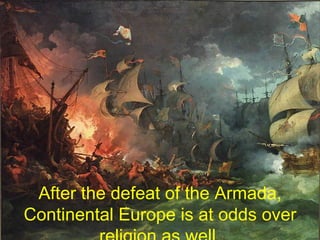
After the defeat of the Armada, Continental Europe is at odds over religion as well.
 
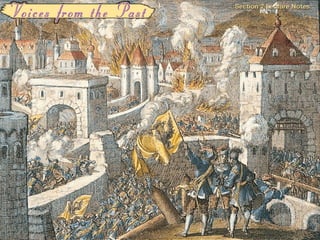
The Thirty Years’ War All major European countries but  England became involved. Takes place on German soil, and Germany was plundered and destroyed for 30 years.    Some countries gained new territories, and   France emerged as the dominant nation   in Europe.
Reformation & Thirty Years War Video
The Thirty Years’ War The Peace of Westphalia  -1648.   A German states could determine their own religion.   2. The states that made up the Holy Roman Empire became independent.     3. The Holy Roman Empire died, and Germany would not reunite for two hundred years.
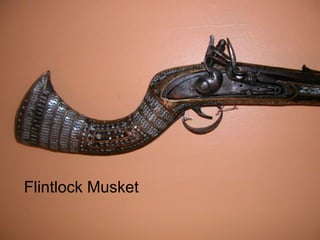
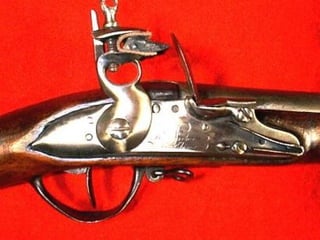
The Thirty Years’ War The 30 Years’ War was Europe’s most destructive.    flintlock musket :   Armies had to be better disciplined and trained.     Governments began to support standing armies.     By 1700, France had a standing army of 400,000.
Flintlock Musket
 
Revolutions in England The 17th century saw England’s civil war, the English Revolution.    It was a struggle between Parliament & King James I   King of England  Divine right of kings – that kings receive their power from God and are responsible only to God.   Parliament wanted equal power
Revolutions in England Parliament made up of mostly Protestants (Puritans)   In 1628, Parliament passed a petition prohibiting passing taxes without Parliament’s consent.   Civil war broke out in 1642 between supporters of the king ( Cavaliers  or Royalists) and those of Parliament ( Roundheads ).  
Revolutions in England Cavaliers  – Royalists/King Roundheads   - Parliament  
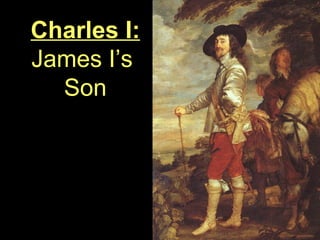
Charles I: James I’s  Son
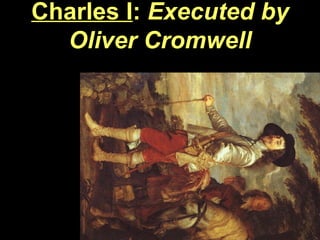
Charles I :  Executed by Oliver Cromwell
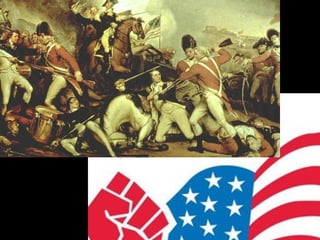
Revolutions in England What Causes Revolution?
 
 
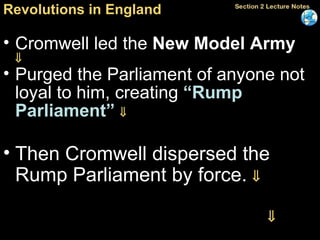
Revolutions in England Cromwell led the  New Model Army    Purged the Parliament of anyone not loyal to him, creating  “Rump Parliament”    Then Cromwell dispersed the Rump Parliament by force.   Ruled until his death in 1658   
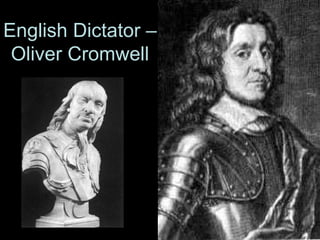
English Dictator – Oliver Cromwell
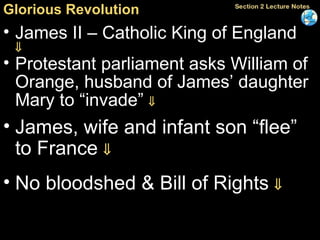
Glorious Revolution James II – Catholic King of England   Protestant parliament asks William of Orange, husband of James’ daughter Mary to “invade”   James, wife and infant son “flee” to France   No bloodshed & Bill of Rights  
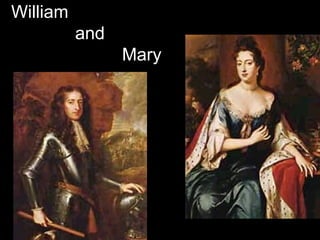
William   and    Mary
Revolutions in England  (cont.)   The  Toleration Act of 1689  gave Puritans, not Catholics, the right of free public worship.   Few English citizens were persecuted for religion ever again, however.   By deposing one king and establishing another, Parliament had destroyed the divine right theory of kingship.
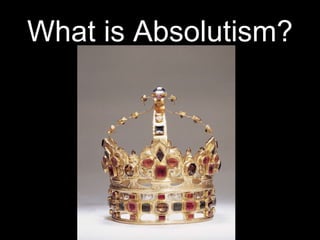
What is Absolutism?
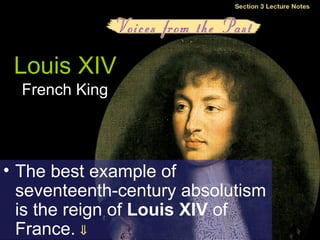
Louis XIV French King The best example of seventeenth-century absolutism is the reign of  Louis XIV  of France.  
France under Louis XIV One response to the crises of the seventeenth century was to seek stability by increasing the monarchy’s power.   This response historians call  absolutism,  a system in which the ruler has total power.   It also includes the idea of the divine right of kings.  
France under Louis XIV  (cont.)   Louis had an  anti-Huguenot policy , wanting the Huguenots to convert to Catholicism.   Destroyed Huguenot churches and schools.   As many as 200,000 Protestants fled France.   The mercantilist policies of the brilliant  Jean-Baptiste Colbert  helped Louis with the money he needed for maintaining his court and pursuing his wars.
France under Louis XIV  (cont.)   France was debt-ridden and surrounded by enemies at the time of Louis XIV’s death.   On his deathbed he seemed remorseful for not caring for the people more.
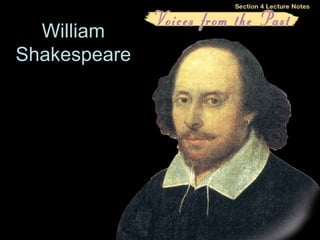
William Shakespeare
A Golden Age of Literature  (cont.)   William Shakespeare.    Shakespeare’s works were performed principally at the  Globe Theater .     The low admission charge allowed the lower classes to attend, and Shakespeare had to write plays pleasing to all classes and types.
Political Thought  (cont.)   England’s revolutionary upheavals alarmed  Thomas Hobbes.    “ state of nature,”  life is brutal and violent because human nature is self-interested.   Life is not about morals, but self-preservation. Believed in Absolute Rule – to save people from themselves
Political Thought  (cont.)   John Locke Against the absolute rule of one person.   People lived in a state of freedom  and equality, not violence and war.   In this state people had  natural rights – rights with which people are born.
Political Thought  (cont.)   Locke’s ideas were important to the American and French Revolutions.   They were used to support demands for constitutional government, the rule of law, and the protection of rights.   Locke’s ideas are found in the American Declaration of Independence and the United States Constitution.

Chapter 14 Sec 2

  • 1.
    Chapter 14 Sec2 30 Years War & Glorious Revolution
  • 2.
    After the defeatof the Armada, Continental Europe is at odds over religion as well.
  • 3.
  • 4.
    The Thirty Years’War All major European countries but England became involved. Takes place on German soil, and Germany was plundered and destroyed for 30 years.  Some countries gained new territories, and France emerged as the dominant nation in Europe.
  • 5.
    Reformation & ThirtyYears War Video
  • 6.
    The Thirty Years’War The Peace of Westphalia -1648.  A German states could determine their own religion.  2. The states that made up the Holy Roman Empire became independent.  3. The Holy Roman Empire died, and Germany would not reunite for two hundred years.
  • 7.
    The Thirty Years’War The 30 Years’ War was Europe’s most destructive.  flintlock musket :  Armies had to be better disciplined and trained.  Governments began to support standing armies.  By 1700, France had a standing army of 400,000.
  • 8.
  • 9.
  • 10.
    Revolutions in EnglandThe 17th century saw England’s civil war, the English Revolution.  It was a struggle between Parliament & King James I King of England  Divine right of kings – that kings receive their power from God and are responsible only to God.  Parliament wanted equal power
  • 11.
    Revolutions in EnglandParliament made up of mostly Protestants (Puritans)  In 1628, Parliament passed a petition prohibiting passing taxes without Parliament’s consent.  Civil war broke out in 1642 between supporters of the king ( Cavaliers or Royalists) and those of Parliament ( Roundheads ). 
  • 12.
    Revolutions in EnglandCavaliers – Royalists/King Roundheads - Parliament 
  • 13.
  • 14.
    Charles I : Executed by Oliver Cromwell
  • 15.
    Revolutions in EnglandWhat Causes Revolution?
  • 16.
  • 17.
  • 18.
    Revolutions in EnglandCromwell led the New Model Army  Purged the Parliament of anyone not loyal to him, creating “Rump Parliament”  Then Cromwell dispersed the Rump Parliament by force.  Ruled until his death in 1658 
  • 19.
    English Dictator –Oliver Cromwell
  • 20.
    Glorious Revolution JamesII – Catholic King of England  Protestant parliament asks William of Orange, husband of James’ daughter Mary to “invade”  James, wife and infant son “flee” to France  No bloodshed & Bill of Rights 
  • 21.
    William and Mary
  • 22.
    Revolutions in England (cont.) The Toleration Act of 1689 gave Puritans, not Catholics, the right of free public worship.  Few English citizens were persecuted for religion ever again, however.  By deposing one king and establishing another, Parliament had destroyed the divine right theory of kingship.
  • 23.
  • 24.
    Louis XIV FrenchKing The best example of seventeenth-century absolutism is the reign of Louis XIV of France. 
  • 25.
    France under LouisXIV One response to the crises of the seventeenth century was to seek stability by increasing the monarchy’s power.  This response historians call absolutism, a system in which the ruler has total power.  It also includes the idea of the divine right of kings. 
  • 26.
    France under LouisXIV (cont.) Louis had an anti-Huguenot policy , wanting the Huguenots to convert to Catholicism.  Destroyed Huguenot churches and schools.  As many as 200,000 Protestants fled France.  The mercantilist policies of the brilliant Jean-Baptiste Colbert helped Louis with the money he needed for maintaining his court and pursuing his wars.
  • 27.
    France under LouisXIV (cont.) France was debt-ridden and surrounded by enemies at the time of Louis XIV’s death.  On his deathbed he seemed remorseful for not caring for the people more.
  • 28.
  • 29.
    A Golden Ageof Literature (cont.) William Shakespeare.  Shakespeare’s works were performed principally at the Globe Theater .  The low admission charge allowed the lower classes to attend, and Shakespeare had to write plays pleasing to all classes and types.
  • 30.
    Political Thought (cont.) England’s revolutionary upheavals alarmed Thomas Hobbes.  “ state of nature,” life is brutal and violent because human nature is self-interested.  Life is not about morals, but self-preservation. Believed in Absolute Rule – to save people from themselves
  • 31.
    Political Thought (cont.) John Locke Against the absolute rule of one person.  People lived in a state of freedom and equality, not violence and war.  In this state people had natural rights – rights with which people are born.
  • 32.
    Political Thought (cont.) Locke’s ideas were important to the American and French Revolutions.  They were used to support demands for constitutional government, the rule of law, and the protection of rights.  Locke’s ideas are found in the American Declaration of Independence and the United States Constitution.