General Pathology
of Infectious Diseases
Dr lina haffar
Pr of Pathology
1
General Pathology
of Infectious Diseases
• General Principles of Microbial
Pathogenesis
• Categories of Infectious Agents
• The Microbiome
• Techniques for Identifying
Infectious Agents
• Newly Emerging and Reemerging
Infectious Diseases
• Agents of Bioterrorism
• Transmission and Dissemination of
Microbes
• Routes of Entry of Microbes
• Spread and Dissemination of
Microbes Within the Body
• Transmission of Microbes
• How Microorganisms Cause Disease
• Mechanisms of Viral Injury
• Mechanisms of Bacterial Injury
• Injurious Effects of Host Immune
Responses
• Immune Evasion by Microbes
• Spectrum of Inflammatory
Responses to Infection
• Mononuclear and Granulomatous
Inflammation
• Cytopathic-Cytoproliferative Reaction
• Tissue Necrosis
• Chronic Inflammation and Scarring
• Infections in Individuals With
Immunodeficiencies
2
GENERAL PRINCIPLES OF MICROBIAL PATHOGENESIS
• Infectious diseases are an important health problem in
the United States and worldwide despite the availability
of effective vaccines and antibiotics for many types of
infections.
• Influenza and pneumonia combined are the eighth
leading cause of death in the United States.
• Lower-respiratory infections, HIV/AIDS, and diarrheal
diseases are the top three causes of death in developing
countries, and malaria and tuberculosis are among the
top ten.
3
GENERAL PRINCIPLES OF MICROBIAL PATHOGENESIS
• Infectious diseases are particularly important
causes of death among children, older adults,
individuals with chronic debilitating diseases
and inherited or acquired immunodeficiency
states (e.g., AIDS), and in patients receiving
immunosuppressive drugs
4
Categories of Infectious Agents
• Infectious agents belong to a wide range of classes
and vary greatly in size, ranging from prion protein
under 20 nm to tapeworms 10 meters in length :
• Prions
• Prions are composed of abnormal forms of a host
protein termed prion protein (PrP).
• These agents cause transmissible spongiform
encephalopathies, including kuru (associated with
human cannibalism), hereditary or sporadic
Creutzfeldt-Jakob disease (CJD), bovine spongiform
encephalopathy (BSE) (better known as mad cow
disease ), and variant Creutzfeldt-Jakob disease (vCJD)
(probably transmitted to humans through consumption
of meat from BSE-infected cattle). 5
• Viruses
• Viruses are obligate intracellular
parasites that depend on the host
cell’s metabolic machinery for their
replication.
• They consist of a nucleic acid
genome surrounded by a protein
coat (called a capsid ) that is
sometimes encased in a lipid
membrane.
• Viruses are classified by their
nucleic acid genome (DNA or RNA,
but not both),
6
• Bacteria
• There are two common forms of cell
wall structure: a thick wall that retains
crystal-violet stain (gram-positive) and a
thin cell wall surrounded by an outer
membrane (gram-negative bacteria) .
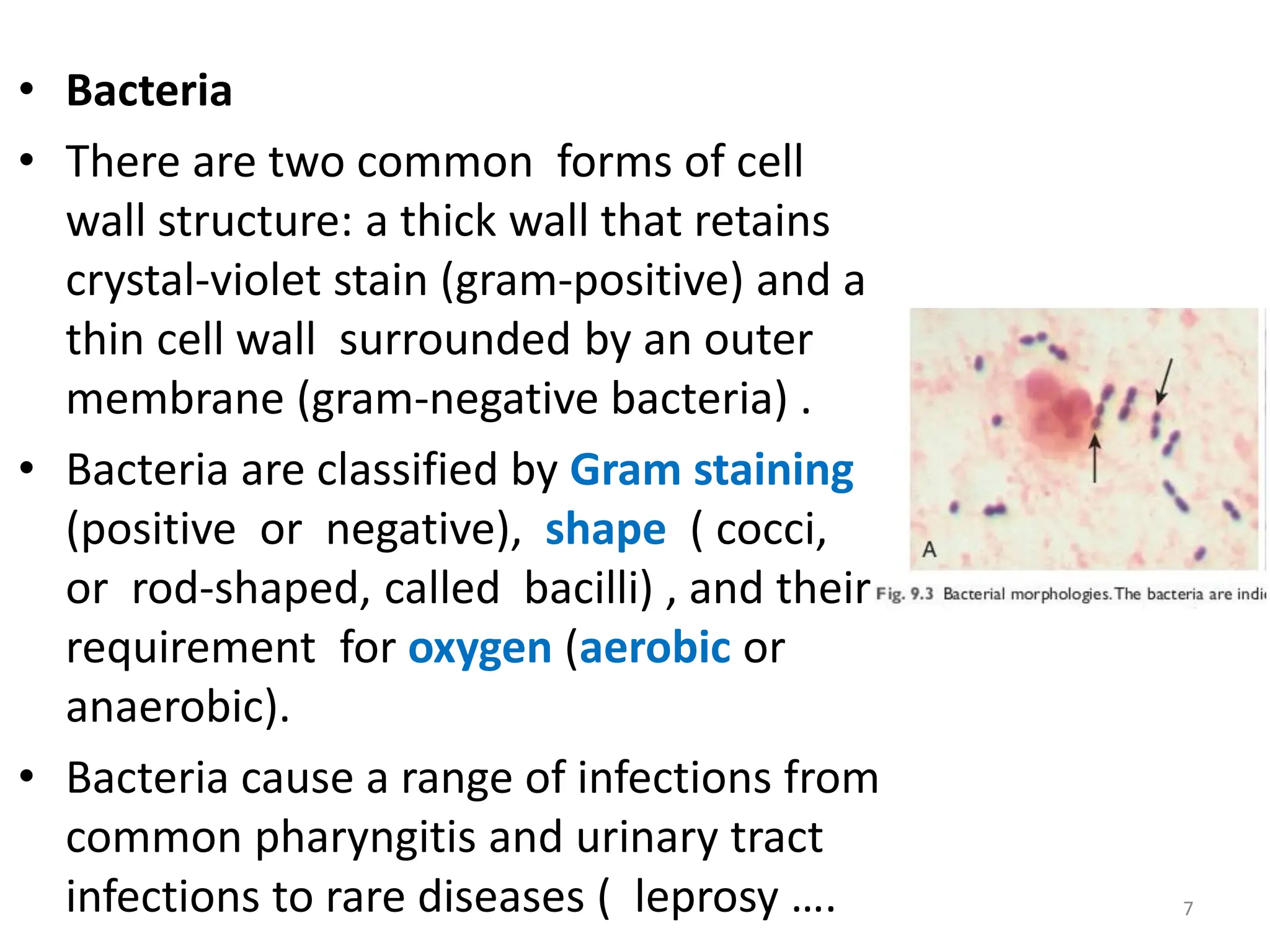
• Bacteria are classified by Gram staining
(positive or negative), shape ( cocci,
or rod-shaped, called bacilli) , and their
requirement for oxygen (aerobic or
anaerobic).
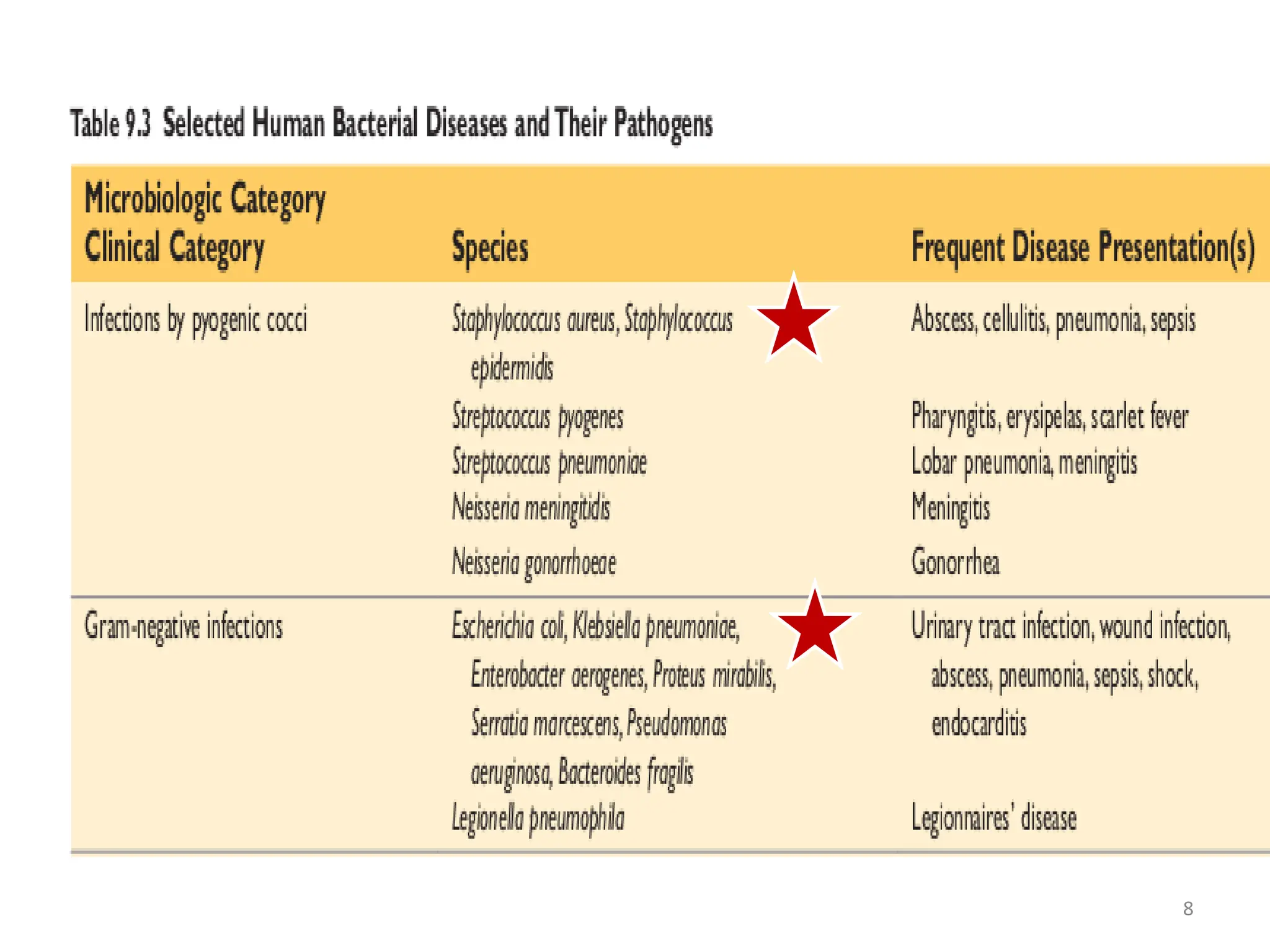
• Bacteria cause a range of infections from
common pharyngitis and urinary tract
infections to rare diseases ( leprosy …. 7
8
• Fungi
• Fungi may cause superficial or
deep infections.
• • Superficial infections involve the
skin, hair, and nails
• • Deep fungal infections can
spread systemically and invade
tissues, destroying vital organs in
immunocompromised hosts, but
usually resolve or remain latent in
otherwise normal hosts.
9
• Fungi
• Fungi are divided into :
• • Endemic fungi are invasive species that are usually
limited to particular geographic regions (e.g.,
Histoplasma in the Ohio River Valley)
• • Opportunistic fungi (e.g., Candida, Aspergillus,
Mucor), that either colonize individuals or are
encountered from environmental sources but do not
cause severe disease in healthy individuals.
10
• Protozoa
• Protozoa are single-celled
eukaryotes that are major causes
of disease and death in developing
countries.
• Protozoa can replicate intracellularly
within a variety of cells (e.g.,
Plasmodium in red cells, Leishmania
in macrophages) or extracellularly
in the urogenital system, intestine,
or blood.
11
• Helminths
• Parasitic worms are highly
differentiated multicellular
organisms.
• Their life cycles are complex;
most alternate between sexual
reproduction in the definitive
host and asexual multiplication
in an intermediate host or
vector.
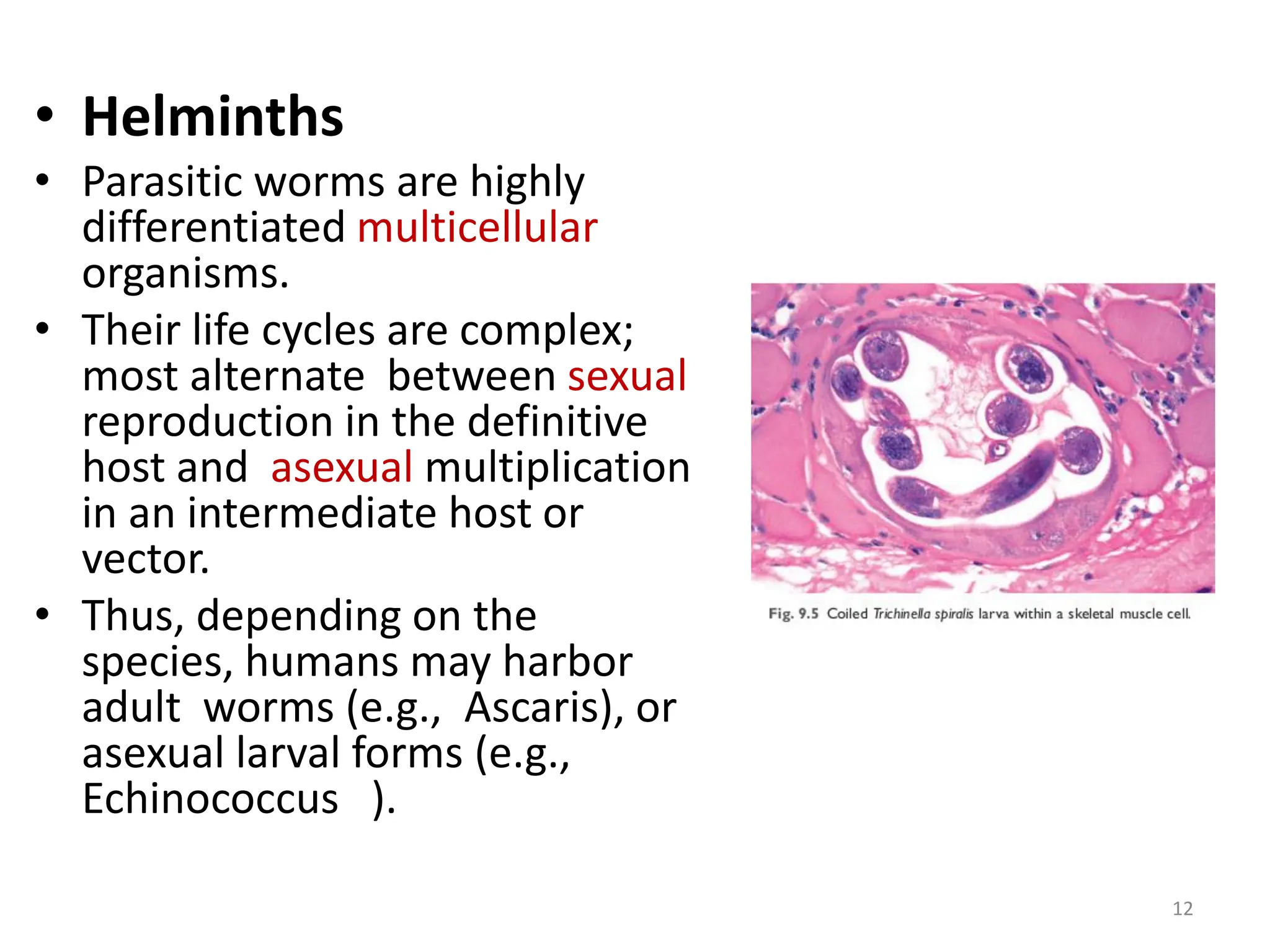
• Thus, depending on the
species, humans may harbor
adult worms (e.g., Ascaris), or
asexual larval forms (e.g.,
Echinococcus ).
12
13
• THE MICROBIOME
• The microbiome is the diverse microbial population of
bacteria, fungi, and viruses found in or on the human
body (e.g., in the intestinal tract, skin, upper airway,
and vagina).
• While most of these organisms do not harm the
healthy host, a few cause diseases such as skin and
soft-tissue infections (Staphylococcus aureus and
Streptococcus pyogenes ),
• • In healthy individuals, the microbiome is very
diverse. For example, there are estimated to be over
1000 species of bacteria in the normal intestinal flora
of an individual
14
• • The diversity of bacteria is greatest in the oral
cavity and the stool, intermediate on the skin, and
least in the vagina.
• • Use of some antibiotics is an important risk
factor for intestinal infections caused by toxin-
producing Clostridium difficile .
• These antibiotics kill or inhibit normal commensal
bacteria, allowing overgrowth of C. difficile.
• Restoration of the microbiome by duodenal
infusion of stool containing commensal flora from
healthy donors successfully treats C. difficile
infection in many individuals who have relapsed
after antibiotic therapy.
15
• TECHNIQUES FOR IDENTIFYING INFECTIOUS
AGENTS
• • Culture. Bacterial and fungal cultures remain
essential for diagnostic testing, but culture of viruses
has been replaced by alternative methods.
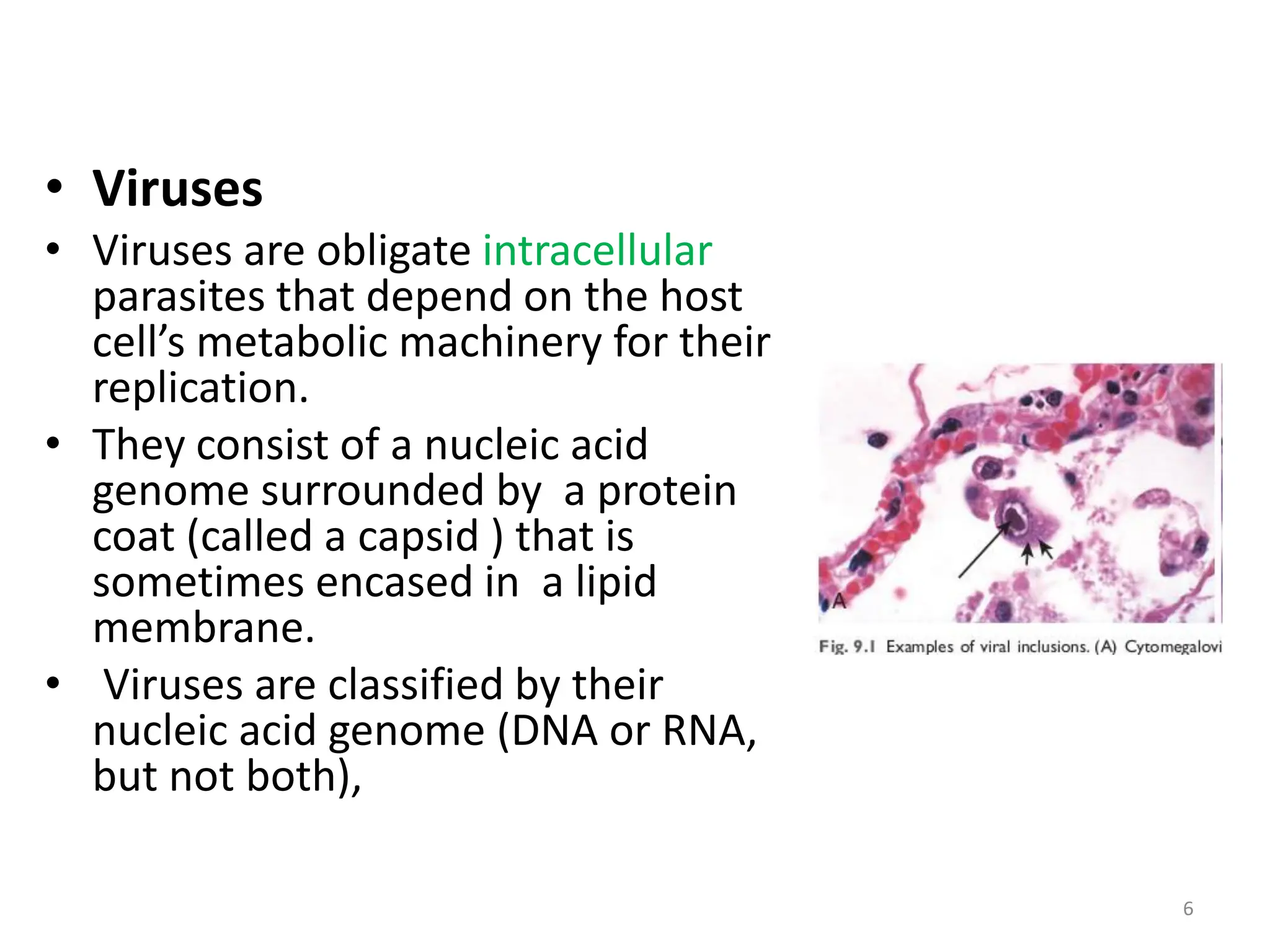
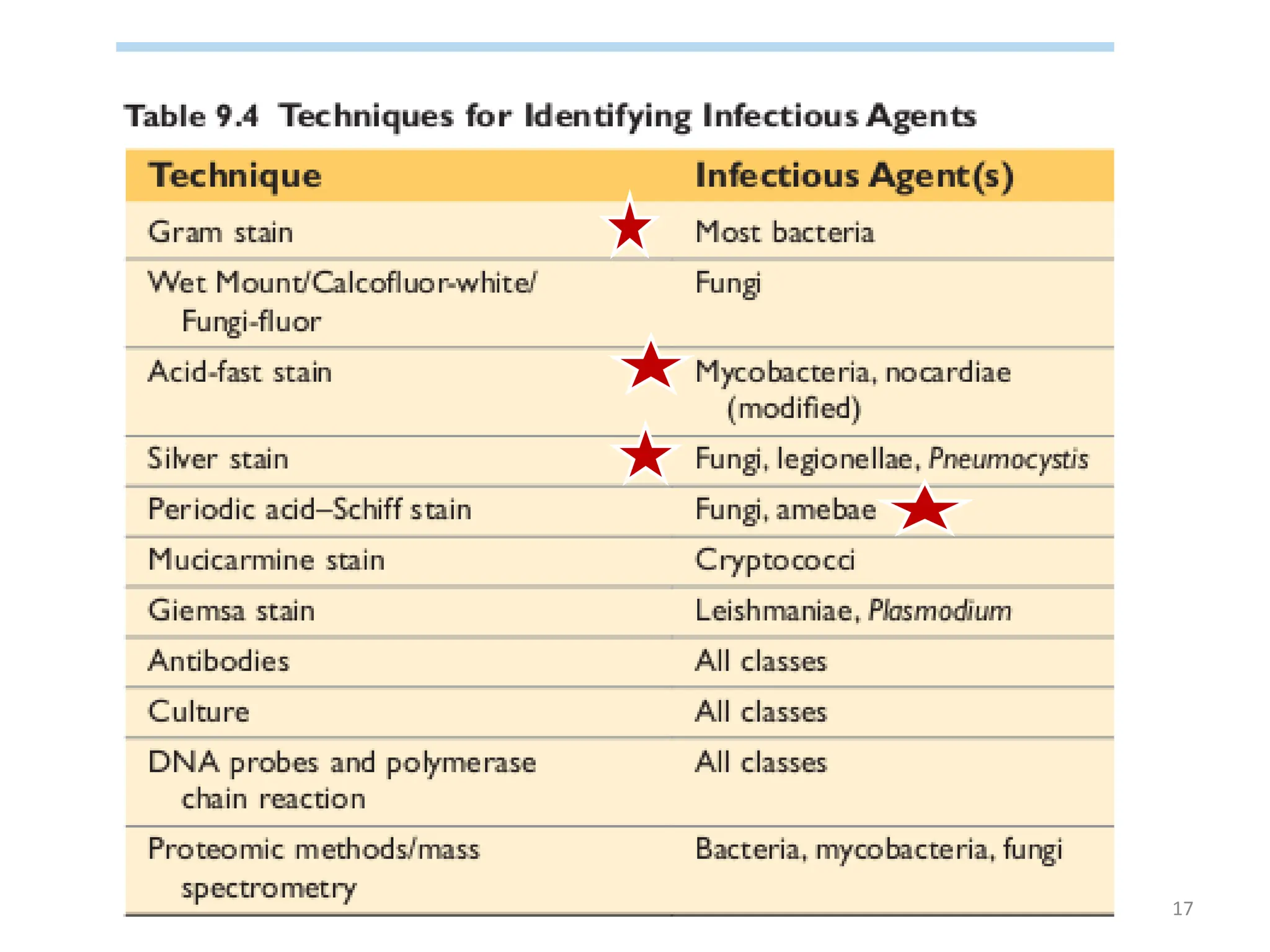
• • Histology. Some infectious agents can be seen in
hematoxylin and eosin (H&E)–stained sections
(e.g., the inclusion bodies formed by CMV which
usually stain blue; Candida and Mucor among the
fungi; most protozoans; all helminths).
• Many infectious agents, however, are better
visualized by special stains: acid-fast, silver,
mucicarmine, and Giemsa stains
16
17
• • Serology. Acute infections can be diagnosed
serologically by detecting pathogen-specific
antibodies in the serum.
• The presence of specific immunoglobulin M (IgM)
antibody shortly after the onset of symptoms Is
often diagnostic.
• • Molecular diagnostics. Nucleic acid amplification
techniques, such as polymerase chain reaction
(PCR) and transcription-mediated amplification,
are used for diagnosis of gonorrhea, chlamydial
infection, tuberculosis, and herpes encephalitis.
18
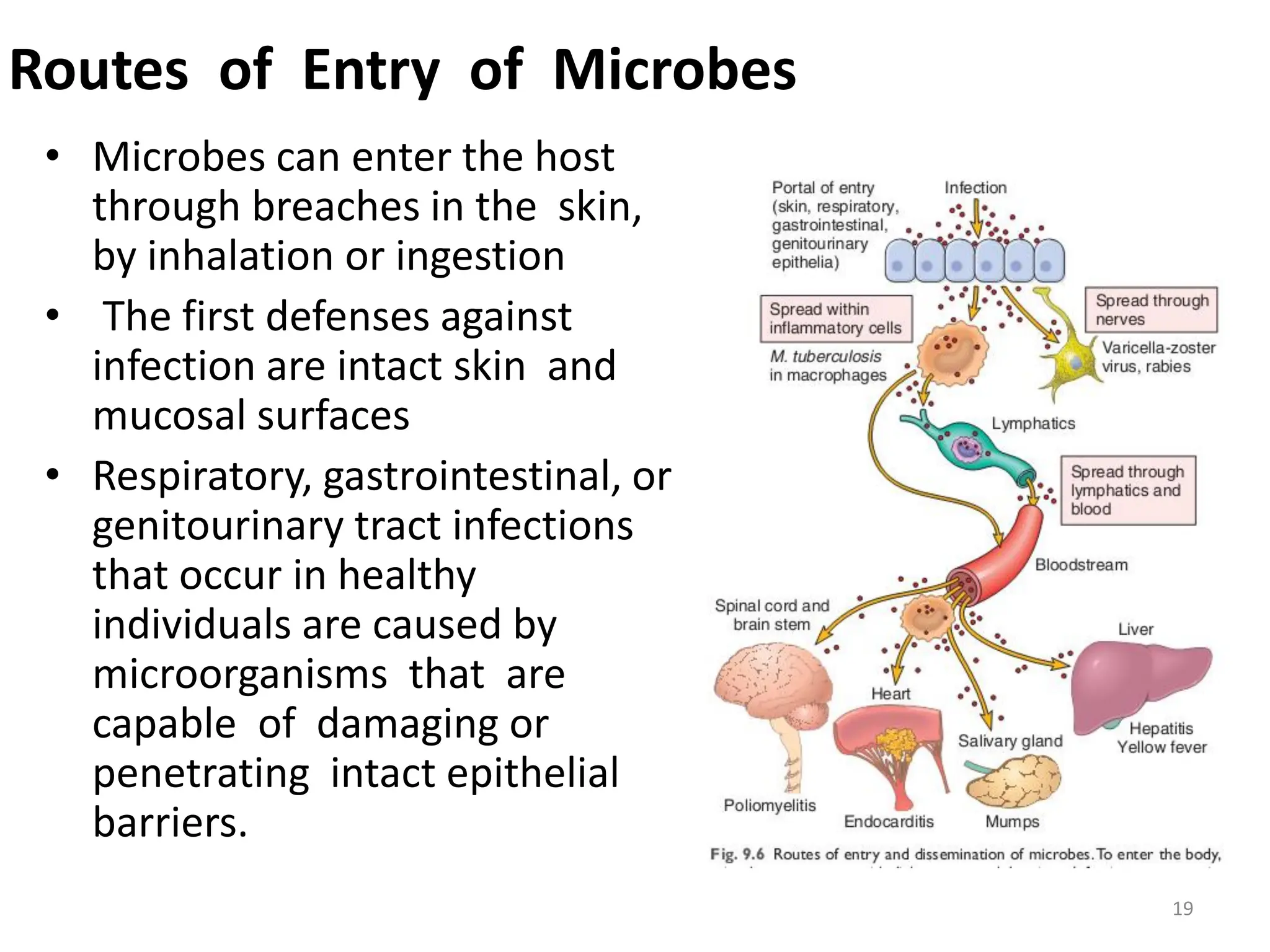
Routes of Entry of Microbes
• Microbes can enter the host
through breaches in the skin,
by inhalation or ingestion
• The first defenses against
infection are intact skin and
mucosal surfaces
• Respiratory, gastrointestinal, or
genitourinary tract infections
that occur in healthy
individuals are caused by
microorganisms that are
capable of damaging or
penetrating intact epithelial
barriers.
19
• Spread and
Dissemination of
Microbes Within the
Body
• Some microorganisms
proliferate locally, at the site
of initial infection, whereas
others penetrate the
epithelial barrier and
spread to distant sites by
way of the lymphatics, the
blood, or nerves .
20
SUMMARY
• TRANSMISSION OF MICROBES
• • Transmission of infections can occur via:
• • Contact (direct and indirect)
• • Respiratory droplets
• • Fecal-oral route
• • Sexual transmission
• • Vertical transmission from mother to fetus or
newborn
• • Insect/arthropod vectors.
• • A pathogen can establish infection if it possesses
virulence factors that overcome normal host
defenses or if the host defenses are compromised.
21
• • Host defenses against infection include:
• • Skin: tough keratinized barrier, low pH, fatty
acids, normal microbiota
• • Respiratory system: alveolar macrophages
and mucociliary clearance by bronchial
epithelium,
• • Gastrointestinal system: acidic gastric pH,
viscous mucus, pancreatic enzymes and bile,
IgA, and normal flora
• • Urogenital tract: repeated flushing and
acidic environment created by commensal
vaginal flora
22
• HOW MICROORGANISMS CAUSE DISEASE
• • Diseases caused by microbes involve an interplay
of microbial virulence and host responses.
• • Infectious agents can cause cell death or dysfunction
by directly interacting with the cell.
• • Injury may be due to local or systemic release of
bacterial products, including endotoxins (LPS),
exotoxins, combined with the immune response.
• • immunocompromised can allow uncontrolled
expansion of opportunistic infections that can
directly cause injury.
23
• • Chronic immunological and inflammatory
diseases and cancer have been associated with
specific microorganisms
• PATTERNS OF HOST RESPONSES TO MICROBES
• • In normal (immunocompetent) individuals, the
patterns of host responses are stereotypical for
different classes of microbes;
• • Neutrophil-rich acute suppurative inflammation
is typical of infections with “pyogenic” bacteria.
• • Mononuclear cell infiltrates are common in
many chronic infections and some acute viral
infections.
24
• • Granulomatous inflammation is the hallmark
of infection with M. tuberculosis and certain
fungi.
• • Necrosis results from tissue-damaging toxins
produced by microbes such as Clostridium .
perfringens.
• • Chronic inflammation and scarring represent the
final common pathway of many infections.
25
26

chap 5 infectious diseases ( pathology) .pdf

  • 1.
    General Pathology of InfectiousDiseases Dr lina haffar Pr of Pathology 1
  • 2.
    General Pathology of InfectiousDiseases • General Principles of Microbial Pathogenesis • Categories of Infectious Agents • The Microbiome • Techniques for Identifying Infectious Agents • Newly Emerging and Reemerging Infectious Diseases • Agents of Bioterrorism • Transmission and Dissemination of Microbes • Routes of Entry of Microbes • Spread and Dissemination of Microbes Within the Body • Transmission of Microbes • How Microorganisms Cause Disease • Mechanisms of Viral Injury • Mechanisms of Bacterial Injury • Injurious Effects of Host Immune Responses • Immune Evasion by Microbes • Spectrum of Inflammatory Responses to Infection • Mononuclear and Granulomatous Inflammation • Cytopathic-Cytoproliferative Reaction • Tissue Necrosis • Chronic Inflammation and Scarring • Infections in Individuals With Immunodeficiencies 2
  • 3.
    GENERAL PRINCIPLES OFMICROBIAL PATHOGENESIS • Infectious diseases are an important health problem in the United States and worldwide despite the availability of effective vaccines and antibiotics for many types of infections. • Influenza and pneumonia combined are the eighth leading cause of death in the United States. • Lower-respiratory infections, HIV/AIDS, and diarrheal diseases are the top three causes of death in developing countries, and malaria and tuberculosis are among the top ten. 3
  • 4.
    GENERAL PRINCIPLES OFMICROBIAL PATHOGENESIS • Infectious diseases are particularly important causes of death among children, older adults, individuals with chronic debilitating diseases and inherited or acquired immunodeficiency states (e.g., AIDS), and in patients receiving immunosuppressive drugs 4
  • 5.
    Categories of InfectiousAgents • Infectious agents belong to a wide range of classes and vary greatly in size, ranging from prion protein under 20 nm to tapeworms 10 meters in length : • Prions • Prions are composed of abnormal forms of a host protein termed prion protein (PrP). • These agents cause transmissible spongiform encephalopathies, including kuru (associated with human cannibalism), hereditary or sporadic Creutzfeldt-Jakob disease (CJD), bovine spongiform encephalopathy (BSE) (better known as mad cow disease ), and variant Creutzfeldt-Jakob disease (vCJD) (probably transmitted to humans through consumption of meat from BSE-infected cattle). 5
  • 6.
    • Viruses • Virusesare obligate intracellular parasites that depend on the host cell’s metabolic machinery for their replication. • They consist of a nucleic acid genome surrounded by a protein coat (called a capsid ) that is sometimes encased in a lipid membrane. • Viruses are classified by their nucleic acid genome (DNA or RNA, but not both), 6
  • 7.
    • Bacteria • Thereare two common forms of cell wall structure: a thick wall that retains crystal-violet stain (gram-positive) and a thin cell wall surrounded by an outer membrane (gram-negative bacteria) . • Bacteria are classified by Gram staining (positive or negative), shape ( cocci, or rod-shaped, called bacilli) , and their requirement for oxygen (aerobic or anaerobic). • Bacteria cause a range of infections from common pharyngitis and urinary tract infections to rare diseases ( leprosy …. 7
  • 8.
  • 9.
    • Fungi • Fungimay cause superficial or deep infections. • • Superficial infections involve the skin, hair, and nails • • Deep fungal infections can spread systemically and invade tissues, destroying vital organs in immunocompromised hosts, but usually resolve or remain latent in otherwise normal hosts. 9
  • 10.
    • Fungi • Fungiare divided into : • • Endemic fungi are invasive species that are usually limited to particular geographic regions (e.g., Histoplasma in the Ohio River Valley) • • Opportunistic fungi (e.g., Candida, Aspergillus, Mucor), that either colonize individuals or are encountered from environmental sources but do not cause severe disease in healthy individuals. 10
  • 11.
    • Protozoa • Protozoaare single-celled eukaryotes that are major causes of disease and death in developing countries. • Protozoa can replicate intracellularly within a variety of cells (e.g., Plasmodium in red cells, Leishmania in macrophages) or extracellularly in the urogenital system, intestine, or blood. 11
  • 12.
    • Helminths • Parasiticworms are highly differentiated multicellular organisms. • Their life cycles are complex; most alternate between sexual reproduction in the definitive host and asexual multiplication in an intermediate host or vector. • Thus, depending on the species, humans may harbor adult worms (e.g., Ascaris), or asexual larval forms (e.g., Echinococcus ). 12
  • 13.
  • 14.
    • THE MICROBIOME •The microbiome is the diverse microbial population of bacteria, fungi, and viruses found in or on the human body (e.g., in the intestinal tract, skin, upper airway, and vagina). • While most of these organisms do not harm the healthy host, a few cause diseases such as skin and soft-tissue infections (Staphylococcus aureus and Streptococcus pyogenes ), • • In healthy individuals, the microbiome is very diverse. For example, there are estimated to be over 1000 species of bacteria in the normal intestinal flora of an individual 14
  • 15.
    • • Thediversity of bacteria is greatest in the oral cavity and the stool, intermediate on the skin, and least in the vagina. • • Use of some antibiotics is an important risk factor for intestinal infections caused by toxin- producing Clostridium difficile . • These antibiotics kill or inhibit normal commensal bacteria, allowing overgrowth of C. difficile. • Restoration of the microbiome by duodenal infusion of stool containing commensal flora from healthy donors successfully treats C. difficile infection in many individuals who have relapsed after antibiotic therapy. 15
  • 16.
    • TECHNIQUES FORIDENTIFYING INFECTIOUS AGENTS • • Culture. Bacterial and fungal cultures remain essential for diagnostic testing, but culture of viruses has been replaced by alternative methods. • • Histology. Some infectious agents can be seen in hematoxylin and eosin (H&E)–stained sections (e.g., the inclusion bodies formed by CMV which usually stain blue; Candida and Mucor among the fungi; most protozoans; all helminths). • Many infectious agents, however, are better visualized by special stains: acid-fast, silver, mucicarmine, and Giemsa stains 16
  • 17.
  • 18.
    • • Serology.Acute infections can be diagnosed serologically by detecting pathogen-specific antibodies in the serum. • The presence of specific immunoglobulin M (IgM) antibody shortly after the onset of symptoms Is often diagnostic. • • Molecular diagnostics. Nucleic acid amplification techniques, such as polymerase chain reaction (PCR) and transcription-mediated amplification, are used for diagnosis of gonorrhea, chlamydial infection, tuberculosis, and herpes encephalitis. 18
  • 19.
    Routes of Entryof Microbes • Microbes can enter the host through breaches in the skin, by inhalation or ingestion • The first defenses against infection are intact skin and mucosal surfaces • Respiratory, gastrointestinal, or genitourinary tract infections that occur in healthy individuals are caused by microorganisms that are capable of damaging or penetrating intact epithelial barriers. 19
  • 20.
    • Spread and Disseminationof Microbes Within the Body • Some microorganisms proliferate locally, at the site of initial infection, whereas others penetrate the epithelial barrier and spread to distant sites by way of the lymphatics, the blood, or nerves . 20
  • 21.
    SUMMARY • TRANSMISSION OFMICROBES • • Transmission of infections can occur via: • • Contact (direct and indirect) • • Respiratory droplets • • Fecal-oral route • • Sexual transmission • • Vertical transmission from mother to fetus or newborn • • Insect/arthropod vectors. • • A pathogen can establish infection if it possesses virulence factors that overcome normal host defenses or if the host defenses are compromised. 21
  • 22.
    • • Hostdefenses against infection include: • • Skin: tough keratinized barrier, low pH, fatty acids, normal microbiota • • Respiratory system: alveolar macrophages and mucociliary clearance by bronchial epithelium, • • Gastrointestinal system: acidic gastric pH, viscous mucus, pancreatic enzymes and bile, IgA, and normal flora • • Urogenital tract: repeated flushing and acidic environment created by commensal vaginal flora 22
  • 23.
    • HOW MICROORGANISMSCAUSE DISEASE • • Diseases caused by microbes involve an interplay of microbial virulence and host responses. • • Infectious agents can cause cell death or dysfunction by directly interacting with the cell. • • Injury may be due to local or systemic release of bacterial products, including endotoxins (LPS), exotoxins, combined with the immune response. • • immunocompromised can allow uncontrolled expansion of opportunistic infections that can directly cause injury. 23
  • 24.
    • • Chronicimmunological and inflammatory diseases and cancer have been associated with specific microorganisms • PATTERNS OF HOST RESPONSES TO MICROBES • • In normal (immunocompetent) individuals, the patterns of host responses are stereotypical for different classes of microbes; • • Neutrophil-rich acute suppurative inflammation is typical of infections with “pyogenic” bacteria. • • Mononuclear cell infiltrates are common in many chronic infections and some acute viral infections. 24
  • 25.
    • • Granulomatousinflammation is the hallmark of infection with M. tuberculosis and certain fungi. • • Necrosis results from tissue-damaging toxins produced by microbes such as Clostridium . perfringens. • • Chronic inflammation and scarring represent the final common pathway of many infections. 25
  • 26.