• Chronic inflammation is defined as inflammation
of prolonged duration (weeks or months) where
• Continuing inflammation,
• Tissue destruction and
• Healing proceeds simultaneously.
 Infiltration by mononuclear cells
◦ Macrophages
◦ Lymphocytes
◦ Plasma cells
 Tissue destruction
 Repair
◦ Angiogenesis (formation of new blood vessels)
◦ Fibrosis
1] Bacterial - TB, Syphilis, Leprosy
2] Fungal – Cryptococcal
3] Parasitic – Schistosomias
4] Miscellaneous - Sarcoidosis, Crohn’s disease
 Distinctive pattern of chronic inflammation
characterized by formation of granulomas.
 Characterized by presence of
◦ Activated macrophages
◦ Lymphocytes
◦ Occasional plasma cells
 Tuberculosis is caused by Mycobacterium
tuberculosis
 Primary tuberculosis
◦ Usually seen in children
◦ Due to initial (first) infection
 Secondary tuberculosis
◦ Seen in adults
◦ Reactivation of primary infection
 Focus of tuberculous inflammation
◦ White to tan colored lesion
◦ Round, irregular borders
◦ Central necrosis (caseation)
◦ Soft, granular, cheesy material
 Extensive necrosis
drains out the
necrotic core
 Leads to cavity
formation
 Extensive spread
leads to formation of
multiple millet sized
granulomas in the
same organ
 Involvement of lymph
nodes gives them a
matted appearance
 The centres are filled
cheesy necrotic
material
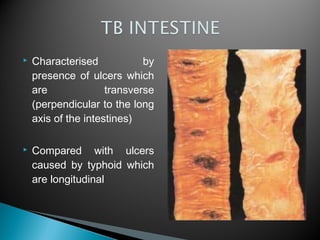
 Characterised by
presence of ulcers which
are transverse
(perpendicular to the long
axis of the intestines)
 Compared with ulcers
caused by typhoid which
are longitudinal
 Caseous necrosis
◦ Pink structureless centre
◦ Surrounded by lymphocytes
 Epitheliod cells
◦ Activated macrophages
◦ Pink granular cytoplasm
◦ Slipper shaped nucleus
 Giant cells
◦ Large mass of cytoplasm
◦ Numerous nuclei
H&E stained section showing a granuloma with central caseation necrosis surrounded
by a collar of lymphocytes, epithelioid cells and giant cells
 Syphilis is a sexually transmitted disease caused
by Treponema Pallidum and has 3 stages
 Primary stage- chancre in the genital region
 Secondary stage- lymphadenopathy and skin
lesions
 Tertiary stage- aortitis
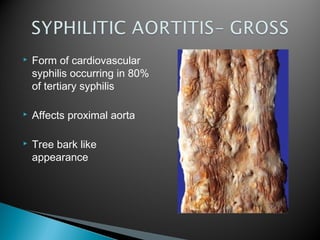
 Form of cardiovascular
syphilis occurring in 80%
of tertiary syphilis
 Affects proximal aorta
 Tree bark like
appearance
H & E stained sections showing fibrosis of the media of the vessel wall and
infiltration by lymphocytes and plasma cells.
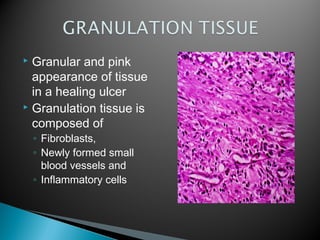
 Granular and pink
appearance of tissue
in a healing ulcer
 Granulation tissue is
composed of
◦ Fibroblasts,
◦ Newly formed small
blood vessels and
◦ Inflammatory cells
 Mycetoma is a chronic
subcutaneous infection
 Initially presents as a nodule
 Later swelling and multiple
discharging sinuses
 Grossly visible granules of
various colors seen extruding
from sinuses
 Gross - solitary, small (1-2.5cm), punched out with sharply defined
margins, deeply penetrating.
 gastric ulcer shows indrawing of the mucosal folds toward the ulcer margins due to contraction of
fibrous tissue. Healed chronic gastric ulcer shows radiating folds pointing to the site of the
healed ulcer
BENIGN ULCER
 Flat margins in level with
surrounding mucosa
 Mucosal folds converge
towards the ulcer
(radiating/spoke wheel
pattern)
MALIGNANT ULCER
 Are larger, bowl shaped with
elevated and indurated
mucosa at the margin
Gastric ulcer :Microscopically, the ulcer here is sharply demarcated, with normal gastric
mucosa on the left falling away into a deep ulcer whose base contains infamed, necrotic
debris..
 Granular and pink appearance of tissue in a
healing ulcer
 Gross examination- floor of the lesion contains
pink granulations composed of the vascular
connective tissue, while the edges are sloping
and bluish white.
At high magnification, granulation tissue has capillaries, fibroblasts, and a variable
amount of inflammatory cells (mostly mononuclear, but with the possibility of some
PMN's still being present).
MICROSCOPIC EXAMINATION
• Granulation tissue is composed of proliferating
fibroblasts, newly formed small blood vessels and
varying number of inflammatory cells which are
initially polymorphs but in later stages
macrophages and lymphocytes predominate.
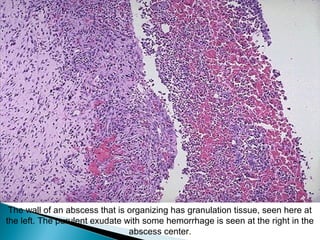
The wall of an abscess that is organizing has granulation tissue, seen here at
the left. The purulent exudate with some hemorrhage is seen at the right in the
abscess center.

Chronic inflammation

  • 2.
    • Chronic inflammationis defined as inflammation of prolonged duration (weeks or months) where • Continuing inflammation, • Tissue destruction and • Healing proceeds simultaneously.
  • 3.
     Infiltration bymononuclear cells ◦ Macrophages ◦ Lymphocytes ◦ Plasma cells  Tissue destruction  Repair ◦ Angiogenesis (formation of new blood vessels) ◦ Fibrosis
  • 4.
    1] Bacterial -TB, Syphilis, Leprosy 2] Fungal – Cryptococcal 3] Parasitic – Schistosomias 4] Miscellaneous - Sarcoidosis, Crohn’s disease
  • 5.
     Distinctive patternof chronic inflammation characterized by formation of granulomas.  Characterized by presence of ◦ Activated macrophages ◦ Lymphocytes ◦ Occasional plasma cells
  • 6.
     Tuberculosis iscaused by Mycobacterium tuberculosis  Primary tuberculosis ◦ Usually seen in children ◦ Due to initial (first) infection  Secondary tuberculosis ◦ Seen in adults ◦ Reactivation of primary infection
  • 7.
     Focus oftuberculous inflammation ◦ White to tan colored lesion ◦ Round, irregular borders ◦ Central necrosis (caseation) ◦ Soft, granular, cheesy material
  • 9.
     Extensive necrosis drainsout the necrotic core  Leads to cavity formation
  • 10.
     Extensive spread leadsto formation of multiple millet sized granulomas in the same organ
  • 11.
     Involvement oflymph nodes gives them a matted appearance  The centres are filled cheesy necrotic material
  • 12.
     Characterised by presenceof ulcers which are transverse (perpendicular to the long axis of the intestines)  Compared with ulcers caused by typhoid which are longitudinal
  • 13.
     Caseous necrosis ◦Pink structureless centre ◦ Surrounded by lymphocytes  Epitheliod cells ◦ Activated macrophages ◦ Pink granular cytoplasm ◦ Slipper shaped nucleus  Giant cells ◦ Large mass of cytoplasm ◦ Numerous nuclei
  • 14.
    H&E stained sectionshowing a granuloma with central caseation necrosis surrounded by a collar of lymphocytes, epithelioid cells and giant cells
  • 15.
     Syphilis isa sexually transmitted disease caused by Treponema Pallidum and has 3 stages  Primary stage- chancre in the genital region  Secondary stage- lymphadenopathy and skin lesions  Tertiary stage- aortitis
  • 16.
     Form ofcardiovascular syphilis occurring in 80% of tertiary syphilis  Affects proximal aorta  Tree bark like appearance
  • 17.
    H & Estained sections showing fibrosis of the media of the vessel wall and infiltration by lymphocytes and plasma cells.
  • 18.
     Granular andpink appearance of tissue in a healing ulcer  Granulation tissue is composed of ◦ Fibroblasts, ◦ Newly formed small blood vessels and ◦ Inflammatory cells
  • 19.
     Mycetoma isa chronic subcutaneous infection  Initially presents as a nodule  Later swelling and multiple discharging sinuses  Grossly visible granules of various colors seen extruding from sinuses
  • 21.
     Gross -solitary, small (1-2.5cm), punched out with sharply defined margins, deeply penetrating.  gastric ulcer shows indrawing of the mucosal folds toward the ulcer margins due to contraction of fibrous tissue. Healed chronic gastric ulcer shows radiating folds pointing to the site of the healed ulcer
  • 22.
    BENIGN ULCER  Flatmargins in level with surrounding mucosa  Mucosal folds converge towards the ulcer (radiating/spoke wheel pattern) MALIGNANT ULCER  Are larger, bowl shaped with elevated and indurated mucosa at the margin
  • 24.
    Gastric ulcer :Microscopically,the ulcer here is sharply demarcated, with normal gastric mucosa on the left falling away into a deep ulcer whose base contains infamed, necrotic debris..
  • 25.
     Granular andpink appearance of tissue in a healing ulcer  Gross examination- floor of the lesion contains pink granulations composed of the vascular connective tissue, while the edges are sloping and bluish white.
  • 26.
    At high magnification,granulation tissue has capillaries, fibroblasts, and a variable amount of inflammatory cells (mostly mononuclear, but with the possibility of some PMN's still being present).
  • 28.
    MICROSCOPIC EXAMINATION • Granulationtissue is composed of proliferating fibroblasts, newly formed small blood vessels and varying number of inflammatory cells which are initially polymorphs but in later stages macrophages and lymphocytes predominate.
  • 29.
    The wall ofan abscess that is organizing has granulation tissue, seen here at the left. The purulent exudate with some hemorrhage is seen at the right in the abscess center.