Chapter 3 Prescriptive Process Models
Prescriptive Models Prescriptive process models advocate an orderly approach to software engineering That leads to a few questions … If prescriptive process models strive for structure and order,  are they inappropriate for a software world that thrives on change?   Yet, if we reject traditional process models (and the order they imply) and replace them with something less structured,  do we make it impossible to achieve coordination and coherence in software work?
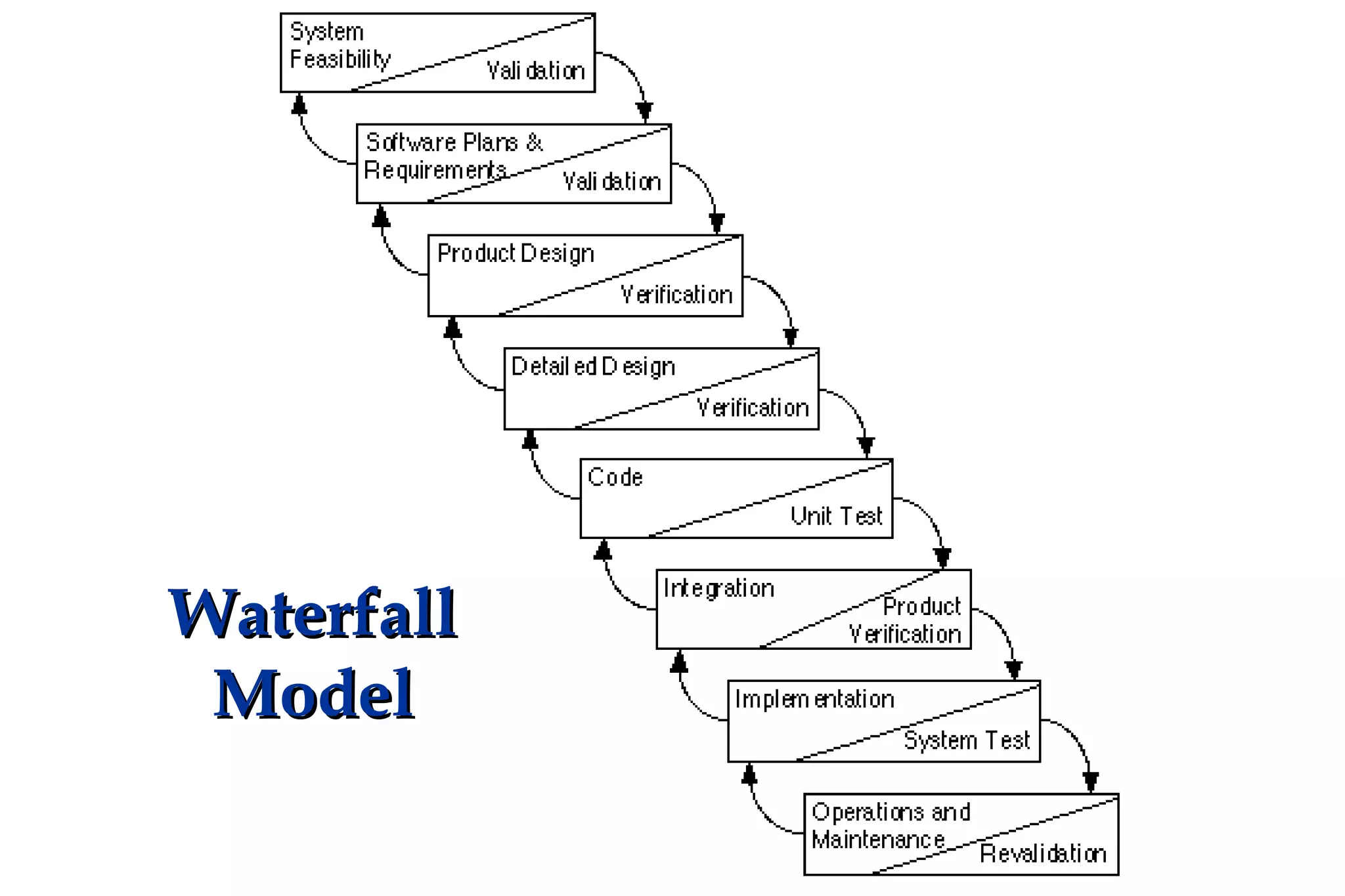
Waterfall Model
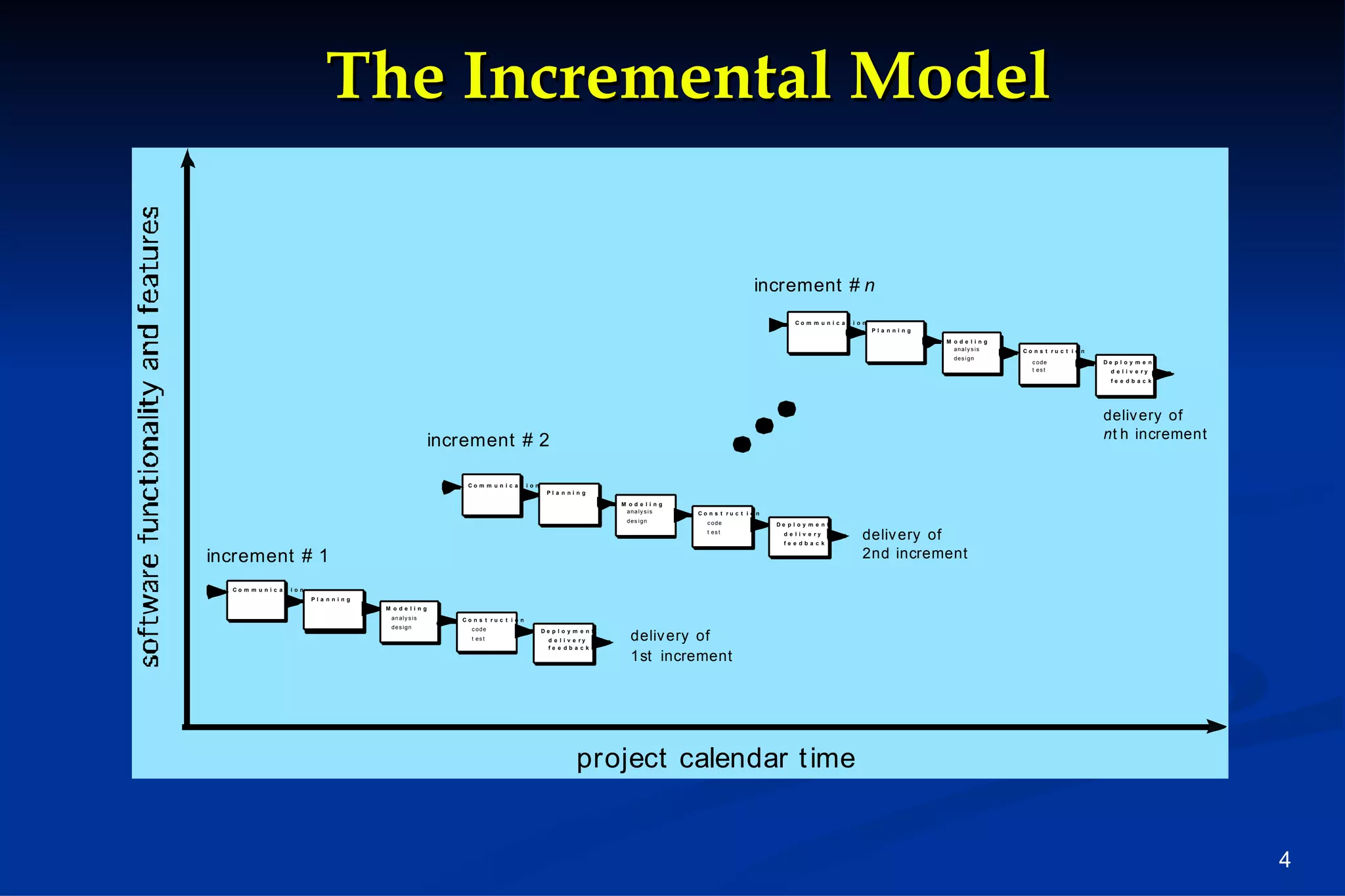
The Incremental Model
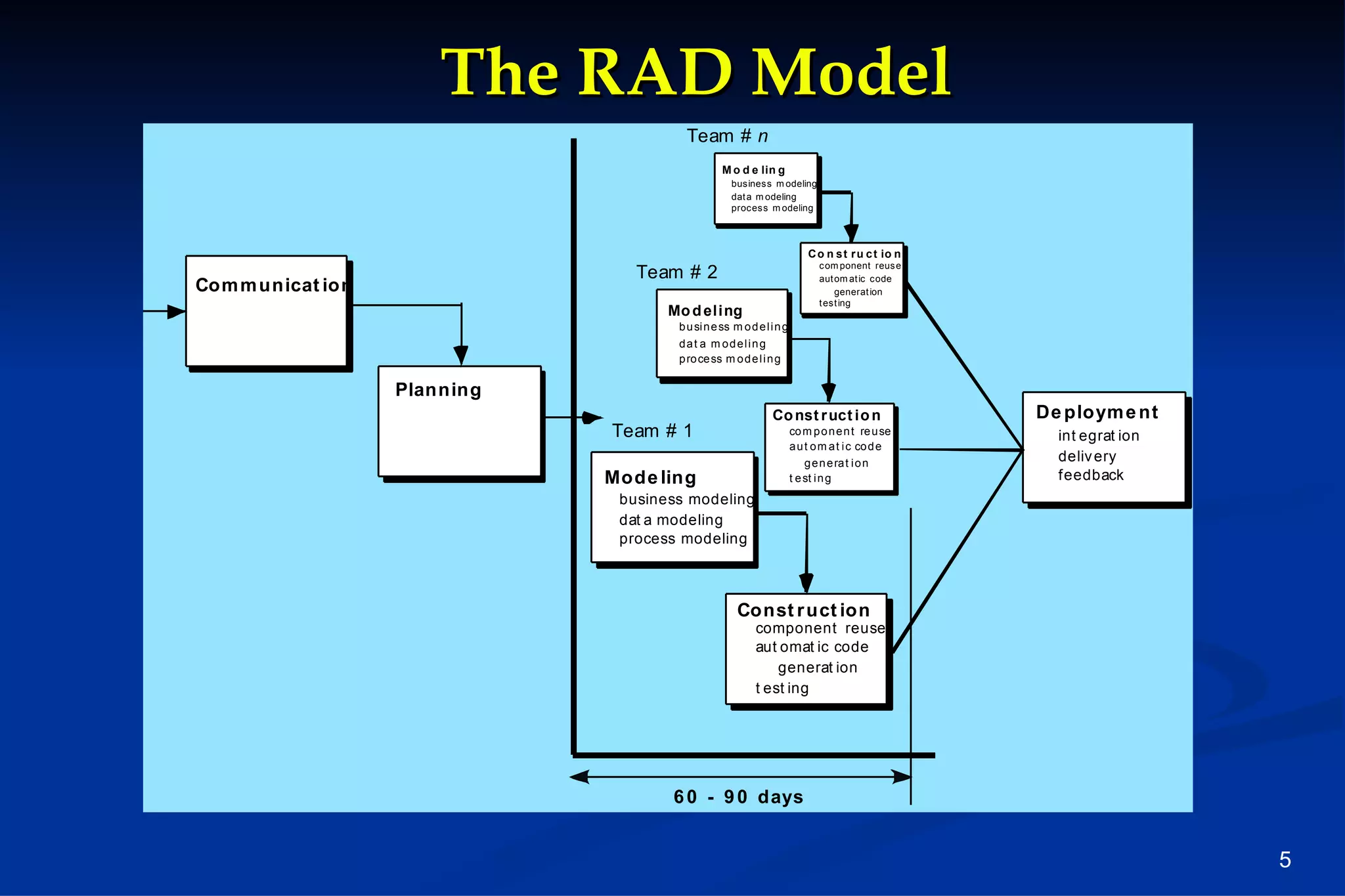
The RAD Model
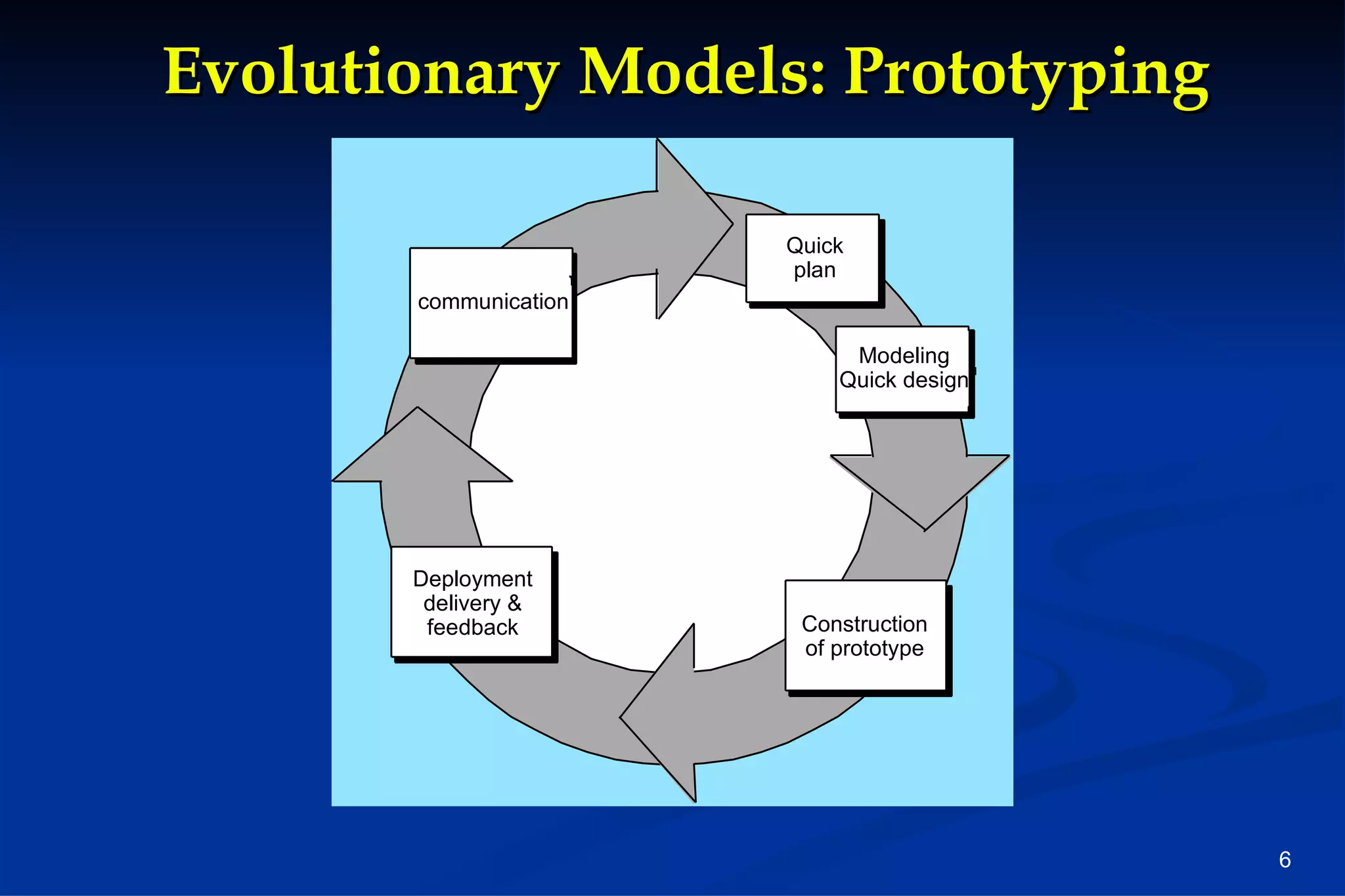
Evolutionary Models: Prototyping communication Quick plan Modeling Quick design Construction of prototype Deployment delivery & feedback
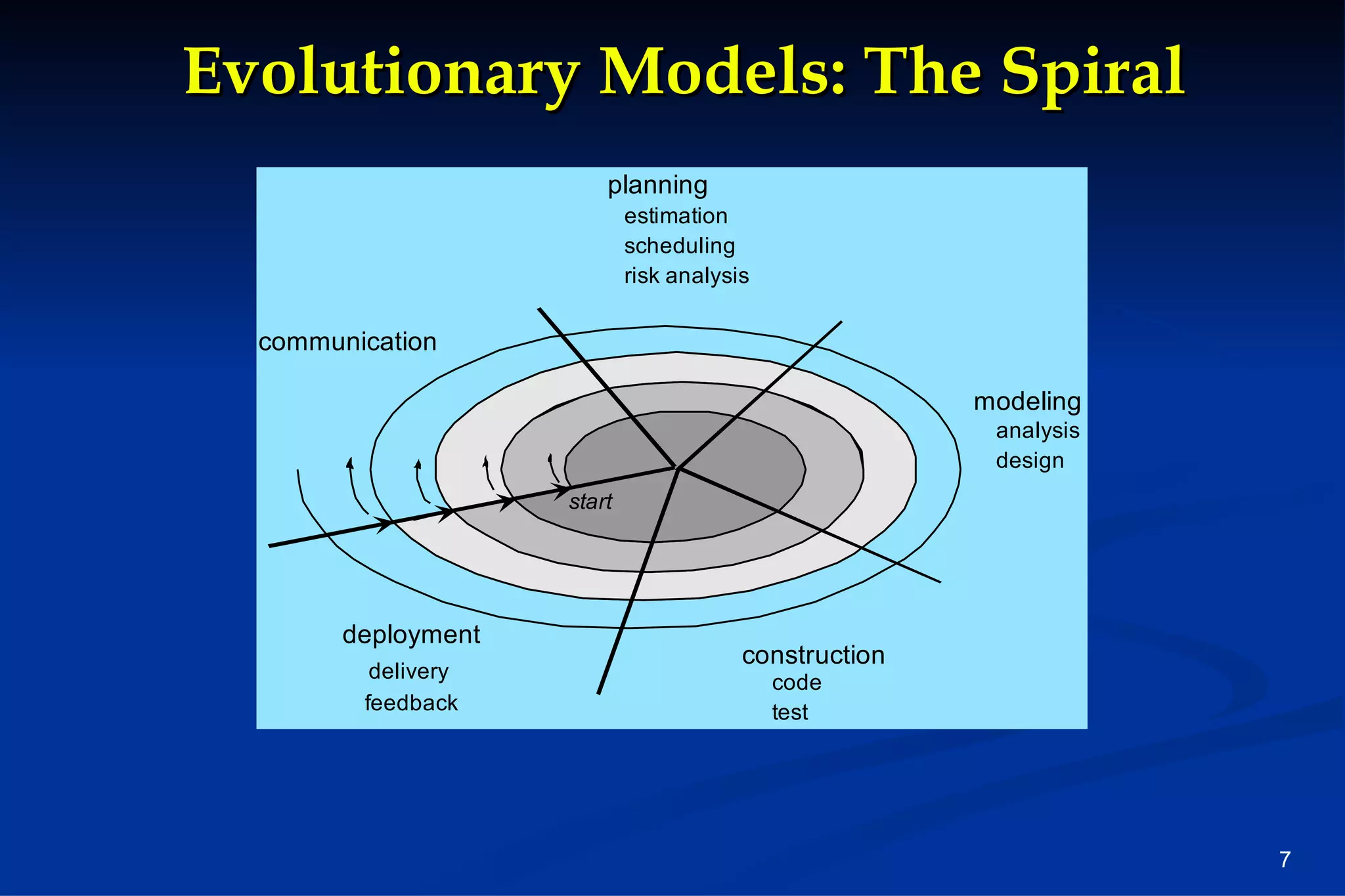
Evolutionary Models: The Spiral
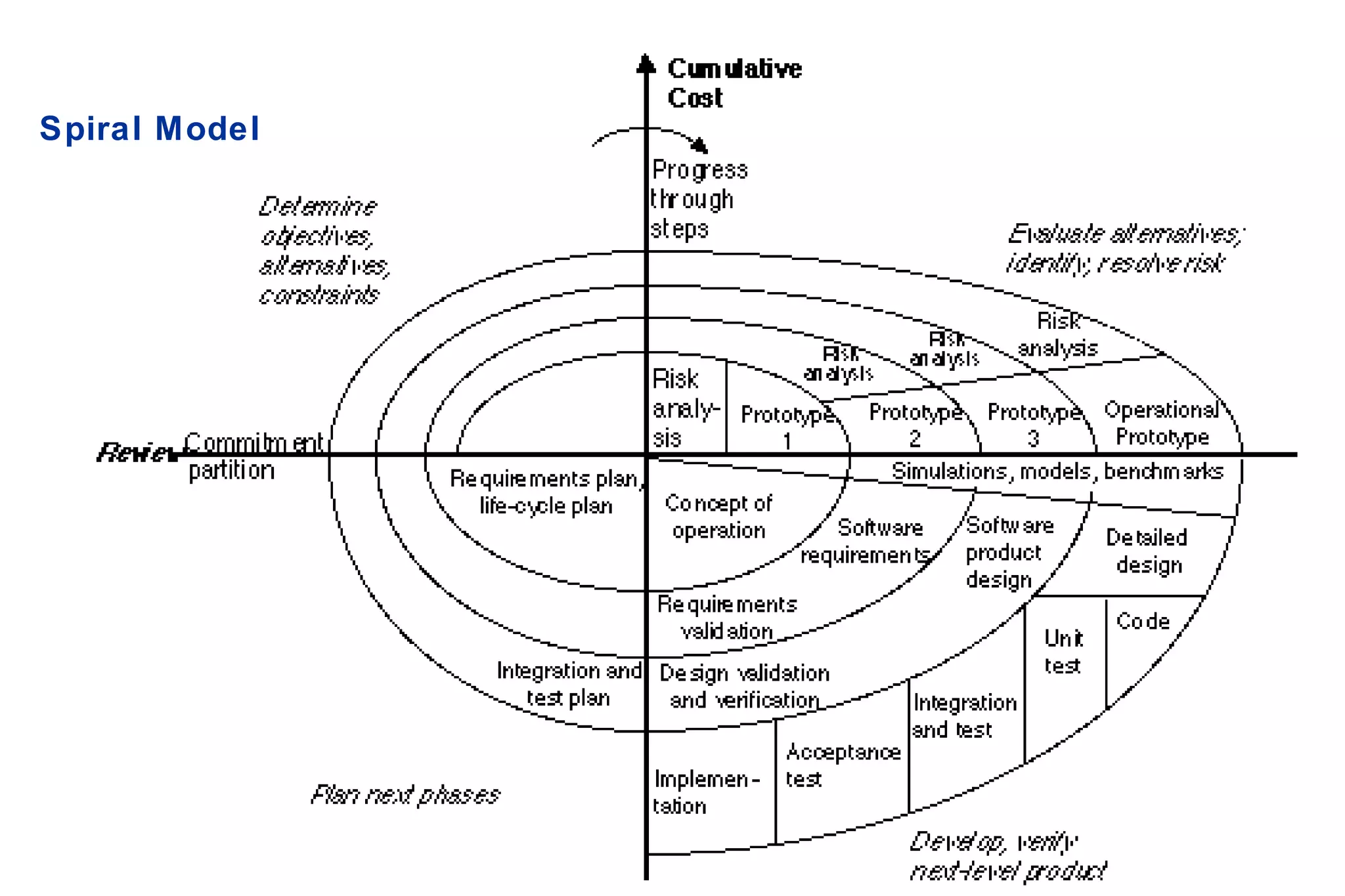
Spiral Model
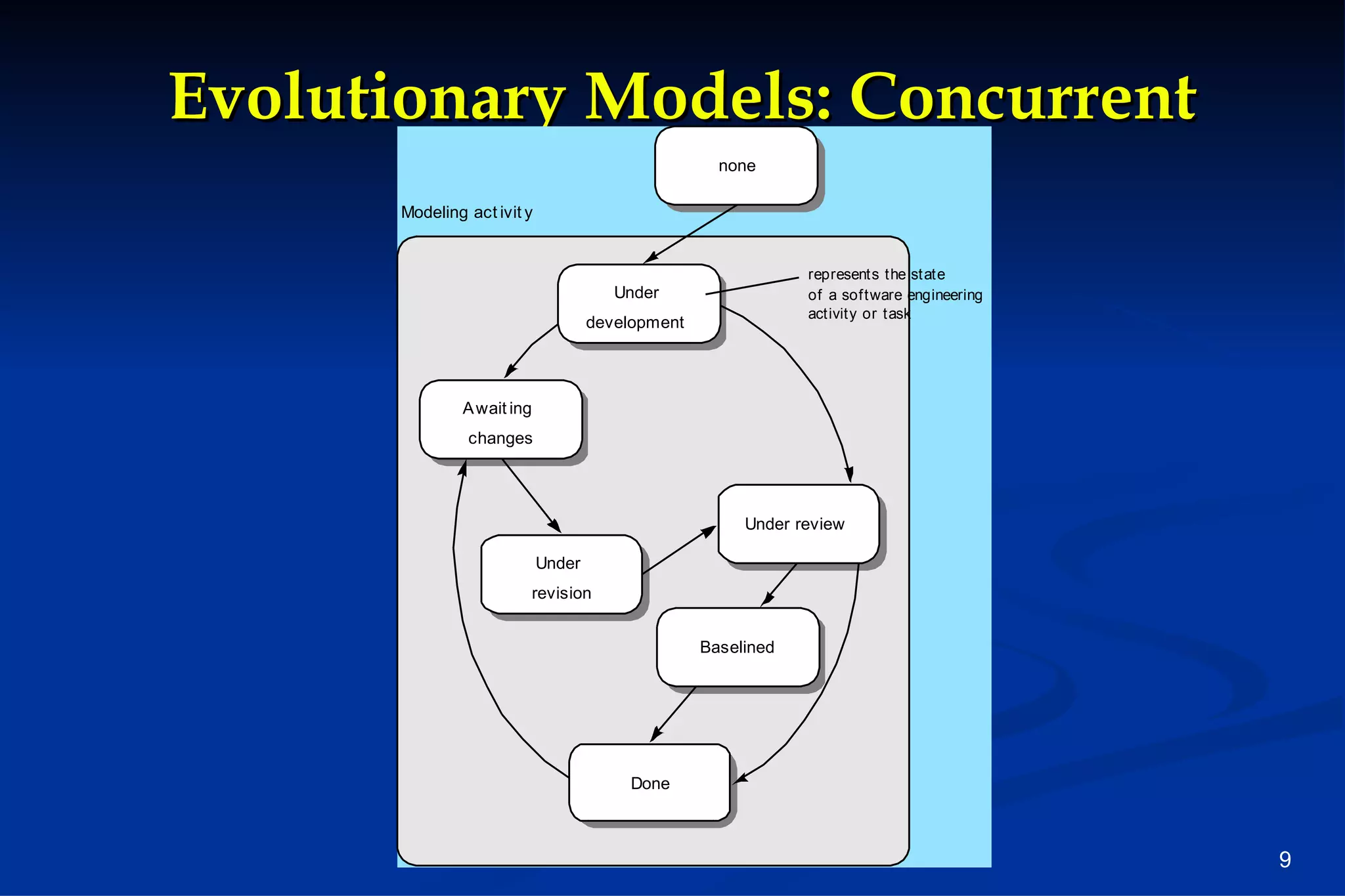
Evolutionary Models: Concurrent
Still Other Process Models Component based development —the process to apply when reuse is a development objective Formal methods —emphasizes the mathematical specification of requirements AOSD —provides a process and methodological approach for defining, specifying, designing, and constructing  aspects Unified Process —a “use-case driven, architecture-centric, iterative and incremental” software process closely aligned with the Unified Modeling Language (UML)
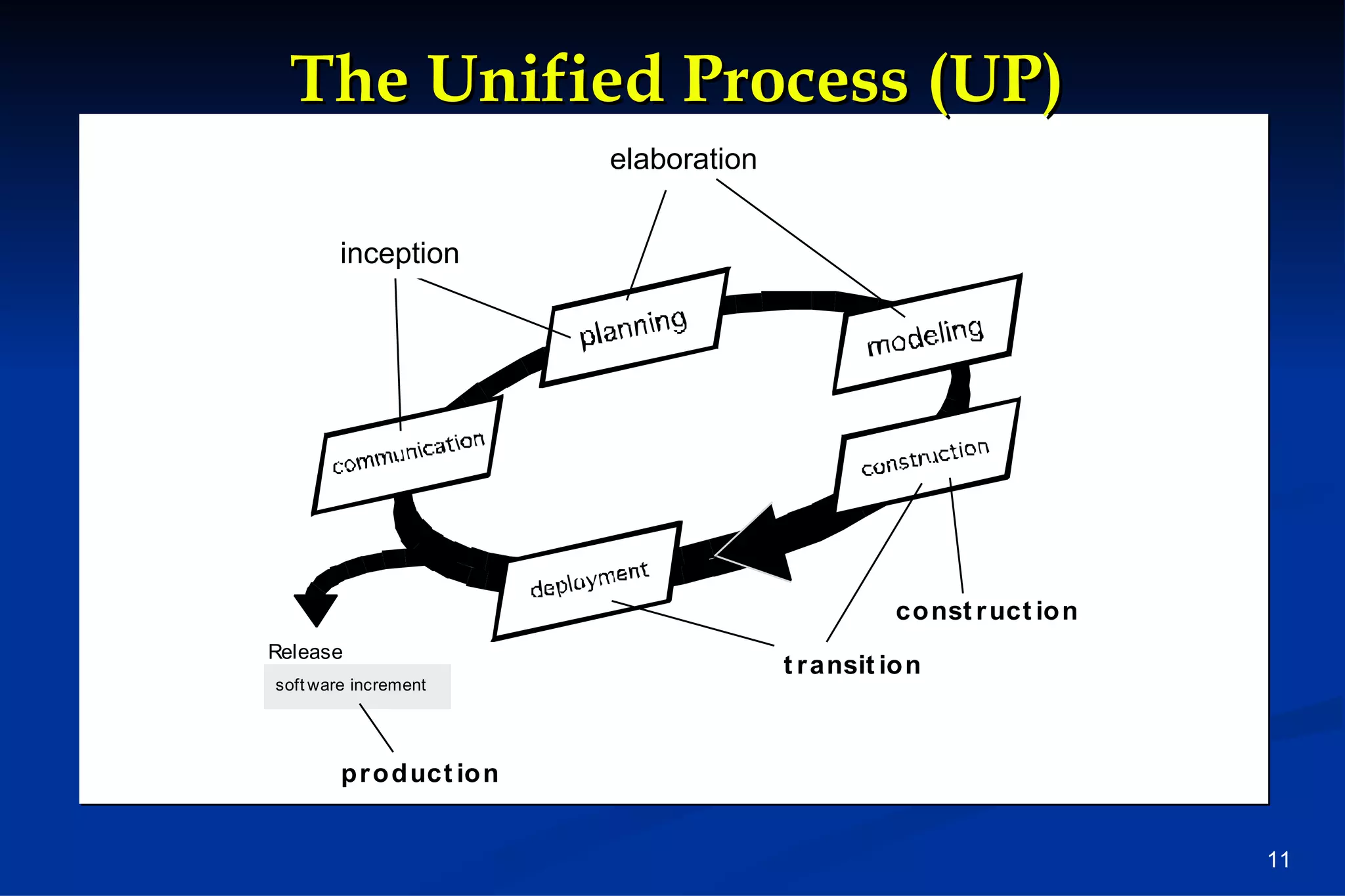
The Unified Process (UP) inception inception elaboration
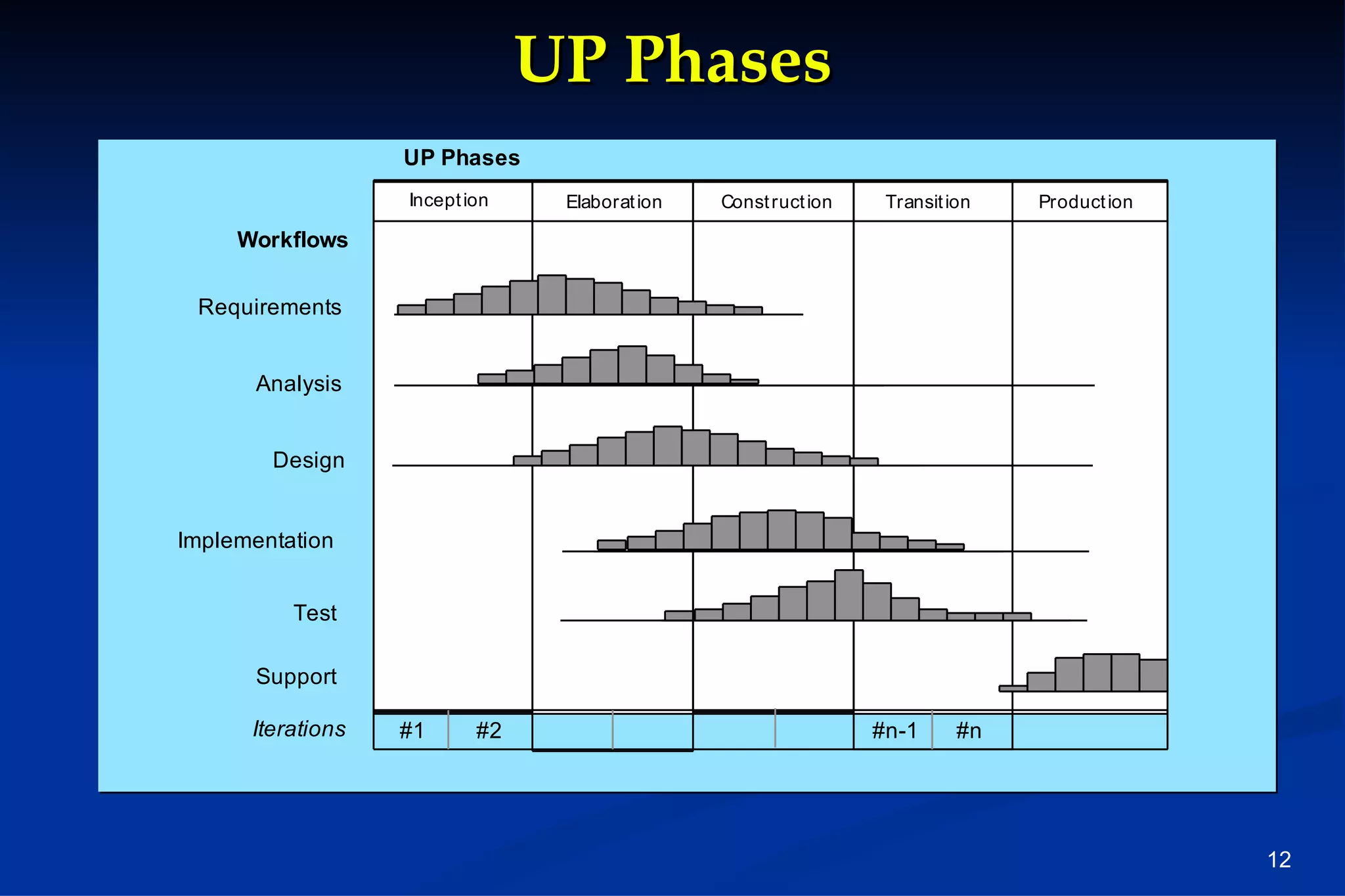
UP Phases
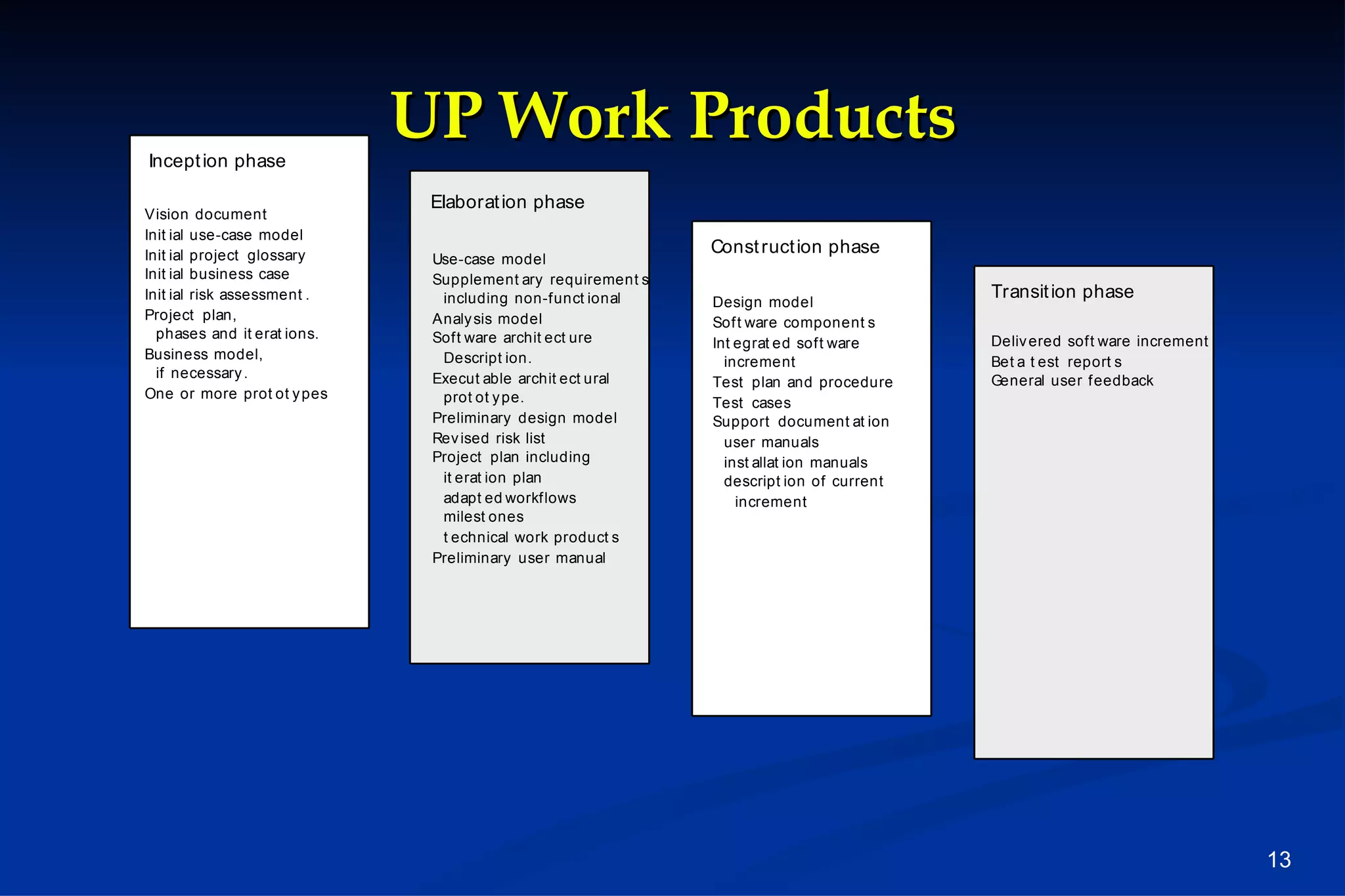
UP Work Products

Ch03 prescriptive process models

  • 1.
    Chapter 3 PrescriptiveProcess Models
  • 2.
    Prescriptive Models Prescriptiveprocess models advocate an orderly approach to software engineering That leads to a few questions … If prescriptive process models strive for structure and order, are they inappropriate for a software world that thrives on change? Yet, if we reject traditional process models (and the order they imply) and replace them with something less structured, do we make it impossible to achieve coordination and coherence in software work?
  • 3.
  • 4.
  • 5.
  • 6.
    Evolutionary Models: Prototypingcommunication Quick plan Modeling Quick design Construction of prototype Deployment delivery & feedback
  • 7.
  • 8.
  • 9.
  • 10.
    Still Other ProcessModels Component based development —the process to apply when reuse is a development objective Formal methods —emphasizes the mathematical specification of requirements AOSD —provides a process and methodological approach for defining, specifying, designing, and constructing aspects Unified Process —a “use-case driven, architecture-centric, iterative and incremental” software process closely aligned with the Unified Modeling Language (UML)
  • 11.
    The Unified Process(UP) inception inception elaboration
  • 12.
  • 13.