C O M M U N I T Y
E N G A G E M E N T,
S O L I D A R I T Y, A N
D C I T I Z E N S H I P
MELC:
•Analyze strategies of
empowerment and advocacy
of a community action initiative
•What is
empowerment?
EMPOWERMENT
•Empowerment is a capacity of
individuals to make choices that
can produce the desired
changes in their social,
economic, and political lives.
F U R T H E R M O R E , E M P O W E R M E N T
E N C O M PA S S E S
•1) having the ability to make one’s own
decisions, to control, to gain further control,
to fight for one’s rights, and to say
something and be listened to;
•2) being free, independent, recognized and
accepted as equal citizens, who can make
a difference
•What will you do to
become an empowered
individual?
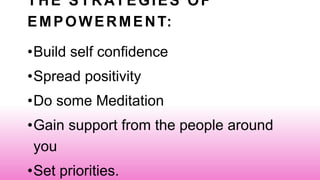
THE STRATEGIES OF
EMPOWERMENT:
•Build self confidence
•Spread positivity
•Do some Meditation
•Gain support from the people around
you
•Set priorities.
•What is
advocacy?
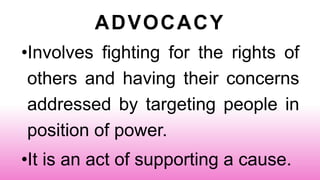
ADVOCACY
•Involves fighting for the rights of
others and having their concerns
addressed by targeting people in
position of power.
•It is an act of supporting a cause.
3 TYPES OF
ADVOCACY:
• systematic
•Individual
•self-advocacy
SYSTEMS ADVOCACY
( S Y S T E M AT I C )
•focuses on effort that shall change policies
at the local, national, or international levels
so that lasting changes will be brought to
the lives of groups or individuals who share
similar problems.
E X A M P L E S O F S Y S T E M S A D V O C A C Y :
• Education Network Philippines focuses on education reforms. It covers different
aspects: early childhood care and development, education financing, and non-
formal and formal education.
• HealthJustice Philippines aims to help Filipinos make sound health choices and
avoid health risks. It also ensures that they have equal health access. It facilitates
research on priority public health policies .In addition, it designs efficient tools for
policy change.
• Women’s Legal and Human Rights Bureau speaks for women’s welfare. It
promotes their holistic growth and legal advocacy. It also supports their dignity,
rights, and leadership.
INDIVIDUAL
ADVOCACY
•focuses on efforts that will change
the situation of an individual and
protect his or her right.
E X A M P L E S O F I N D I V I D U A L A D V O C A C Y :
• LoveYourself provides free HIV testing and counseling. This group uses a positive
approach to promote HIV awareness and sexual health. It has a culture of love and
belonging.
• Give.PH offers poor children with daily needs to keep them in school. Its three
main programs are back to school, hygiene, and customized personal and
corporate advocacy programs for children.
• Childhope Philippines launched Street Education and Protection (STEP). Its goal
is to improve the life of street children.
SELF-ADVOCACY
•focuses on strengthening an individual’s
ability to communicate with other
people, and at the same time
persuading and convincing the
individual to address his or her own
needs and rights.
W H AT I S C O M M O N A M O N G T H E S E
T H R E E T Y P E S O F A D V O C A C I E S ?
•their goal of changing the status
quo by targeting decision-
makers, leaders, or
policymakers who can affect
positive change.
PROCEDURE:
• ➢ Identifying a priority
problem
• ➢ Gathering information
• ➢ Developing achievable
aims and objectives
• ➢ Identifying the level of
advocacy
• ➢ Identifying target people or
groups
• ➢ Developing advocacy
messages
• ➢ Identifying allies
• ➢ Identifying available
resources
• ➢ Creating an action plan
• ➢ Monitoring and evaluating
advocacy work.
FALSE
•Read each statement
carefully. Write T if the
statement is TRUE and F if
FALSE.
•1. Empowerment involves the
capacity of an individual to
make choices that can make
changes in his life
•2. Empowerment does not
involve interplay of different
agency and opportunity
structure.
•3. Participation of everyone
is important in making
effective decision.
•4. In promoting advocacy,
there is no need to persuade
people to believe in you.
•5. Advocacy promotes
changes in status quo of
individual’s perspectives.
A C T I V I T Y 2 . E M P O W E R M E N T O R
A D V O C A C Y:
•Read the statements and determine
whether what is being described is
Empowerment or Advocacy. Write E
for Empowerment and A for Advocacy.
•1. It is the ability to
make one’s own
decision
•2. It involves enhancing the
capacity of an individual or
group to make purposive
outcome.
•3. The act of pleading
or arguing in favor of
something.
•4. It involves fighting for
the rights of others.
•5. It has three types:
systematic, individual,
and self.
•6. The goal is to change
the status quo of
people.
•7. It requires a carefully
detailed advocacy plan.
•8. The process of becoming
stronger and more
confident, especially in
controlling one’s life and
claiming one’s right.
•9. Example of this is a non-profit
organization that works to help
women of domestic abuse who
feel too afraid to speak for
themselves.
•10. Childhope Philippines launched
Street Education and Protection
(STEP) to improve the life of street
children.
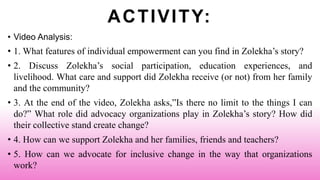
ACTIVITY:
• Video Analysis:
• 1. What features of individual empowerment can you find in Zolekha’s story?
• 2. Discuss Zolekha’s social participation, education experiences, and
livelihood. What care and support did Zolekha receive (or not) from her family
and the community?
• 3. At the end of the video, Zolekha asks,”Is there no limit to the things I can
do?” What role did advocacy organizations play in Zolekha’s story? How did
their collective stand create change?
• 4. How can we support Zolekha and her families, friends and teachers?
• 5. How can we advocate for inclusive change in the way that organizations
work?
CESC Week 2.pptx

CESC Week 2.pptx

  • 1.
    C O MM U N I T Y E N G A G E M E N T, S O L I D A R I T Y, A N D C I T I Z E N S H I P
  • 2.
    MELC: •Analyze strategies of empowermentand advocacy of a community action initiative
  • 3.
  • 4.
    EMPOWERMENT •Empowerment is acapacity of individuals to make choices that can produce the desired changes in their social, economic, and political lives.
  • 5.
    F U RT H E R M O R E , E M P O W E R M E N T E N C O M PA S S E S •1) having the ability to make one’s own decisions, to control, to gain further control, to fight for one’s rights, and to say something and be listened to; •2) being free, independent, recognized and accepted as equal citizens, who can make a difference
  • 6.
    •What will youdo to become an empowered individual?
  • 7.
    THE STRATEGIES OF EMPOWERMENT: •Buildself confidence •Spread positivity •Do some Meditation •Gain support from the people around you •Set priorities.
  • 8.
  • 9.
    ADVOCACY •Involves fighting forthe rights of others and having their concerns addressed by targeting people in position of power. •It is an act of supporting a cause.
  • 10.
    3 TYPES OF ADVOCACY: •systematic •Individual •self-advocacy
  • 11.
    SYSTEMS ADVOCACY ( SY S T E M AT I C ) •focuses on effort that shall change policies at the local, national, or international levels so that lasting changes will be brought to the lives of groups or individuals who share similar problems.
  • 12.
    E X AM P L E S O F S Y S T E M S A D V O C A C Y : • Education Network Philippines focuses on education reforms. It covers different aspects: early childhood care and development, education financing, and non- formal and formal education. • HealthJustice Philippines aims to help Filipinos make sound health choices and avoid health risks. It also ensures that they have equal health access. It facilitates research on priority public health policies .In addition, it designs efficient tools for policy change. • Women’s Legal and Human Rights Bureau speaks for women’s welfare. It promotes their holistic growth and legal advocacy. It also supports their dignity, rights, and leadership.
  • 13.
    INDIVIDUAL ADVOCACY •focuses on effortsthat will change the situation of an individual and protect his or her right.
  • 14.
    E X AM P L E S O F I N D I V I D U A L A D V O C A C Y : • LoveYourself provides free HIV testing and counseling. This group uses a positive approach to promote HIV awareness and sexual health. It has a culture of love and belonging. • Give.PH offers poor children with daily needs to keep them in school. Its three main programs are back to school, hygiene, and customized personal and corporate advocacy programs for children. • Childhope Philippines launched Street Education and Protection (STEP). Its goal is to improve the life of street children.
  • 15.
    SELF-ADVOCACY •focuses on strengtheningan individual’s ability to communicate with other people, and at the same time persuading and convincing the individual to address his or her own needs and rights.
  • 16.
    W H ATI S C O M M O N A M O N G T H E S E T H R E E T Y P E S O F A D V O C A C I E S ? •their goal of changing the status quo by targeting decision- makers, leaders, or policymakers who can affect positive change.
  • 17.
    PROCEDURE: • ➢ Identifyinga priority problem • ➢ Gathering information • ➢ Developing achievable aims and objectives • ➢ Identifying the level of advocacy • ➢ Identifying target people or groups • ➢ Developing advocacy messages • ➢ Identifying allies • ➢ Identifying available resources • ➢ Creating an action plan • ➢ Monitoring and evaluating advocacy work.
  • 18.
    FALSE •Read each statement carefully.Write T if the statement is TRUE and F if FALSE.
  • 19.
    •1. Empowerment involvesthe capacity of an individual to make choices that can make changes in his life
  • 20.
    •2. Empowerment doesnot involve interplay of different agency and opportunity structure.
  • 21.
    •3. Participation ofeveryone is important in making effective decision.
  • 22.
    •4. In promotingadvocacy, there is no need to persuade people to believe in you.
  • 23.
    •5. Advocacy promotes changesin status quo of individual’s perspectives.

  • 24.
    A C TI V I T Y 2 . E M P O W E R M E N T O R A D V O C A C Y: •Read the statements and determine whether what is being described is Empowerment or Advocacy. Write E for Empowerment and A for Advocacy.
  • 25.
    •1. It isthe ability to make one’s own decision
  • 26.
    •2. It involvesenhancing the capacity of an individual or group to make purposive outcome.
  • 27.
    •3. The actof pleading or arguing in favor of something.
  • 28.
    •4. It involvesfighting for the rights of others.
  • 29.
    •5. It hasthree types: systematic, individual, and self.
  • 30.
    •6. The goalis to change the status quo of people.
  • 31.
    •7. It requiresa carefully detailed advocacy plan.
  • 32.
    •8. The processof becoming stronger and more confident, especially in controlling one’s life and claiming one’s right.
  • 33.
    •9. Example ofthis is a non-profit organization that works to help women of domestic abuse who feel too afraid to speak for themselves.
  • 34.
    •10. Childhope Philippineslaunched Street Education and Protection (STEP) to improve the life of street children.
  • 35.
    ACTIVITY: • Video Analysis: •1. What features of individual empowerment can you find in Zolekha’s story? • 2. Discuss Zolekha’s social participation, education experiences, and livelihood. What care and support did Zolekha receive (or not) from her family and the community? • 3. At the end of the video, Zolekha asks,”Is there no limit to the things I can do?” What role did advocacy organizations play in Zolekha’s story? How did their collective stand create change? • 4. How can we support Zolekha and her families, friends and teachers? • 5. How can we advocate for inclusive change in the way that organizations work?

Editor's Notes