Community
Engagement,
Solidarity and
Citizenship
Social Sciences
Department., Arellano
University
Understan
d
the value
of
communit
y
1. What are the current
trends in community
action?
2. What is the value of
community action?
3. What are the current
dynamic institutions and
organizations that
contribute to community
development?
OBJECTIVE GUIDE QUESTIONS
KARL JASPERS
“The community of masses of
human beings has produced an
order of life in regulated channels
which connects individuals in a
technically functioning organization,
but not inwardly from the historicity
of their souls.”
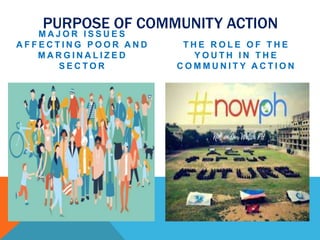
PURPOSE OF COMMUNITY ACTION
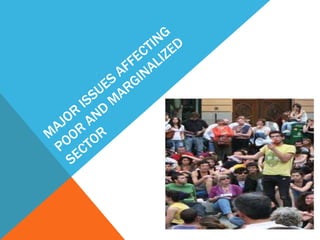
M A J O R I S S U E S
A F F E C T I N G P O O R A N D
M A R G I N A L I Z E D
S E C T O R
T H E R O L E O F T H E
Y O U T H I N T H E
C O M M U N I T Y A C T I O N
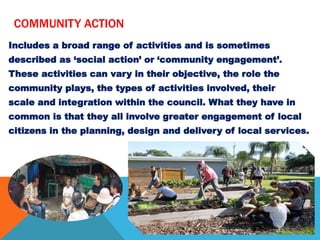
Includes a broad range of activities and is sometimes
described as ‘social action’ or ‘community engagement’.
These activities can vary in their objective, the role the
community plays, the types of activities involved, their
scale and integration within the council. What they have in
common is that they all involve greater engagement of local
citizens in the planning, design and delivery of local services.
COMMUNITY ACTION
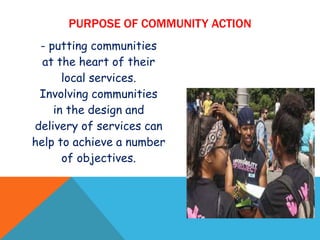
- putting communities
at the heart of their
local services.
Involving communities
in the design and
delivery of services can
help to achieve a number
of objectives.
PURPOSE OF COMMUNITY ACTION
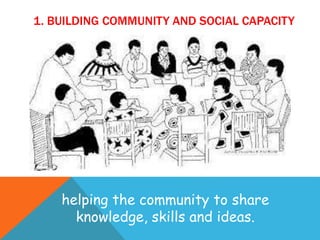
1. BUILDING COMMUNITY AND SOCIAL CAPACITY
helping the community to share
knowledge, skills and ideas.
2. COMMUNITY RESILIENCE
helping the community to support itself.
3. PREVENTION
a focus on early access to services or support,
engagement in design, cross-sector collaboration
and partnerships.
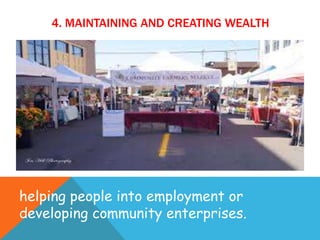
4. MAINTAINING AND CREATING WEALTH
helping people into employment or
developing community enterprises.
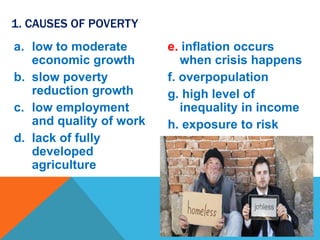
a. low to moderate
economic growth
b. slow poverty
reduction growth
c. low employment
and quality of work
d. lack of fully
developed
agriculture
e. inflation occurs
when crisis happens
f. overpopulation
g. high level of
inequality in income
h. exposure to risk
1. CAUSES OF POVERTY
 Immigrants, refugees and
migrants
 Women and girls
 Victims of Human Trafficking
 Mentally ill
 Children and youth
• People of differing sexual
orientation (LGBT community)
• People of differing religions
 Developmentally delayed,
physically disabled or mentally ill
people
 Incarcerated people (and their
families) People released from
incarceration
 People of low socioeconomic
status
 Unemployed people
 People of a particular
ethnicity/country of origin
 People with a differing political
orientation
2. MARGINALIZATION
– the process whereby something or someone is pushed to the edge
of a group and accorded lesser importance. This is predominantly a
social phenomenon by which a
minority or sub-group is excluded and their needs or desires ignored.
– when governments won’t engage
youth, community groups and non-profits
can step into engage youth as
community organizers. Through
training and empowerment, they can
develop unique, powerful campaigns that
engage many people, including
children, youth, adults, families and elders.
1. YOUTH AS COMMUNITY ORGANIZERS
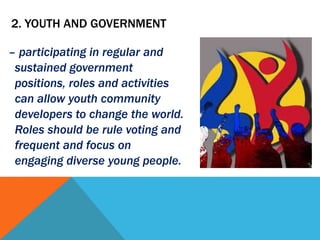
– participating in regular and
sustained government
positions, roles and activities
can allow youth community
developers to change the world.
Roles should be rule voting and
frequent and focus on
engaging diverse young people.
2. YOUTH AND GOVERNMENT
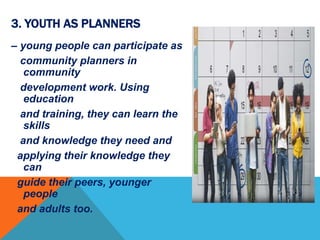
– young people can participate as
community planners in
community
development work. Using
education
and training, they can learn the
skills
and knowledge they need and
applying their knowledge they
can
guide their peers, younger
people
and adults too.
3. YOUTH AS PLANNERS
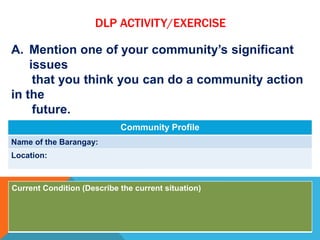
DLP ACTIVITY/EXERCISE
A. Mention one of your community’s significant
issues
that you think you can do a community action
in the
future.
B. Complete the table.
Community Profile
Name of the Barangay:
Location:
Current Condition (Describe the current situation)
and participations
Next Monday we will have a review of all
your lessons from day 1!

Purpose of Community Action

  • 1.
  • 3.
    Understan d the value of communit y 1. Whatare the current trends in community action? 2. What is the value of community action? 3. What are the current dynamic institutions and organizations that contribute to community development? OBJECTIVE GUIDE QUESTIONS
  • 4.
    KARL JASPERS “The communityof masses of human beings has produced an order of life in regulated channels which connects individuals in a technically functioning organization, but not inwardly from the historicity of their souls.”
  • 5.
    PURPOSE OF COMMUNITYACTION M A J O R I S S U E S A F F E C T I N G P O O R A N D M A R G I N A L I Z E D S E C T O R T H E R O L E O F T H E Y O U T H I N T H E C O M M U N I T Y A C T I O N
  • 6.
    Includes a broadrange of activities and is sometimes described as ‘social action’ or ‘community engagement’. These activities can vary in their objective, the role the community plays, the types of activities involved, their scale and integration within the council. What they have in common is that they all involve greater engagement of local citizens in the planning, design and delivery of local services. COMMUNITY ACTION
  • 7.
    - putting communities atthe heart of their local services. Involving communities in the design and delivery of services can help to achieve a number of objectives. PURPOSE OF COMMUNITY ACTION
  • 8.
    1. BUILDING COMMUNITYAND SOCIAL CAPACITY helping the community to share knowledge, skills and ideas.
  • 9.
    2. COMMUNITY RESILIENCE helpingthe community to support itself.
  • 10.
    3. PREVENTION a focuson early access to services or support, engagement in design, cross-sector collaboration and partnerships.
  • 11.
    4. MAINTAINING ANDCREATING WEALTH helping people into employment or developing community enterprises.
  • 13.
    a. low tomoderate economic growth b. slow poverty reduction growth c. low employment and quality of work d. lack of fully developed agriculture e. inflation occurs when crisis happens f. overpopulation g. high level of inequality in income h. exposure to risk 1. CAUSES OF POVERTY
  • 14.
     Immigrants, refugeesand migrants  Women and girls  Victims of Human Trafficking  Mentally ill  Children and youth • People of differing sexual orientation (LGBT community) • People of differing religions  Developmentally delayed, physically disabled or mentally ill people  Incarcerated people (and their families) People released from incarceration  People of low socioeconomic status  Unemployed people  People of a particular ethnicity/country of origin  People with a differing political orientation 2. MARGINALIZATION – the process whereby something or someone is pushed to the edge of a group and accorded lesser importance. This is predominantly a social phenomenon by which a minority or sub-group is excluded and their needs or desires ignored.
  • 16.
    – when governmentswon’t engage youth, community groups and non-profits can step into engage youth as community organizers. Through training and empowerment, they can develop unique, powerful campaigns that engage many people, including children, youth, adults, families and elders. 1. YOUTH AS COMMUNITY ORGANIZERS
  • 17.
    – participating inregular and sustained government positions, roles and activities can allow youth community developers to change the world. Roles should be rule voting and frequent and focus on engaging diverse young people. 2. YOUTH AND GOVERNMENT
  • 18.
    – young peoplecan participate as community planners in community development work. Using education and training, they can learn the skills and knowledge they need and applying their knowledge they can guide their peers, younger people and adults too. 3. YOUTH AS PLANNERS
  • 19.
    DLP ACTIVITY/EXERCISE A. Mentionone of your community’s significant issues that you think you can do a community action in the future. B. Complete the table. Community Profile Name of the Barangay: Location: Current Condition (Describe the current situation)
  • 20.
    and participations Next Mondaywe will have a review of all your lessons from day 1!