
Marleen Cobben
        Centre for Genetic Resources
                     The Netherlands


CGN, met goede opmaak
Postdoc at CGN

The effects of climate change on wild relatives of crops
important for European breeders
Starting with gap analysis

• Using gap analysis and GCM to assess future habitat
  areas for CWR
• Here at CIAT for two weeks to learn this methodology
• Important tool to get an estimate of the vulnerability of
  species to climate change
• Species with declining or disappearing habitat area are
  considered vulnerable
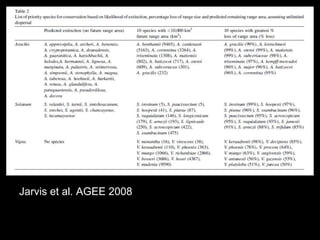
Jarvis et al. AGEE 2008
Gap analysis

• I am currently however inclined to think that we should
  prioritise the collection of species in populations we think
  will go extinct soon.
• This is not necessarily the same
• The focus shifts from species to populations
• In the following I will explain why I feel this way
• And I like to hear your thoughts about this
Marleen Cobben   René Smulders   Jana Verboom   Rolf Hoekstra   Paul Opdam


                   Adapt, move or perish

           The interaction of range shifts and
            genetics under climate change
Collaboration within Wageningen-UR

Plant Breeding
Alterra
Land Use Planning
Genetics
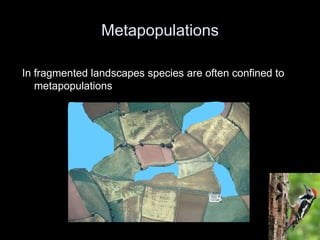
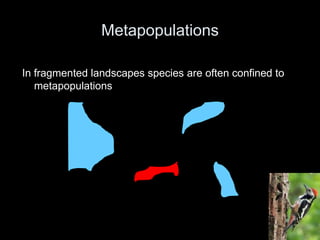
Metapopulations

In fragmented landscapes species are often confined to
   metapopulations
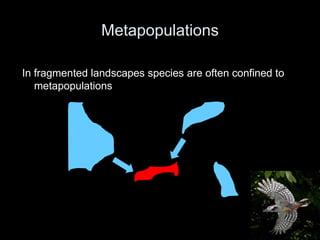
Metapopulations

In fragmented landscapes species are often confined to
   metapopulations
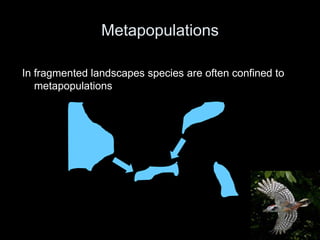
Metapopulations

In fragmented landscapes species are often confined to
   metapopulations
Metapopulations

In fragmented landscapes species are often confined to
   metapopulations
Climate change

• Natural populations of species need to respond to
  climate change. They may
   – track suitable climate, and thus shift their range
   – adapt to changed climate


• These responses may occur together and interact

• In my thesis I investigated both responses and their
  interaction
Research question


How will the level and distribution of neutral genetic
diversity in metapopulations be affected by range shifts
which are induced by current climate change?
Climate scenarios

• Overall increased temperature
   – Hadley Centre:
      • 1 C warming by 2100
      • 2 C warming by 2100
      • 4 C warming by 2100


• Increased weather variability: more weather extremes
Simulation study

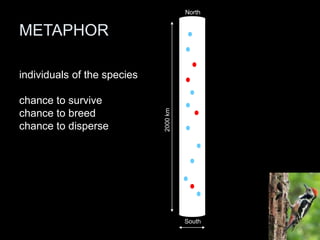
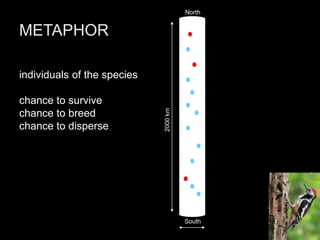
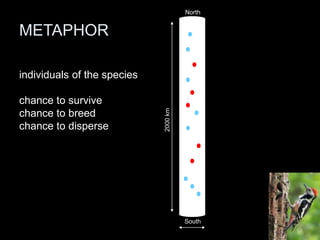
• METAPHOR: simulates metapopulation demography

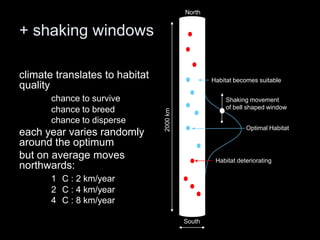
• + shaking windows: simulates temperature increase and
  weather variability

• + genetics: each individual has its own genome
  100 genes, diploid


              WHAT DOES IT LOOK LIKE?
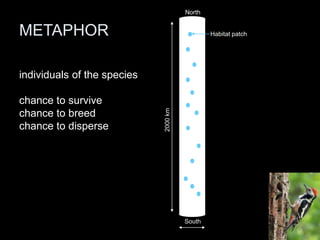
North


METAPHOR                                       Habitat patch


individuals of the species

chance to survive


                             2000 km
chance to breed
chance to disperse


                                       South
North


METAPHOR

individuals of the species

chance to survive


                             2000 km
chance to breed
chance to disperse


                                       South
North


METAPHOR

individuals of the species

chance to survive


                             2000 km
chance to breed
chance to disperse


                                       South
North


METAPHOR

individuals of the species

chance to survive


                             2000 km
chance to breed
chance to disperse


                                       South
North


+ shaking windows

climate translates to habitat                     Habitat becomes suitable
quality
       chance to survive                              Shaking movement
       chance to breed                                of bell shaped window


                                2000 km
       chance to disperse
                                                              Optimal Habitat
each year varies randomly
around the optimum
but on average moves                               Habitat deteriorating
northwards:
       1 C : 2 km/year
       2 C : 4 km/year
       4 C : 8 km/year

                                          South
North


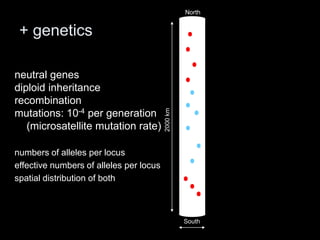
 + genetics

neutral genes
diploid inheritance
recombination


                                         2000 km
mutations: 10-4 per generation
   (microsatellite mutation rate)

numbers of alleles per locus
effective numbers of alleles per locus
spatial distribution of both


                                                   South
North


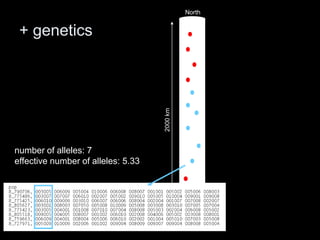
 + genetics


                                    2000 km
number of alleles: 7
effective number of alleles: 5.33


                                              South
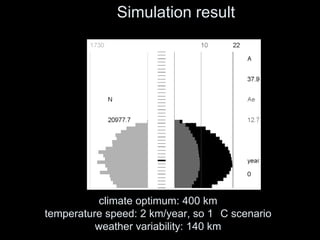
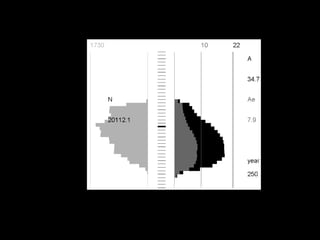
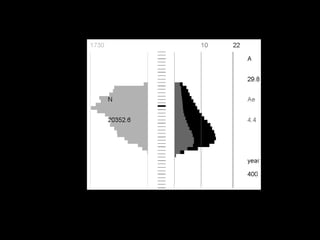
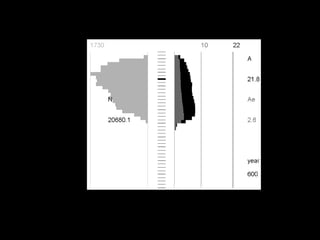
Simulation result


           climate optimum: 400 km
temperature speed: 2 km/year, so 1 C scenario
          weather variability: 140 km
Concluding

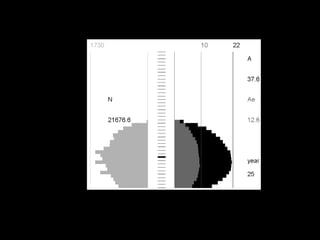
Under 2 and 4 degrees temperature increase scenarios the
  metapopulation goes extinct

All temperature increase scenarios show loss of neutral
genetic diversity as a combination of ‘allele surfing’ at the
leading edge and ‘allele wipe-out’ at the trailing edge


                                      Cobben et al. 2011 Ecography
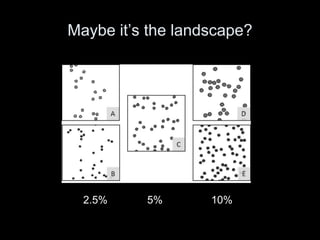
Maybe it’s the landscape?


  2.5%    5%       10%
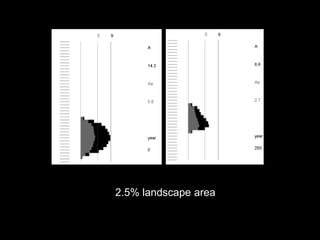
2.5% landscape area
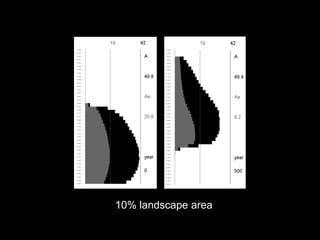
10% landscape area
So

 Enhancing landscape connectivity may lead to a delayed
  loss of genetic diversity in metapopulations under
  climate change
 But additional measures are likely necessary to ensure
  its long-term conservation


                            Cobben et al. 2012 Landscape Ecology
Well....

 Surely genetic variation that is selected for will not go
  extinct...
 And adaptation will improve either the species’ tracking
  capabilities or its local survival?
Modelling adaptive genetic diversity

• Up till now neutral genes: not affecting individual
  performance

• Set of models allowing selection for traits or a
  combination of traits

• Under temperature increase and increased weather
  variability
Research question

What is the outcome of the interaction of local evolution
 and range shifts when the central populations in the
 species range differ genetically from the marginal
 populations?
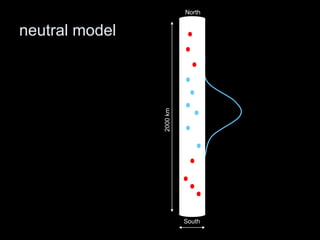
North


neutral model


                2000 km


                          South
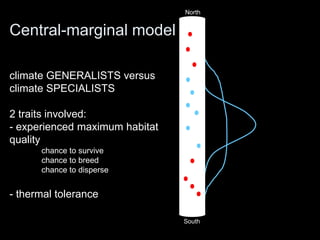
North


Central-marginal model

climate GENERALISTS versus
climate SPECIALISTS

2 traits involved:
- experienced maximum habitat
quality
      chance to survive
      chance to breed
      chance to disperse


- thermal tolerance

                                South
North


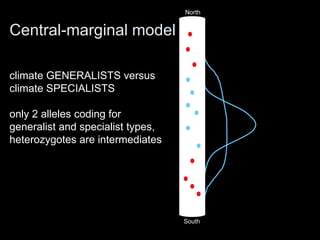
Central-marginal model

climate GENERALISTS versus
climate SPECIALISTS

only 2 alleles coding for
generalist and specialist types,
heterozygotes are intermediates


                                   South
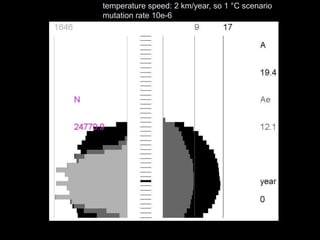
temperature speed: 2 km/year, so 1 °C scenario
mutation rate 10e-6
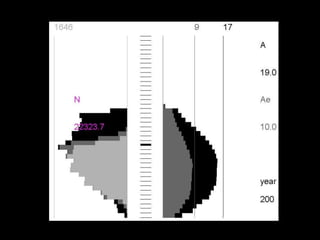
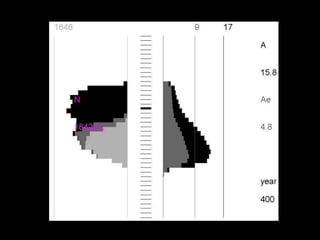
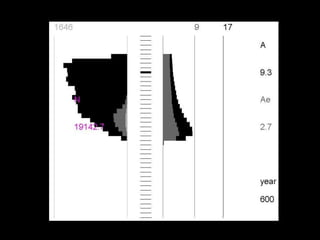
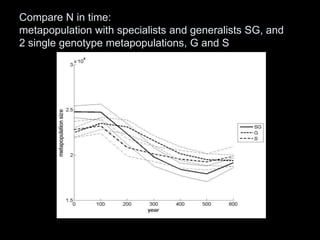
Compare N in time:
metapopulation with specialists and generalists SG, and
2 single genotype metapopulations, G and S
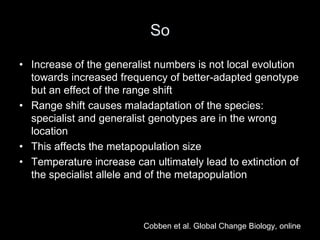
So

• Increase of the generalist numbers is not local evolution
  towards increased frequency of better-adapted genotype
  but an effect of the range shift
• Range shift causes maladaptation of the species:
  specialist and generalist genotypes are in the wrong
  location
• This affects the metapopulation size
• Temperature increase can ultimately lead to extinction of
  the specialist allele and of the metapopulation


                          Cobben et al. Global Change Biology, online
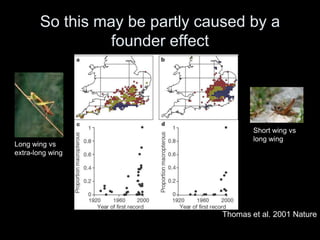
Evolution of dispersal

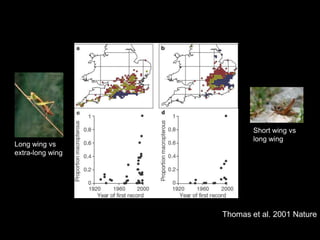
• Range shifts are known to lead to increased dispersal
  capacity at range borders
Short wing vs
                          long wing
Long wing vs
extra-long wing


                  Thomas et al. 2001 Nature
Hmmm....

• I wonder if this pattern could be partly explained by
  founder effects as a result of the range shift....
Research questions

Will range shifts lead to selection for increased dispersal
    probability in the metapopulation?
Could this increase be caused by founder effects?
If so, are there adverse effects of this?
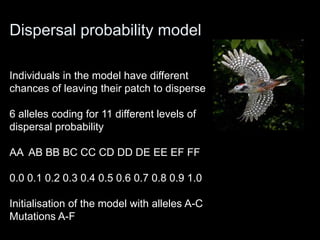
Dispersal probability model

Individuals in the model have different
chances of leaving their patch to disperse

6 alleles coding for 11 different levels of
dispersal probability

AA AB BB BC CC CD DD DE EE EF FF

0.0 0.1 0.2 0.3 0.4 0.5 0.6 0.7 0.8 0.9 1.0

Initialisation of the model with alleles A-C
Mutations A-F
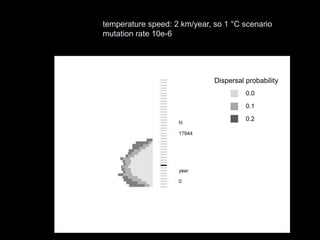
temperature speed: 2 km/year, so 1 °C scenario
mutation rate 10e-6


                              Dispersal probability
                                        0.0

                                        0.1

                                        0.2
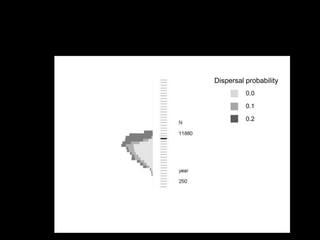
Dispersal probability
          0.0

          0.1

          0.2
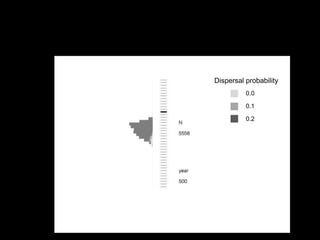
Dispersal probability
          0.0

          0.1

          0.2
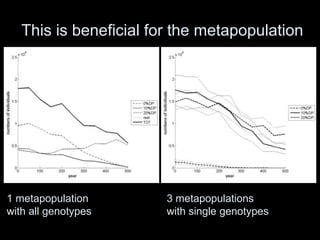
This is beneficial for the metapopulation


1 metapopulation        3 metapopulations
with all genotypes      with single genotypes
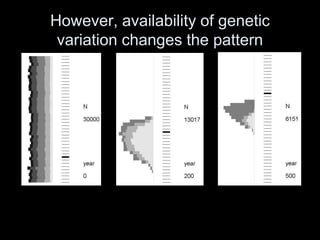
However, availability of genetic
 variation changes the pattern
So
• The pattern of genotypes is not caused solely by
  selection pressure
• And is thus partly the result of the local availability of the
  genotypes
• Under climate change, evolution towards increased
  dispersal probability is therefore enhanced by the
  founder effect
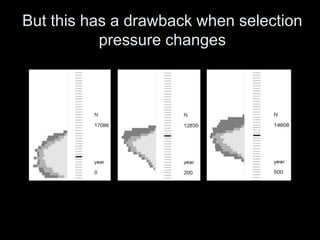
But this has a drawback when selection
           pressure changes
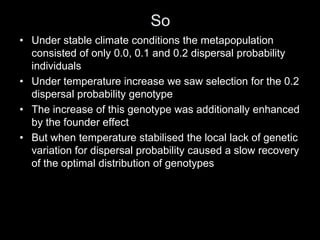
So
• Under stable climate conditions the metapopulation
  consisted of only 0.0, 0.1 and 0.2 dispersal probability
  individuals
• Under temperature increase we saw selection for the 0.2
  dispersal probability genotype
• The increase of this genotype was additionally enhanced
  by the founder effect
• But when temperature stabilised the local lack of genetic
  variation for dispersal probability caused a slow recovery
  of the optimal distribution of genotypes
So this may be partly caused by a
                 founder effect


                                        Short wing vs
                                        long wing
Long wing vs
extra-long wing


                                Thomas et al. 2001 Nature
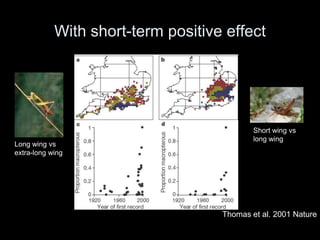
With short-term positive effect


                                            Short wing vs
                                            long wing
Long wing vs
extra-long wing


                                    Thomas et al. 2001 Nature
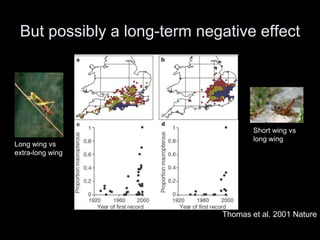
But possibly a long-term negative effect


                                     Short wing vs
                                     long wing
Long wing vs
extra-long wing


                             Thomas et al. 2001 Nature
Overall conclusions

1. The founder effect is an important determinant of the
   allele composition in newly established populations
   under range shift across fragmented habitat.

2. The genetic impoverishment resulting from such founder
events requires considerable restoration time in fragmented
habitat and may consequently be a risk to species’ survival.
Implications

• We are investigating future suitable habitat areas for
  species that are currently shifting their ranges
• And basing our estimate of their vulnerability on the
  amount of habitat left
• But we don’t know whether these species will actually be
  able to reach these new areas
• And if they do, they may look very different
• I therefore suggest that we further investigate whether to
  prioritise the collection of genetic diversity in populations
  assessed to go extinct soon
Thank you

Centre for Genetic Resources The Netherlands

  • 1.
    Marleen Cobben Centre for Genetic Resources The Netherlands CGN, met goede opmaak
  • 2.
    Postdoc at CGN Theeffects of climate change on wild relatives of crops important for European breeders
  • 3.
    Starting with gapanalysis • Using gap analysis and GCM to assess future habitat areas for CWR • Here at CIAT for two weeks to learn this methodology • Important tool to get an estimate of the vulnerability of species to climate change • Species with declining or disappearing habitat area are considered vulnerable
  • 4.
    Jarvis et al.AGEE 2008
  • 5.
    Gap analysis • Iam currently however inclined to think that we should prioritise the collection of species in populations we think will go extinct soon. • This is not necessarily the same • The focus shifts from species to populations • In the following I will explain why I feel this way • And I like to hear your thoughts about this
  • 6.
    Marleen Cobben René Smulders Jana Verboom Rolf Hoekstra Paul Opdam Adapt, move or perish The interaction of range shifts and genetics under climate change
  • 7.
    Collaboration within Wageningen-UR PlantBreeding Alterra Land Use Planning Genetics
  • 8.
    Metapopulations In fragmented landscapesspecies are often confined to metapopulations
  • 9.
    Metapopulations In fragmented landscapesspecies are often confined to metapopulations
  • 10.
    Metapopulations In fragmented landscapesspecies are often confined to metapopulations
  • 11.
    Metapopulations In fragmented landscapesspecies are often confined to metapopulations
  • 12.
    Climate change • Naturalpopulations of species need to respond to climate change. They may – track suitable climate, and thus shift their range – adapt to changed climate • These responses may occur together and interact • In my thesis I investigated both responses and their interaction
  • 13.
    Research question How willthe level and distribution of neutral genetic diversity in metapopulations be affected by range shifts which are induced by current climate change?
  • 14.
    Climate scenarios • Overallincreased temperature – Hadley Centre: • 1 C warming by 2100 • 2 C warming by 2100 • 4 C warming by 2100 • Increased weather variability: more weather extremes
  • 15.
    Simulation study • METAPHOR:simulates metapopulation demography • + shaking windows: simulates temperature increase and weather variability • + genetics: each individual has its own genome 100 genes, diploid WHAT DOES IT LOOK LIKE?
  • 16.
    North METAPHOR Habitat patch individuals of the species chance to survive 2000 km chance to breed chance to disperse South
  • 17.
    North METAPHOR individuals of thespecies chance to survive 2000 km chance to breed chance to disperse South
  • 18.
    North METAPHOR individuals of thespecies chance to survive 2000 km chance to breed chance to disperse South
  • 19.
    North METAPHOR individuals of thespecies chance to survive 2000 km chance to breed chance to disperse South
  • 20.
    North + shaking windows climatetranslates to habitat Habitat becomes suitable quality chance to survive Shaking movement chance to breed of bell shaped window 2000 km chance to disperse Optimal Habitat each year varies randomly around the optimum but on average moves Habitat deteriorating northwards: 1 C : 2 km/year 2 C : 4 km/year 4 C : 8 km/year South
  • 21.
    North + genetics neutralgenes diploid inheritance recombination 2000 km mutations: 10-4 per generation (microsatellite mutation rate) numbers of alleles per locus effective numbers of alleles per locus spatial distribution of both South
  • 22.
    North + genetics 2000 km number of alleles: 7 effective number of alleles: 5.33 South
  • 23.
    Simulation result climate optimum: 400 km temperature speed: 2 km/year, so 1 C scenario weather variability: 140 km
  • 40.
    Concluding Under 2 and4 degrees temperature increase scenarios the metapopulation goes extinct All temperature increase scenarios show loss of neutral genetic diversity as a combination of ‘allele surfing’ at the leading edge and ‘allele wipe-out’ at the trailing edge Cobben et al. 2011 Ecography
  • 41.
    Maybe it’s thelandscape? 2.5% 5% 10%
  • 42.
  • 43.
  • 44.
    So  Enhancing landscapeconnectivity may lead to a delayed loss of genetic diversity in metapopulations under climate change  But additional measures are likely necessary to ensure its long-term conservation Cobben et al. 2012 Landscape Ecology
  • 45.
    Well....  Surely geneticvariation that is selected for will not go extinct...  And adaptation will improve either the species’ tracking capabilities or its local survival?
  • 46.
    Modelling adaptive geneticdiversity • Up till now neutral genes: not affecting individual performance • Set of models allowing selection for traits or a combination of traits • Under temperature increase and increased weather variability
  • 47.
    Research question What isthe outcome of the interaction of local evolution and range shifts when the central populations in the species range differ genetically from the marginal populations?
  • 48.
    North neutral model 2000 km South
  • 49.
    North Central-marginal model climate GENERALISTSversus climate SPECIALISTS 2 traits involved: - experienced maximum habitat quality chance to survive chance to breed chance to disperse - thermal tolerance South
  • 50.
    North Central-marginal model climate GENERALISTSversus climate SPECIALISTS only 2 alleles coding for generalist and specialist types, heterozygotes are intermediates South
  • 51.
    temperature speed: 2km/year, so 1 °C scenario mutation rate 10e-6
  • 55.
    Compare N intime: metapopulation with specialists and generalists SG, and 2 single genotype metapopulations, G and S
  • 56.
    So • Increase ofthe generalist numbers is not local evolution towards increased frequency of better-adapted genotype but an effect of the range shift • Range shift causes maladaptation of the species: specialist and generalist genotypes are in the wrong location • This affects the metapopulation size • Temperature increase can ultimately lead to extinction of the specialist allele and of the metapopulation Cobben et al. Global Change Biology, online
  • 57.
    Evolution of dispersal •Range shifts are known to lead to increased dispersal capacity at range borders
  • 58.
    Short wing vs long wing Long wing vs extra-long wing Thomas et al. 2001 Nature
  • 59.
    Hmmm.... • I wonderif this pattern could be partly explained by founder effects as a result of the range shift....
  • 60.
    Research questions Will rangeshifts lead to selection for increased dispersal probability in the metapopulation? Could this increase be caused by founder effects? If so, are there adverse effects of this?
  • 61.
    Dispersal probability model Individualsin the model have different chances of leaving their patch to disperse 6 alleles coding for 11 different levels of dispersal probability AA AB BB BC CC CD DD DE EE EF FF 0.0 0.1 0.2 0.3 0.4 0.5 0.6 0.7 0.8 0.9 1.0 Initialisation of the model with alleles A-C Mutations A-F
  • 62.
    temperature speed: 2km/year, so 1 °C scenario mutation rate 10e-6 Dispersal probability 0.0 0.1 0.2
  • 63.
  • 64.
  • 65.
    This is beneficialfor the metapopulation 1 metapopulation 3 metapopulations with all genotypes with single genotypes
  • 66.
    However, availability ofgenetic variation changes the pattern
  • 67.
    So • The patternof genotypes is not caused solely by selection pressure • And is thus partly the result of the local availability of the genotypes • Under climate change, evolution towards increased dispersal probability is therefore enhanced by the founder effect
  • 68.
    But this hasa drawback when selection pressure changes
  • 69.
    So • Under stableclimate conditions the metapopulation consisted of only 0.0, 0.1 and 0.2 dispersal probability individuals • Under temperature increase we saw selection for the 0.2 dispersal probability genotype • The increase of this genotype was additionally enhanced by the founder effect • But when temperature stabilised the local lack of genetic variation for dispersal probability caused a slow recovery of the optimal distribution of genotypes
  • 70.
    So this maybe partly caused by a founder effect Short wing vs long wing Long wing vs extra-long wing Thomas et al. 2001 Nature
  • 71.
    With short-term positiveeffect Short wing vs long wing Long wing vs extra-long wing Thomas et al. 2001 Nature
  • 72.
    But possibly along-term negative effect Short wing vs long wing Long wing vs extra-long wing Thomas et al. 2001 Nature
  • 73.
    Overall conclusions 1. Thefounder effect is an important determinant of the allele composition in newly established populations under range shift across fragmented habitat. 2. The genetic impoverishment resulting from such founder events requires considerable restoration time in fragmented habitat and may consequently be a risk to species’ survival.
  • 74.
    Implications • We areinvestigating future suitable habitat areas for species that are currently shifting their ranges • And basing our estimate of their vulnerability on the amount of habitat left • But we don’t know whether these species will actually be able to reach these new areas • And if they do, they may look very different • I therefore suggest that we further investigate whether to prioritise the collection of genetic diversity in populations assessed to go extinct soon
  • 75.