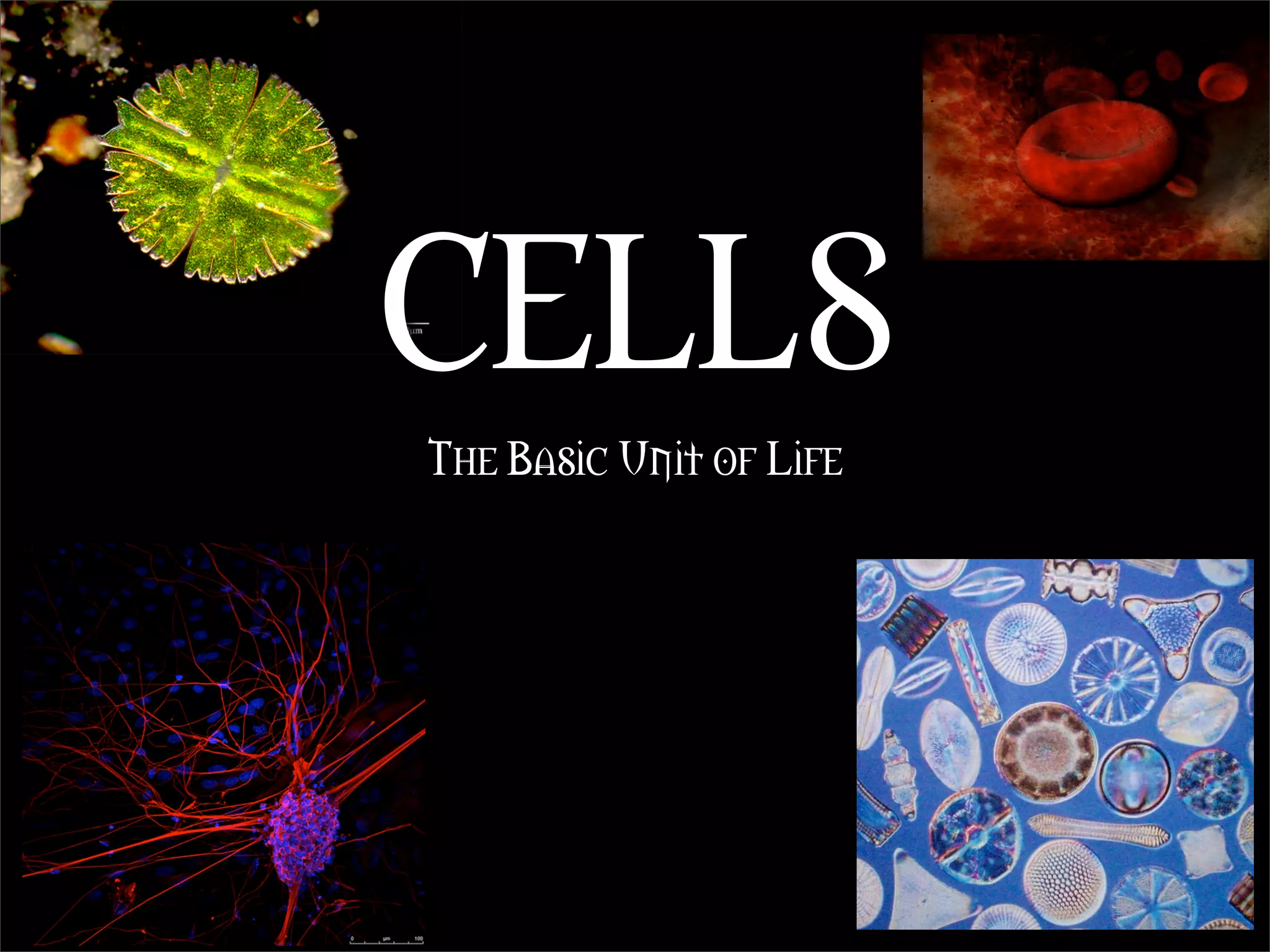
CELLS
The Basic Unit of Life
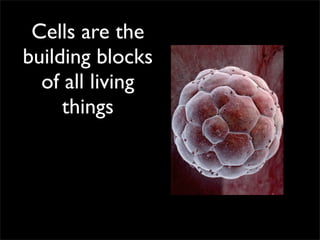
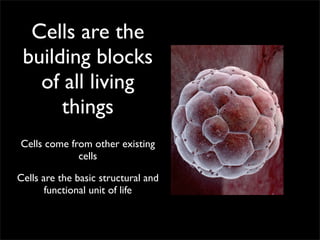
Cells are the
building blocks
  of all living
     things
Cells are the
building blocks
  of all living
     things
Cells come from other existing
             cells
Cells are the
 building blocks
   of all living
      things
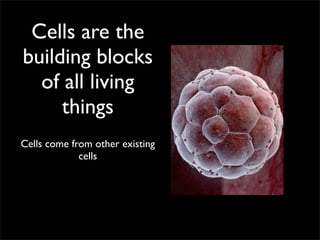
Cells come from other existing
             cells

Cells are the basic structural and
       functional unit of life
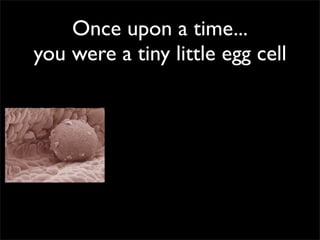
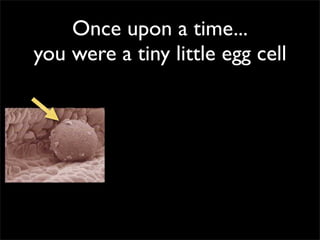
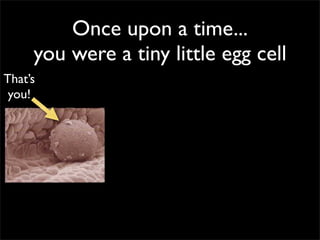
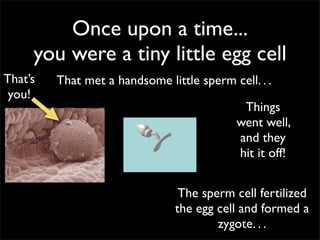
Once upon a time...
you were a tiny little egg cell
Once upon a time...
you were a tiny little egg cell
Once upon a time...
you were a tiny little egg cell
Once upon a time...
     you were a tiny little egg cell
That’s
 you!
Once upon a time...
     you were a tiny little egg cell
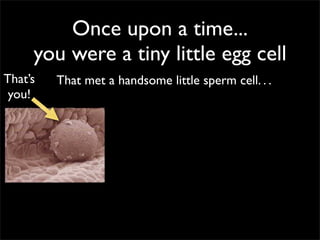
That’s   That met a handsome little sperm cell. . .
 you!
Once upon a time...
     you were a tiny little egg cell
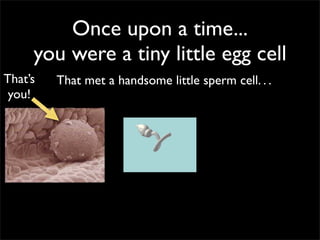
That’s   That met a handsome little sperm cell. . .
 you!
Once upon a time...
     you were a tiny little egg cell
That’s   That met a handsome little sperm cell. . .
 you!
                                             Things
                                            went well,
                                            and they
                                            hit it off!
Once upon a time...
     you were a tiny little egg cell
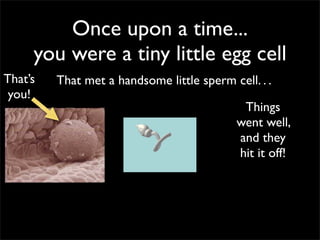
That’s   That met a handsome little sperm cell. . .
 you!
                                             Things
                                            went well,
                                            and they
                                            hit it off!


                                 The sperm cell fertilized
                                the egg cell and formed a
                                        zygote. . .
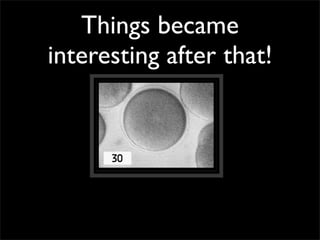
Things became
interesting after that!
Things became
interesting after that!
Things became
interesting after that!


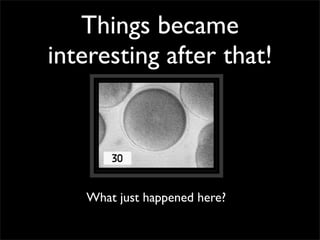
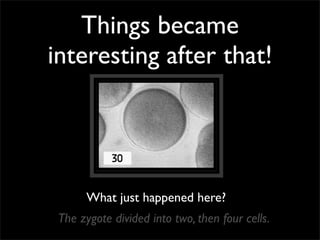
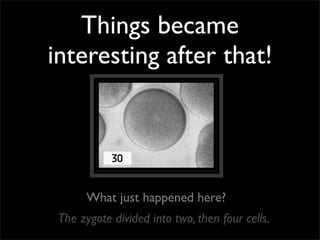
   What just happened here?
Things became
interesting after that!


       What just happened here?
 The zygote divided into two, then four cells.
Things became
interesting after that!


       What just happened here?
 The zygote divided into two, then four cells.
What had to happen in order to change the four cells you saw
 on the last slide to the small fetus you viewed on this slide?
What had to happen in order to change the four cells you saw
 on the last slide to the small fetus you viewed on this slide?

The cells had to differentiate from stem cells, and they had to divide
                       so the animal could grow
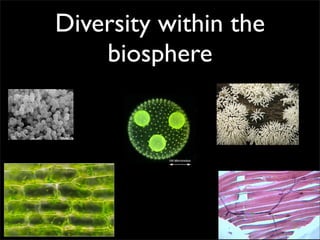
Diversity within the
    biosphere
Diversity within the
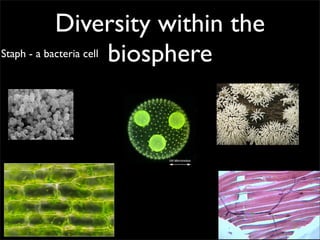
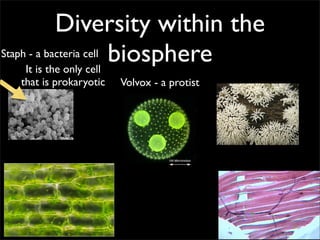
Staph - a bacteria cell biosphere
Diversity within the
Staph - a bacteria cell biosphere
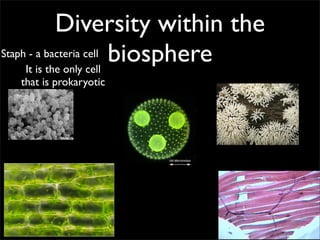
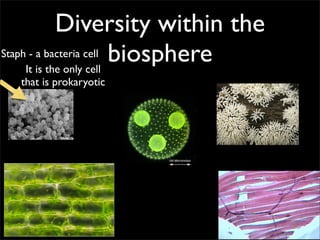
     It is the only cell
  that is prokaryotic
Diversity within the
Staph - a bacteria cell biosphere
     It is the only cell
  that is prokaryotic
Diversity within the
Staph - a bacteria cell biosphere
     It is the only cell
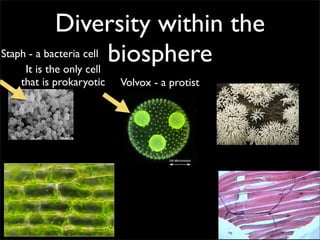
  that is prokaryotic   Volvox - a protist
Diversity within the
Staph - a bacteria cell biosphere
     It is the only cell
  that is prokaryotic   Volvox - a protist
Diversity within the
Staph - a bacteria cell biosphere
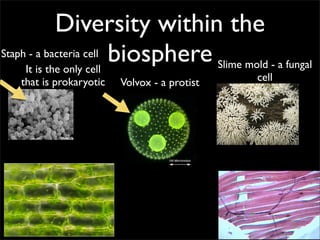
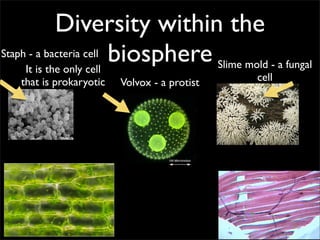
     It is the only cell          Slime mold - a fungal
   that is prokaryotic   Volvox - a protist   cell
Diversity within the
Staph - a bacteria cell biosphere
     It is the only cell          Slime mold - a fungal
   that is prokaryotic   Volvox - a protist   cell
Diversity within the
Staph - a bacteria cell biosphere
     It is the only cell          Slime mold - a fungal
   that is prokaryotic     Volvox - a protist   cell


   Elodea - a plant cell
Diversity within the
Staph - a bacteria cell biosphere
     It is the only cell          Slime mold - a fungal
   that is prokaryotic     Volvox - a protist   cell


   Elodea - a plant cell
Diversity within the
Staph - a bacteria cell biosphere
     It is the only cell          Slime mold - a fungal
   that is prokaryotic     Volvox - a protist              cell


   Elodea - a plant cell                        Muscle cells - found in
                                                       animals
Diversity within the
Staph - a bacteria cell biosphere
     It is the only cell          Slime mold - a fungal
   that is prokaryotic     Volvox - a protist              cell


   Elodea - a plant cell                        Muscle cells - found in
                                                       animals
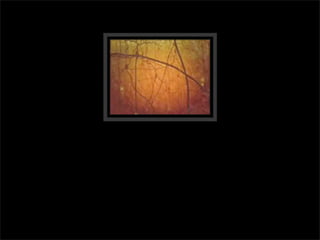
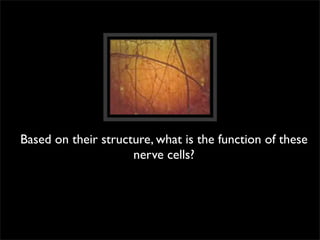
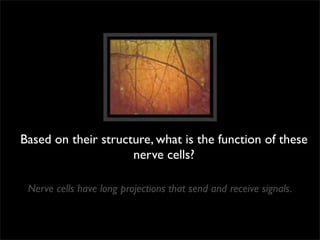
Based on their structure, what is the function of these
                     nerve cells?
Based on their structure, what is the function of these
                     nerve cells?

 Nerve cells have long projections that send and receive signals.
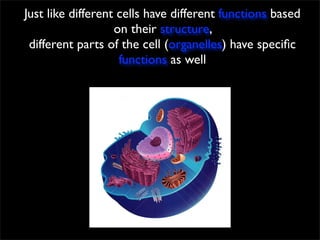
Just like different cells have different functions based
                   on their structure,
 different parts of the cell (organelles) have specific
                    functions as well
The cell membrane
The cell membrane


Based on the video, what functions does
 the cell membrane accomplish for the
                 cell?
The cell membrane


Based on the video, what functions does
 the cell membrane accomplish for the
                 cell?
   It provides structure, and it helps transport
                     molecules
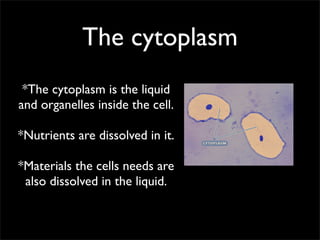
The cytoplasm
 *The cytoplasm is the liquid
and organelles inside the cell.

*Nutrients are dissolved in it.

*Materials the cells needs are
 also dissolved in the liquid.
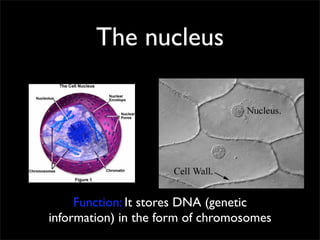
The nucleus


     Function: It stores DNA (genetic
information) in the form of chromosomes
Mitochondria
Mitochondria


How does the structure of this organelle
       relate to its function?
Mitochondria


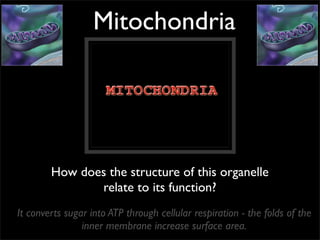
        How does the structure of this organelle
               relate to its function?
It converts sugar into ATP through cellular respiration - the folds of the
                inner membrane increase surface area.
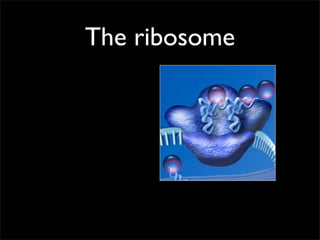
The ribosome
The ribosome
The ribosome
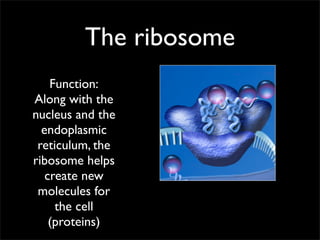
    Function:
Along with the
nucleus and the
  endoplasmic
 reticulum, the
ribosome helps
   create new
 molecules for
     the cell
    (proteins)
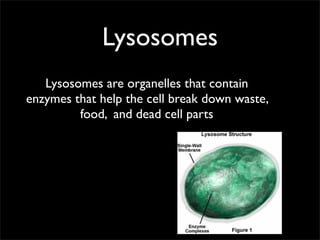
Lysosomes
   Lysosomes are organelles that contain
enzymes that help the cell break down waste,
         food, and dead cell parts
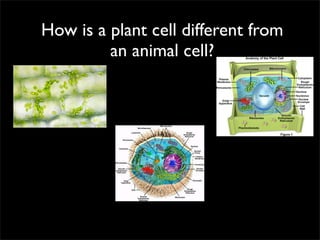
How is a plant cell different from
         an animal cell?
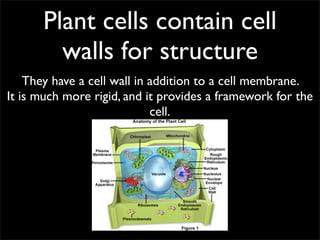
Plant cells contain cell
        walls for structure
    They have a cell wall in addition to a cell membrane.
It is much more rigid, and it provides a framework for the
                             cell.
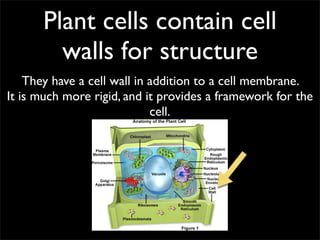
Plant cells contain cell
        walls for structure
    They have a cell wall in addition to a cell membrane.
It is much more rigid, and it provides a framework for the
                             cell.
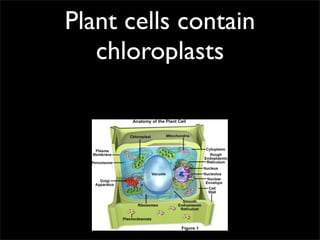
Plant cells contain
   chloroplasts
Plant cells contain
             chloroplasts
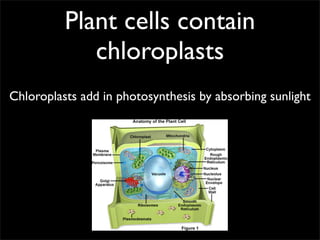
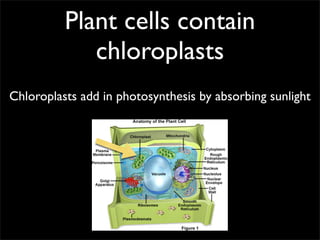
Chloroplasts add in photosynthesis by absorbing sunlight
Plant cells contain
             chloroplasts
Chloroplasts add in photosynthesis by absorbing sunlight
Plant cells contain
                  chloroplasts
 Chloroplasts add in photosynthesis by absorbing sunlight

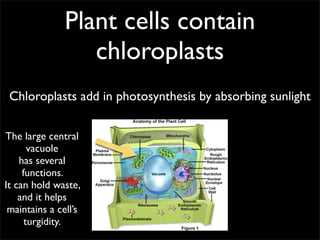
The large central
       vacuole
    has several
     functions.
It can hold waste,
    and it helps
 maintains a cell’s
      turgidity.
Plant cells contain
                  chloroplasts
 Chloroplasts add in photosynthesis by absorbing sunlight

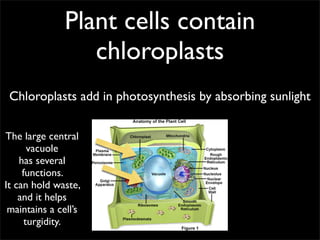
The large central
       vacuole
    has several
     functions.
It can hold waste,
    and it helps
 maintains a cell’s
      turgidity.
Cells.carmenriv

Cells.carmenriv

  • 1.
  • 2.
    Cells are the buildingblocks of all living things
  • 3.
    Cells are the buildingblocks of all living things Cells come from other existing cells
  • 4.
    Cells are the building blocks of all living things Cells come from other existing cells Cells are the basic structural and functional unit of life
  • 6.
    Once upon atime... you were a tiny little egg cell
  • 7.
    Once upon atime... you were a tiny little egg cell
  • 8.
    Once upon atime... you were a tiny little egg cell
  • 9.
    Once upon atime... you were a tiny little egg cell That’s you!
  • 10.
    Once upon atime... you were a tiny little egg cell That’s That met a handsome little sperm cell. . . you!
  • 11.
    Once upon atime... you were a tiny little egg cell That’s That met a handsome little sperm cell. . . you!
  • 12.
    Once upon atime... you were a tiny little egg cell That’s That met a handsome little sperm cell. . . you! Things went well, and they hit it off!
  • 13.
    Once upon atime... you were a tiny little egg cell That’s That met a handsome little sperm cell. . . you! Things went well, and they hit it off! The sperm cell fertilized the egg cell and formed a zygote. . .
  • 15.
  • 16.
  • 17.
    Things became interesting afterthat! What just happened here?
  • 18.
    Things became interesting afterthat! What just happened here? The zygote divided into two, then four cells.
  • 19.
    Things became interesting afterthat! What just happened here? The zygote divided into two, then four cells.
  • 21.
    What had tohappen in order to change the four cells you saw on the last slide to the small fetus you viewed on this slide?
  • 22.
    What had tohappen in order to change the four cells you saw on the last slide to the small fetus you viewed on this slide? The cells had to differentiate from stem cells, and they had to divide so the animal could grow
  • 23.
  • 24.
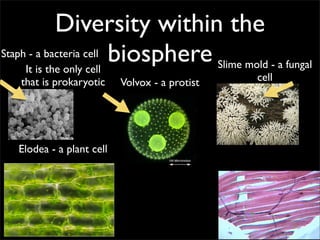
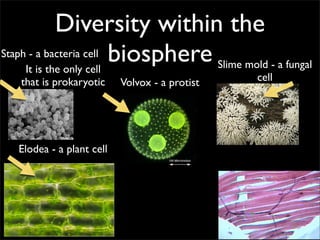
    Diversity within the Staph- a bacteria cell biosphere
  • 25.
    Diversity within the Staph- a bacteria cell biosphere It is the only cell that is prokaryotic
  • 26.
    Diversity within the Staph- a bacteria cell biosphere It is the only cell that is prokaryotic
  • 27.
    Diversity within the Staph- a bacteria cell biosphere It is the only cell that is prokaryotic Volvox - a protist
  • 28.
    Diversity within the Staph- a bacteria cell biosphere It is the only cell that is prokaryotic Volvox - a protist
  • 29.
    Diversity within the Staph- a bacteria cell biosphere It is the only cell Slime mold - a fungal that is prokaryotic Volvox - a protist cell
  • 30.
    Diversity within the Staph- a bacteria cell biosphere It is the only cell Slime mold - a fungal that is prokaryotic Volvox - a protist cell
  • 31.
    Diversity within the Staph- a bacteria cell biosphere It is the only cell Slime mold - a fungal that is prokaryotic Volvox - a protist cell Elodea - a plant cell
  • 32.
    Diversity within the Staph- a bacteria cell biosphere It is the only cell Slime mold - a fungal that is prokaryotic Volvox - a protist cell Elodea - a plant cell
  • 33.
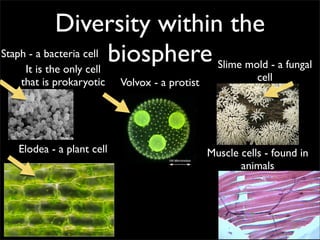
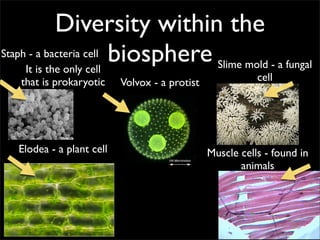
    Diversity within the Staph- a bacteria cell biosphere It is the only cell Slime mold - a fungal that is prokaryotic Volvox - a protist cell Elodea - a plant cell Muscle cells - found in animals
  • 34.
    Diversity within the Staph- a bacteria cell biosphere It is the only cell Slime mold - a fungal that is prokaryotic Volvox - a protist cell Elodea - a plant cell Muscle cells - found in animals
  • 36.
    Based on theirstructure, what is the function of these nerve cells?
  • 37.
    Based on theirstructure, what is the function of these nerve cells? Nerve cells have long projections that send and receive signals.
  • 38.
    Just like differentcells have different functions based on their structure, different parts of the cell (organelles) have specific functions as well
  • 39.
  • 40.
    The cell membrane Basedon the video, what functions does the cell membrane accomplish for the cell?
  • 41.
    The cell membrane Basedon the video, what functions does the cell membrane accomplish for the cell? It provides structure, and it helps transport molecules
  • 42.
    The cytoplasm *Thecytoplasm is the liquid and organelles inside the cell. *Nutrients are dissolved in it. *Materials the cells needs are also dissolved in the liquid.
  • 43.
    The nucleus Function: It stores DNA (genetic information) in the form of chromosomes
  • 44.
  • 45.
    Mitochondria How does thestructure of this organelle relate to its function?
  • 46.
    Mitochondria How does the structure of this organelle relate to its function? It converts sugar into ATP through cellular respiration - the folds of the inner membrane increase surface area.
  • 47.
  • 48.
  • 49.
    The ribosome Function: Along with the nucleus and the endoplasmic reticulum, the ribosome helps create new molecules for the cell (proteins)
  • 50.
    Lysosomes Lysosomes are organelles that contain enzymes that help the cell break down waste, food, and dead cell parts
  • 51.
    How is aplant cell different from an animal cell?
  • 52.
    Plant cells containcell walls for structure They have a cell wall in addition to a cell membrane. It is much more rigid, and it provides a framework for the cell.
  • 53.
    Plant cells containcell walls for structure They have a cell wall in addition to a cell membrane. It is much more rigid, and it provides a framework for the cell.
  • 54.
  • 55.
    Plant cells contain chloroplasts Chloroplasts add in photosynthesis by absorbing sunlight
  • 56.
    Plant cells contain chloroplasts Chloroplasts add in photosynthesis by absorbing sunlight
  • 57.
    Plant cells contain chloroplasts Chloroplasts add in photosynthesis by absorbing sunlight The large central vacuole has several functions. It can hold waste, and it helps maintains a cell’s turgidity.
  • 58.
    Plant cells contain chloroplasts Chloroplasts add in photosynthesis by absorbing sunlight The large central vacuole has several functions. It can hold waste, and it helps maintains a cell’s turgidity.