CHAPTER - 8
CELL - STRUCTURE AND FUNCTIONS
CLASS :- VIII
MADE BY :- RAVI PRAKASH SINGH
SUBJECT :- BIOLOGY
Sunday, December 10, 2017RAVI PRAKASH SINGH
1
• The cell is the smallest unit of life.
• Cell is basic structural and functional
unit of living organisms.
• New cells arise from pre-existing
cells.
• All organisms are composed one or
more cells.
Sunday, December 10, 2017 RAVI PRAKASH SINGH
2
 Robert Hooke was the first scientist to discover
existence of cells with the help of a microscope in
1965.
 He observed thin slices of cork (a part bark of a tree)
under a microscope and saw honeycomb structures.
 The slices of cork appeared like small compartments
which were further separated by a wall.
Sunday, December 10, 2017 RAVI PRAKASH SINGH
3
 Cell Number:
• On basis of no. of cell, living organisms can be
classified into two categories:-
1) Unicellular- Living organism consist of single cell.
Example- Amoeba, Euglena
2) Multicellular- Living organism consist of more than
one cell. Example- Earthworm, Human being.
Sunday, December 10, 2017 RAVI PRAKASH SINGH
4
 Cell Shape:
• The shape of cell differ not only in different organisms, but also
in different organs of same organism
• Shape may be oval spherical cuboidal, fibre like or polygonal
 Cell size:
• The difference in size of organism is due to the number of cells
present in them
• The smallest cell PPLO (Plero Pneumonia –like organism) are
called mycoplasma is about 0.1 micron in diameter
• The largest cell is ostrich cell with 170 mm in diameter
Sunday, December 10, 2017 RAVI PRAKASH SINGH
5
Sunday, December 10, 2017 RAVI PRAKASH SINGH
6
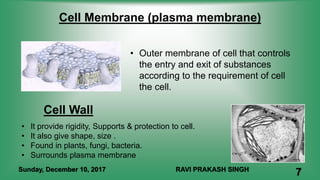
Cell Membrane (plasma membrane)
• Outer membrane of cell that controls
the entry and exit of substances
according to the requirement of cell
the cell.
Cell Wall
• It provide rigidity, Supports & protection to cell.
• It also give shape, size .
• Found in plants, fungi, bacteria.
• Surrounds plasma membrane
Sunday, December 10, 2017 RAVI PRAKASH SINGH
7
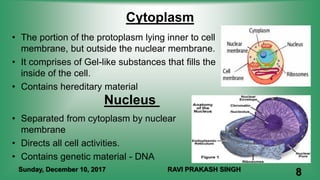
Cytoplasm
• The portion of the protoplasm lying inner to cell
membrane, but outside the nuclear membrane.
• It comprises of Gel-like substances that fills the
inside of the cell.
• Contains hereditary material
Nucleus
• Separated from cytoplasm by nuclear
membrane
• Directs all cell activities.
• Contains genetic material - DNA
Sunday, December 10, 2017 RAVI PRAKASH SINGH
8
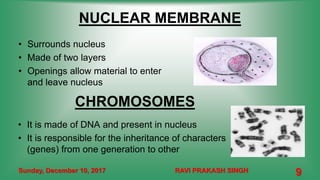
NUCLEAR MEMBRANE
• Surrounds nucleus
• Made of two layers
• Openings allow material to enter
and leave nucleus
• It is made of DNA and present in nucleus
• It is responsible for the inheritance of characters
(genes) from one generation to other
CHROMOSOMES
Sunday, December 10, 2017 RAVI PRAKASH SINGH 9
Cell Organelles
Sunday, December 10, 2017 RAVI PRAKASH SINGH 10
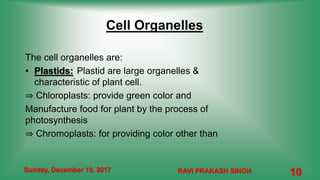
The cell organelles are:
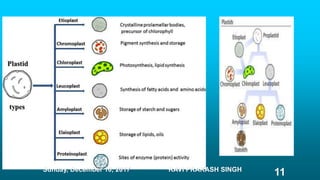
• Plastids: Plastid are large organelles &
characteristic of plant cell.
⇒ Chloroplasts: provide green color and
Manufacture food for plant by the process of
photosynthesis
⇒ Chromoplasts: for providing color other than
Sunday, December 10, 2017 RAVI PRAKASH SINGH
11
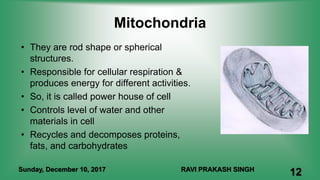
Mitochondria
• They are rod shape or spherical
structures.
• Responsible for cellular respiration &
produces energy for different activities.
• So, it is called power house of cell
• Controls level of water and other
materials in cell
• Recycles and decomposes proteins,
fats, and carbohydrates
Sunday, December 10, 2017 RAVI PRAKASH SINGH
12
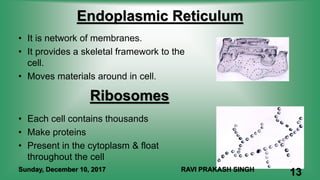
Endoplasmic Reticulum
• It is network of membranes.
• It provides a skeletal framework to the
cell.
• Moves materials around in cell.
Ribosomes
• Each cell contains thousands
• Make proteins
• Present in the cytoplasm & float
throughout the cell
Sunday, December 10, 2017 RAVI PRAKASH SINGH
13
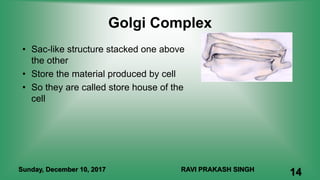
Golgi Complex
• Sac-like structure stacked one above
the other
• Store the material produced by cell
• So they are called store house of the
cell
Sunday, December 10, 2017 RAVI PRAKASH SINGH
14
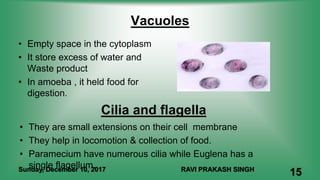
Vacuoles
• Empty space in the cytoplasm
• It store excess of water and
Waste product
• In amoeba , it held food for
digestion.
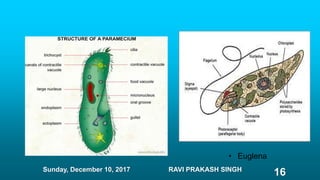
Cilia and flagella
• They are small extensions on their cell membrane
• They help in locomotion & collection of food.
• Paramecium have numerous cilia while Euglena has a
single flagellum.Sunday, December 10, 2017 RAVI PRAKASH SINGH
15
• Euglena
Sunday, December 10, 2017 RAVI PRAKASH SINGH
16
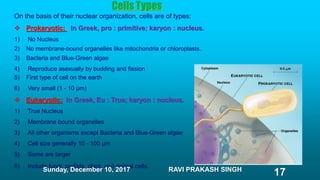
Cells Types
On the basis of their nuclear organization, cells are of types:
 Prokaryotic: In Greek, pro : primitive; karyon : nucleus.
1) No Nucleus
2) No membrane-bound organelles like mitochondria or chloroplasts.
3) Bacteria and Blue-Green algae
4) Reproduce asexually by budding and fission
5) First type of cell on the earth
6) Very small (1 - 10 µm)
 Eukaryotic: In Greek, Eu : True; karyon : nucleus.
1) True Nucleus
2) Membrane bound organelles
3) All other organisms except Bacteria and Blue-Green algae
4) Cell size generally 10 - 100 µm
5) Some are larger
6) Include fungi, protists, plant, and animal cells.
Sunday, December 10, 2017 RAVI PRAKASH SINGH
17
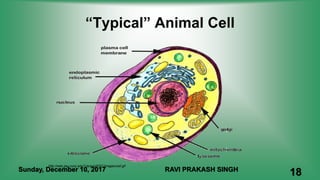
“Typical” Animal Cell
http://web.jjay.cuny.edu/~acarpi/NSC/images/cell.gif
Sunday, December 10, 2017 RAVI PRAKASH SINGH
18
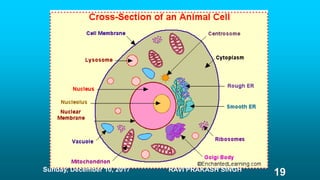
Sunday, December 10, 2017 RAVI PRAKASH SINGH
19
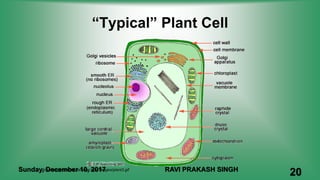
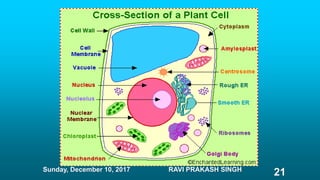
http://waynesword.palomar.edu/images/plant3.gif
“Typical” Plant Cell
Sunday, December 10, 2017 RAVI PRAKASH SINGH
20
Sunday, December 10, 2017 RAVI PRAKASH SINGH
21
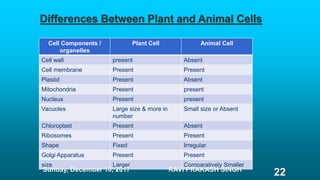
Cell Components /
organelles
Plant Cell Animal Cell
Cell wall present Absent
Cell membrane Present Present
Plastid Present Absent
Mitochondria Present present
Nucleus Present present
Vacuoles Large size & more in
number
Small size or Absent
Chloroplast Present Absent
Ribosomes Present Present
Shape Fixed Irregular
Golgi Apparatus Present Present
size Larger Comparatively Smaller
Differences Between Plant and Animal Cells
Sunday, December 10, 2017 RAVI PRAKASH SINGH
22
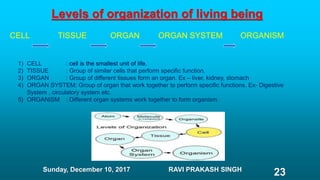
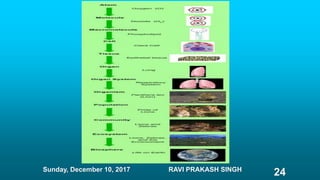
Levels of organization of living being
CELL TISSUE ORGAN ORGAN SYSTEM ORGANISM
1) CELL : cell is the smallest unit of life.
2) TISSUE : Group of similar cells that perform specific function.
3) ORGAN : Group of different tissues form an organ. Ex – liver, kidney, stomach
4) ORGAN SYSTEM: Group of organ that work together to perform specific functions. Ex- Digestive
System , circulatory system etc.
5) ORGANISM : Different organ systems work together to form organism.
Sunday, December 10, 2017 RAVI PRAKASH SINGH
23
Sunday, December 10, 2017 RAVI PRAKASH SINGH
24
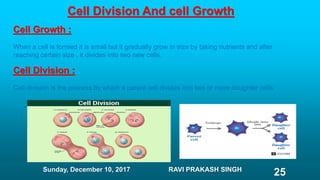
Cell Division And cell Growth
Cell Growth :
When a cell is formed it is small but it gradually grow in size by taking nutrients and after
reaching certain size , it divides into two new cells.
Cell Division :
Cell division is the process by which a parent cell divides into two or more daughter cells
Sunday, December 10, 2017 RAVI PRAKASH SINGH
25
Sunday, December 10, 2017
26
RAVI PRAKASH SINGH

Cell class 8 presentation

  • 1.
    CHAPTER - 8 CELL- STRUCTURE AND FUNCTIONS CLASS :- VIII MADE BY :- RAVI PRAKASH SINGH SUBJECT :- BIOLOGY Sunday, December 10, 2017RAVI PRAKASH SINGH 1
  • 2.
    • The cellis the smallest unit of life. • Cell is basic structural and functional unit of living organisms. • New cells arise from pre-existing cells. • All organisms are composed one or more cells. Sunday, December 10, 2017 RAVI PRAKASH SINGH 2
  • 3.
     Robert Hookewas the first scientist to discover existence of cells with the help of a microscope in 1965.  He observed thin slices of cork (a part bark of a tree) under a microscope and saw honeycomb structures.  The slices of cork appeared like small compartments which were further separated by a wall. Sunday, December 10, 2017 RAVI PRAKASH SINGH 3
  • 4.
     Cell Number: •On basis of no. of cell, living organisms can be classified into two categories:- 1) Unicellular- Living organism consist of single cell. Example- Amoeba, Euglena 2) Multicellular- Living organism consist of more than one cell. Example- Earthworm, Human being. Sunday, December 10, 2017 RAVI PRAKASH SINGH 4
  • 5.
     Cell Shape: •The shape of cell differ not only in different organisms, but also in different organs of same organism • Shape may be oval spherical cuboidal, fibre like or polygonal  Cell size: • The difference in size of organism is due to the number of cells present in them • The smallest cell PPLO (Plero Pneumonia –like organism) are called mycoplasma is about 0.1 micron in diameter • The largest cell is ostrich cell with 170 mm in diameter Sunday, December 10, 2017 RAVI PRAKASH SINGH 5
  • 6.
    Sunday, December 10,2017 RAVI PRAKASH SINGH 6
  • 7.
    Cell Membrane (plasmamembrane) • Outer membrane of cell that controls the entry and exit of substances according to the requirement of cell the cell. Cell Wall • It provide rigidity, Supports & protection to cell. • It also give shape, size . • Found in plants, fungi, bacteria. • Surrounds plasma membrane Sunday, December 10, 2017 RAVI PRAKASH SINGH 7
  • 8.
    Cytoplasm • The portionof the protoplasm lying inner to cell membrane, but outside the nuclear membrane. • It comprises of Gel-like substances that fills the inside of the cell. • Contains hereditary material Nucleus • Separated from cytoplasm by nuclear membrane • Directs all cell activities. • Contains genetic material - DNA Sunday, December 10, 2017 RAVI PRAKASH SINGH 8
  • 9.
    NUCLEAR MEMBRANE • Surroundsnucleus • Made of two layers • Openings allow material to enter and leave nucleus • It is made of DNA and present in nucleus • It is responsible for the inheritance of characters (genes) from one generation to other CHROMOSOMES Sunday, December 10, 2017 RAVI PRAKASH SINGH 9
  • 10.
    Cell Organelles Sunday, December10, 2017 RAVI PRAKASH SINGH 10 The cell organelles are: • Plastids: Plastid are large organelles & characteristic of plant cell. ⇒ Chloroplasts: provide green color and Manufacture food for plant by the process of photosynthesis ⇒ Chromoplasts: for providing color other than
  • 11.
    Sunday, December 10,2017 RAVI PRAKASH SINGH 11
  • 12.
    Mitochondria • They arerod shape or spherical structures. • Responsible for cellular respiration & produces energy for different activities. • So, it is called power house of cell • Controls level of water and other materials in cell • Recycles and decomposes proteins, fats, and carbohydrates Sunday, December 10, 2017 RAVI PRAKASH SINGH 12
  • 13.
    Endoplasmic Reticulum • Itis network of membranes. • It provides a skeletal framework to the cell. • Moves materials around in cell. Ribosomes • Each cell contains thousands • Make proteins • Present in the cytoplasm & float throughout the cell Sunday, December 10, 2017 RAVI PRAKASH SINGH 13
  • 14.
    Golgi Complex • Sac-likestructure stacked one above the other • Store the material produced by cell • So they are called store house of the cell Sunday, December 10, 2017 RAVI PRAKASH SINGH 14
  • 15.
    Vacuoles • Empty spacein the cytoplasm • It store excess of water and Waste product • In amoeba , it held food for digestion. Cilia and flagella • They are small extensions on their cell membrane • They help in locomotion & collection of food. • Paramecium have numerous cilia while Euglena has a single flagellum.Sunday, December 10, 2017 RAVI PRAKASH SINGH 15
  • 16.
    • Euglena Sunday, December10, 2017 RAVI PRAKASH SINGH 16
  • 17.
    Cells Types On thebasis of their nuclear organization, cells are of types:  Prokaryotic: In Greek, pro : primitive; karyon : nucleus. 1) No Nucleus 2) No membrane-bound organelles like mitochondria or chloroplasts. 3) Bacteria and Blue-Green algae 4) Reproduce asexually by budding and fission 5) First type of cell on the earth 6) Very small (1 - 10 µm)  Eukaryotic: In Greek, Eu : True; karyon : nucleus. 1) True Nucleus 2) Membrane bound organelles 3) All other organisms except Bacteria and Blue-Green algae 4) Cell size generally 10 - 100 µm 5) Some are larger 6) Include fungi, protists, plant, and animal cells. Sunday, December 10, 2017 RAVI PRAKASH SINGH 17
  • 18.
  • 19.
    Sunday, December 10,2017 RAVI PRAKASH SINGH 19
  • 20.
  • 21.
    Sunday, December 10,2017 RAVI PRAKASH SINGH 21
  • 22.
    Cell Components / organelles PlantCell Animal Cell Cell wall present Absent Cell membrane Present Present Plastid Present Absent Mitochondria Present present Nucleus Present present Vacuoles Large size & more in number Small size or Absent Chloroplast Present Absent Ribosomes Present Present Shape Fixed Irregular Golgi Apparatus Present Present size Larger Comparatively Smaller Differences Between Plant and Animal Cells Sunday, December 10, 2017 RAVI PRAKASH SINGH 22
  • 23.
    Levels of organizationof living being CELL TISSUE ORGAN ORGAN SYSTEM ORGANISM 1) CELL : cell is the smallest unit of life. 2) TISSUE : Group of similar cells that perform specific function. 3) ORGAN : Group of different tissues form an organ. Ex – liver, kidney, stomach 4) ORGAN SYSTEM: Group of organ that work together to perform specific functions. Ex- Digestive System , circulatory system etc. 5) ORGANISM : Different organ systems work together to form organism. Sunday, December 10, 2017 RAVI PRAKASH SINGH 23
  • 24.
    Sunday, December 10,2017 RAVI PRAKASH SINGH 24
  • 25.
    Cell Division Andcell Growth Cell Growth : When a cell is formed it is small but it gradually grow in size by taking nutrients and after reaching certain size , it divides into two new cells. Cell Division : Cell division is the process by which a parent cell divides into two or more daughter cells Sunday, December 10, 2017 RAVI PRAKASH SINGH 25
  • 26.
    Sunday, December 10,2017 26 RAVI PRAKASH SINGH