Cell Structure
& Function
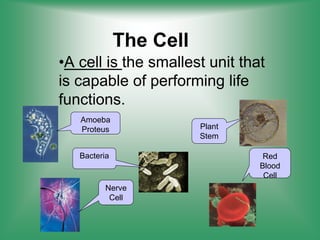
The Cell
•A cell is the smallest unit that
is capable of performing life
functions.
Amoeba
Proteus Plant
Stem
Red
Blood
Cell
Nerve
Cell
Bacteria
Microscopes and Cells
• 1600’s.
–Anton van
Leeuwenhoek
first described
living cells as
seen through a
simple
microscope.
Microscopes and Cells
–Robert Hooke first used a
compound microscope to
view thinly sliced cork cells.
•Compound scopes use
a series of lenses to
magnify in steps.
•Hooke was the first to
use the term “cell”.
Microscopes and Cells
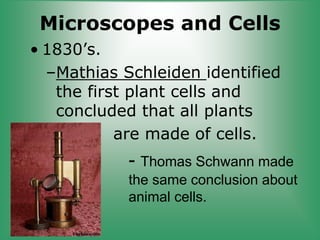
• 1830’s.
–Mathias Schleiden identified
the first plant cells and
concluded that all plants
are made of cells.
- Thomas Schwann made
the same conclusion about
animal cells.
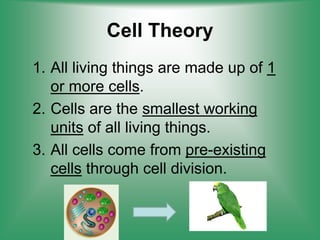
Cell Theory
1. All living things are made up of 1
or more cells.
2. Cells are the smallest working
units of all living things.
3. All cells come from pre-existing
cells through cell division.
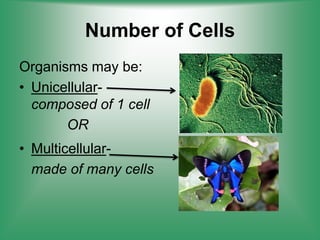
Number of Cells
Organisms may be:
• Unicellular-
composed of 1 cell
OR
• Multicellular-
made of many cells
Cells can be Eukaryotic or
Prokaryotic
•Prokaryotes :do not have a nucleus or
organelles (bacteria).
•Eukaryotes: have a nucleus and
organelles (plants, fungi, animals,
protists)
Organelles
• Cell structures that have a specific
function and are surrounded by a
membrane that are found in eukaryotes
only.
Prokaryotic vs. Eukaryotic
Http://micro.magnet.fsu.edu/cells.html
Prokaryotic Cells
• Believed to be the
first cells to evolve.
• Lack a membrane
bound nucleus and
organelles.
• Genetic material is
free in the cytoplasm
• Ribosomes are only
other cell structure.
Eukaryotic
• 2 major types of eukaryotic cells-
Plant and Animal cells
Plant Animal
http://library.thinkquest.org/C004535/eukaryotic_cells.html
Cell Structures
& Functions
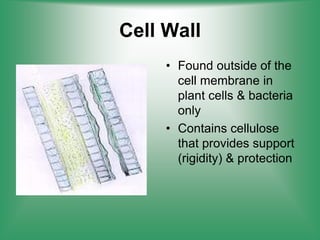
Cell Wall
• Found outside of the
cell membrane in
plant cells & bacteria
only
• Contains cellulose
that provides support
(rigidity) & protection
Cell or Plasma Membrane
• Outer membrane of
cells that controls
movement of
substances in and out of
the cell
• Double layer (bi-layer)
• In plants and bacteria,
this is within the cell
wall.
Cytoplasm
• Gel-like mixture inside cells
• Surrounded by cell membrane
• Contains cell structure that carry out
specific jobs ex. Mitochondrion, nucleus
• Provides a medium for chemical reactions
to take place
Nucleoid
• In prokaryotes.
• Region of the
cytoplasm where
chromosomal DNA is
located.
• Singular, circular
chromosome.
• Smaller circles of
DNA called plasmids
are also located in
cytoplasm.
Ribosomes
• Each cell contains
thousands
• Make proteins
• Found on
endoplasmic
reticulum & floating
throughout the cell
cytoplasm
Organelles
Nucleus
• “Control center”
• Directs cell activities
• Contains the genetic
material (DNA)
• Separated from
cytoplasm by nuclear
membrane (or nuclear
envelope).
Nuclear Membrane
• Surrounds nucleus,
separates DNA from
cytoplasm
• Made of two layers
• Openings called
pores allow some
materials to enter and
leave nucleus
Chromatin
• In nucleus
• Genetic material
(DNA) of cell in its
non-dividing state.
• Ie. Uncoiled
chromosomes
• Contain instructions
for traits &
characteristics
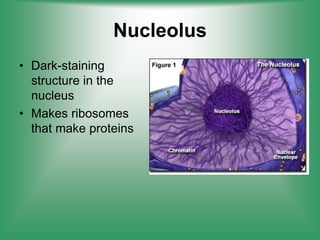
Nucleolus
• Dark-staining
structure in the
nucleus
• Makes ribosomes
that make proteins
Rough Endoplasmic Reticulum
• Network of continuous
sacs, studded with
ribosomes.
• Internal delivery
system of the cell.
• Manufactures, pro-
cesses, and transports
proteins for export
from cell.
• Continuous with
nuclear envelope.
Smooth Endoplasmic Reticulum
• Similar in
appearance to
rough ER, but
without the
ribosomes.
• Produces lipids, involved in
carbohydrate metabolism, and
detoxification of drugs and poisons.
Golgi Apparatus
• Protein 'packaging plant‘
• Modifies proteins and
lipids made by the ER
and prepares them for
export from the cell.
• Encloses digestive
enyzymes into
membranes to form
lysosomes (transport
pods).
Lysosome
• Digestive 'plant' for
proteins, fats, and
carbohydrates
• Digestive enzymes
break down cellular
waste and debris
• Transports undigested
material to cell
membrane for removal
• Cell breaks down if
lysosome explodes
Mitochondria
• Cell “powerhouse”
• Membrane bound
organelles that are
the site of cellular
respiration (use
glucose to produce
cell energy, ATP)
• Active cells like
muscles have more
mitochondria
Animal Vacuole
• Membrane-bound
sacs for storage,
digestion, and waste
removal
• Contains water
solution
Plant Vacuole
• Plants have large
central vacuoles that
store water and
nutrients needed by
the cell.
• Help support the
shape of the cell.
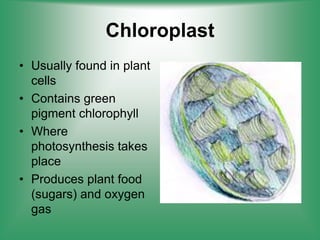
Chloroplast
• Usually found in plant
cells
• Contains green
pigment chlorophyll
• Where
photosynthesis takes
place
• Produces plant food
(sugars) and oxygen
gas
Cilia and Flagella
• External
appendages from
the cell membrane
that aid in
locomotion
(movement) of the
cell.
• Cilia also help to
move substance
past the membrane.
Cilia
Flagella
Centrioles
• Found only in animal
cells.
• Self-replicating
• Made of bundles of
microtubules.
• Help in organizing cell
division.
Cytoskeleton
• The cell’s skeleton
• Made of
microtubules and
filaments
• Give the cell
shape, strength
and ability to move

NOTES Cell Structure and Function.pdf

  • 1.
  • 2.
    The Cell •A cellis the smallest unit that is capable of performing life functions. Amoeba Proteus Plant Stem Red Blood Cell Nerve Cell Bacteria
  • 3.
    Microscopes and Cells •1600’s. –Anton van Leeuwenhoek first described living cells as seen through a simple microscope.
  • 4.
    Microscopes and Cells –RobertHooke first used a compound microscope to view thinly sliced cork cells. •Compound scopes use a series of lenses to magnify in steps. •Hooke was the first to use the term “cell”.
  • 5.
    Microscopes and Cells •1830’s. –Mathias Schleiden identified the first plant cells and concluded that all plants are made of cells. - Thomas Schwann made the same conclusion about animal cells.
  • 6.
    Cell Theory 1. Allliving things are made up of 1 or more cells. 2. Cells are the smallest working units of all living things. 3. All cells come from pre-existing cells through cell division.
  • 7.
    Number of Cells Organismsmay be: • Unicellular- composed of 1 cell OR • Multicellular- made of many cells
  • 8.
    Cells can beEukaryotic or Prokaryotic •Prokaryotes :do not have a nucleus or organelles (bacteria). •Eukaryotes: have a nucleus and organelles (plants, fungi, animals, protists)
  • 9.
    Organelles • Cell structuresthat have a specific function and are surrounded by a membrane that are found in eukaryotes only.
  • 10.
  • 11.
    Prokaryotic Cells • Believedto be the first cells to evolve. • Lack a membrane bound nucleus and organelles. • Genetic material is free in the cytoplasm • Ribosomes are only other cell structure.
  • 12.
    Eukaryotic • 2 majortypes of eukaryotic cells- Plant and Animal cells Plant Animal http://library.thinkquest.org/C004535/eukaryotic_cells.html
  • 13.
  • 14.
    Cell Wall • Foundoutside of the cell membrane in plant cells & bacteria only • Contains cellulose that provides support (rigidity) & protection
  • 15.
    Cell or PlasmaMembrane • Outer membrane of cells that controls movement of substances in and out of the cell • Double layer (bi-layer) • In plants and bacteria, this is within the cell wall.
  • 16.
    Cytoplasm • Gel-like mixtureinside cells • Surrounded by cell membrane • Contains cell structure that carry out specific jobs ex. Mitochondrion, nucleus • Provides a medium for chemical reactions to take place
  • 17.
    Nucleoid • In prokaryotes. •Region of the cytoplasm where chromosomal DNA is located. • Singular, circular chromosome. • Smaller circles of DNA called plasmids are also located in cytoplasm.
  • 18.
    Ribosomes • Each cellcontains thousands • Make proteins • Found on endoplasmic reticulum & floating throughout the cell cytoplasm
  • 19.
  • 20.
    Nucleus • “Control center” •Directs cell activities • Contains the genetic material (DNA) • Separated from cytoplasm by nuclear membrane (or nuclear envelope).
  • 21.
    Nuclear Membrane • Surroundsnucleus, separates DNA from cytoplasm • Made of two layers • Openings called pores allow some materials to enter and leave nucleus
  • 22.
    Chromatin • In nucleus •Genetic material (DNA) of cell in its non-dividing state. • Ie. Uncoiled chromosomes • Contain instructions for traits & characteristics
  • 23.
    Nucleolus • Dark-staining structure inthe nucleus • Makes ribosomes that make proteins
  • 24.
    Rough Endoplasmic Reticulum •Network of continuous sacs, studded with ribosomes. • Internal delivery system of the cell. • Manufactures, pro- cesses, and transports proteins for export from cell. • Continuous with nuclear envelope.
  • 25.
    Smooth Endoplasmic Reticulum •Similar in appearance to rough ER, but without the ribosomes. • Produces lipids, involved in carbohydrate metabolism, and detoxification of drugs and poisons.
  • 26.
    Golgi Apparatus • Protein'packaging plant‘ • Modifies proteins and lipids made by the ER and prepares them for export from the cell. • Encloses digestive enyzymes into membranes to form lysosomes (transport pods).
  • 27.
    Lysosome • Digestive 'plant'for proteins, fats, and carbohydrates • Digestive enzymes break down cellular waste and debris • Transports undigested material to cell membrane for removal • Cell breaks down if lysosome explodes
  • 28.
    Mitochondria • Cell “powerhouse” •Membrane bound organelles that are the site of cellular respiration (use glucose to produce cell energy, ATP) • Active cells like muscles have more mitochondria
  • 29.
    Animal Vacuole • Membrane-bound sacsfor storage, digestion, and waste removal • Contains water solution
  • 30.
    Plant Vacuole • Plantshave large central vacuoles that store water and nutrients needed by the cell. • Help support the shape of the cell.
  • 31.
    Chloroplast • Usually foundin plant cells • Contains green pigment chlorophyll • Where photosynthesis takes place • Produces plant food (sugars) and oxygen gas
  • 32.
    Cilia and Flagella •External appendages from the cell membrane that aid in locomotion (movement) of the cell. • Cilia also help to move substance past the membrane. Cilia Flagella
  • 33.
    Centrioles • Found onlyin animal cells. • Self-replicating • Made of bundles of microtubules. • Help in organizing cell division.
  • 34.
    Cytoskeleton • The cell’sskeleton • Made of microtubules and filaments • Give the cell shape, strength and ability to move