Cell Signalling and Molecular 
Hydrogen 
From AlkaWay International
Cell Signalling 
• The ability of cells to perceive and correctly 
respond to their microenvironment is the 
basis of development, tissue repair, and 
immunity as well as normal tissue 
homeostasis. 
• Errors in cellular information processing 
contribute to the development of diseases 
such as cancer, autoimmunity, and diabetes.
Cell signalling 
• Cell signalling is the mechanism by which the 
body responds to external and internal changes 
in order to maintain homoeostasis. 
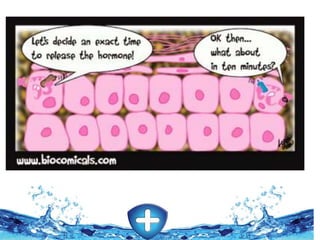
• When a cell receives a stimuli it releases cellular 
messengers in response to that stimuli. 
• Cell signalling molecules can either travel to 
neighbouring cells (eg. Neurotransmitters), to 
cells in another part of the body (eg. hormones) 
or act on the emitting cell. 
• These messengers come in many forms, 
including: proteins, minerals, lipids and gases.
Cell Signalling 
• A cell signalling molecule is released by the 
stimulated cell and travels to the target cell. 
The molecule then either attaches to a 
receptor on the cell surface, or enters the cell. 
• This results in a change in the molecules that a 
cell produces. 
• This change in cellular output creates the 
change required by the originating cell in 
order to maintain homoeostasis.
How do signals cause 
changes in cells? 
• Signals may cause the cell to change what it is 
doing in a variety of ways. Depending upon the 
signal, things inside a cell may change, for 
example, by: 
• a change in intracellular conditions like ion 
concentrations 
• metabolic changes, like the activation of 
enzymes that were previously inactive 
• gene expression changes, like activation of 
transcription of previously unexpressed genes
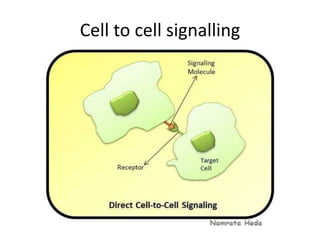
Cell to cell signalling
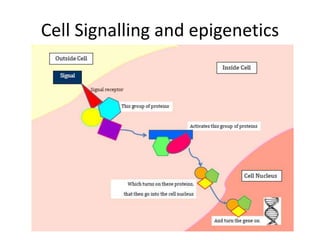
Cell Signalling and epigenetics
Gases as cell signalling 
molecules 
• Several gases have been identified as having a 
cell signalling role in the body. 
• These gases include: Nitric Oxide, Carbon 
Monoxide, Hydrogen Sulphide and Molecular 
Hydrogen. 
• It is thought that they function through 
modulating the activity of target enzymes 
within the cell.
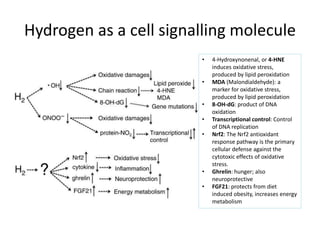
Hydrogen as a cell signalling molecule 
• 4-Hydroxynonenal, or 4-HNE 
induces oxidative stress, 
produced by lipid peroxidation 
• MDA (Malondialdehyde): a 
marker for oxidative stress, 
produced by lipid peroxidation 
• 8-OH-dG: product of DNA 
oxidation 
• Transcriptional control: Control 
of DNA replication 
• Nrf2: The Nrf2 antioxidant 
response pathway is the primary 
cellular defense against the 
cytotoxic effects of oxidative 
stress. 
• Ghrelin: hunger; also 
neuroprotective 
• FGF21: protects from diet 
induced obesity, increases energy 
metabolism
H2 and Allergic response 
• H2 attenuates the phosphorylation of FcεRI-associated 
Lyn and its downstream signalling 
molecules 
– FcεRI is receptor involved in allergy response and 
controls the production of important immune 
mediators 
– Signals Lyn, which is an enzyme that ultimately 
induces the mechanisms of the allergic response 
– Phosphorolation is the action by which the 
enzyme increases the activity of FcεRI
Inhibition of stress responses 
• H2 inhibits the phosphorylation of ASK1 and its 
downstream signalling molecules, p38 MAP 
kinase, JNK, and IκB without affecting ROS 
production derived from NADPH oxidase 
• ASK1: an enzyme that transfers phosphate groups 
from donor molecules to specific substrates, a 
process referred to as phosphorylation 
• Phosphorylation: Increases a molecules activity, 
reactivity, and its ability to bind other molecules in 
response to an array of stimuli such as oxidative 
stress
H2 & Cell Signalling 
Modulation 
– p38 MAP kinase & JNK are MAPKs. 
– MAPKs are involved in directing cellular responses to a 
diverse array of stimuli, such as proinflammatory 
cytokines. They regulate proliferation, gene expression, 
differentiation, cell survival, and apoptosis 
• So therefore H2 inhibits the activation of the 
molecules involved in the response to stimuli such as 
oxidative stress and inflammation 
• NADPH: used by neutrophil white blood cells to 
engulf microorganisms. The ROS generated are 
those required to kill bacteria
H2 & Liver cancer 
• Pre-treatment with H2 reduced fatty acid uptake 
and lipid accumulation after palmitate overload 
in HepG2 cells, which was associated with 
inhibition of JNK activation 
– JNK: type of enzyme that respond to environmental 
stress stimuli and inflammatory cytokines. They also 
play a role in the immune response. 
– HepG2 cells are liver cancer cells 
– Lipid accumulation and palmitate overload have been 
associated to the development of some liver cancers 
– So therefore H2 may decrease the mechanism by 
which lipids may increase the development of 
cancerous cells in the liver.
H2 & Cell Signalling 
• These studies suggest that H2 influences some 
signal transductions as an indirect modulator; 
however, it is unlikely that H2 could directly 
bind to some receptors involved in the signal 
transductions. 
• The primary target molecule of H2 has not 
been identified in these signal transduction 
pathways. 
Presented by AlkaWay International: for information purposes only

Cell signalling

  • 1.
    Cell Signalling andMolecular Hydrogen From AlkaWay International
  • 2.
    Cell Signalling •The ability of cells to perceive and correctly respond to their microenvironment is the basis of development, tissue repair, and immunity as well as normal tissue homeostasis. • Errors in cellular information processing contribute to the development of diseases such as cancer, autoimmunity, and diabetes.
  • 4.
    Cell signalling •Cell signalling is the mechanism by which the body responds to external and internal changes in order to maintain homoeostasis. • When a cell receives a stimuli it releases cellular messengers in response to that stimuli. • Cell signalling molecules can either travel to neighbouring cells (eg. Neurotransmitters), to cells in another part of the body (eg. hormones) or act on the emitting cell. • These messengers come in many forms, including: proteins, minerals, lipids and gases.
  • 5.
    Cell Signalling •A cell signalling molecule is released by the stimulated cell and travels to the target cell. The molecule then either attaches to a receptor on the cell surface, or enters the cell. • This results in a change in the molecules that a cell produces. • This change in cellular output creates the change required by the originating cell in order to maintain homoeostasis.
  • 6.
    How do signalscause changes in cells? • Signals may cause the cell to change what it is doing in a variety of ways. Depending upon the signal, things inside a cell may change, for example, by: • a change in intracellular conditions like ion concentrations • metabolic changes, like the activation of enzymes that were previously inactive • gene expression changes, like activation of transcription of previously unexpressed genes
  • 7.
    Cell to cellsignalling
  • 8.
  • 9.
    Gases as cellsignalling molecules • Several gases have been identified as having a cell signalling role in the body. • These gases include: Nitric Oxide, Carbon Monoxide, Hydrogen Sulphide and Molecular Hydrogen. • It is thought that they function through modulating the activity of target enzymes within the cell.
  • 10.
    Hydrogen as acell signalling molecule • 4-Hydroxynonenal, or 4-HNE induces oxidative stress, produced by lipid peroxidation • MDA (Malondialdehyde): a marker for oxidative stress, produced by lipid peroxidation • 8-OH-dG: product of DNA oxidation • Transcriptional control: Control of DNA replication • Nrf2: The Nrf2 antioxidant response pathway is the primary cellular defense against the cytotoxic effects of oxidative stress. • Ghrelin: hunger; also neuroprotective • FGF21: protects from diet induced obesity, increases energy metabolism
  • 11.
    H2 and Allergicresponse • H2 attenuates the phosphorylation of FcεRI-associated Lyn and its downstream signalling molecules – FcεRI is receptor involved in allergy response and controls the production of important immune mediators – Signals Lyn, which is an enzyme that ultimately induces the mechanisms of the allergic response – Phosphorolation is the action by which the enzyme increases the activity of FcεRI
  • 12.
    Inhibition of stressresponses • H2 inhibits the phosphorylation of ASK1 and its downstream signalling molecules, p38 MAP kinase, JNK, and IκB without affecting ROS production derived from NADPH oxidase • ASK1: an enzyme that transfers phosphate groups from donor molecules to specific substrates, a process referred to as phosphorylation • Phosphorylation: Increases a molecules activity, reactivity, and its ability to bind other molecules in response to an array of stimuli such as oxidative stress
  • 13.
    H2 & CellSignalling Modulation – p38 MAP kinase & JNK are MAPKs. – MAPKs are involved in directing cellular responses to a diverse array of stimuli, such as proinflammatory cytokines. They regulate proliferation, gene expression, differentiation, cell survival, and apoptosis • So therefore H2 inhibits the activation of the molecules involved in the response to stimuli such as oxidative stress and inflammation • NADPH: used by neutrophil white blood cells to engulf microorganisms. The ROS generated are those required to kill bacteria
  • 14.
    H2 & Livercancer • Pre-treatment with H2 reduced fatty acid uptake and lipid accumulation after palmitate overload in HepG2 cells, which was associated with inhibition of JNK activation – JNK: type of enzyme that respond to environmental stress stimuli and inflammatory cytokines. They also play a role in the immune response. – HepG2 cells are liver cancer cells – Lipid accumulation and palmitate overload have been associated to the development of some liver cancers – So therefore H2 may decrease the mechanism by which lipids may increase the development of cancerous cells in the liver.
  • 15.
    H2 & CellSignalling • These studies suggest that H2 influences some signal transductions as an indirect modulator; however, it is unlikely that H2 could directly bind to some receptors involved in the signal transductions. • The primary target molecule of H2 has not been identified in these signal transduction pathways. Presented by AlkaWay International: for information purposes only

Editor's Notes

  • #5 Hormones, neurotransmitters and cytokines are all cell signalling molecules.
  • #7 http://oregonstate.edu/instruction/bi314/summer08/signaling.html
  • #8 http://namrataheda.blogspot.com.au/2013/02/cell-cell-signaling.html B is for Biology
  • #9 Based on and largely plagiarised from: http://ddar.manchester.ac.uk/blog/?attachment_id=222
  • #10 Modulating the activity of target enzymes within the cell: http://oregonstate.edu/instruction/bi314/summer08/signaling.html
  • #11 There remain many unresolved questions regarding the molecular mechanism to fully explain the effects of H2. In particular, although H2 apparently regulates gene expressions and the protein phosphorylation involved in signal transduction, the primary target(s) of H2 in these regulations has not been identified. Here, possible mechanisms are proposed as summarized
  • #12 Fc epsilon RI
  • #13 NADPH oxidase generates superoxide by transferring electrons from NADPH inside the cell across the membrane and coupling these to molecular oxygen to produce superoxide anion, a reactive free-radical. Superoxide can be produced in phagosomes, which contain ingested bacteria and fungi, or it can be produced outside of the cell. In a phagosome, superoxide can spontaneously form hydrogen peroxide that will undergo further reactions to generate reactive oxygen species (ROS). Superoxide kills bacteria and fungi by mechanisms that are not yet fully understood
  • #14 Osteoclast differentiation: associated with bone remodelling, errors are associated with rheumatoid arthritis and psoriatic arthritis Blast: make, Clast: remove
  • #15 Respond to: Inflammatory signals, changes in levels of reactive oxygen species, ultraviolet radiation, protein synthesis inhibitors, and a variety of stress stimuli can activate JNK