Protective activity of certain
important antioxidants
Naveen K L
M Pharma (2nd Sem)
Dept. of Pharmacology
Srinivas College of Pharmacy
Valachil, Mangaluru
1
Contents:
 Introduction
 Categorisation of Antioxidants
 Functions of Antioxidant
 Major antioxidant in plants
 Pro antioxidant
 Biological role of antioxidant
 Therapeutic uses of antioxidant
 Conclusion
 Reference
2
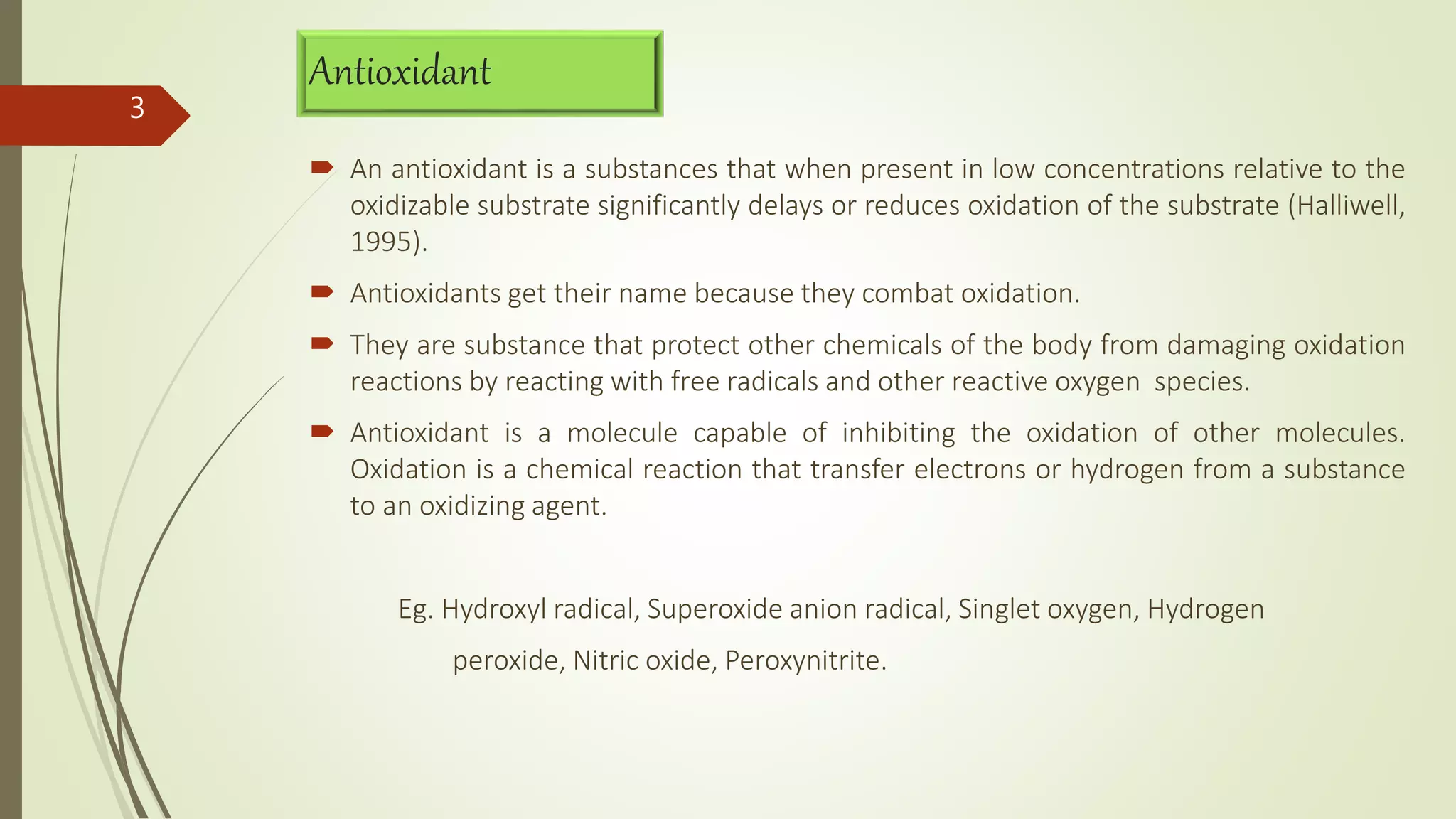
Antioxidant
 An antioxidant is a substances that when present in low concentrations relative to the
oxidizable substrate significantly delays or reduces oxidation of the substrate (Halliwell,
1995).
 Antioxidants get their name because they combat oxidation.
 They are substance that protect other chemicals of the body from damaging oxidation
reactions by reacting with free radicals and other reactive oxygen species.
 Antioxidant is a molecule capable of inhibiting the oxidation of other molecules.
Oxidation is a chemical reaction that transfer electrons or hydrogen from a substance
to an oxidizing agent.
Eg. Hydroxyl radical, Superoxide anion radical, Singlet oxygen, Hydrogen
peroxide, Nitric oxide, Peroxynitrite.
3
1) Types
a) Mode of action
b) Location
c) Solubility
2) Structural dependents
3) Origin
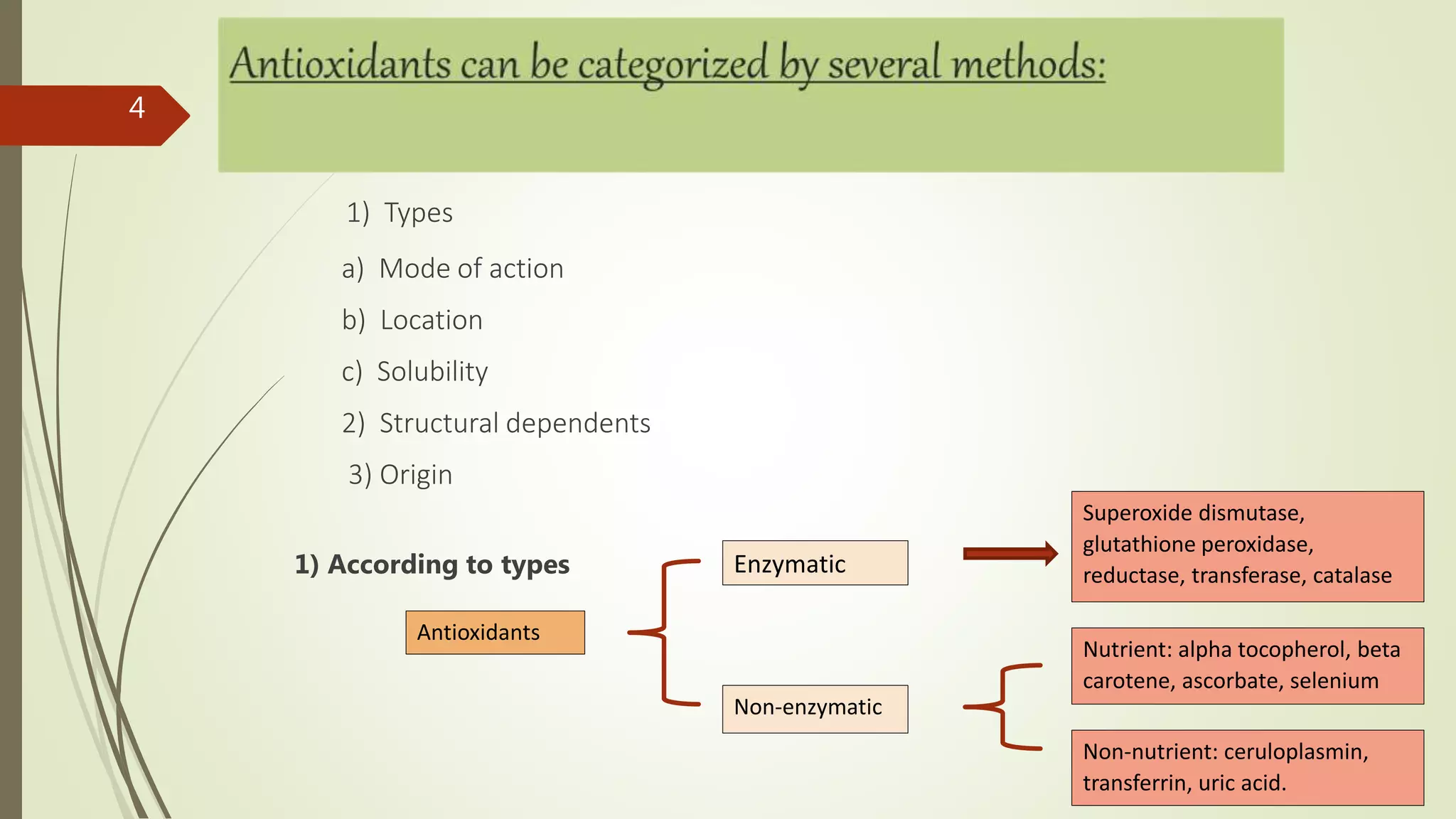
1) According to types Enzymatic
Superoxide dismutase,
glutathione peroxidase,
reductase, transferase, catalase
Antioxidants
Nutrient: alpha tocopherol, beta
carotene, ascorbate, selenium
Non-nutrient: ceruloplasmin,
transferrin, uric acid.
Non-enzymatic
4
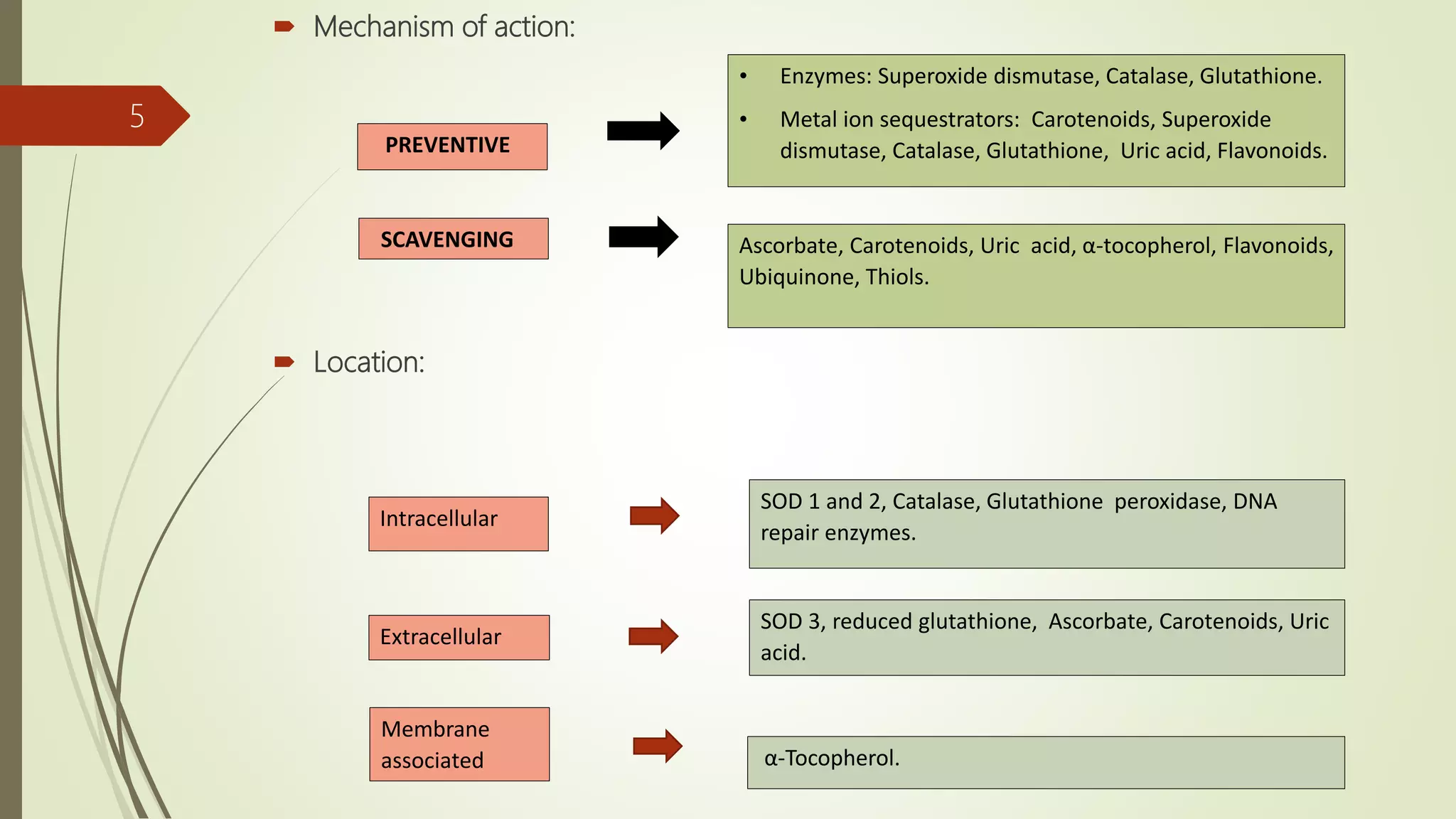
 Mechanism of action:
 Location:
PREVENTIVE
SCAVENGING
• Enzymes: Superoxide dismutase, Catalase, Glutathione.
• Metal ion sequestrators: Carotenoids, Superoxide
dismutase, Catalase, Glutathione, Uric acid, Flavonoids.
Ascorbate, Carotenoids, Uric acid, α-tocopherol, Flavonoids,
Ubiquinone, Thiols.
Intracellular
Extracellular
Membrane
associated
SOD 1 and 2, Catalase, Glutathione peroxidase, DNA
repair enzymes.
SOD 3, reduced glutathione, Ascorbate, Carotenoids, Uric
acid.
α-Tocopherol.
5
4) solubility
 Water soluble: Ascorbate, Uric acid, Thiols, Flavonoids, Cysteine, Transferrin.
 Lipid soluble: Alpha tocopherols, Carotenoids, bilirubin.
5) structures they protect:
 DNA: SOD1&2, Glutathione peroxidase, DNA repair enzymes, reduced glutathione,
cysteine.
 Protein: Sequestration of transition metals by preventive antioxidants.
 Lipid: Alpha tocopherols, Ascorbate, carotenoids, glutathione.
6) Origin:
 Exogenous: Carotenoids, Ascorbic acid, Tocopherols, Polyphenols
 Endogenous: Catalase, Superoxide dismutase, Glutathione
6
Functions of Antioxidant:
 Antioxidant such as Vitamin - C and E boost our immune system.
 Certain phytochemicals have beneficial effect on heart disease.
 Antioxidant lowers the level of LDL-Cholesterol, thus preventing
plaque deposition in the blood vessel.
 Its beneficial in cancer prevention.
 Antioxidant neutralize substances that can damage the genetic
material by oxidation.
7
Major Group of Antioxidant 2˚ Metabolite
Important group of antioxidant activity are
 Phenol
 Phenolic acid
 Anthocyanin
 Flavones
 Flavonoids
 Flavonols
 Tannins
 Isoflavanoids
These group of compound shows antioxidant activity and plant defence mechanism
against microorganism
8
Major Antioxidant Compounds in Plants
1. Enzymes
1.1 Superoxide Dismutase (SODs):
• SOD isoenzyme are present in chloroplasts, cytosol and in mitochondria.
• It catalyses the decomposition of hydrogen peroxide into water and oxygen.
1.2 Glutathione:
• Participating directly in the neutralisation of free radicals and reactive oxygen
compounds.
• Maintaining of exogenous antioxidant such as vitamin C & E in their reduced forms.
1.3 Glutathione Peroxide:
• Glutathione Peroxide uses glutathione as substrate and catalyses the reduction of
hydrogen peroxide and lipid hydro peroxide
9
2. Mineral:
• Minerals are elements that originate in the soil and can’t be created by living things.
• Selenium in the only mineral produced by plants.
• The richest plants sources of selenium is Brazil nut.
3. Low Molecular Weight & High Molecular Weight Compounds:
• HMW compounds includes albumin, cariplasmin and transferrin.
• LMW antioxidant are divided into
Polyphenols, Tocopherols & ascorbic acid.
Some Polyphenols.
• Both types of these compounds act as reducing agents, free radical scavengers and
quenchers of singlet oxygen formation.
Lipid soluble
Water soluble
10
4. Vitamins:
Carotenes:
• A carotene is one of four antioxidant that are vital our general health and wellbeing.
• α-carotene,γ-carotenes,δ-carotenes and β-carotenes types of carotenes.
• α&β carotenes are the powerful antioxidant.
• β –carotene is an anti aging micronutrient and play a significant role in reducing the effects of
certain illness such as heart disease, decreased immune function, cataracts, cancer.
Ascorbic acid (Vit-C):
• Its an hydrophilic antioxidant.
• Neutralisation of H2O2.
• Maintain healthy collagen in skin.
• Repair damaged tissue, healthy teeth and bones, immune system.
• As a free radical fights against cataracts, arthritis, heart disease, cancer & oxidation.
11
• Vitamin C functions as anti-inflammatory, and helps the body fight against inflammatory diseases
including fibromyalgia, chronic fatigue, angina, bronchitis, constipation and diabetes.
• Its also helpful in treating iron deficiency and anaemia.
Tocopherols (Vit-E)
• Vitamin E is primary fat-soluble antioxidant nutrient.
• Vitamin E resides in fatty tissues, especially cell walls and membranes.
• It helps to protect the stability and integrity of cellular tissues membranes throughout the body by
preventing free radical (lipid peroxidation) damage.
It helps in :-
 Improving skin conditions.
 Improving appearance of scars.
 Protecting the body’s membrane.
 Maintaining healthy blood vessels.
 thinning blood in body.
12
5.Hormone as antioxidant:
Melatonin:
• Its powerful antioxidant that can easily cross cell membrane and the blood brain
barrier.
• It doesn’t undergo redox cycling.
• Melatonin cant be reduced its former state as it forms stable compounds after
reacting with free radical.
• It has been referred as a terminal or suicidal antioxidant.
13
6. Essential Oils as Antioxidant:
 These are the class of volatile oils obtained by steam distillation and these may be
extracted from plants, flowers, barks and seeds.
Advantages:
• Due to their small molecular size, they can easily penetrate the skin tissue.
• As essential oils are lipid soluble they are capable of penetrating the membrane
easily even inn conditions when oxygen deficiency present.
• They serve as powerful antioxidant & they prevent mutants and oxidants in cells.
14
Pro-oxidants:
 These are the chemical that induce oxidative stress either through creating
reactive oxygen species or inhibiting antioxidant system.
 The oxidative stress is produced by these chemicals can damage cells and tissues.
 Some substances can acts as either antioxidants or Pro-oxidants depending on the
specific set of condition.
 Eg: Transitional Metal (Mn, Fe, Cu), Vit C and Uric acid .
15
Biological role of Antioxidant:
 To counter the harmful effects of free radicals, antioxidants defence mechanism
operates to detoxify or scavenge theses free radicals.
 Boost up immune system.
 Prevent the neurodegenerative disorder.
 Prevent DNA damage and there for have anticarcinogenic effects.
 Promotes the cardiovascular health.
 Antioxidants can decrease LDL and cholesterol, Increases HDL and blood pressure.
 Promotes the eye health and prevent macular degeneration, cataract and other
degenerative disorder.
16
Therapeutic uses of antioxidants:
 Alzheimer's disorder
 Cataract
 Diabetes
 Thrombosis
 Asthma
 Prevent the skin aging
 Parkinson's disease
17
Conclusion:
Antioxidant plays a important role in prevention of cancer, and other
disease. They also have role in slowing ageing process and preventing
heart disease. So antioxidant are very much necessary for our body. But
our body cant manufacture these chemicals, so they must be supplied
through diet.
18
19

PPT on Protective Activity Of Certain Important Antioxidant

  • 1.
    Protective activity ofcertain important antioxidants Naveen K L M Pharma (2nd Sem) Dept. of Pharmacology Srinivas College of Pharmacy Valachil, Mangaluru 1
  • 2.
    Contents:  Introduction  Categorisationof Antioxidants  Functions of Antioxidant  Major antioxidant in plants  Pro antioxidant  Biological role of antioxidant  Therapeutic uses of antioxidant  Conclusion  Reference 2
  • 3.
    Antioxidant  An antioxidantis a substances that when present in low concentrations relative to the oxidizable substrate significantly delays or reduces oxidation of the substrate (Halliwell, 1995).  Antioxidants get their name because they combat oxidation.  They are substance that protect other chemicals of the body from damaging oxidation reactions by reacting with free radicals and other reactive oxygen species.  Antioxidant is a molecule capable of inhibiting the oxidation of other molecules. Oxidation is a chemical reaction that transfer electrons or hydrogen from a substance to an oxidizing agent. Eg. Hydroxyl radical, Superoxide anion radical, Singlet oxygen, Hydrogen peroxide, Nitric oxide, Peroxynitrite. 3
  • 4.
    1) Types a) Modeof action b) Location c) Solubility 2) Structural dependents 3) Origin 1) According to types Enzymatic Superoxide dismutase, glutathione peroxidase, reductase, transferase, catalase Antioxidants Nutrient: alpha tocopherol, beta carotene, ascorbate, selenium Non-nutrient: ceruloplasmin, transferrin, uric acid. Non-enzymatic 4
  • 5.
     Mechanism ofaction:  Location: PREVENTIVE SCAVENGING • Enzymes: Superoxide dismutase, Catalase, Glutathione. • Metal ion sequestrators: Carotenoids, Superoxide dismutase, Catalase, Glutathione, Uric acid, Flavonoids. Ascorbate, Carotenoids, Uric acid, α-tocopherol, Flavonoids, Ubiquinone, Thiols. Intracellular Extracellular Membrane associated SOD 1 and 2, Catalase, Glutathione peroxidase, DNA repair enzymes. SOD 3, reduced glutathione, Ascorbate, Carotenoids, Uric acid. α-Tocopherol. 5
  • 6.
    4) solubility  Watersoluble: Ascorbate, Uric acid, Thiols, Flavonoids, Cysteine, Transferrin.  Lipid soluble: Alpha tocopherols, Carotenoids, bilirubin. 5) structures they protect:  DNA: SOD1&2, Glutathione peroxidase, DNA repair enzymes, reduced glutathione, cysteine.  Protein: Sequestration of transition metals by preventive antioxidants.  Lipid: Alpha tocopherols, Ascorbate, carotenoids, glutathione. 6) Origin:  Exogenous: Carotenoids, Ascorbic acid, Tocopherols, Polyphenols  Endogenous: Catalase, Superoxide dismutase, Glutathione 6
  • 7.
    Functions of Antioxidant: Antioxidant such as Vitamin - C and E boost our immune system.  Certain phytochemicals have beneficial effect on heart disease.  Antioxidant lowers the level of LDL-Cholesterol, thus preventing plaque deposition in the blood vessel.  Its beneficial in cancer prevention.  Antioxidant neutralize substances that can damage the genetic material by oxidation. 7
  • 8.
    Major Group ofAntioxidant 2˚ Metabolite Important group of antioxidant activity are  Phenol  Phenolic acid  Anthocyanin  Flavones  Flavonoids  Flavonols  Tannins  Isoflavanoids These group of compound shows antioxidant activity and plant defence mechanism against microorganism 8
  • 9.
    Major Antioxidant Compoundsin Plants 1. Enzymes 1.1 Superoxide Dismutase (SODs): • SOD isoenzyme are present in chloroplasts, cytosol and in mitochondria. • It catalyses the decomposition of hydrogen peroxide into water and oxygen. 1.2 Glutathione: • Participating directly in the neutralisation of free radicals and reactive oxygen compounds. • Maintaining of exogenous antioxidant such as vitamin C & E in their reduced forms. 1.3 Glutathione Peroxide: • Glutathione Peroxide uses glutathione as substrate and catalyses the reduction of hydrogen peroxide and lipid hydro peroxide 9
  • 10.
    2. Mineral: • Mineralsare elements that originate in the soil and can’t be created by living things. • Selenium in the only mineral produced by plants. • The richest plants sources of selenium is Brazil nut. 3. Low Molecular Weight & High Molecular Weight Compounds: • HMW compounds includes albumin, cariplasmin and transferrin. • LMW antioxidant are divided into Polyphenols, Tocopherols & ascorbic acid. Some Polyphenols. • Both types of these compounds act as reducing agents, free radical scavengers and quenchers of singlet oxygen formation. Lipid soluble Water soluble 10
  • 11.
    4. Vitamins: Carotenes: • Acarotene is one of four antioxidant that are vital our general health and wellbeing. • α-carotene,γ-carotenes,δ-carotenes and β-carotenes types of carotenes. • α&β carotenes are the powerful antioxidant. • β –carotene is an anti aging micronutrient and play a significant role in reducing the effects of certain illness such as heart disease, decreased immune function, cataracts, cancer. Ascorbic acid (Vit-C): • Its an hydrophilic antioxidant. • Neutralisation of H2O2. • Maintain healthy collagen in skin. • Repair damaged tissue, healthy teeth and bones, immune system. • As a free radical fights against cataracts, arthritis, heart disease, cancer & oxidation. 11
  • 12.
    • Vitamin Cfunctions as anti-inflammatory, and helps the body fight against inflammatory diseases including fibromyalgia, chronic fatigue, angina, bronchitis, constipation and diabetes. • Its also helpful in treating iron deficiency and anaemia. Tocopherols (Vit-E) • Vitamin E is primary fat-soluble antioxidant nutrient. • Vitamin E resides in fatty tissues, especially cell walls and membranes. • It helps to protect the stability and integrity of cellular tissues membranes throughout the body by preventing free radical (lipid peroxidation) damage. It helps in :-  Improving skin conditions.  Improving appearance of scars.  Protecting the body’s membrane.  Maintaining healthy blood vessels.  thinning blood in body. 12
  • 13.
    5.Hormone as antioxidant: Melatonin: •Its powerful antioxidant that can easily cross cell membrane and the blood brain barrier. • It doesn’t undergo redox cycling. • Melatonin cant be reduced its former state as it forms stable compounds after reacting with free radical. • It has been referred as a terminal or suicidal antioxidant. 13
  • 14.
    6. Essential Oilsas Antioxidant:  These are the class of volatile oils obtained by steam distillation and these may be extracted from plants, flowers, barks and seeds. Advantages: • Due to their small molecular size, they can easily penetrate the skin tissue. • As essential oils are lipid soluble they are capable of penetrating the membrane easily even inn conditions when oxygen deficiency present. • They serve as powerful antioxidant & they prevent mutants and oxidants in cells. 14
  • 15.
    Pro-oxidants:  These arethe chemical that induce oxidative stress either through creating reactive oxygen species or inhibiting antioxidant system.  The oxidative stress is produced by these chemicals can damage cells and tissues.  Some substances can acts as either antioxidants or Pro-oxidants depending on the specific set of condition.  Eg: Transitional Metal (Mn, Fe, Cu), Vit C and Uric acid . 15
  • 16.
    Biological role ofAntioxidant:  To counter the harmful effects of free radicals, antioxidants defence mechanism operates to detoxify or scavenge theses free radicals.  Boost up immune system.  Prevent the neurodegenerative disorder.  Prevent DNA damage and there for have anticarcinogenic effects.  Promotes the cardiovascular health.  Antioxidants can decrease LDL and cholesterol, Increases HDL and blood pressure.  Promotes the eye health and prevent macular degeneration, cataract and other degenerative disorder. 16
  • 17.
    Therapeutic uses ofantioxidants:  Alzheimer's disorder  Cataract  Diabetes  Thrombosis  Asthma  Prevent the skin aging  Parkinson's disease 17
  • 18.
    Conclusion: Antioxidant plays aimportant role in prevention of cancer, and other disease. They also have role in slowing ageing process and preventing heart disease. So antioxidant are very much necessary for our body. But our body cant manufacture these chemicals, so they must be supplied through diet. 18
  • 19.