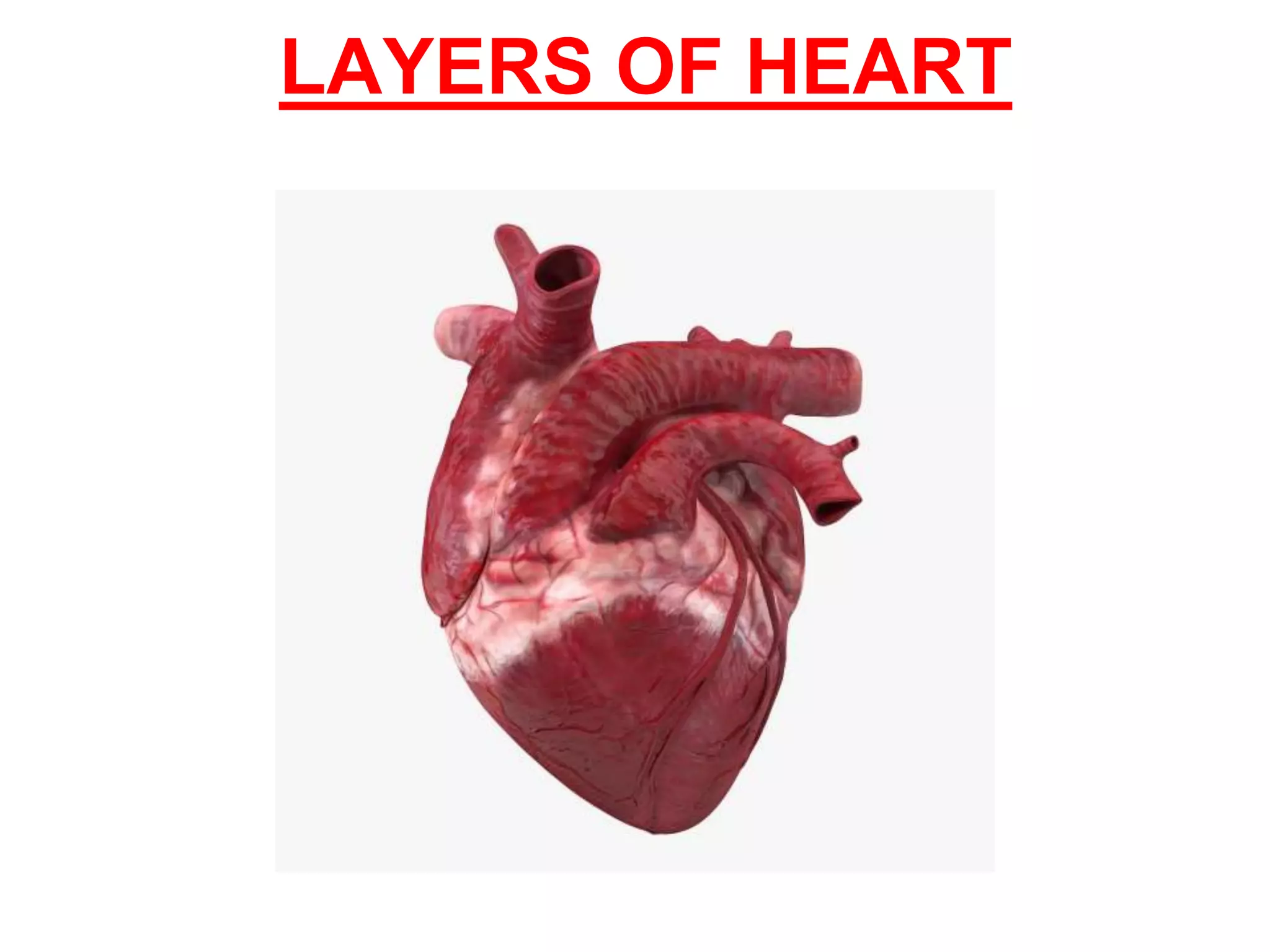
LAYERS OF HEART
Two type of layer
• Covering layer of Heart
• Internal Layer of Heart
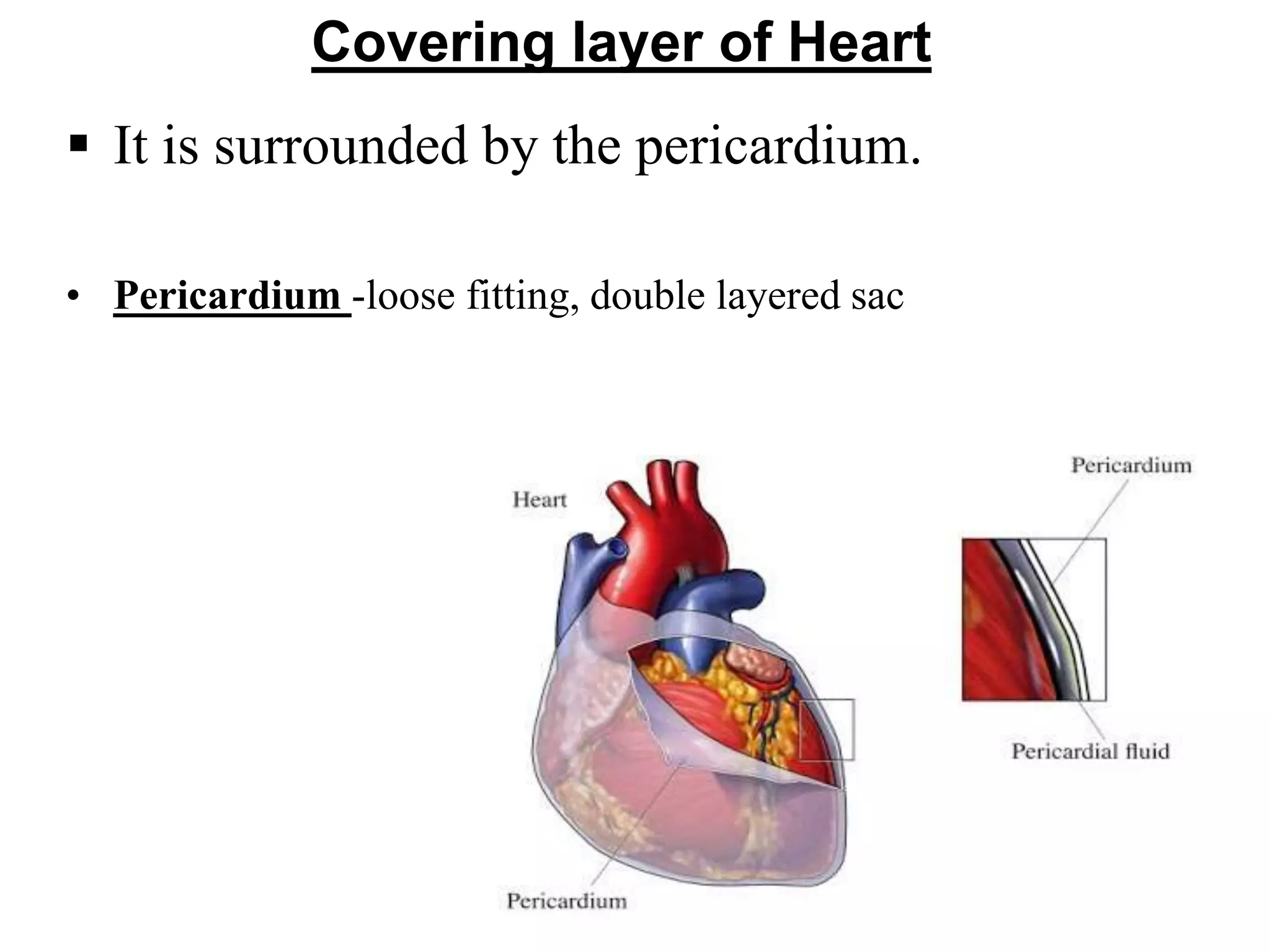
 It is surrounded by the pericardium.
• Pericardium -loose fitting, double layered sac
Covering layer of Heart
Pericardial fluid- (Serous fluid)-fluid that is
between the parietal and visceral pericardium which
prevents friction as the heart beats.
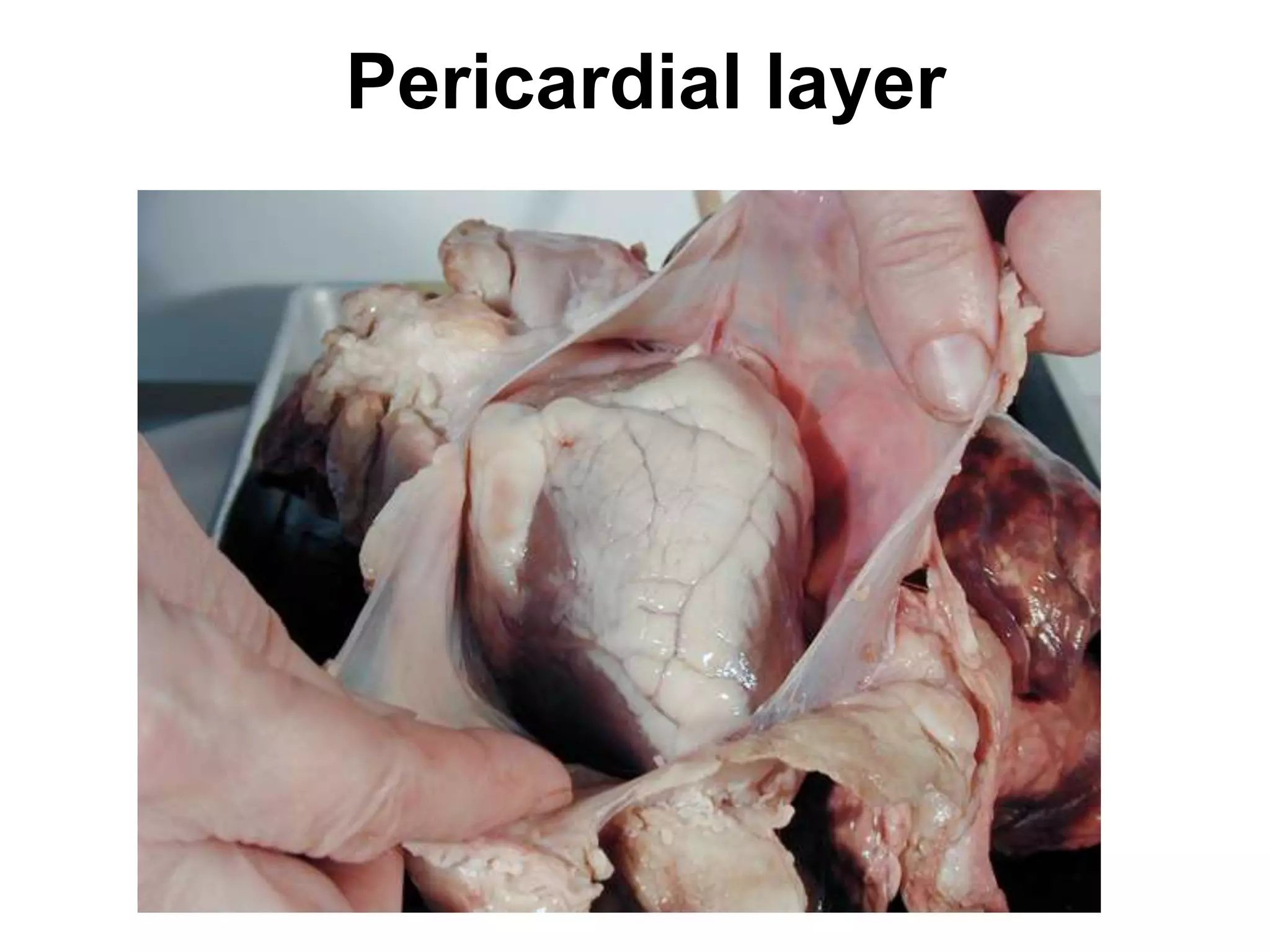
Pericardial layer
Layers of heart tissue
• Epicardium
• Myocardium
• Endocardium
Serous membrane
Continuous with
blood vessels
Epicardium
• Protective, outer layer of the heart wall
same as the visceral pericardium
• The coronary blood
vessels that nourish
the heart wall are
located here
Myocardium
* Middle layer made of cardiac muscle.
* Forms the bulk of the heart wall.
*Contains the septum- a thick muscular wall.
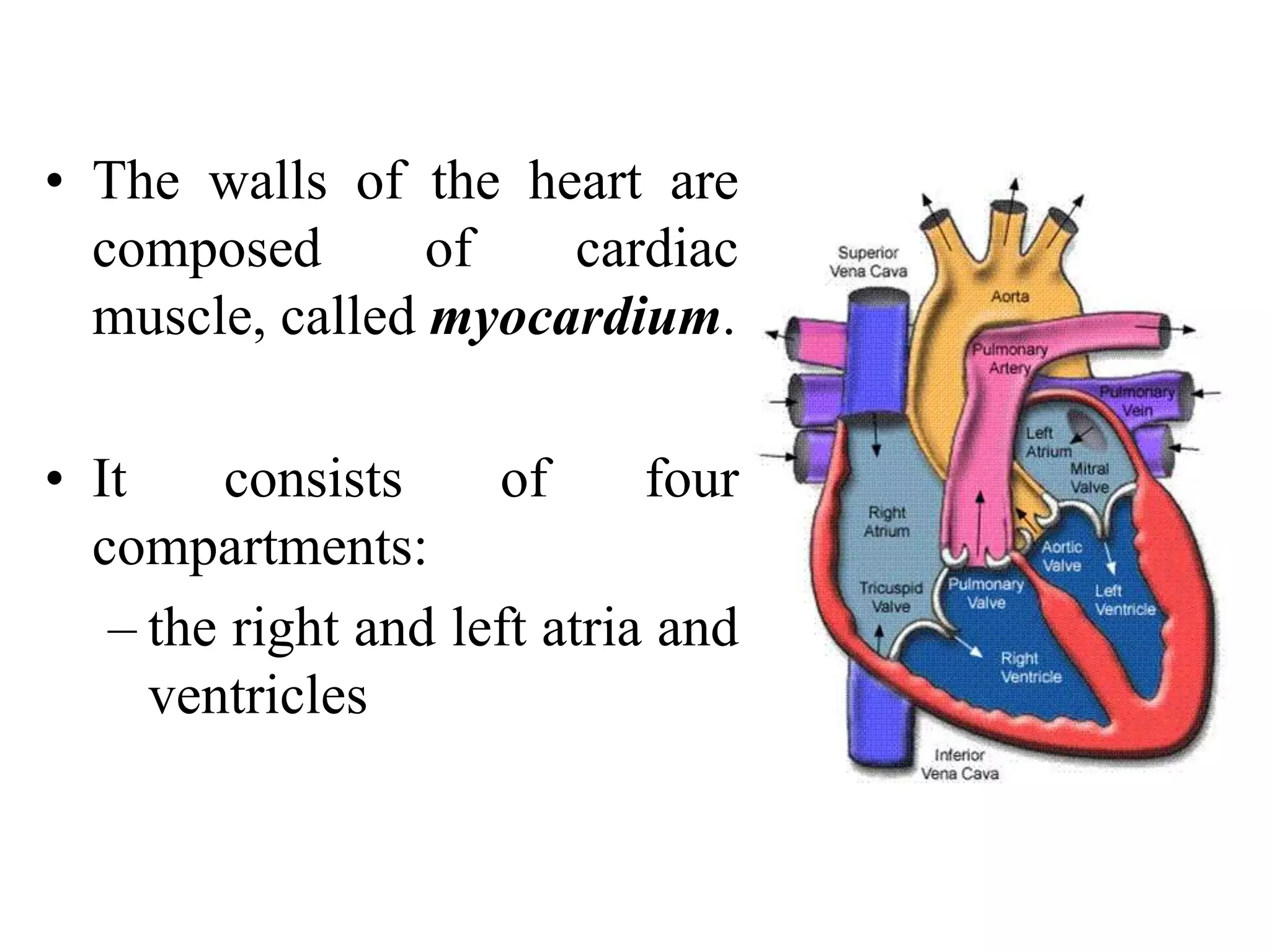
• The walls of the heart are
composed of cardiac
muscle, called myocardium.
• It consists of four
compartments:
– the right and left atria and
ventricles
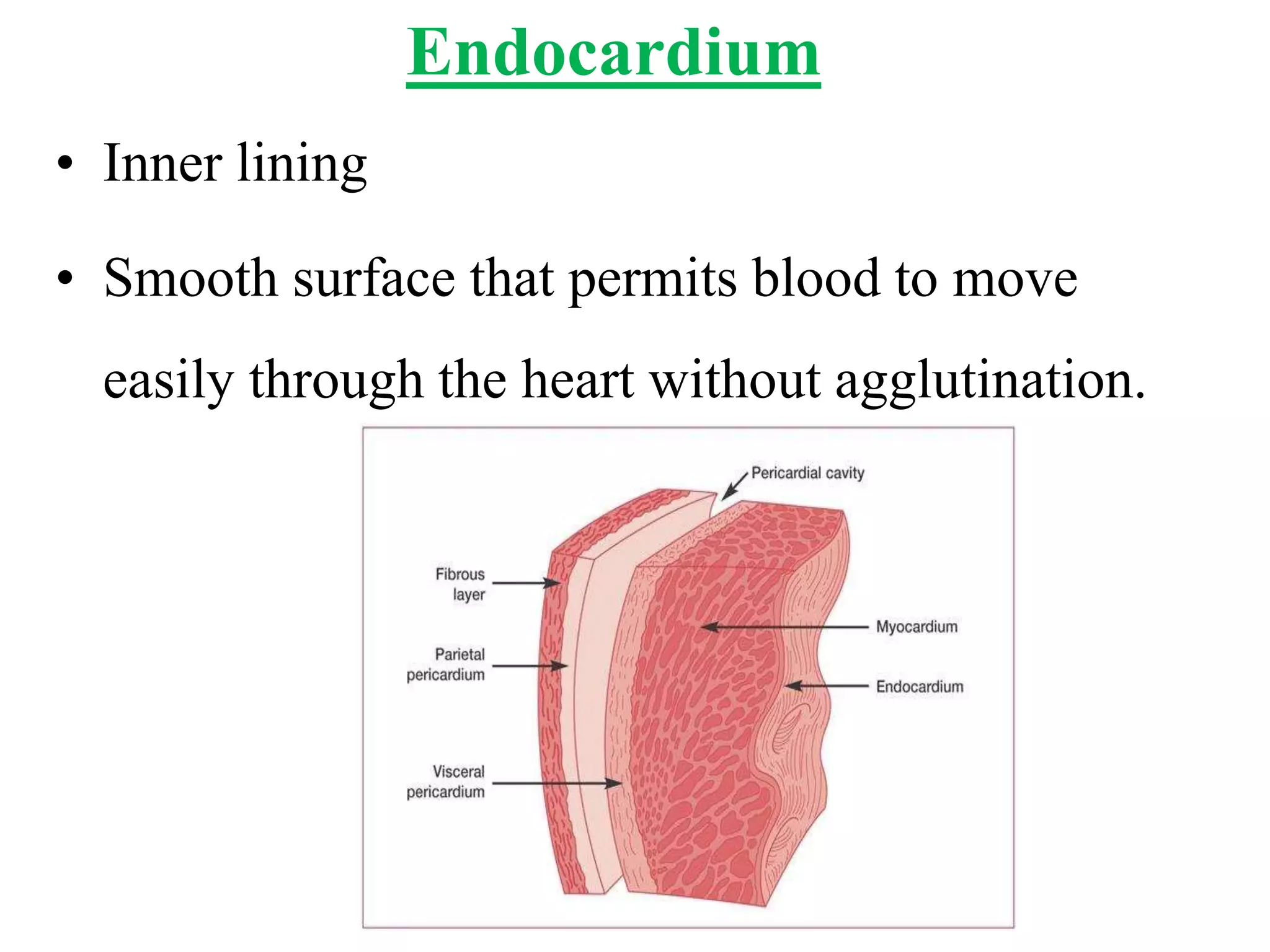
Endocardium
• Inner lining
• Smooth surface that permits blood to move
easily through the heart without agglutination.
• Epicardium – Outer, serous layer of heart
• Myocardium – Strong, muscular layer of
heart
• Endocardium – lines the heart chambers
Serous membrane
Continuous with
blood vessels
BY PHARMA JOSH YOUTUBE CHANNEL
15
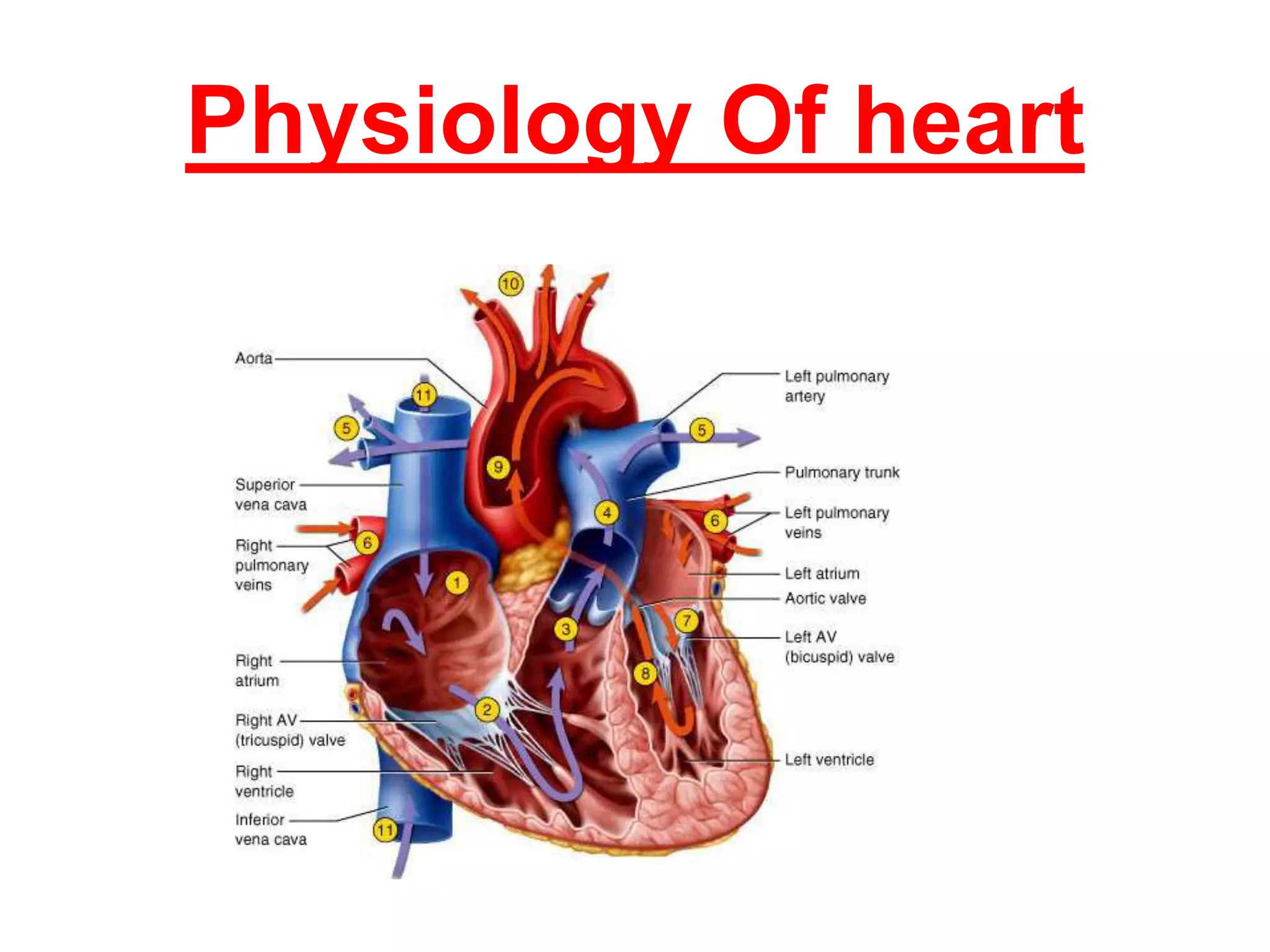
4. HEART chambers
 The heart has four chambers.
 Two Atrium act as collecting reservoirs.
 Two Ventricles act as pumps.
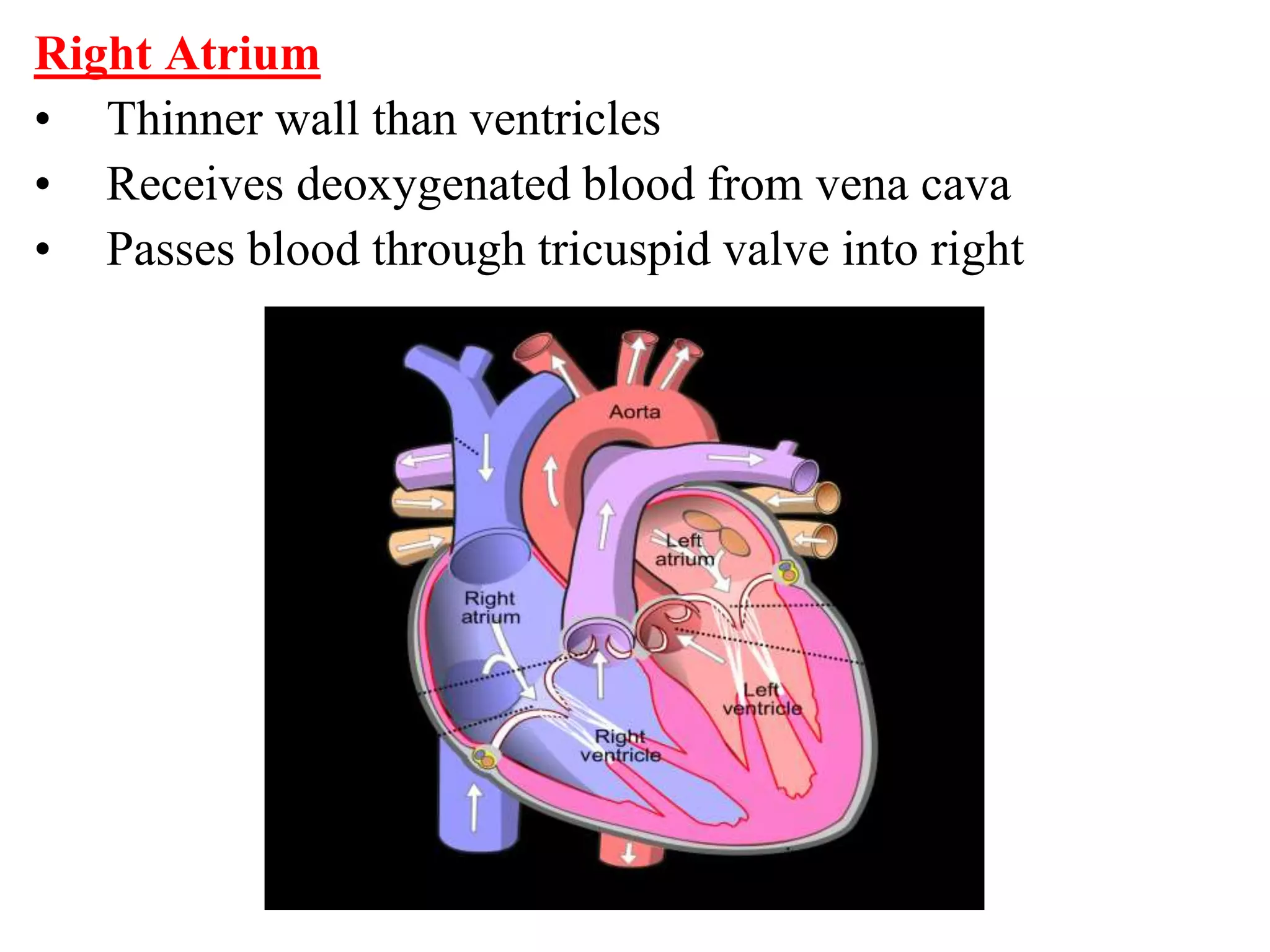
Right Atrium
• Thinner wall than ventricles
• Receives deoxygenated blood from vena cava
• Passes blood through tricuspid valve into right
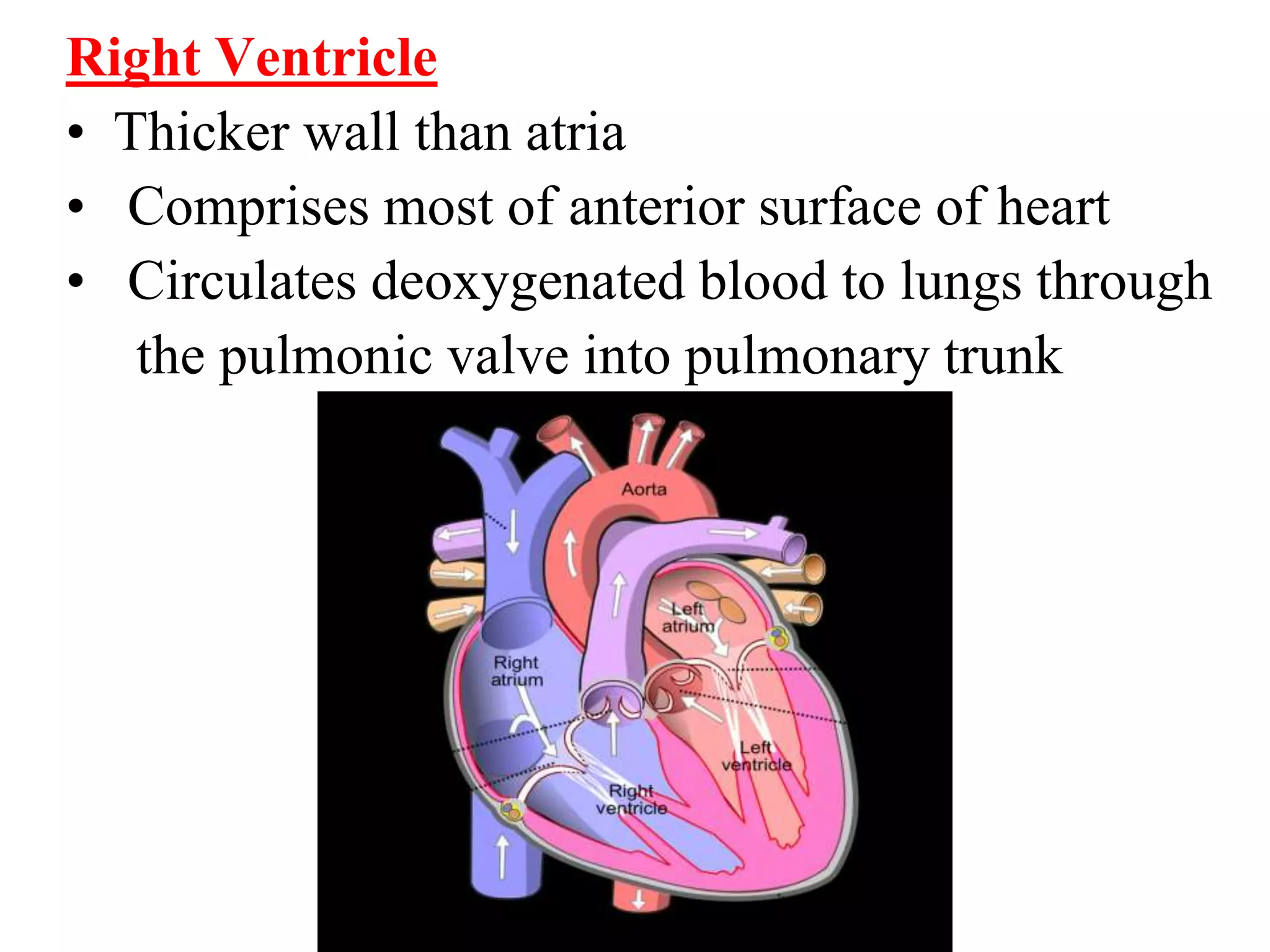
Right Ventricle
• Thicker wall than atria
• Comprises most of anterior surface of heart
• Circulates deoxygenated blood to lungs through
the pulmonic valve into pulmonary trunk
Left Atrium
• Receives freshly oxygenated blood from pulmonary
vein
• Passes blood to left ventricle through mitral valve
Left Ventricle
• Receives blood from left atrium
• Thickest myocardial wall
• Forms apex of heart
• Sends blood to systemic circulation via aorta
5. Septa or septum
• Interatrial septum
• Muscular division b/w atria
• Interventricular septum
• Thick muscular wall
• Separates ventricles
6. Heart Valves
Function-
• prevent blood from flowing backwards
Two types of valves in heart
1. Atrioventricular valves (AV)
2. Semi-lunar valves (SL)
1. Atrioventricular Valves
Located between Atrium and
ventricles.
Right AV valve (Tricuspid)
• Located between Right
Atrium and ventricle.
• Contains 3 cusps
Left AV valve (Mitral or
Bicuspid)
• Located between left Atrium
and ventricle.
•Contains 2 cusps
2. Semilunar valves
• Located at exit of ventricles, originate from
endothelial lining of veins
Heart contains two semilunar valves
• Pulmonic valve
• Aortic valve
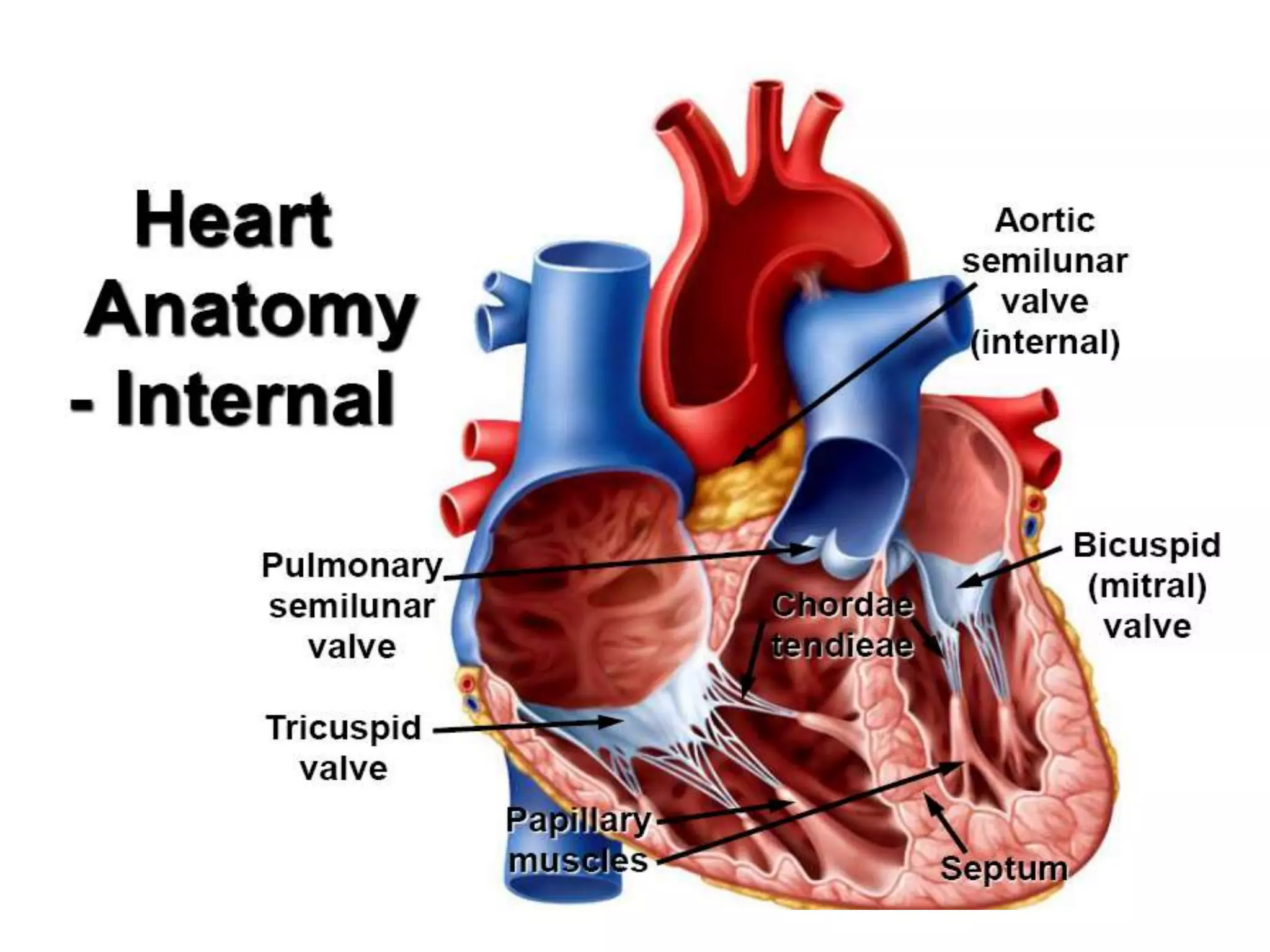
Internal structure of Heart
The Heart
These are arteries.
They carry blood away
from the heart.
This is a vein. It brings
blood from the body,
except the lungs.
Coronary arteries,
the hearts own
blood supply
The heart has four chambers
2 atria
2 ventricles
now lets look inside the heart
The Heart
Left Ventricle
Left Atrium
Right Atrium
Right Ventricle
valve
Vein from Lungs
Artery to Head and BodyArtery to Lungs
Vein from Head and Body
valve
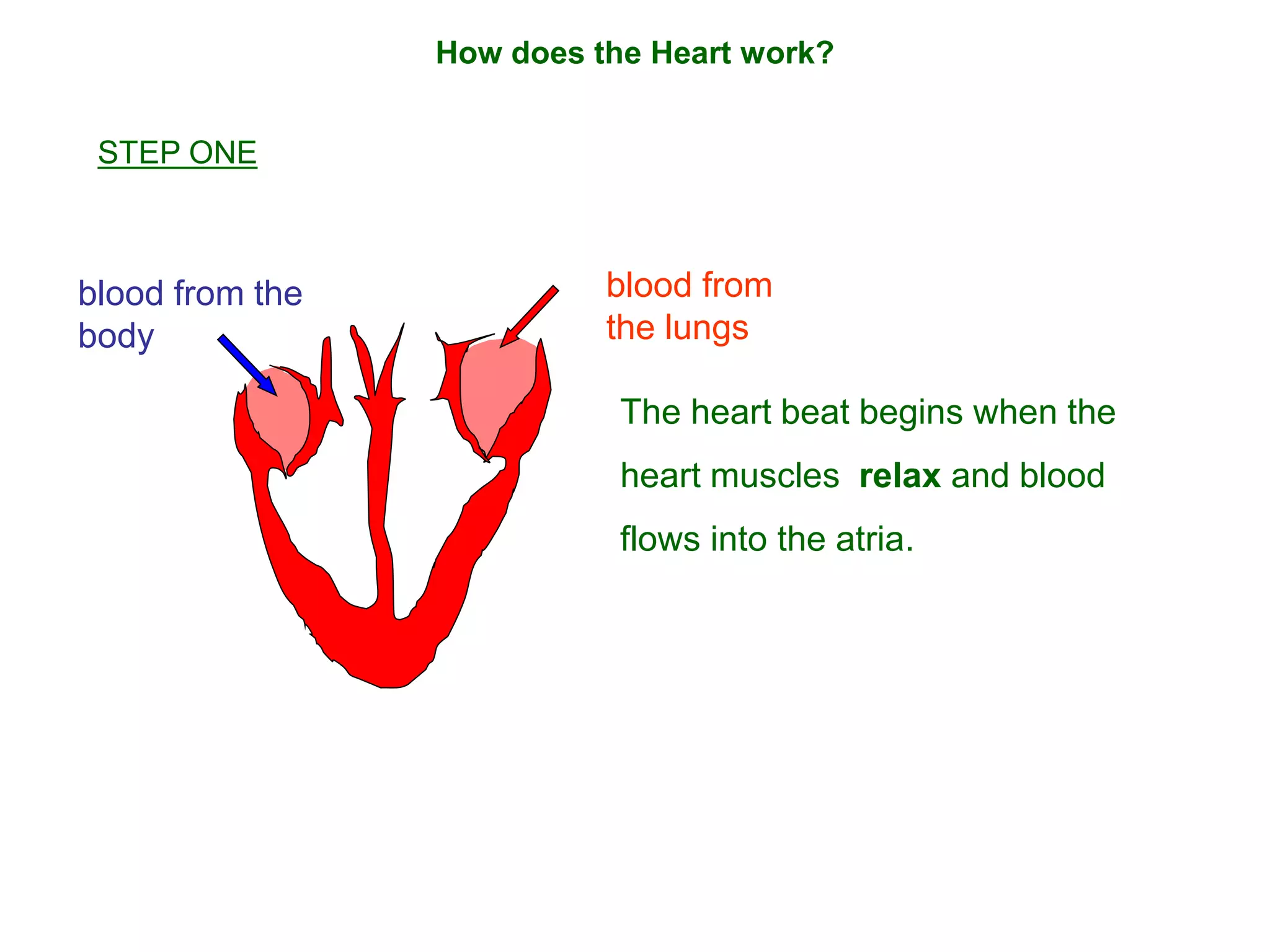
How does the Heart work?
blood from the
body
blood from
the lungs
The heart beat begins when the
heart muscles relax and blood
flows into the atria.
STEP ONE
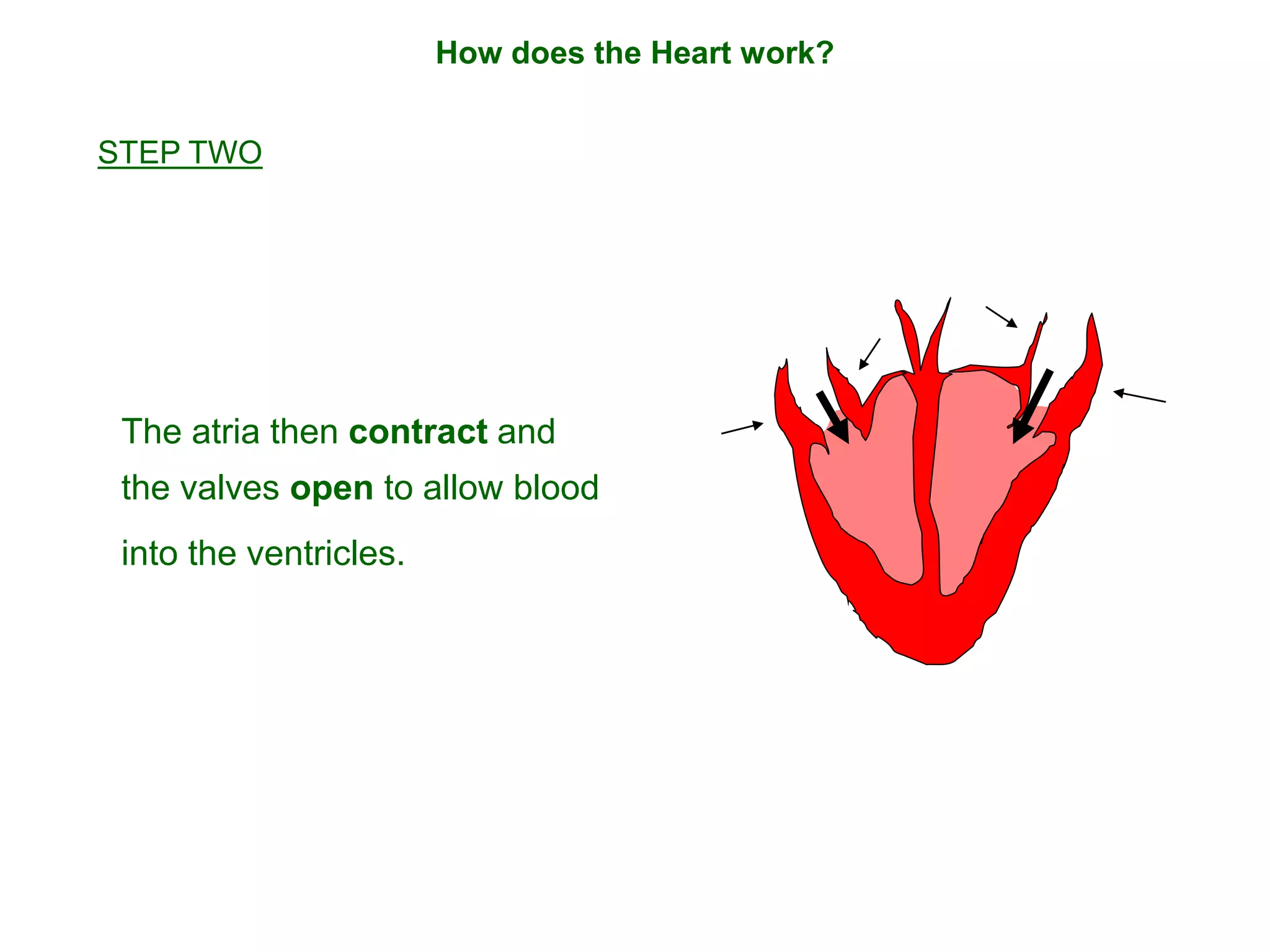
The atria then contract and
the valves open to allow blood
into the ventricles.
How does the Heart work?
STEP TWO
How does the Heart work?
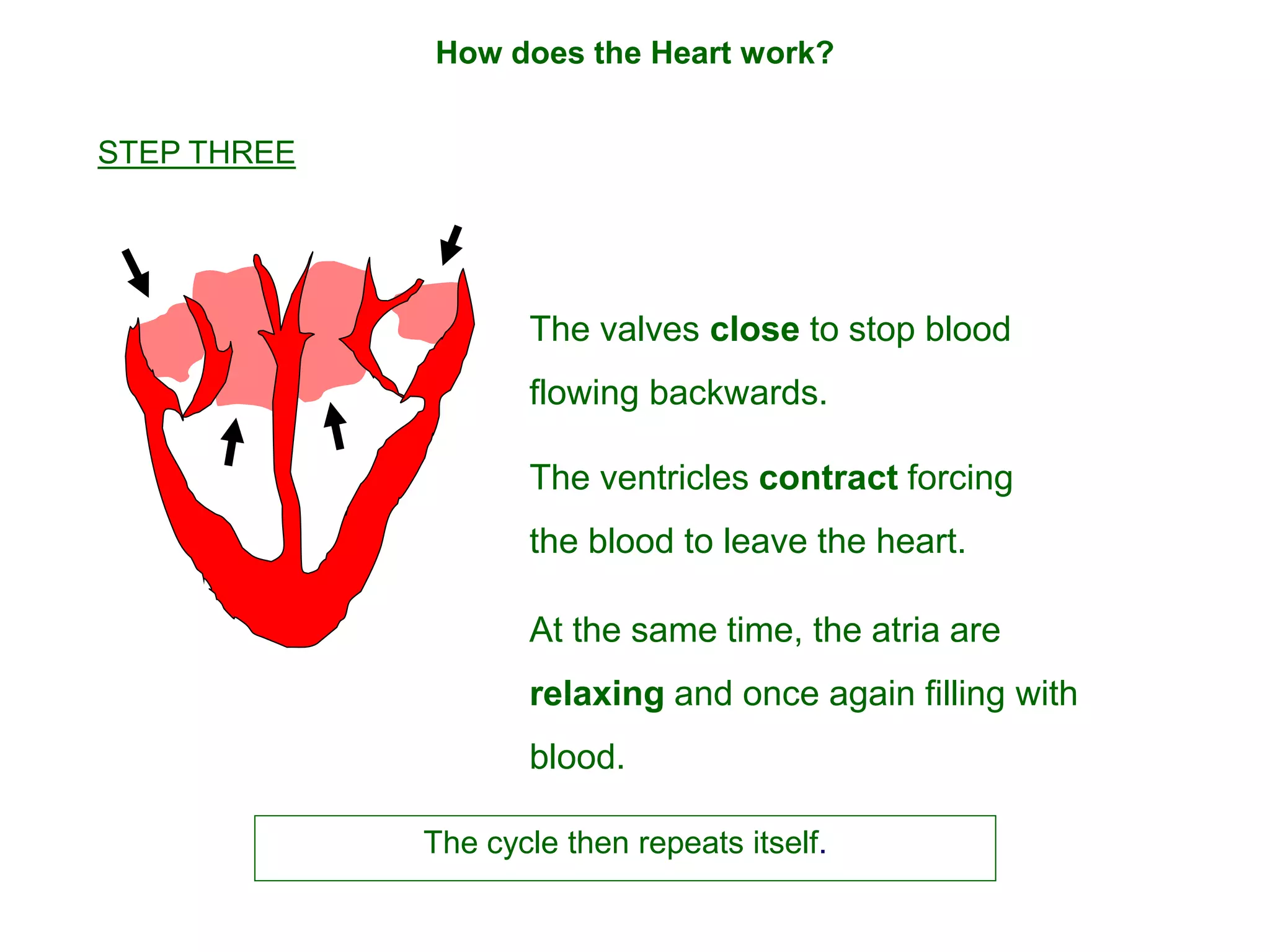
The valves close to stop blood
flowing backwards.
The ventricles contract forcing
the blood to leave the heart.
At the same time, the atria are
relaxing and once again filling with
blood.
The cycle then repeats itself.
STEP THREE
3 Kinds of Circulation:
• Pulmonary circulation
• Coronary circulation
• Systemic circulation
Pulmonary Circulation
Movement of blood from the heart, to the
lungs, and back to the heart again
sln.fi.edu/biosci/systems/ pulmonary.html
Coronary Circulation
Movement of blood through the tissues of
the heart
http://sln.fi.edu/biosci2/systems/
Systemic Circulation
Supplies nourishment to all of the tissue
located throughout the body , except for
the heart and lungs
http://sln.fi.edu/biosci/systems/systemic.html
Hollow tubes that circulate your blood
There are 3 types of blood vessels
a. ARTERY
b. VEIN
c. CAPILLARY
Blood Vessels
Arteries
• Carry blood AWAY from the heart
• Main artery called the aorta
• Aorta divides and branches and become Many smaller
arteries
• Each region of your body has system of arteries
supplying it with fresh, oxygen-rich blood.
The ARTERY
thick muscle and elastic
fibres
Arteries carry blood away from the heart.
the elastic fibres allow the artery
to stretch under pressure
the thick muscle can contract
to push the blood along.
Aortic arch
Arteries
Pulmonary artery
(trunk)
Coronary
arteries
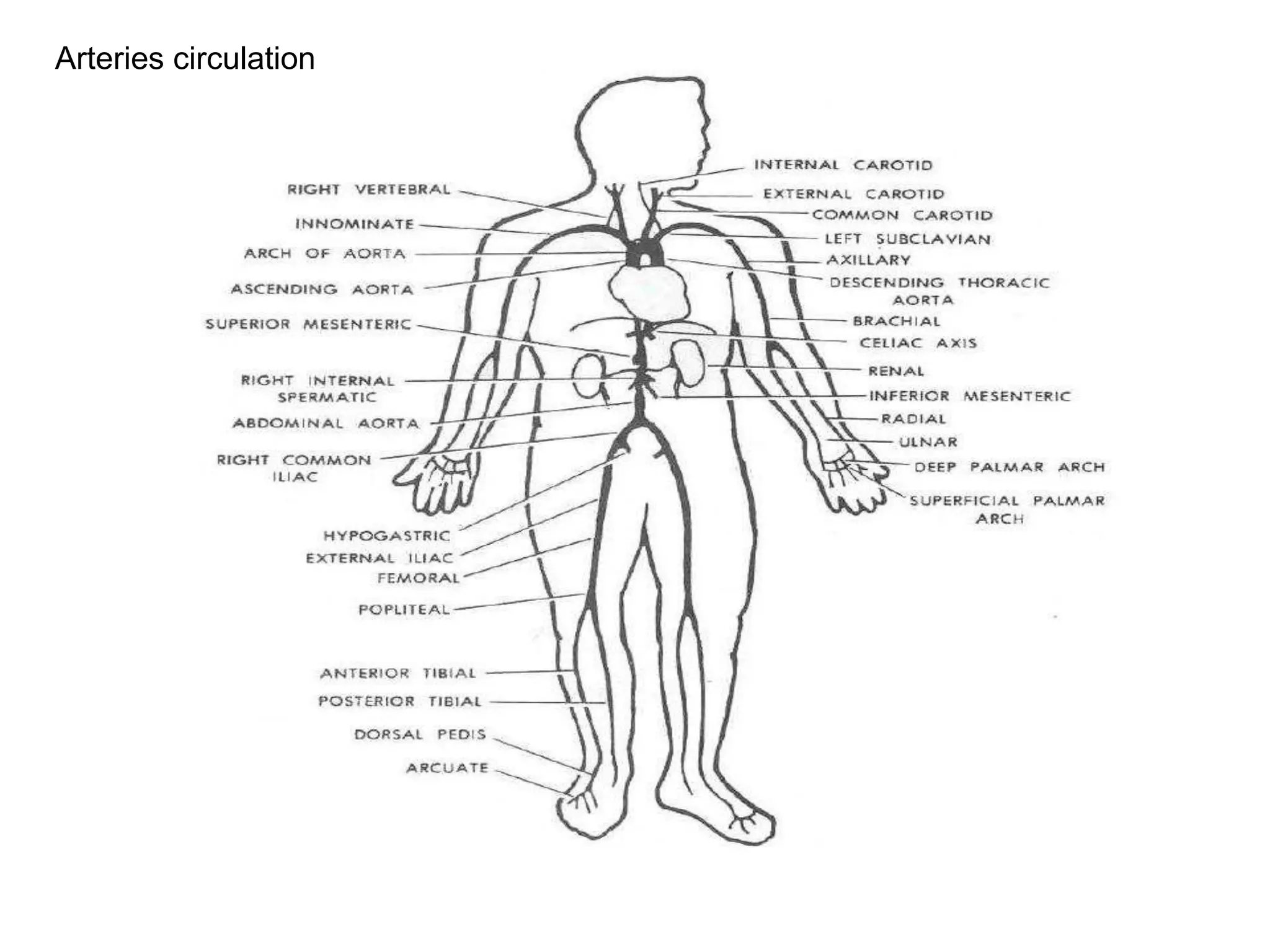
Arteries circulation
Veins
• Carry blood to the heart
• Receive blood from the capillaries
• Transport waste-rich/ oxygen-poor blood back to
the heart
• Allow blood to move in one direction
The VEIN
Veins carry blood towards from the heart.
thin muscle and elastic
fibres
veins have valves which act to
stop the blood from going in the
wrong direction.
body muscles surround the veins so that when
they contract to move the body, they also
squeeze the veins and push the blood along the
vessel.
Capillaries
• Very thin
• Only one cell thick
• Connect arteries & veins
Capillaries
• Food and oxygen released to the body
cells
• Carbon dioxide and other waste products
returned to the bloodstream
The CAPILLARY
Capillaries link Arteries with Veins
the wall of a capillary
is only one cell thick
they exchange materials between
the blood and other body cells.
The exchange of materials between
the blood and the body can only occur
through capillaries.
artery vein
capillaries
body cell
The CAPILLARY
A collection of capillaries is known as a capillary bed.
http://users.tpg.com.au/users/amcgann/body/circulatory.html
www.biosbcc.net/doohan/ sample/htm/heart.htm
Heart Circulation
Heart Circulation
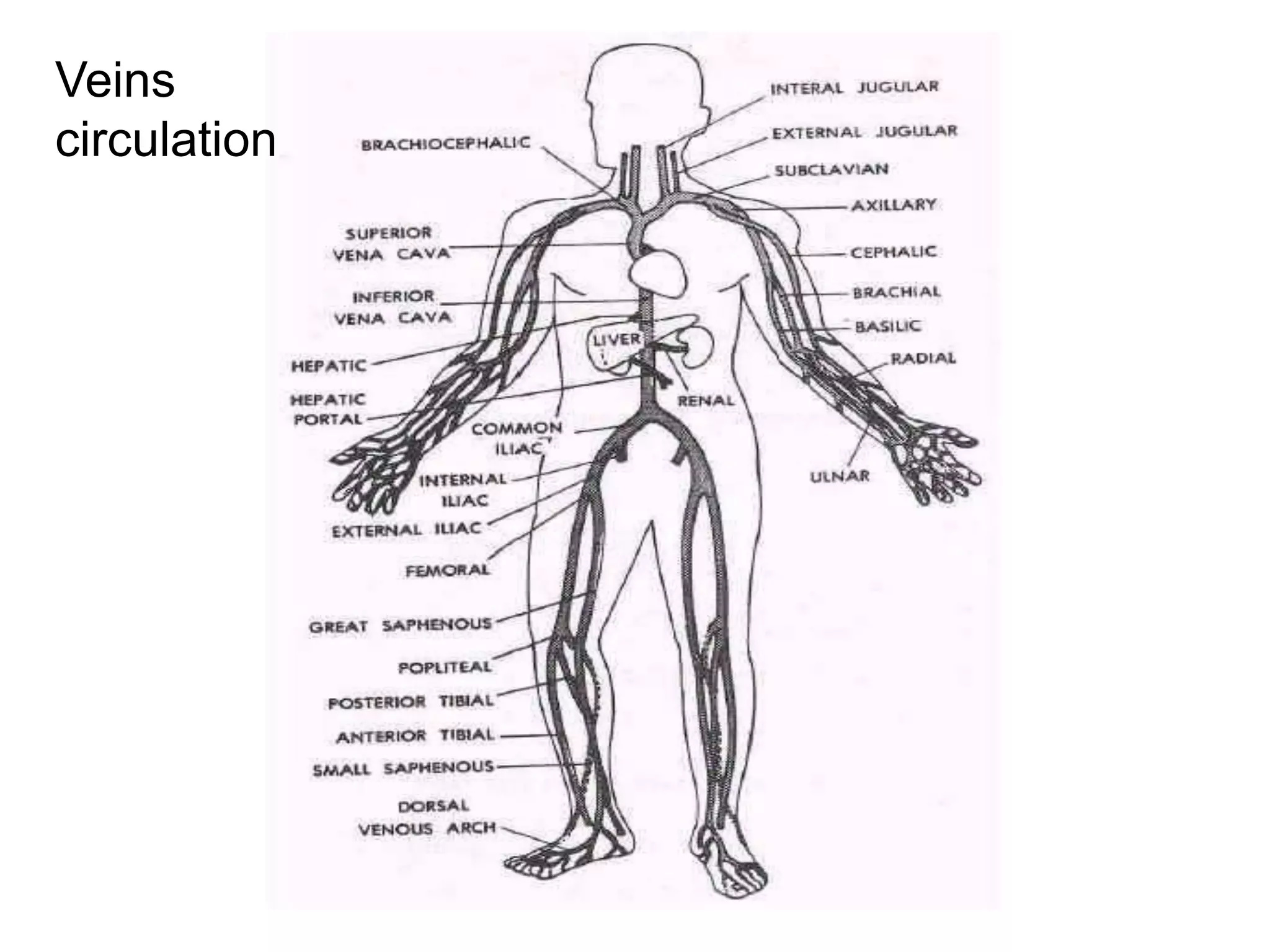
Veins
circulation
Physiology Of heart
Properties of Cardiac muscle:-
1.Excitability or irritability
2.Contractility
3.Automaticity
4.Rhythmicity
5.Refractory period
6.Tonicity
Coordination of chamber contraction, relaxation
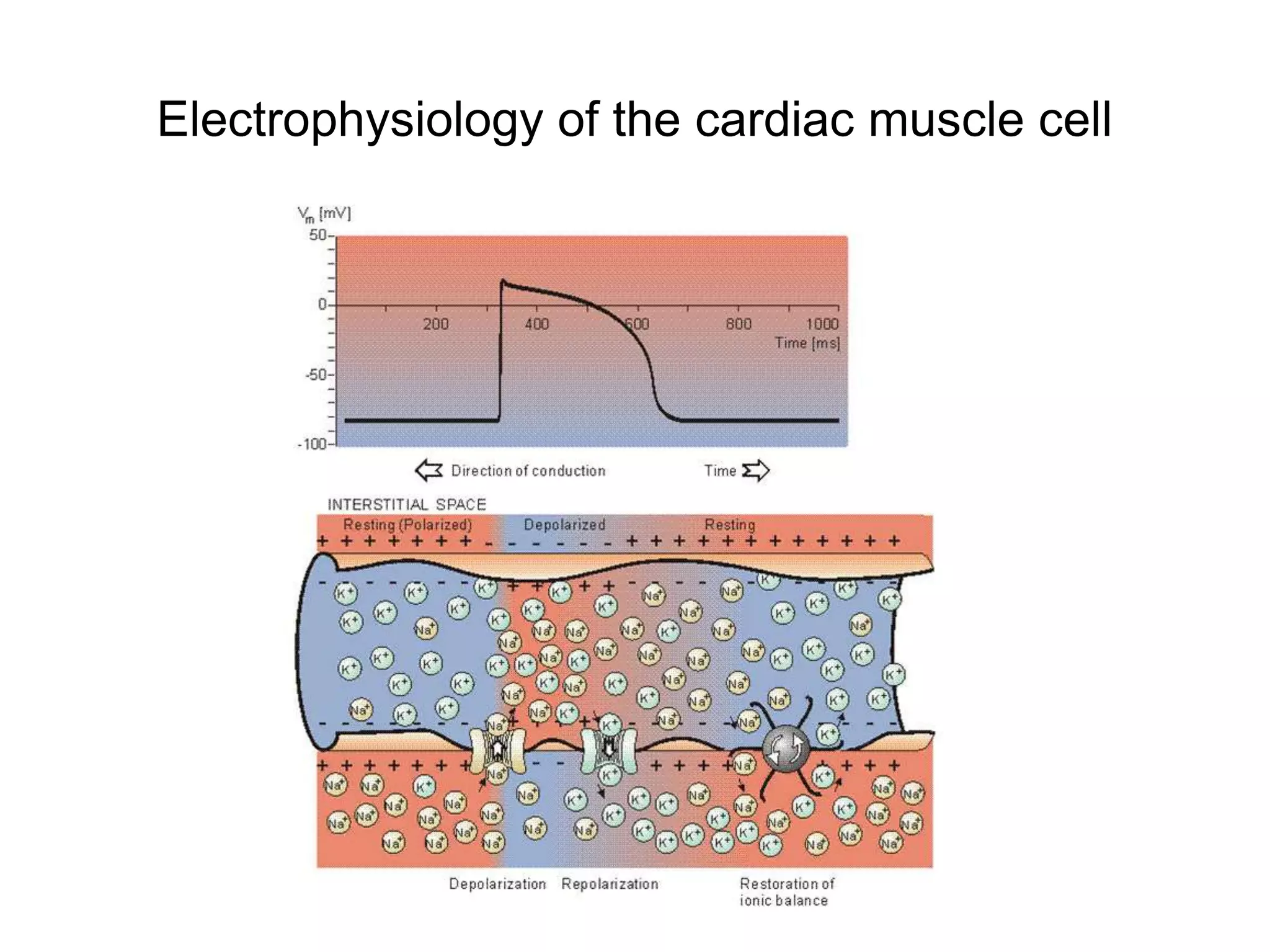
I. Excitability (Irritability):
= the ability of cardiac muscle to respond to
adequate stimuli by generating an action
potential followed by a mechanical
contraction.
Electrophysiology of the cardiac muscle cell
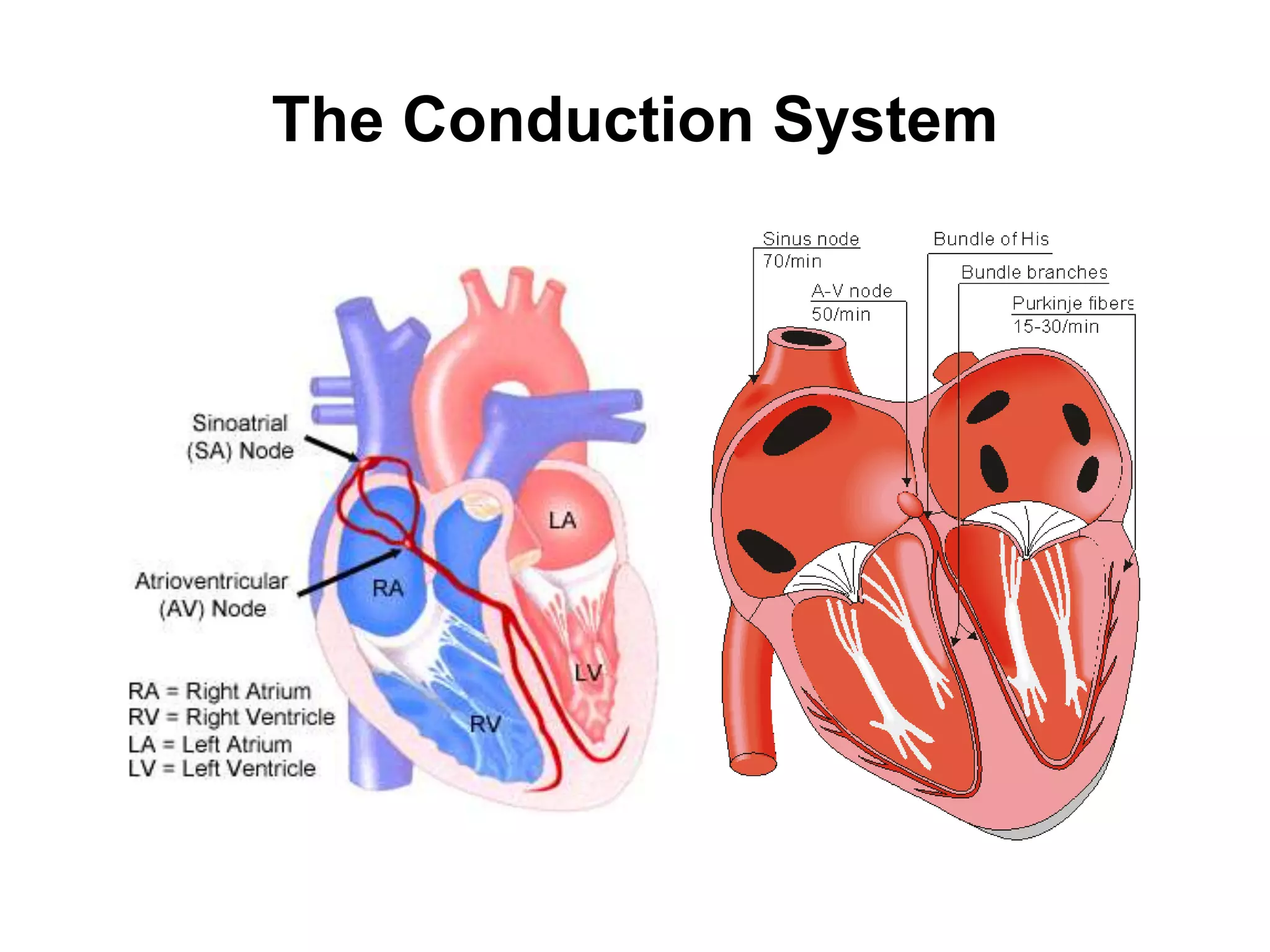
The Conduction System
• Electrical signal begins in the sinoatrial (SA) node:
"natural pacemaker."
– causes the atria to contract.
• The signal then passes through the atrioventricular
(AV) node.
– sends the signal to the ventricles via the “bundle of
His”
– causes the ventricles to contract.
The Conduction System
The normal electrocardiogram
Abnormalities of Heart:-
1. Hypertension
2. CHF (Conjunctive heart failure)
3. Hyperlipidemic
4. Arraythmias
5. Angina pectories

layers of heart part 2 ll SOHAN PATEL