Learning Objective: I can describe how cells divide and
the different phases of the cell cycle.
What is the process cells undergo before they
become specialized?
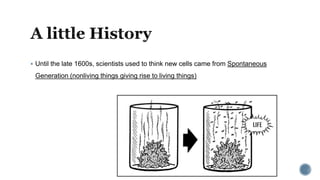
 Until the late 1600s, scientists used to think new cells came from Spontaneous
Generation (nonliving things giving rise to living things)
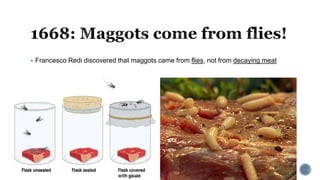
 Francesco Redi discovered that maggots came from flies, not from decaying meat
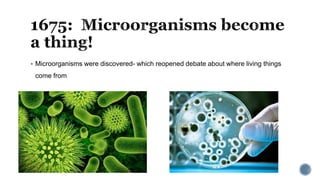
 Microorganisms were discovered- which reopened debate about where living things
come from
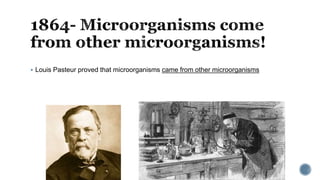
 Louis Pasteur proved that microorganisms came from other microorganisms
 All life comes from other life
 Thanks Pasteur.
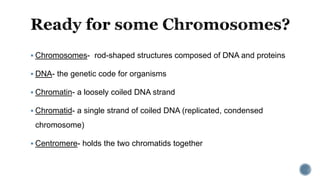
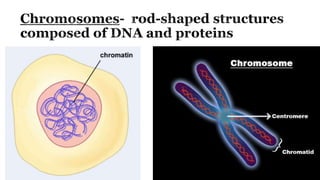
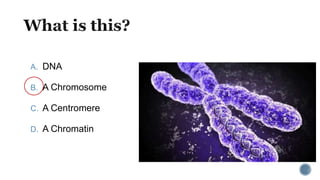
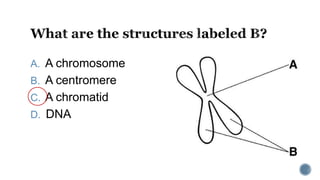
 Chromosomes- rod-shaped structures composed of DNA and proteins
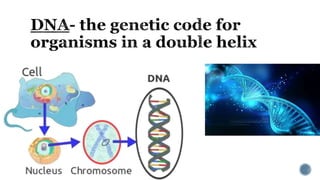
 DNA- the genetic code for organisms
 Chromatin- a loosely coiled DNA strand
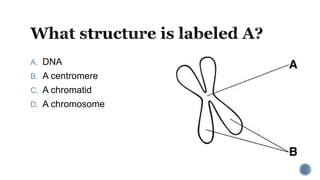
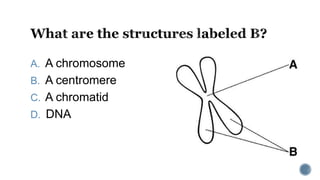
 Chromatid- a single strand of coiled DNA (replicated, condensed
chromosome)
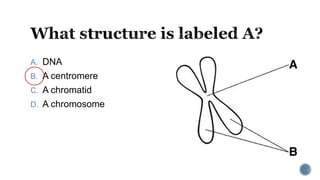
 Centromere- holds the two chromatids together
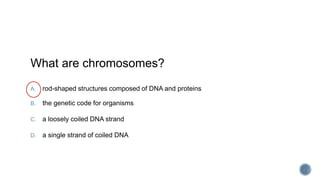
What are chromosomes?
A. rod-shaped structures composed of DNA and proteins
B. the genetic code for organisms
C. a loosely coiled DNA strand
D. a single strand of coiled DNA
What are chromosomes?
A. rod-shaped structures composed of DNA and proteins
B. the genetic code for organisms
C. a loosely coiled DNA strand
D. a single strand of coiled DNA
A. rod-shaped structures composed of DNA and proteins
B. the genetic code for organisms
C. Structure that holds the two chromatids together
D. a loosely coiled DNA strand
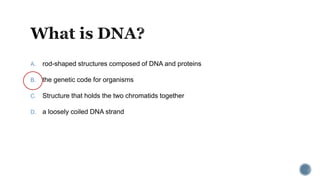
A. rod-shaped structures composed of DNA and proteins
B. the genetic code for organisms
C. Structure that holds the two chromatids together
D. a loosely coiled DNA strand
A. A structure that holds two chromatids together?
B. a single strand of coiled DNA (replicated, condensed chromosome)
C. a loosely coiled DNA strand
D. the genetic code for organisms
A. A structure that holds two chromatids together
B. a single strand of coiled DNA (replicated, condensed chromosome)
C. a loosely coiled DNA strand
D. the genetic code for organisms
A. A structure that holds the two chromatids together
B. a single strand of coiled DNA (replicated, condensed chromosome)
C. a loosely coiled DNA strand
D. rod-shaped structures composed of DNA and proteins
A. A structure that holds the two chromatids together
B. a single strand of coiled DNA (replicated, condensed chromosome)
C. a loosely coiled DNA strand
D. rod-shaped structures composed of DNA and proteins
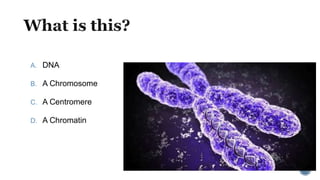
A. DNA
B. A Chromosome
C. A Centromere
D. A Chromatin
A. DNA
B. A Chromosome
C. A Centromere
D. A Chromatin
A. DNA
B. A centromere
C. A chromatid
D. A chromosome
A. DNA
B. A centromere
C. A chromatid
D. A chromosome
A. A chromosome
B. A centromere
C. A chromatid
D. DNA
A. A chromosome
B. A centromere
C. A chromatid
D. DNA
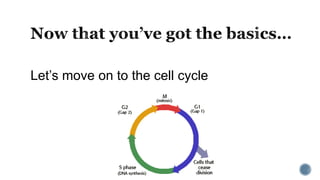
Let’s move on to the cell cycle
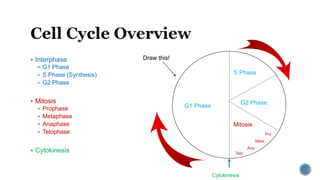
 Interphase
 G1 Phase
 S Phase (Synthesis)
 G2 Phase
 Mitosis
 Prophase
 Metaphase
 Anaphase
 Telophase
 Cytokinesis
G1 Phase
S Phase
G2 Phase
Mitosis
Pro
Meta
Ana
Telo
Cytokinesis
Draw this!
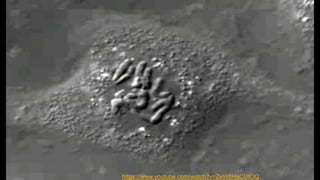
https://www.youtube.com/watch?v=ZeW8HaCUtOQ
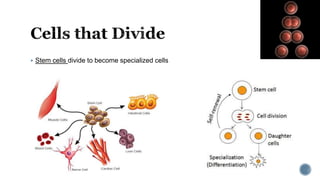
 Stem cells divide to become specialized cells
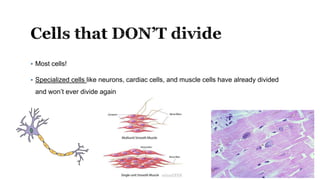
 Most cells!
 Specialized cells like neurons, cardiac cells, and muscle cells have already divided
and won’t ever divide again
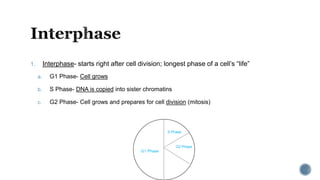
1. Interphase- starts right after cell division; longest phase of a cell’s “life”
a. G1 Phase- Cell grows
b. S Phase- DNA is copied into sister chromatins
c. G2 Phase- Cell grows and prepares for cell division (mitosis)
G1 Phase
S Phase
G2 Phase
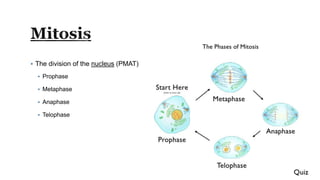
 The division of the nucleus (PMAT)
 Prophase
 Metaphase
 Anaphase
 Telophase
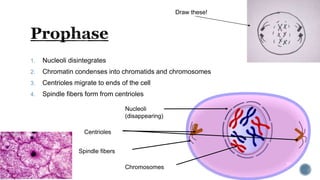
1. Nucleoli disintegrates
2. Chromatin condenses into chromatids and chromosomes
3. Centrioles migrate to ends of the cell
4. Spindle fibers form from centrioles
Centrioles
Spindle fibers
Nucleoli
(disappearing)
Chromosomes
Draw these!
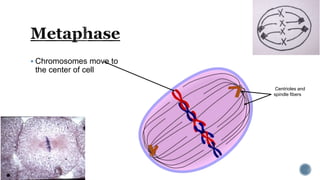
 Chromosomes move to
the center of cell
Centrioles and
spindle fibers
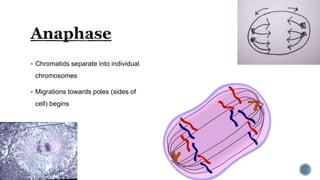
 Chromatids separate into individual
chromosomes
 Migrations towards poles (sides of
cell) begins
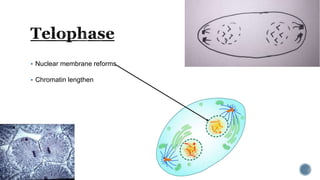
 Nuclear membrane reforms
 Chromatin lengthen
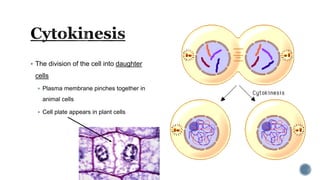
 The division of the cell into daughter
cells
 Plasma membrane pinches together in
animal cells
 Cell plate appears in plant cells
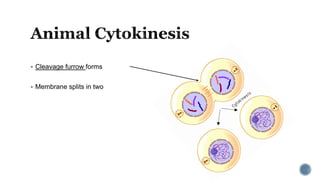
 Cleavage furrow forms
 Membrane splits in two
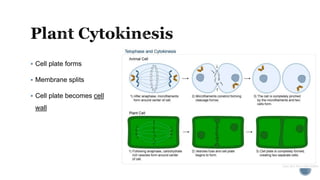
 Cell plate forms
 Membrane splits
 Cell plate becomes cell
wall
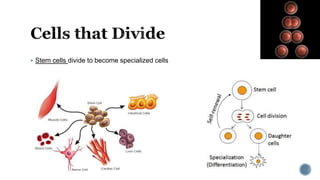
 Stem cells divide to become specialized cells
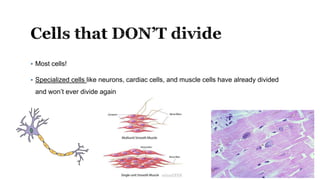
 Most cells!
 Specialized cells like neurons, cardiac cells, and muscle cells have already divided
and won’t ever divide again
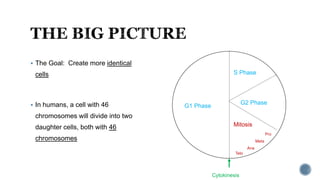
 The Goal: Create more identical
cells
 In humans, a cell with 46
chromosomes will divide into two
daughter cells, both with 46
chromosomes
G1 Phase
S Phase
G2 Phase
Mitosis
Pro
Meta
Ana
Telo
Cytokinesis

Cell Cycle Notes

  • 1.
    Learning Objective: Ican describe how cells divide and the different phases of the cell cycle.
  • 2.
    What is theprocess cells undergo before they become specialized?
  • 3.
     Until thelate 1600s, scientists used to think new cells came from Spontaneous Generation (nonliving things giving rise to living things)
  • 4.
     Francesco Redidiscovered that maggots came from flies, not from decaying meat
  • 5.
     Microorganisms werediscovered- which reopened debate about where living things come from
  • 6.
     Louis Pasteurproved that microorganisms came from other microorganisms
  • 8.
     All lifecomes from other life  Thanks Pasteur.
  • 9.
     Chromosomes- rod-shapedstructures composed of DNA and proteins  DNA- the genetic code for organisms  Chromatin- a loosely coiled DNA strand  Chromatid- a single strand of coiled DNA (replicated, condensed chromosome)  Centromere- holds the two chromatids together
  • 12.
    What are chromosomes? A.rod-shaped structures composed of DNA and proteins B. the genetic code for organisms C. a loosely coiled DNA strand D. a single strand of coiled DNA
  • 13.
    What are chromosomes? A.rod-shaped structures composed of DNA and proteins B. the genetic code for organisms C. a loosely coiled DNA strand D. a single strand of coiled DNA
  • 14.
    A. rod-shaped structurescomposed of DNA and proteins B. the genetic code for organisms C. Structure that holds the two chromatids together D. a loosely coiled DNA strand
  • 15.
    A. rod-shaped structurescomposed of DNA and proteins B. the genetic code for organisms C. Structure that holds the two chromatids together D. a loosely coiled DNA strand
  • 16.
    A. A structurethat holds two chromatids together? B. a single strand of coiled DNA (replicated, condensed chromosome) C. a loosely coiled DNA strand D. the genetic code for organisms
  • 17.
    A. A structurethat holds two chromatids together B. a single strand of coiled DNA (replicated, condensed chromosome) C. a loosely coiled DNA strand D. the genetic code for organisms
  • 18.
    A. A structurethat holds the two chromatids together B. a single strand of coiled DNA (replicated, condensed chromosome) C. a loosely coiled DNA strand D. rod-shaped structures composed of DNA and proteins
  • 19.
    A. A structurethat holds the two chromatids together B. a single strand of coiled DNA (replicated, condensed chromosome) C. a loosely coiled DNA strand D. rod-shaped structures composed of DNA and proteins
  • 20.
    A. DNA B. AChromosome C. A Centromere D. A Chromatin
  • 21.
    A. DNA B. AChromosome C. A Centromere D. A Chromatin
  • 22.
    A. DNA B. Acentromere C. A chromatid D. A chromosome
  • 23.
    A. DNA B. Acentromere C. A chromatid D. A chromosome
  • 24.
    A. A chromosome B.A centromere C. A chromatid D. DNA
  • 25.
    A. A chromosome B.A centromere C. A chromatid D. DNA
  • 26.
    Let’s move onto the cell cycle
  • 27.
     Interphase  G1Phase  S Phase (Synthesis)  G2 Phase  Mitosis  Prophase  Metaphase  Anaphase  Telophase  Cytokinesis G1 Phase S Phase G2 Phase Mitosis Pro Meta Ana Telo Cytokinesis Draw this!
  • 28.
  • 29.
     Stem cellsdivide to become specialized cells
  • 30.
     Most cells! Specialized cells like neurons, cardiac cells, and muscle cells have already divided and won’t ever divide again
  • 31.
    1. Interphase- startsright after cell division; longest phase of a cell’s “life” a. G1 Phase- Cell grows b. S Phase- DNA is copied into sister chromatins c. G2 Phase- Cell grows and prepares for cell division (mitosis) G1 Phase S Phase G2 Phase
  • 32.
     The divisionof the nucleus (PMAT)  Prophase  Metaphase  Anaphase  Telophase
  • 33.
    1. Nucleoli disintegrates 2.Chromatin condenses into chromatids and chromosomes 3. Centrioles migrate to ends of the cell 4. Spindle fibers form from centrioles Centrioles Spindle fibers Nucleoli (disappearing) Chromosomes Draw these!
  • 34.
     Chromosomes moveto the center of cell Centrioles and spindle fibers
  • 35.
     Chromatids separateinto individual chromosomes  Migrations towards poles (sides of cell) begins
  • 36.
     Nuclear membranereforms  Chromatin lengthen
  • 37.
     The divisionof the cell into daughter cells  Plasma membrane pinches together in animal cells  Cell plate appears in plant cells
  • 38.
     Cleavage furrowforms  Membrane splits in two
  • 39.
     Cell plateforms  Membrane splits  Cell plate becomes cell wall
  • 40.
     Stem cellsdivide to become specialized cells
  • 41.
     Most cells! Specialized cells like neurons, cardiac cells, and muscle cells have already divided and won’t ever divide again
  • 42.
     The Goal:Create more identical cells  In humans, a cell with 46 chromosomes will divide into two daughter cells, both with 46 chromosomes G1 Phase S Phase G2 Phase Mitosis Pro Meta Ana Telo Cytokinesis