Community Capacity
Building Program
Group Dynamics
Group Dynamics
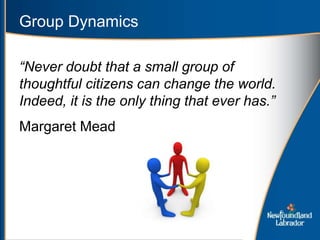
“Never doubt that a small group of
thoughtful citizens can change the world.
Indeed, it is the only thing that ever has.”
Margaret Mead
Group Dynamics
• To identify and analyze the social processes
that impact on group development and
performance
• To acquire the skills necessary to intervene
and improve individual and group
performance in an organizational context
• To build more successful organizations by
applying techniques that provide positive
impact on goal achievement
Objectives:
Group Dynamics
• The social process by which people
interact in a group environment
• The influences of personality, power
and behavior on the group process
Types of Groups
Formal
Structured to perform specific tasks
Informal
Emerge naturally in response to
organizational or member interests
Group Size
• To express individual viewpoints
• To develop social relationships
• To ensure everyone participates
• For individual recognition
Issues to be considered include opportunities:
Group Structure
• Ensure that all skill sets are included
• Examine the impact of a poor performer
on group achievement
• Ensure a combination of leaders and
followers
• Examine the potential for personality
conflicts
• Impacts of member diversity
Issues considered include:
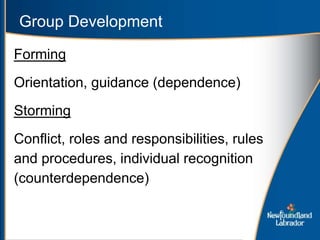
Group Development
Forming
Orientation, guidance (dependence)
Storming
Conflict, roles and responsibilities, rules
and procedures, individual recognition
(counterdependence)
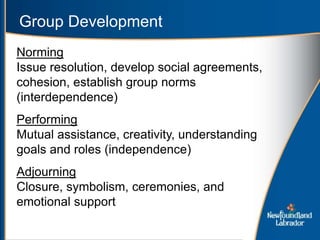
Group Development
Norming
Issue resolution, develop social agreements,
cohesion, establish group norms
(interdependence)
Performing
Mutual assistance, creativity, understanding
goals and roles (independence)
Adjourning
Closure, symbolism, ceremonies, and
emotional support
Participants’ Input
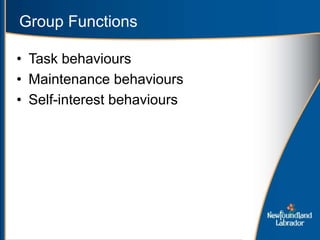
Group Functions
• Task behaviours
• Maintenance behaviours
• Self-interest behaviours
Task Behaviours
• Initiating
• Information seeking/giving
• Clarifying ideas
• Bringing closure
• Consensus testing
Maintenance Behaviours
• Encouraging
• Improving group atmosphere
• Harmonizing
• Compromising
• Gate-keeping
Self-interest Behaviours
• Dominating/controlling
• Blocking
• Manipulating
• Belittling
• Splitting hairs
Group Norms
• Social standards and acceptable
behaviours
• Collectively held expectations of
group functioning
• Provide regularity and predictability
to group functioning
Types of Norms
• Conduct
• Work performance/attendance
• Rearranging personal space
• Assisting co-workers
• Loyalty
• Dress codes
• Rewards
Standards related to:
Roles
Assigned roles
Chair, secretary, manager, treasurer, etc
Emergent roles
Confidant, group clown, gossip, mentor, etc
Factors That Impact Effectiveness
Role Ambiguity
Worker is unclear of job definition
Role Conflict
Worker experiences job overlap
Status
Symbolic
Office, administrative support, perks
Impact
Authority, hierarchy, decision-making,
rewards
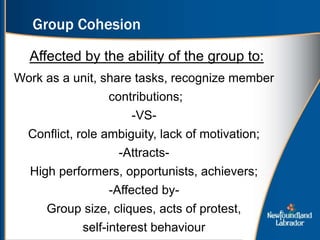
Affected by the ability of the group to:
Group Cohesion
Work as a unit, share tasks, recognize member
contributions;
-VS-
Conflict, role ambiguity, lack of motivation;
-Attracts-
High performers, opportunists, achievers;
-Affected by-
Group size, cliques, acts of protest,
self-interest behaviour
Support
• Training
• Reward system
• Empowerment/self-management
• Organizational representativeness/diversity
Participants’ Input
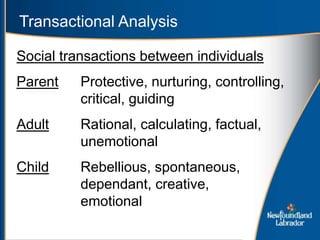
Transactional Analysis
Social transactions between individuals
Parent Protective, nurturing, controlling,
critical, guiding
Adult Rational, calculating, factual,
unemotional
Child Rebellious, spontaneous,
dependant, creative,
emotional
Reactions
• I’m OK - You’re OK
• I’m OK - You’re not OK
• I’m not OK - You’re OK
• I’m not OK - You’re not OK
Individual Behaviour
Passive
Easily “pushed around”, compliant,
submissive, non-resistant
Aggressive
Pushy, hostile, forceful, creates conflict,
shows disregard for others
Assertive
Self-assured, confident, positive,
protects own rights, respects others
Effective Teams
• High skills, high motivation
• Have a clear picture of group goals
• High performance
• Success attracts others
• Opportunity for individual recognition
• Recognition of professionalism
Are a result of:
3 Characteristics of a Real Team
• A meaningful and common purpose
• Adaptable skills
• Mutual accountability
Participants’ Input
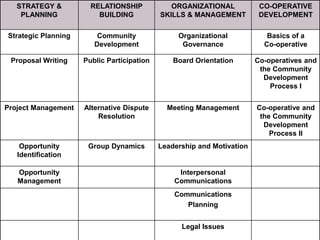
STRATEGY &
PLANNING
RELATIONSHIP
BUILDING
ORGANIZATIONAL
SKILLS & MANAGEMENT
CO-OPERATIVE
DEVELOPMENT
Strategic Planning Community
Development
Organizational
Governance
Basics of a
Co-operative
Proposal Writing Public Participation Board Orientation Co-operatives and
the Community
Development
Process I
Project Management Alternative Dispute
Resolution
Meeting Management Co-operative and
the Community
Development
Process II
Opportunity
Identification
Group Dynamics Leadership and Motivation
Opportunity
Management
Interpersonal
Communications
Communications
Planning
Legal Issues
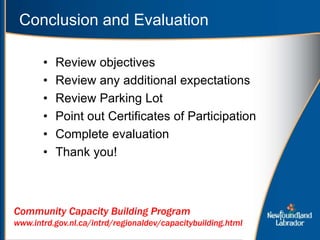
• Review objectives
• Review any additional expectations
• Review Parking Lot
• Point out Certificates of Participation
• Complete evaluation
• Thank you!
Conclusion and Evaluation
Community Capacity Building Program
www.intrd.gov.nl.ca/intrd/regionaldev/capacitybuilding.html

CCB_GroupDynamics.ppt

  • 1.
  • 2.
    Group Dynamics “Never doubtthat a small group of thoughtful citizens can change the world. Indeed, it is the only thing that ever has.” Margaret Mead
  • 3.
    Group Dynamics • Toidentify and analyze the social processes that impact on group development and performance • To acquire the skills necessary to intervene and improve individual and group performance in an organizational context • To build more successful organizations by applying techniques that provide positive impact on goal achievement Objectives:
  • 4.
    Group Dynamics • Thesocial process by which people interact in a group environment • The influences of personality, power and behavior on the group process
  • 5.
    Types of Groups Formal Structuredto perform specific tasks Informal Emerge naturally in response to organizational or member interests
  • 6.
    Group Size • Toexpress individual viewpoints • To develop social relationships • To ensure everyone participates • For individual recognition Issues to be considered include opportunities:
  • 7.
    Group Structure • Ensurethat all skill sets are included • Examine the impact of a poor performer on group achievement • Ensure a combination of leaders and followers • Examine the potential for personality conflicts • Impacts of member diversity Issues considered include:
  • 8.
    Group Development Forming Orientation, guidance(dependence) Storming Conflict, roles and responsibilities, rules and procedures, individual recognition (counterdependence)
  • 9.
    Group Development Norming Issue resolution,develop social agreements, cohesion, establish group norms (interdependence) Performing Mutual assistance, creativity, understanding goals and roles (independence) Adjourning Closure, symbolism, ceremonies, and emotional support
  • 10.
  • 11.
    Group Functions • Taskbehaviours • Maintenance behaviours • Self-interest behaviours
  • 12.
    Task Behaviours • Initiating •Information seeking/giving • Clarifying ideas • Bringing closure • Consensus testing
  • 13.
    Maintenance Behaviours • Encouraging •Improving group atmosphere • Harmonizing • Compromising • Gate-keeping
  • 14.
    Self-interest Behaviours • Dominating/controlling •Blocking • Manipulating • Belittling • Splitting hairs
  • 15.
    Group Norms • Socialstandards and acceptable behaviours • Collectively held expectations of group functioning • Provide regularity and predictability to group functioning
  • 16.
    Types of Norms •Conduct • Work performance/attendance • Rearranging personal space • Assisting co-workers • Loyalty • Dress codes • Rewards Standards related to:
  • 17.
    Roles Assigned roles Chair, secretary,manager, treasurer, etc Emergent roles Confidant, group clown, gossip, mentor, etc
  • 18.
    Factors That ImpactEffectiveness Role Ambiguity Worker is unclear of job definition Role Conflict Worker experiences job overlap
  • 19.
    Status Symbolic Office, administrative support,perks Impact Authority, hierarchy, decision-making, rewards
  • 20.
    Affected by theability of the group to: Group Cohesion Work as a unit, share tasks, recognize member contributions; -VS- Conflict, role ambiguity, lack of motivation; -Attracts- High performers, opportunists, achievers; -Affected by- Group size, cliques, acts of protest, self-interest behaviour
  • 21.
    Support • Training • Rewardsystem • Empowerment/self-management • Organizational representativeness/diversity
  • 22.
  • 23.
    Transactional Analysis Social transactionsbetween individuals Parent Protective, nurturing, controlling, critical, guiding Adult Rational, calculating, factual, unemotional Child Rebellious, spontaneous, dependant, creative, emotional
  • 24.
    Reactions • I’m OK- You’re OK • I’m OK - You’re not OK • I’m not OK - You’re OK • I’m not OK - You’re not OK
  • 25.
    Individual Behaviour Passive Easily “pushedaround”, compliant, submissive, non-resistant Aggressive Pushy, hostile, forceful, creates conflict, shows disregard for others Assertive Self-assured, confident, positive, protects own rights, respects others
  • 26.
    Effective Teams • Highskills, high motivation • Have a clear picture of group goals • High performance • Success attracts others • Opportunity for individual recognition • Recognition of professionalism Are a result of:
  • 27.
    3 Characteristics ofa Real Team • A meaningful and common purpose • Adaptable skills • Mutual accountability
  • 28.
  • 29.
    STRATEGY & PLANNING RELATIONSHIP BUILDING ORGANIZATIONAL SKILLS &MANAGEMENT CO-OPERATIVE DEVELOPMENT Strategic Planning Community Development Organizational Governance Basics of a Co-operative Proposal Writing Public Participation Board Orientation Co-operatives and the Community Development Process I Project Management Alternative Dispute Resolution Meeting Management Co-operative and the Community Development Process II Opportunity Identification Group Dynamics Leadership and Motivation Opportunity Management Interpersonal Communications Communications Planning Legal Issues
  • 30.
    • Review objectives •Review any additional expectations • Review Parking Lot • Point out Certificates of Participation • Complete evaluation • Thank you! Conclusion and Evaluation Community Capacity Building Program www.intrd.gov.nl.ca/intrd/regionaldev/capacitybuilding.html