Causes of odontogenic cyst

     Amin Abusallamah
Periapical (radicular) cyst
• A periapical cyst develops from a preexisting
  periapical granuloma, which is a focus of
  chronically inflamed granulation tissue in
  bone located at the apex of a nonvital tooth.

• Periapical granulomas are initiated and
  maintained by the degradation products of
  necrotic pulp tissue.
Residual cyst
• When the necrotic tooth is
  extracted but the cyst lining
  is incompletely removed, a
  residual cyst may develop
  from months to years.
Gingival cysts of the newborn
• It is believed that fragments of the dental
  lamina that remain within the alveolar ridge
  mucosa after tooth formation proliferate to
  form these small, keratinized cysts.
Dentigerous cyst


• Dentigerous cyst develops
  from proliferation of the
  enamel organ remnant or
  reduced enamel epithelium.
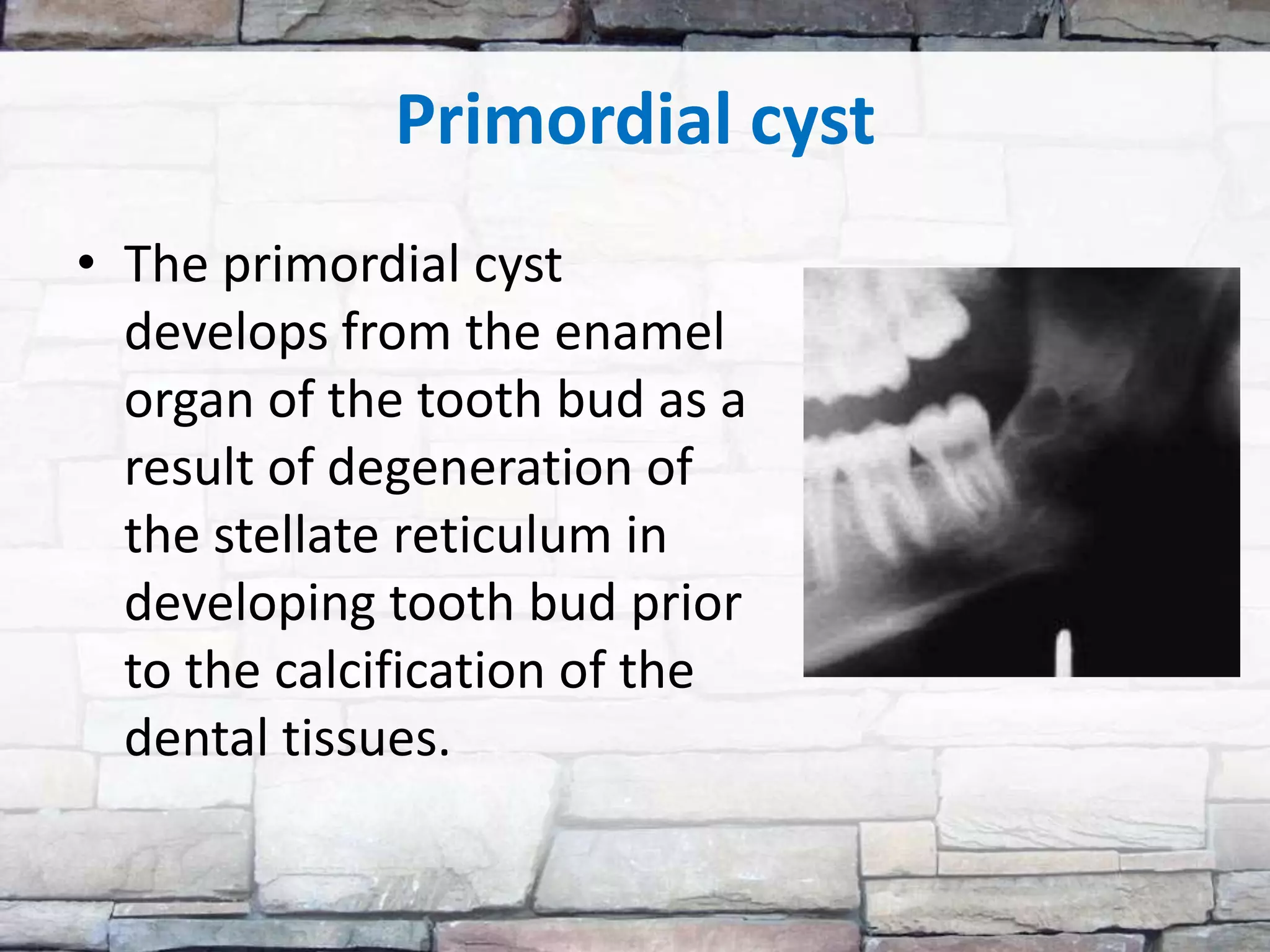
Primordial cyst
• The primordial cyst
  develops from the enamel
  organ of the tooth bud as a
  result of degeneration of
  the stellate reticulum in
  developing tooth bud prior
  to the calcification of the
  dental tissues.
Eruption cyst
• An eruption cyst results from
  fluid accumulation within the
  follicular space of an erupting
  tooth.

• The epithelium lining this
  space is simply reduced
  enamel epithelium.
Odontogenic keratocysts
• There is general agreement that OKCs develop
  from dental lamina remnants in the mandible
  and maxilla. However, an origin of this cyst
  From extension of basal cells of the overlying
  oral epithelium has also been suggested.

• Genetic
Calcifying odontogenic cysts
• COGs are believed to be
  derived from odontogenic
  epithelial remnants within
  the gingiva or within the
  mandible or maxilla.
• Chapter … 10… pages … 243 -255

Causes of odontogenic cyst

  • 1.
    Causes of odontogeniccyst Amin Abusallamah
  • 2.
    Periapical (radicular) cyst •A periapical cyst develops from a preexisting periapical granuloma, which is a focus of chronically inflamed granulation tissue in bone located at the apex of a nonvital tooth. • Periapical granulomas are initiated and maintained by the degradation products of necrotic pulp tissue.
  • 4.
    Residual cyst • Whenthe necrotic tooth is extracted but the cyst lining is incompletely removed, a residual cyst may develop from months to years.
  • 5.
    Gingival cysts ofthe newborn • It is believed that fragments of the dental lamina that remain within the alveolar ridge mucosa after tooth formation proliferate to form these small, keratinized cysts.
  • 6.
    Dentigerous cyst • Dentigerouscyst develops from proliferation of the enamel organ remnant or reduced enamel epithelium.
  • 7.
    Primordial cyst • Theprimordial cyst develops from the enamel organ of the tooth bud as a result of degeneration of the stellate reticulum in developing tooth bud prior to the calcification of the dental tissues.
  • 8.
    Eruption cyst • Aneruption cyst results from fluid accumulation within the follicular space of an erupting tooth. • The epithelium lining this space is simply reduced enamel epithelium.
  • 9.
    Odontogenic keratocysts • Thereis general agreement that OKCs develop from dental lamina remnants in the mandible and maxilla. However, an origin of this cyst From extension of basal cells of the overlying oral epithelium has also been suggested. • Genetic
  • 11.
    Calcifying odontogenic cysts •COGs are believed to be derived from odontogenic epithelial remnants within the gingiva or within the mandible or maxilla.
  • 12.
    • Chapter …10… pages … 243 -255