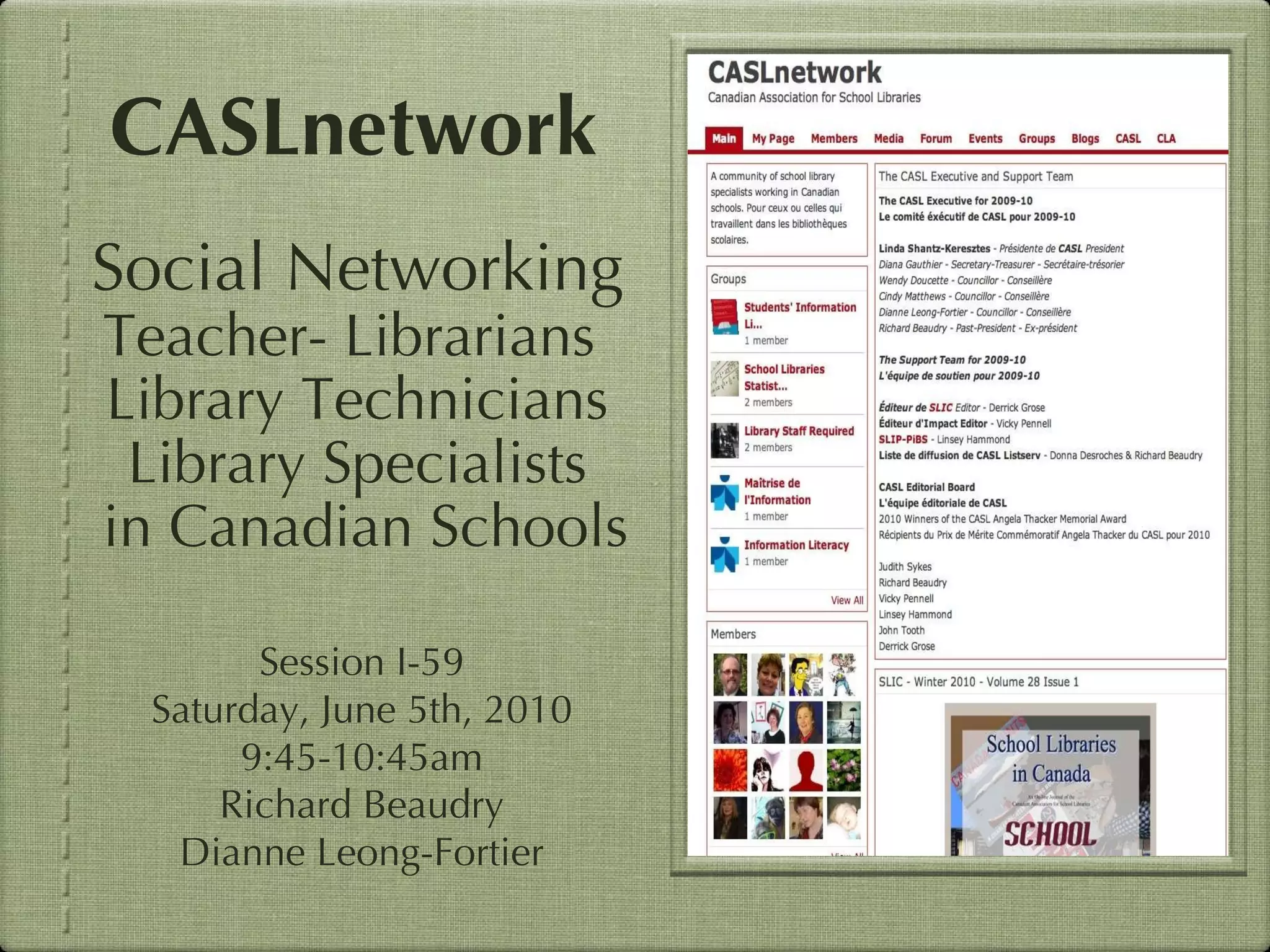
CASLnetwork Social Networking Teacher- Librarians  Library Technicians Library Specialists in Canadian Schools Session I-59 Saturday, June 5th, 2010 9:45-10:45am Richard Beaudry Dianne Leong-Fortier
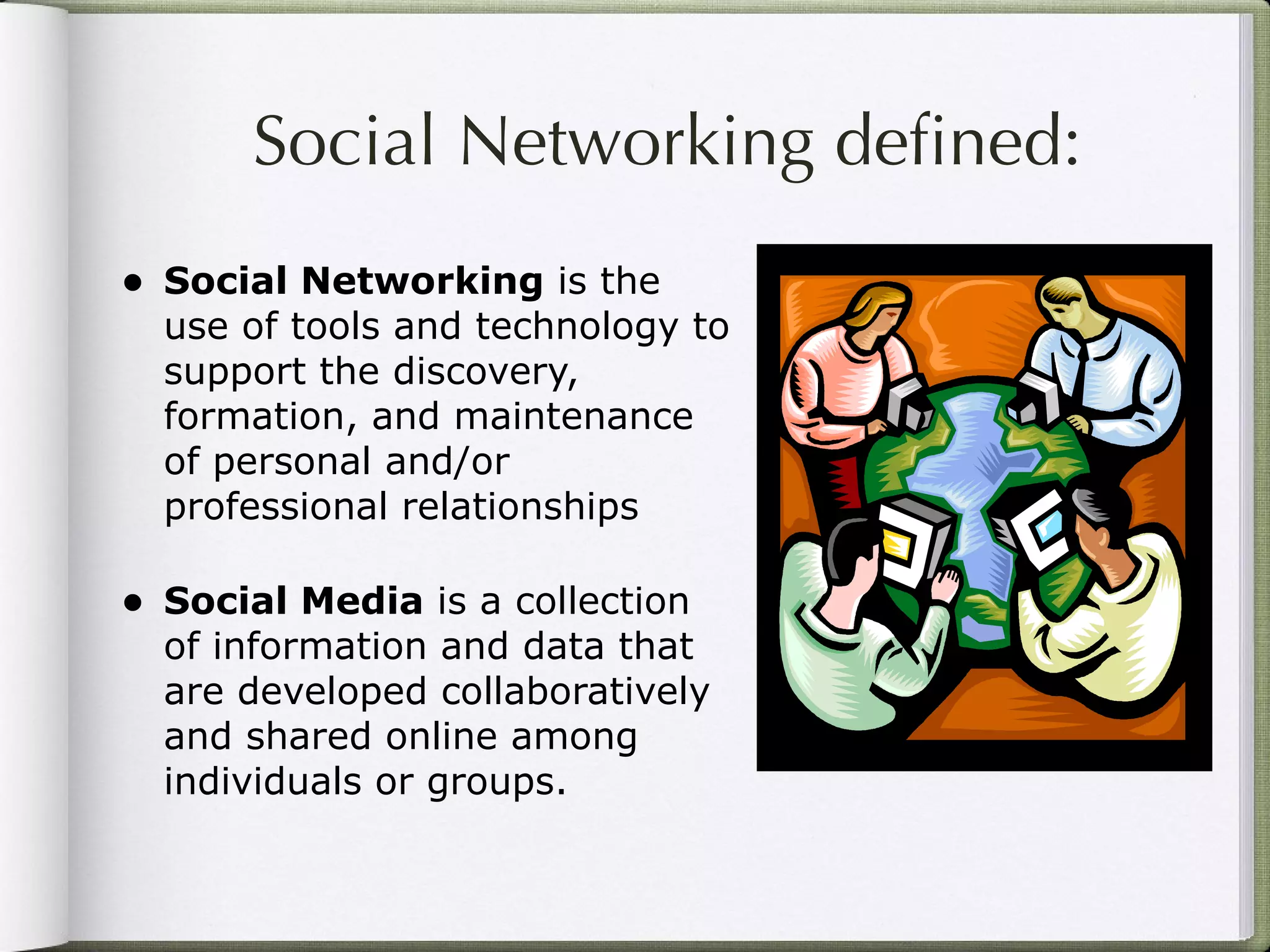
Social Networking defined: Social Networking  is the use of tools and technology to support the discovery, formation, and maintenance of personal and/or professional relationships  Social Media  is a collection of information and data that are developed collaboratively and shared online among individuals or groups.
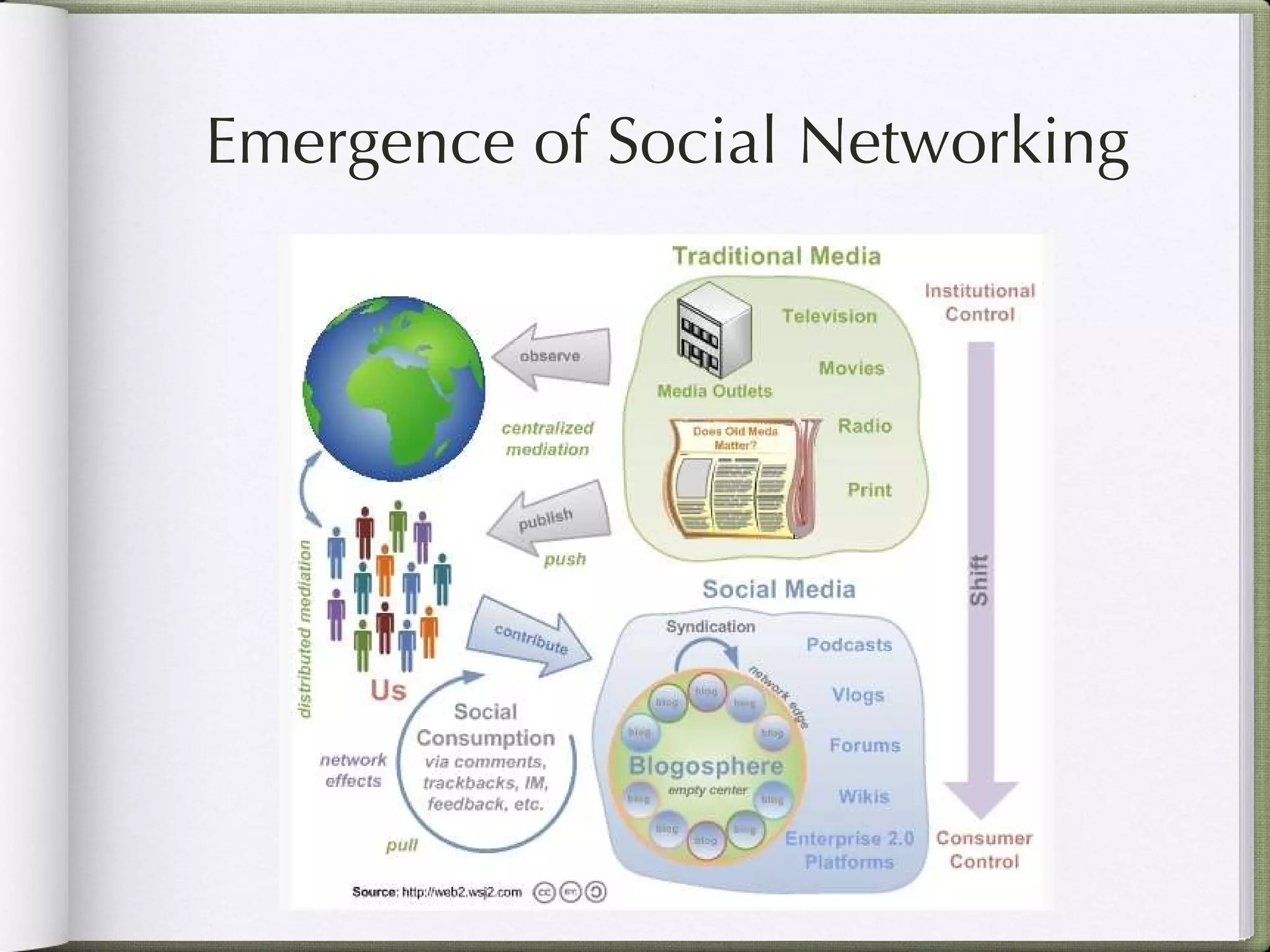
Emergence of Social Networking
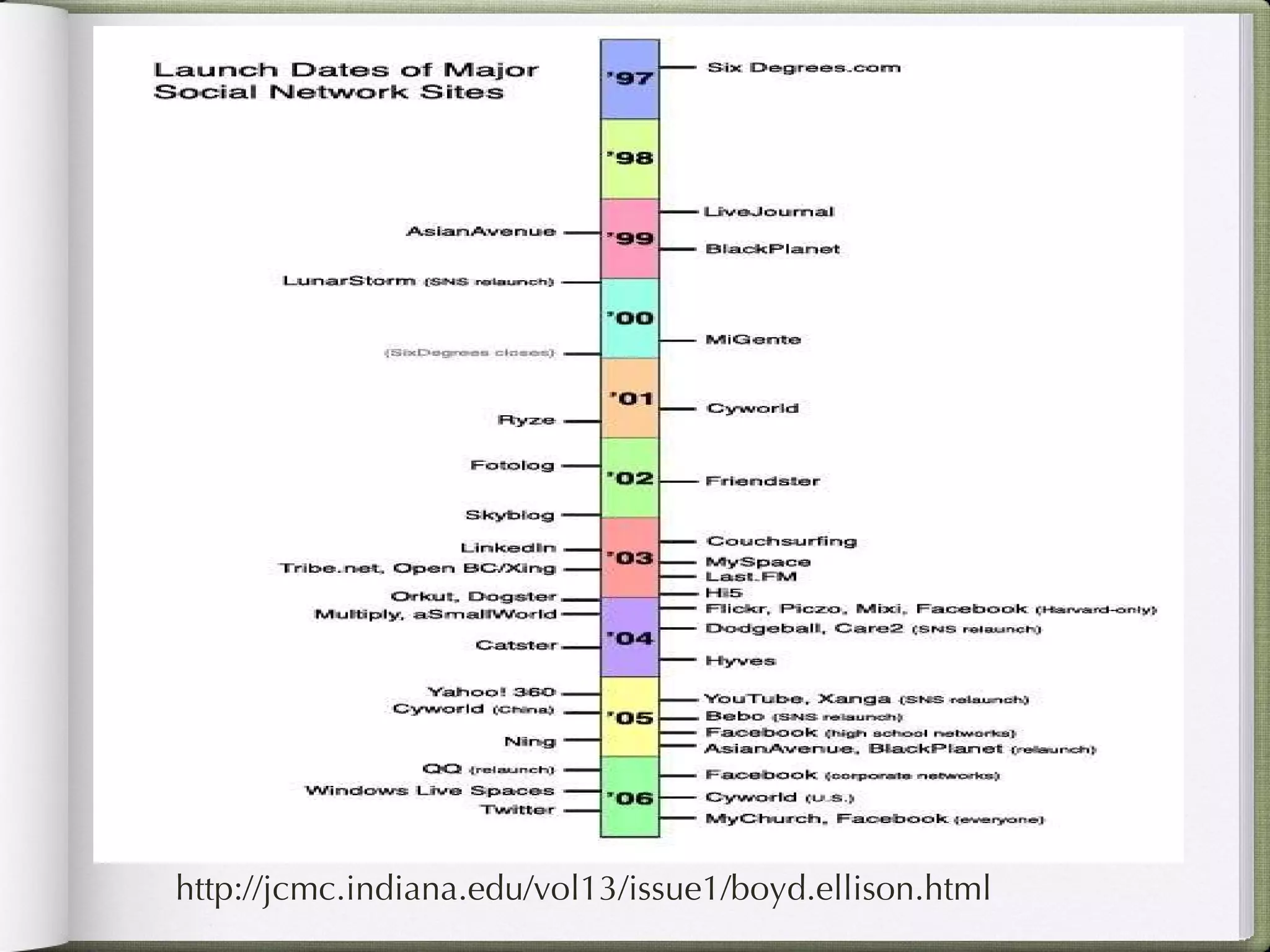
http://jcmc.indiana.edu/vol13/issue1/boyd.ellison.html
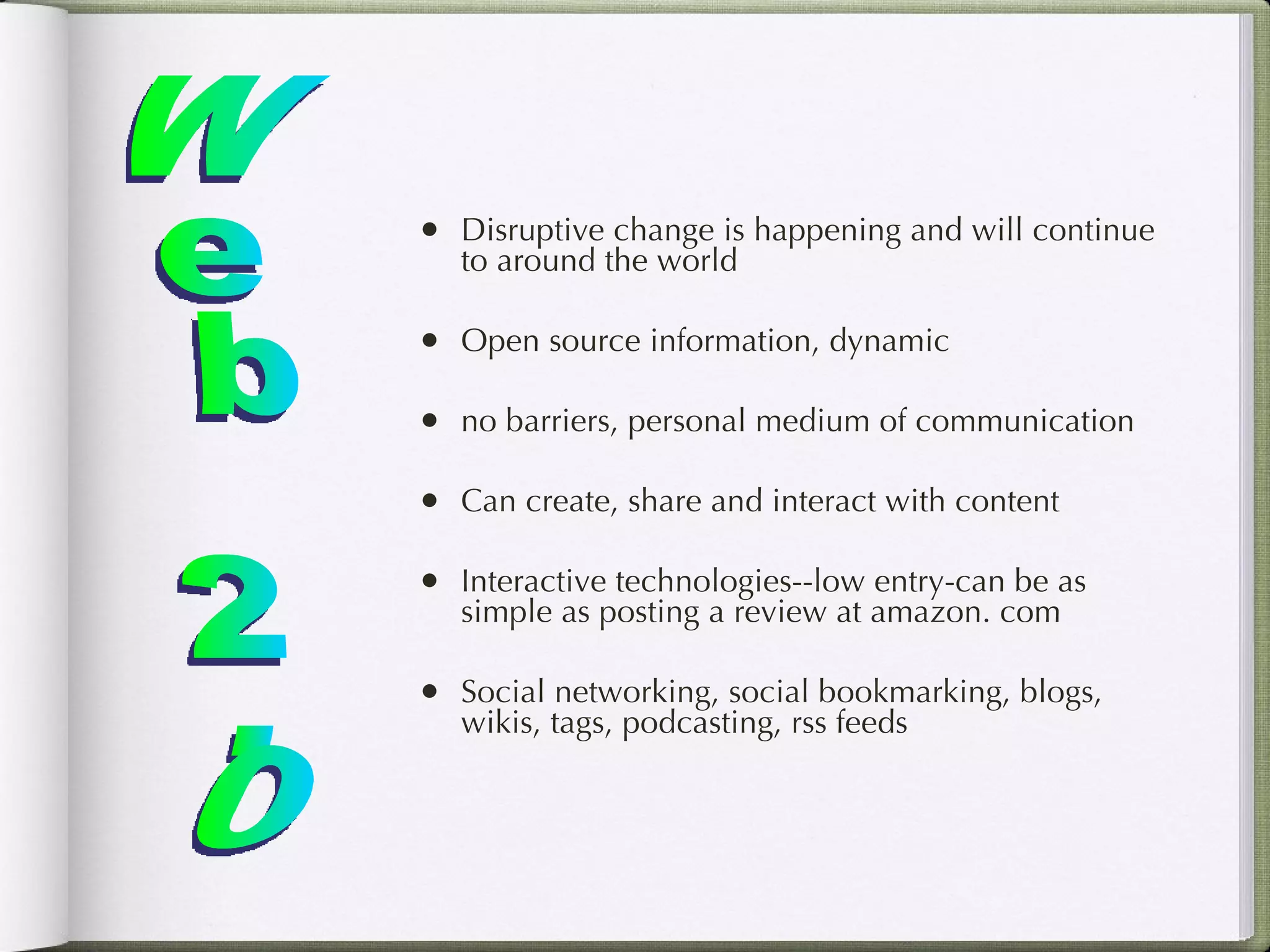
Disruptive change is happening and will continue to around the world Open source information, dynamic no barriers, personal medium of communication Can create, share and interact with content Interactive technologies--low entry-can be as simple as posting a review at amazon. com Social networking, social bookmarking, blogs, wikis, tags, podcasting, rss feeds Web 2.0
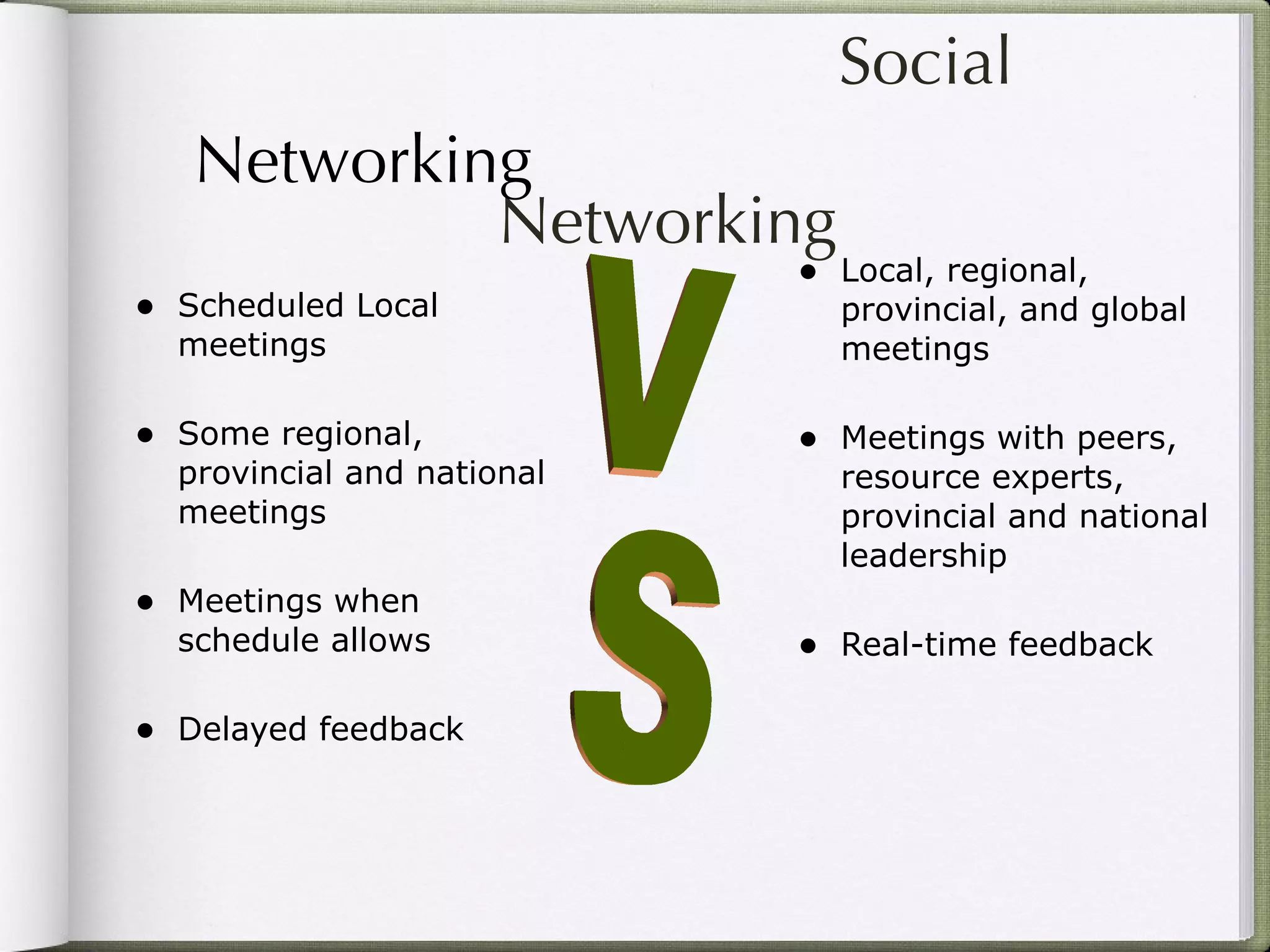
Social  Networking Scheduled Local meetings Some regional, provincial and national meetings Meetings when schedule allows Delayed feedback Local, regional, provincial, and global meetings Meetings with peers, resource experts, provincial and national leadership Real-time feedback VS Networking
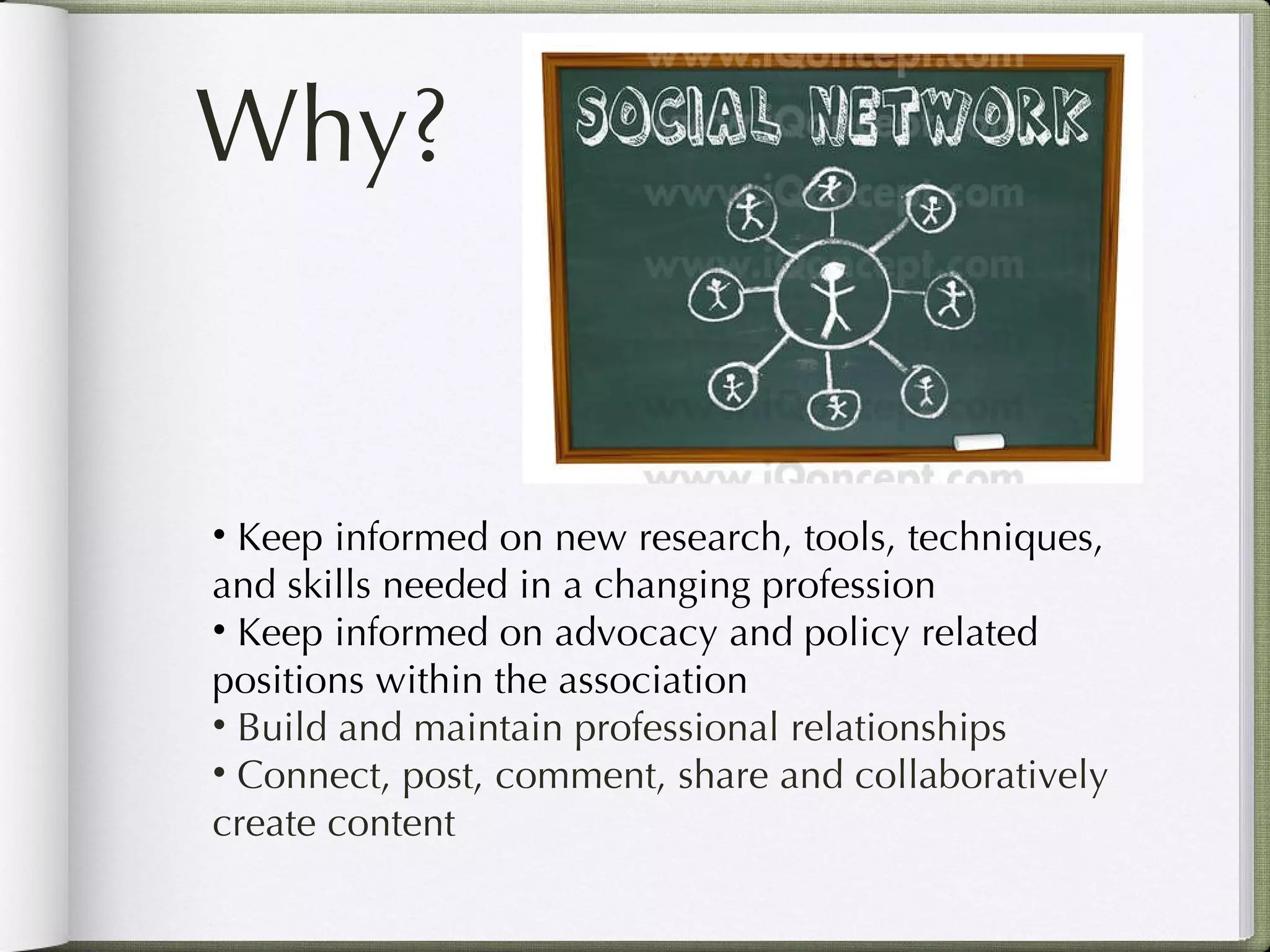
Why? Keep informed on new research, tools, techniques, and skills needed in a changing profession Keep informed on advocacy and policy related positions within the association Build and maintain professional relationships Connect, post, comment, share and collaboratively create content
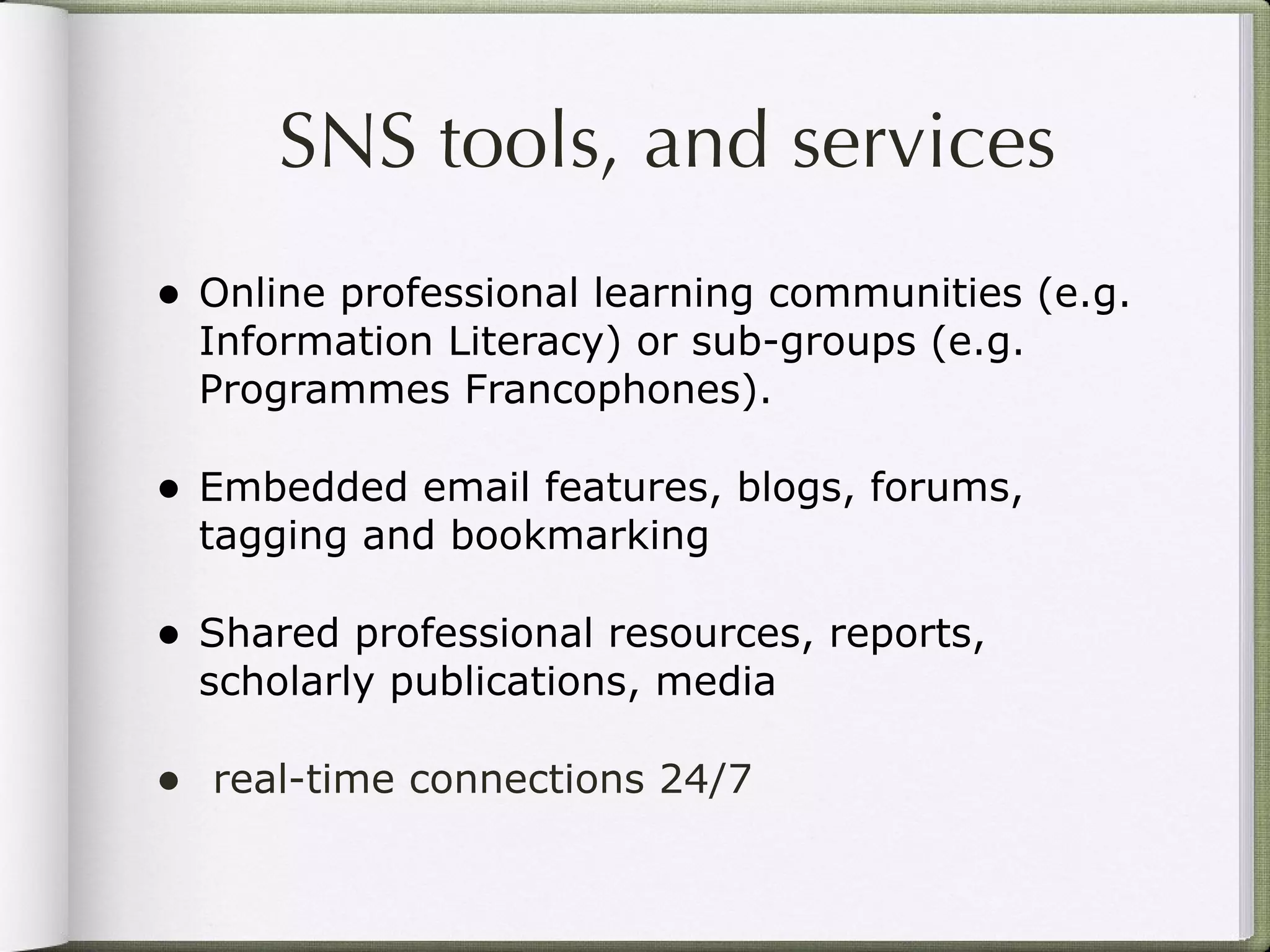
SNS tools, and services Online professional learning communities (e.g. Information Literacy) or sub-groups (e.g. Programmes Francophones). Embedded email features, blogs, forums, tagging and bookmarking Shared professional resources, reports, scholarly publications, media real-time connections 24/7
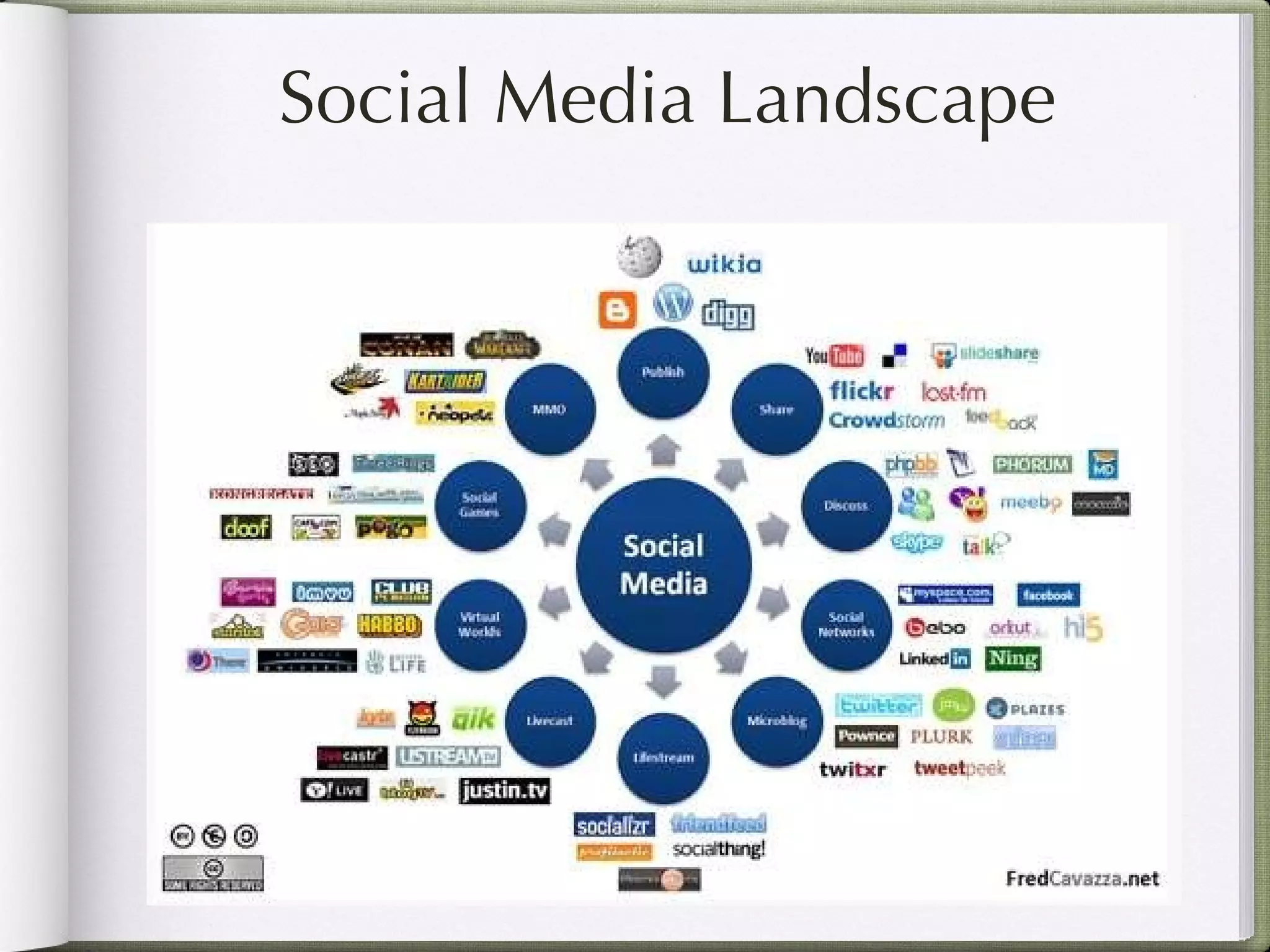
Social Media Landscape
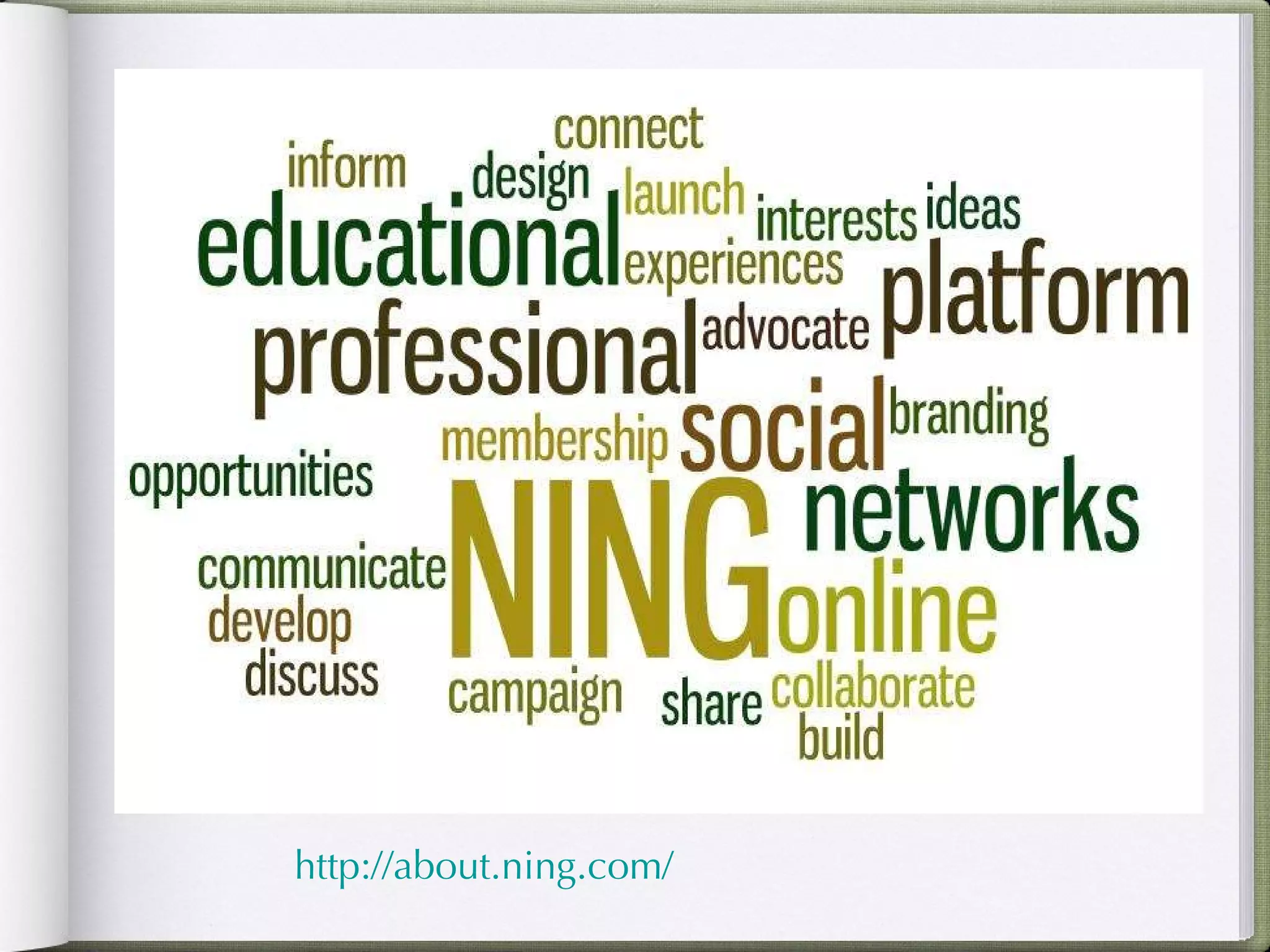
http://about.ning.com/
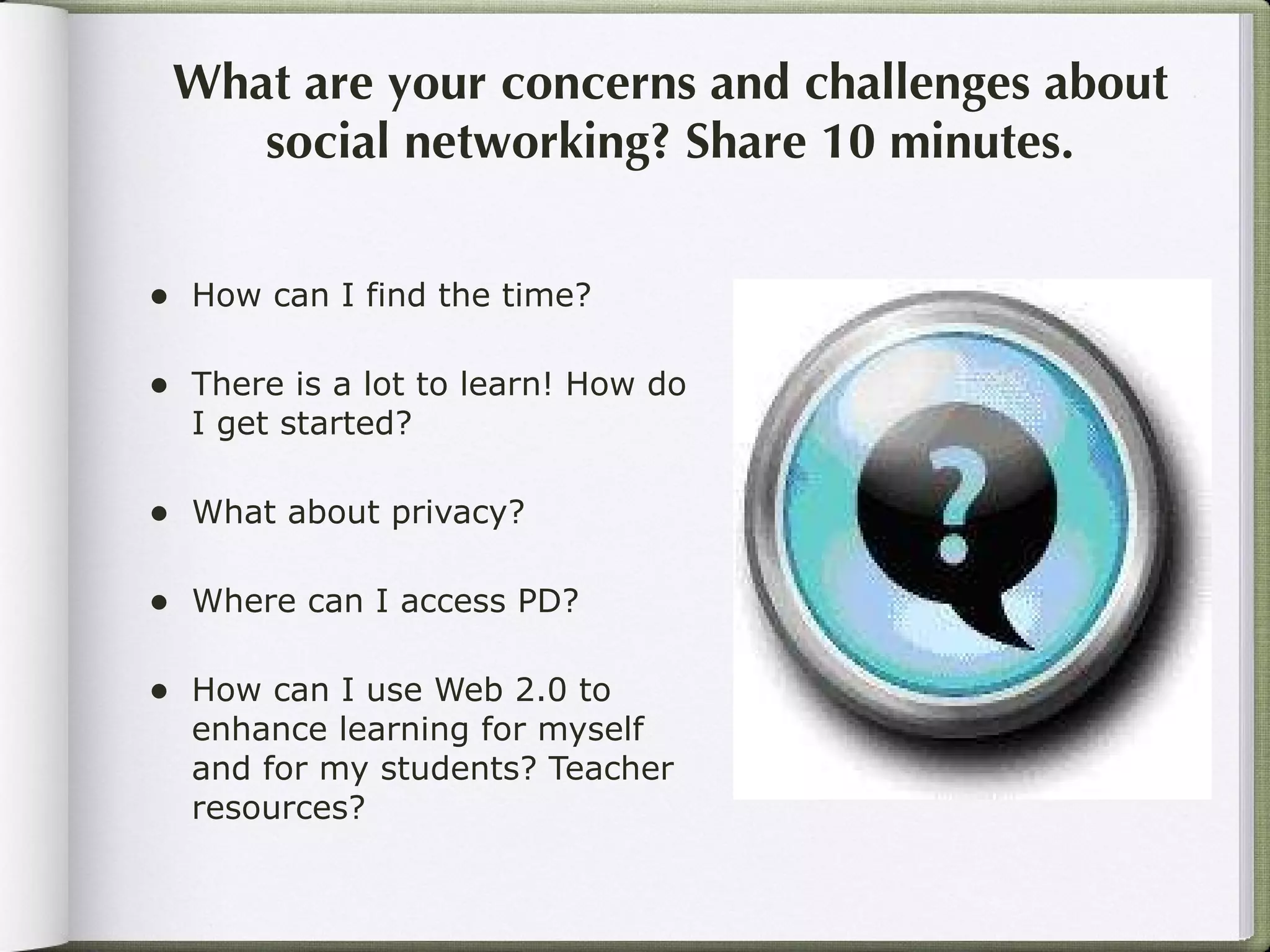
What are your concerns and challenges about social networking? Share 10 minutes. How can I find the time? There is a lot to learn! How do I get started? What about privacy? Where can I access PD? How can I use Web 2.0 to enhance learning for myself and for my students? Teacher resources?
CASLNetwork Inception:  The CASL EC voted on creating an online Professional Network for teacher librarians and library technicians at the CASL AGM at the CLA national conference in May, 2009 in Montreal. Official start-up was June 17th, 2009 Objective : To provide a national social network for all school library specialists working in Canada. Mission Statement : Professional network of school library specialists working in Canadian schools.  Membership:  Canada and some overseas (Europe and Australia).  R
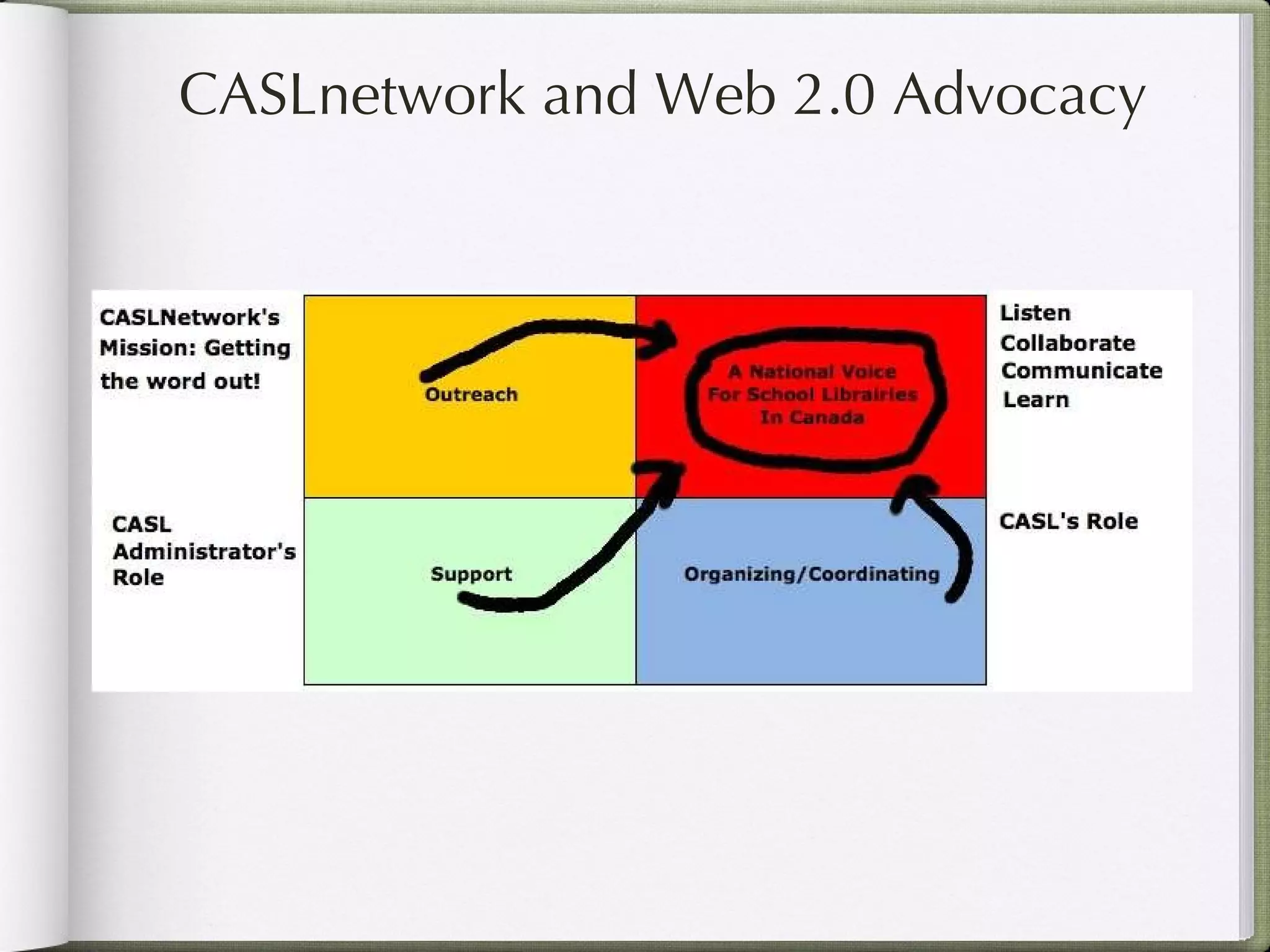
CASLnetwork and Web 2.0 Advocacy
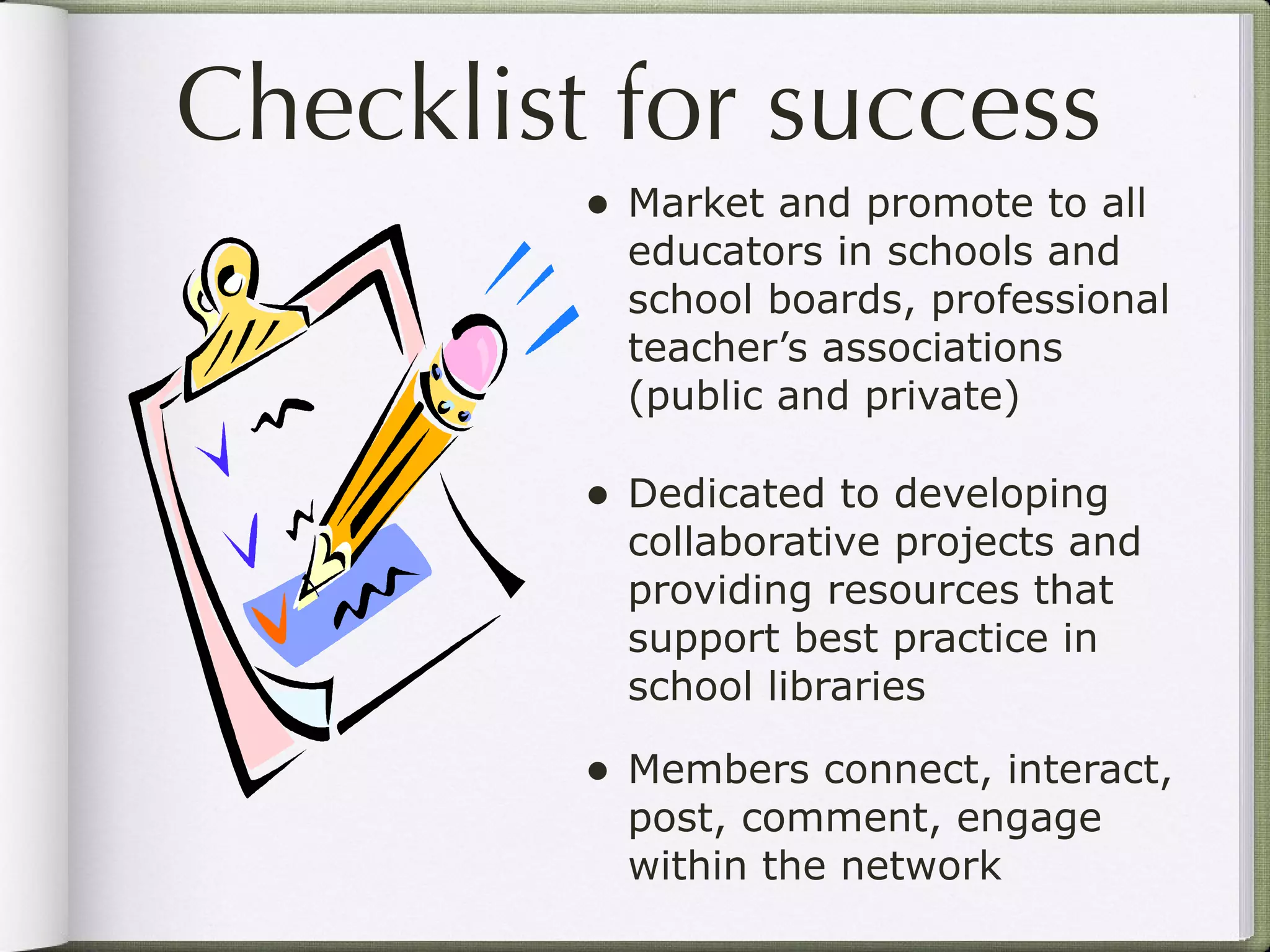
Checklist for success Market and promote to all educators in schools and school boards, professional teacher’s associations (public and private) Dedicated to developing collaborative projects and providing resources that support best practice in school libraries  Members connect, interact, post, comment, engage within the network
 
 
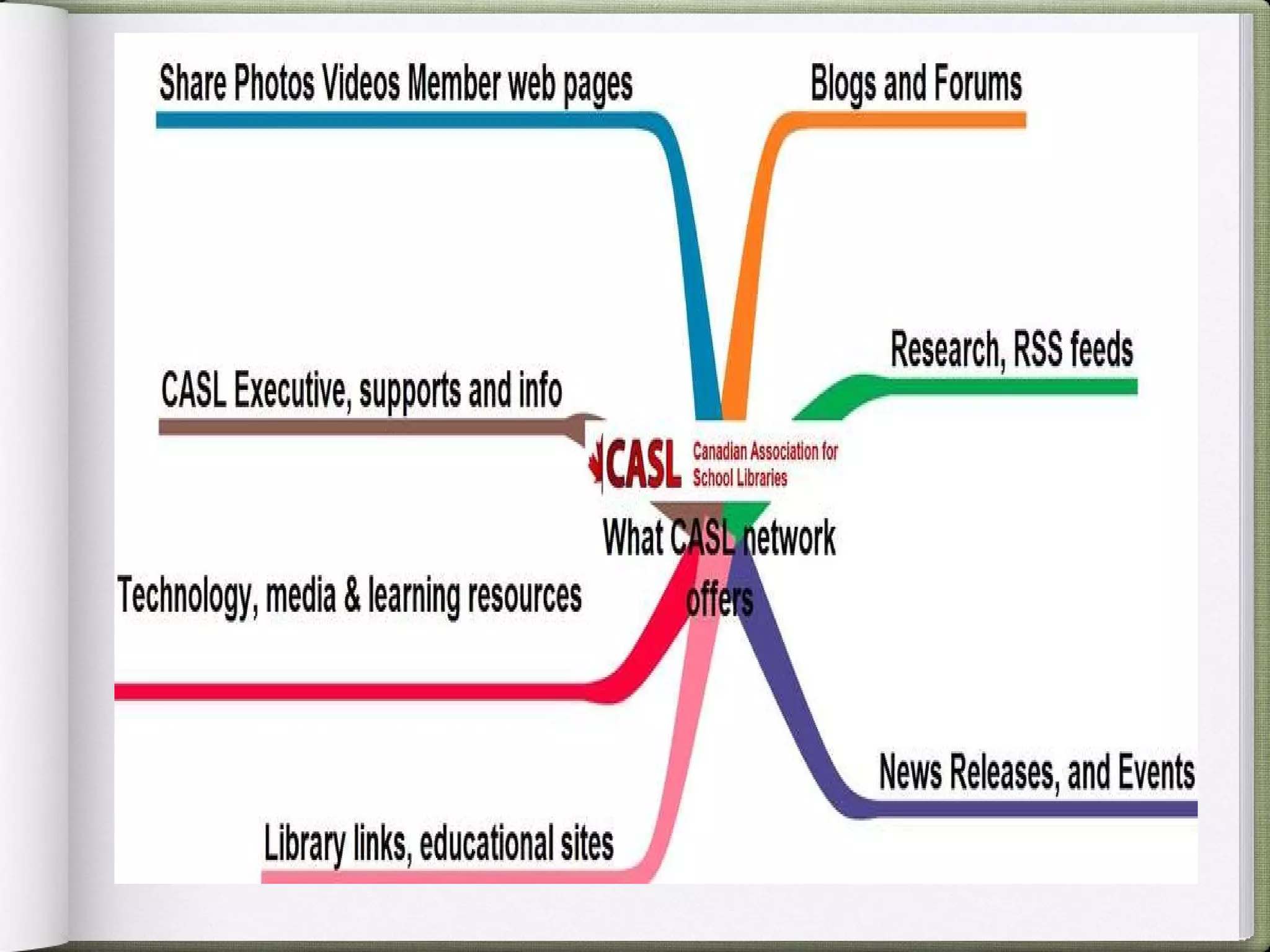
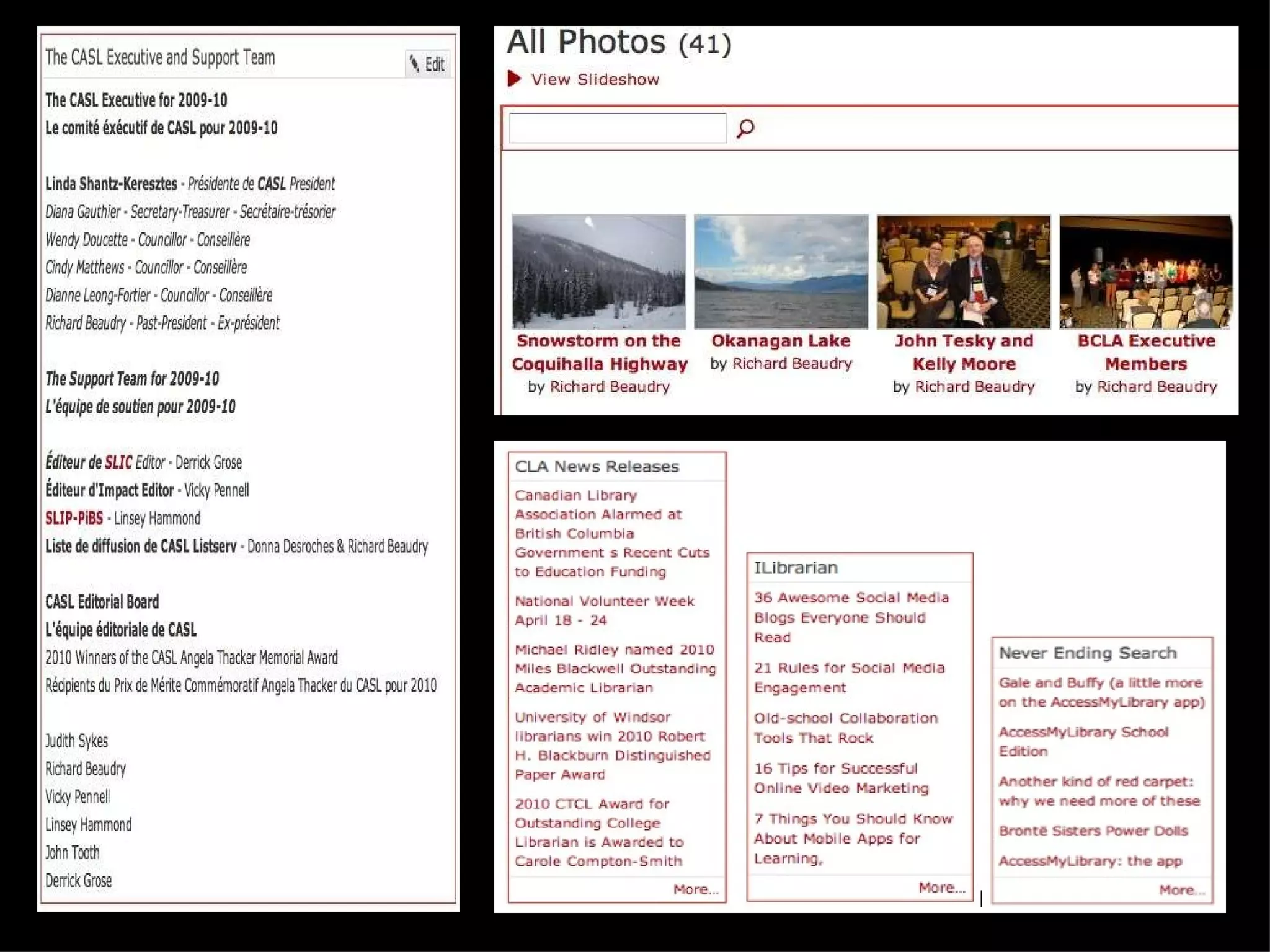
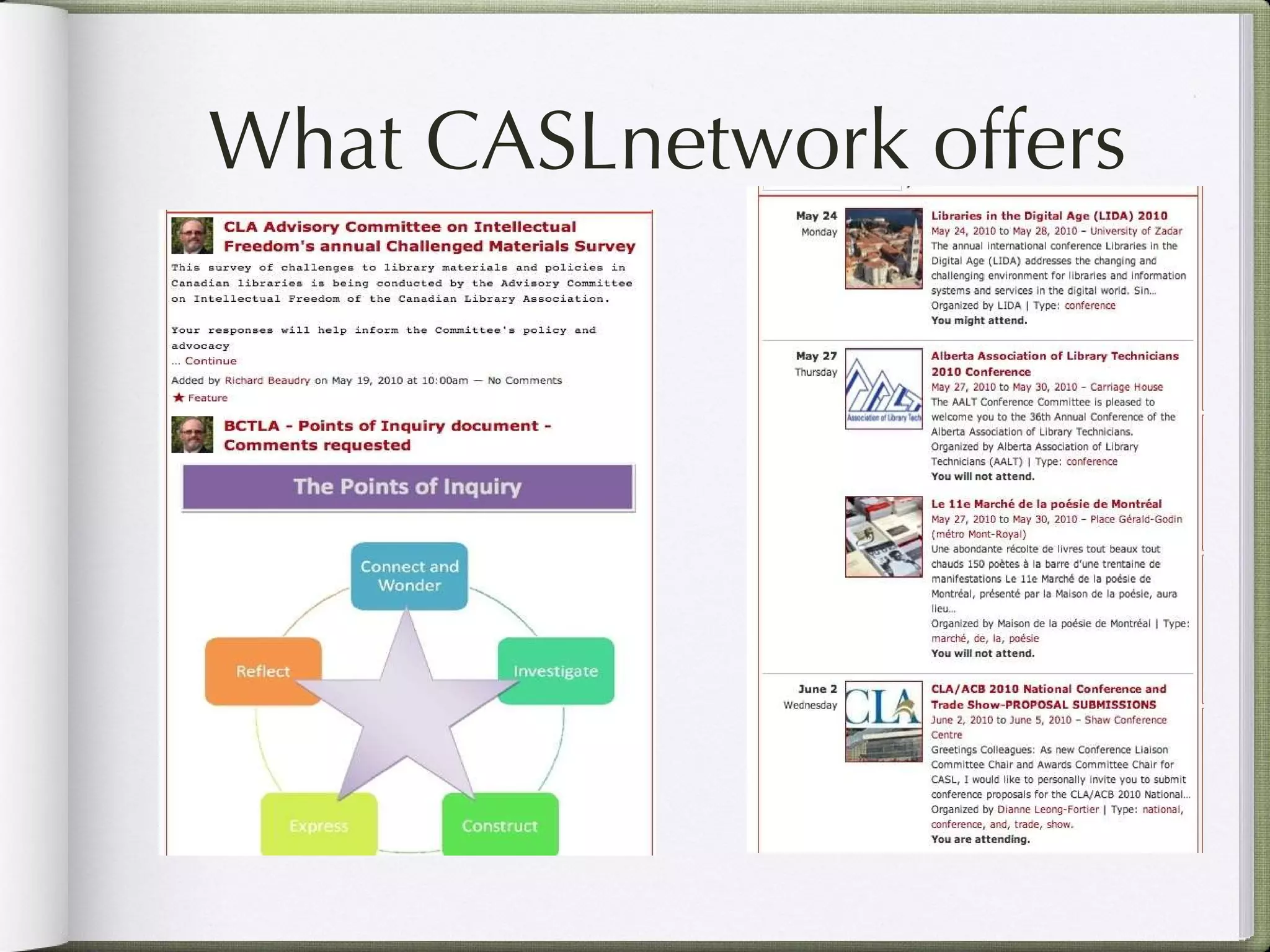
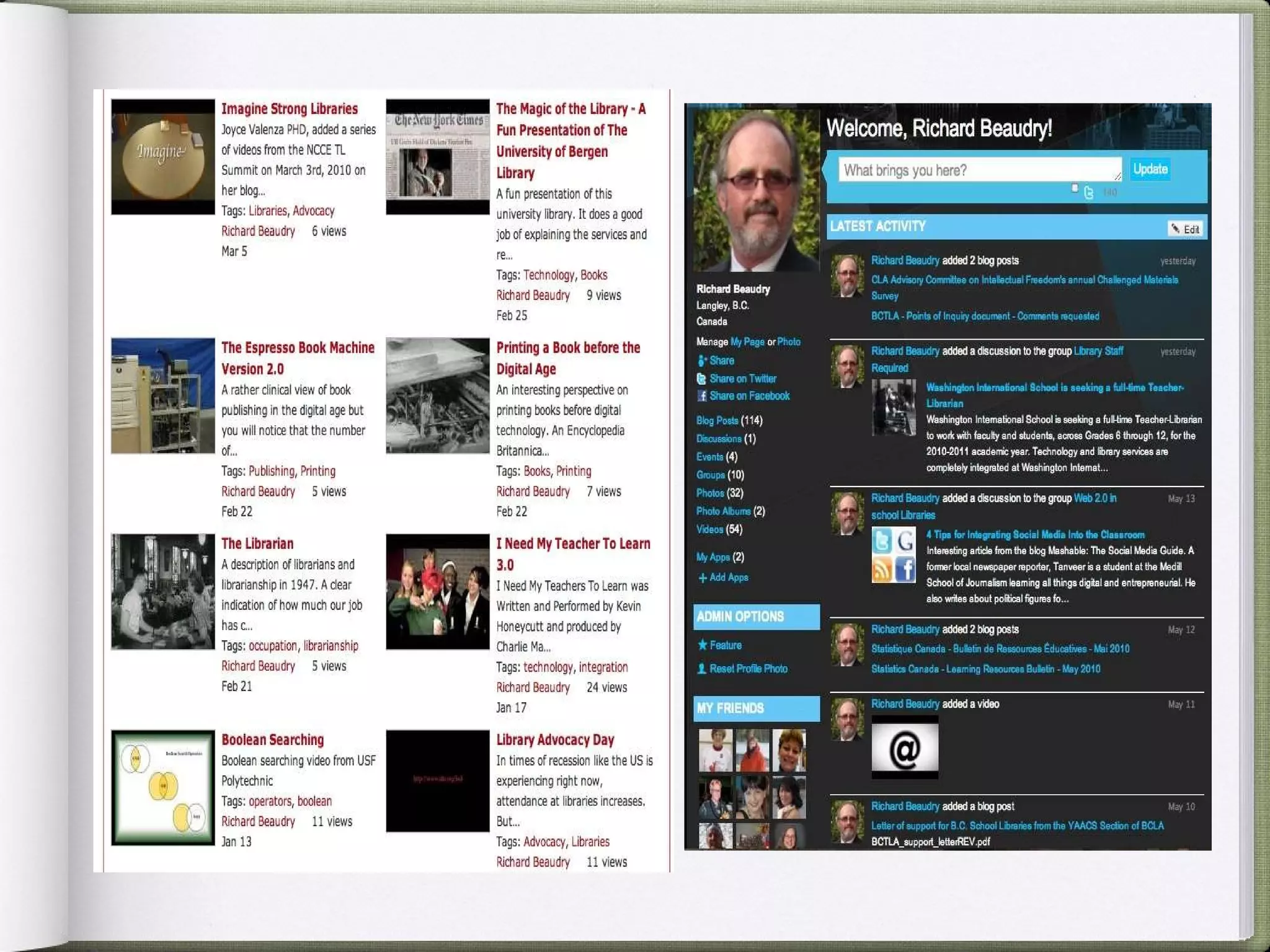
What CASLnetwork offers
 
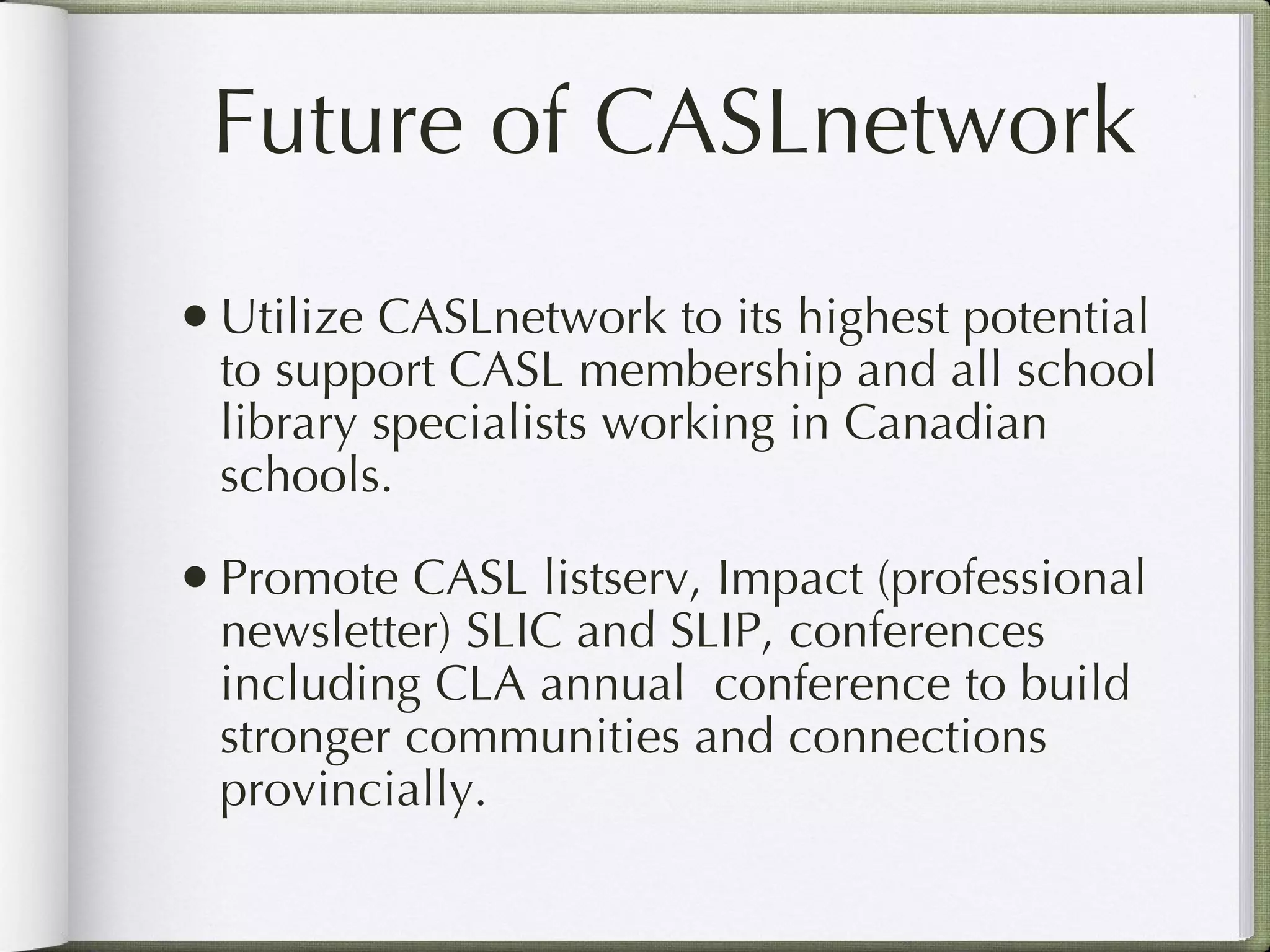
Future of CASLnetwork Utilize CASLnetwork to its highest potential to support CASL membership and all school library specialists working in Canadian schools. Promote CASL listserv, Impact (professional newsletter) SLIC and SLIP, conferences including CLA annual  conference to build stronger communities and connections provincially.
References Bookmarks and references for this session can be reviewed at  www.delicious.com  under the tag CASLnetwork session
Questions?
CASLnetwork Thank You! Merci! Richard Beaudry Dianne Leong-Fortier

CASLNetwork - CLA Presentation

  • 1.
    CASLnetwork Social NetworkingTeacher- Librarians Library Technicians Library Specialists in Canadian Schools Session I-59 Saturday, June 5th, 2010 9:45-10:45am Richard Beaudry Dianne Leong-Fortier
  • 2.
    Social Networking defined:Social Networking is the use of tools and technology to support the discovery, formation, and maintenance of personal and/or professional relationships Social Media is a collection of information and data that are developed collaboratively and shared online among individuals or groups.
  • 3.
  • 4.
  • 5.
    Disruptive change ishappening and will continue to around the world Open source information, dynamic no barriers, personal medium of communication Can create, share and interact with content Interactive technologies--low entry-can be as simple as posting a review at amazon. com Social networking, social bookmarking, blogs, wikis, tags, podcasting, rss feeds Web 2.0
  • 6.
    Social NetworkingScheduled Local meetings Some regional, provincial and national meetings Meetings when schedule allows Delayed feedback Local, regional, provincial, and global meetings Meetings with peers, resource experts, provincial and national leadership Real-time feedback VS Networking
  • 7.
    Why? Keep informedon new research, tools, techniques, and skills needed in a changing profession Keep informed on advocacy and policy related positions within the association Build and maintain professional relationships Connect, post, comment, share and collaboratively create content
  • 8.
    SNS tools, andservices Online professional learning communities (e.g. Information Literacy) or sub-groups (e.g. Programmes Francophones). Embedded email features, blogs, forums, tagging and bookmarking Shared professional resources, reports, scholarly publications, media real-time connections 24/7
  • 9.
  • 10.
  • 11.
    What are yourconcerns and challenges about social networking? Share 10 minutes. How can I find the time? There is a lot to learn! How do I get started? What about privacy? Where can I access PD? How can I use Web 2.0 to enhance learning for myself and for my students? Teacher resources?
  • 12.
    CASLNetwork Inception: The CASL EC voted on creating an online Professional Network for teacher librarians and library technicians at the CASL AGM at the CLA national conference in May, 2009 in Montreal. Official start-up was June 17th, 2009 Objective : To provide a national social network for all school library specialists working in Canada. Mission Statement : Professional network of school library specialists working in Canadian schools. Membership: Canada and some overseas (Europe and Australia). R
  • 13.
    CASLnetwork and Web2.0 Advocacy
  • 14.
    Checklist for successMarket and promote to all educators in schools and school boards, professional teacher’s associations (public and private) Dedicated to developing collaborative projects and providing resources that support best practice in school libraries Members connect, interact, post, comment, engage within the network
  • 15.
  • 16.
  • 17.
  • 18.
  • 19.
    Future of CASLnetworkUtilize CASLnetwork to its highest potential to support CASL membership and all school library specialists working in Canadian schools. Promote CASL listserv, Impact (professional newsletter) SLIC and SLIP, conferences including CLA annual conference to build stronger communities and connections provincially.
  • 20.
    References Bookmarks andreferences for this session can be reviewed at www.delicious.com under the tag CASLnetwork session
  • 21.
  • 22.
    CASLnetwork Thank You!Merci! Richard Beaudry Dianne Leong-Fortier

Editor's Notes