Evelyn Izquierdo ICT in ELT course facilitator [email_address] ICT - Current trends in the ELT field UNIVERSIDAD CENTRAL DE VENEZUELA FACULTAD DE HUMANIDADES Y EDUCACIÓN MAESTRÍA EN INGLÉS  COMO LENGUA EXTRANJERA Sep. 29, 2009
What is ICT? It is a term used for communication and information technology (ICT).
Do you think we have to teach technology in schools? Why? What? How? To whom?
The answer is here. Watch this video . Original source: Why We Need to Teach Technology in Schools. YouTube. Available at:  http://www.youtube.com/watch?v=FRZ15cXopEw
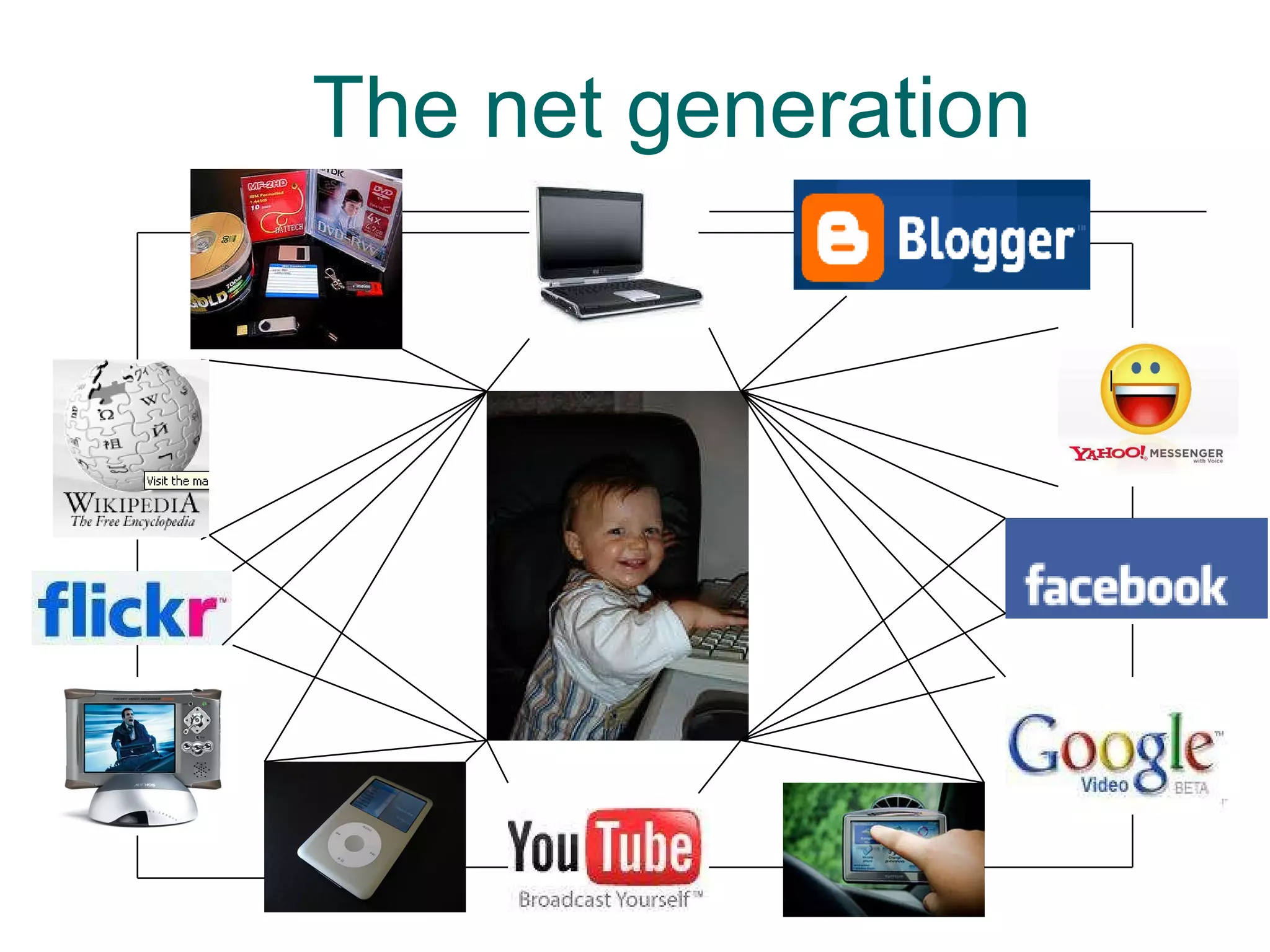
The net generation
What is our current CALL situation? Three scenarios: The world context The Latin American context The Venezuelan context
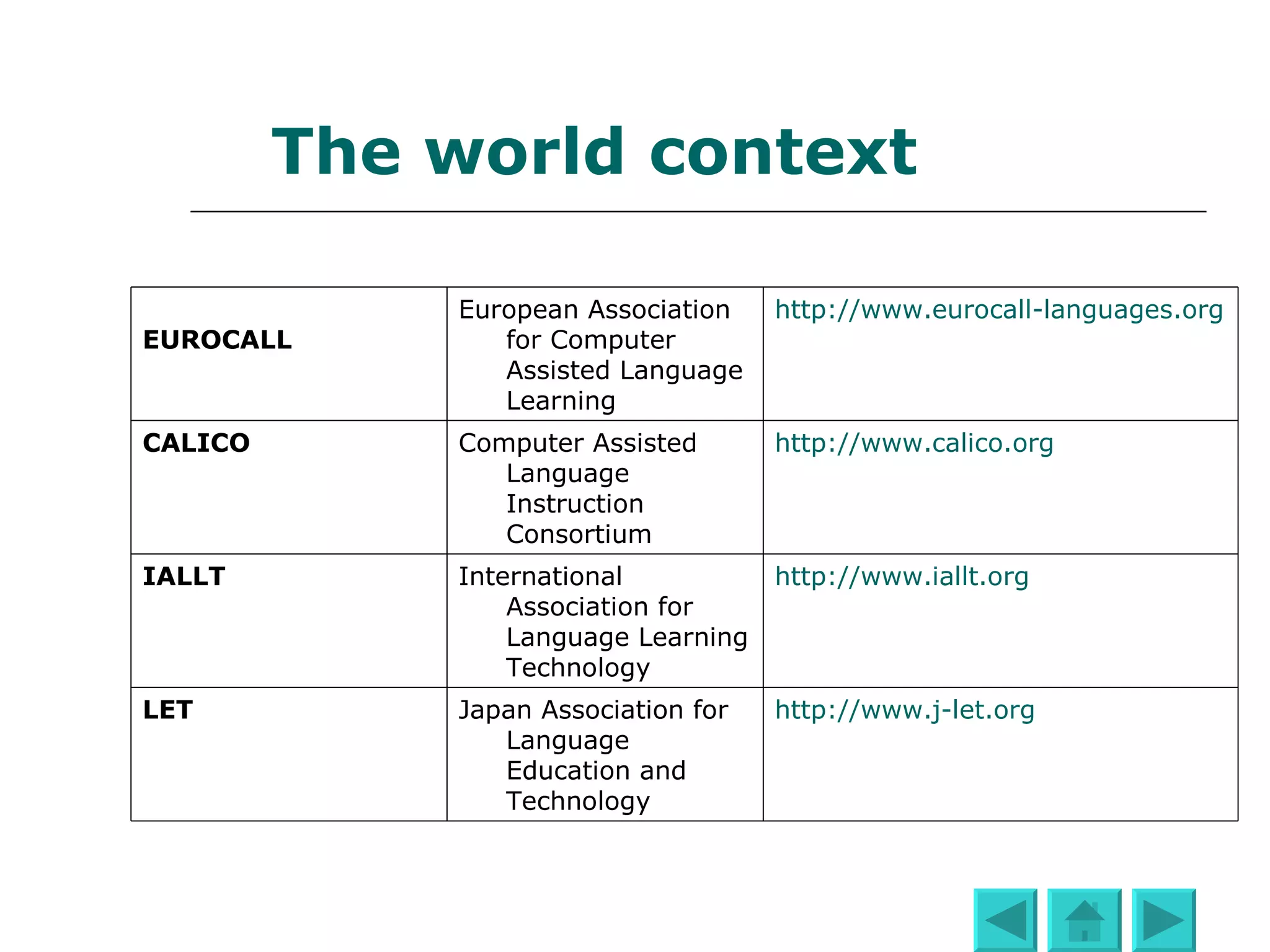
The world context Source: WorldCALL  http://www.worldcall.org/   Members of WorldCALL are drawn from established, professional affiliated associations working in the areas of CALL throughout the world. The current members of WorldCALL are: http:// www.iallt.org International Association for Language Learning Technology IALLT http:// www.calico.org Computer Assisted Language Instruction Consortium CALICO   http://www.eurocall-languages.org European Association for Computer Assisted Language Learning EUROCALL http://www.worldcall.org/ Worldwide professional association for teachers and educators interested in Computer Assisted Language Learning (CALL).  WORLDCALL
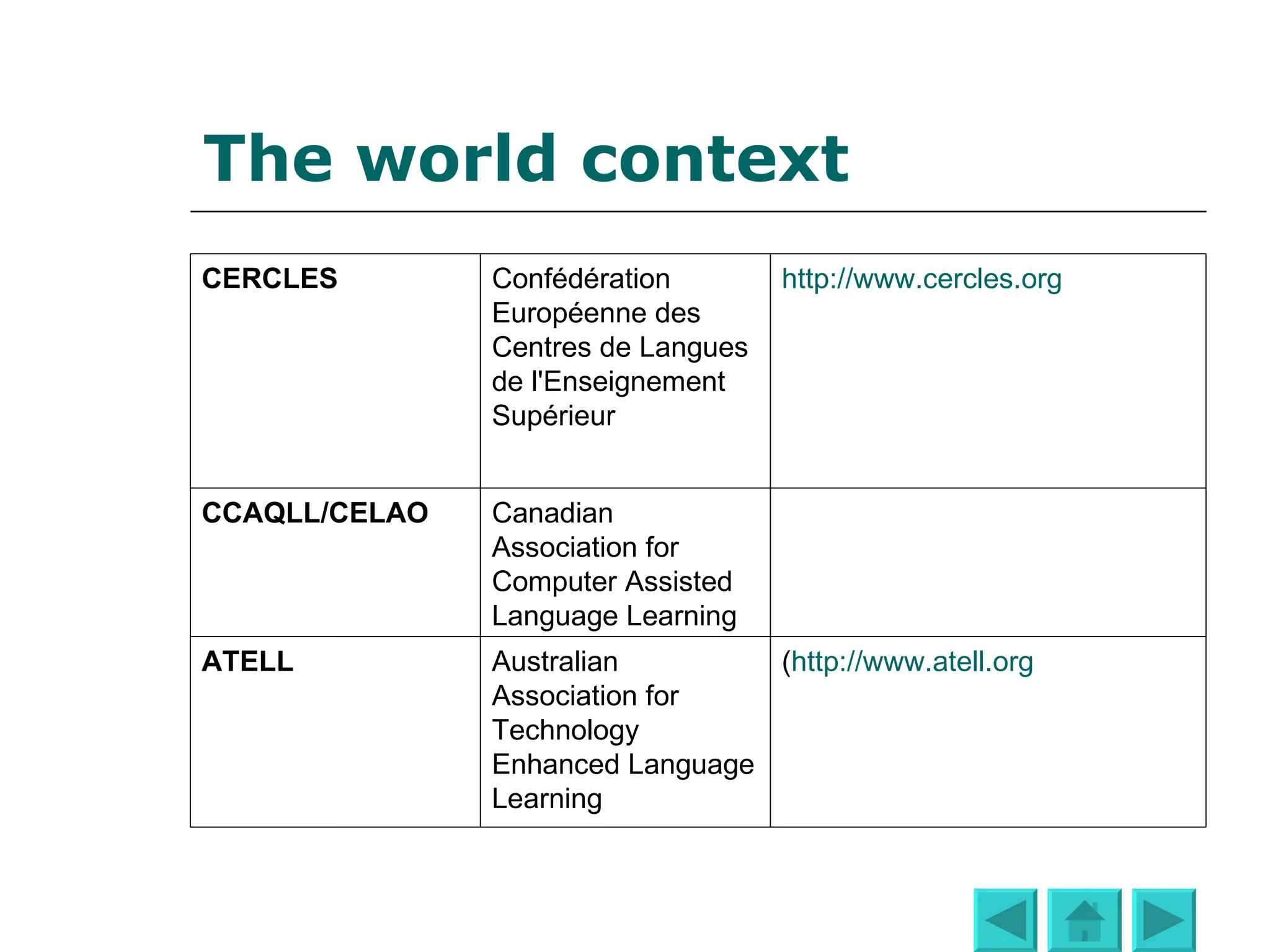
The world context Members of WorldCALL are drawn from established, professional affiliated associations working in the areas of CALL throughout the world. The current members of WorldCALL are: ( http://www.atell.org Australian Association for Technology Enhanced Language Learning ATELL     Canadian Association for Computer Assisted Language Learning CCAQLL/CELAO http:// www.cercles.org Confédération Européenne des Centres de Langues de l'Enseignement Supérieur CERCLES http://www.j-let.org Japan Association for Language Education and Technology LET
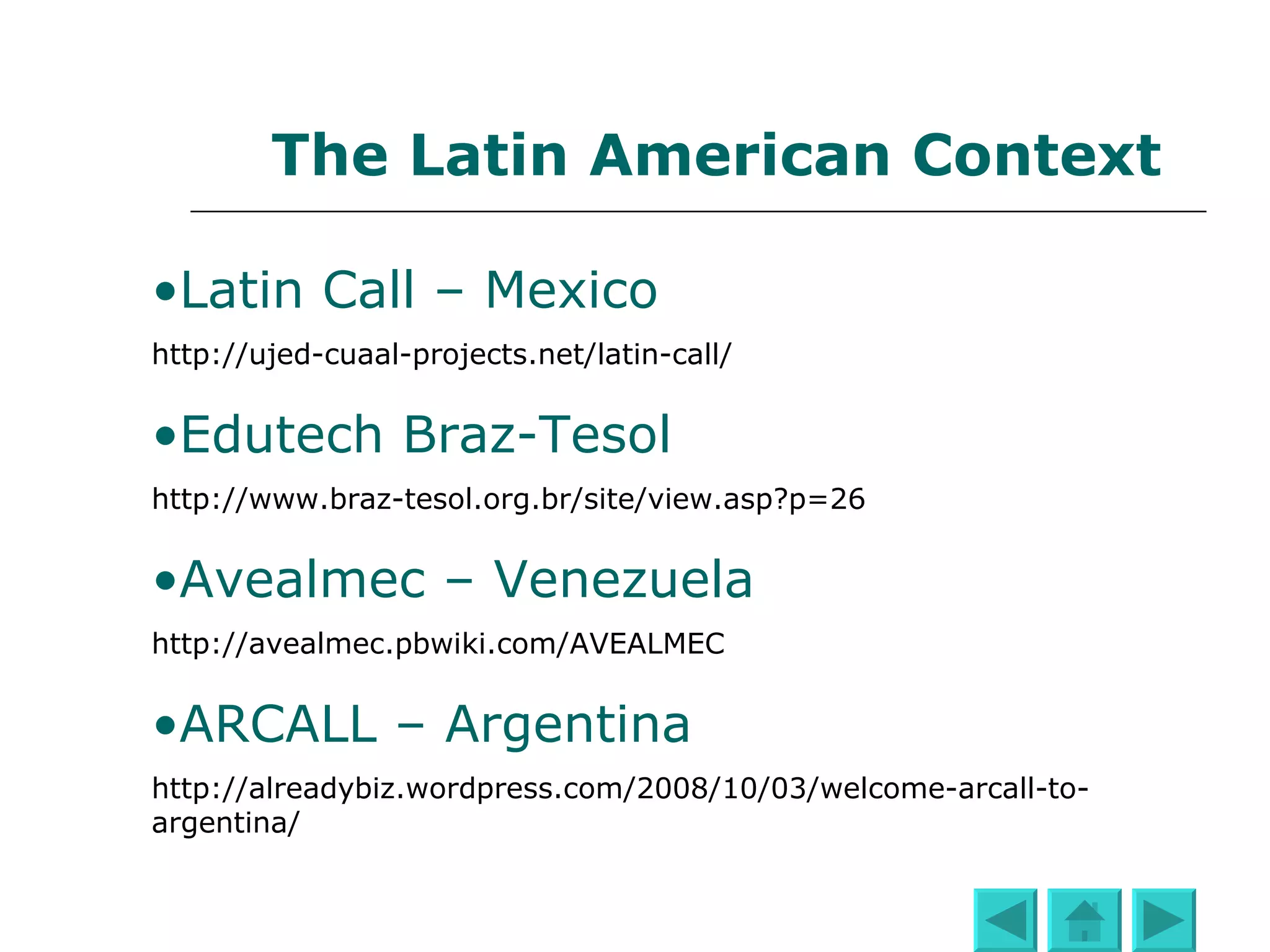
The Latin American Context Latin   Call  –  Mexico Edutech  ( Braz - Tesol   Sig ) - Brazil ARCALL – Argentina Avealmec  – Venezuela
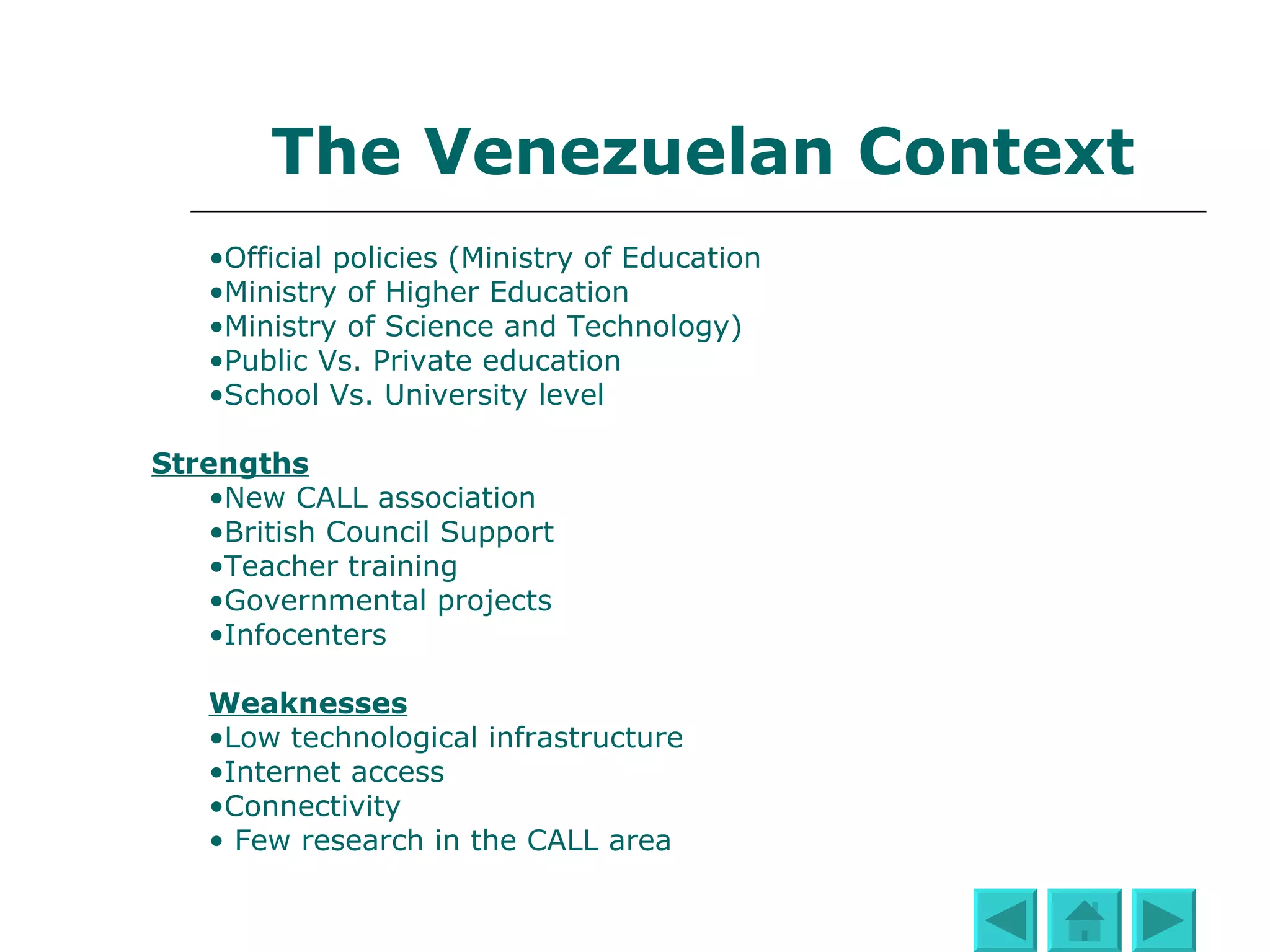
The Venezuelan Context Official policies (Ministry of Education, Ministry of Higher Education, Ministry of Science and Technology)  Public Vs. Private education School Vs. University level Strengths New CALL association British Council Support Teacher training Governmental projects Infocenters or Cbits Cybers Weaknesses Low technological infrastructure Limited Internet access Connectivity: Not all Internet users have broad band Internet connection Few research works in the CALL area
What are we supposed to know about ICTs?  What should we learn? What Web tools can we use in ELT? ICT in ELT
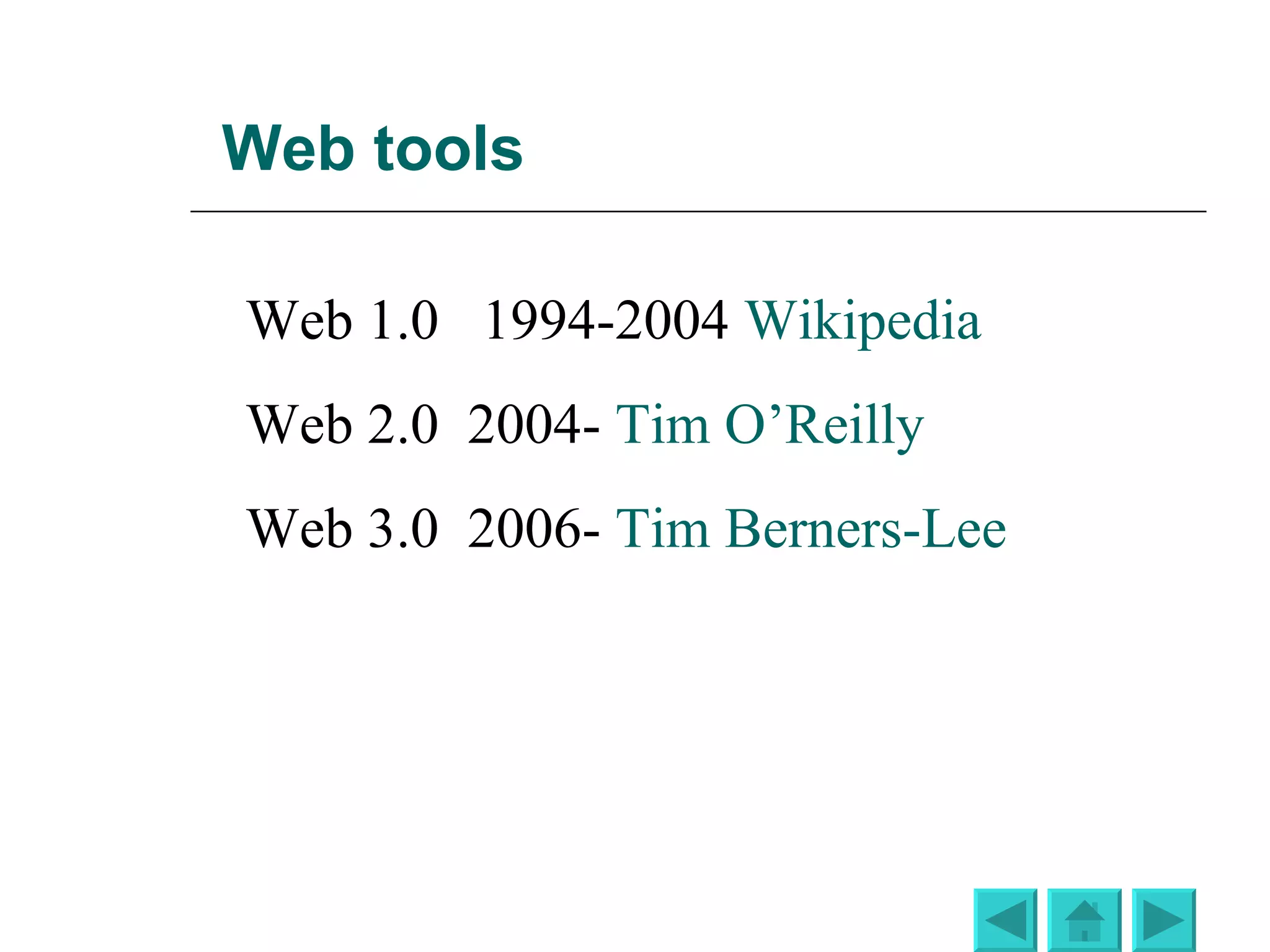
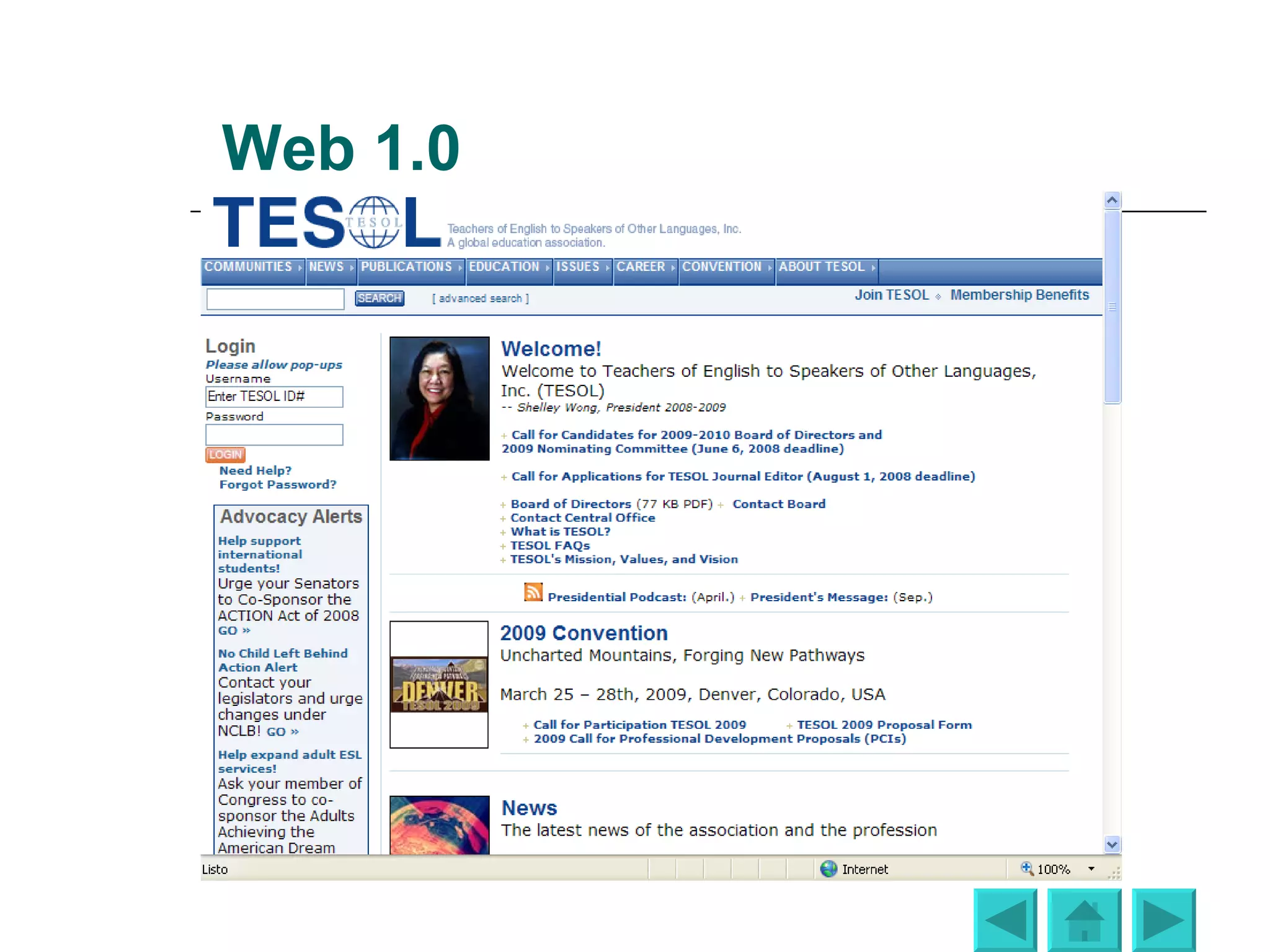
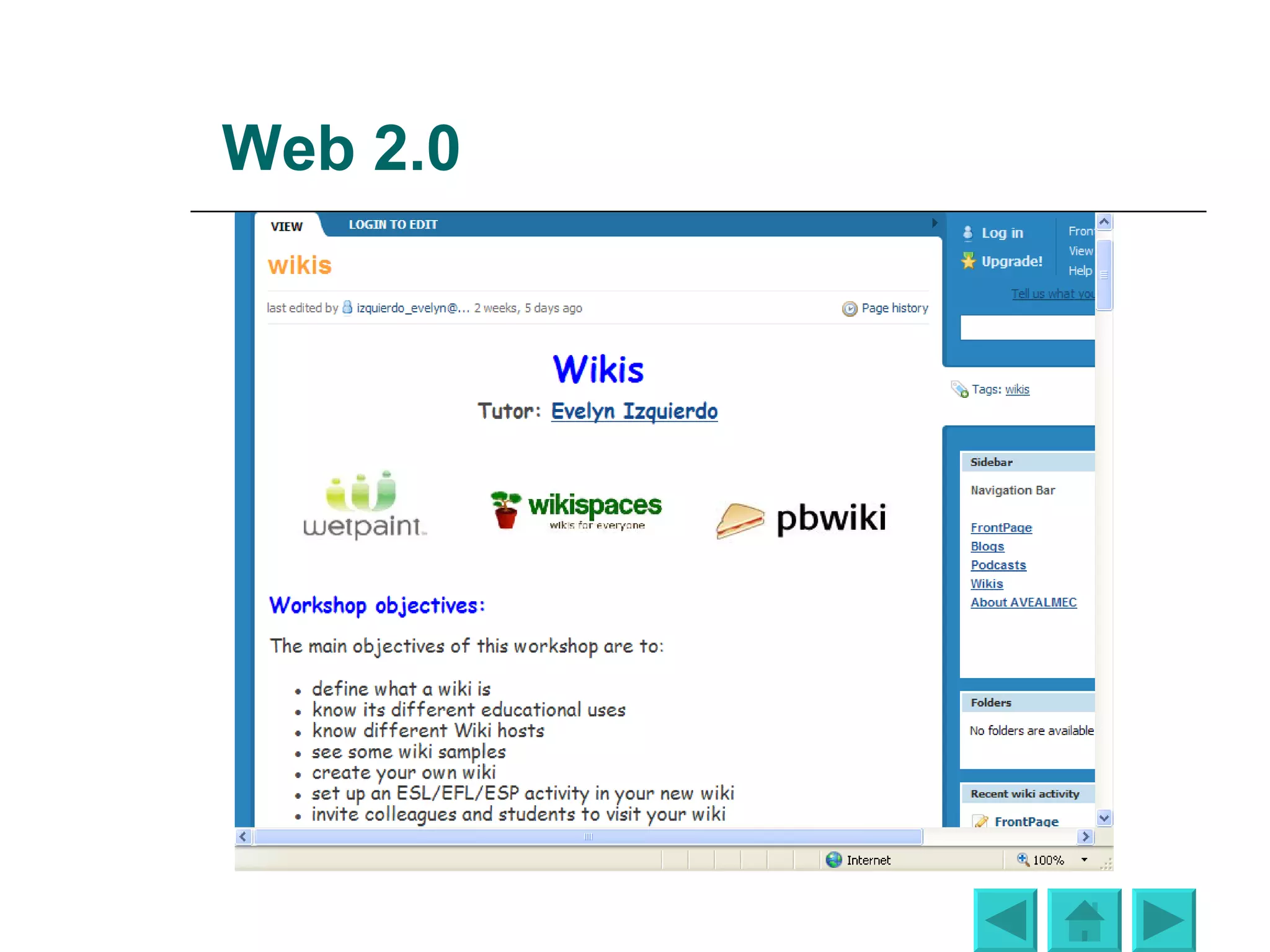
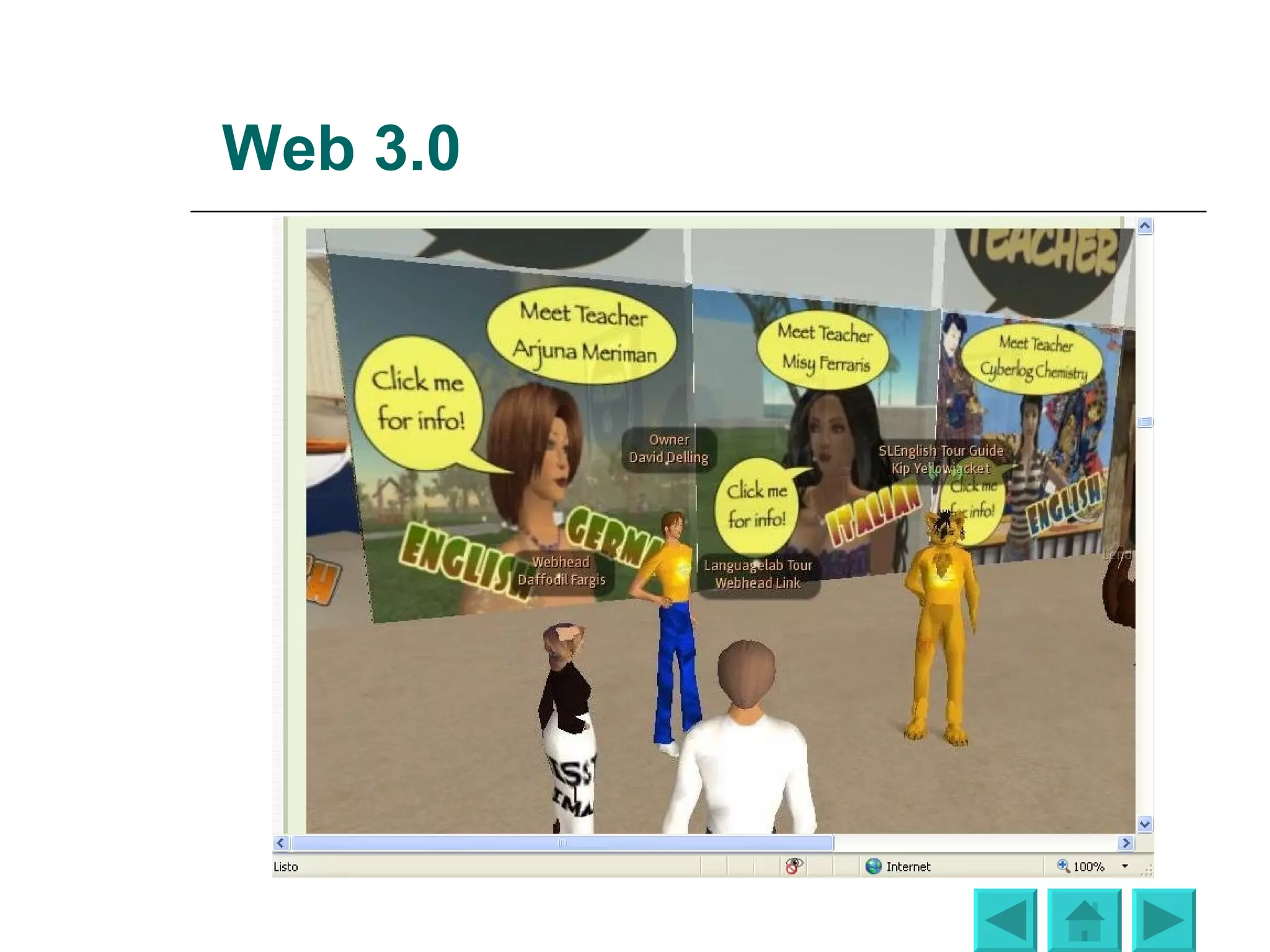
Web evolution Web 1.0 1994 – 2004  Static  Web Web 2.0   2004 – … Social Web Web 3.0   2006 – … Semantic Web
Web 1.0
Web 2.0
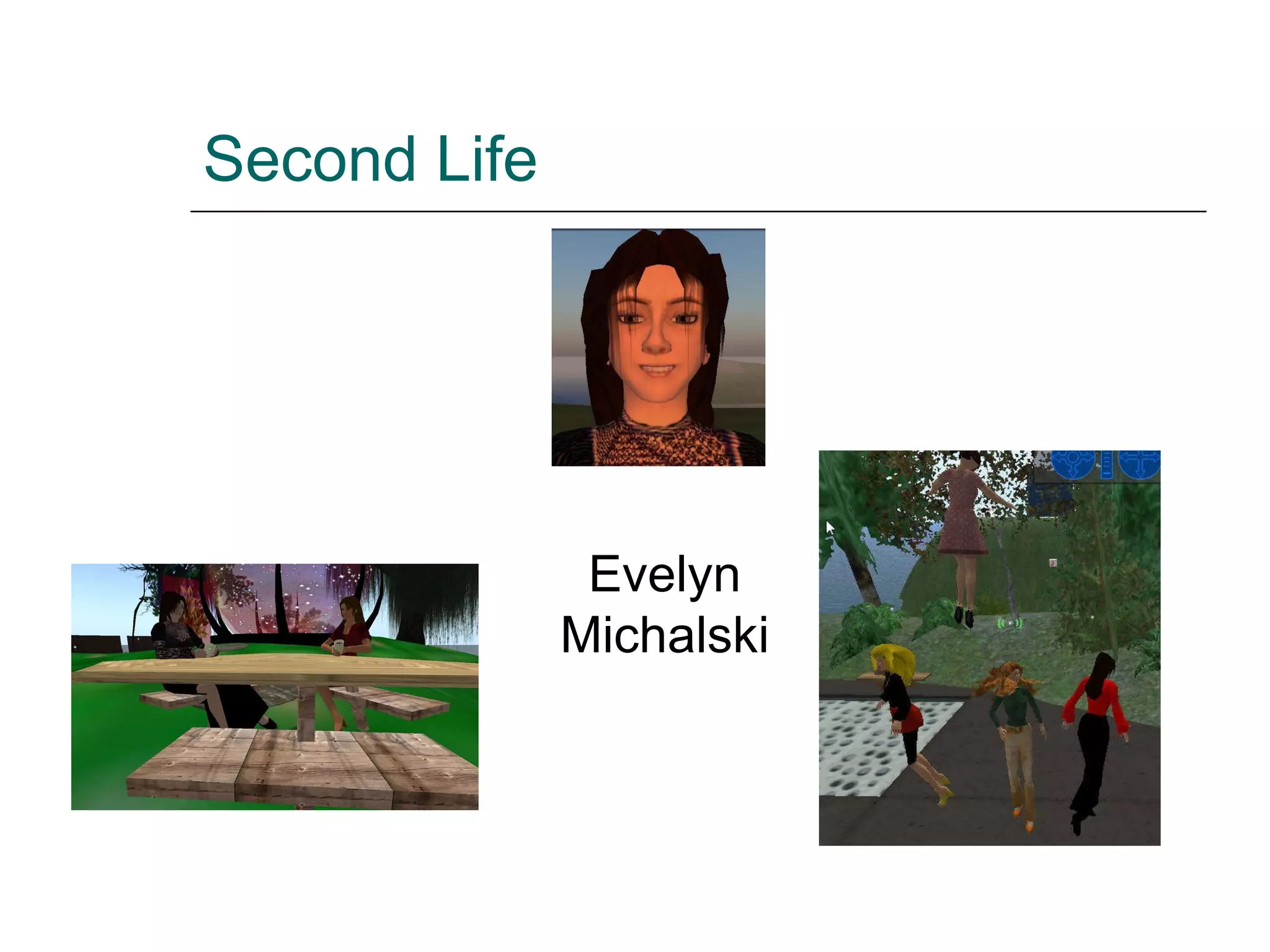
Virtual worlds - Web 2.0 or 3.0?
Second Life Evelyn Michalski
New trends in the ELT field A new learning theory: Connectivism (George Siemens and Stephen Downes, 2003) Blended learning Research on ICT in ELT  Social networking
The Latin American and Venezuelan Contexts Communities of Practice for English teachers VENELT http://groups.yahoo.com/group/VENELT/?yguid=211734267 ELTnet http://groups.yahoo.com/group/ELTnet/ AVEALMEC  http://groups.yahoo.com/group/avealmecmembers/?yguid=211734267 LWC http://groups.yahoo.com/group/learningwithcomputers/ WIA http://groups.yahoo.com/group/evonline2002_webheads/?yguid=211734267
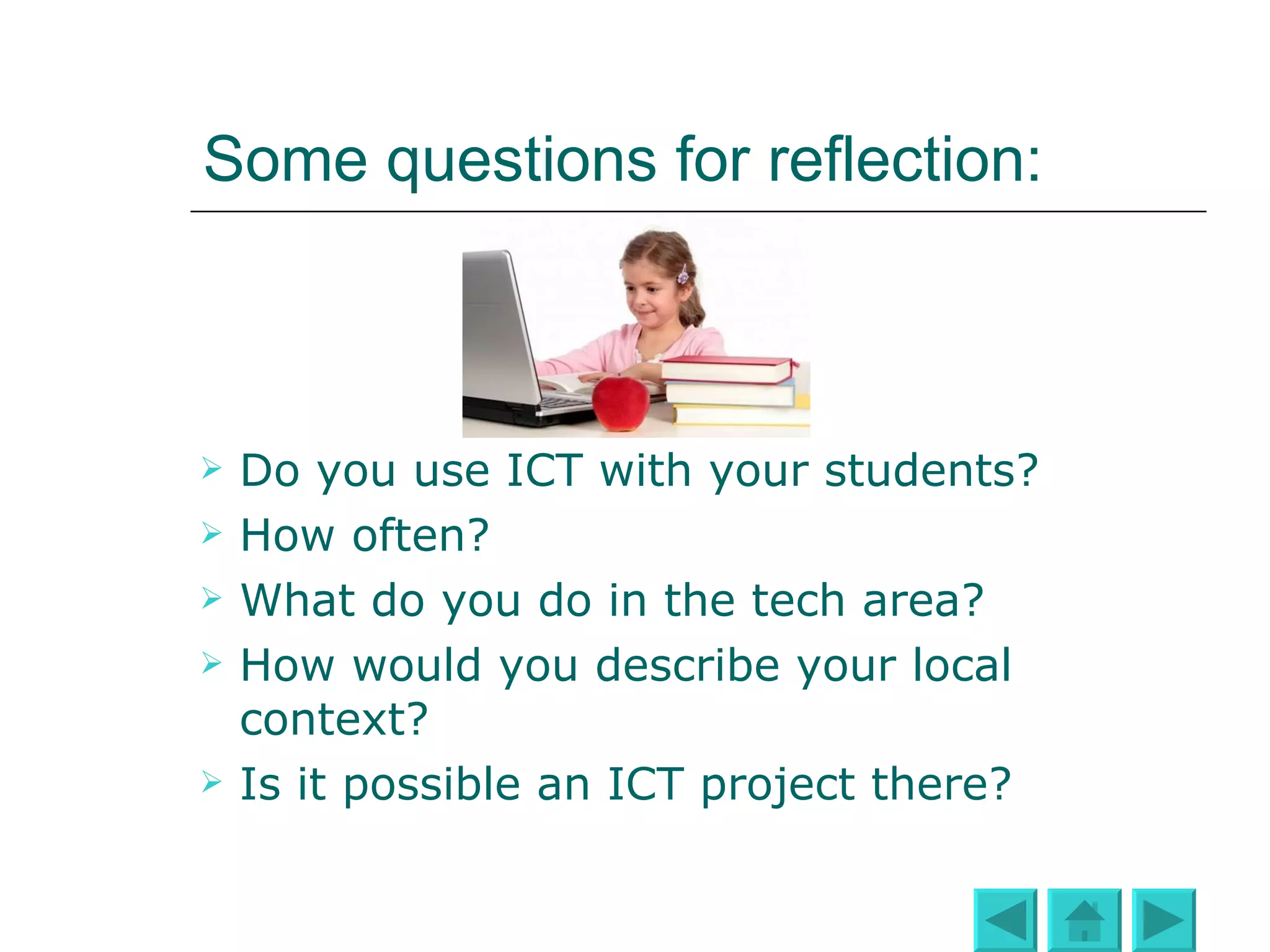
Some questions for reflection: Do you use ICT with your students? How often? What do you do in the tech area? How would you describe your local context? Is it possible an ICT project there?
Thank you very much!   Evelyn Izquierdo Escuela de Educación  Universidad Central de Venezuela http://evelynizquierdo.wordpress.com

ICT in ELT - Current situation

  • 1.
    Evelyn Izquierdo ICTin ELT course facilitator [email_address] ICT - Current trends in the ELT field UNIVERSIDAD CENTRAL DE VENEZUELA FACULTAD DE HUMANIDADES Y EDUCACIÓN MAESTRÍA EN INGLÉS COMO LENGUA EXTRANJERA Sep. 29, 2009
  • 2.
    What is ICT?It is a term used for communication and information technology (ICT).
  • 3.
    Do you thinkwe have to teach technology in schools? Why? What? How? To whom?
  • 4.
    The answer ishere. Watch this video . Original source: Why We Need to Teach Technology in Schools. YouTube. Available at: http://www.youtube.com/watch?v=FRZ15cXopEw
  • 5.
  • 6.
    What is ourcurrent CALL situation? Three scenarios: The world context The Latin American context The Venezuelan context
  • 7.
    The world contextSource: WorldCALL http://www.worldcall.org/ Members of WorldCALL are drawn from established, professional affiliated associations working in the areas of CALL throughout the world. The current members of WorldCALL are: http:// www.iallt.org International Association for Language Learning Technology IALLT http:// www.calico.org Computer Assisted Language Instruction Consortium CALICO http://www.eurocall-languages.org European Association for Computer Assisted Language Learning EUROCALL http://www.worldcall.org/ Worldwide professional association for teachers and educators interested in Computer Assisted Language Learning (CALL). WORLDCALL
  • 8.
    The world contextMembers of WorldCALL are drawn from established, professional affiliated associations working in the areas of CALL throughout the world. The current members of WorldCALL are: ( http://www.atell.org Australian Association for Technology Enhanced Language Learning ATELL   Canadian Association for Computer Assisted Language Learning CCAQLL/CELAO http:// www.cercles.org Confédération Européenne des Centres de Langues de l'Enseignement Supérieur CERCLES http://www.j-let.org Japan Association for Language Education and Technology LET
  • 9.
    The Latin AmericanContext Latin Call – Mexico Edutech ( Braz - Tesol Sig ) - Brazil ARCALL – Argentina Avealmec – Venezuela
  • 10.
    The Venezuelan ContextOfficial policies (Ministry of Education, Ministry of Higher Education, Ministry of Science and Technology) Public Vs. Private education School Vs. University level Strengths New CALL association British Council Support Teacher training Governmental projects Infocenters or Cbits Cybers Weaknesses Low technological infrastructure Limited Internet access Connectivity: Not all Internet users have broad band Internet connection Few research works in the CALL area
  • 11.
    What are wesupposed to know about ICTs? What should we learn? What Web tools can we use in ELT? ICT in ELT
  • 12.
    Web evolution Web1.0 1994 – 2004 Static Web Web 2.0 2004 – … Social Web Web 3.0 2006 – … Semantic Web
  • 13.
  • 14.
  • 15.
    Virtual worlds -Web 2.0 or 3.0?
  • 16.
  • 17.
    New trends inthe ELT field A new learning theory: Connectivism (George Siemens and Stephen Downes, 2003) Blended learning Research on ICT in ELT Social networking
  • 18.
    The Latin Americanand Venezuelan Contexts Communities of Practice for English teachers VENELT http://groups.yahoo.com/group/VENELT/?yguid=211734267 ELTnet http://groups.yahoo.com/group/ELTnet/ AVEALMEC http://groups.yahoo.com/group/avealmecmembers/?yguid=211734267 LWC http://groups.yahoo.com/group/learningwithcomputers/ WIA http://groups.yahoo.com/group/evonline2002_webheads/?yguid=211734267
  • 19.
    Some questions forreflection: Do you use ICT with your students? How often? What do you do in the tech area? How would you describe your local context? Is it possible an ICT project there?
  • 20.
    Thank you verymuch!   Evelyn Izquierdo Escuela de Educación Universidad Central de Venezuela http://evelynizquierdo.wordpress.com