Kevin O’Shea [email_address] Creating the Classroom 2.0 Web 2 Point What? Social Huh?
Web 2.0 & Social Networking What Does It Mean? Why Does It Matter? What Tools Are Available For the Classroom?  How Is It Being Used?
What Does It All Mean? Web 2.0 – Definition  “ Second generation of web-based communities and hosted services, which aim to facilitate  creativity ,  collaboration , and  sharing  between users.” –  Wikipedia.org  Examples Google (Gmail, GoogleDocs, etc…) Wikipedia Blogger
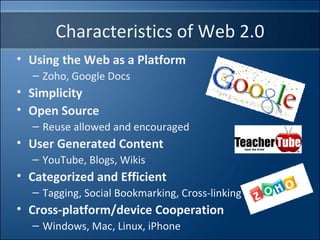
Using the Web as a Platform Zoho, Google Docs Simplicity Open Source Reuse allowed and encouraged User Generated Content YouTube, Blogs, Wikis Categorized and Efficient Tagging, Social Bookmarking, Cross-linking  Cross-platform/device Cooperation Windows, Mac, Linux, iPhone Characteristics of Web 2.0
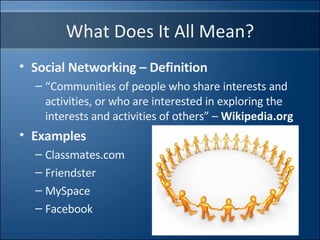
What Does It All Mean? Social Networking – Definition “ Communities of people who share interests and activities, or who are interested in exploring the interests and activities of others” –  Wikipedia.org Examples Classmates.com Friendster MySpace Facebook
Characteristics of Social Networking Interaction Pursuing Common Interests Instant Collaboration Sharing of Content
Why Does It Matter? “ The illiterate of the 21st century will not be those who cannot read and write, but those who cannot learn, unlearn, and relearn.” -Alvin Toffler
Why Does It Matter? According to the Pew Internet & American Life Project (Lenhardt & Madden 2007) more than 60% of teens have created online media content, and more than 75% of those teens have shared the content they have produced.  This in turn has fueled the online revolution of participation and collaboration.
Why Does It Matter? Strong support for the creation process between users. Users believe that their content and expression matter. Users feel a connection between each other. It has created a new form of literacy. Multitasking Collective Intelligence Confronting the Challenges of Participatory Culture: Media Education for the 21st Century - Henry Jenkins 10/19/06
What Tools are Available? Blogging + RSS Powerful communication and publishing tools Wikis Online writing space allowing user to add and modify its pages. Web Applications Office Suites, News Aggregators, etc… Social Networks
Blogging & Education Instructors Blogs  Keep Track of Assignments Virtual In-service and Personal Publishing Class Blogs Student work showcase Extending class discussion Networking with other schools
Popular Blog Tools  Blogger http://www.blogger.com  Edublogs http://www.edublogs.org Wordpress http://www.wordpress.com Blog Meister http://www.classblogmeister.com  (school code required)
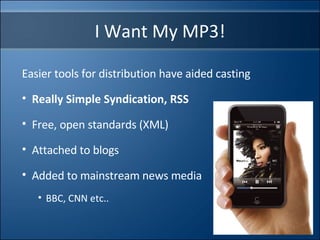
I Want My MP3! Easier tools for distribution have aided casting Really Simple Syndication, RSS Free, open standards (XML) Attached to blogs Added to mainstream news media BBC, CNN etc..
Podcasting in Higher Education iTunesU  – Media portal provided through the iTunes music store to pod/vodcasts of Universities. Edcast  – Online repository of educators voluntarily placing lectures, conversations, and related podcasts. Uchannel  – Collection of lectures, panels, and speeches from all over the world.
Benefits & Dangers of Podcasting Time Shifting In & Out of Class Content Study Aid Educational Supplement NOT Replacement
Wikis Collaboration Public writing tool User generated and maintained. Content rich site limited only to participation. Fully editable Allowing for addition, subtraction, and discussion. The process is the product.
Wiki Tools Wikipedia http://www.wikipedia.org MediaWiki http://www.mediawiki.org CollegeWikis http://purdue.collegewikis.com/
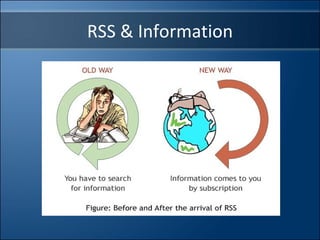
RSS & Information
Popular Blog Aggregator Tools Netvibes http://www.netvibes.com iGoogle http://www.google.com/ig Bloglines http://www.bloglines.com Pageflakes http://www.pageflakes.com iTunes (pod/vodcasts) http://www.apple.com/itunes
Online Applications Movement away from Desktop application reliance. Platform independent. Mobile device compatibility. Open source. Online collaboration
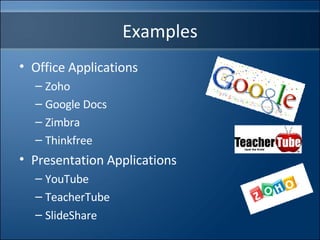
Examples Office Applications Zoho Google Docs Zimbra Thinkfree Presentation Applications YouTube TeacherTube SlideShare

Web 2.0

  • 1.
    Kevin O’Shea [email_address]Creating the Classroom 2.0 Web 2 Point What? Social Huh?
  • 2.
    Web 2.0 &Social Networking What Does It Mean? Why Does It Matter? What Tools Are Available For the Classroom? How Is It Being Used?
  • 3.
    What Does ItAll Mean? Web 2.0 – Definition “ Second generation of web-based communities and hosted services, which aim to facilitate creativity , collaboration , and sharing between users.” – Wikipedia.org Examples Google (Gmail, GoogleDocs, etc…) Wikipedia Blogger
  • 4.
    Using the Webas a Platform Zoho, Google Docs Simplicity Open Source Reuse allowed and encouraged User Generated Content YouTube, Blogs, Wikis Categorized and Efficient Tagging, Social Bookmarking, Cross-linking Cross-platform/device Cooperation Windows, Mac, Linux, iPhone Characteristics of Web 2.0
  • 5.
    What Does ItAll Mean? Social Networking – Definition “ Communities of people who share interests and activities, or who are interested in exploring the interests and activities of others” – Wikipedia.org Examples Classmates.com Friendster MySpace Facebook
  • 6.
    Characteristics of SocialNetworking Interaction Pursuing Common Interests Instant Collaboration Sharing of Content
  • 7.
    Why Does ItMatter? “ The illiterate of the 21st century will not be those who cannot read and write, but those who cannot learn, unlearn, and relearn.” -Alvin Toffler
  • 8.
    Why Does ItMatter? According to the Pew Internet & American Life Project (Lenhardt & Madden 2007) more than 60% of teens have created online media content, and more than 75% of those teens have shared the content they have produced. This in turn has fueled the online revolution of participation and collaboration.
  • 9.
    Why Does ItMatter? Strong support for the creation process between users. Users believe that their content and expression matter. Users feel a connection between each other. It has created a new form of literacy. Multitasking Collective Intelligence Confronting the Challenges of Participatory Culture: Media Education for the 21st Century - Henry Jenkins 10/19/06
  • 10.
    What Tools areAvailable? Blogging + RSS Powerful communication and publishing tools Wikis Online writing space allowing user to add and modify its pages. Web Applications Office Suites, News Aggregators, etc… Social Networks
  • 11.
    Blogging & EducationInstructors Blogs Keep Track of Assignments Virtual In-service and Personal Publishing Class Blogs Student work showcase Extending class discussion Networking with other schools
  • 12.
    Popular Blog Tools Blogger http://www.blogger.com Edublogs http://www.edublogs.org Wordpress http://www.wordpress.com Blog Meister http://www.classblogmeister.com (school code required)
  • 13.
    I Want MyMP3! Easier tools for distribution have aided casting Really Simple Syndication, RSS Free, open standards (XML) Attached to blogs Added to mainstream news media BBC, CNN etc..
  • 14.
    Podcasting in HigherEducation iTunesU – Media portal provided through the iTunes music store to pod/vodcasts of Universities. Edcast – Online repository of educators voluntarily placing lectures, conversations, and related podcasts. Uchannel – Collection of lectures, panels, and speeches from all over the world.
  • 15.
    Benefits & Dangersof Podcasting Time Shifting In & Out of Class Content Study Aid Educational Supplement NOT Replacement
  • 16.
    Wikis Collaboration Publicwriting tool User generated and maintained. Content rich site limited only to participation. Fully editable Allowing for addition, subtraction, and discussion. The process is the product.
  • 17.
    Wiki Tools Wikipediahttp://www.wikipedia.org MediaWiki http://www.mediawiki.org CollegeWikis http://purdue.collegewikis.com/
  • 18.
  • 19.
    Popular Blog AggregatorTools Netvibes http://www.netvibes.com iGoogle http://www.google.com/ig Bloglines http://www.bloglines.com Pageflakes http://www.pageflakes.com iTunes (pod/vodcasts) http://www.apple.com/itunes
  • 20.
    Online Applications Movementaway from Desktop application reliance. Platform independent. Mobile device compatibility. Open source. Online collaboration
  • 21.
    Examples Office ApplicationsZoho Google Docs Zimbra Thinkfree Presentation Applications YouTube TeacherTube SlideShare