CARDIAC TAMPONADE
Mohammed Niyas
Group 4a
Dept. of Surgery
TSMU
PERICARDIUM - ANATOMY
• Resilient Fibro-serous sac – envelops heart and great vessels
•2 layers
•Inner visceral layer – Serous Pericardium
•Monolayer membrane of mesothelial cells, collagen &
elastin fibres.
•Over the heart, same as the Epicardium - contains the
epicardial coronary arteries and veins, autonomic
nerves, lymphatics, and a variable amount of adipose
tissue.
•Reflects over the great vessels - forms delicate inner
lining of Fibrous Pericardium
•Outer parietal layer – Fibrous Pericardium
•Acellular, mainly collagenous fibrous tissue, little elastin
fibrils.
•2 mm thick normally. Contains the epicardial coronary
arteries and veins, autonomic nerves, lymphatics, variable
amount of adipose tissue.
•The junctions between the visceral and parietal pericardium
lie along the great vessels - pericardial reflections -
continuous along the pulmonary veins and vena cavae
•Posterior to LA, midline cul-de-sac known as the Oblique
Sinus.
•Behind the great arteries, the Transverse Sinus forms a
tunnel-like passageway.
•Between these 2 layers lies the Pericardial Space – 10-50
ml of fluid - ultrafiltrate of the plasma.
•Intrapericardial
•All 4 Chambers except posterior part of LA
•Almost entire Ascending Aorta, Main Pulmonary Artery, all
4 Pulmonary Veins
•In case of TAPVC, PV confluence is intrapericardial
•Extrapericardial
•Right and Left Pulmonary Artery
•Ductus Arteriosus
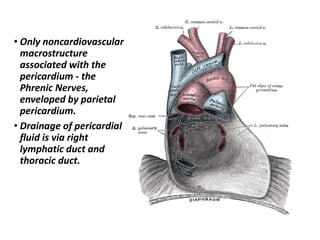
• Only noncardiovascular
macrostructure
associated with the
pericardium - the
Phrenic Nerves,
enveloped by parietal
pericardium.
• Drainage of pericardial
fluid is via right
lymphatic duct and
thoracic duct.
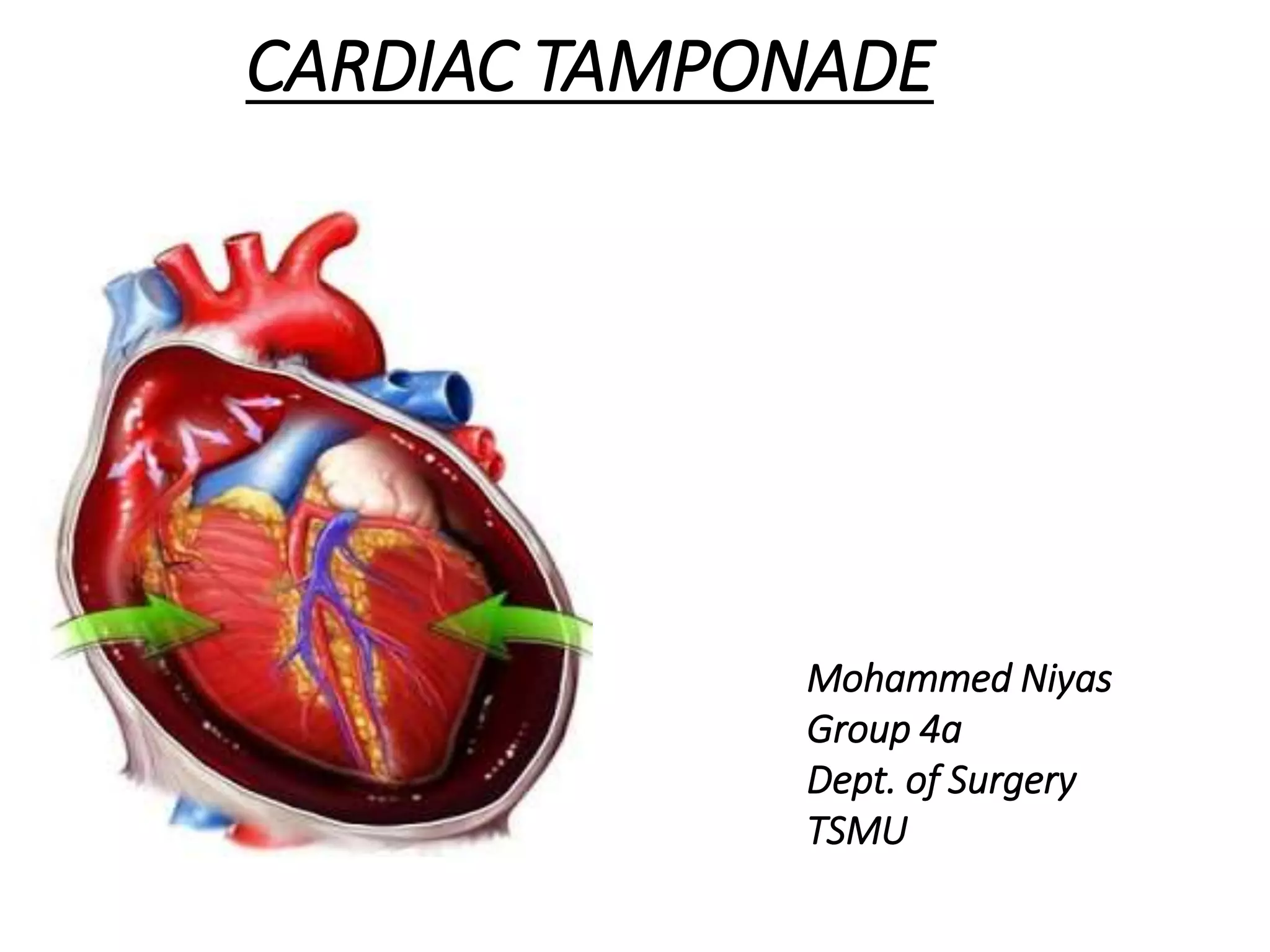
DEFINITION
“clinical syndrome caused by accumulation of
fluid in the pericardial space,
resulting in reduced ventricular filling and
subsequent hemodynamic compromise”
CARDIAC TAMPONADE
↑ pericardial
fluid
Pressure onrt
sideof heart
↓Venousreturn
Poolingofblood
inpulmonary
capillaries
↓Strokevolume,
↓Cardiac
output
CardiacArrest
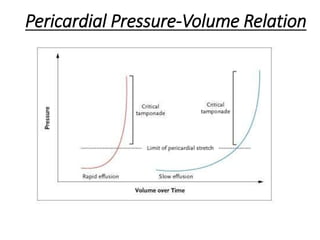
Howmuch pericardial fluid is needed to impair diastolic filling ?
PATHO-PHYSIOLOGY
Pericardial Pressure-Volume Relation
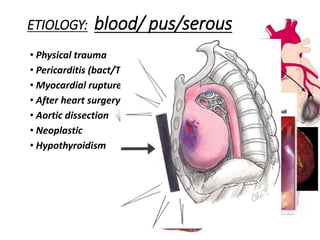
ETIOLOGY: blood/ pus/serous
• Physical trauma
• Pericarditis (bact/TB/HIV)
• Myocardial rupture
• After heart surgery
• Aortic dissection
• Neoplastic
• Hypothyroidism
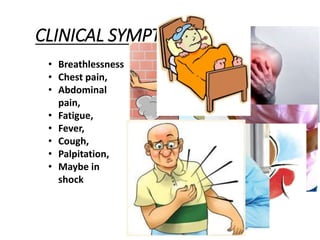
CLINICAL SYMPTOMS
• Breathlessness
• Chest pain,
• Abdominal
pain,
• Fatigue,
• Fever,
• Cough,
• Palpitation,
• Maybe in
shock
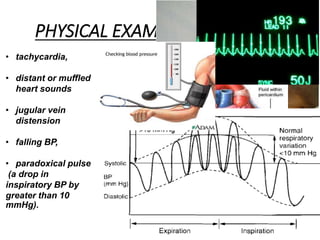
PHYSICAL EXAMINATION
• tachycardia,
• distant or muffled
heart sounds
• jugular vein
distension
• falling BP,
• paradoxical pulse
(a drop in
inspiratory BP by
greater than 10
mmHg).
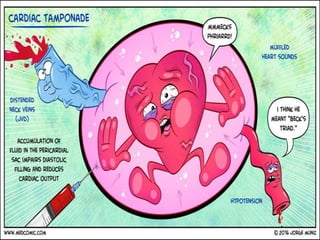
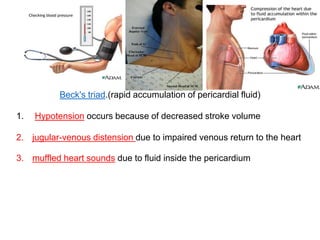
Beck's triad.(rapid accumulation of pericardial fluid)
1. Hypotension occurs because of decreased stroke volume
2. jugular-venous distension due to impaired venous return to the heart
3. muffled heart sounds due to fluid inside the pericardium
• complete blood count (CBC)
• RFT,LFT
• PT,INR
• CKMB, TROP-T
• ANA assay,
• ESR
• Rh FACTOR
• HIV testing
• Mantouxtest
• Pericardial fluidC/S, AFB
INVESTIGATIONS
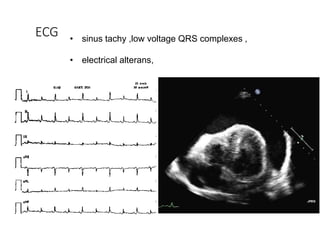
ECG • sinus tachy ,low voltage QRS complexes ,
• electrical alterans,
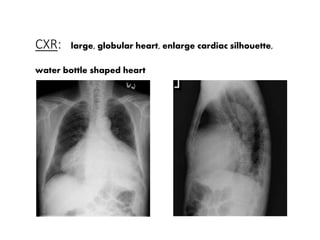
CXR: large, globular heart, enlarge cardiac silhouette,
water bottle shaped heart
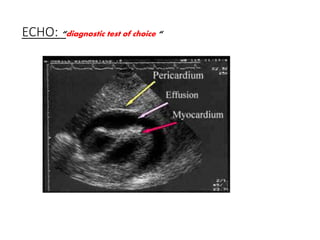
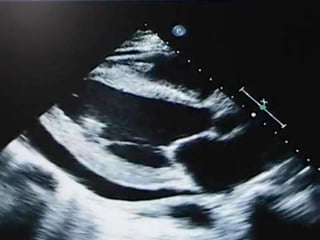
ECHO: “diagnostic test of choice “
TREATMENT:
Cardiac tamponade is a medical emergency
Untreated, cardiac tamponade is rapidly and universally fatal
Prompt diagnosis and treatment is the key.
• O2
• Volume expansion
• Bed rest
• Inotropic drugs
• Positive-pressure mechanical ventilation should be
avoided
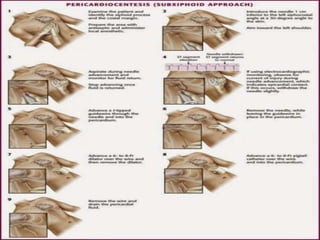
• Pericardiocentesis:
• A Swan-Ganz catheter can be left in place for continuous
monitoring of hemodynamics
• repeat ECHO and a repeat CXR within 24 hours.
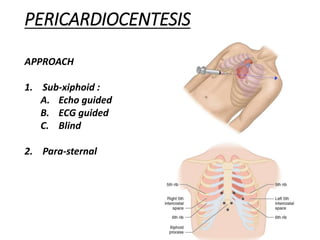
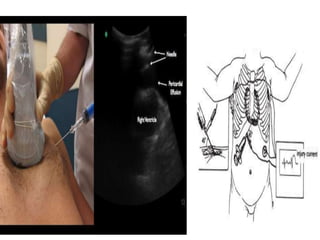
APPROACH
1. Sub-xiphoid :
A. Echo guided
B. ECG guided
C. Blind
2. Para-sternal
PERICARDIOCENTESIS
AFTER CARE
1. Monitor vitals
2. Look out for complications
3. Repeat ECHO & CXR
4. If Pt still symptomatic then may require placement of
catheter in the pericardial space or surgical creation
of a pericardial window
PERICARDIOCENTESIS
COMPLICATIONS
1. Cardiac arrhythmia
2. Pneumothorax
3. Pleural effusion
4. Myocardial injury
5. Peritoneal injury
6. Liver/stomach injury
7. Internal mammary artery injury
8. Diaphragmatic injury
RECURRENT TAMPONADE
• Pericardial window
• Sclerosing the pericardium
• Pericardio-peritoneal shunt
• Pericardiectomy
summary
•Cardiac tamponade is a medical emergency, and if
untreated, its rapidly and universally fatal
•Prompt diagnosis and treatment is the key.
•Pericardiocentesis is a life saving procedure in
tamponade
•Monitor vitals after the procedure to look for
complications
References:
• www.escardio.org/static_file/Escardio/Guidelines/publications/PERIC
Aguidelines-pericardial-FT

Cardiac tamponade

  • 1.
  • 3.
    PERICARDIUM - ANATOMY •Resilient Fibro-serous sac – envelops heart and great vessels •2 layers •Inner visceral layer – Serous Pericardium •Monolayer membrane of mesothelial cells, collagen & elastin fibres. •Over the heart, same as the Epicardium - contains the epicardial coronary arteries and veins, autonomic nerves, lymphatics, and a variable amount of adipose tissue. •Reflects over the great vessels - forms delicate inner lining of Fibrous Pericardium
  • 4.
    •Outer parietal layer– Fibrous Pericardium •Acellular, mainly collagenous fibrous tissue, little elastin fibrils. •2 mm thick normally. Contains the epicardial coronary arteries and veins, autonomic nerves, lymphatics, variable amount of adipose tissue. •The junctions between the visceral and parietal pericardium lie along the great vessels - pericardial reflections - continuous along the pulmonary veins and vena cavae •Posterior to LA, midline cul-de-sac known as the Oblique Sinus. •Behind the great arteries, the Transverse Sinus forms a tunnel-like passageway.
  • 5.
    •Between these 2layers lies the Pericardial Space – 10-50 ml of fluid - ultrafiltrate of the plasma. •Intrapericardial •All 4 Chambers except posterior part of LA •Almost entire Ascending Aorta, Main Pulmonary Artery, all 4 Pulmonary Veins •In case of TAPVC, PV confluence is intrapericardial •Extrapericardial •Right and Left Pulmonary Artery •Ductus Arteriosus
  • 6.
    • Only noncardiovascular macrostructure associatedwith the pericardium - the Phrenic Nerves, enveloped by parietal pericardium. • Drainage of pericardial fluid is via right lymphatic duct and thoracic duct.
  • 7.
    DEFINITION “clinical syndrome causedby accumulation of fluid in the pericardial space, resulting in reduced ventricular filling and subsequent hemodynamic compromise” CARDIAC TAMPONADE
  • 8.
    ↑ pericardial fluid Pressure onrt sideofheart ↓Venousreturn Poolingofblood inpulmonary capillaries ↓Strokevolume, ↓Cardiac output CardiacArrest Howmuch pericardial fluid is needed to impair diastolic filling ? PATHO-PHYSIOLOGY
  • 9.
  • 10.
    ETIOLOGY: blood/ pus/serous •Physical trauma • Pericarditis (bact/TB/HIV) • Myocardial rupture • After heart surgery • Aortic dissection • Neoplastic • Hypothyroidism
  • 11.
    CLINICAL SYMPTOMS • Breathlessness •Chest pain, • Abdominal pain, • Fatigue, • Fever, • Cough, • Palpitation, • Maybe in shock
  • 12.
    PHYSICAL EXAMINATION • tachycardia, •distant or muffled heart sounds • jugular vein distension • falling BP, • paradoxical pulse (a drop in inspiratory BP by greater than 10 mmHg).
  • 13.
    Beck's triad.(rapid accumulationof pericardial fluid) 1. Hypotension occurs because of decreased stroke volume 2. jugular-venous distension due to impaired venous return to the heart 3. muffled heart sounds due to fluid inside the pericardium
  • 14.
    • complete bloodcount (CBC) • RFT,LFT • PT,INR • CKMB, TROP-T • ANA assay, • ESR • Rh FACTOR • HIV testing • Mantouxtest • Pericardial fluidC/S, AFB INVESTIGATIONS
  • 15.
    ECG • sinustachy ,low voltage QRS complexes , • electrical alterans,
  • 16.
    CXR: large, globularheart, enlarge cardiac silhouette, water bottle shaped heart
  • 17.
  • 19.
    TREATMENT: Cardiac tamponade isa medical emergency Untreated, cardiac tamponade is rapidly and universally fatal Prompt diagnosis and treatment is the key. • O2 • Volume expansion • Bed rest • Inotropic drugs • Positive-pressure mechanical ventilation should be avoided • Pericardiocentesis: • A Swan-Ganz catheter can be left in place for continuous monitoring of hemodynamics • repeat ECHO and a repeat CXR within 24 hours.
  • 20.
    APPROACH 1. Sub-xiphoid : A.Echo guided B. ECG guided C. Blind 2. Para-sternal PERICARDIOCENTESIS
  • 24.
    AFTER CARE 1. Monitorvitals 2. Look out for complications 3. Repeat ECHO & CXR 4. If Pt still symptomatic then may require placement of catheter in the pericardial space or surgical creation of a pericardial window PERICARDIOCENTESIS
  • 25.
    COMPLICATIONS 1. Cardiac arrhythmia 2.Pneumothorax 3. Pleural effusion 4. Myocardial injury 5. Peritoneal injury 6. Liver/stomach injury 7. Internal mammary artery injury 8. Diaphragmatic injury
  • 26.
    RECURRENT TAMPONADE • Pericardialwindow • Sclerosing the pericardium • Pericardio-peritoneal shunt • Pericardiectomy
  • 27.
    summary •Cardiac tamponade isa medical emergency, and if untreated, its rapidly and universally fatal •Prompt diagnosis and treatment is the key. •Pericardiocentesis is a life saving procedure in tamponade •Monitor vitals after the procedure to look for complications
  • 28.