CARDIAC ASSESSMENT
Sanil Varghese
ANATOMY AND
PHYSIOLOGY
OF HEART
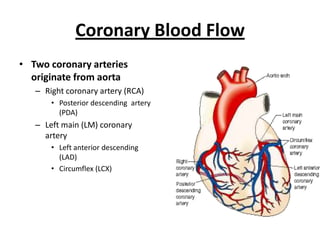
Coronary Blood Flow
โ€ข Two coronary arteries
originate from aorta
โ€“ Right coronary artery (RCA)
โ€ข Posterior descending artery
(PDA)

โ€“ Left main (LM) coronary
artery
โ€ข Left anterior descending
(LAD)
โ€ข Circumflex (LCX)
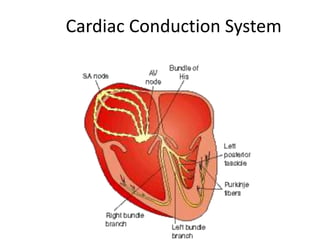
Cardiac Conduction System
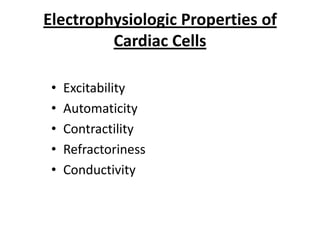
Electrophysiologic Properties of
Cardiac Cells
โ€ข
โ€ข
โ€ข
โ€ข
โ€ข

Excitability
Automaticity
Contractility
Refractoriness
Conductivity
CARDIAC CYCLE
โ€ข Systole
โ€ข Diastole
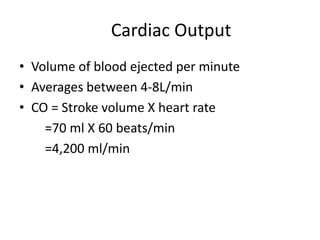
Cardiac Output
โ€ข Volume of blood ejected per minute
โ€ข Averages between 4-8L/min
โ€ข CO = Stroke volume X heart rate
=70 ml X 60 beats/min
=4,200 ml/min
Stroke Volume Is Determined By Three
Factors
โ€ข Preload
โ€ข Afterload
โ€ข Contractility
Preload
โ€ข Degree of stretch of myocardial fibers
โ€ข Determined by the volume of blood in left ventricle
(LV) at end of diastole
โ€ข Increased volume โ€“> increased preload-> increased
cardiac output (CO)
โ€ข Decreased volume โ€“> decreased preload โ€“>
decreased cardiac output (CO)
โ€ข Compliance of myocardial cells also affects preload
Afterload
โ€ข Resistance or pressure the
ventricles must overcome to
pump blood out
โ€ข Left ventricle affected by
systemic vascular resistance
(SVR)
โ€ข Right ventricle affected by
pulmonary vascular
resistance (PVR)
Autonomic Nervous System (ANS)
Regulation of Cardiovascular System
โ€ข Heart rate โ€“ chronotropic effect
โ€ข Contractility โ€“ inotropic effect
โ€ข Conduction velocity at AV node โ€“
dromotropic effect
โ€ข Afterload - vascular resistance โ€“ arterial
vasoconstriction and dilation
โ€ข Preload โ€“ venous constriction and
dilation
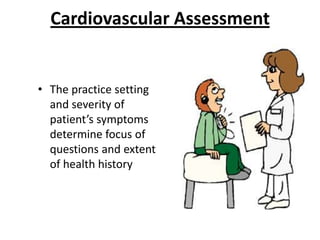
Cardiovascular Assessment

โ€ข The practice setting
and severity of
patientโ€™s symptoms
determine focus of
questions and extent
of health history
Steps
โ€ข History collection
โ€ข Risk factors analysis
โ€ข Biographical and
demographical data
โ€ข Current health
history

โ€ข Past health history
โ€ข Family history
โ€ข Psychosocial history
Common Symptoms Of Cardiovascular
Disease
โ€ข
โ€ข
โ€ข
โ€ข
โ€ข
โ€ข
โ€ข
โ€ข
โ€ข

Chest discomfort or pain
Palpitations
Syncope
Fatigue
Dyspnea
Cough, hemoptyosis
Weight gain
Edema
Nocturia
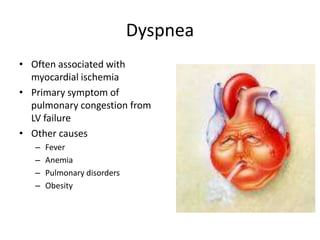
Dyspnea
โ€ข Often associated with
myocardial ischemia
โ€ข Primary symptom of
pulmonary congestion from
LV failure
โ€ข Other causes
โ€“
โ€“
โ€“
โ€“

Fever
Anemia
Pulmonary disorders
Obesity
โ€ข Different forms of dyspnea
โ€“ Exertional dyspnea (DOE)
โ€“ Orthopnea
โ€“ Paroxysmal nocturnal dyspnea (PND)
Weight Gain, Dependent Edema and
Nocturia
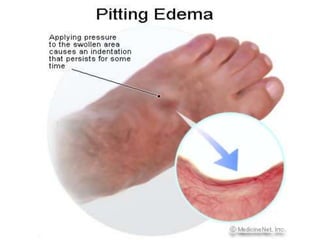
โ€ข As heart fails, fluid accumulates
โ€ข Increase of 3 lbs or more in 24 hr or 5 lbs in one
week
โ€ข Inquire about weight gain, fitting of shoes, or
tightening of clothes around waist
โ€ข Nocturia - kidneys inadequately perfused by weak
heart and receive increased blood flow during night โ€“
> output increases
Past Medical History
โ€ข Inquire about previous illnesses
โ€“ Rheumatic fever, autoimmune diseases
โ€“ Diabetes, kidney disease, HTN, dyslipidemia
โ€“ Lung disorders
โ€“ Clotting disorders
โ€ข Explore previous hospitalizations and
surgeries
โ€ข Evaluate use of medications, OTC drugs, herbs,
recreational drugs
โ€“ Are meds taken as prescribed
โ€“ Financial problems
โ€“ Knowledge about meds

โ€ข Any allergies
Family Health History
โ€ข Inquire about diabetes, kidney disease, stroke,
heart disease, hypertension (HTN)
โ€ข Inquire about health of parents and siblings
Psychosocial History
โ€ข
โ€ข
โ€ข
โ€ข
โ€ข

Education
Occupation
Marital status, children and relationships
Coping and stress tolerance
Health habits โ€“ diet, exercise, smoking,
alcohol use
General Appearance
โ€ข Look at the client and consider
โ€“ Does the client lie quietly or is he restless?
โ€“ Can the client lie flat or must be upright?
โ€“ Do facial expressions reflect pain or distress?
โ€“ Are there signs of cyanosis or pallor?

โ€ข Note level of consciousness (LOC)
Inspection Of Skin and Nails
โ€ข Assess skin color
โ€“ Pallor
โ€“ Cyanosis
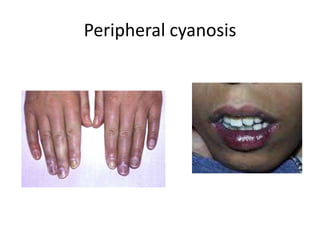
โ€ข Peripheral cyanosis-nose, ears, periphery
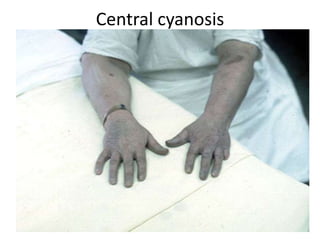
โ€ข Central cyanosis-mucous membranes, lips

โ€ข Assess skin temperature and moistness
โ€ข Assess for ecchymosis
โ€ข Assess for wounds, scars, implanted devices
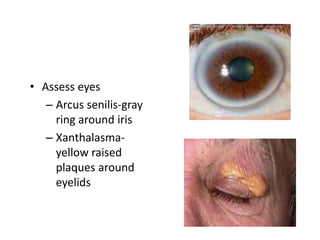
โ€ข Assess eyes
โ€“ Arcus senilis-gray
ring around iris
โ€“ Xanthalasmayellow raised
plaques around
eyelids
Peripheral cyanosis
Central cyanosis
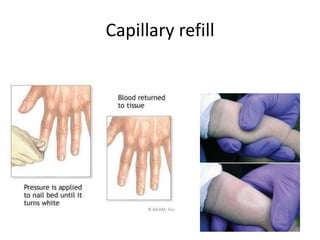
Capillary refill
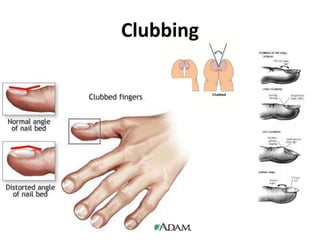
Clubbing
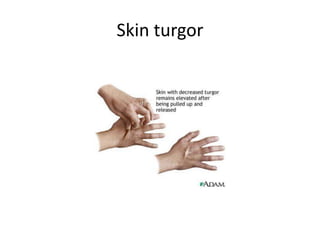
Skin turgor
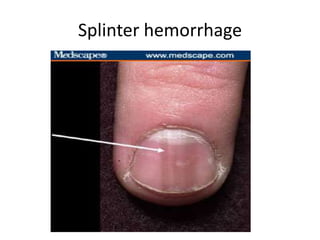
Splinter hemorrhage
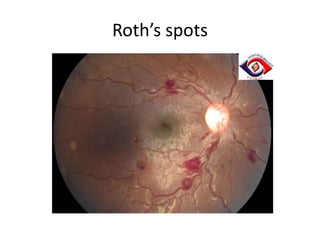
Rothโ€™s spots
Assess Vital Signs
โ€ข
โ€ข
โ€ข
โ€ข

Measure BP in both arms initially
Determine pulse pressure
Perform postural checks
Assess pulse
โ€“ Rate
โ€“ Rhythm
โ€“ Quality
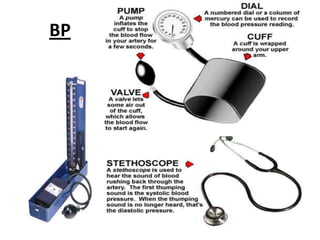
BP
Pulse Quality Scale
โ€ข
โ€ข
โ€ข
โ€ข
โ€ข

0
+1
+2
+3
+4

pulse not palpable or absent
weak, thready, difficult to palpate
diminished
easy to palpate, full pulse
strong, bounding pulse
Assess Neck Vessels
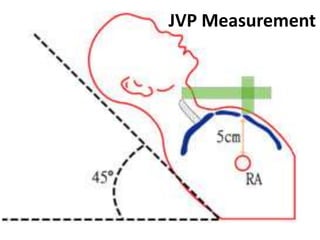
โ€ข Determine jugular venous pressure
โ€“ Gives an estimate of right heart function and CVP
โ€“ Measurements >3 cm are elevated โ€“ jugular venous
distention (JVD)

โ€ข Assess for hepatojugular reflux (HJR)
โ€“ Rise of more than 1 cm in internal jugular vein indicates
HJR

โ€ข Assess carotid arteries
โ€“ Assess amplitude of pulse
โ€“ Auscultate for bruits
Inspection and Palpation of
Precordium
โ€ข Purpose is to determine presence of normal
and abnormal pulsations or thrills
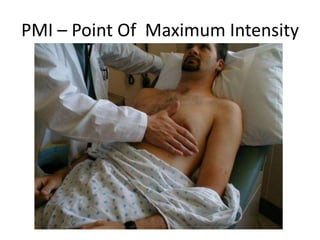
โ€ข Normally, palpate point of maximal impulse
(PMI) at 5th, left intercostal space,
midclavicular
โ€ข A thrill indicates diseased valve or obstructed
vessel
JVP Measurement
PMI โ€“ Point Of Maximum Intensity
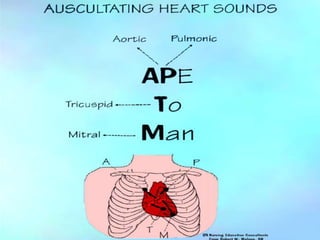
Cardiac Auscultation
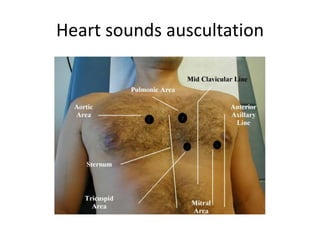
โ€ข S1
โ€“ Caused by closure of mitral and tricuspid valves
โ€“ Signifies beginning of systole
โ€“ Best heard over apical area (left, midclavicular, 5th ICS)

โ€ข S2
โ€“ Caused by closure of aortic and pulmonic valves
โ€“ Signifies beginning of diastole
โ€“ Best heard over base area (โ€œAโ€ and โ€œPโ€ areas, 2nd ICS)
Heart sounds auscultation
Gallop Sounds
โ€ข S3 โ€“ Ventricular gallop
โ€“ Heard in early diastole right after S2
โ€“ Normal in children and young adults
โ€“ Characteristic of LV failure

โ€ข S4 โ€“ Atrial gallop
โ€“ Heard in late diastole right before S1
โ€“ Heard during atrial contraction as atria force blood into
resistant ventricles
โ€“ Characteristic of HTN, heart failure, pulmonary disease
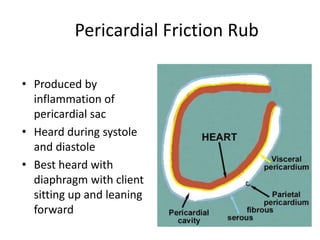
Pericardial Friction Rub
โ€ข Produced by
inflammation of
pericardial sac
โ€ข Heard during systole
and diastole
โ€ข Best heard with
diaphragm with client
sitting up and leaning
forward
Assess Respiratory Status
โ€ข Respiratory findings
frequently exhibited
by cardiac clients
โ€“
โ€“
โ€“
โ€“
โ€“
โ€“

Tachypnea
Dyspnea
Crackles
Cough
Hemoptysis
Wheezing

โ€ข Assess O2 saturation
Abdominal Assessment
โ€ข
โ€ข
โ€ข
โ€ข

Inspection may reveal ascites
Palpation may reveal an enlarged liver
Assess for elevated JVD and HJR
Auscultate for bruit over umbilicus
โ€ข Potential complications
โ€“ Dysrhythmias
โ€“ Perforation of heart or vessels
โ€“ Hemorrhage
โ€“ Spasm of vessels
โ€“ Thrombus or embolus formation
โ€“ Infection
Thank you

Cardiac assessment

  • 1.
  • 2.
  • 4.
    Coronary Blood Flow โ€ขTwo coronary arteries originate from aorta โ€“ Right coronary artery (RCA) โ€ข Posterior descending artery (PDA) โ€“ Left main (LM) coronary artery โ€ข Left anterior descending (LAD) โ€ข Circumflex (LCX)
  • 5.
  • 6.
    Electrophysiologic Properties of CardiacCells โ€ข โ€ข โ€ข โ€ข โ€ข Excitability Automaticity Contractility Refractoriness Conductivity
  • 7.
  • 8.
    Cardiac Output โ€ข Volumeof blood ejected per minute โ€ข Averages between 4-8L/min โ€ข CO = Stroke volume X heart rate =70 ml X 60 beats/min =4,200 ml/min
  • 9.
    Stroke Volume IsDetermined By Three Factors โ€ข Preload โ€ข Afterload โ€ข Contractility
  • 10.
    Preload โ€ข Degree ofstretch of myocardial fibers โ€ข Determined by the volume of blood in left ventricle (LV) at end of diastole โ€ข Increased volume โ€“> increased preload-> increased cardiac output (CO) โ€ข Decreased volume โ€“> decreased preload โ€“> decreased cardiac output (CO) โ€ข Compliance of myocardial cells also affects preload
  • 11.
    Afterload โ€ข Resistance orpressure the ventricles must overcome to pump blood out โ€ข Left ventricle affected by systemic vascular resistance (SVR) โ€ข Right ventricle affected by pulmonary vascular resistance (PVR)
  • 12.
    Autonomic Nervous System(ANS) Regulation of Cardiovascular System โ€ข Heart rate โ€“ chronotropic effect โ€ข Contractility โ€“ inotropic effect โ€ข Conduction velocity at AV node โ€“ dromotropic effect โ€ข Afterload - vascular resistance โ€“ arterial vasoconstriction and dilation โ€ข Preload โ€“ venous constriction and dilation
  • 13.
    Cardiovascular Assessment โ€ข Thepractice setting and severity of patientโ€™s symptoms determine focus of questions and extent of health history
  • 14.
    Steps โ€ข History collection โ€ขRisk factors analysis โ€ข Biographical and demographical data โ€ข Current health history โ€ข Past health history โ€ข Family history โ€ข Psychosocial history
  • 15.
    Common Symptoms OfCardiovascular Disease โ€ข โ€ข โ€ข โ€ข โ€ข โ€ข โ€ข โ€ข โ€ข Chest discomfort or pain Palpitations Syncope Fatigue Dyspnea Cough, hemoptyosis Weight gain Edema Nocturia
  • 16.
    Dyspnea โ€ข Often associatedwith myocardial ischemia โ€ข Primary symptom of pulmonary congestion from LV failure โ€ข Other causes โ€“ โ€“ โ€“ โ€“ Fever Anemia Pulmonary disorders Obesity
  • 17.
    โ€ข Different formsof dyspnea โ€“ Exertional dyspnea (DOE) โ€“ Orthopnea โ€“ Paroxysmal nocturnal dyspnea (PND)
  • 18.
    Weight Gain, DependentEdema and Nocturia โ€ข As heart fails, fluid accumulates โ€ข Increase of 3 lbs or more in 24 hr or 5 lbs in one week โ€ข Inquire about weight gain, fitting of shoes, or tightening of clothes around waist โ€ข Nocturia - kidneys inadequately perfused by weak heart and receive increased blood flow during night โ€“ > output increases
  • 19.
    Past Medical History โ€ขInquire about previous illnesses โ€“ Rheumatic fever, autoimmune diseases โ€“ Diabetes, kidney disease, HTN, dyslipidemia โ€“ Lung disorders โ€“ Clotting disorders
  • 20.
    โ€ข Explore previoushospitalizations and surgeries โ€ข Evaluate use of medications, OTC drugs, herbs, recreational drugs โ€“ Are meds taken as prescribed โ€“ Financial problems โ€“ Knowledge about meds โ€ข Any allergies
  • 21.
    Family Health History โ€ขInquire about diabetes, kidney disease, stroke, heart disease, hypertension (HTN) โ€ข Inquire about health of parents and siblings
  • 22.
    Psychosocial History โ€ข โ€ข โ€ข โ€ข โ€ข Education Occupation Marital status,children and relationships Coping and stress tolerance Health habits โ€“ diet, exercise, smoking, alcohol use
  • 23.
    General Appearance โ€ข Lookat the client and consider โ€“ Does the client lie quietly or is he restless? โ€“ Can the client lie flat or must be upright? โ€“ Do facial expressions reflect pain or distress? โ€“ Are there signs of cyanosis or pallor? โ€ข Note level of consciousness (LOC)
  • 24.
    Inspection Of Skinand Nails โ€ข Assess skin color โ€“ Pallor โ€“ Cyanosis โ€ข Peripheral cyanosis-nose, ears, periphery โ€ข Central cyanosis-mucous membranes, lips โ€ข Assess skin temperature and moistness โ€ข Assess for ecchymosis โ€ข Assess for wounds, scars, implanted devices
  • 25.
    โ€ข Assess eyes โ€“Arcus senilis-gray ring around iris โ€“ Xanthalasmayellow raised plaques around eyelids
  • 26.
  • 27.
  • 28.
  • 29.
  • 30.
  • 31.
  • 32.
  • 34.
    Assess Vital Signs โ€ข โ€ข โ€ข โ€ข MeasureBP in both arms initially Determine pulse pressure Perform postural checks Assess pulse โ€“ Rate โ€“ Rhythm โ€“ Quality
  • 35.
  • 36.
    Pulse Quality Scale โ€ข โ€ข โ€ข โ€ข โ€ข 0 +1 +2 +3 +4 pulsenot palpable or absent weak, thready, difficult to palpate diminished easy to palpate, full pulse strong, bounding pulse
  • 37.
    Assess Neck Vessels โ€ขDetermine jugular venous pressure โ€“ Gives an estimate of right heart function and CVP โ€“ Measurements >3 cm are elevated โ€“ jugular venous distention (JVD) โ€ข Assess for hepatojugular reflux (HJR) โ€“ Rise of more than 1 cm in internal jugular vein indicates HJR โ€ข Assess carotid arteries โ€“ Assess amplitude of pulse โ€“ Auscultate for bruits
  • 38.
    Inspection and Palpationof Precordium โ€ข Purpose is to determine presence of normal and abnormal pulsations or thrills โ€ข Normally, palpate point of maximal impulse (PMI) at 5th, left intercostal space, midclavicular โ€ข A thrill indicates diseased valve or obstructed vessel
  • 39.
  • 40.
    PMI โ€“ PointOf Maximum Intensity
  • 41.
    Cardiac Auscultation โ€ข S1 โ€“Caused by closure of mitral and tricuspid valves โ€“ Signifies beginning of systole โ€“ Best heard over apical area (left, midclavicular, 5th ICS) โ€ข S2 โ€“ Caused by closure of aortic and pulmonic valves โ€“ Signifies beginning of diastole โ€“ Best heard over base area (โ€œAโ€ and โ€œPโ€ areas, 2nd ICS)
  • 42.
  • 43.
    Gallop Sounds โ€ข S3โ€“ Ventricular gallop โ€“ Heard in early diastole right after S2 โ€“ Normal in children and young adults โ€“ Characteristic of LV failure โ€ข S4 โ€“ Atrial gallop โ€“ Heard in late diastole right before S1 โ€“ Heard during atrial contraction as atria force blood into resistant ventricles โ€“ Characteristic of HTN, heart failure, pulmonary disease
  • 44.
    Pericardial Friction Rub โ€ขProduced by inflammation of pericardial sac โ€ข Heard during systole and diastole โ€ข Best heard with diaphragm with client sitting up and leaning forward
  • 46.
    Assess Respiratory Status โ€ขRespiratory findings frequently exhibited by cardiac clients โ€“ โ€“ โ€“ โ€“ โ€“ โ€“ Tachypnea Dyspnea Crackles Cough Hemoptysis Wheezing โ€ข Assess O2 saturation
  • 47.
    Abdominal Assessment โ€ข โ€ข โ€ข โ€ข Inspection mayreveal ascites Palpation may reveal an enlarged liver Assess for elevated JVD and HJR Auscultate for bruit over umbilicus
  • 48.
    โ€ข Potential complications โ€“Dysrhythmias โ€“ Perforation of heart or vessels โ€“ Hemorrhage โ€“ Spasm of vessels โ€“ Thrombus or embolus formation โ€“ Infection
  • 49.