Downloaded 356 times

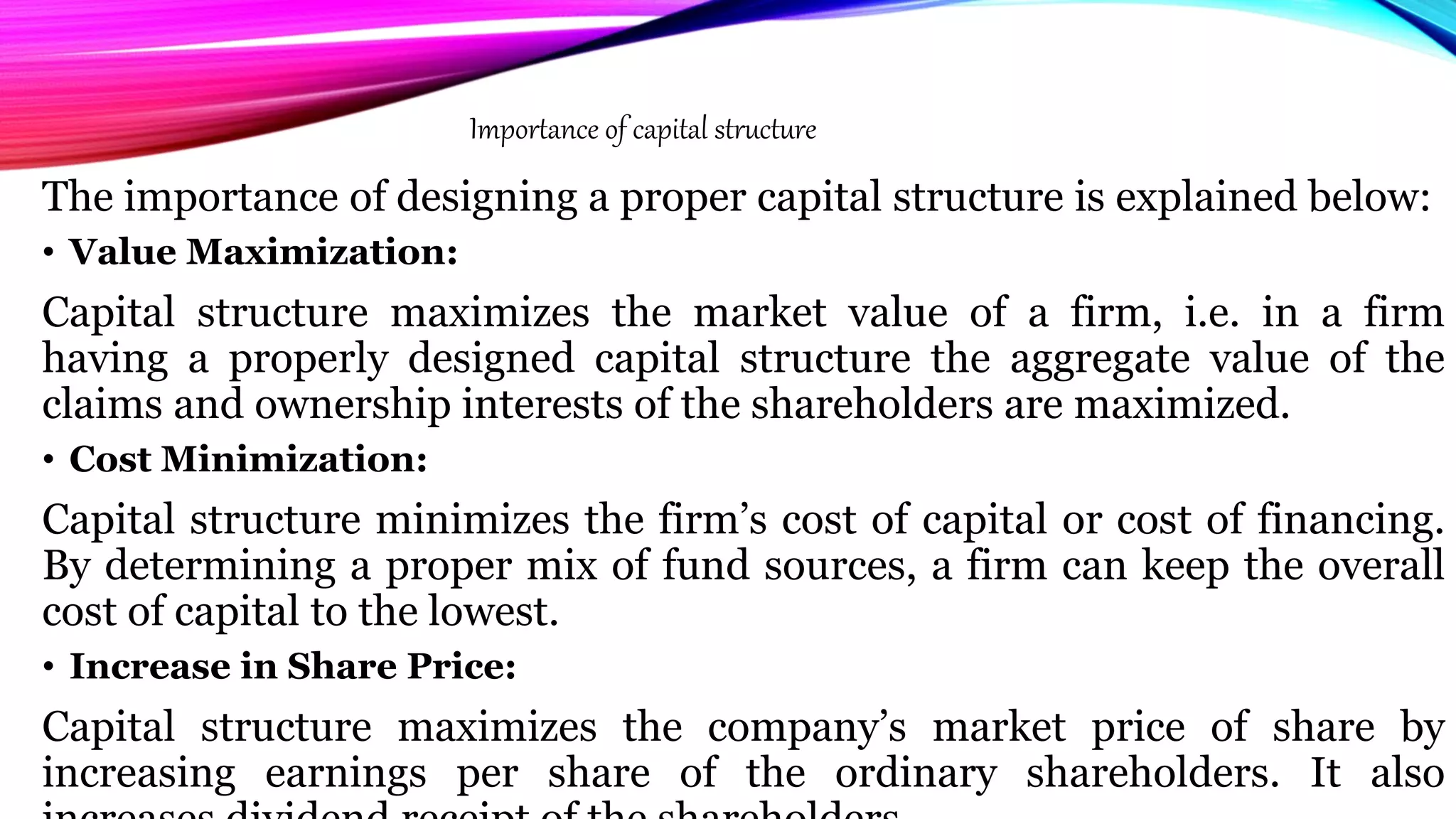

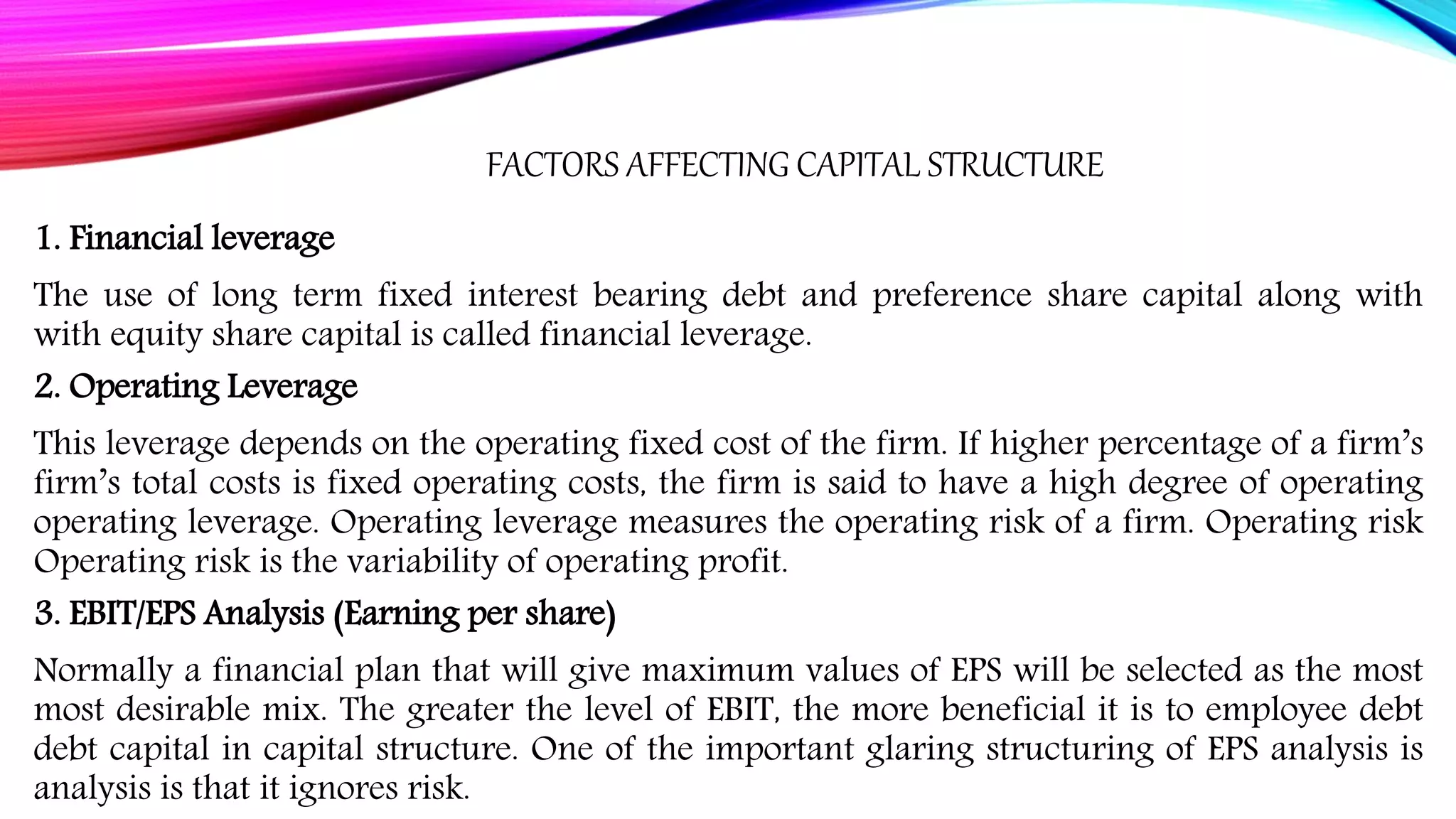











Capital structure refers to the composition of long-term capital from sources like loans, reserves, shares, and bonds. It represents the relationship between different types of long-term capital. A proper capital structure maximizes firm value, minimizes costs, and increases share prices. It also allows firms to take advantage of new investment opportunities and supports country growth. Factors that affect capital structure include financial leverage, operating leverage, earnings per share, costs of different sources, growth and stability of sales, flexibility, nature and size of firm, cash flows, control, market conditions, asset structure, financing purpose, and period of finance. Advantages of debt include amplifying returns, greater control and flexibility, while equity provides flexibility in raising funds


