CHAPTER 8:
CAPACITY PLANNING
 8.1 Identifying Capacity Requirements
8.1.1 Measuring Demand
8.1.2 Measuring Capacity
 8.2 Evaluating Capacity Plans
8.2.1 Level Capacity
8.2.2 Chase Demand
8.2.3 Demand Management
 Capacity comprises the resources to
serve customers, process information or
make products and is a mix of the
people, systems, equipment and facilities
needed to meet the services or products
involved (Hill, 2005).
 A definition of capacity should take into
account both the volume and the time
over which capacity is available.
 Capacity can be taken as a measure of
an organization’s ability to provide
customers with services or goods in the
amount requested at the time requested.
 Capacity decisions should be taken by
firstly identifying capacity requirements
and then evaluating the alternative
capacity plans generated.
8.1 IDENTIFYING CAPACITY REQUIREMENTS
This stage consists of both estimating
future customer demand but also
determining current capacity levels to
meet that demand.
8.1.1 MEASURING DEMAND
Business planning process is driven by
two elements:
1. Company strategy
2. Forecasts of demand for the
product/service the organization is
offering to the market
Demand forecasts:
 Will usually be developed by the marketing
department.
 Should express demand requirements in terms of
the capacity constraints applicable to the
organization.
 Should permit the operations manager to ensure
that enough capacity is available to meet demand
at a particular point in time, while minimizing the
cost of employing too much capacity for demand
needs.
8.1.2 MEASURING CAPACITY
When measuring capacity it must be
considered that capacity is not fixed but is
a variable that is dependent on a number
of factors such as the product mix
processed by the operation and machine
setup requirements.
8.2 EVALUATING CAPACITY PLANS
The organization’s ability to
reconcile capacity with demand will be
dependent on the amount of flexibility
it possesses.
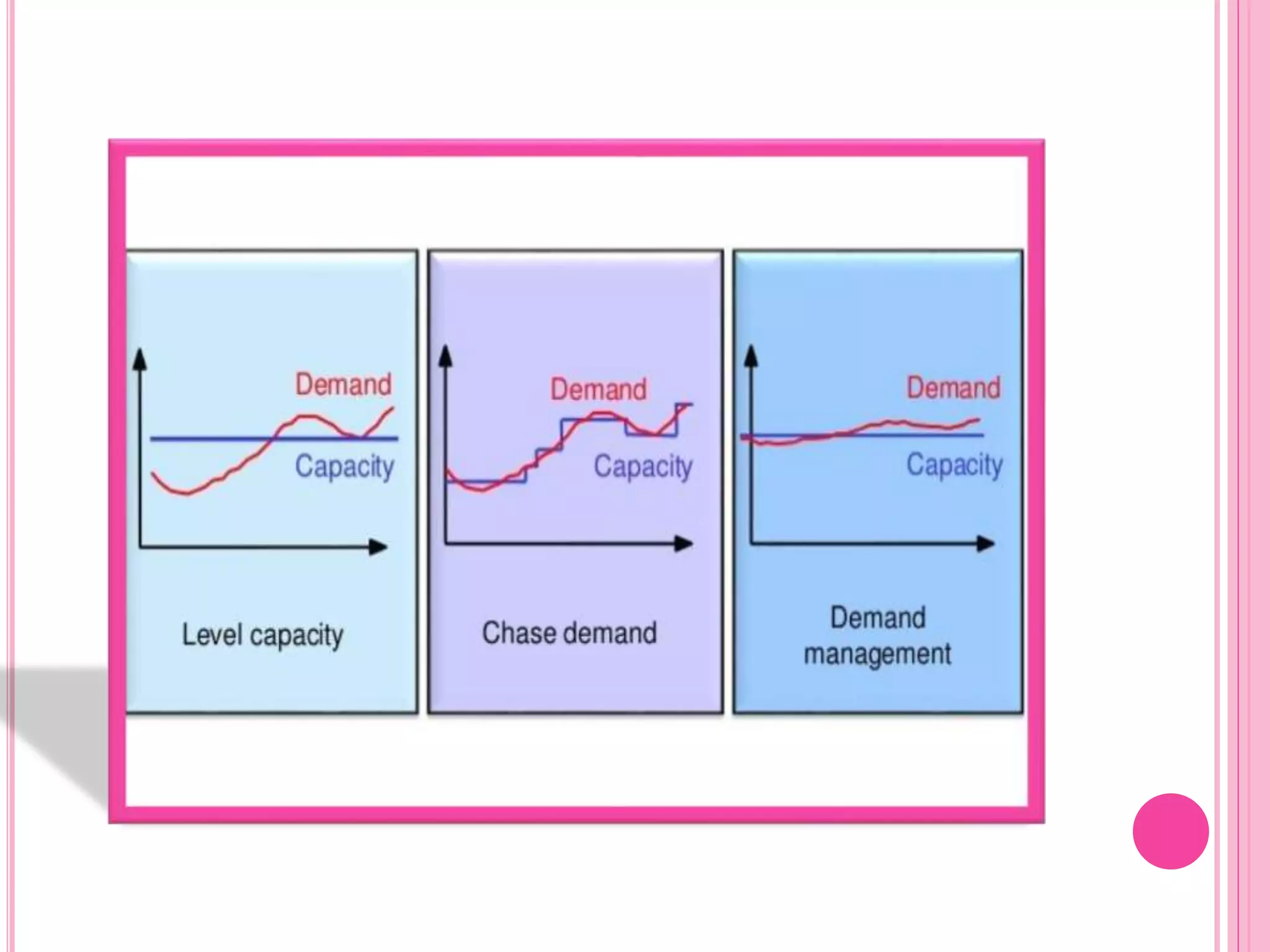
8.2.1 LEVEL CAPACITY
This approach fixes capacity at a
constant level throughout the planning
period regardless of fluctuations in
forecast demand.
8.2.2 CHASE DEMAND
This strategy seeks to change
production capacity to match the demand
pattern over time.
8.2.3 DEMAND MANAGEMENT
The demand management strategy
attempts to adjust demand to meet
available capacity.
Demand Management strategies include:
 Varying the Price.
 Provide increased marketing effort to
product lines with excess capacity.
 Use advertising to increase sales during
low demand periods.
 Use the existing process to develop
alternative product during low demand
periods.
 Offer instant delivery of product during
low demand periods.
 Use an appointment system to level out
demand.
Capacity Planning

Capacity Planning

  • 1.
  • 2.
     8.1 IdentifyingCapacity Requirements 8.1.1 Measuring Demand 8.1.2 Measuring Capacity  8.2 Evaluating Capacity Plans 8.2.1 Level Capacity 8.2.2 Chase Demand 8.2.3 Demand Management
  • 3.
     Capacity comprisesthe resources to serve customers, process information or make products and is a mix of the people, systems, equipment and facilities needed to meet the services or products involved (Hill, 2005).  A definition of capacity should take into account both the volume and the time over which capacity is available.
  • 4.
     Capacity canbe taken as a measure of an organization’s ability to provide customers with services or goods in the amount requested at the time requested.  Capacity decisions should be taken by firstly identifying capacity requirements and then evaluating the alternative capacity plans generated.
  • 5.
    8.1 IDENTIFYING CAPACITYREQUIREMENTS This stage consists of both estimating future customer demand but also determining current capacity levels to meet that demand.
  • 6.
    8.1.1 MEASURING DEMAND Businessplanning process is driven by two elements: 1. Company strategy 2. Forecasts of demand for the product/service the organization is offering to the market
  • 7.
    Demand forecasts:  Willusually be developed by the marketing department.  Should express demand requirements in terms of the capacity constraints applicable to the organization.  Should permit the operations manager to ensure that enough capacity is available to meet demand at a particular point in time, while minimizing the cost of employing too much capacity for demand needs.
  • 8.
    8.1.2 MEASURING CAPACITY Whenmeasuring capacity it must be considered that capacity is not fixed but is a variable that is dependent on a number of factors such as the product mix processed by the operation and machine setup requirements.
  • 9.
    8.2 EVALUATING CAPACITYPLANS The organization’s ability to reconcile capacity with demand will be dependent on the amount of flexibility it possesses.
  • 10.
    8.2.1 LEVEL CAPACITY Thisapproach fixes capacity at a constant level throughout the planning period regardless of fluctuations in forecast demand.
  • 12.
    8.2.2 CHASE DEMAND Thisstrategy seeks to change production capacity to match the demand pattern over time.
  • 14.
    8.2.3 DEMAND MANAGEMENT Thedemand management strategy attempts to adjust demand to meet available capacity. Demand Management strategies include:  Varying the Price.  Provide increased marketing effort to product lines with excess capacity.
  • 15.
     Use advertisingto increase sales during low demand periods.  Use the existing process to develop alternative product during low demand periods.  Offer instant delivery of product during low demand periods.  Use an appointment system to level out demand.