Capacitors
A capacitorisadevicethat storeselectric charge.
A capacitor consistsof two conductorsseparated by an
insulator.
Capacitorshavemany applications:
Radiosand electronic circuits.
Fans, motor e.t.c.
Thereare2 typesof capacitor.
 Fixed capacitorswith fixed capacitancevaluesand
variablecapacitorswith variable(or adjustable)
capacitancevalues.
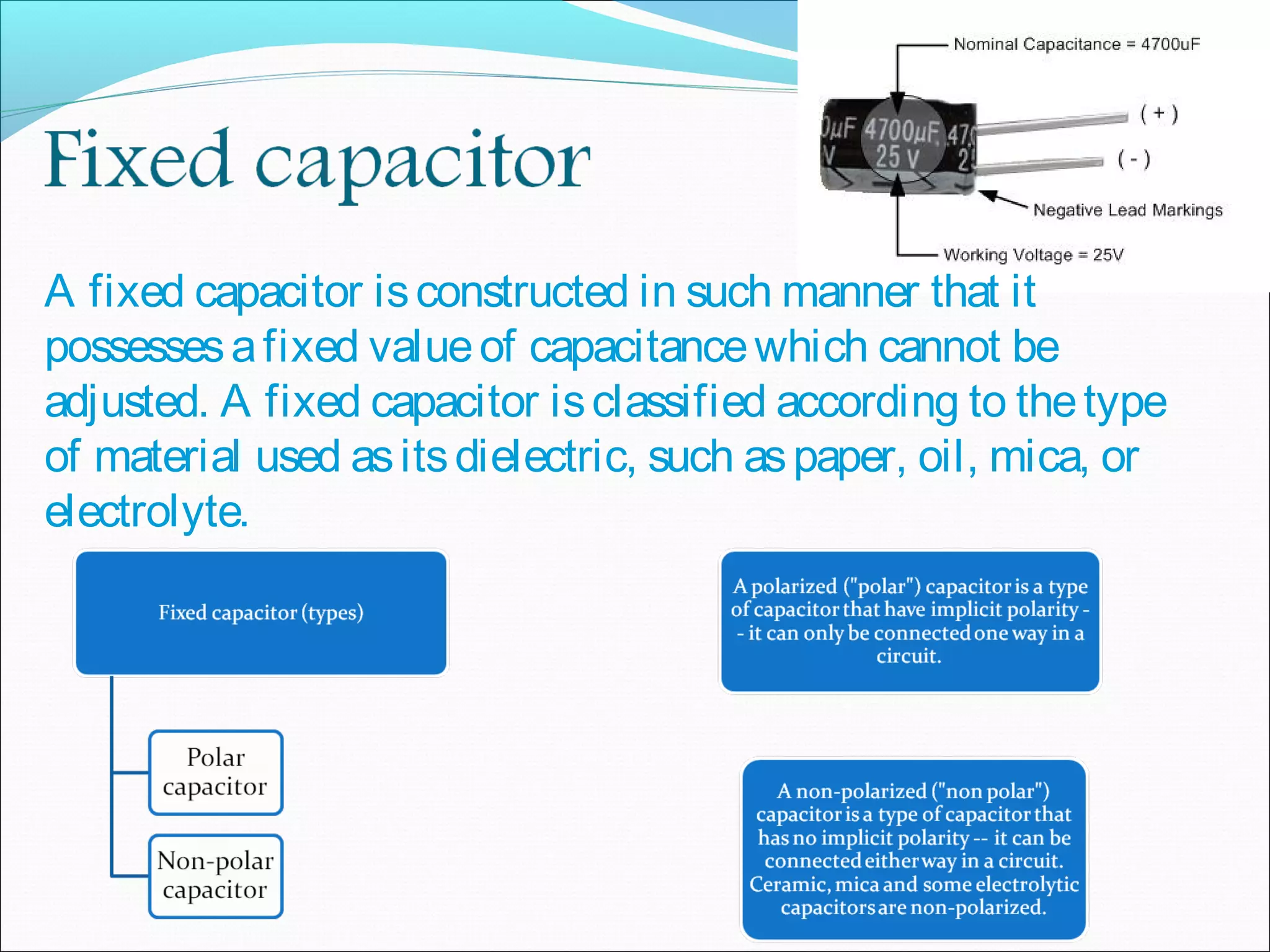
A fixed capacitor isconstructed in such manner that it
possessesafixed valueof capacitancewhich cannot be
adjusted. A fixed capacitor isclassified according to thetype
of material used asitsdielectric, such aspaper, oil, mica, or
electrolyte.
VARIABLE CAPACITOR
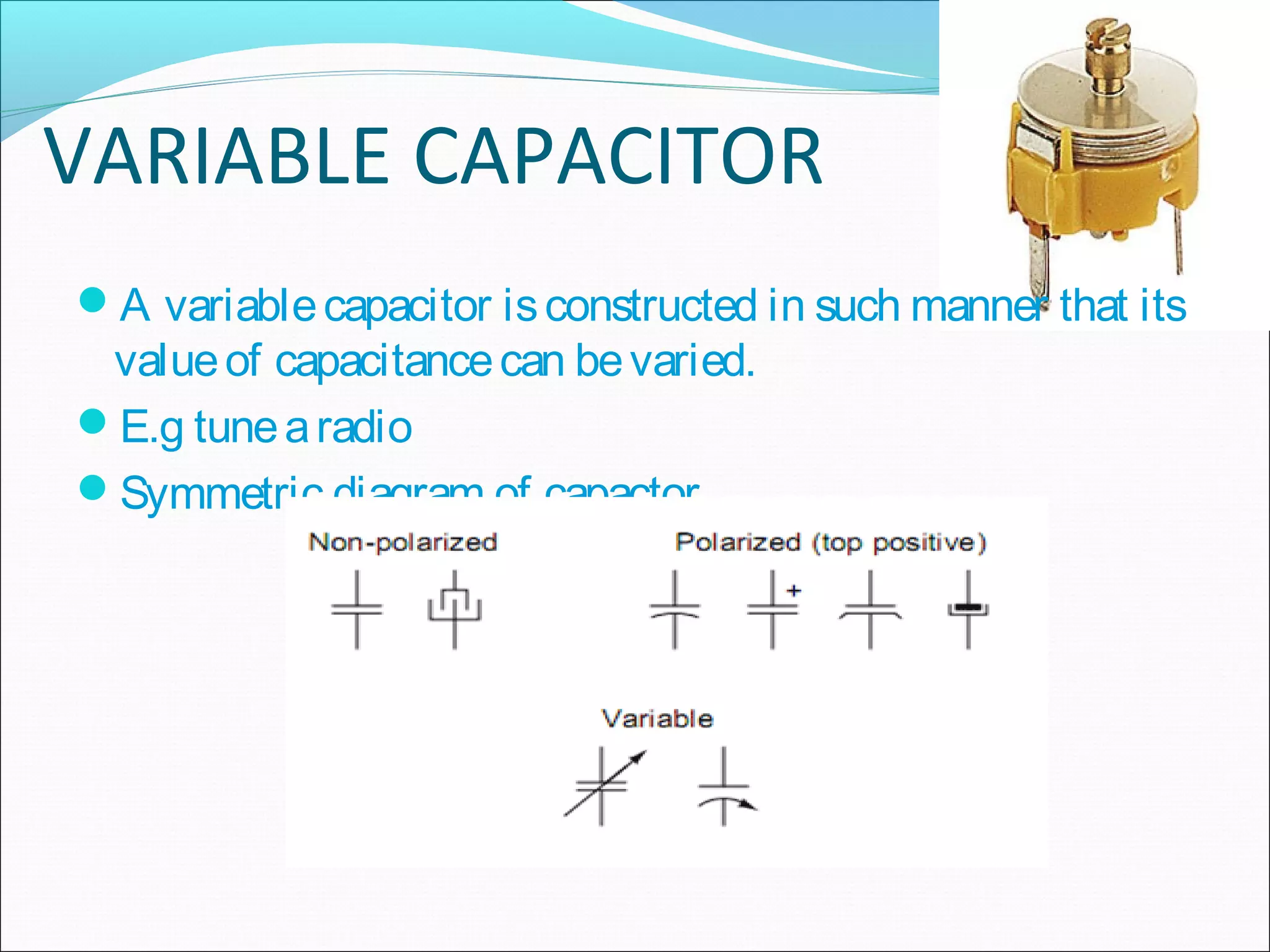
A variablecapacitor isconstructed in such manner that its
valueof capacitancecan bevaried.
E.g tunearadio
Symmetric diagram of capactor
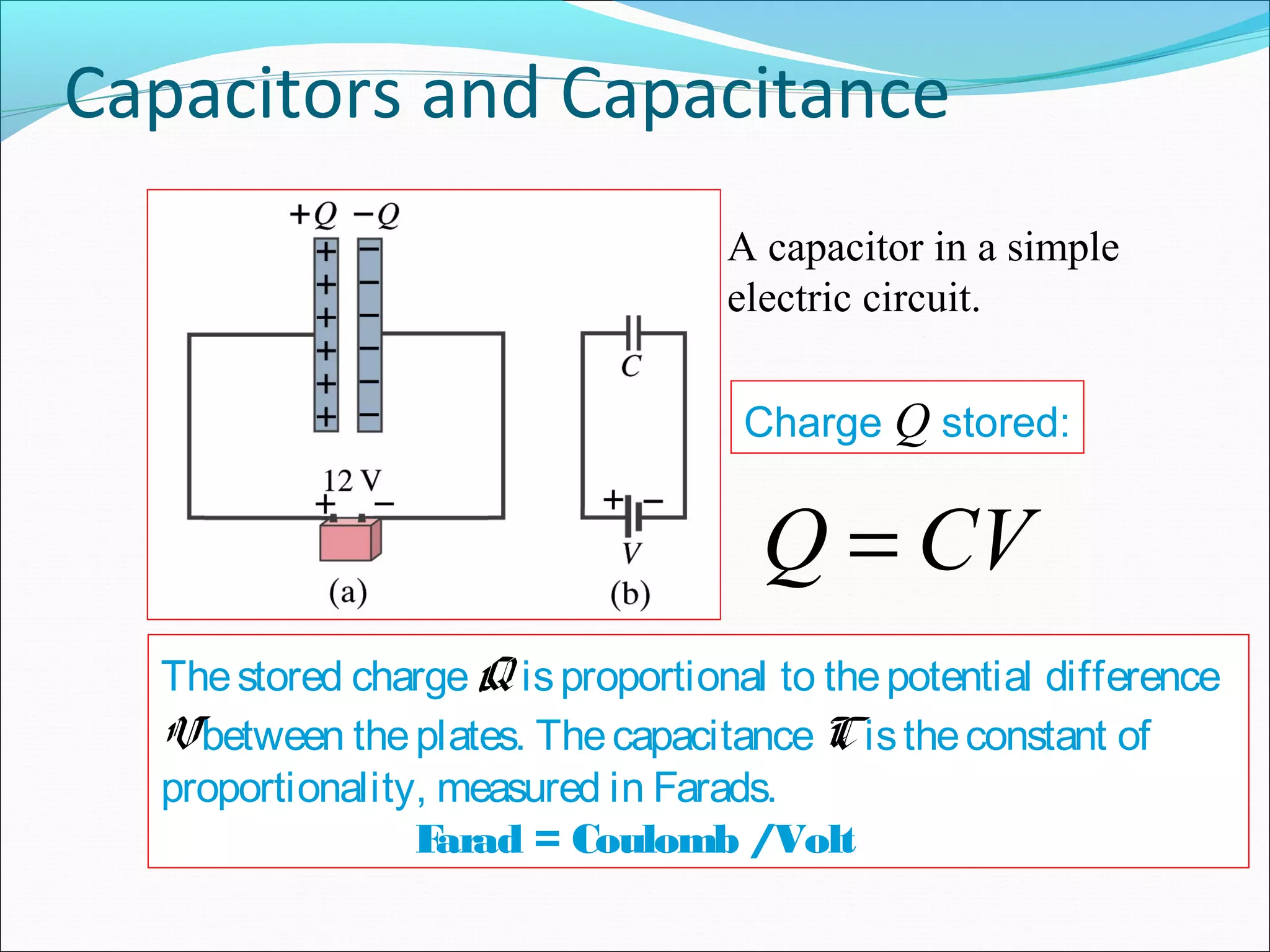
Capacitors and Capacitance
Charge Q stored:
CVQ =
Thestored chargeQ isproportional to thepotential difference
Vbetween theplates. ThecapacitanceCistheconstant of
proportionality, measured in Farads.
Farad = Coulomb /Volt
A capacitor in a simple
electric circuit.
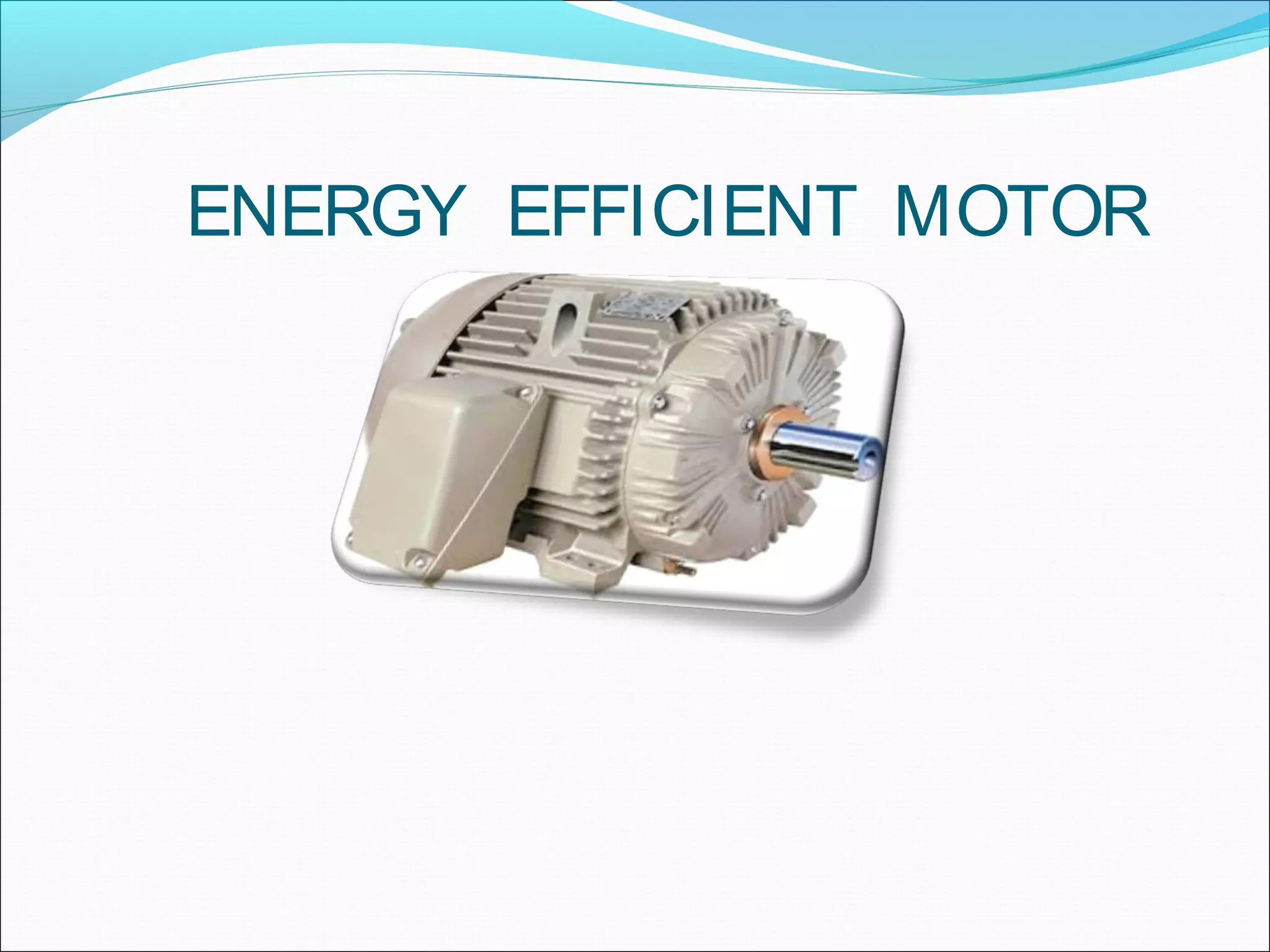
ENERGY EFFICIENT MOTOR
Energy Efficiency Purpose
Thepurposeof energy efficient motorsisto beableto supply
thesamelevel of energy serviceonly using lessenergy.
Efficient energy useisachieved primarily by meansof amore
efficient technology or processrather than by changesin
individual behavior.
Energy conservation reducestheenergy consumption.
Efficiency
 Definition of "efficiency".
 For an electric motor, efficiency istheratio of mechanical
power delivered by themotor (output) to theelectrical
power supplied to themotor (input).
Efficiency = (Mechanical Power Output / Electrical Power
Input) x 100%
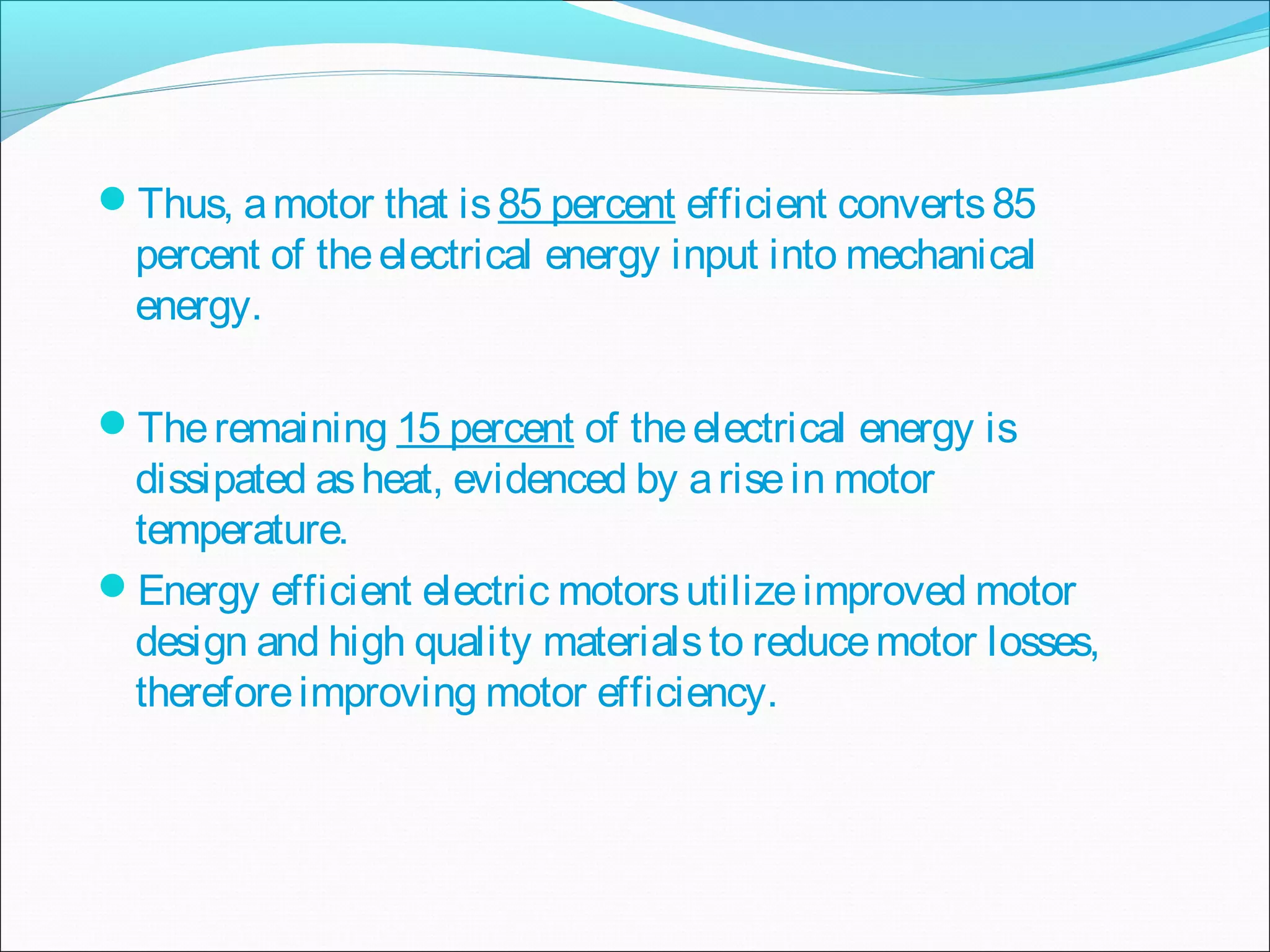
Thus, amotor that is85 percent efficient converts85
percent of theelectrical energy input into mechanical
energy.
Theremaining 15 percent of theelectrical energy is
dissipated asheat, evidenced by arisein motor
temperature.
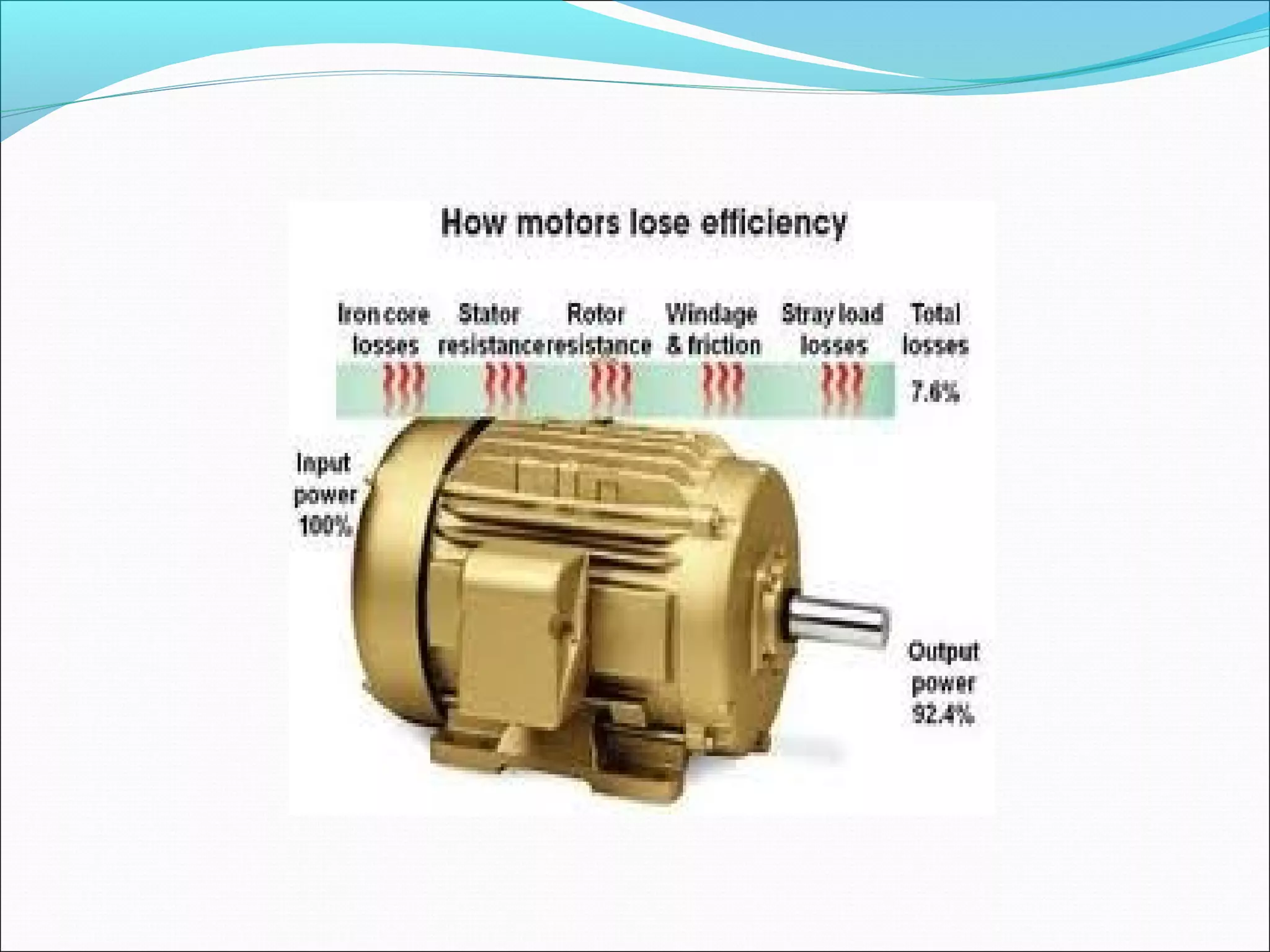
Energy efficient electric motorsutilizeimproved motor
design and high quality materialsto reducemotor losses,
thereforeimproving motor efficiency.
Description of motor component’s losses
Copperloss:
Iron loss:
Friction and windage loss:
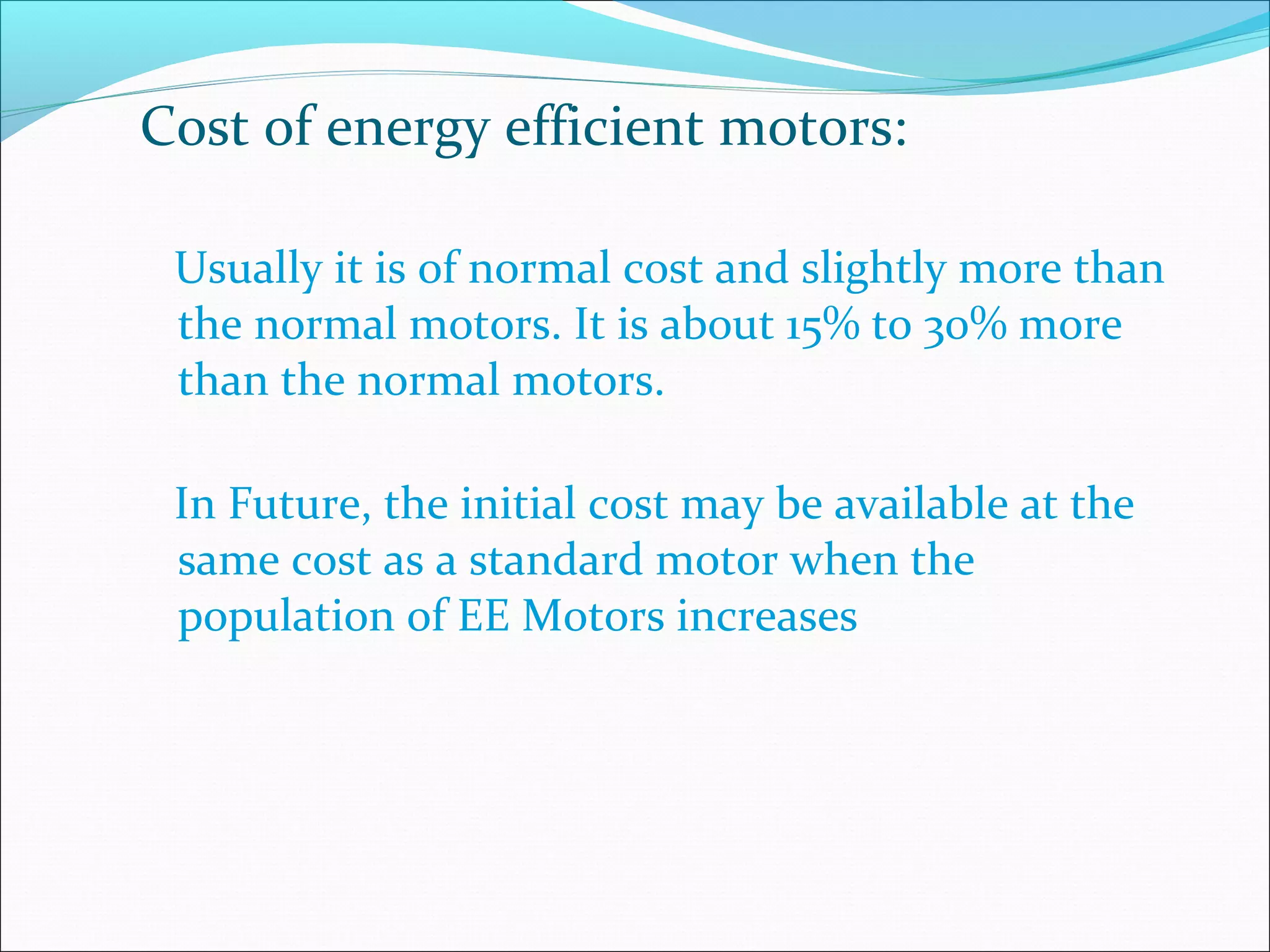
Cost of energy efficient motors:
Usually it is of normal cost and slightly more than
the normal motors. It is about 15% to 30% more
than the normal motors.
In Future, the initial cost may be available at the
same cost as a standard motor when the
population of EE Motors increases
Advantages
The EEM has a greater efficiency than a standard motor;
therefore they have less operating costs.
EEM has a lower slip so they have a higher speed than
standard motor.
EEM can reduce maintenance costs and improve
operations in industry due to robustness and reliability.
Application
Energy efficient motors are specially suited for
industries which are power intensive and equipments
which run on constant load for long duration.
For example: fans, blowers, pumps, compressors etc. are
some of the driven equipments and industries such as
textile, paper, cement, power generation etc.
THANK YOU

Capacitor and efficient motors

  • 2.
    Capacitors A capacitorisadevicethat storeselectriccharge. A capacitor consistsof two conductorsseparated by an insulator. Capacitorshavemany applications: Radiosand electronic circuits. Fans, motor e.t.c. Thereare2 typesof capacitor.  Fixed capacitorswith fixed capacitancevaluesand variablecapacitorswith variable(or adjustable) capacitancevalues.
  • 3.
    A fixed capacitorisconstructed in such manner that it possessesafixed valueof capacitancewhich cannot be adjusted. A fixed capacitor isclassified according to thetype of material used asitsdielectric, such aspaper, oil, mica, or electrolyte.
  • 4.
    VARIABLE CAPACITOR A variablecapacitorisconstructed in such manner that its valueof capacitancecan bevaried. E.g tunearadio Symmetric diagram of capactor
  • 5.
    Capacitors and Capacitance ChargeQ stored: CVQ = Thestored chargeQ isproportional to thepotential difference Vbetween theplates. ThecapacitanceCistheconstant of proportionality, measured in Farads. Farad = Coulomb /Volt A capacitor in a simple electric circuit.
  • 6.
  • 7.
    Energy Efficiency Purpose Thepurposeofenergy efficient motorsisto beableto supply thesamelevel of energy serviceonly using lessenergy. Efficient energy useisachieved primarily by meansof amore efficient technology or processrather than by changesin individual behavior. Energy conservation reducestheenergy consumption.
  • 8.
    Efficiency  Definition of"efficiency".  For an electric motor, efficiency istheratio of mechanical power delivered by themotor (output) to theelectrical power supplied to themotor (input). Efficiency = (Mechanical Power Output / Electrical Power Input) x 100%
  • 9.
    Thus, amotor thatis85 percent efficient converts85 percent of theelectrical energy input into mechanical energy. Theremaining 15 percent of theelectrical energy is dissipated asheat, evidenced by arisein motor temperature. Energy efficient electric motorsutilizeimproved motor design and high quality materialsto reducemotor losses, thereforeimproving motor efficiency.
  • 10.
    Description of motorcomponent’s losses Copperloss: Iron loss: Friction and windage loss:
  • 12.
    Cost of energyefficient motors: Usually it is of normal cost and slightly more than the normal motors. It is about 15% to 30% more than the normal motors. In Future, the initial cost may be available at the same cost as a standard motor when the population of EE Motors increases
  • 13.
    Advantages The EEM hasa greater efficiency than a standard motor; therefore they have less operating costs. EEM has a lower slip so they have a higher speed than standard motor. EEM can reduce maintenance costs and improve operations in industry due to robustness and reliability.
  • 14.
    Application Energy efficient motorsare specially suited for industries which are power intensive and equipments which run on constant load for long duration. For example: fans, blowers, pumps, compressors etc. are some of the driven equipments and industries such as textile, paper, cement, power generation etc.
  • 15.