ENERGY EFFICIENT MOTORS
UNDER THE GUIDENCE OF SUBMITTED BY
Mr. G Laxminarayana(Asst. Prof) N Deepak
(09621A0239)
ABSRACT
This paper deals with energy conservation by installing
energy efficient motor(EEM) instead of standard efficiency motor.
This transition becomes a necessity as a direct result of limitation
in energy sources and escalating energy prices. Here EEM is
compared with standard motors and rewound motor. In all these
cases energy savings can be achieved and the simple payback is
less of five years. So, it is very necessary to implement EEM in the
industry.
In the future, the cost of energy will increase due to
environmental problems and limited resources. The electric
motors consume a major part of the electric energy in
industries. Thus, implementing energy efficient motor could
save a significant amount of electricity. It would also reduce
the production of green house gases and push down the total
environmental cost of electricity generation.
Also these motors can reduce maintenance costs and improve
operations in industry.
Problem:
Efficient energy use is achieved primarily by means
of a more efficient technology or process rather than by
changes in individual behavior.
Solution:
An EEM produces the same shaft output power, but
uses less input power than a standard efficiency motor.
A standard motor is a compromise between efficiency,
endurance, starting torque, and initial cost. Standard motor
generally competes on price, not efficiency. On the
contrary, EEM competes on efficiency, not price.
Description
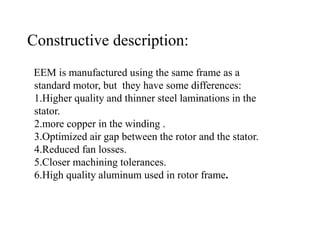
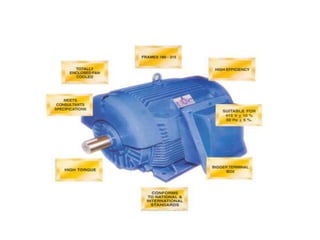
EEM is manufactured using the same frame as a
standard motor, but they have some differences:
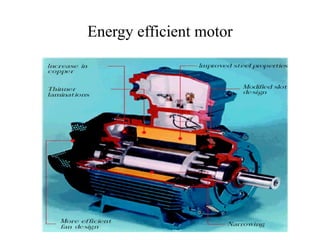
1.Higher quality and thinner steel laminations in the
stator.
2.more copper in the winding .
3.Optimized air gap between the rotor and the stator.
4.Reduced fan losses.
5.Closer machining tolerances.
6.High quality aluminum used in rotor frame.
Constructive description:
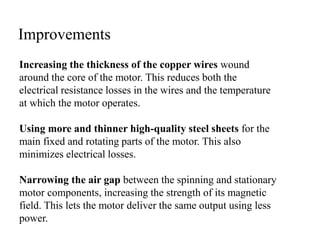
Increasing the thickness of the copper wires wound
around the core of the motor. This reduces both the
electrical resistance losses in the wires and the temperature
at which the motor operates.
Using more and thinner high-quality steel sheets for the
main fixed and rotating parts of the motor. This also
minimizes electrical losses.
Narrowing the air gap between the spinning and stationary
motor components, increasing the strength of its magnetic
field. This lets the motor deliver the same output using less
power.
Improvements
Energy efficient motor
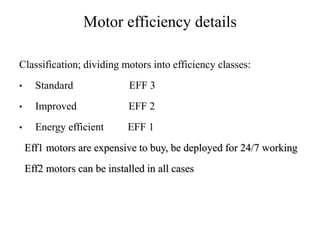
Motor efficiency details
Classification; dividing motors into efficiency classes:
• Standard EFF 3
• Improved EFF 2
• Energy efficient EFF 1
Eff1 motors are expensive to buy, be deployed for 24/7 working
Eff2 motors can be installed in all cases
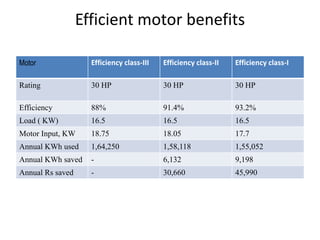
Efficient motor benefits
Motor Efficiency class-III Efficiency class-II Efficiency class-I
Rating 30 HP 30 HP 30 HP
Efficiency 88% 91.4% 93.2%
Load ( KW) 16.5 16.5 16.5
Motor Input, KW 18.75 18.05 17.7
Annual KWh used 1,64,250 1,58,118 1,55,052
Annual KWh saved - 6,132 9,198
Annual Rs saved - 30,660 45,990
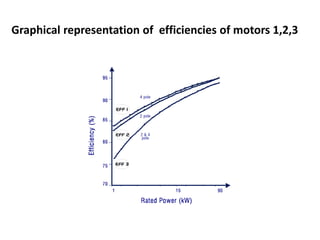
Graphical representation of efficiencies of motors 1,2,3
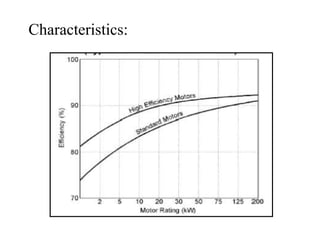
Characteristics:
The EEM has a greater efficiency than a standard motors
therefore they have less operating costs
1)EEM has a lower slip so they have a higher speed than
standard motors.
2)EEM can reduce maintenance costs and improve operations
in industry due to robustness and reliability.
3)Increasing the productivity.
4)Efficiencies are 3% to 7% higher compared with standard
motors.
5)Design improvements focus on reducing intrinsic motor
losses.
Advantages:
AS YOU CAN SEE, ENERGY-EFFICIENT MOTORS PLAY AN
IMPORTANT ROLE IN REDUCING ENERGY USAGE AND
INCREASING COST SAVINGS. BUT THEY ARE BY NO MEANS THE
CURE-ALL TO EVERY ENERGY CONSUMPTION PROBLEM.
Conclusion:
THANK YOU

Energy efficient motors

  • 1.
    ENERGY EFFICIENT MOTORS UNDERTHE GUIDENCE OF SUBMITTED BY Mr. G Laxminarayana(Asst. Prof) N Deepak (09621A0239)
  • 2.
    ABSRACT This paper dealswith energy conservation by installing energy efficient motor(EEM) instead of standard efficiency motor. This transition becomes a necessity as a direct result of limitation in energy sources and escalating energy prices. Here EEM is compared with standard motors and rewound motor. In all these cases energy savings can be achieved and the simple payback is less of five years. So, it is very necessary to implement EEM in the industry.
  • 3.
    In the future,the cost of energy will increase due to environmental problems and limited resources. The electric motors consume a major part of the electric energy in industries. Thus, implementing energy efficient motor could save a significant amount of electricity. It would also reduce the production of green house gases and push down the total environmental cost of electricity generation. Also these motors can reduce maintenance costs and improve operations in industry. Problem:
  • 4.
    Efficient energy useis achieved primarily by means of a more efficient technology or process rather than by changes in individual behavior. Solution:
  • 5.
    An EEM producesthe same shaft output power, but uses less input power than a standard efficiency motor. A standard motor is a compromise between efficiency, endurance, starting torque, and initial cost. Standard motor generally competes on price, not efficiency. On the contrary, EEM competes on efficiency, not price. Description
  • 6.
    EEM is manufacturedusing the same frame as a standard motor, but they have some differences: 1.Higher quality and thinner steel laminations in the stator. 2.more copper in the winding . 3.Optimized air gap between the rotor and the stator. 4.Reduced fan losses. 5.Closer machining tolerances. 6.High quality aluminum used in rotor frame. Constructive description:
  • 7.
    Increasing the thicknessof the copper wires wound around the core of the motor. This reduces both the electrical resistance losses in the wires and the temperature at which the motor operates. Using more and thinner high-quality steel sheets for the main fixed and rotating parts of the motor. This also minimizes electrical losses. Narrowing the air gap between the spinning and stationary motor components, increasing the strength of its magnetic field. This lets the motor deliver the same output using less power. Improvements
  • 8.
  • 9.
    Motor efficiency details Classification;dividing motors into efficiency classes: • Standard EFF 3 • Improved EFF 2 • Energy efficient EFF 1 Eff1 motors are expensive to buy, be deployed for 24/7 working Eff2 motors can be installed in all cases
  • 10.
    Efficient motor benefits MotorEfficiency class-III Efficiency class-II Efficiency class-I Rating 30 HP 30 HP 30 HP Efficiency 88% 91.4% 93.2% Load ( KW) 16.5 16.5 16.5 Motor Input, KW 18.75 18.05 17.7 Annual KWh used 1,64,250 1,58,118 1,55,052 Annual KWh saved - 6,132 9,198 Annual Rs saved - 30,660 45,990
  • 11.
    Graphical representation ofefficiencies of motors 1,2,3
  • 12.
  • 14.
    The EEM hasa greater efficiency than a standard motors therefore they have less operating costs 1)EEM has a lower slip so they have a higher speed than standard motors. 2)EEM can reduce maintenance costs and improve operations in industry due to robustness and reliability. 3)Increasing the productivity. 4)Efficiencies are 3% to 7% higher compared with standard motors. 5)Design improvements focus on reducing intrinsic motor losses. Advantages:
  • 15.
    AS YOU CANSEE, ENERGY-EFFICIENT MOTORS PLAY AN IMPORTANT ROLE IN REDUCING ENERGY USAGE AND INCREASING COST SAVINGS. BUT THEY ARE BY NO MEANS THE CURE-ALL TO EVERY ENERGY CONSUMPTION PROBLEM. Conclusion:
  • 16.