CANCER
MODALITIES
By
Mr B Kalyan kumar
Msc (N) Dept Of MSN
INTRODUCTION
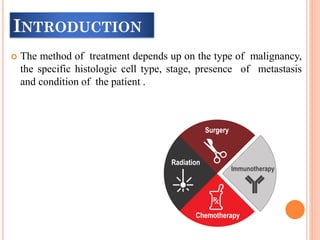
 The method of treatment depends up on the type of malignancy,
the specific histologic cell type, stage, presence of metastasis
and condition of the patient .
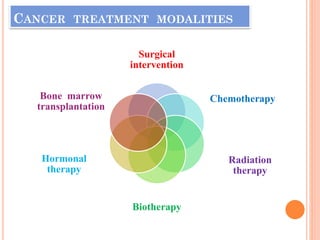
CANCER TREATMENT MODALITIES
Surgical
intervention
Chemotherapy
Radiation
therapy
Biotherapy
Hormonal
therapy
Bone marrow
transplantation
CHEMOTHERAPY
 Chemotherapy is the use of drugs to kill tumor cell by interfering
with cellular functions and reproduction. In Chemotherapy
Anti neoplastic agents are used in an attempt to destroy tumor
cells by interfering with cellular functions. The purpose of
treating cancer cells with chemotherapy is to prevent these cells
from multiplying, invading and metastasizing to distant sites.
 Chemotherapy may be combined with surgery or radiation
therapy or both.
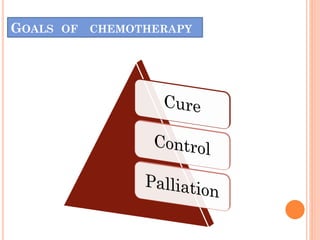
GOALS OF CHEMOTHERAPY
 Cure : Total elimination of cancerous cells.
 Control: To extend the life of patient when cure not
possible.
 Palliation: When the cancer is at an advanced stage,
chemotherapy drugs may be used to relieve symptoms
caused by the cancer.
CLASSIFICATION OF CHEMOTHERAPEUTIC
DRUGS
 Alkylating agents: Common drugs Chlorambucil,
Cyclophosphamide, Cisplatin, Carboplatin.
 Anti metabolite agents: 5-Flurouracil , hydroxyurea
 Anti tumor antibiotics: Bleomycin, mitomycin,
Doxorubicin.
 Plant alkaloids: Plant alkaloids are cytotoxic agents derived
from plant extracts
Vinblastine, vincristine.
ROUTE OF CHEMOTHERAPY
ADMINISTRATION
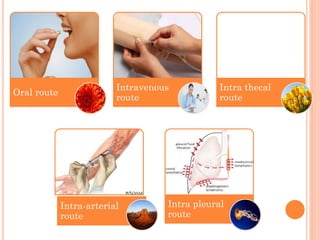
Oral route
Intravenous
route
Intra thecal
route
Intra-arterial
route
Intra pleural
route
PLANNING DRUG DOSE AND SCHEDULES
 Dose – Most of the chemodrugs are measured in milligrams
(Mg). The overall dose is sometimes based on persons body
weight.
 Schedule- Chemotherapy is generally given at regular
intervals called cycles.
NURSING MANAGEMENT FOR PATIENT
UNDERGOING CHEMOTHERAPY
 Patient should be protected from infection
 Wash hands regularly with antibacterial agent
 Avoid crowds and people with cold
 Maintain good nutritional status
 Antiemetics should be administered one hour prior to
chemotherapy
 Body weight should be measured at least twice a week
 Patient should be clearly assessed for side effects .
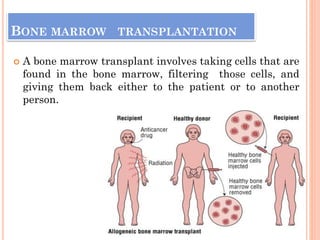
BONE MARROW TRANSPLANTATION
 A bone marrow transplant involves taking cells that are
found in the bone marrow, filtering those cells, and
giving them back either to the patient or to another
person.
NURSING MANAGEMENT FOR PATIENT
UNDERGOING BONE MARROW THERAPY
 Monitor vital signs and observe for dyspnea, chest pain, chills
 Monitor patient for signs of infection
 Observe patient for signs of bleeding
 Balanced fluid and electrolyte status has to be maintained.
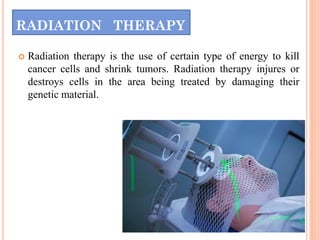
RADIATION THERAPY
 Radiation therapy is the use of certain type of energy to kill
cancer cells and shrink tumors. Radiation therapy injures or
destroys cells in the area being treated by damaging their
genetic material.
TYPES OF RADIATION THERAPY
 External radiation therapy
 Internal radiation therapy
EXTERNAL RADIATION THERAPY
 External radiation therapy also called teletherapy, is administered
by a machine at a certain distance from the specific area of
body.
 External radiation therapy is used to treat most types of cancer,
including cancer of the bladder, brain, breast, cervix, larynx,
lung, prostate and vagina. In addition external radiation maybe
used to relieve pain.
INTERNAL RADIATION THERAPY
 Internal radiation therapy also called brachytherapy, is a
radiation technique in which the specific radioisotopes placed
directly near the tumor.
 The radiation source is usually sealed in a small holder called an
implant. Implant may be in the form of thin wires, plastic tube
called catheters, capsule.
 For internal radiation therapy, the patient says in the hospital for
a few days. The implant may be temporary or permanent. Once
an implant is removed, there is no radioactivity in the body
MOST COMMON SIDE EFFECTS OF
RADIATION THERAPY
 Skin reaction- Common side effect of radiation is skin
irritation in the area of the body being treated.
 Skin reaction can range from mild redness and dryness to
severe peeling.
PRECAUTIONS THAT MAY MINIMIZE SKIN
IRRITATION
 Keep the treated area dry
 Wash the skin in the treatment area only with mild soap
 Use a mild shampoo, such as baby shampoo, if the head is
being treated
 Do not use perfumes, deodorants
 Wear loose fitting clothing that does not rub the skin in the
treated area.
FATIGUE
Feeling of tiredness, weakness. Fatigue is typically more severe
two to four hours after treatment
Following suggestions may help you to manage fatigue
 Limit your activities
 Exercise each day to maintain your strength
 Drink three litres of fluid each day to prevent the buildup of
cellular waste products
 Increase rest by getting more sleep at night .
 Nausea and vomiting
 Loss of appetite
 Taste changes.
NURSING MANAGEMENT OF PATIENT
UNDERGOING RADIATION THERAPY
 Reassure the patient by clearing all the fears about the effects of
radiotherapy.
 Explain procedure to the patient like equipment to be used,
duration of procedure.
 If radio-implant is used for radiotherapy, patient should be
informed about restriction of movements.
 Oral mucosa and skin of the patient assessed frequently to rule
out side effects.
 Skin is protected from radiation.
Cancer   modalities
Cancer   modalities

Cancer modalities

  • 1.
    CANCER MODALITIES By Mr B Kalyankumar Msc (N) Dept Of MSN
  • 2.
    INTRODUCTION  The methodof treatment depends up on the type of malignancy, the specific histologic cell type, stage, presence of metastasis and condition of the patient .
  • 3.
  • 4.
    CHEMOTHERAPY  Chemotherapy isthe use of drugs to kill tumor cell by interfering with cellular functions and reproduction. In Chemotherapy Anti neoplastic agents are used in an attempt to destroy tumor cells by interfering with cellular functions. The purpose of treating cancer cells with chemotherapy is to prevent these cells from multiplying, invading and metastasizing to distant sites.  Chemotherapy may be combined with surgery or radiation therapy or both.
  • 5.
  • 6.
     Cure :Total elimination of cancerous cells.  Control: To extend the life of patient when cure not possible.  Palliation: When the cancer is at an advanced stage, chemotherapy drugs may be used to relieve symptoms caused by the cancer.
  • 7.
    CLASSIFICATION OF CHEMOTHERAPEUTIC DRUGS Alkylating agents: Common drugs Chlorambucil, Cyclophosphamide, Cisplatin, Carboplatin.  Anti metabolite agents: 5-Flurouracil , hydroxyurea  Anti tumor antibiotics: Bleomycin, mitomycin, Doxorubicin.  Plant alkaloids: Plant alkaloids are cytotoxic agents derived from plant extracts Vinblastine, vincristine.
  • 8.
  • 9.
  • 10.
    PLANNING DRUG DOSEAND SCHEDULES  Dose – Most of the chemodrugs are measured in milligrams (Mg). The overall dose is sometimes based on persons body weight.  Schedule- Chemotherapy is generally given at regular intervals called cycles.
  • 11.
    NURSING MANAGEMENT FORPATIENT UNDERGOING CHEMOTHERAPY  Patient should be protected from infection  Wash hands regularly with antibacterial agent  Avoid crowds and people with cold  Maintain good nutritional status  Antiemetics should be administered one hour prior to chemotherapy  Body weight should be measured at least twice a week  Patient should be clearly assessed for side effects .
  • 12.
    BONE MARROW TRANSPLANTATION A bone marrow transplant involves taking cells that are found in the bone marrow, filtering those cells, and giving them back either to the patient or to another person.
  • 13.
    NURSING MANAGEMENT FORPATIENT UNDERGOING BONE MARROW THERAPY  Monitor vital signs and observe for dyspnea, chest pain, chills  Monitor patient for signs of infection  Observe patient for signs of bleeding  Balanced fluid and electrolyte status has to be maintained.
  • 14.
    RADIATION THERAPY  Radiationtherapy is the use of certain type of energy to kill cancer cells and shrink tumors. Radiation therapy injures or destroys cells in the area being treated by damaging their genetic material.
  • 15.
    TYPES OF RADIATIONTHERAPY  External radiation therapy  Internal radiation therapy
  • 16.
    EXTERNAL RADIATION THERAPY External radiation therapy also called teletherapy, is administered by a machine at a certain distance from the specific area of body.  External radiation therapy is used to treat most types of cancer, including cancer of the bladder, brain, breast, cervix, larynx, lung, prostate and vagina. In addition external radiation maybe used to relieve pain.
  • 17.
    INTERNAL RADIATION THERAPY Internal radiation therapy also called brachytherapy, is a radiation technique in which the specific radioisotopes placed directly near the tumor.  The radiation source is usually sealed in a small holder called an implant. Implant may be in the form of thin wires, plastic tube called catheters, capsule.  For internal radiation therapy, the patient says in the hospital for a few days. The implant may be temporary or permanent. Once an implant is removed, there is no radioactivity in the body
  • 18.
    MOST COMMON SIDEEFFECTS OF RADIATION THERAPY  Skin reaction- Common side effect of radiation is skin irritation in the area of the body being treated.  Skin reaction can range from mild redness and dryness to severe peeling.
  • 19.
    PRECAUTIONS THAT MAYMINIMIZE SKIN IRRITATION  Keep the treated area dry  Wash the skin in the treatment area only with mild soap  Use a mild shampoo, such as baby shampoo, if the head is being treated  Do not use perfumes, deodorants  Wear loose fitting clothing that does not rub the skin in the treated area.
  • 20.
    FATIGUE Feeling of tiredness,weakness. Fatigue is typically more severe two to four hours after treatment Following suggestions may help you to manage fatigue  Limit your activities  Exercise each day to maintain your strength  Drink three litres of fluid each day to prevent the buildup of cellular waste products  Increase rest by getting more sleep at night .
  • 21.
     Nausea andvomiting  Loss of appetite  Taste changes.
  • 22.
    NURSING MANAGEMENT OFPATIENT UNDERGOING RADIATION THERAPY  Reassure the patient by clearing all the fears about the effects of radiotherapy.  Explain procedure to the patient like equipment to be used, duration of procedure.  If radio-implant is used for radiotherapy, patient should be informed about restriction of movements.  Oral mucosa and skin of the patient assessed frequently to rule out side effects.  Skin is protected from radiation.