MANIA
Presented by MR KALYANKUMAR Msc(N)
Introduction
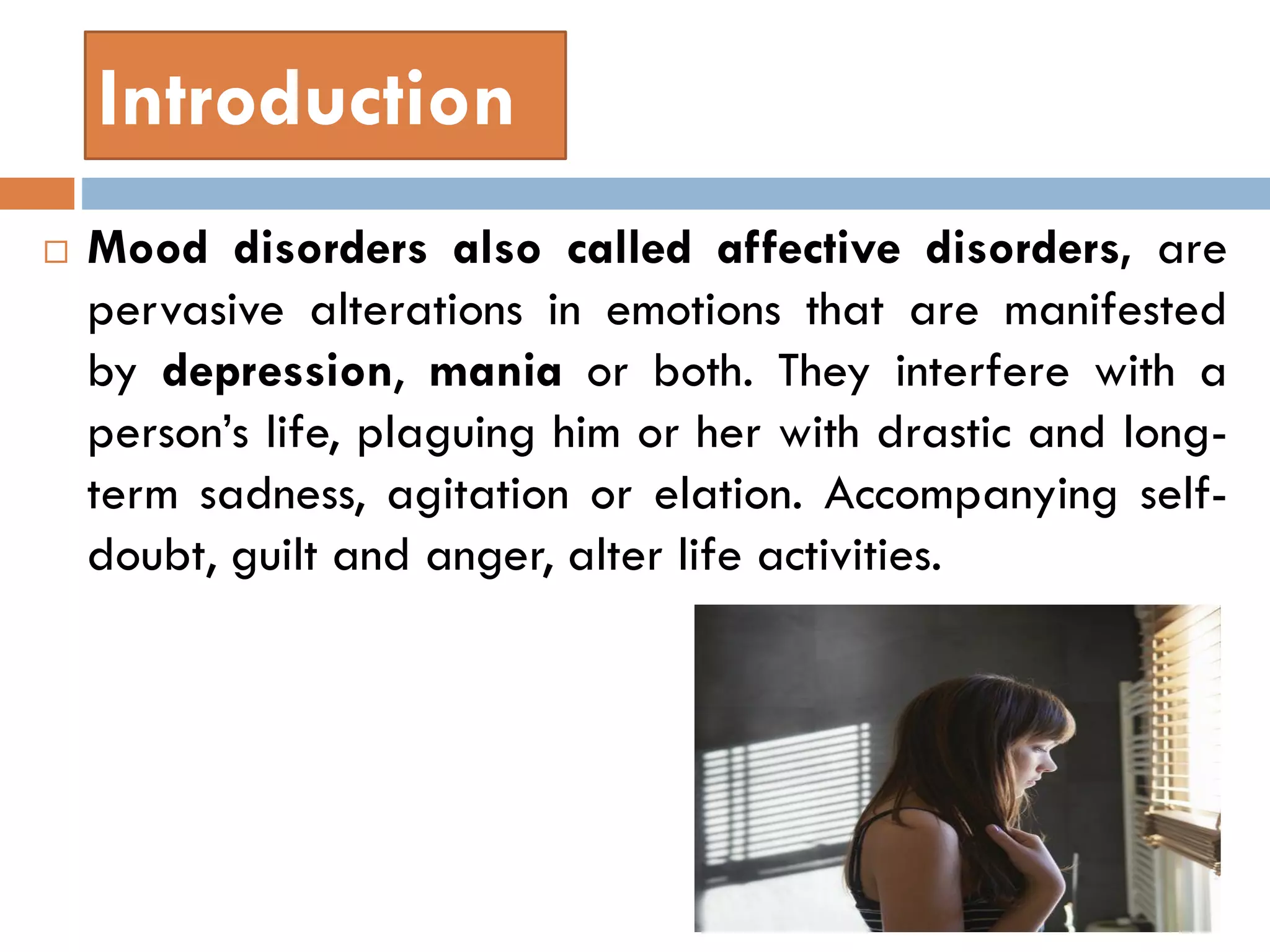
 Mood disorders also called affective disorders, are
pervasive alterations in emotions that are manifested
by depression, mania or both. They interfere with a
person’s life, plaguing him or her with drastic and long-
term sadness, agitation or elation. Accompanying self-
doubt, guilt and anger, alter life activities.
Definition
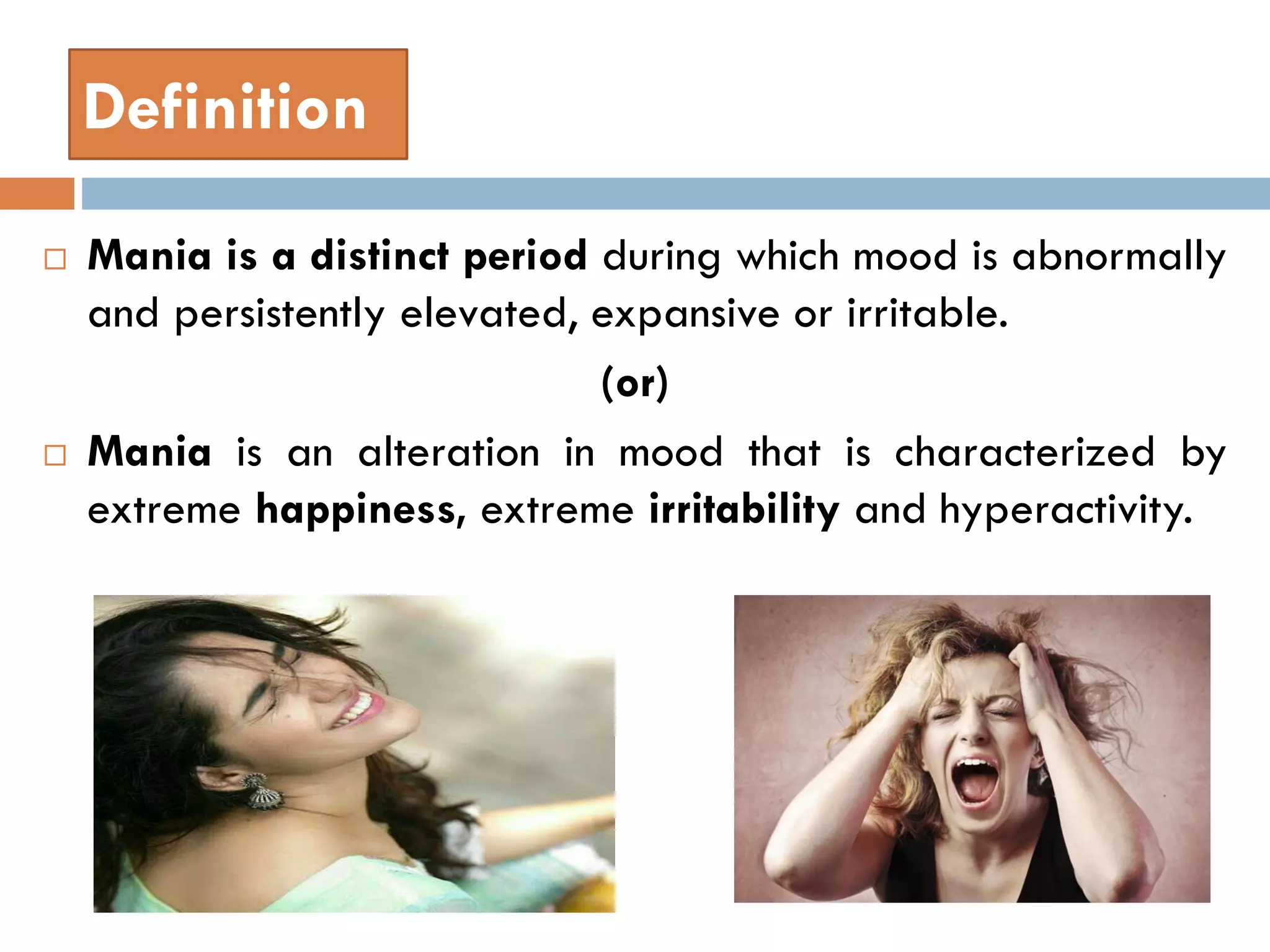
 Mania is a distinct period during which mood is abnormally
and persistently elevated, expansive or irritable.
(or)
 Mania is an alteration in mood that is characterized by
extreme happiness, extreme irritability and hyperactivity.
Etiology
 Biological theories:
Genetics: First degree relatives
Monozygotic twins
 Biochemical influences :
Excess of Nor epinephrine and dopamine
Low serotonin level.
 Physiological:
Right sided lesions in limbic system ,basal ganglia and
thalamus
Enlarged ventricles and sub cortical white matter .
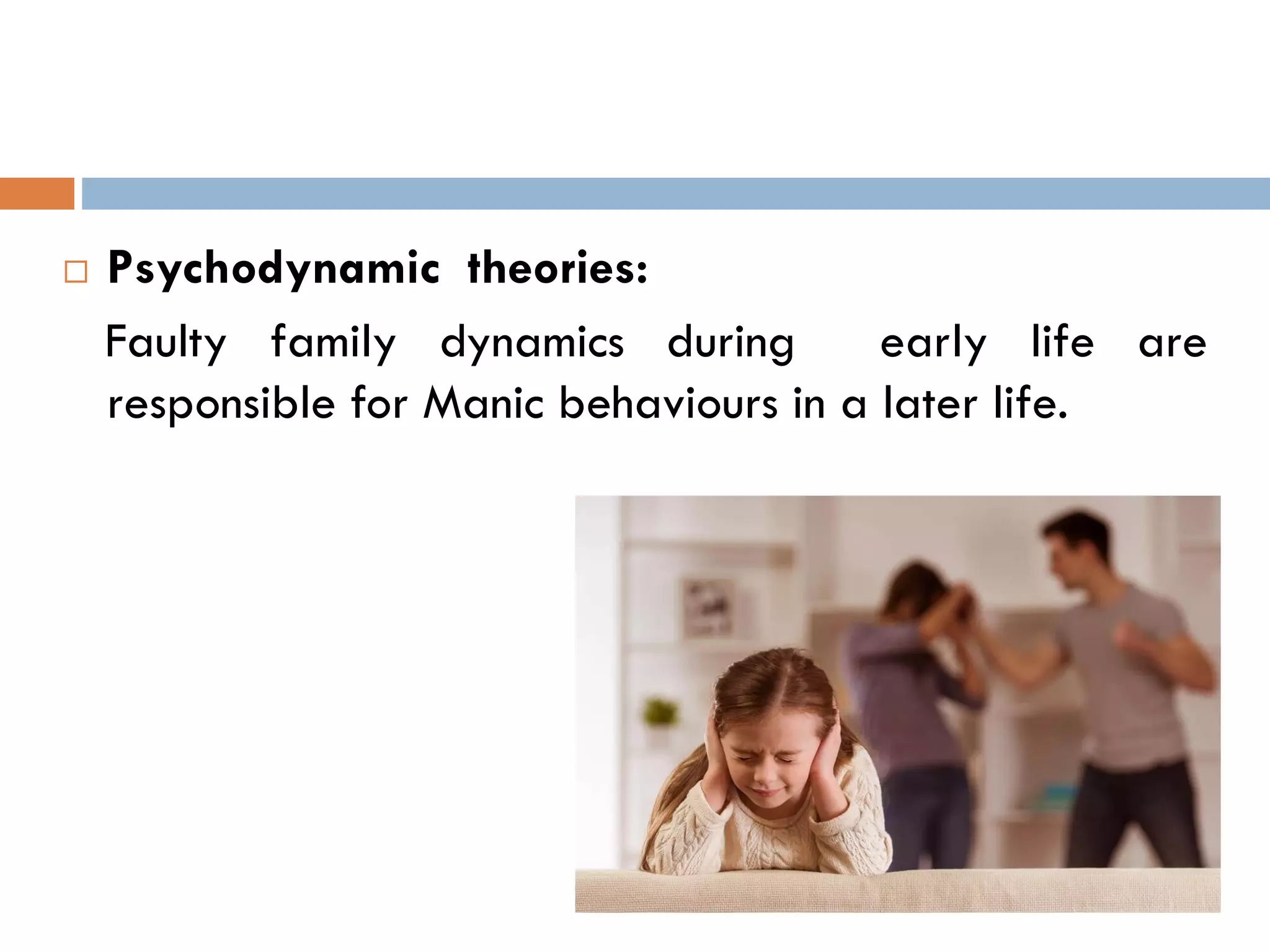
 Psychodynamic theories:
Faulty family dynamics during early life are
responsible for Manic behaviours in a later life.
Clinical feature
Elevated
mood
Expansive
mood
Irritable
mood
Elevated mood has four stages depending on
severity of Manic episodes:
 Euphoria : Increased sense of psychological
wellbeing and happiness not in keeping with the
ongoing events.
 Elation : Moderate elevation of Mood with
increased psychomotor activity.
 Exaltation: Intense elevation of mood with delusions
of Grandeur.
 Ecstasy: Severe elevation of mood, intense sense of
blissfulness.
 Expansive mood is unceasing and unselective
enthusiasm for interacting with people and
surrounding environment.
 Irritable mood may be predominant, especially
when the person is stopped from doing what
he/she wants.
Speech and thought:
 Flight of ideas: Rapid shift from one topic to another.
 Pressure of speech: Speech is Forceful , strong and
difficult to interrupt. Uses Playful language with
rhyming, joking and speak loudly.
 Delusions of Grandeur
 Delusions of persecution.
Other features:
 Poor judgement
 High risk activities
 Decreased the attention and concentration
 Absent Insight
 Impulsive behaviour
 Decreased need for sleep
 Decreased food intake due to over activities.
Hypomania
 Hypomania is a lesser degree of Mania. There is a
persistent mild elevation of mood and increased
sense of psychological well-being and happiness not
in keeping with ongoing events.
 Concentration and attention May be impaired.
Diagnosis
 Psychological tests such as young Mania rating
scale
 ICD 10 Diagnostic criteria.
Treatment modalities
Mood stabilizers:
 Lithium 900-2100 mg/day
 Carbamazepine 600-1800 mg/day
 Sodium valproate 600-2600 mg/day
Calcium channel blockers:
 Verapamil 40-300 mg
Antipsychotics:
 Olanzapine 10-20 mg
 Chlorpromazine 75-200 mg
 Electroconvulsive therapy
 Psychosocial treatment: Family and marital
therapy is used to decrease interpersonal
difficulties
 Cognitive therapy
 Individual psychotherapy
 Group Therapy
Nursing management
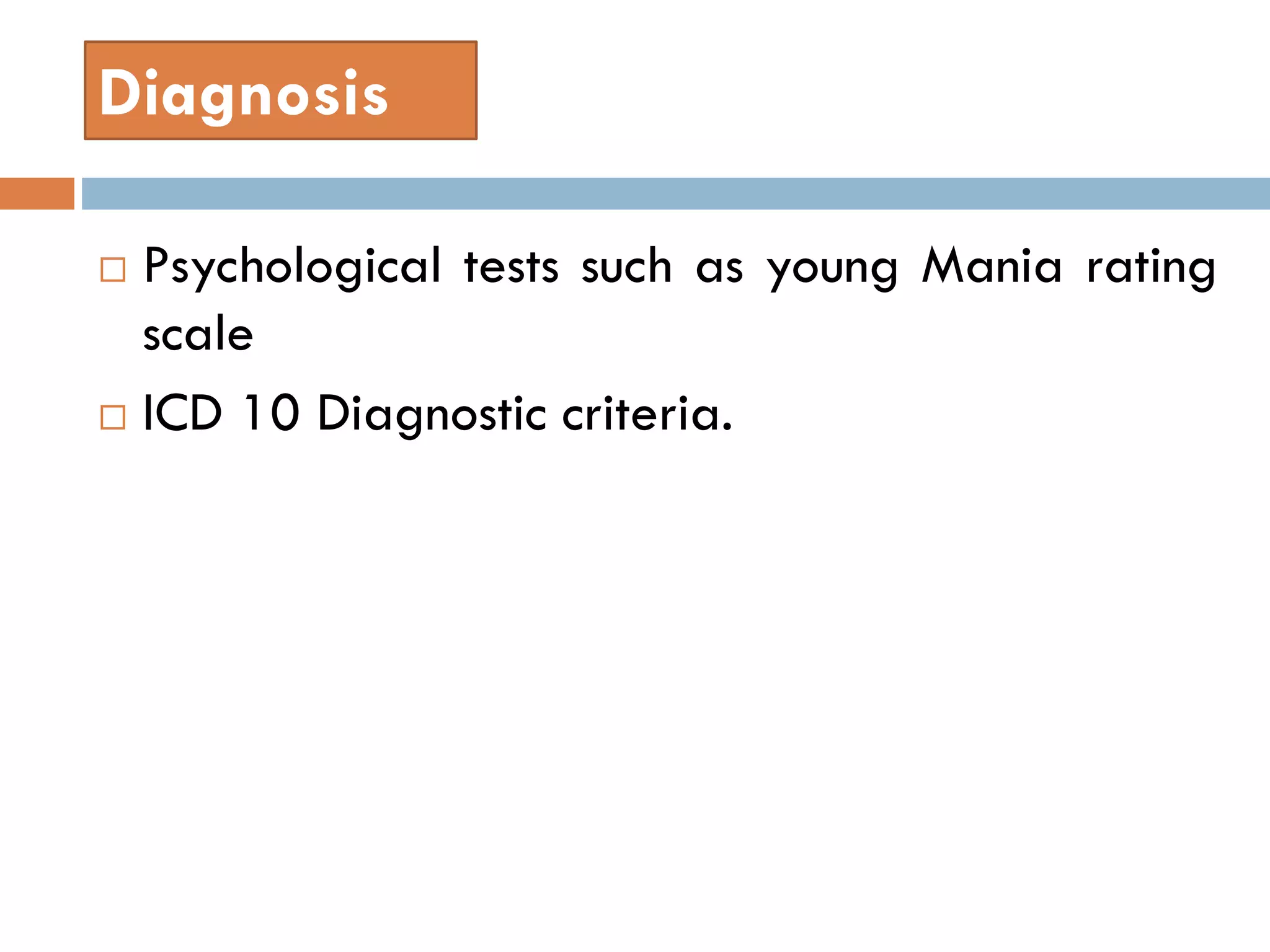
 Nursing assessment of the Manic patient should
include assessing the severity of the disorder. As far
as possible all relevant data should be collected
from the patient as well as from his relatives,
because the patient may not always recognised the
extent of his abnormal behaviour.
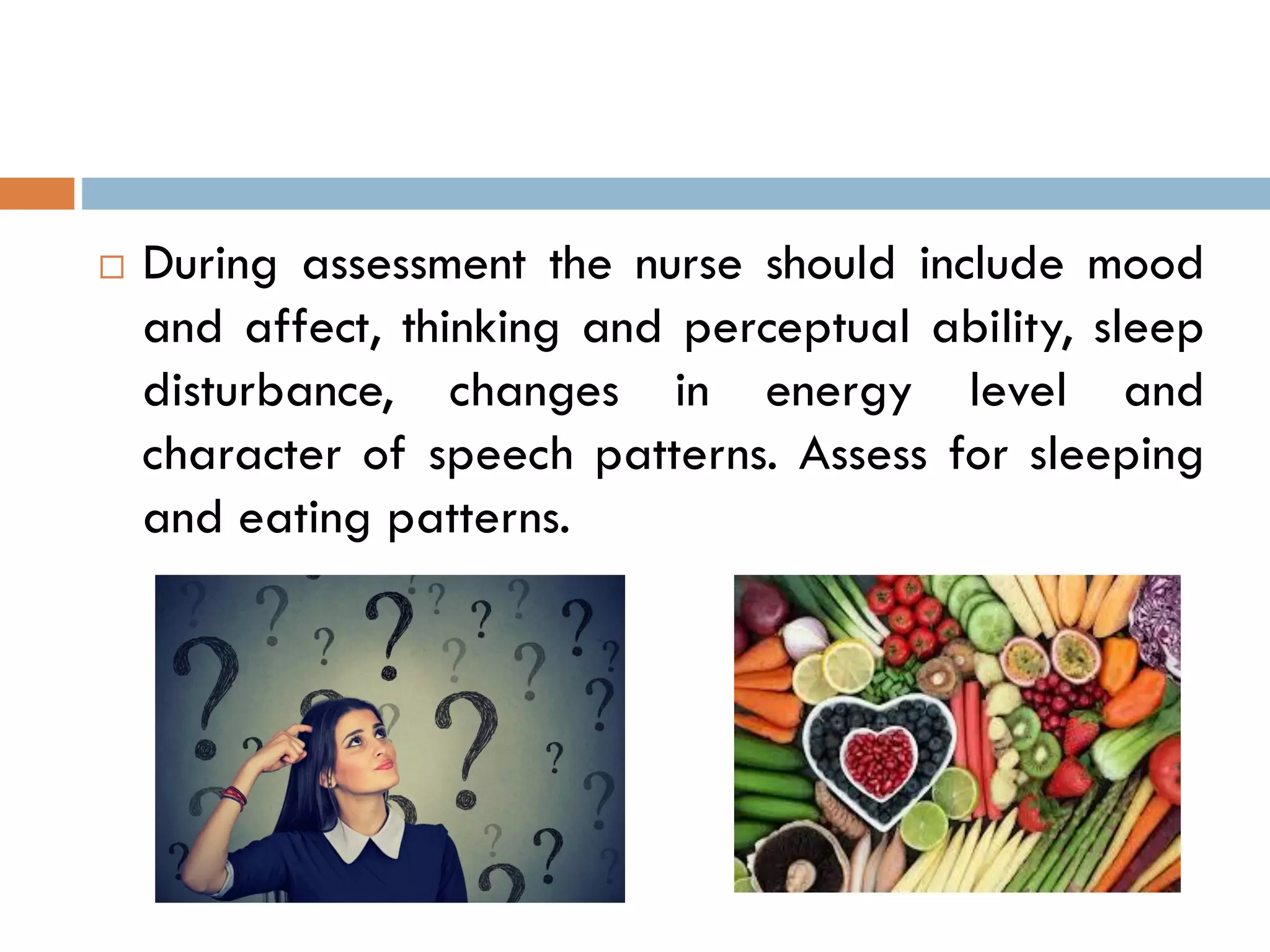
 During assessment the nurse should include mood
and affect, thinking and perceptual ability, sleep
disturbance, changes in energy level and
character of speech patterns. Assess for sleeping
and eating patterns.
Summary
Conclusion
Bipolar disorder (Mania)

Bipolar disorder (Mania)

  • 1.
    MANIA Presented by MRKALYANKUMAR Msc(N)
  • 2.
    Introduction  Mood disordersalso called affective disorders, are pervasive alterations in emotions that are manifested by depression, mania or both. They interfere with a person’s life, plaguing him or her with drastic and long- term sadness, agitation or elation. Accompanying self- doubt, guilt and anger, alter life activities.
  • 3.
    Definition  Mania isa distinct period during which mood is abnormally and persistently elevated, expansive or irritable. (or)  Mania is an alteration in mood that is characterized by extreme happiness, extreme irritability and hyperactivity.
  • 4.
    Etiology  Biological theories: Genetics:First degree relatives Monozygotic twins  Biochemical influences : Excess of Nor epinephrine and dopamine Low serotonin level.  Physiological: Right sided lesions in limbic system ,basal ganglia and thalamus Enlarged ventricles and sub cortical white matter .
  • 5.
     Psychodynamic theories: Faultyfamily dynamics during early life are responsible for Manic behaviours in a later life.
  • 6.
  • 7.
    Elevated mood hasfour stages depending on severity of Manic episodes:  Euphoria : Increased sense of psychological wellbeing and happiness not in keeping with the ongoing events.  Elation : Moderate elevation of Mood with increased psychomotor activity.  Exaltation: Intense elevation of mood with delusions of Grandeur.  Ecstasy: Severe elevation of mood, intense sense of blissfulness.
  • 8.
     Expansive moodis unceasing and unselective enthusiasm for interacting with people and surrounding environment.  Irritable mood may be predominant, especially when the person is stopped from doing what he/she wants.
  • 9.
    Speech and thought: Flight of ideas: Rapid shift from one topic to another.  Pressure of speech: Speech is Forceful , strong and difficult to interrupt. Uses Playful language with rhyming, joking and speak loudly.  Delusions of Grandeur  Delusions of persecution.
  • 10.
    Other features:  Poorjudgement  High risk activities  Decreased the attention and concentration  Absent Insight  Impulsive behaviour  Decreased need for sleep  Decreased food intake due to over activities.
  • 11.
    Hypomania  Hypomania isa lesser degree of Mania. There is a persistent mild elevation of mood and increased sense of psychological well-being and happiness not in keeping with ongoing events.  Concentration and attention May be impaired.
  • 12.
    Diagnosis  Psychological testssuch as young Mania rating scale  ICD 10 Diagnostic criteria.
  • 13.
    Treatment modalities Mood stabilizers: Lithium 900-2100 mg/day  Carbamazepine 600-1800 mg/day  Sodium valproate 600-2600 mg/day Calcium channel blockers:  Verapamil 40-300 mg Antipsychotics:  Olanzapine 10-20 mg  Chlorpromazine 75-200 mg
  • 14.
     Electroconvulsive therapy Psychosocial treatment: Family and marital therapy is used to decrease interpersonal difficulties  Cognitive therapy  Individual psychotherapy  Group Therapy
  • 15.
    Nursing management  Nursingassessment of the Manic patient should include assessing the severity of the disorder. As far as possible all relevant data should be collected from the patient as well as from his relatives, because the patient may not always recognised the extent of his abnormal behaviour.
  • 16.
     During assessmentthe nurse should include mood and affect, thinking and perceptual ability, sleep disturbance, changes in energy level and character of speech patterns. Assess for sleeping and eating patterns.
  • 17.