PSYCHOSOCIAL
ASPECTS
Presented by
Mr.kalyankumar Msc (N)
INTRODUCTION
 A variety of coping skills are required to adjust to and
live successfully with cancer. Cancer patients have to
cope with a variety of stressors, including loss of
function in body system, pain, nausea and vomiting,
anorexia, fatigue, social isolation, loss of self-esteem,
fear of death and dying, adjusting to hospital
environment, sexual problems, cognitive impairment
and fear of recurrence of fever.
DEFINITION
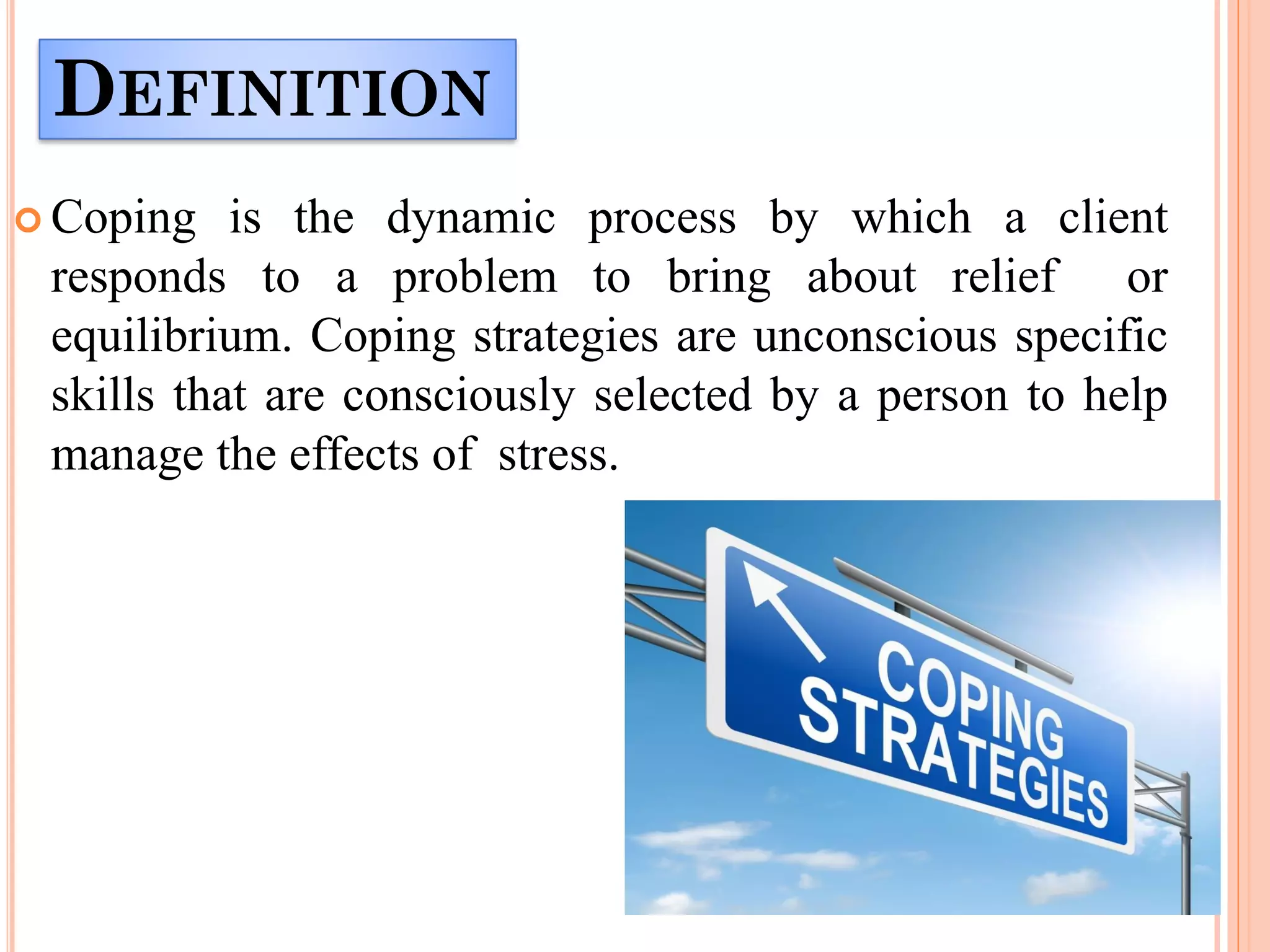
 Coping is the dynamic process by which a client
responds to a problem to bring about relief or
equilibrium. Coping strategies are unconscious specific
skills that are consciously selected by a person to help
manage the effects of stress.
COPING STYLES
 Rational inquiry- Seek more information; Get guidance
 Mutuality- Share concern and talk to other people
 Affect reversal- Laugh it off; make light of the situation .
 Displacement - Keep busy; do other things for distraction
 Confrontation- Take firm action; confront the problem
 Redefinition- Focus on positive aspects of situation
 Passive acceptance- Submit to the inevitable; resign yourself
 Suppression- Try to forget; put it out of mind .
 Impulsivity- Do something reckless or impractical
 Disengagement- Withdraw into isolation; get away
 Projection- Blame someone or something else
 Cooperative compliance- Seek direction; do what you are told
 Tension reduction- Find an escape with drink, drugs, danger
 Consideration of alternatives – consider or negotiate a
feasible alternative .
CHARACTERISTICS OF GOOD CANCER
COPERS
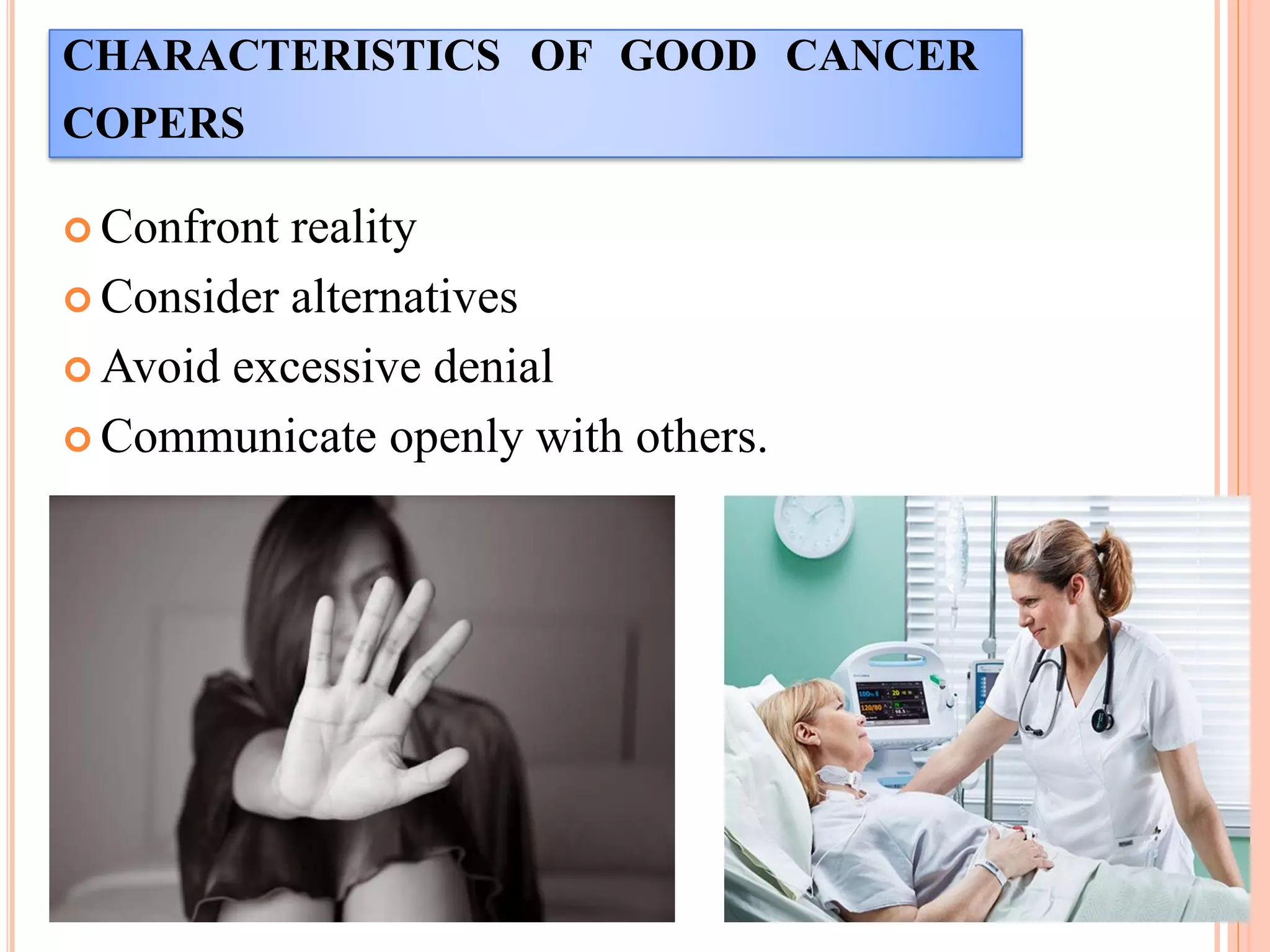
 Confront reality
 Consider alternatives
 Avoid excessive denial
 Communicate openly with others.
 Self-reliant but accept help when offered
 Make use of available resources
 Flexible
 Realistically hopeful
 Try to maintain morale and self esteem
 Focus on problem- Solving when appropriate
NURSING INTERVENTIONS
 Nursing interventions should be used to promote more
effective coping strategies in dealing with the cancer
experience.
 Encouraging the patient to become at the challenges of
disease and treatment more positively.
 Assisting the patient to look at the challenges of
disease and treatment more positively.
 Helping the patient develop new coping strategies
throughout the course of illness.
 Encourage open expression of feelings and involve in
decision regarding daily activities.
 Give information needed at the time and answer
questions. Share medical information .
 Encourage to ask for needed support and encourage to
use own support network.
 Recognize possible response to fear and not
personalize.
Psychosocial aspects (Cancer patients has to cope with a variety of stressors)

Psychosocial aspects (Cancer patients has to cope with a variety of stressors)

  • 2.
  • 3.
    INTRODUCTION  A varietyof coping skills are required to adjust to and live successfully with cancer. Cancer patients have to cope with a variety of stressors, including loss of function in body system, pain, nausea and vomiting, anorexia, fatigue, social isolation, loss of self-esteem, fear of death and dying, adjusting to hospital environment, sexual problems, cognitive impairment and fear of recurrence of fever.
  • 4.
    DEFINITION  Coping isthe dynamic process by which a client responds to a problem to bring about relief or equilibrium. Coping strategies are unconscious specific skills that are consciously selected by a person to help manage the effects of stress.
  • 5.
    COPING STYLES  Rationalinquiry- Seek more information; Get guidance  Mutuality- Share concern and talk to other people  Affect reversal- Laugh it off; make light of the situation .
  • 6.
     Displacement -Keep busy; do other things for distraction  Confrontation- Take firm action; confront the problem  Redefinition- Focus on positive aspects of situation  Passive acceptance- Submit to the inevitable; resign yourself  Suppression- Try to forget; put it out of mind .
  • 7.
     Impulsivity- Dosomething reckless or impractical  Disengagement- Withdraw into isolation; get away  Projection- Blame someone or something else  Cooperative compliance- Seek direction; do what you are told
  • 8.
     Tension reduction-Find an escape with drink, drugs, danger  Consideration of alternatives – consider or negotiate a feasible alternative .
  • 9.
    CHARACTERISTICS OF GOODCANCER COPERS  Confront reality  Consider alternatives  Avoid excessive denial  Communicate openly with others.
  • 10.
     Self-reliant butaccept help when offered  Make use of available resources  Flexible  Realistically hopeful
  • 11.
     Try tomaintain morale and self esteem  Focus on problem- Solving when appropriate
  • 12.
    NURSING INTERVENTIONS  Nursinginterventions should be used to promote more effective coping strategies in dealing with the cancer experience.  Encouraging the patient to become at the challenges of disease and treatment more positively.  Assisting the patient to look at the challenges of disease and treatment more positively.  Helping the patient develop new coping strategies throughout the course of illness.  Encourage open expression of feelings and involve in decision regarding daily activities.
  • 13.
     Give informationneeded at the time and answer questions. Share medical information .  Encourage to ask for needed support and encourage to use own support network.  Recognize possible response to fear and not personalize.