This document discusses the use of modal verbs to express ability, permission, and probability.
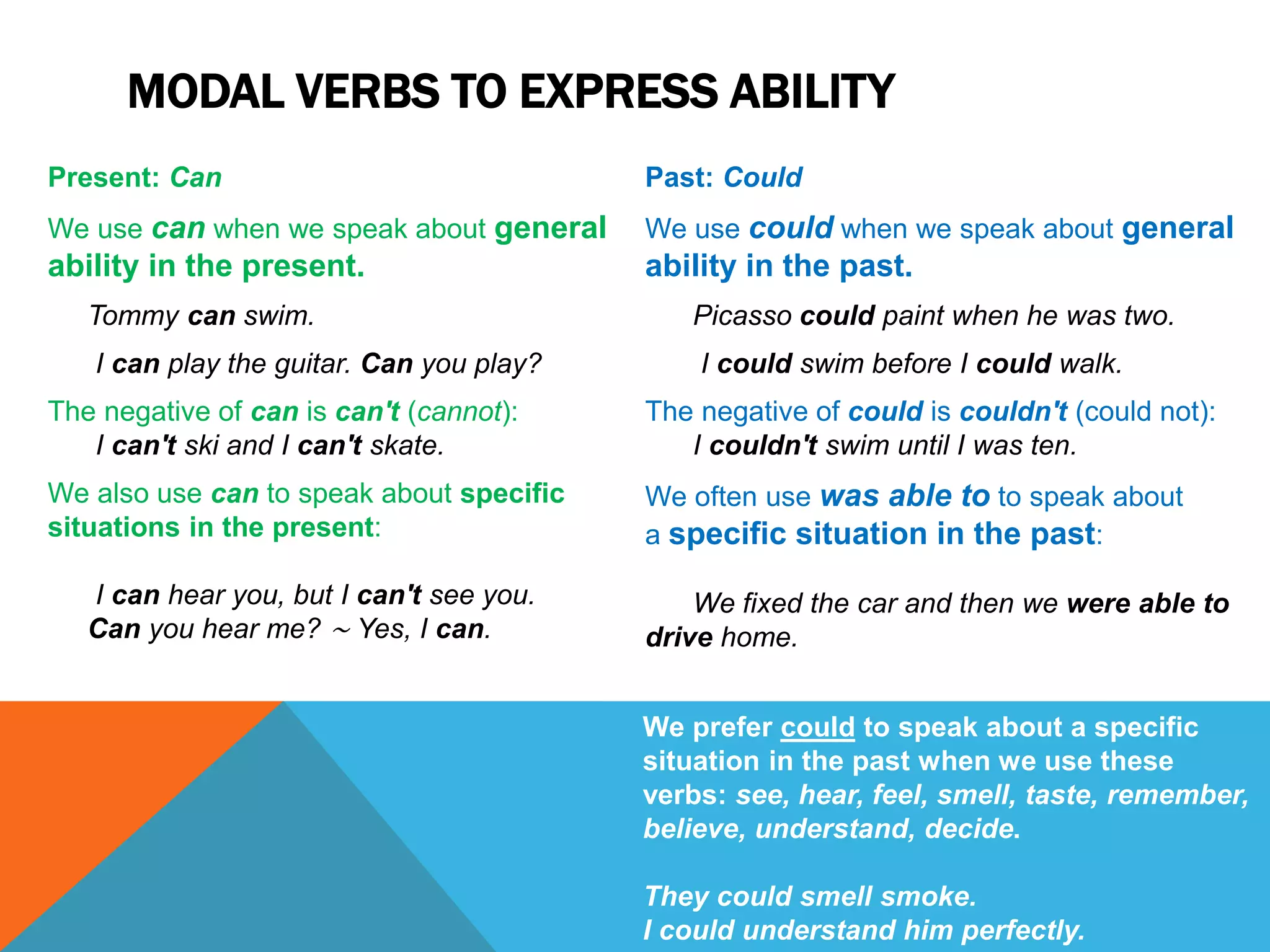
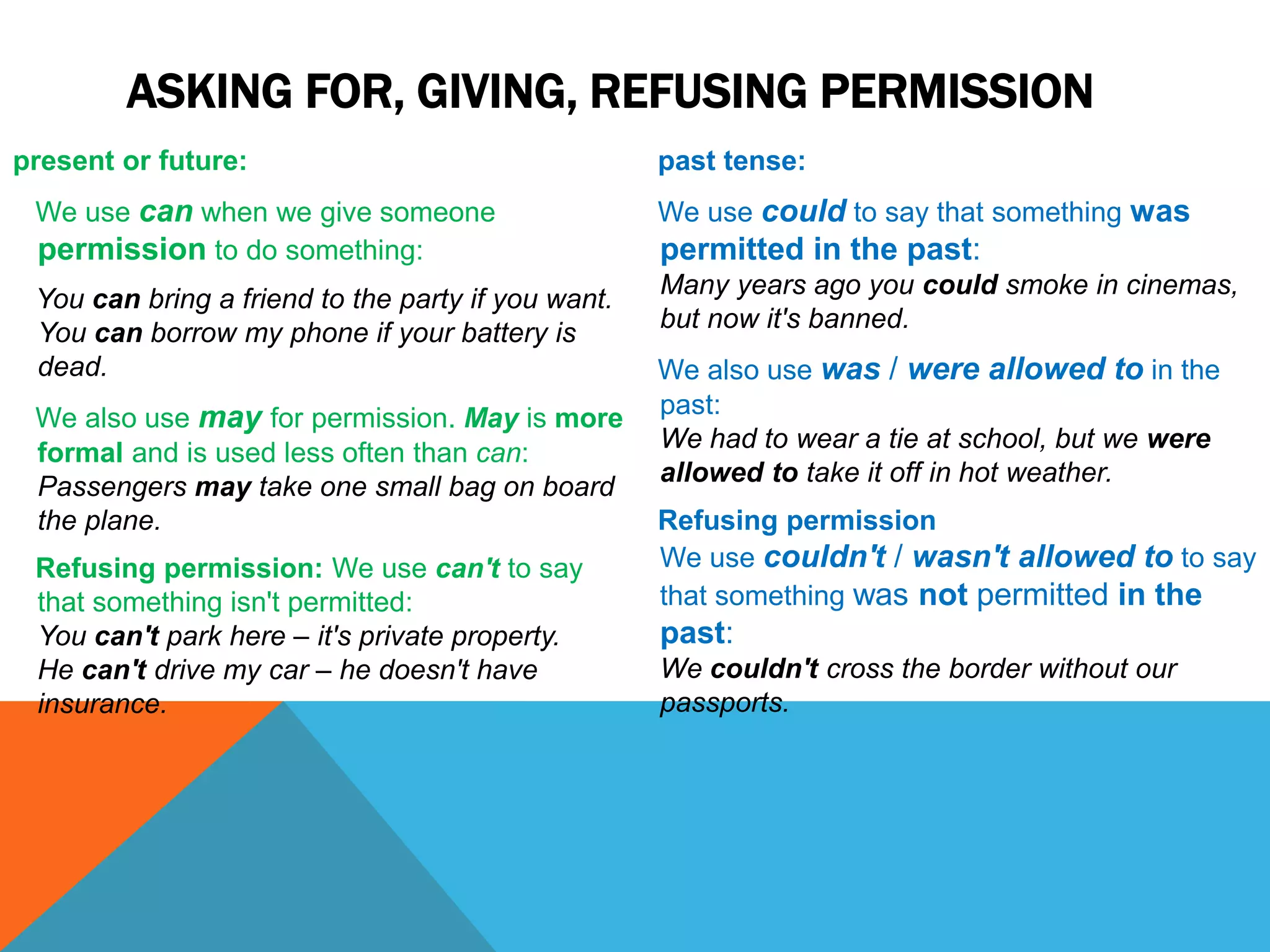
For ability, "can" is used for general present ability, "could" for past ability, and "be able to" for specific past situations. For permission, "can/may" grant permission in present/future, while "couldn't/wasn't allowed to" refuse past permission.
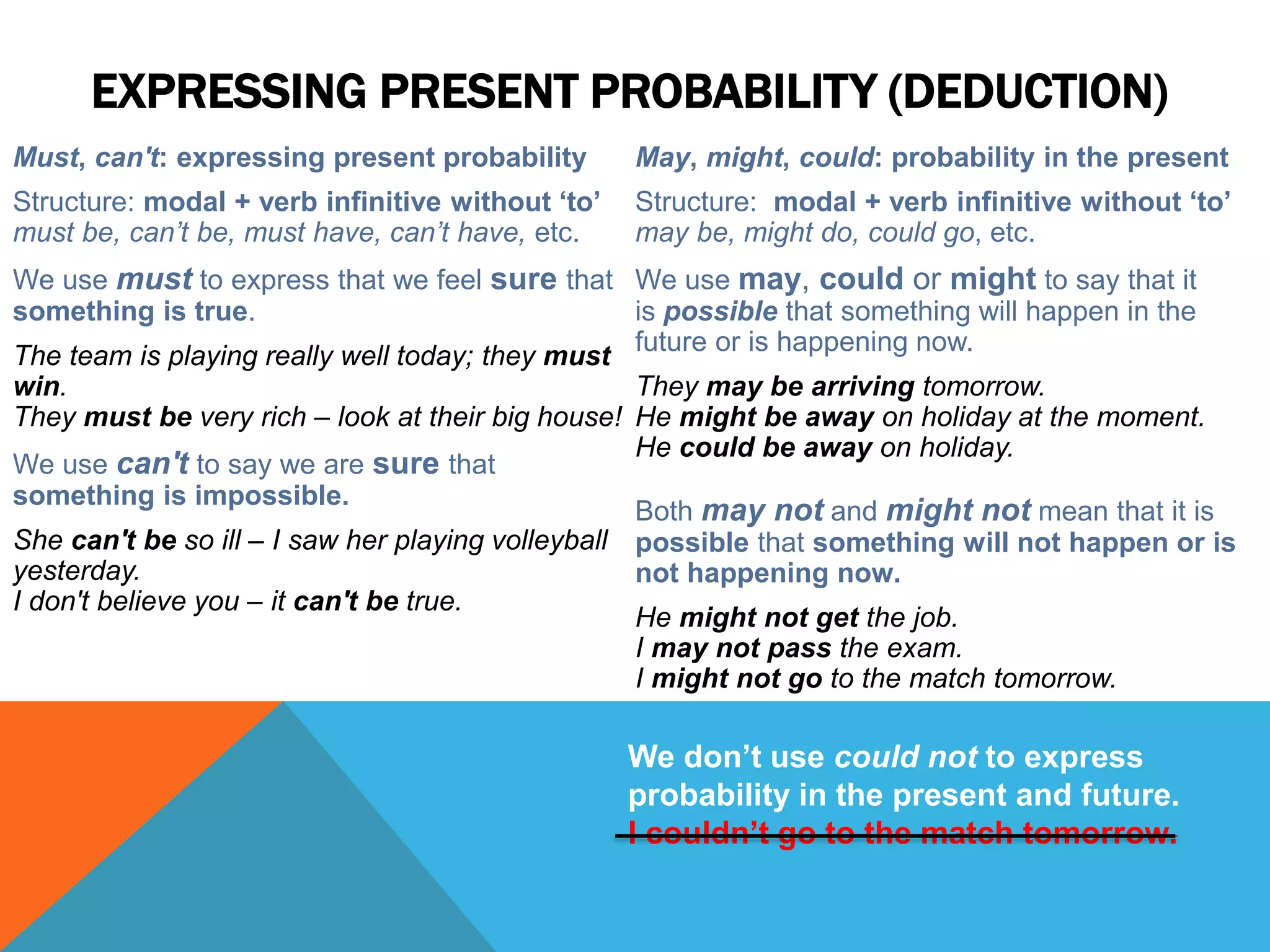
For probability, "must" and "can't" express sure present deductions. "May," "might," and "could" suggest present possibilities, while "might/may not" mean possible non-occurrence. "Couldn't" is not used to express present/future probability.