SHOT SIZES
EXTREME CLOSE UP (XCU)
                  An extreme close up shot gets very
                  close to the subject and shows
                  immense detail. It can be used to
                  show emotion. For example; a close
                  up of the eye or mouth can show
                  facial expression. This shot can be
                  described as intrusive and personal.
CLOSE UP (CU)
A close up shot shows expression but in less detail then the extreme
close up. Close ups are often used to show an action. For example;
someone brushing their hair. This shot can also be described as
personal.
MEDIUM CLOSE UP (MCU)
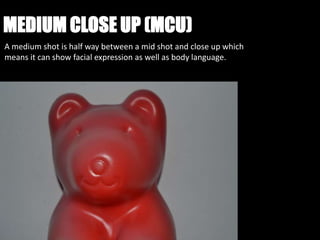
A medium shot is half way between a mid shot and close up which
means it can show facial expression as well as body language.
MID SHOT (MS)
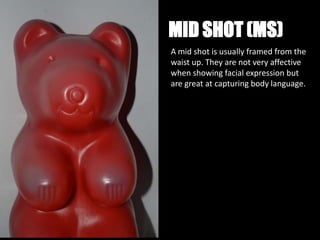
A mid shot is usually framed from the
waist up. They are not very affective
when showing facial expression but
are great at capturing body language.
LONG SHOT (LS)
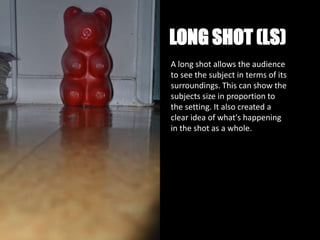
A long shot allows the audience
to see the subject in terms of its
surroundings. This can show the
subjects size in proportion to
the setting. It also created a
clear idea of what's happening
in the shot as a whole.
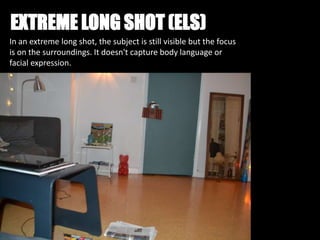
EXTREME LONG SHOT (ELS)
In an extreme long shot, the subject is still visible but the focus
is on the surroundings. It doesn't capture body language or
facial expression.
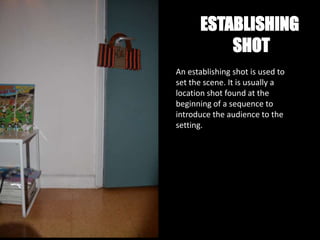
ESTABLISHING
           SHOT
An establishing shot is used to
set the scene. It is usually a
location shot found at the
beginning of a sequence to
introduce the audience to the
setting.
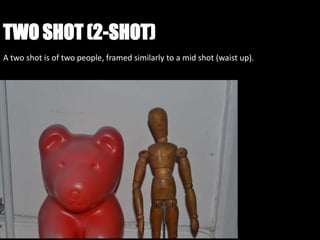
TWO SHOT (2-SHOT)
A two shot is of two people, framed similarly to a mid shot (waist up).
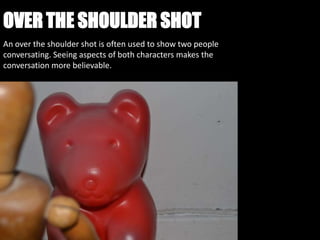
OVER THE SHOULDER SHOT
An over the shoulder shot is often used to show two people
conversating. Seeing aspects of both characters makes the
conversation more believable.
SHOT ANGLES
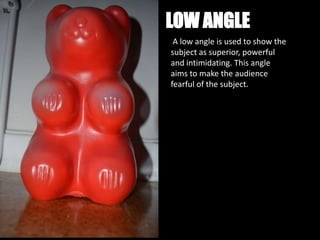
LOW ANGLE
 A low angle is used to show the
subject as superior, powerful
and intimidating. This angle
aims to make the audience
fearful of the subject.
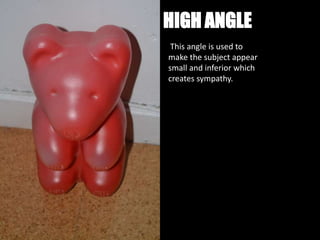
HIGH ANGLE
 This angle is used to
make the subject appear
small and inferior which
creates sympathy.
BIRDS EYE
Birds eye is taken directly above an object and is normally
used to show a large scale location. For example; a city.
CANTED ANGLE
 A canted angle is taken when the camera is at a tilt which
can suggest drama, intoxication and /or madness
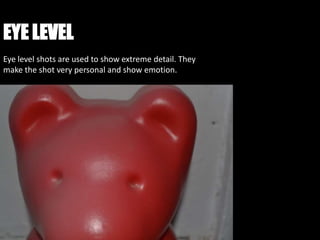
EYE LEVEL
Eye level shots are used to show extreme detail. They
make the shot very personal and show emotion.
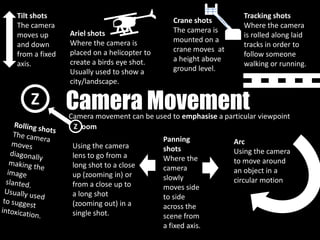
Tilt shots                                                       Tracking shots
                                              Crane shots
The camera                                                       Where the camera
               Ariel shots                    The camera is
moves up                                                         is rolled along laid
               Where the camera is            mounted on a
and down                                                         tracks in order to
               placed on a helicopter to      crane moves at
from a fixed                                                     follow someone
               create a birds eye shot.       a height above
axis.                                                            walking or running.
               Usually used to show a         ground level.
               city/landscape.

    Z          Camera Movement
               Camera movement can be used to emphasise a particular viewpoint
                Z oom
                                           Panning             Arc
                Using the camera           shots               Using the camera
                lens to go from a          Where the           to move around
                long shot to a close       camera              an object in a
                up (zooming in) or         slowly              circular motion
                from a close up to         moves side
                a long shot                to side
                (zooming out) in a         across the
                single shot.               scene from
                                           a fixed axis.

Shot sizescamera anglescamera movement

  • 1.
  • 2.
    EXTREME CLOSE UP(XCU) An extreme close up shot gets very close to the subject and shows immense detail. It can be used to show emotion. For example; a close up of the eye or mouth can show facial expression. This shot can be described as intrusive and personal.
  • 3.
    CLOSE UP (CU) Aclose up shot shows expression but in less detail then the extreme close up. Close ups are often used to show an action. For example; someone brushing their hair. This shot can also be described as personal.
  • 4.
    MEDIUM CLOSE UP(MCU) A medium shot is half way between a mid shot and close up which means it can show facial expression as well as body language.
  • 5.
    MID SHOT (MS) Amid shot is usually framed from the waist up. They are not very affective when showing facial expression but are great at capturing body language.
  • 6.
    LONG SHOT (LS) Along shot allows the audience to see the subject in terms of its surroundings. This can show the subjects size in proportion to the setting. It also created a clear idea of what's happening in the shot as a whole.
  • 7.
    EXTREME LONG SHOT(ELS) In an extreme long shot, the subject is still visible but the focus is on the surroundings. It doesn't capture body language or facial expression.
  • 8.
    ESTABLISHING SHOT An establishing shot is used to set the scene. It is usually a location shot found at the beginning of a sequence to introduce the audience to the setting.
  • 9.
    TWO SHOT (2-SHOT) Atwo shot is of two people, framed similarly to a mid shot (waist up).
  • 10.
    OVER THE SHOULDERSHOT An over the shoulder shot is often used to show two people conversating. Seeing aspects of both characters makes the conversation more believable.
  • 11.
  • 12.
    LOW ANGLE Alow angle is used to show the subject as superior, powerful and intimidating. This angle aims to make the audience fearful of the subject.
  • 13.
    HIGH ANGLE Thisangle is used to make the subject appear small and inferior which creates sympathy.
  • 14.
    BIRDS EYE Birds eyeis taken directly above an object and is normally used to show a large scale location. For example; a city.
  • 15.
    CANTED ANGLE Acanted angle is taken when the camera is at a tilt which can suggest drama, intoxication and /or madness
  • 16.
    EYE LEVEL Eye levelshots are used to show extreme detail. They make the shot very personal and show emotion.
  • 17.
    Tilt shots Tracking shots Crane shots The camera Where the camera Ariel shots The camera is moves up is rolled along laid Where the camera is mounted on a and down tracks in order to placed on a helicopter to crane moves at from a fixed follow someone create a birds eye shot. a height above axis. walking or running. Usually used to show a ground level. city/landscape. Z Camera Movement Camera movement can be used to emphasise a particular viewpoint Z oom Panning Arc Using the camera shots Using the camera lens to go from a Where the to move around long shot to a close camera an object in a up (zooming in) or slowly circular motion from a close up to moves side a long shot to side (zooming out) in a across the single shot. scene from a fixed axis.