
MEMORY 
•Memory is the ability to retain information 
over time through 3 processes: encoding , 
storing & retrieving
MEMORY PROCESS 
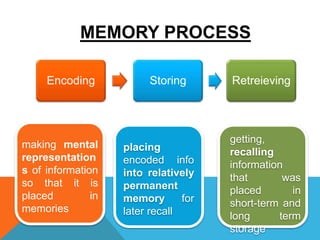
Encoding Storing Retreieving 
making mental 
representation 
s of information 
so that it is 
placed in 
memories 
placing 
encoded info 
into relatively 
permanent 
memory for 
later recall 
getting, 
recalling 
information 
that was 
placed in 
short-term and 
long term 
storage
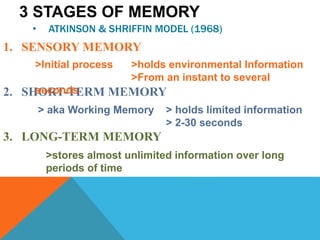
3 STAGES OF MEMORY 
• ATKINSON & SHRIFFIN MODEL (1968) 
1. SENSORY MEMORY 
>Initial process >holds environmental Information 
>From an instant to several 
seconds 
> aka Working Memory > holds limited information 
2. SHORT-TERM MEMORY 
3. LONG-TERM MEMORY 
> 2-30 seconds 
>stores almost unlimited information over long 
periods of time
SENSORY MEMORY 
EXAMPLES: 
• Iconic Memory 
• Echoic Memory 
FUNCTIONS: 
•Prevents being 
overwhelmed 
•Gives decision time 
•Provides stability 
•Playback 
Recognition
SHORT-TERM 
MEMORY 
Limited Duration- 
2-30 seconds, can be 
prolonged with 
Maintenance 
Rehearsal 
Limited Capacity-an 
average of 7 items, 
FUNCTIONS: 
•Attending 
•Rehearsing 
•Storing
LONG-TERM 
MEMORY 
Capacity & Permanency 
Chances of retrieval 
Accuracy
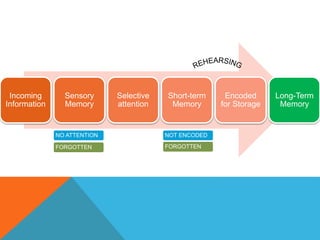
Incoming 
Information 
Sensory 
Memory 
Selective 
attention 
Short-term 
Memory 
Encoded 
for Storage 
Long-Term 
Memory 
NO ATTENTION 
FORGOTTEN 
NOT ENCODED 
FORGOTTEN
LEVELS OF 
PROCESSING
LEVELS OF 
PROCESSING 
• CRAIK & LOCKHART MODEL (1972) 
“Remembering depends on how 
information is encoded.” 
1.SHALLOW PROCESSING 
2.DEEP/ SEMANTIC 
PROCESSING
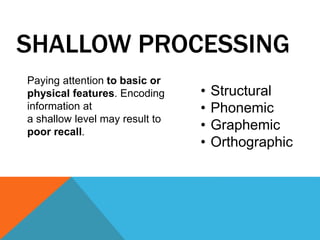
SHALLOW PROCESSING 
• Structural 
• Phonemic 
• Graphemic 
• Orthographic 
Paying attention to basic or 
physical features. Encoding 
information at 
a shallow level may result to 
poor recall.
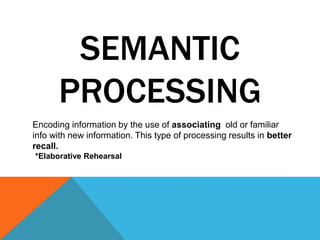
SEMANTIC 
PROCESSING 
Encoding information by the use of associating old or familiar 
info with new information. This type of processing results in better 
recall. 
*Elaborative Rehearsal
FORGETTING 
Can be described as the loss of information already 
stored in long-term memory.
FORGETTING 
WHY DO 
PEOPLE FORGET?
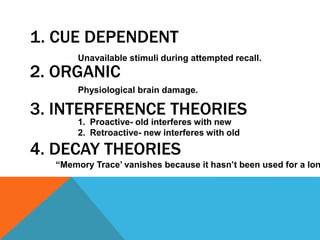
1. CUE DEPENDENT 
Unavailable stimuli during attempted recall. 
2. ORGANIC 
Physiological brain damage. 
3. INTERFERENCE THEORIES 
1. Proactive- old interferes with new 
2. Retroactive- new interferes with old 
4. DECAY THEORIES 
“Memory Trace’ vanishes because it hasn’t been used for a long
THANK YOU FOR LISTENING. 
:)

Memory

  • 2.
    MEMORY •Memory isthe ability to retain information over time through 3 processes: encoding , storing & retrieving
  • 3.
    MEMORY PROCESS EncodingStoring Retreieving making mental representation s of information so that it is placed in memories placing encoded info into relatively permanent memory for later recall getting, recalling information that was placed in short-term and long term storage
  • 4.
    3 STAGES OFMEMORY • ATKINSON & SHRIFFIN MODEL (1968) 1. SENSORY MEMORY >Initial process >holds environmental Information >From an instant to several seconds > aka Working Memory > holds limited information 2. SHORT-TERM MEMORY 3. LONG-TERM MEMORY > 2-30 seconds >stores almost unlimited information over long periods of time
  • 5.
    SENSORY MEMORY EXAMPLES: • Iconic Memory • Echoic Memory FUNCTIONS: •Prevents being overwhelmed •Gives decision time •Provides stability •Playback Recognition
  • 6.
    SHORT-TERM MEMORY LimitedDuration- 2-30 seconds, can be prolonged with Maintenance Rehearsal Limited Capacity-an average of 7 items, FUNCTIONS: •Attending •Rehearsing •Storing
  • 7.
    LONG-TERM MEMORY Capacity& Permanency Chances of retrieval Accuracy
  • 8.
    Incoming Information Sensory Memory Selective attention Short-term Memory Encoded for Storage Long-Term Memory NO ATTENTION FORGOTTEN NOT ENCODED FORGOTTEN
  • 9.
  • 10.
    LEVELS OF PROCESSING • CRAIK & LOCKHART MODEL (1972) “Remembering depends on how information is encoded.” 1.SHALLOW PROCESSING 2.DEEP/ SEMANTIC PROCESSING
  • 11.
    SHALLOW PROCESSING •Structural • Phonemic • Graphemic • Orthographic Paying attention to basic or physical features. Encoding information at a shallow level may result to poor recall.
  • 12.
    SEMANTIC PROCESSING Encodinginformation by the use of associating old or familiar info with new information. This type of processing results in better recall. *Elaborative Rehearsal
  • 13.
    FORGETTING Can bedescribed as the loss of information already stored in long-term memory.
  • 14.
    FORGETTING WHY DO PEOPLE FORGET?
  • 15.
    1. CUE DEPENDENT Unavailable stimuli during attempted recall. 2. ORGANIC Physiological brain damage. 3. INTERFERENCE THEORIES 1. Proactive- old interferes with new 2. Retroactive- new interferes with old 4. DECAY THEORIES “Memory Trace’ vanishes because it hasn’t been used for a long
  • 16.
    THANK YOU FORLISTENING. :)

Editor's Notes

  • #3 -Memory refers to the processes that are used to acquire, store, retain, and later retrieve information. -Memory is the ability to retain information over time through 3 processes: encoding, storing & retrieving
  • #4 Encoding- refers to making mental representations of information so that it is placed in memories. -associating something with something else -processing info into memory -paying attention, sometimes we need to pay attention to remember, sometimes we don’t even have to try Storing- process of placing encoded info into relatively permanent for later recall - Retrieving- process of getting, recalling information that was placed in short-term and long term storage
  • #5 Three types of memory Sensory- initial process that receives and holds environmental information in raw form for a brief period of time, for an instant to several seconds Short-term- aka Working Memory process that holds limited information for a short period of time, 2-30 seconds Long-term- Process of storing almost unlimited amounts of info over long periods of time.
  • #6 (Blinking, Iconic Memory) (“What?”, Echoic) Funct: Prevents being overwhelmed, gives decsion time, Provides stability, playback recognition
  • #7 Limited Duration- 2-30 seconds, can be prolonged with Maintenance Rehearsal Limited Capacity- an average of 7 items,