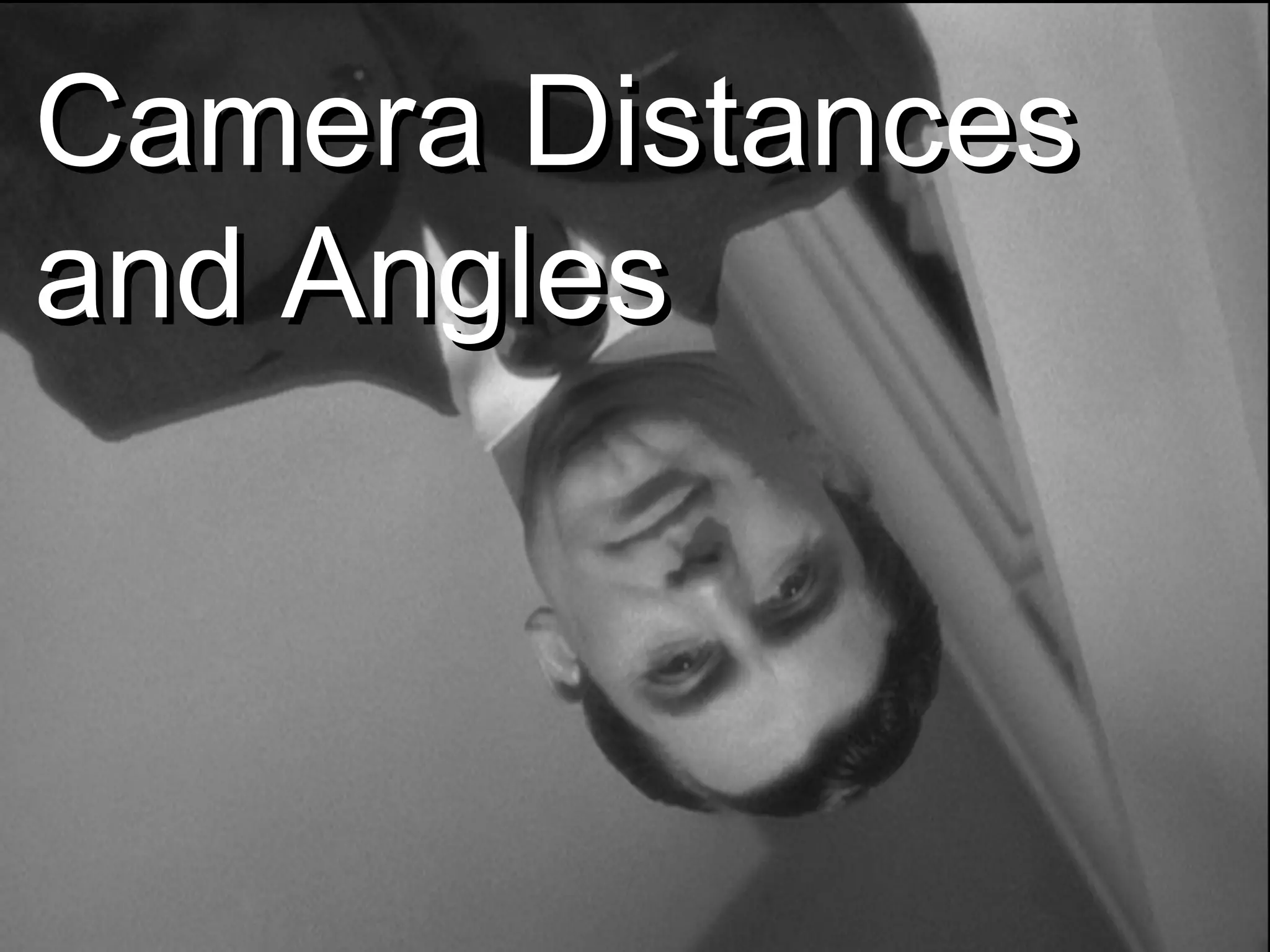
Camera DistancesCamera Distances
and Anglesand Angles
Subject-
Camera
Distance
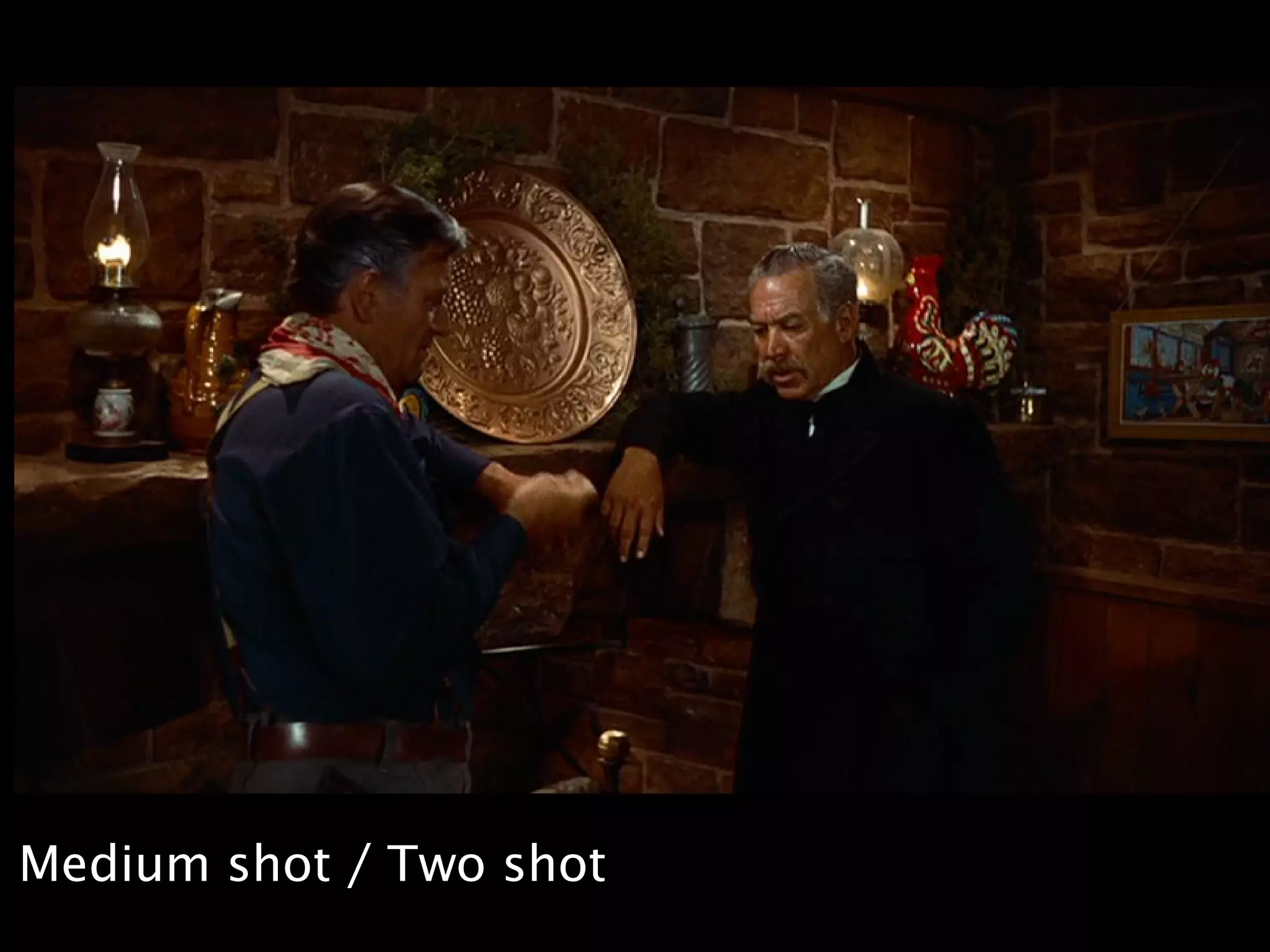
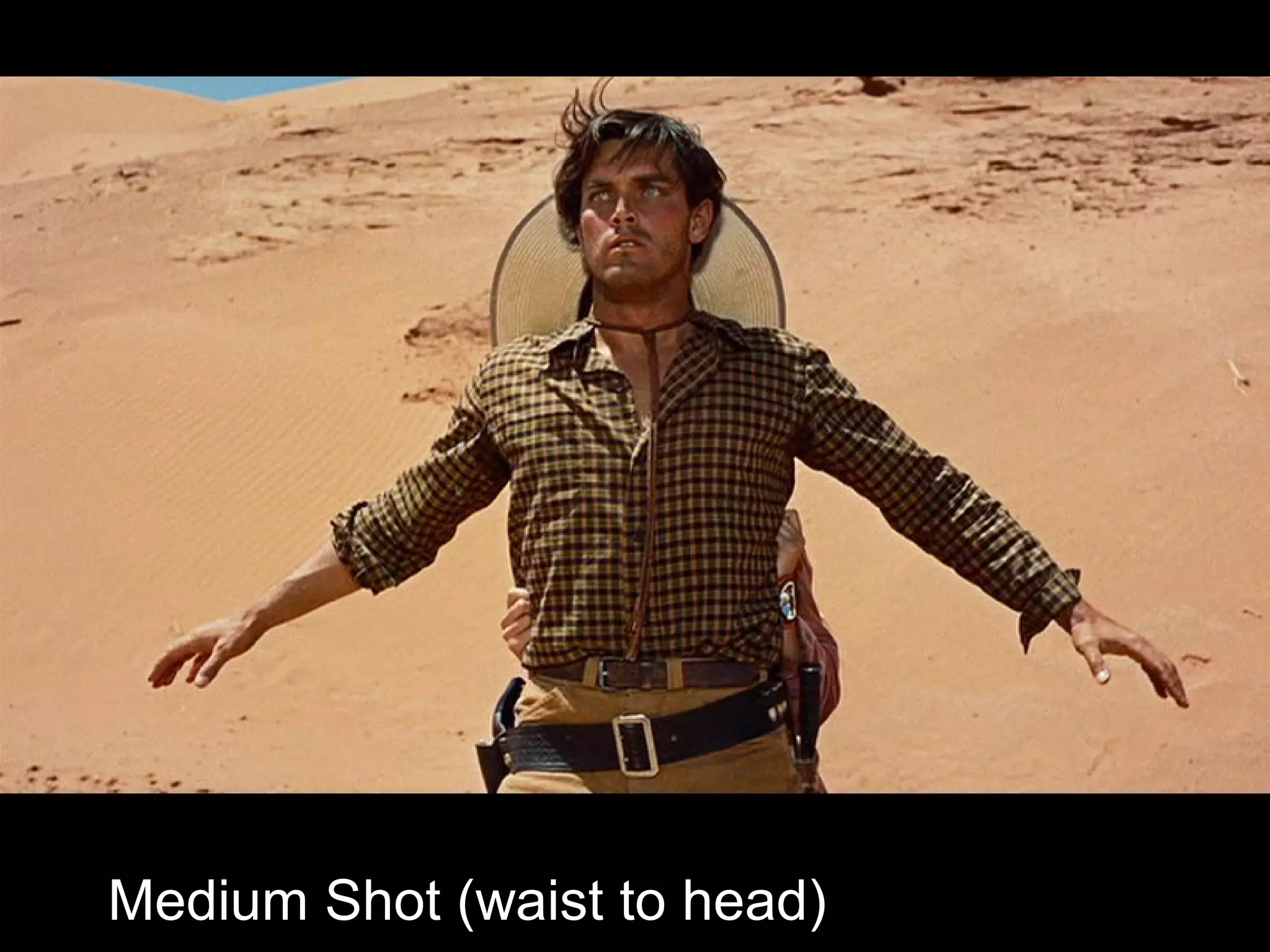
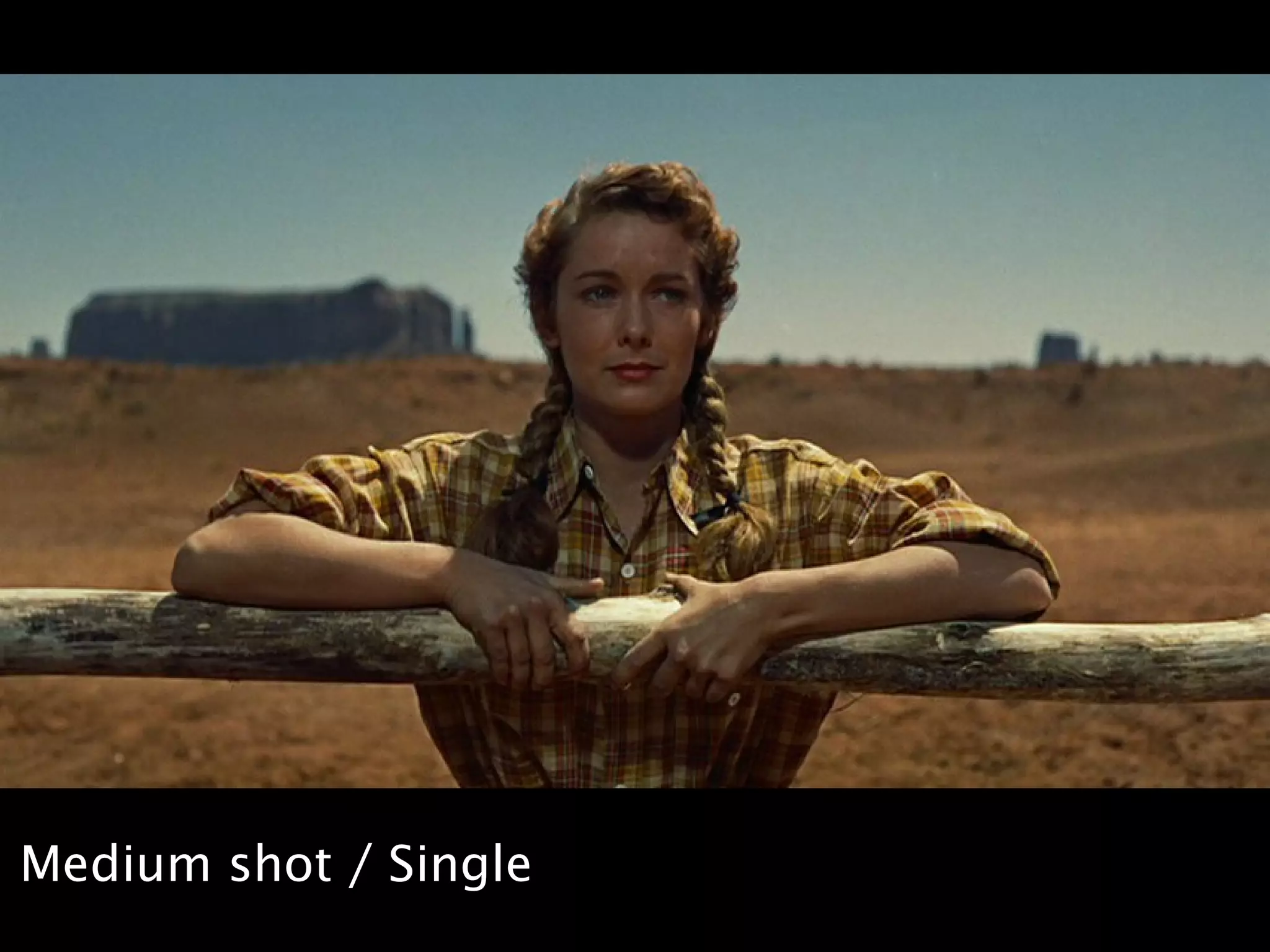
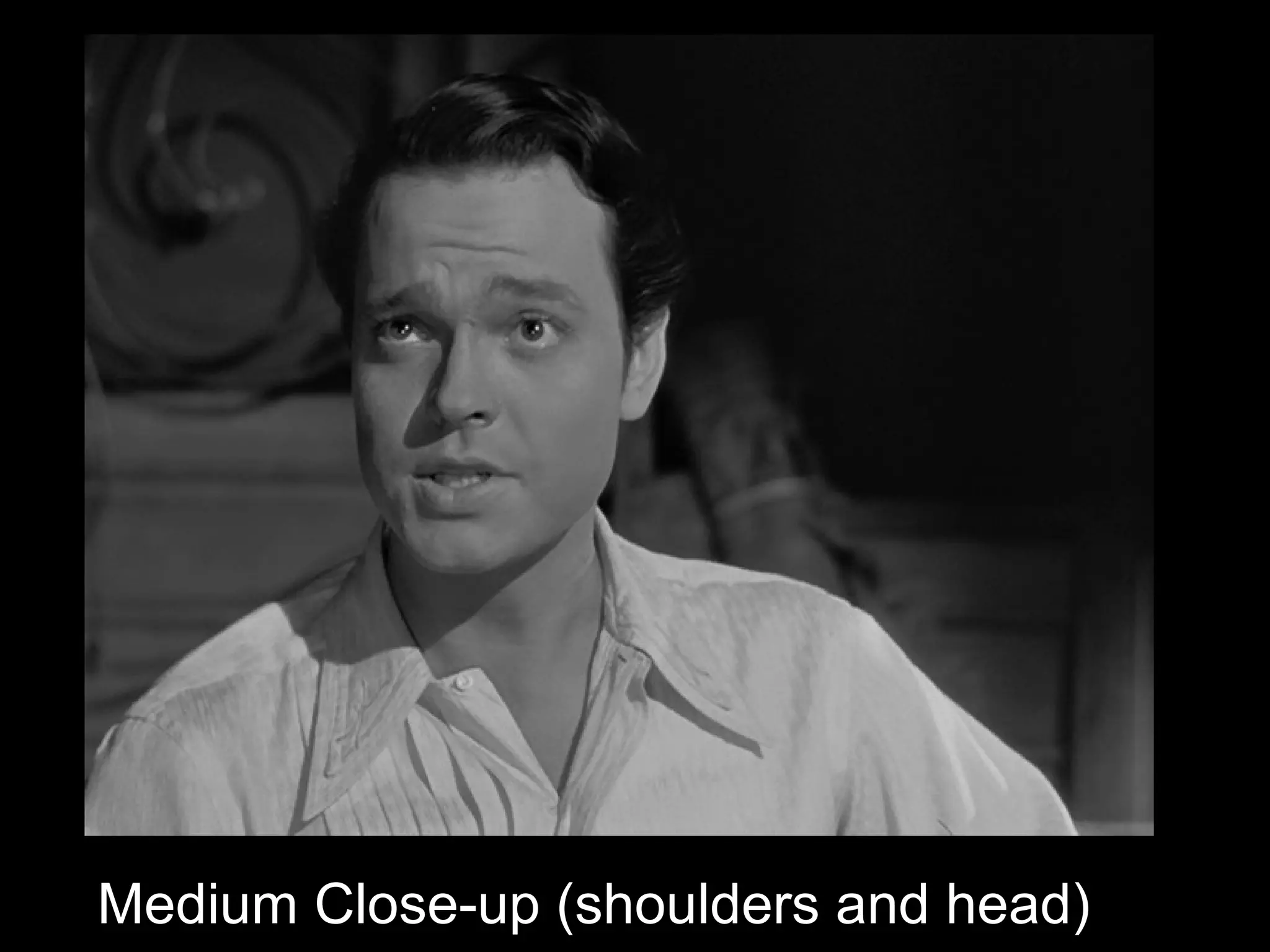
The human body is the measure of subject-
camera distance.
What matters: The expressive results of
(apparent) camera distance on screen.
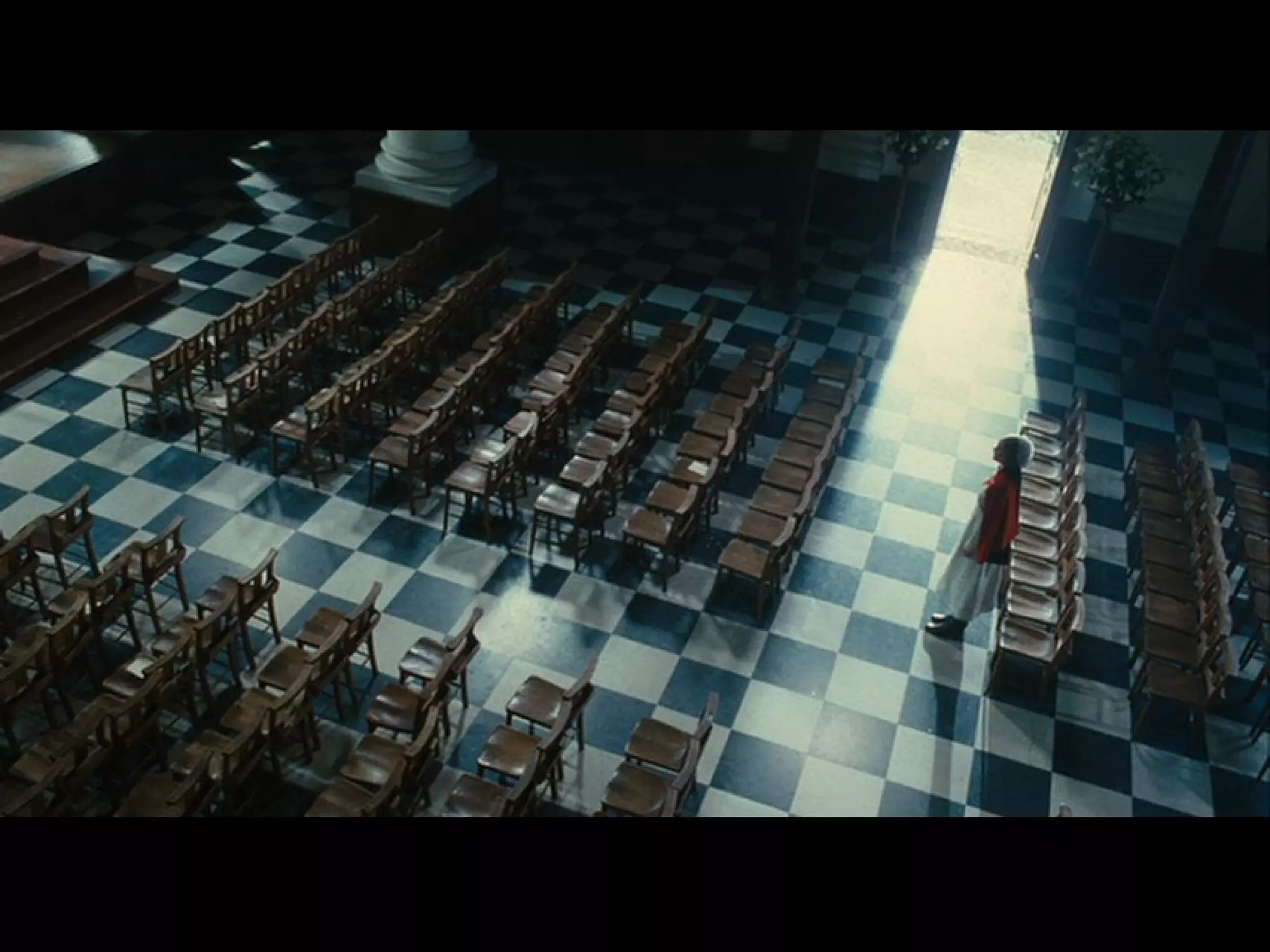
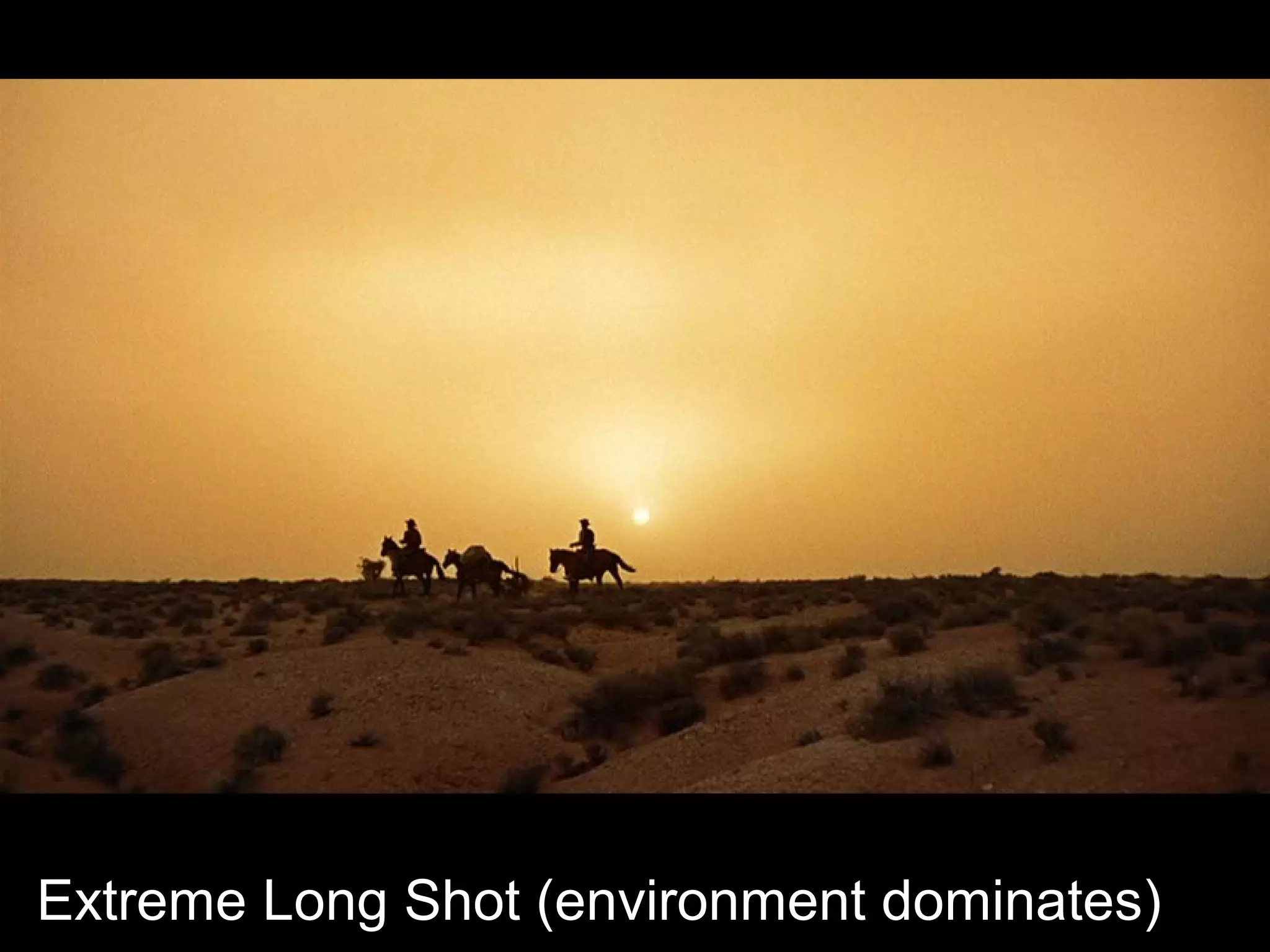
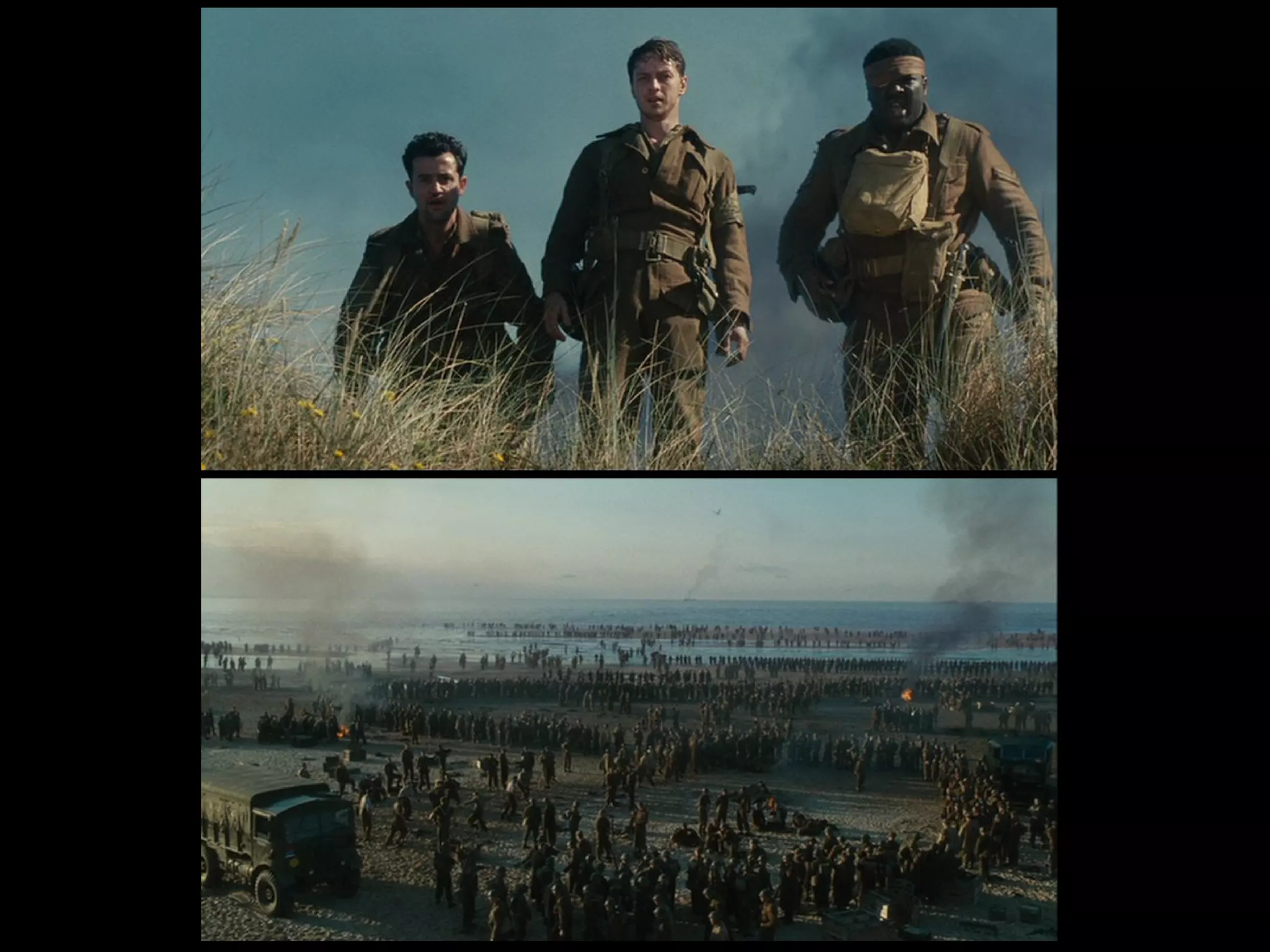
Extreme Long Shot (environment dominates)
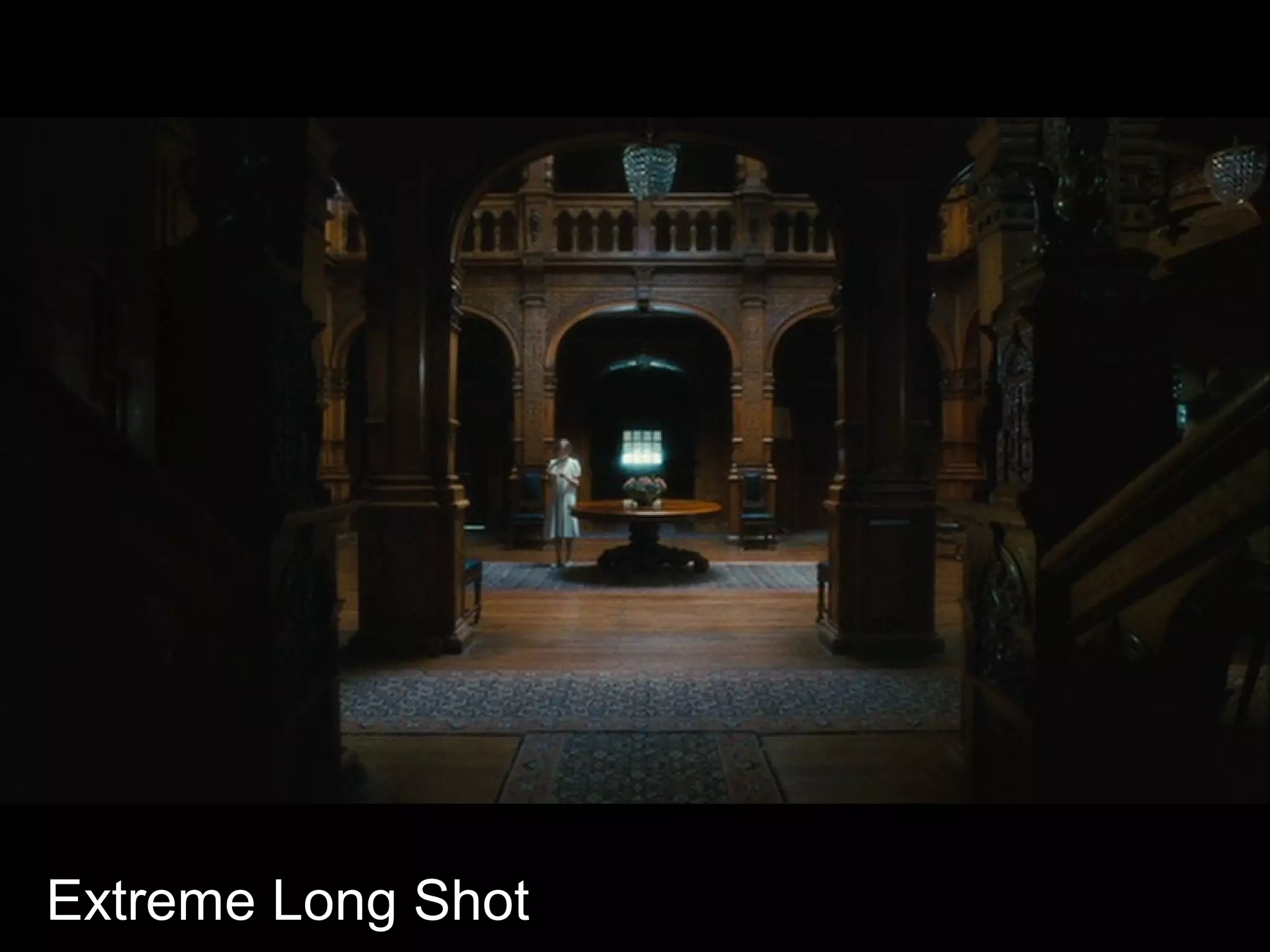
Extreme Long Shot
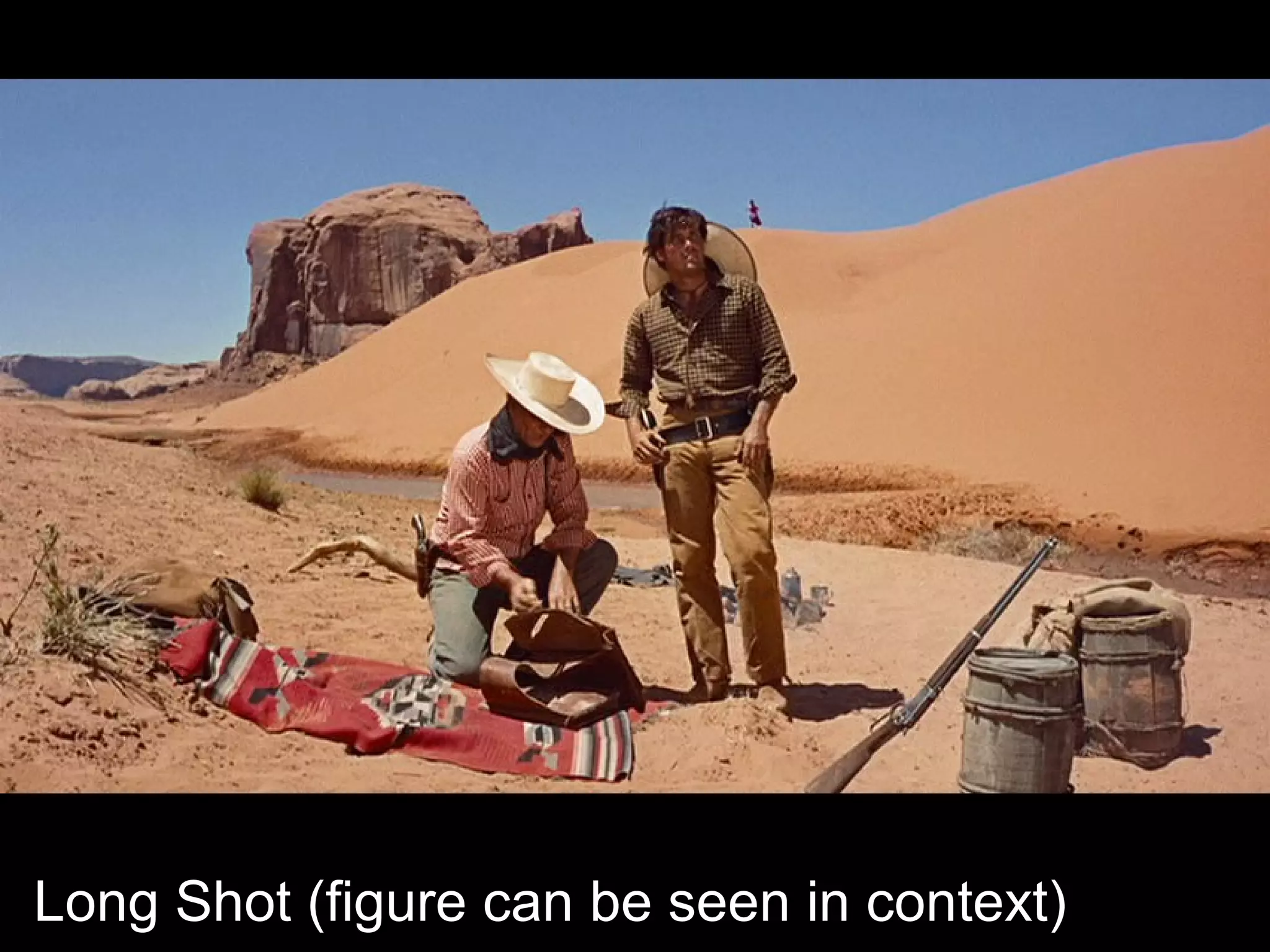
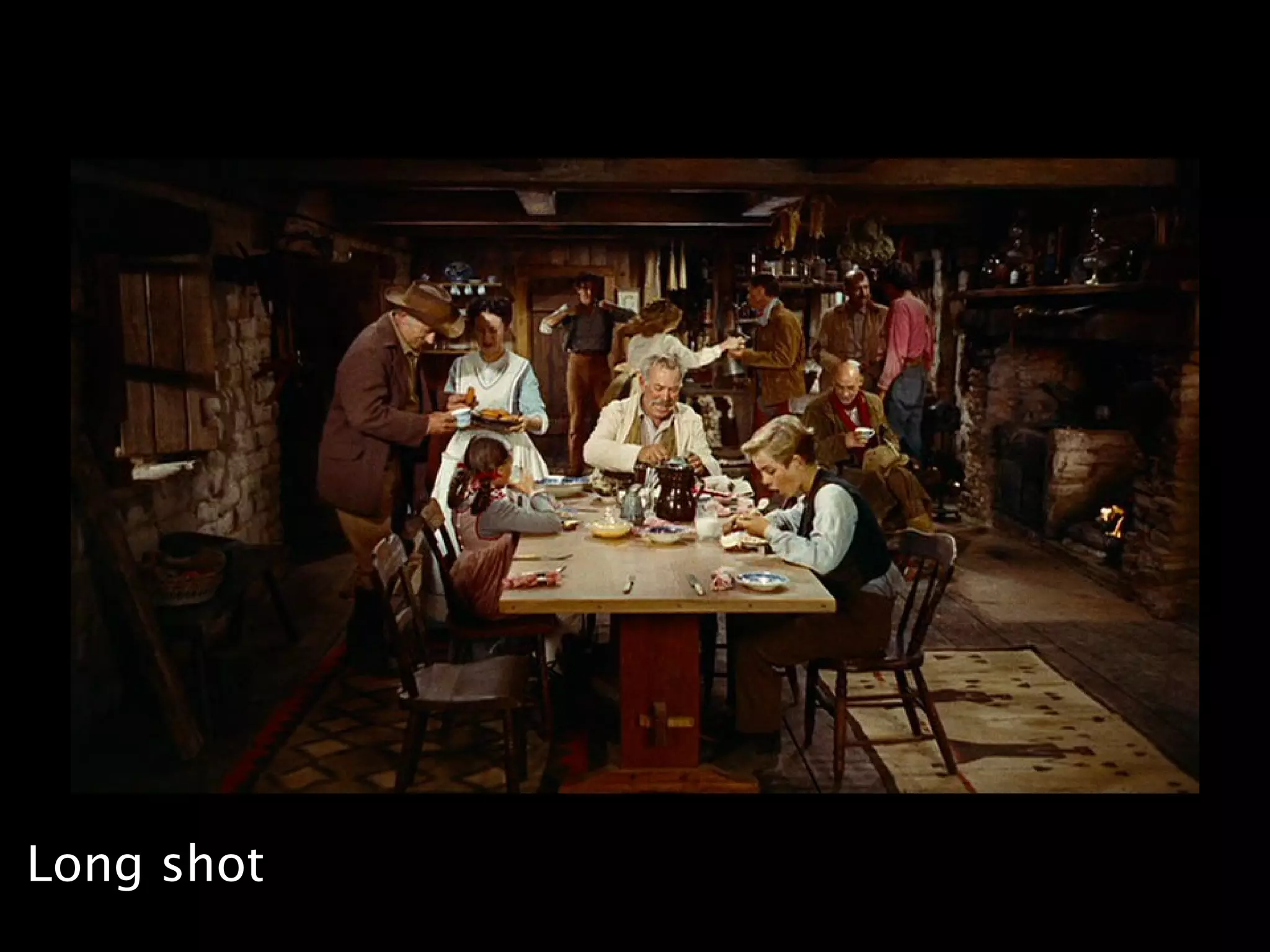
Long Shot (figure can be seen in context)
Long shot
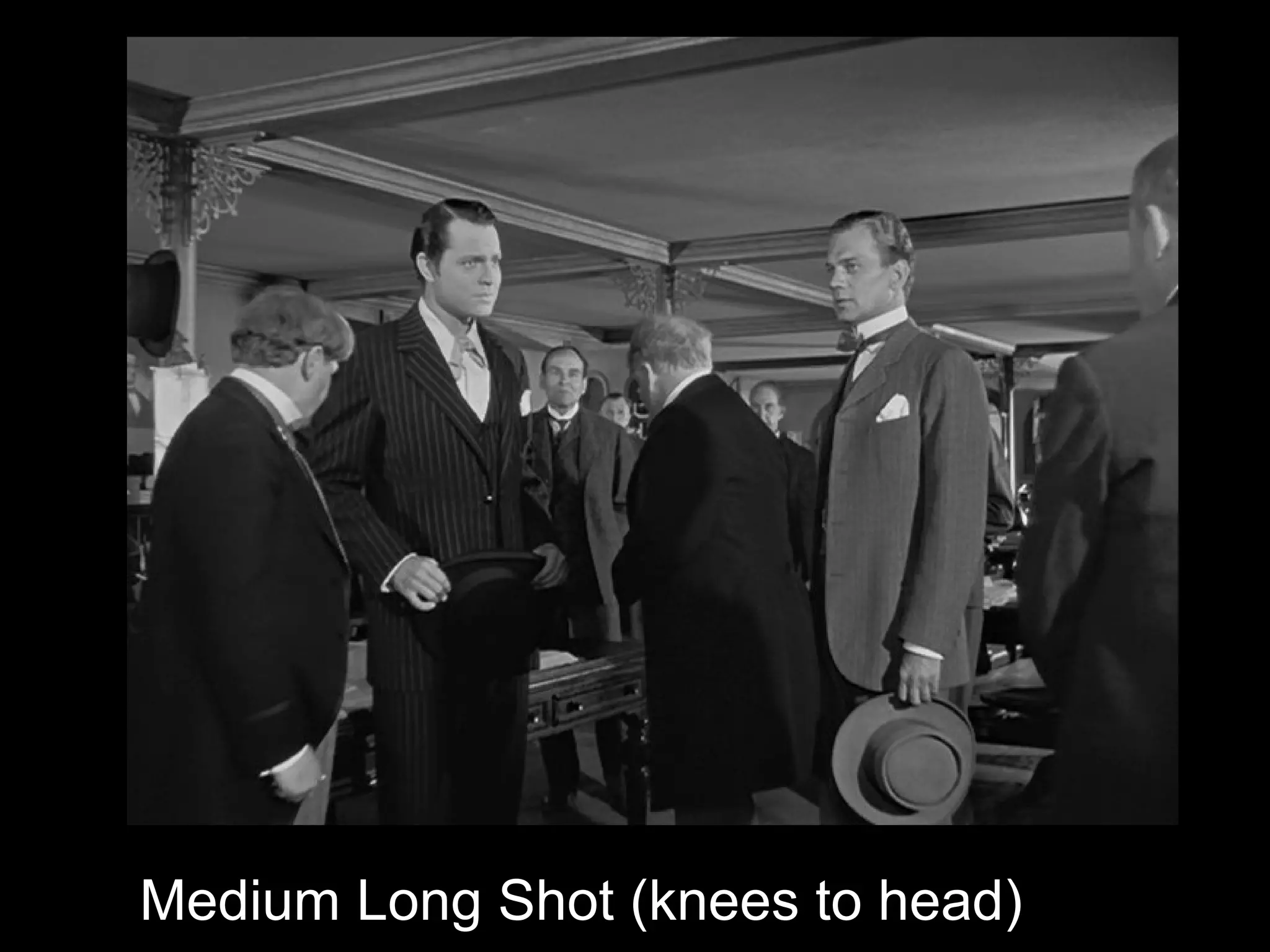
Medium Long Shot (knees to head)
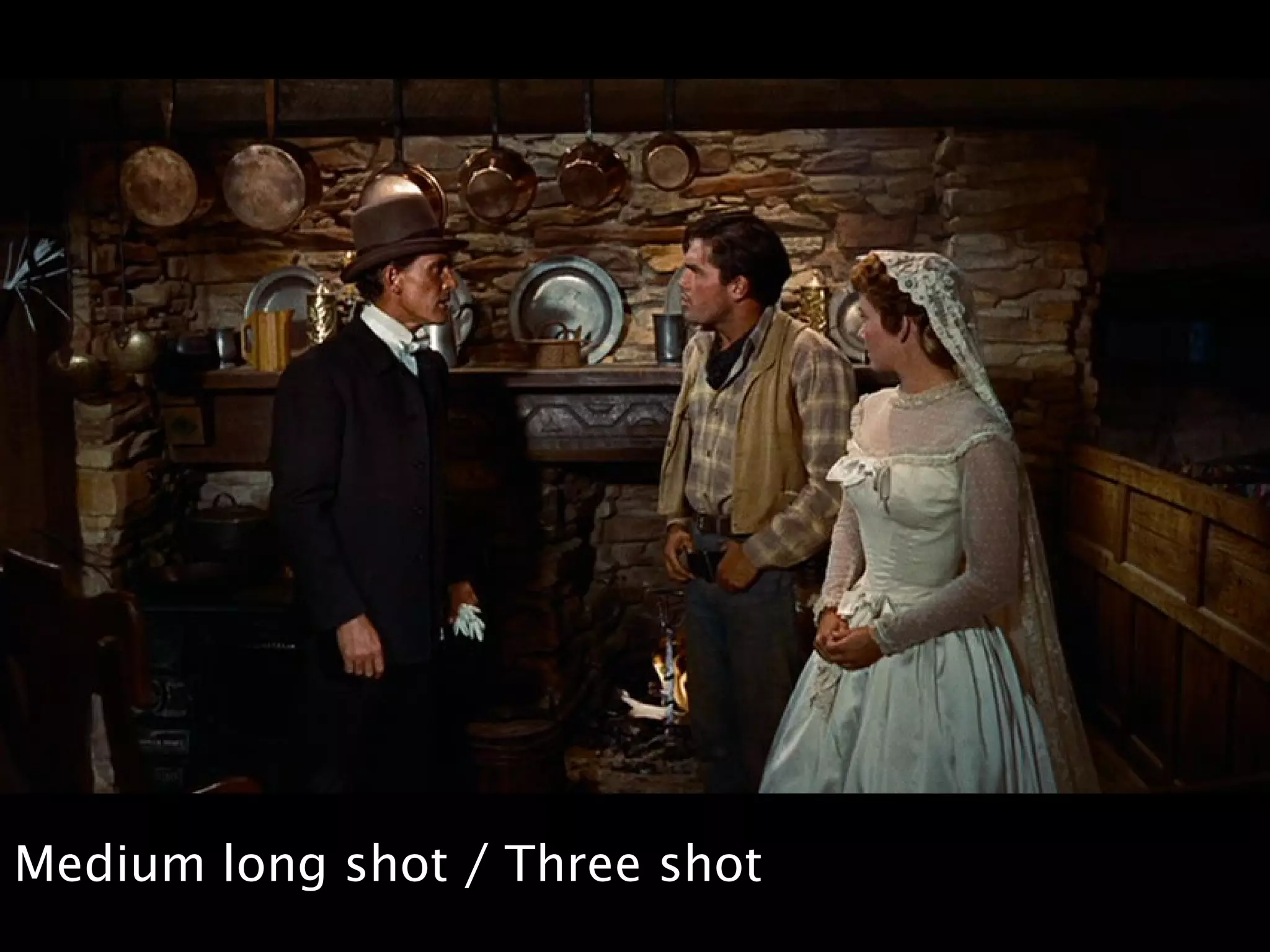
Medium long shot / Three shot
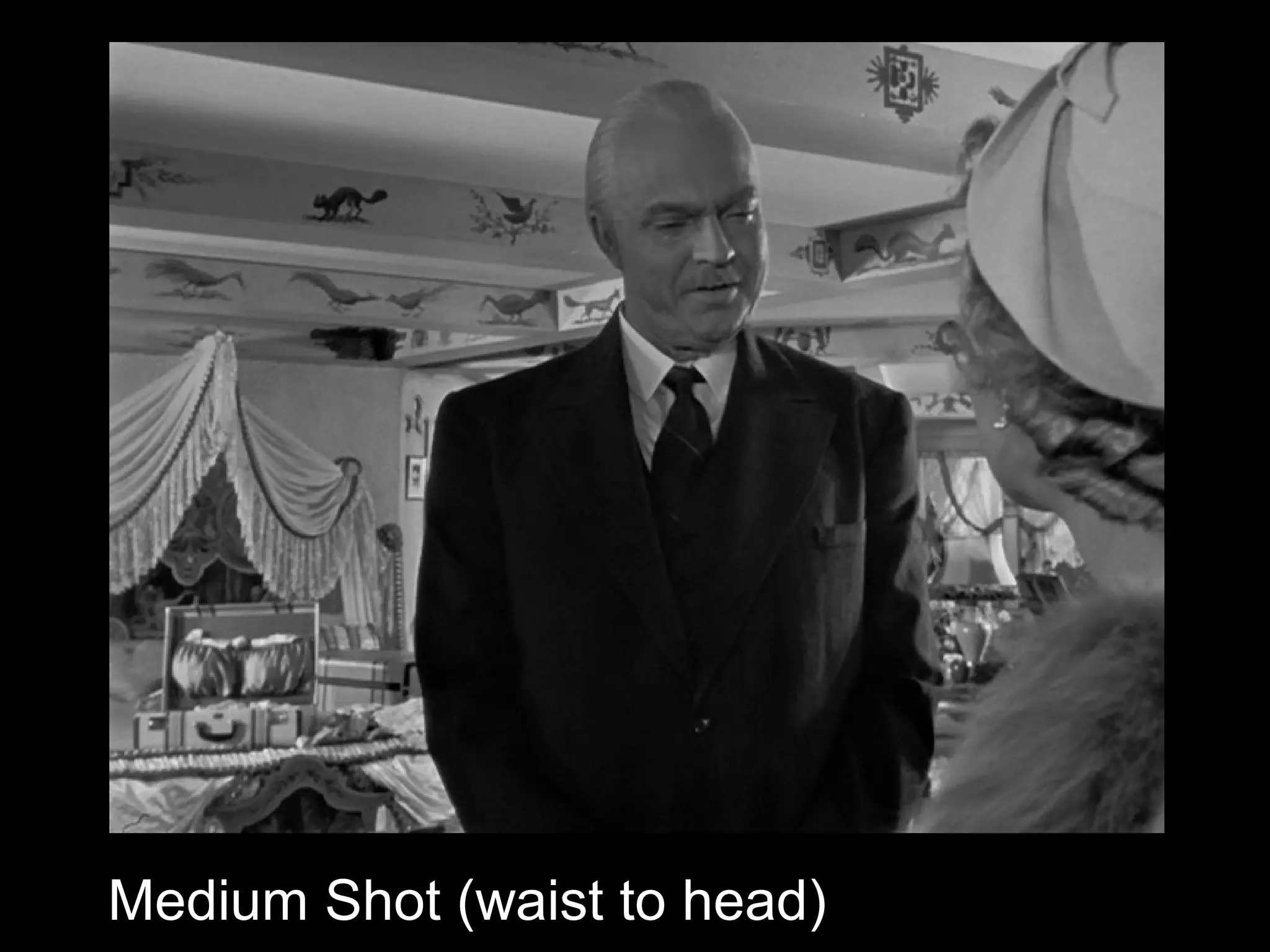
Medium Shot (waist to head)
Medium shot / Two shot
Medium Shot (waist to head)
Medium shot / Single
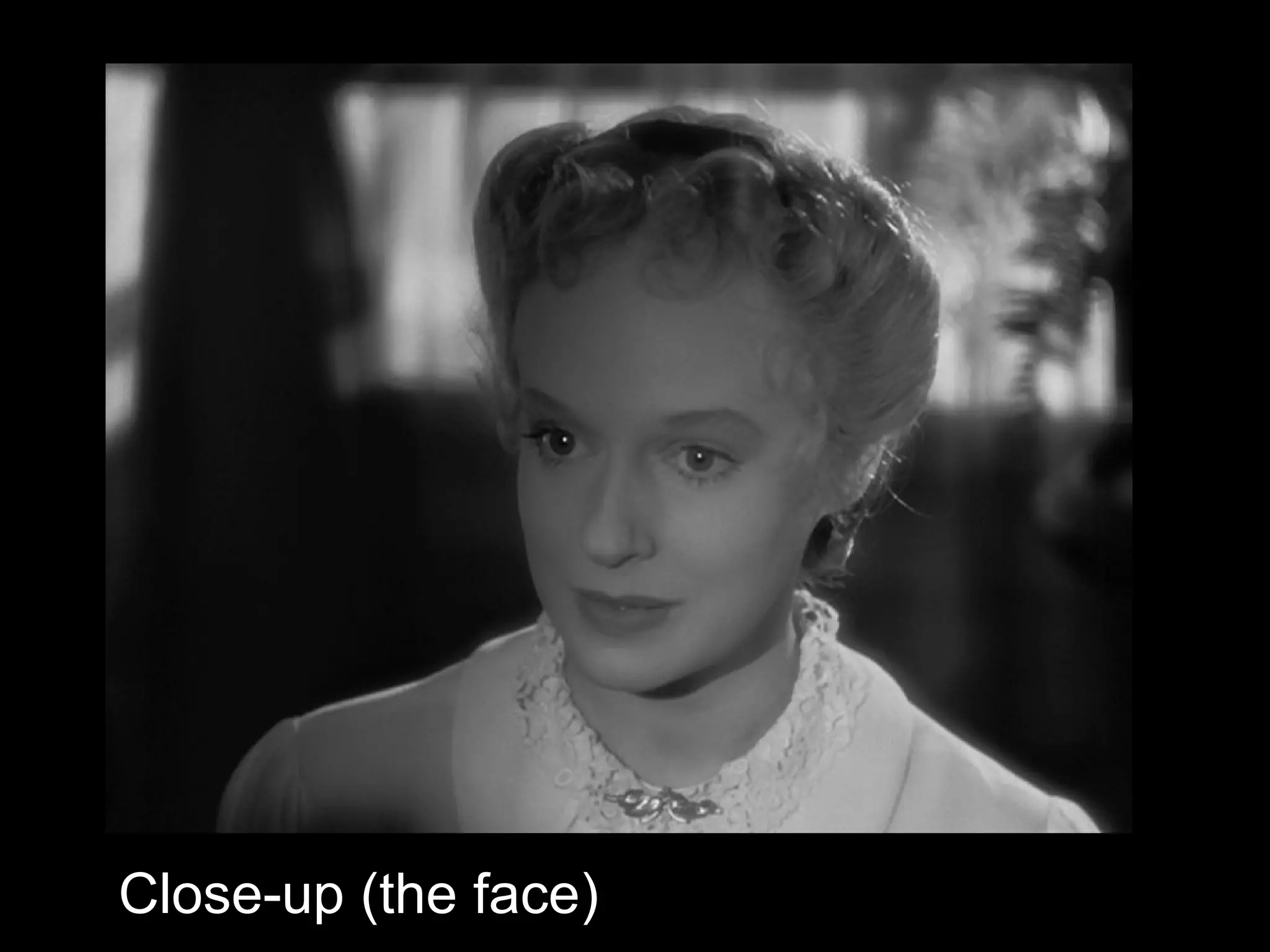
Medium Close-up (shoulders and head)
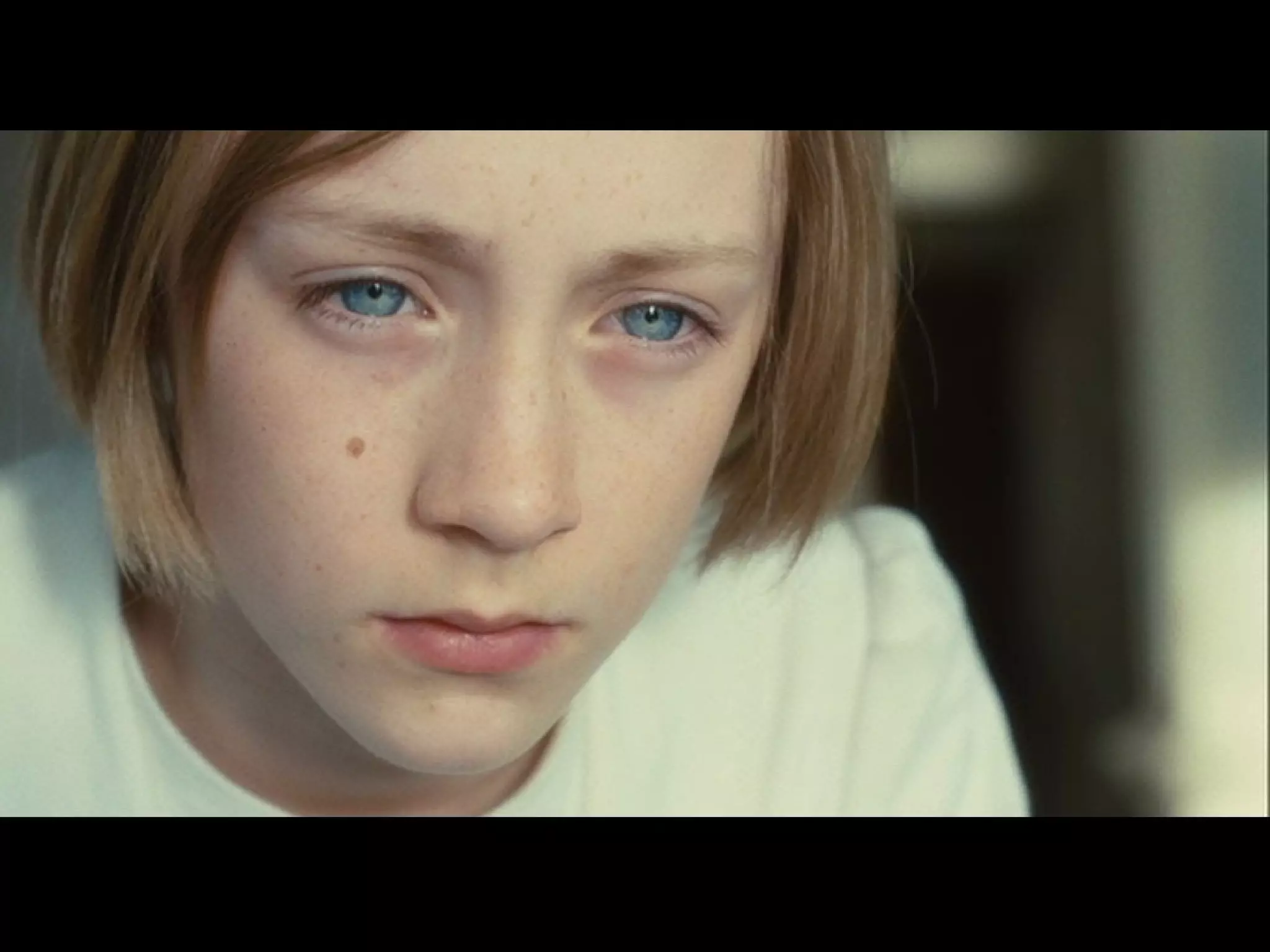
Close-up (the face)
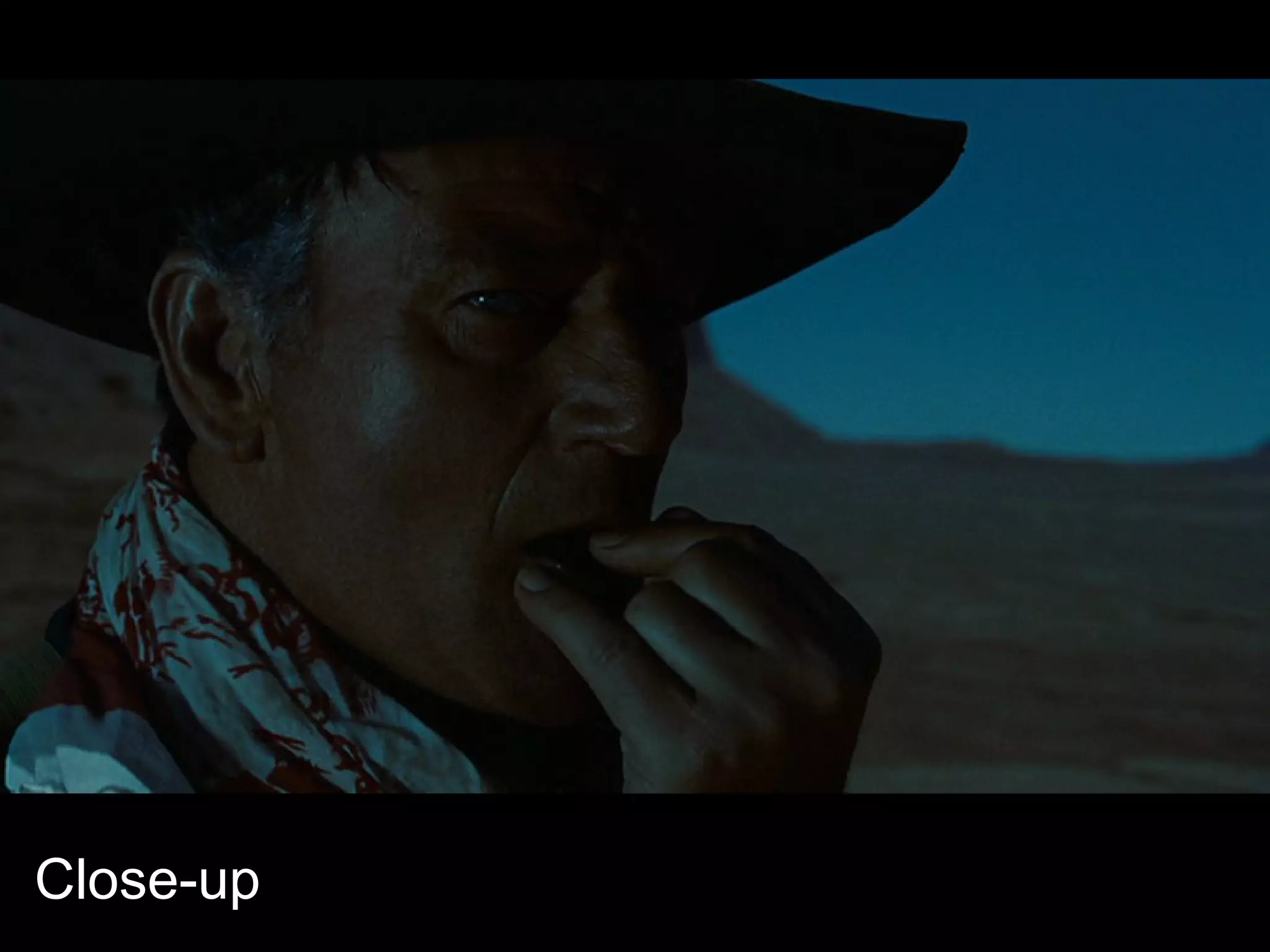
Close-up
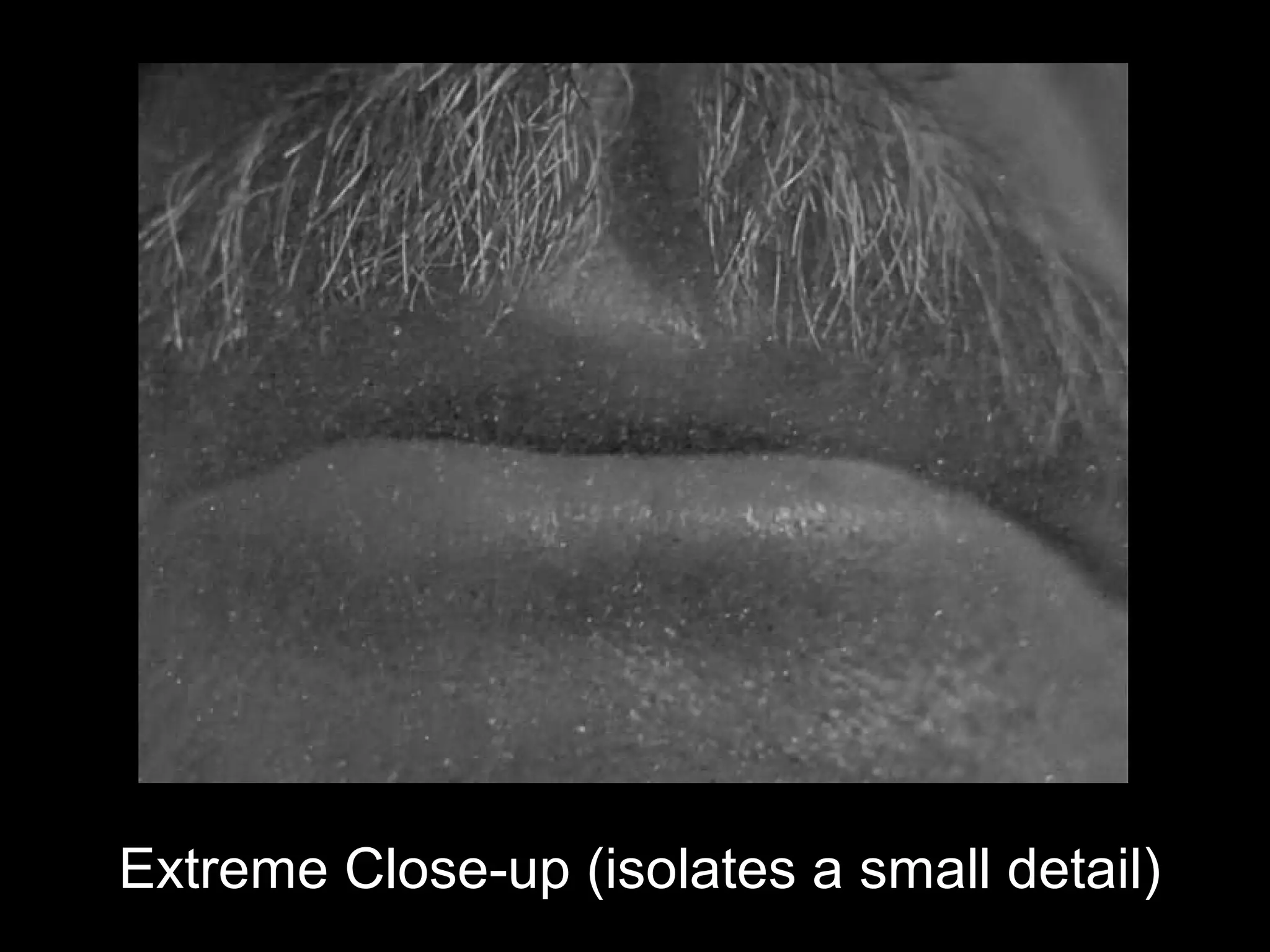
Extreme Close-up (isolates a small detail)
20
Camera
Angle
and Height
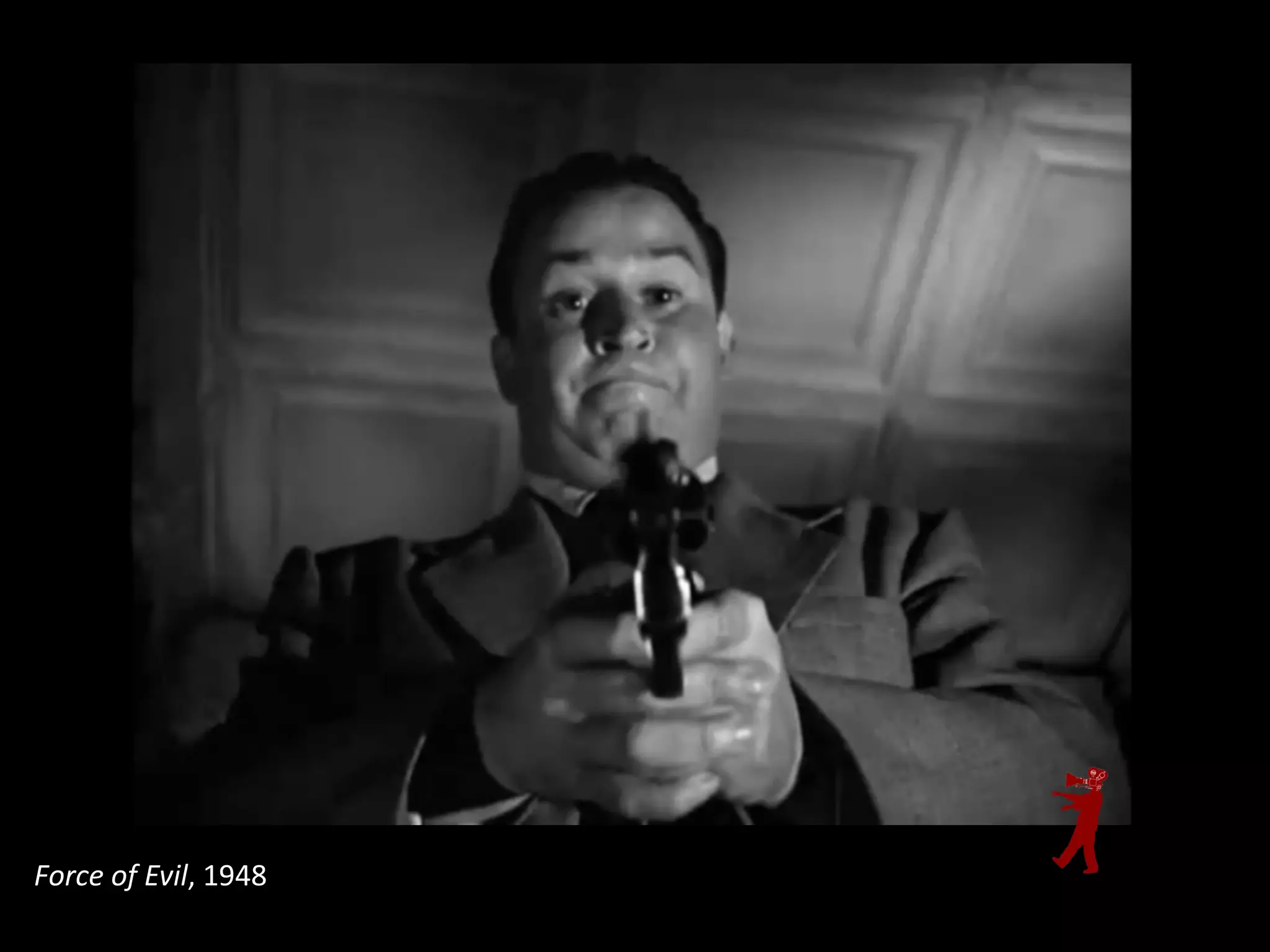
Viewers
identify with
the point of
view of the
camera.
Force of Evil, 1948
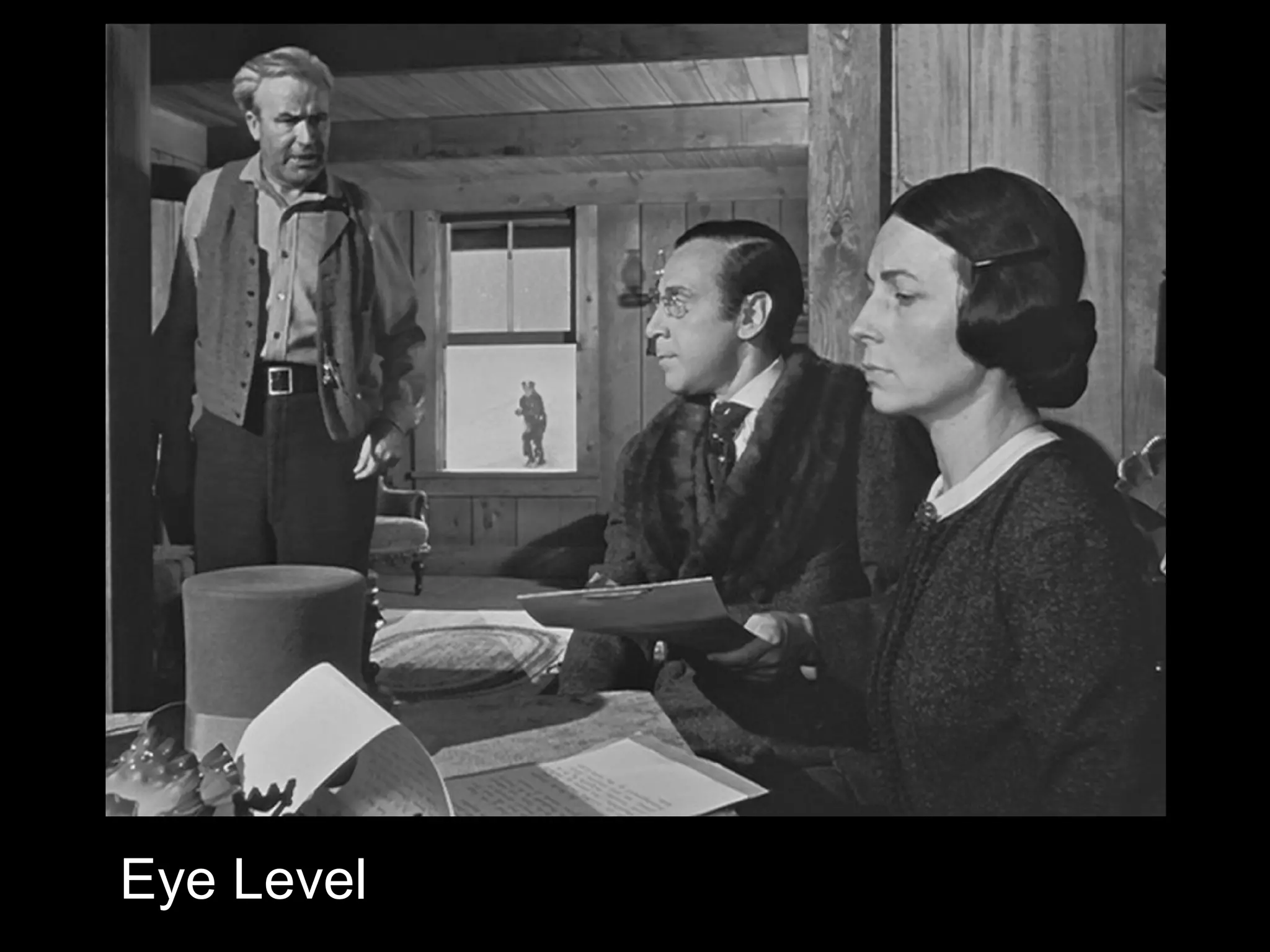
Eye Level
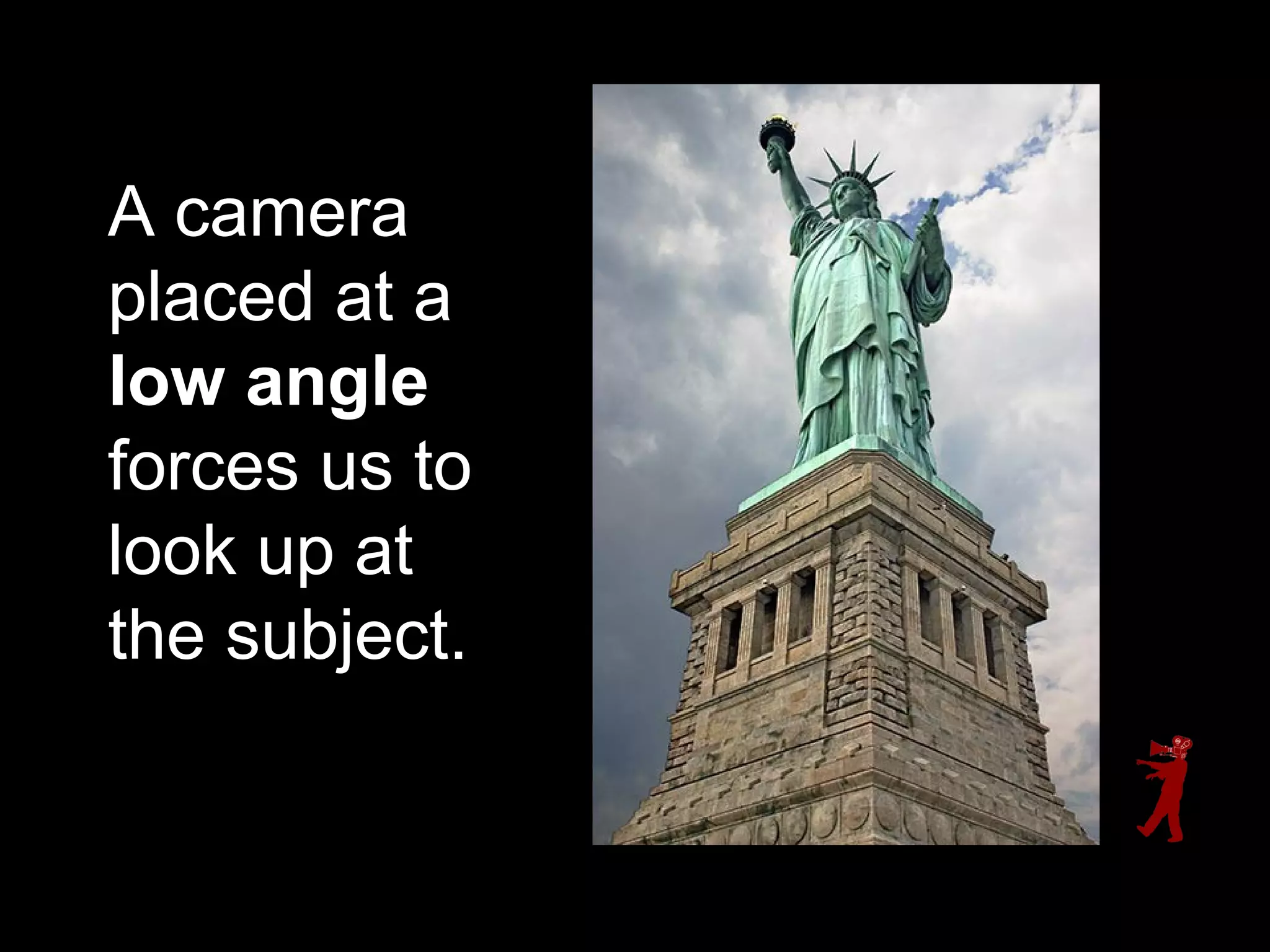
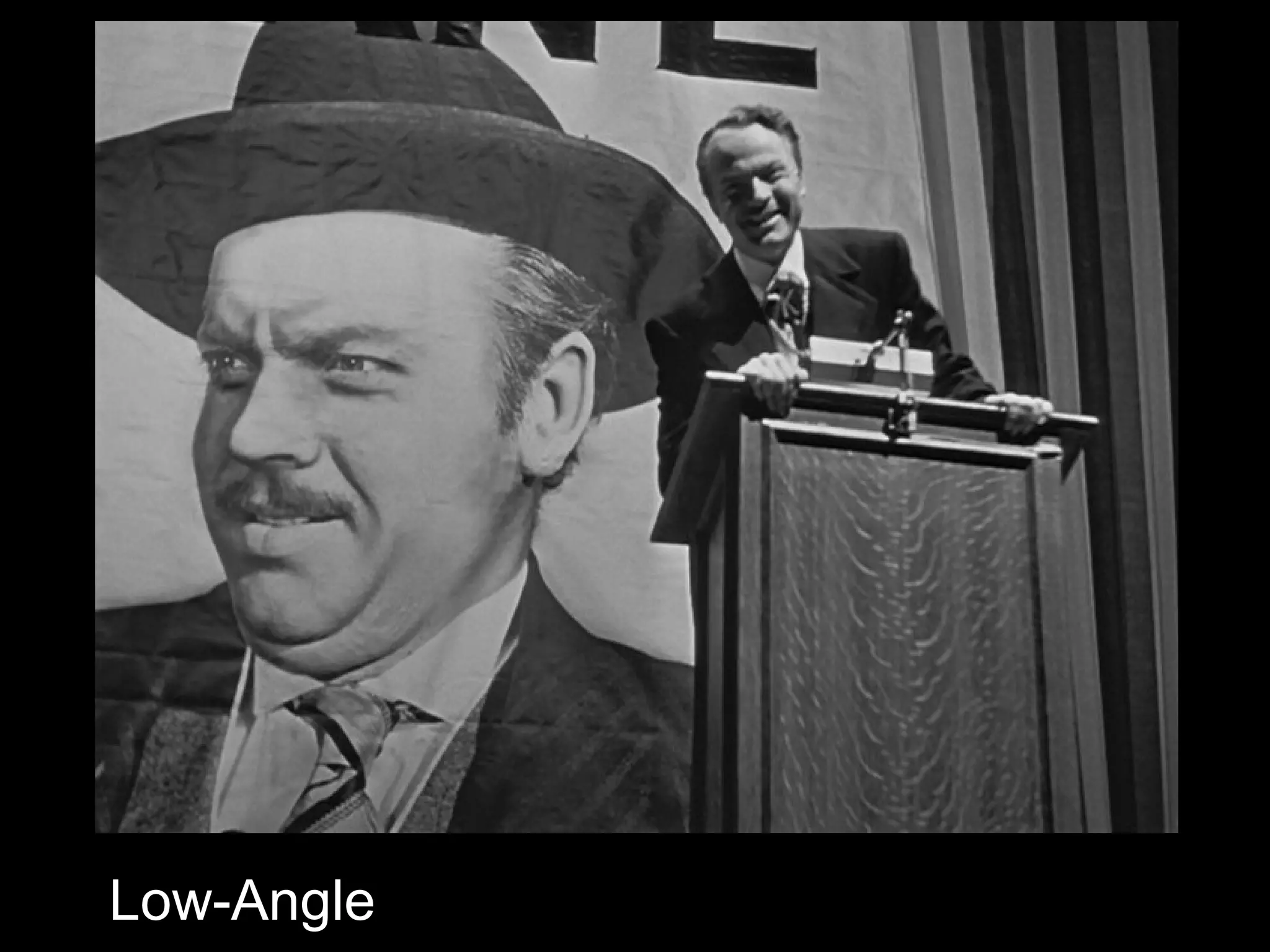
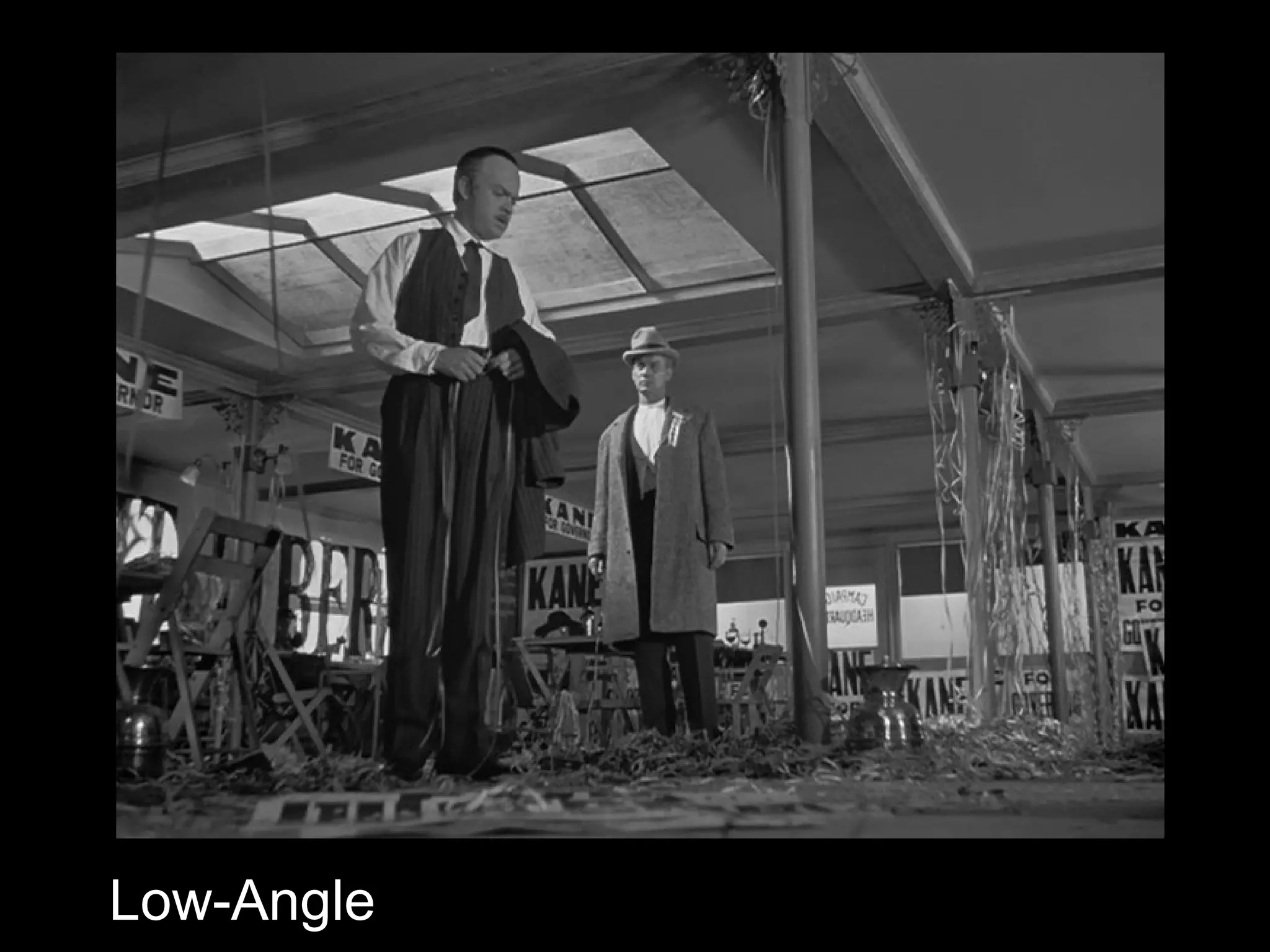
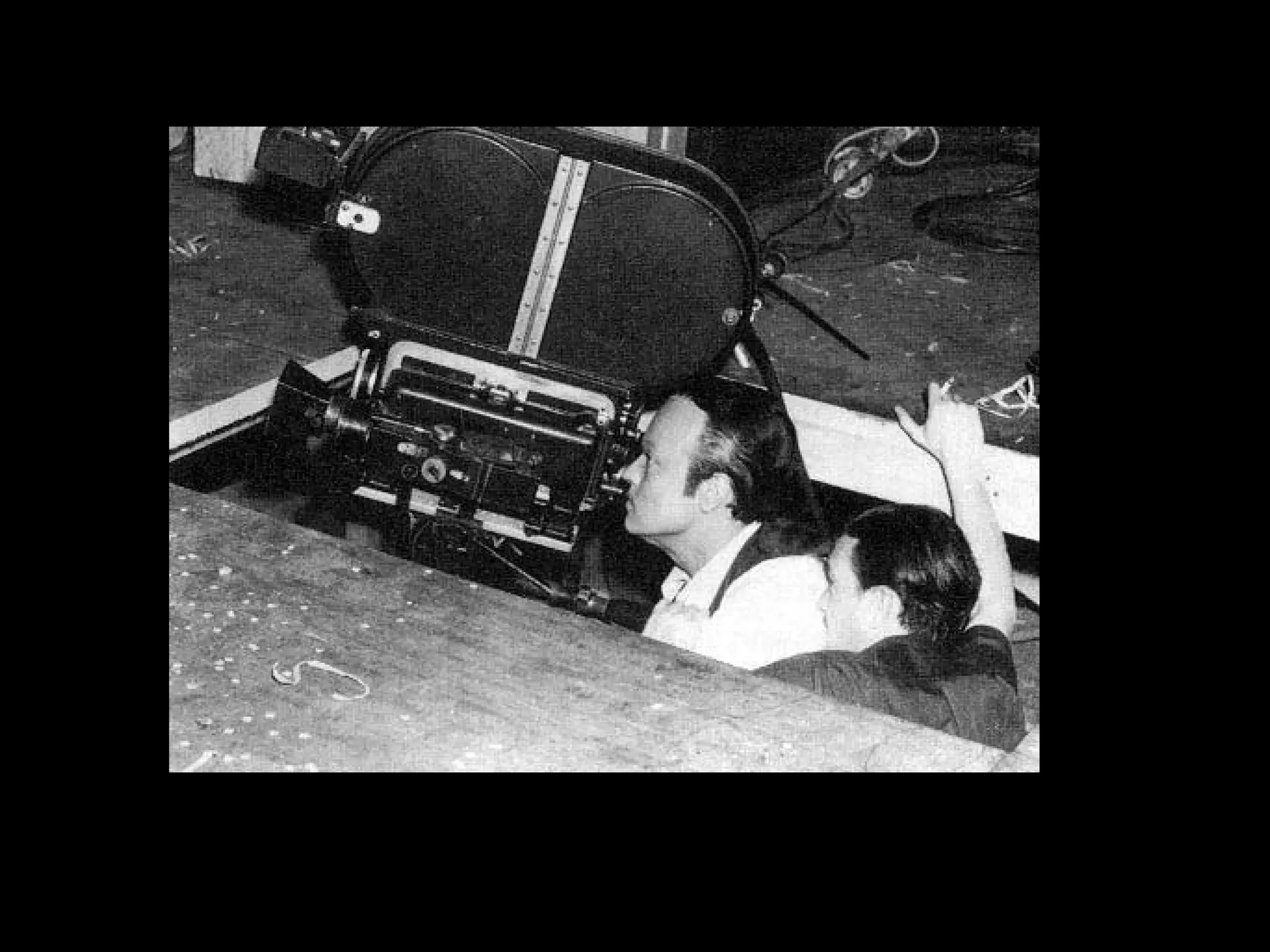
A camera
placed at a
low angle
forces us to
look up at
the subject.
Low-Angle
Low-Angle
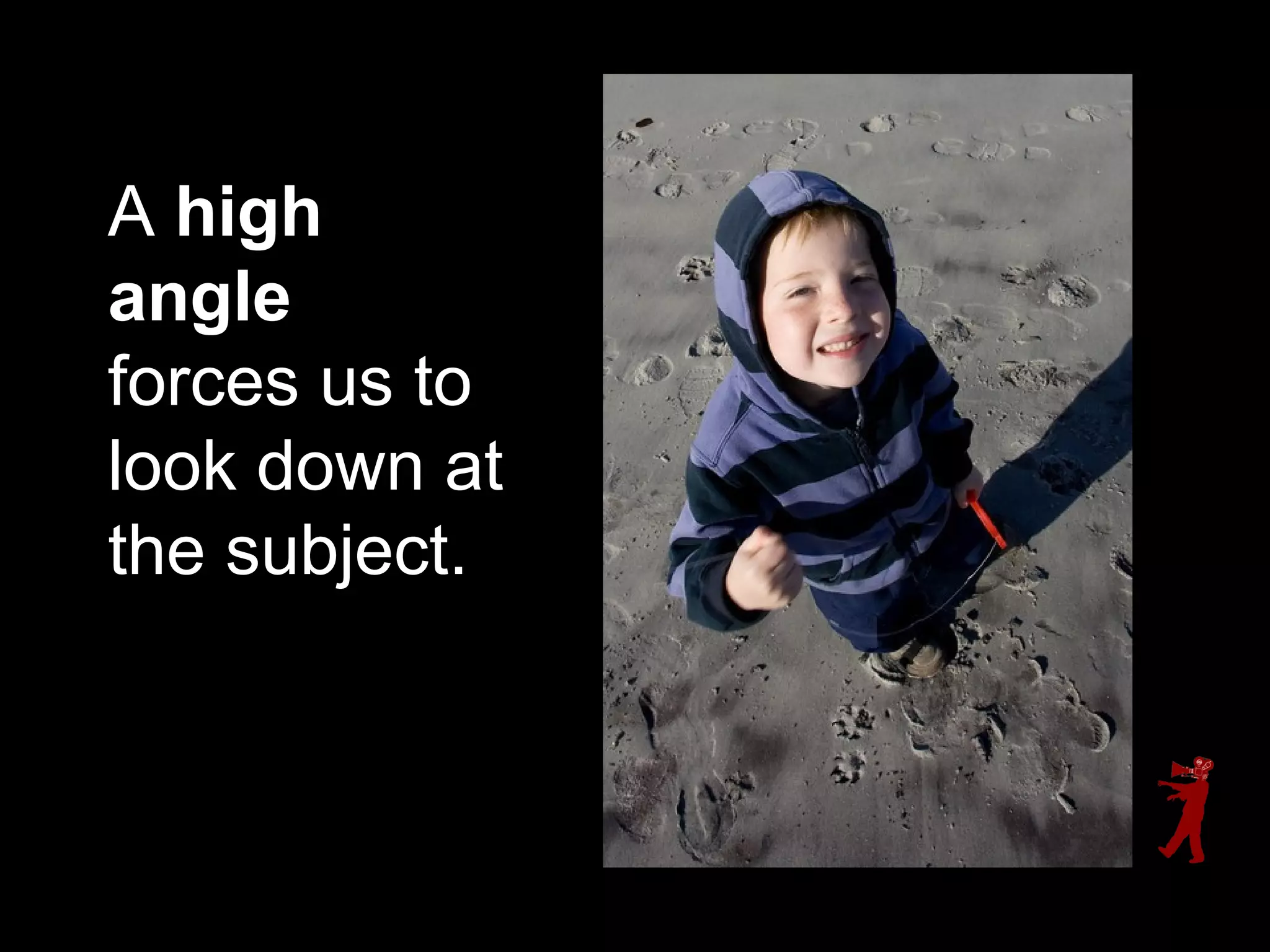
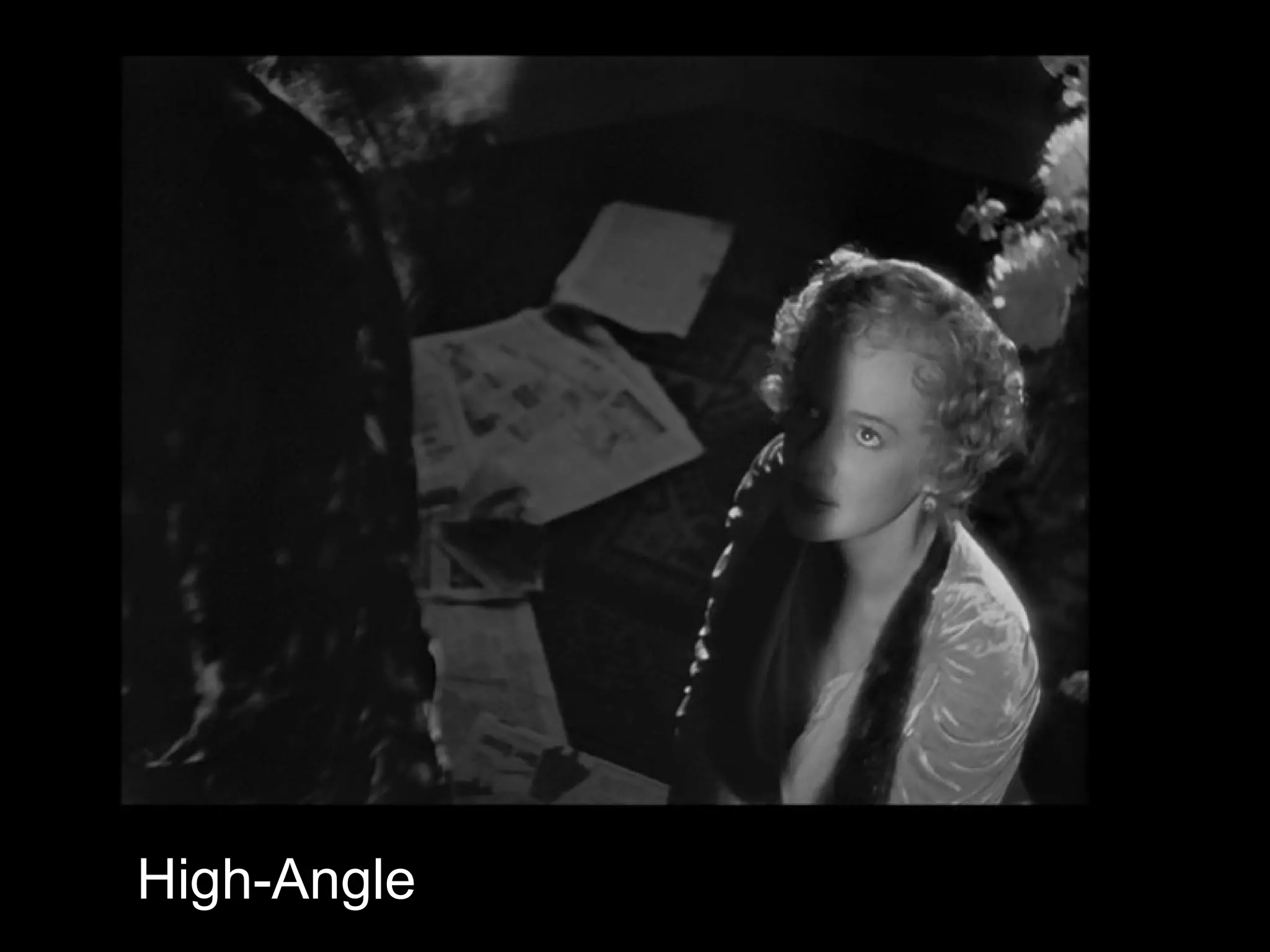
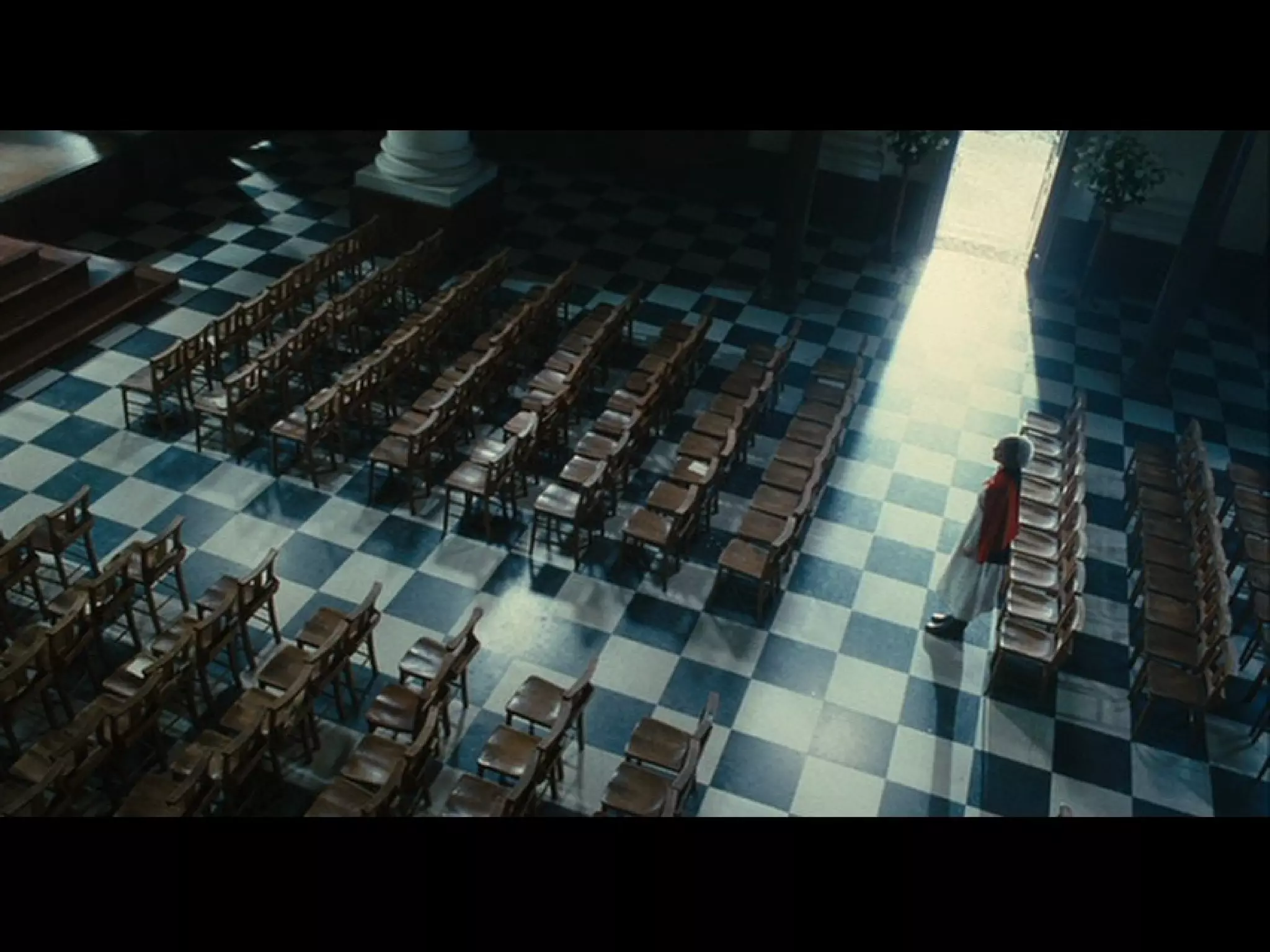
A high
angle
forces us to
look down at
the subject.
High-Angle
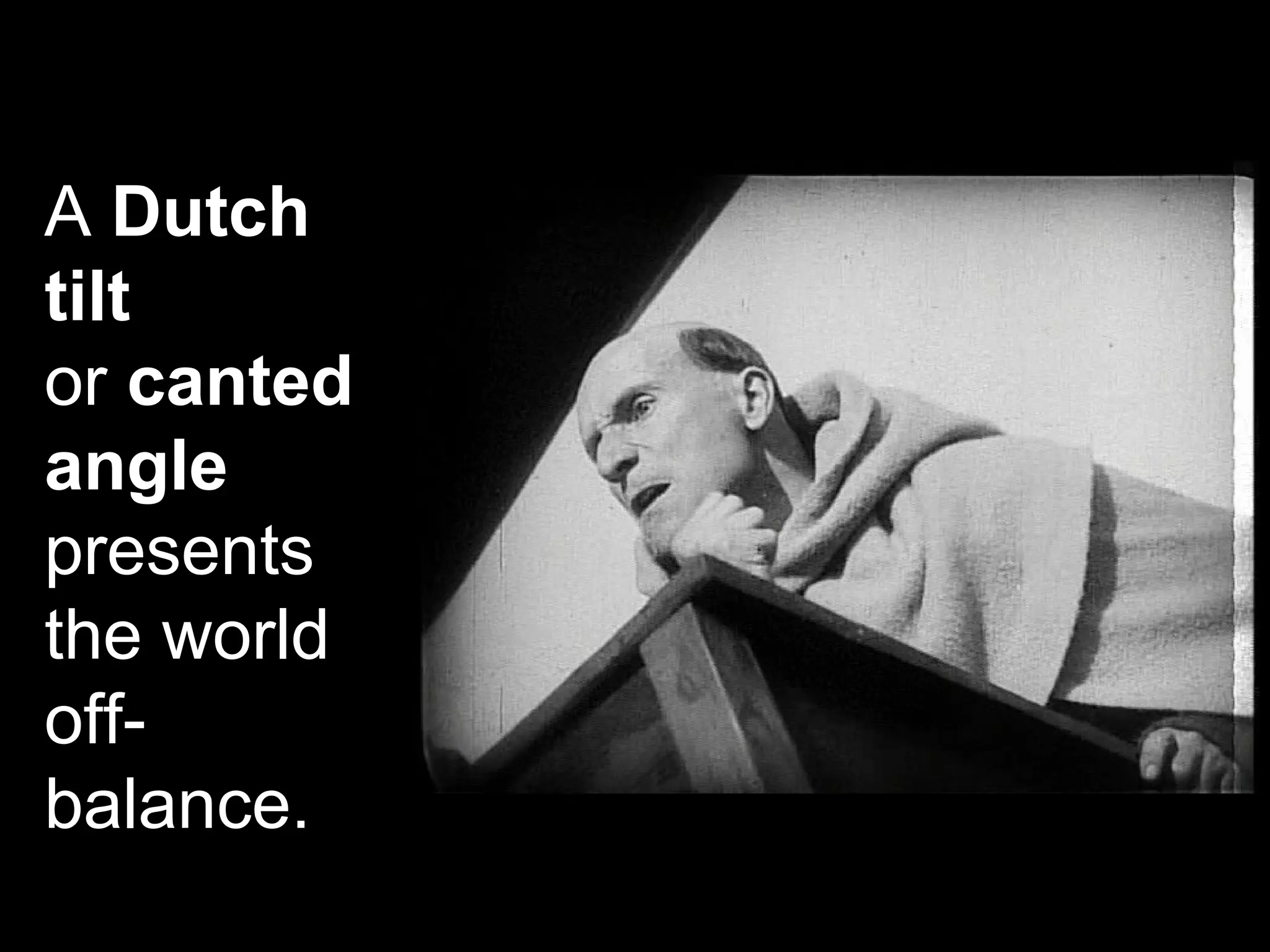
A Dutch
tilt
or canted
angle
presents
the world
off-
balance.
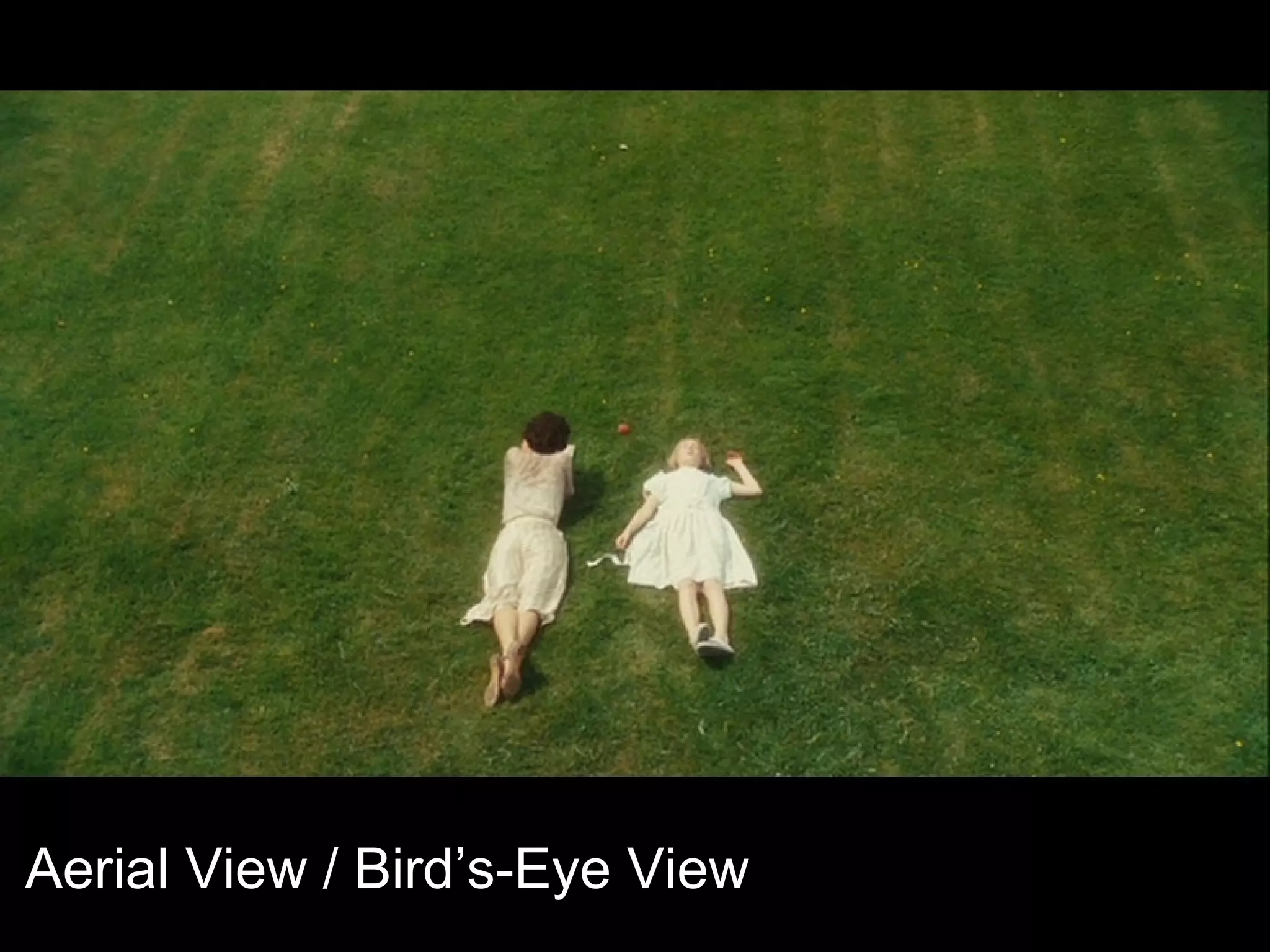
Aerial View / Bird’s-Eye View
33
FRAMING
AND
POINT
OF VIEW
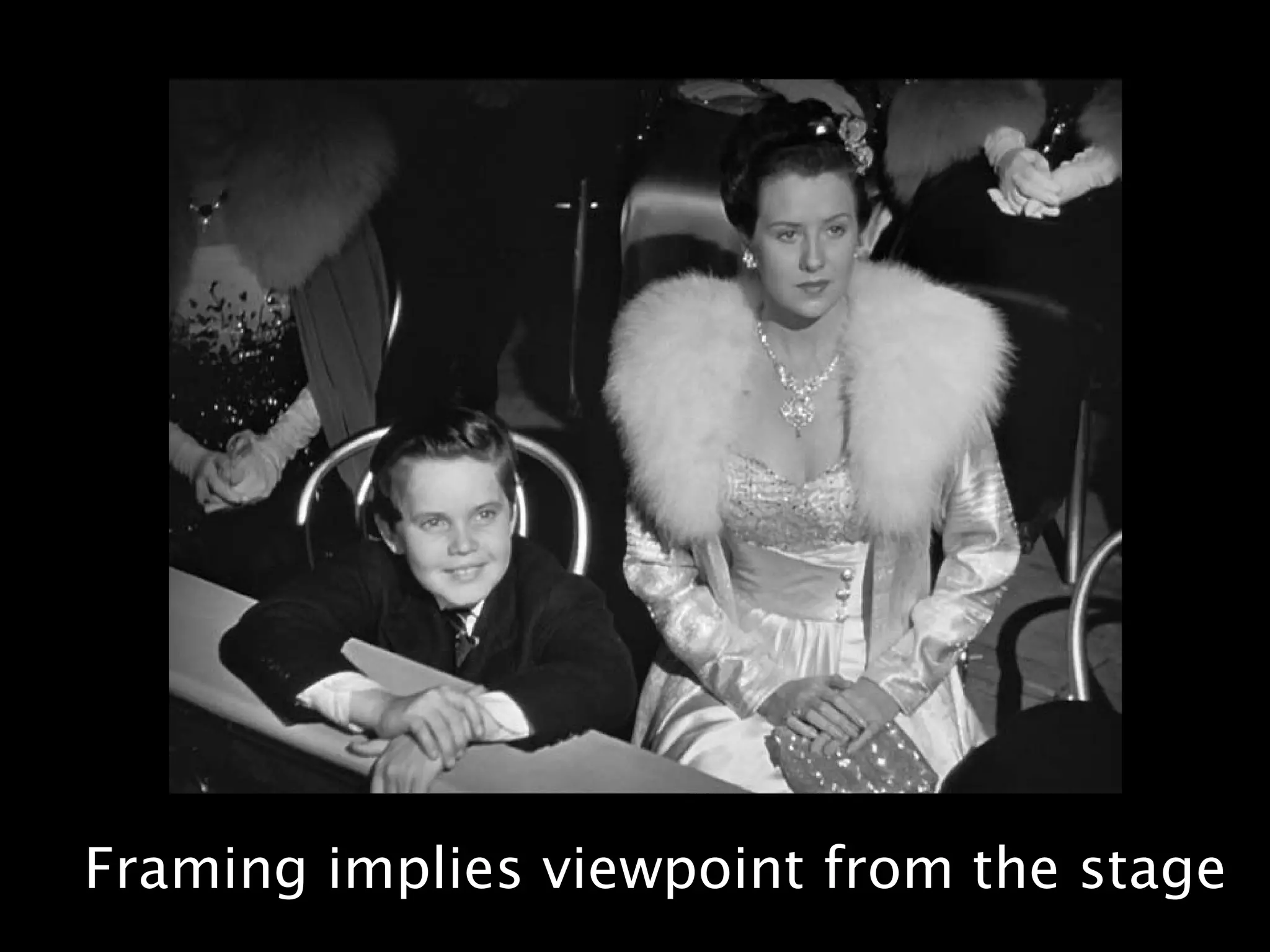
Framing implies viewpoint from the stage
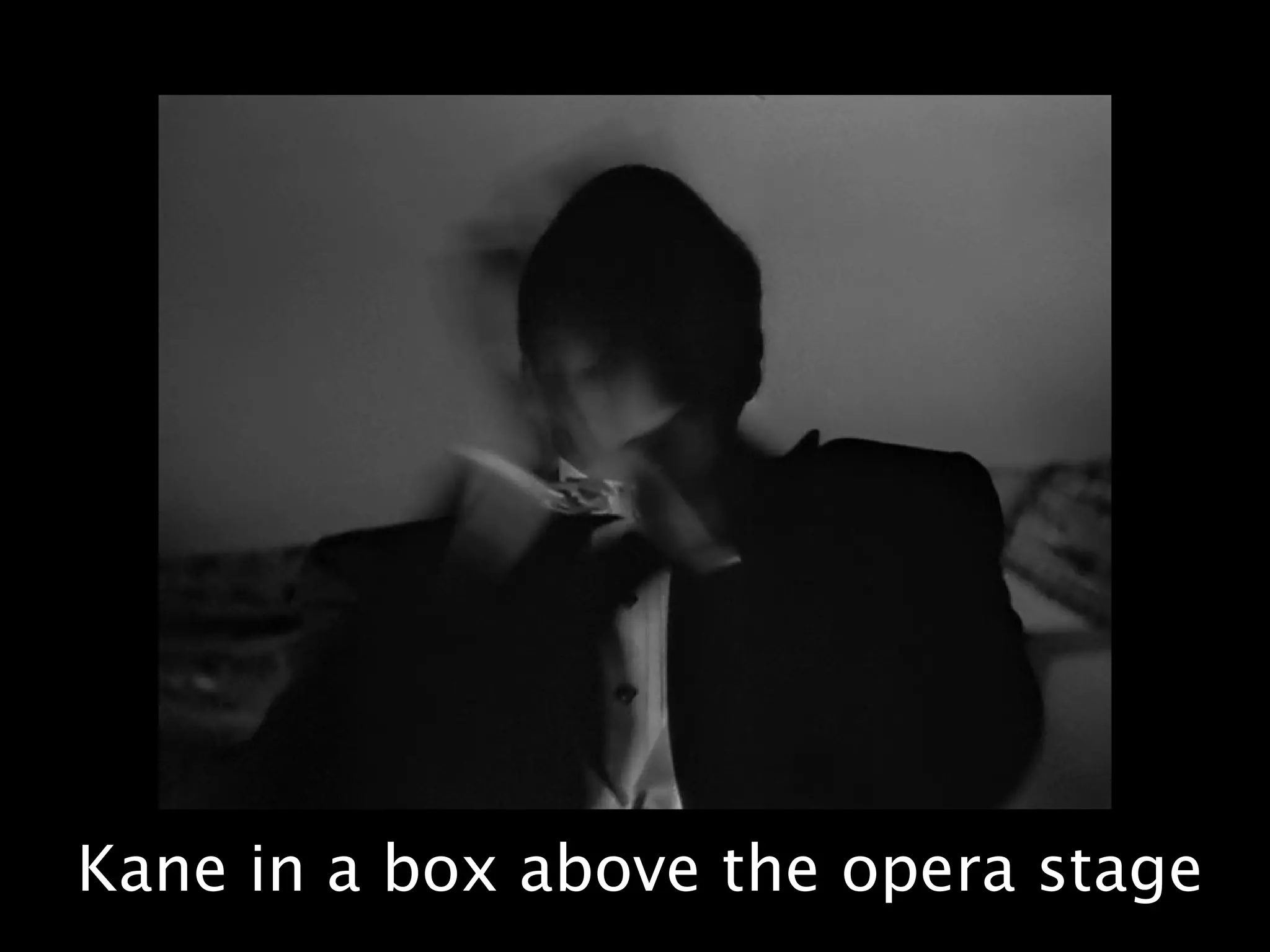
Kane in a box above the opera stage
Camera distances and angles summer 13b

Camera distances and angles summer 13b

Editor's Notes

  • #7 Extreme long shot (XLS) – establishing shot, wide view of a location.
  • #8 Extreme long shot (XLS) – person not recognizable (except from context)
  • #9 Long shot (LS) – full body and some of the surroundins.
  • #11 Medium long shot (MLS) – from the knees up, often used for two characters in conversation.
  • #13 Medium shot (MS) – waist up, proximity without intimacy.
  • #15 Medium shot (MS) – waist up, proximity without intimacy.
  • #17 Medium close-up (MCU)
  • #18 Close up (CU)
  • #19 Close-up (CU)
  • #20 Extreme close-up (XCU)
  • #24 Eye-level. Normal. Implies neutrality toward the subject.