Narrative
Structure
in Film
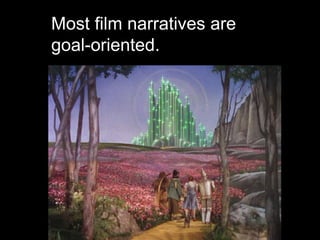
Most film narratives are
goal-oriented.
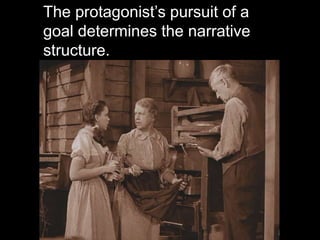
The protagonist’s pursuit of a
goal determines the narrative
structure.
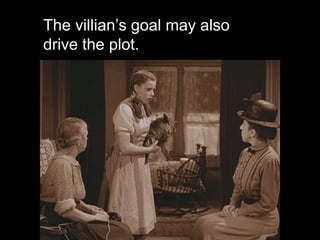
The villian’s goal may also
drive the plot.
Three-Act Structure
1
Exposition
Three-Act Structure
1
Exposition
Three-Act Structure
Introduces characters and
dramatic situation.
Protagonist forms a goal.
2
Complicating Action
Three-Act Structure
2
Complicating Action
Three-Act Structure
Protagonist faces obstacles
in pursuit of goal.
3
Climax and Resolution
Three-Act Structure
3
Climax and Resolution
Three-Act Structure
Protagonist confronts opposition. Goal
is achieved (or not).
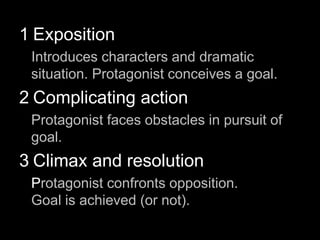
1 Exposition
Introduces characters and dramatic
situation. Protagonist conceives a goal.
2 Complicating action
Protagonist faces obstacles in pursuit of
goal.
3 Climax and resolution
Protagonist confronts opposition.
Goal is achieved (or not).
Three-Act Structure
Turning Point
Three-Act Structure
Turning Point
Protagonist gets a new goal or must
change tactics in pursuit of a goal.
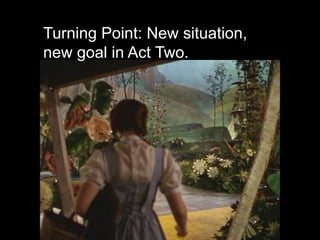
Turning Point: New situation,
new goal in Act Two.
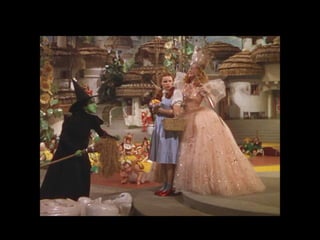
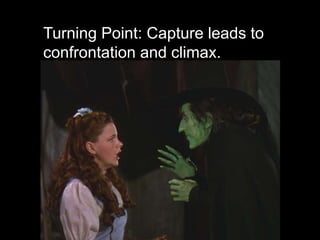
Turning Point: Capture leads to
confrontation and climax.
Act Two
Act Two
Complicating Action:
Protagonist has to change
tactics to achieve goal, or
protagonist faces a new
situation and has to cope.
Act Two
Complicating Action:
Protagonist has to change
tactics to achieve goal, or
protagonist faces a new
situation and has to cope.
Development:
Protagonist struggles
toward goals. Incidents
create action, suspense,
delay.
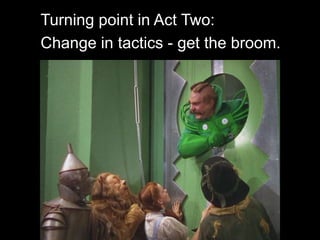
Turning point in Act Two:
Change in tactics - get the broom.
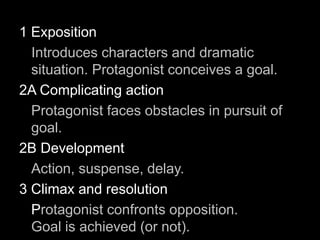
1 Exposition
Introduces characters and dramatic
situation. Protagonist conceives a goal.
2A Complicating action
Protagonist faces obstacles in pursuit of
goal.
2B Development
Action, suspense, delay.
3 Climax and resolution
Protagonist confronts opposition.
Goal is achieved (or not).
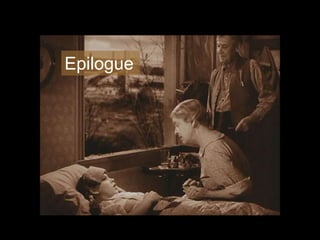
Epilogue
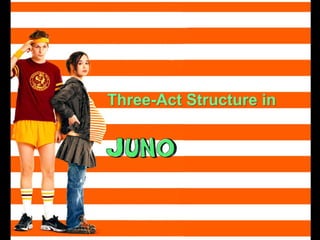
Three-Act Structure in
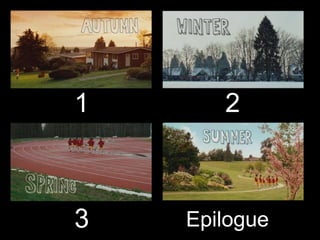
1
Epilogue3
2
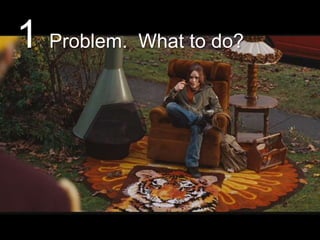
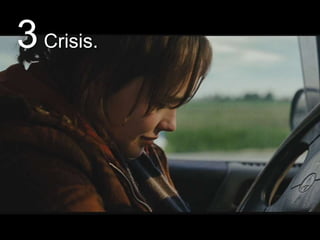
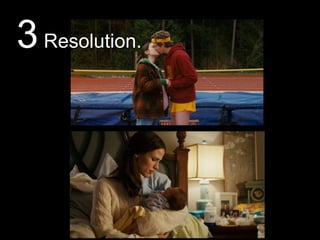
1 Problem. What to do?
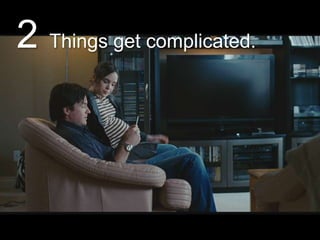
2 Things get complicated.
3Crisis.
3Resolution.
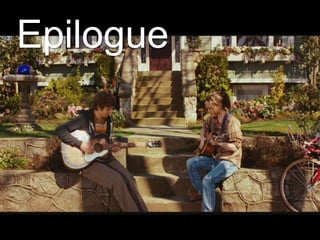
Epilogue
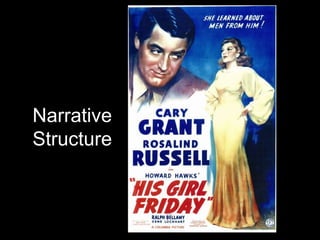
Narrative
Structure
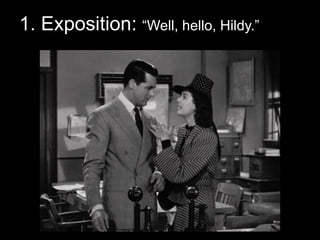
1. Exposition: “Well, hello, Hildy.”
Turning Point:
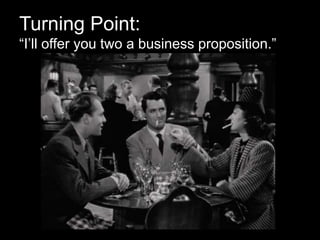
“I’ll offer you two a business proposition.”
2. Complicating Action:
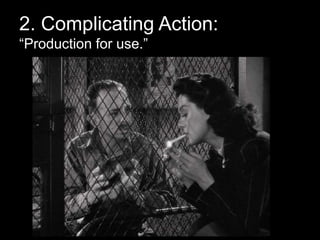
“Production for use.”
Turning Point (midpoint):
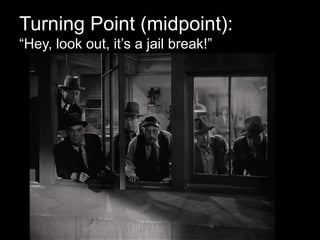
“Hey, look out, it’s a jail break!”
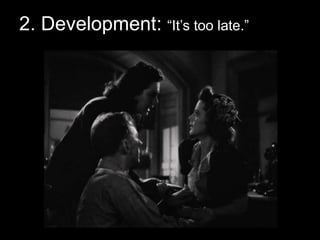
2. Development: “It’s too late.”
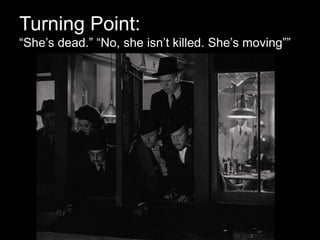
Turning Point:
“She’s dead.” “No, she isn’t killed. She’s moving””
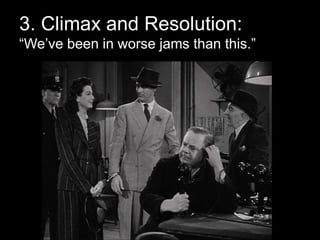
3. Climax and Resolution:
“We’ve been in worse jams than this.”
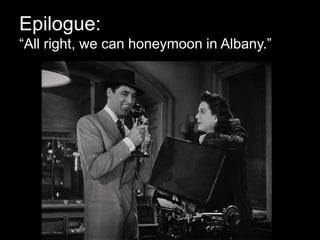
Epilogue:
“All right, we can honeymoon in Albany.”
Analyzing Narrative
• What is the protagonist’s goal at the
beginning of the movie? How does the
protagonist pursue this goal?
• What obstacles block the protagonist’s
efforts?
• Does the protagonist’s goal change? Does
the protagonist have to change tactics in
order to achieve the goal? (When? Why?)
• Is the goal achieved? When? How?
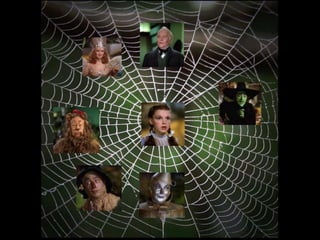
Another way to think of
structure.
Photo Credits
Arbre Evolution (Flickr)
Trey Ratcliff, Stuck in
Customs (Flickr)
kurtxio (Flickr)

Three-Act Narrative Structure

Editor's Notes

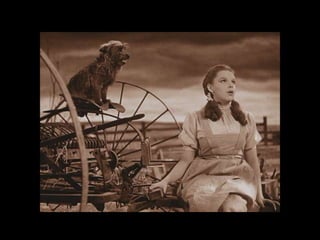
  • #3 To get home Dorothy must go off to see the wizard.
  • #4 Dorothy’s initial goal is to protect Toto from Miss Gulch.
  • #5 Dorothy’s desire: To go over the rainbow
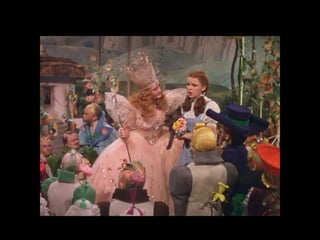
  • #6 Dorothy’s goal changes: Once in Oz, she wants to go home.
  • #7 To get home Dorothy must go off to see the wizard.
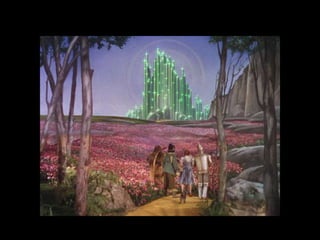
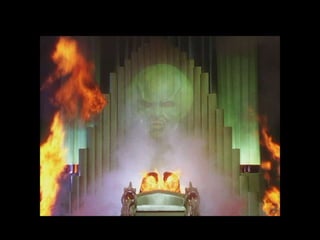
  • #8 The wizard gives Dorothy a new goal: Bring me the witch’s broom.
  • #9 The villain’s goals also drive the plot. Miss Gulch’s desire to see Toto destroyed prompts Dorothy to run away.
  • #10 The Wicked Witch of the West wants the ruby slippers.
  • #21 Turning point: The arrival in Oz marks the beginning of Act 2. Dorothy faces a new situation and gets a new goal.
  • #22 Turning point: Dorothy’s capture by the witch leads to the climactic confrontation in Act 3.
  • #26 Turning point: Arrival in the Emerald City marks another turn. The Wizard, instead of solving Dorothy’s problems, gives her a task. Dorothy must change tactics.
  • #37 What initial situation is established? (Two plotlines) What goals do characters conceive? Who is the protagonist?
  • #38 Shift in direction: the deal. What new goal does Hildy get? How does Walter change his tactics in order to achieve his goal? Does Bruce have a goal?
  • #39 How has the initial situation changed? What opposition does Hildy face? Bruce? Walter?
  • #40 Shift in direction: the deal. What new goal does Hildy get? How does Walter change his tactics in order to achieve his goal? Does Bruce have a goal?
  • #41 How do characters struggle toward goals? What obstacles do they face? What incidents create action, suspense, or delay?
  • #42 Shift in direction: How does this turning point push the film toward it’s climax? (It gets everyone out of the room except Walter, who enters, and Hildy.)
  • #43 How does action or confrontation resolve plotlines? Are there any significant discoveries? New understandings? Reversals of fortune? Have character goals been achieved?
  • #44 Does anything happen after all plotlines have been resolved?