CAM SAM and Composition 
By: Denise O’Brein, Kate-lyn Aranda, Annamaria Noto and Amanda Abi- 
Khalil
Camera Shots 
• Establishing shot 
• Wide shot 
• Long shot 
• Mid/ medium shot 
• Close up shot 
• Extreme close up shot 
• Point of view 
• Over the shoulder shot 
• Two shot 
• Overhead shot
Establishing shot 
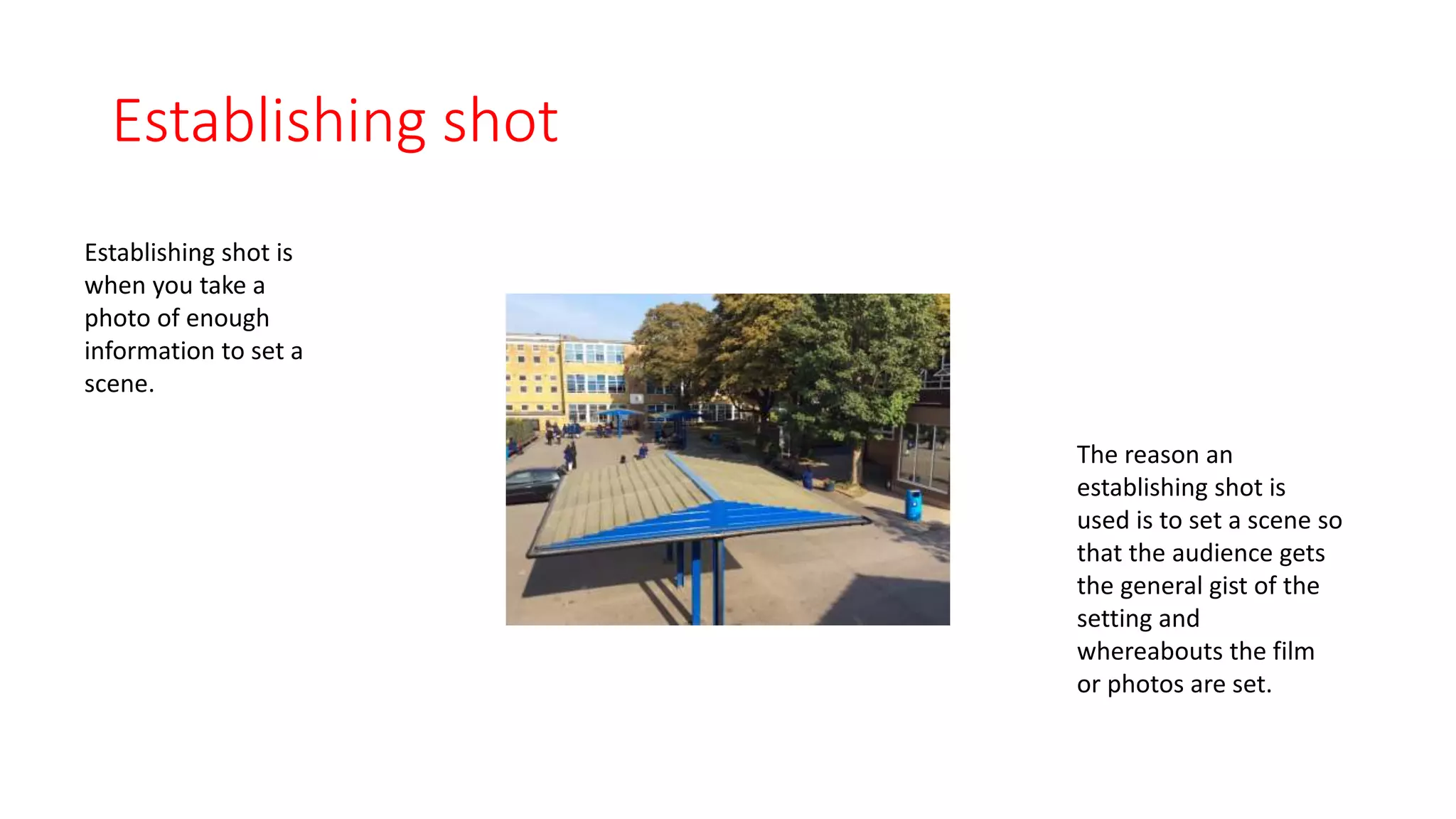
Establishing shot is 
when you take a 
photo of enough 
information to set a 
scene. 
The reason an 
establishing shot is 
used is to set a scene so 
that the audience gets 
the general gist of the 
setting and 
whereabouts the film 
or photos are set.
Wide shot 
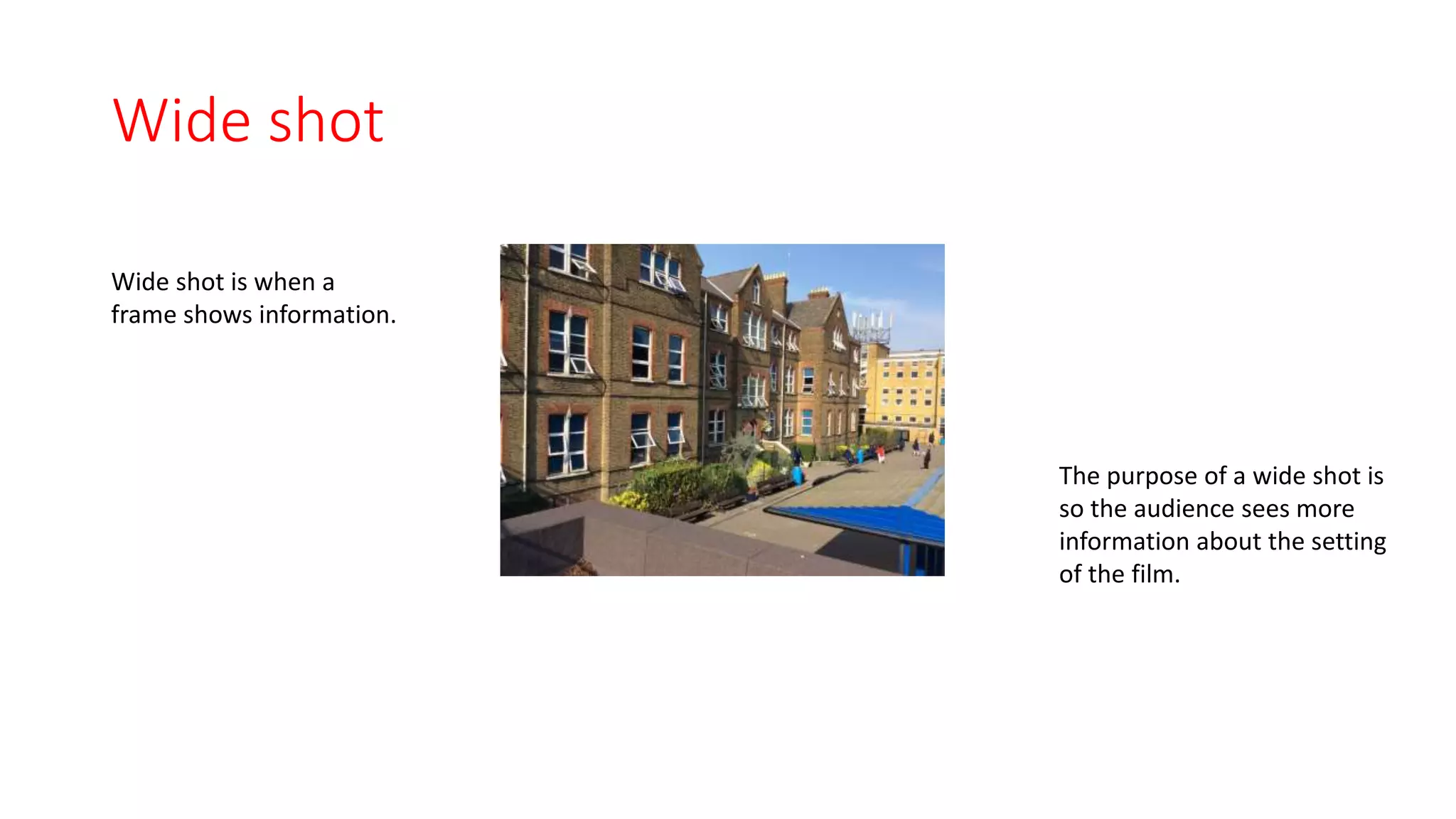
Wide shot is when a 
frame shows information. 
The purpose of a wide shot is 
so the audience sees more 
information about the setting 
of the film.
Long shot 
Long shot is when the 
audience can see the 
object in the frame as well 
as background. 
The reason long shot is used 
is because it shows who is in 
the scene and also helps to 
show what the character is 
doing as well as to introduce 
them.
Mid/medium shot 
Mid shot is when the 
subject can be seen from 
torso above. 
The reason mid shots are used is 
because it helps to show the 
characters body language.
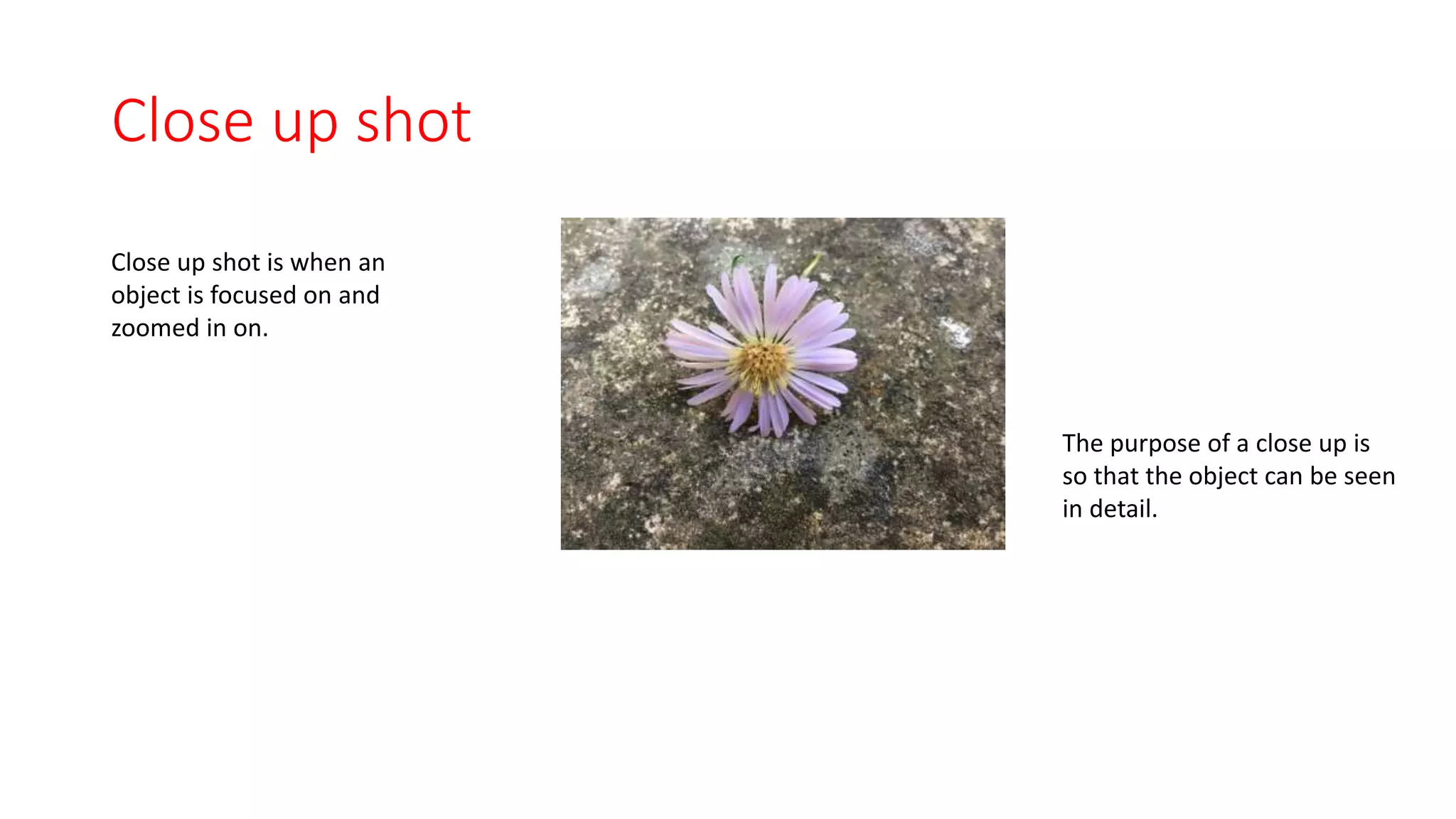
Close up shot 
Close up shot is when an 
object is focused on and 
zoomed in on. 
The purpose of a close up is 
so that the object can be seen 
in detail.
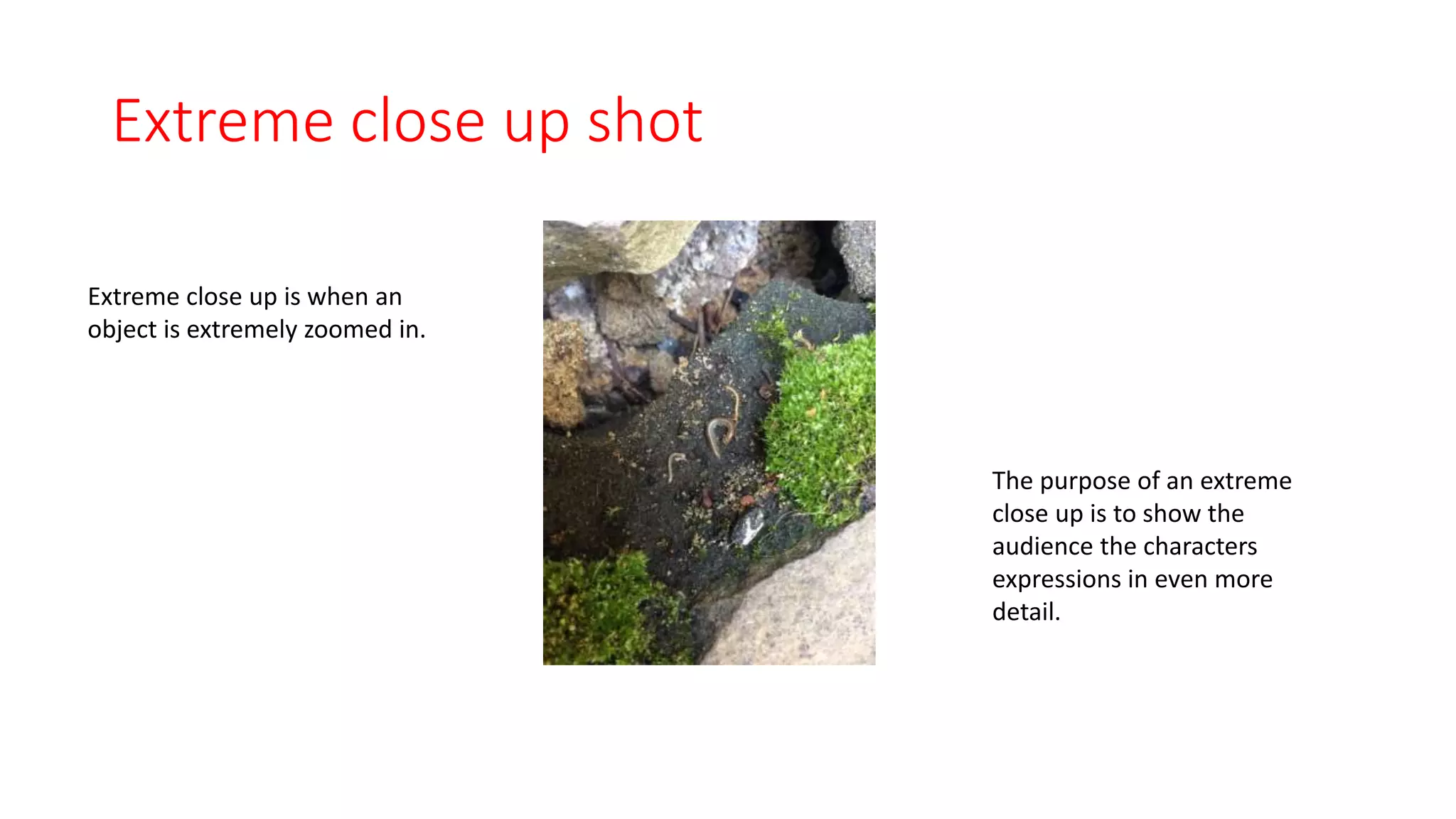
Extreme close up shot 
Extreme close up is when an 
object is extremely zoomed in. 
The purpose of an extreme 
close up is to show the 
audience the characters 
expressions in even more 
detail.
Point of view (POV) 
Point of view is when a 
frame is taken in the 
point of view of the 
character or object. 
The purpose of a point of 
view shot is so that the 
audience can see the frame 
from the characters 
perspective.
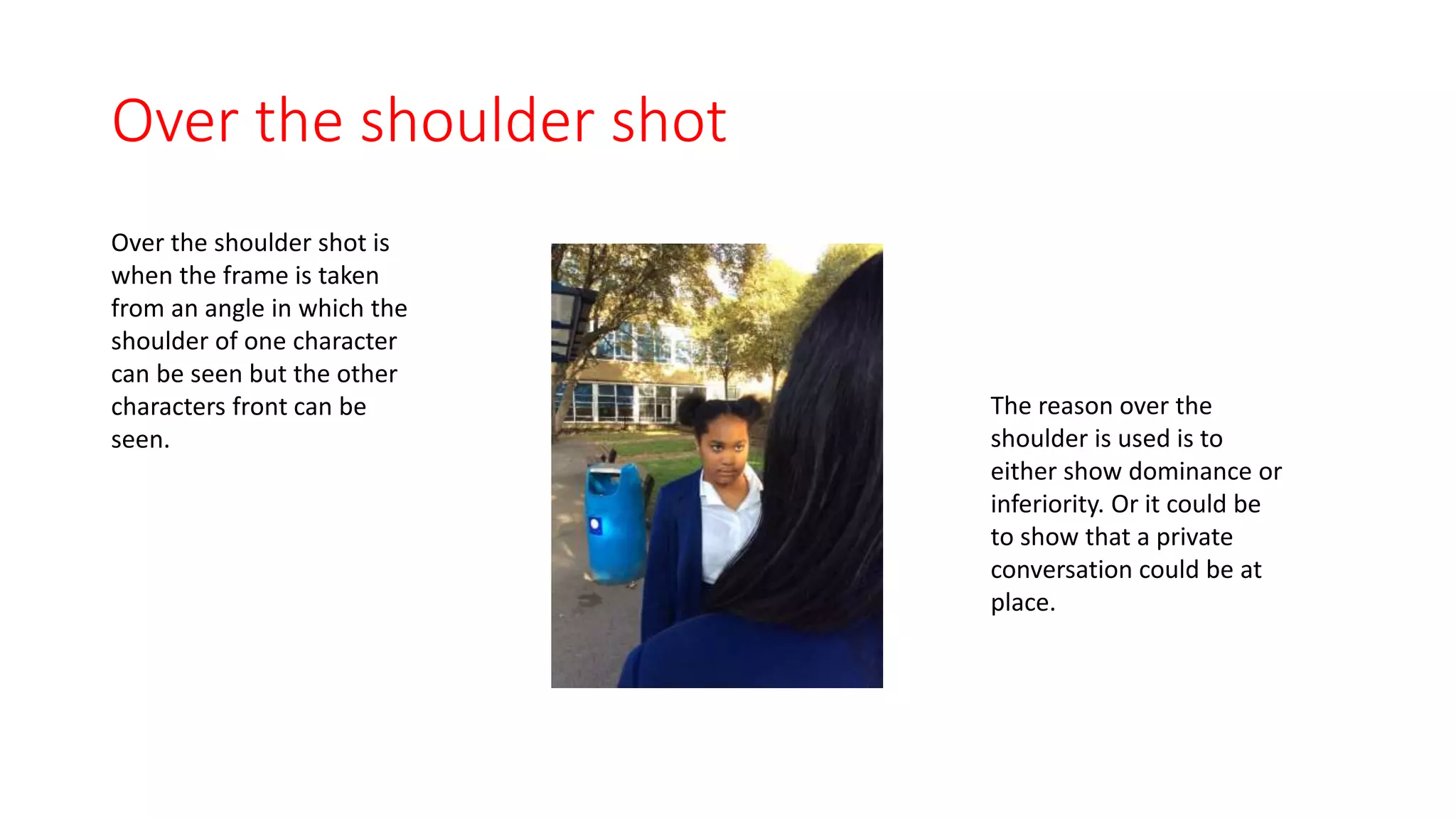
Over the shoulder shot 
Over the shoulder shot is 
when the frame is taken 
from an angle in which the 
shoulder of one character 
can be seen but the other 
characters front can be 
seen. 
The reason over the 
shoulder is used is to 
either show dominance or 
inferiority. Or it could be 
to show that a private 
conversation could be at 
place.
Two shot 
Two shot is when two 
characters are in a frame. 
The purpose of a two shot is to 
show the possibility of a 
conversation.
Overhead shot 
Overhead shot is when a 
subject is taken a photo or 
filmed from above. 
The purpose of an 
overhead shot is so the 
audience can see what the 
characters are doing from a 
birds eye view.
Camera Angles 
• High angle 
• Low angle 
• Oblique/canted angle
High angle 
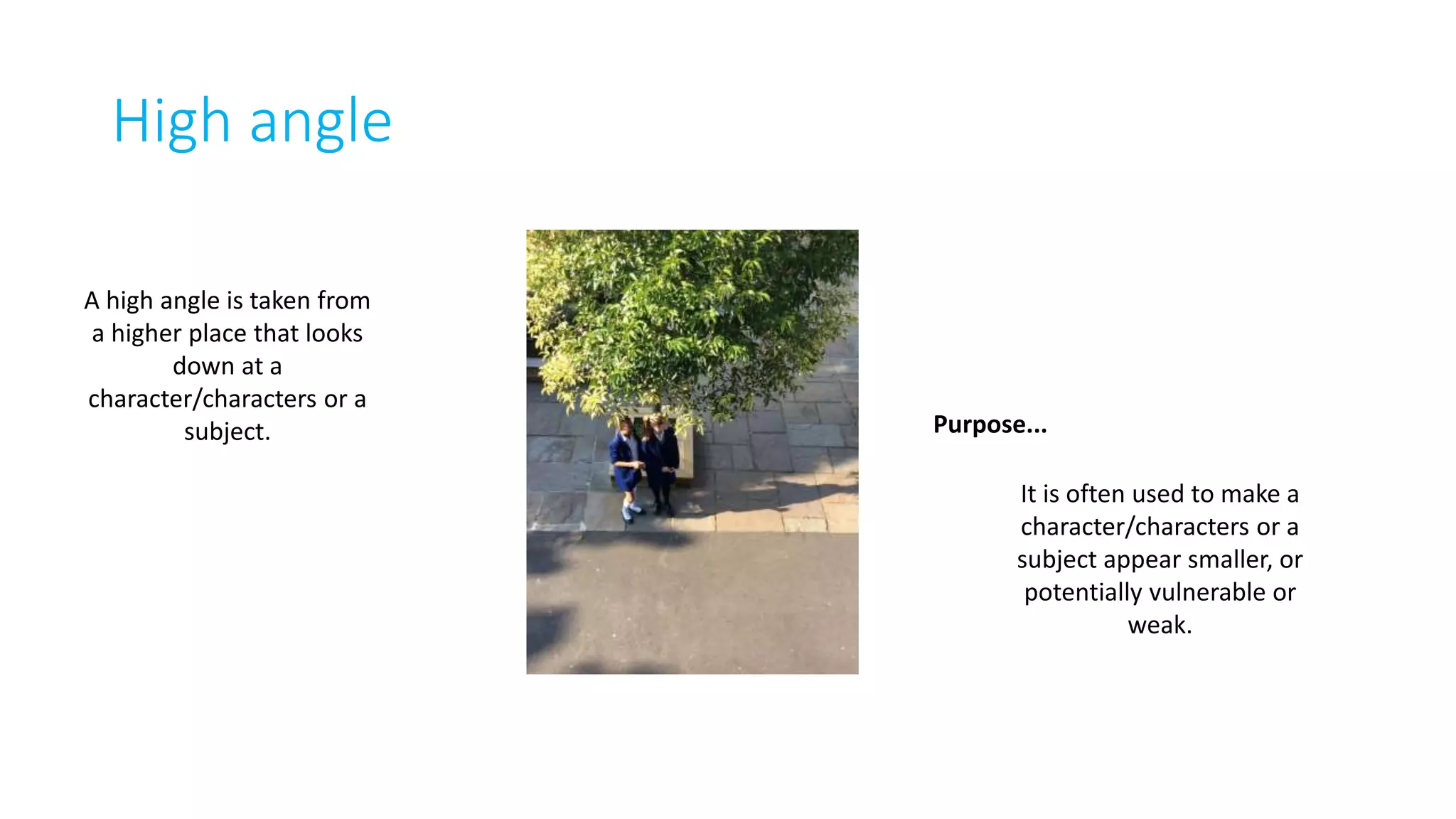
A high angle is taken from 
a higher place that looks 
down at a 
character/characters or a 
subject. Purpose... 
It is often used to make a 
character/characters or a 
subject appear smaller, or 
potentially vulnerable or 
weak.
Low angle 
A low angle is taken from a 
lower place that looks up 
at a character or a subject. 
Purpose... 
It is often used to make a 
character or subject appear 
bigger, possibly more 
dominant or powerful.
Canted/oblique angle 
Purpose... 
A canted/oblique angle 
makes what is shot appear 
tilted or skewed. 
It could be used to 
disorientate the audience.
Camera Movements 
• Pan 
• Tilt 
• Track 
• Zoom 
• Reverse zoom 
• Dolly
Pan 
Pan is when the camera 
pivots horizontally either 
from left to right, or right 
to left. 
• In order to reveal more 
information (e.g. a 
setting) 
• To give the viewer a 
panoramic view. 
• Sometimes used to 
establish a scene that 
can't fit in one 
shot/frame.
Tilt 
Opposite to pan: Tilt is 
when the camera pivots 
vertically either from top 
to bottom, or bottom to 
top. 
• Often used to reveal a 
whole outfit of a 
character. 
• To reveal more 
information (e.g. a 
setting, objects, 
characters e.t.c).
Track 
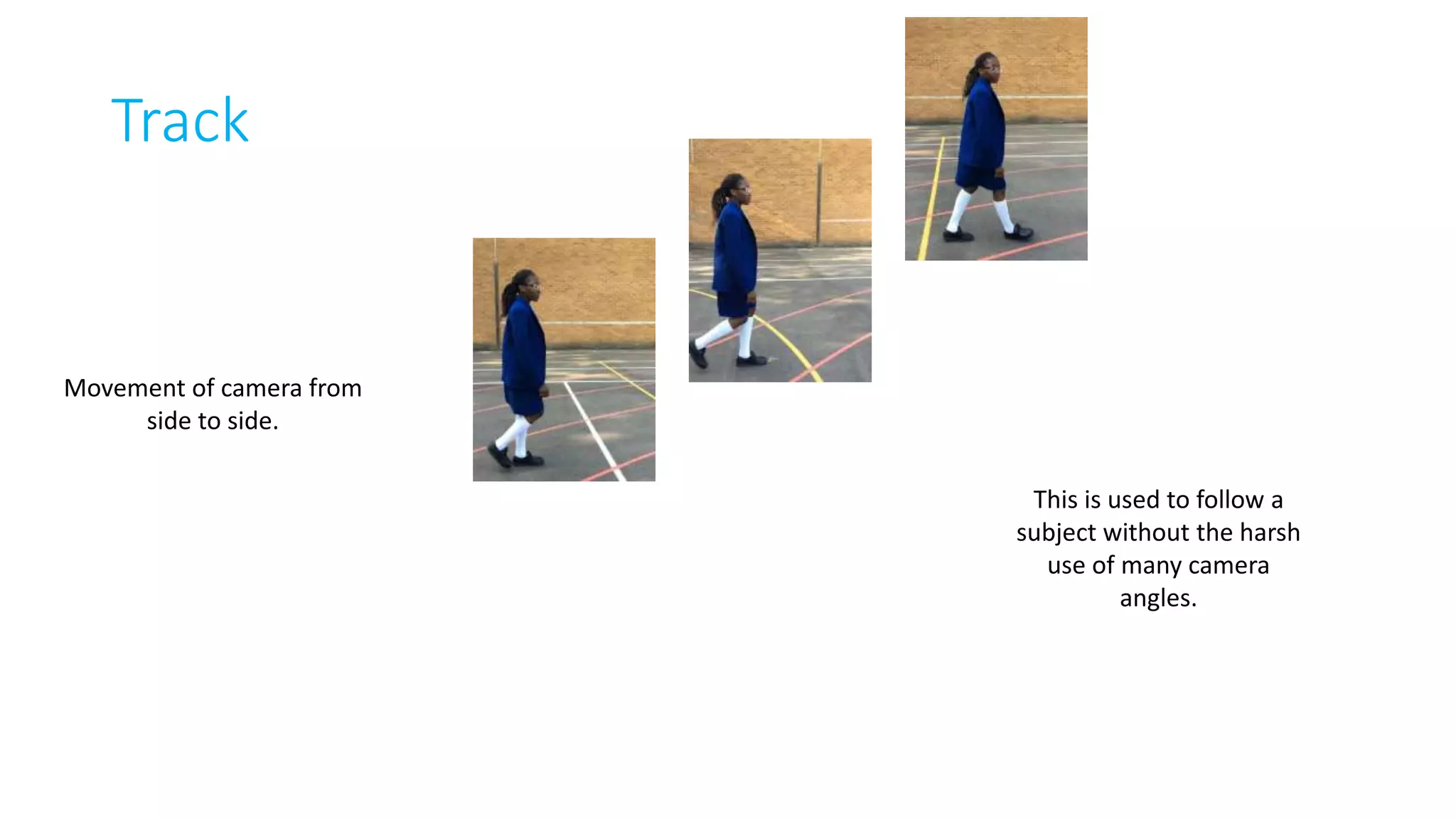
Movement of camera from 
side to side. 
This is used to follow a 
subject without the harsh 
use of many camera 
angles.
Zoom 
Zoom is when the camera 
zooms in towards the 
subject or character. 
This is used to zoom into a 
character or subject to 
reveal more detail.
Reverse zoom 
when the camera reverse 
zooms out from a subject 
or character. 
This is used to reveal more 
detail about the characters 
or subject surroundings.
Dolly 
When a camera moves in 
and out or backwards and 
forwards around a 
character or subject. 
This is used when wanting 
to show all angles of the 
setting whilst creating 
smooth camera 
movement.
Composition 
• Balance 
• Symmetry 
• Asymmetry 
• Rule of thirds 
• Shallow focus 
• Deep focus 
• Focus pulls
Balance 
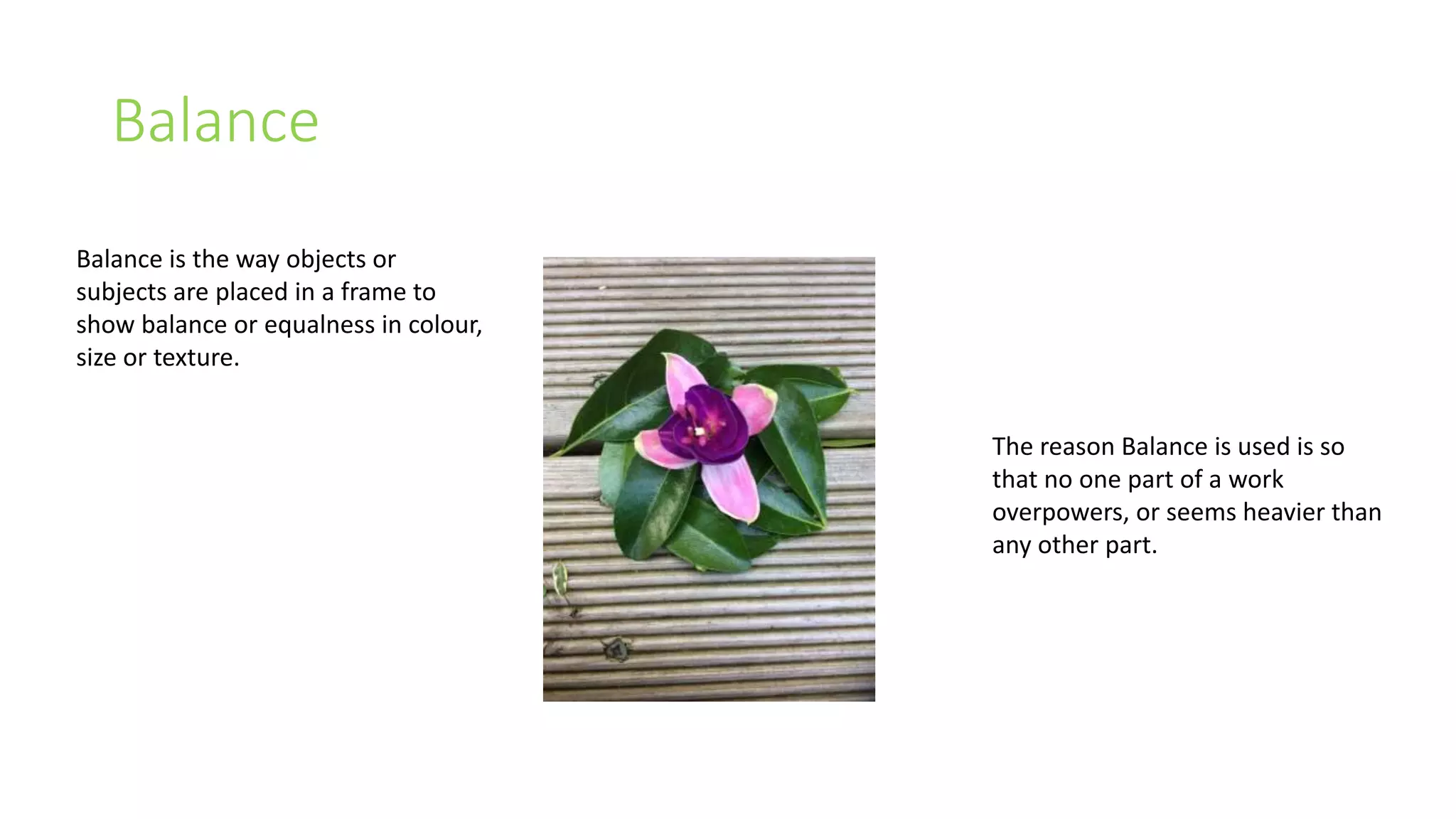
Balance is the way objects or 
subjects are placed in a frame to 
show balance or equalness in colour, 
size or texture. 
The reason Balance is used is so 
that no one part of a work 
overpowers, or seems heavier than 
any other part.
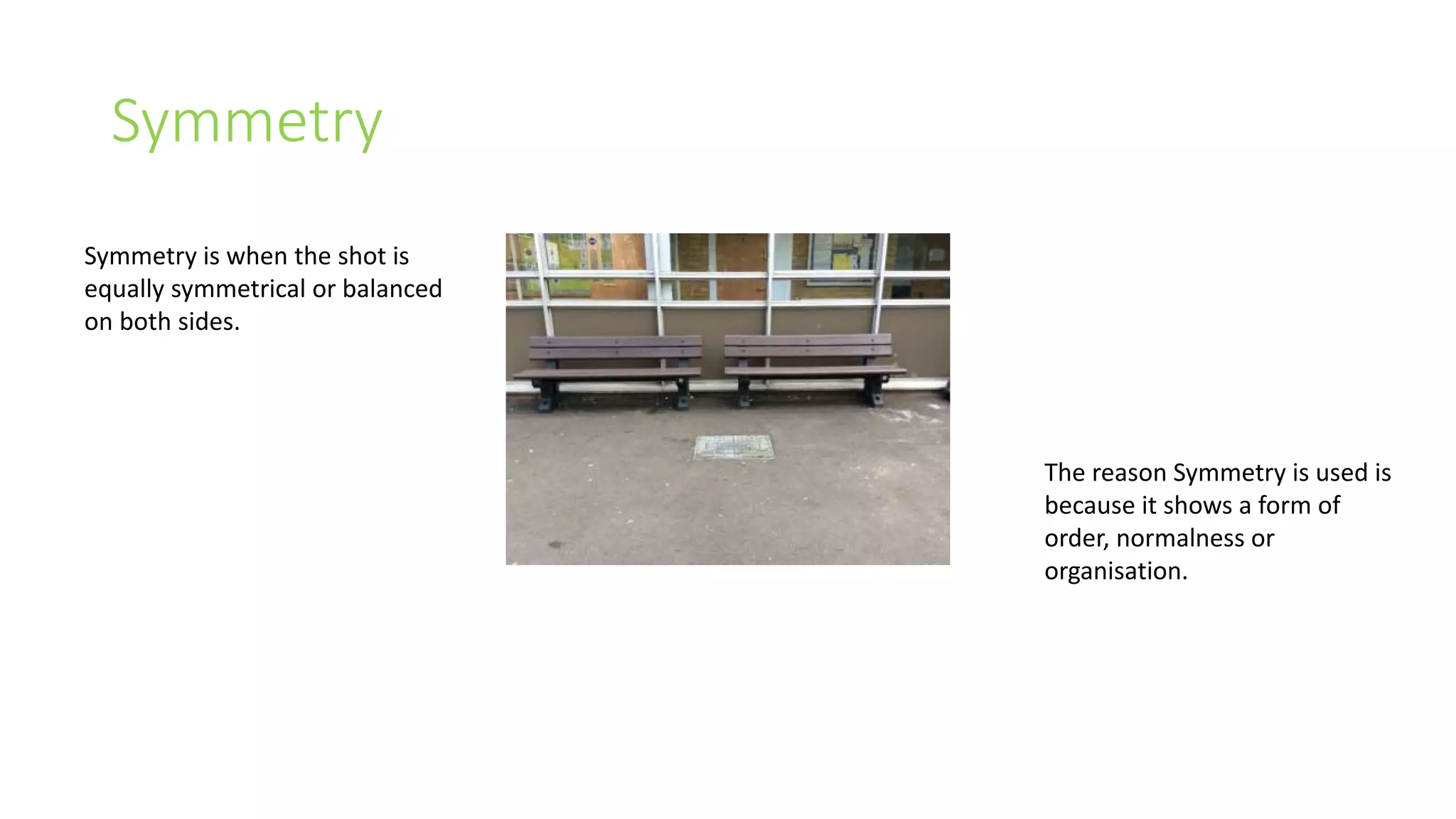
Symmetry 
Symmetry is when the shot is 
equally symmetrical or balanced 
on both sides. 
The reason Symmetry is used is 
because it shows a form of 
order, normalness or 
organisation.
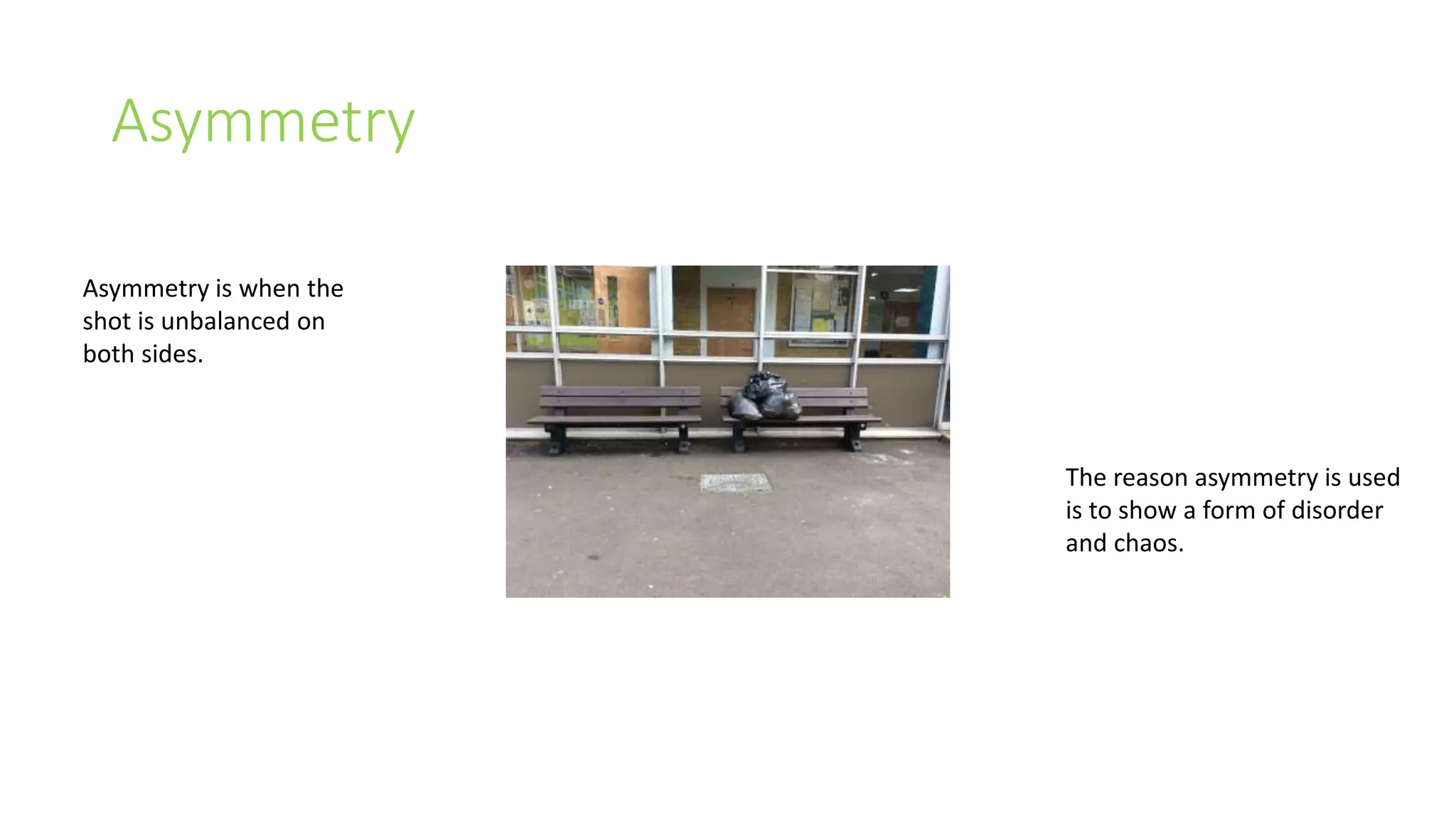
Asymmetry 
Asymmetry is when the 
shot is unbalanced on 
both sides. 
The reason asymmetry is used 
is to show a form of disorder 
and chaos.
Rule of thirds 
Rule of thirds is a composition 
rule in which photos are to be 
taken using a grid of nine equal 
parts. 
The reason rule of thirds is used 
is because technique claims that 
aligning an object with these 
points creates more tension, 
energy and interest in the 
composition rather than 
centering the object.
Shallow focus 
Shallow focus is when one plane of 
the image is in focus whilst the rest is 
out of focus. 
The reason shallow focus is used is 
to emphasize one part of the image 
over another.
Deep focus 
Deep focus is when the entire image 
is in focus. 
The reason deep focus is used 
is to emphasise on the entire 
image rather than a specific 
object in the frame.
Focus pulls 
Focus pull is 
when you 
change the focus 
from one object 
to another 
during a shot. 
The reason deep focus is 
used is because the 
change in focus 
emphasises on the 
character or object that 
the producer or 
photographer want the 
audience to see.

Cam sam and composition powerpoint (1)

  • 1.
    CAM SAM andComposition By: Denise O’Brein, Kate-lyn Aranda, Annamaria Noto and Amanda Abi- Khalil
  • 2.
    Camera Shots •Establishing shot • Wide shot • Long shot • Mid/ medium shot • Close up shot • Extreme close up shot • Point of view • Over the shoulder shot • Two shot • Overhead shot
  • 3.
    Establishing shot Establishingshot is when you take a photo of enough information to set a scene. The reason an establishing shot is used is to set a scene so that the audience gets the general gist of the setting and whereabouts the film or photos are set.
  • 4.
    Wide shot Wideshot is when a frame shows information. The purpose of a wide shot is so the audience sees more information about the setting of the film.
  • 5.
    Long shot Longshot is when the audience can see the object in the frame as well as background. The reason long shot is used is because it shows who is in the scene and also helps to show what the character is doing as well as to introduce them.
  • 6.
    Mid/medium shot Midshot is when the subject can be seen from torso above. The reason mid shots are used is because it helps to show the characters body language.
  • 7.
    Close up shot Close up shot is when an object is focused on and zoomed in on. The purpose of a close up is so that the object can be seen in detail.
  • 8.
    Extreme close upshot Extreme close up is when an object is extremely zoomed in. The purpose of an extreme close up is to show the audience the characters expressions in even more detail.
  • 9.
    Point of view(POV) Point of view is when a frame is taken in the point of view of the character or object. The purpose of a point of view shot is so that the audience can see the frame from the characters perspective.
  • 10.
    Over the shouldershot Over the shoulder shot is when the frame is taken from an angle in which the shoulder of one character can be seen but the other characters front can be seen. The reason over the shoulder is used is to either show dominance or inferiority. Or it could be to show that a private conversation could be at place.
  • 11.
    Two shot Twoshot is when two characters are in a frame. The purpose of a two shot is to show the possibility of a conversation.
  • 12.
    Overhead shot Overheadshot is when a subject is taken a photo or filmed from above. The purpose of an overhead shot is so the audience can see what the characters are doing from a birds eye view.
  • 13.
    Camera Angles •High angle • Low angle • Oblique/canted angle
  • 14.
    High angle Ahigh angle is taken from a higher place that looks down at a character/characters or a subject. Purpose... It is often used to make a character/characters or a subject appear smaller, or potentially vulnerable or weak.
  • 15.
    Low angle Alow angle is taken from a lower place that looks up at a character or a subject. Purpose... It is often used to make a character or subject appear bigger, possibly more dominant or powerful.
  • 16.
    Canted/oblique angle Purpose... A canted/oblique angle makes what is shot appear tilted or skewed. It could be used to disorientate the audience.
  • 17.
    Camera Movements •Pan • Tilt • Track • Zoom • Reverse zoom • Dolly
  • 18.
    Pan Pan iswhen the camera pivots horizontally either from left to right, or right to left. • In order to reveal more information (e.g. a setting) • To give the viewer a panoramic view. • Sometimes used to establish a scene that can't fit in one shot/frame.
  • 19.
    Tilt Opposite topan: Tilt is when the camera pivots vertically either from top to bottom, or bottom to top. • Often used to reveal a whole outfit of a character. • To reveal more information (e.g. a setting, objects, characters e.t.c).
  • 20.
    Track Movement ofcamera from side to side. This is used to follow a subject without the harsh use of many camera angles.
  • 21.
    Zoom Zoom iswhen the camera zooms in towards the subject or character. This is used to zoom into a character or subject to reveal more detail.
  • 22.
    Reverse zoom whenthe camera reverse zooms out from a subject or character. This is used to reveal more detail about the characters or subject surroundings.
  • 23.
    Dolly When acamera moves in and out or backwards and forwards around a character or subject. This is used when wanting to show all angles of the setting whilst creating smooth camera movement.
  • 24.
    Composition • Balance • Symmetry • Asymmetry • Rule of thirds • Shallow focus • Deep focus • Focus pulls
  • 25.
    Balance Balance isthe way objects or subjects are placed in a frame to show balance or equalness in colour, size or texture. The reason Balance is used is so that no one part of a work overpowers, or seems heavier than any other part.
  • 26.
    Symmetry Symmetry iswhen the shot is equally symmetrical or balanced on both sides. The reason Symmetry is used is because it shows a form of order, normalness or organisation.
  • 27.
    Asymmetry Asymmetry iswhen the shot is unbalanced on both sides. The reason asymmetry is used is to show a form of disorder and chaos.
  • 28.
    Rule of thirds Rule of thirds is a composition rule in which photos are to be taken using a grid of nine equal parts. The reason rule of thirds is used is because technique claims that aligning an object with these points creates more tension, energy and interest in the composition rather than centering the object.
  • 29.
    Shallow focus Shallowfocus is when one plane of the image is in focus whilst the rest is out of focus. The reason shallow focus is used is to emphasize one part of the image over another.
  • 30.
    Deep focus Deepfocus is when the entire image is in focus. The reason deep focus is used is to emphasise on the entire image rather than a specific object in the frame.
  • 31.
    Focus pulls Focuspull is when you change the focus from one object to another during a shot. The reason deep focus is used is because the change in focus emphasises on the character or object that the producer or photographer want the audience to see.