Downloaded 106 times


!["You can do anything you want with montage.
Cinema is simply pieces of film put together in a
manner that creates ideas and emotions."
Alfred Hitchcock [Interview with Charles Thomas
Samuels, 1972]](https://image.slidesharecdn.com/kuleshovexperimentsum15-150707151341-lva1-app6892/75/Montage-and-Kuleshov-Effect-4-2048.jpg)


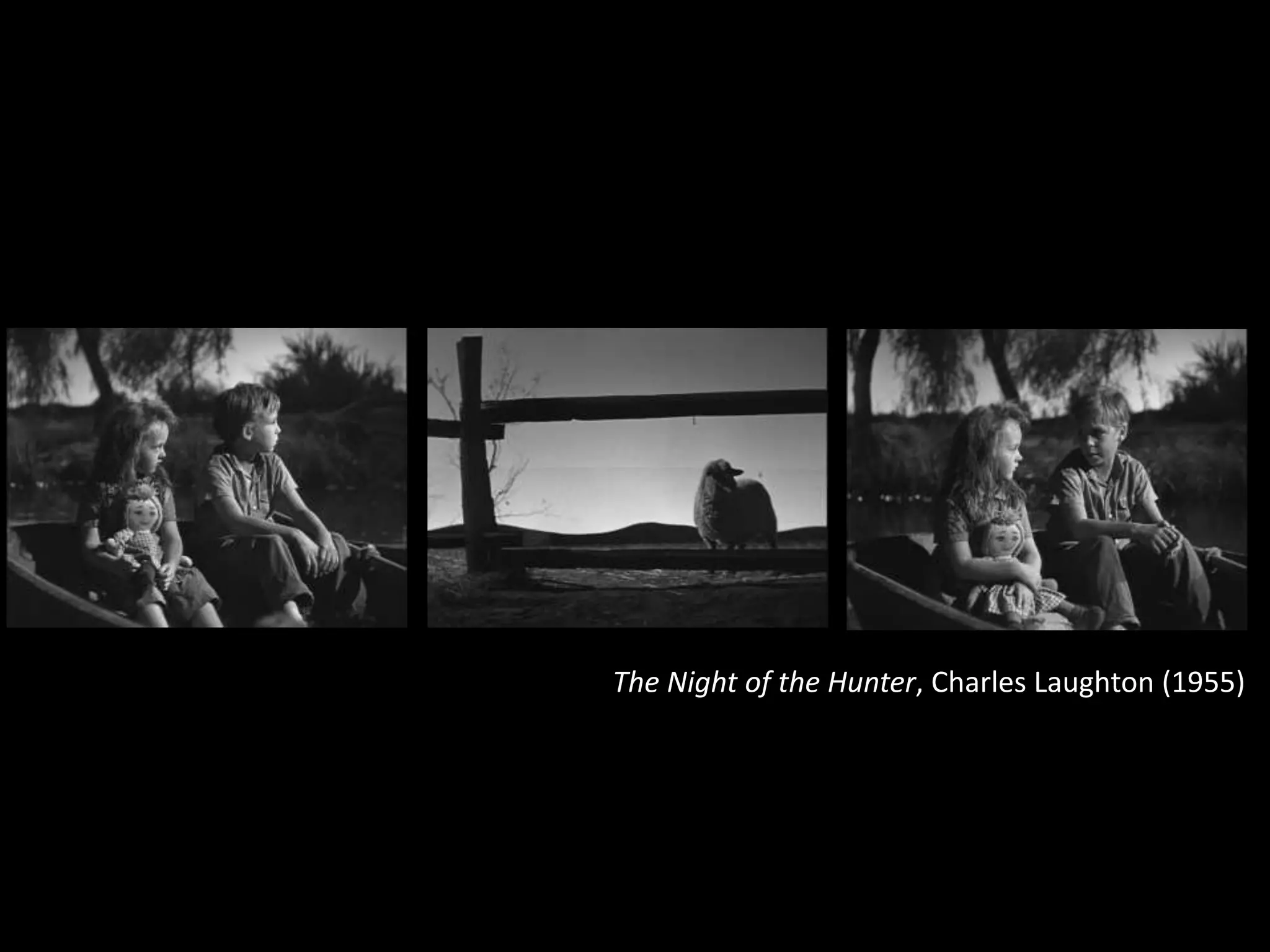
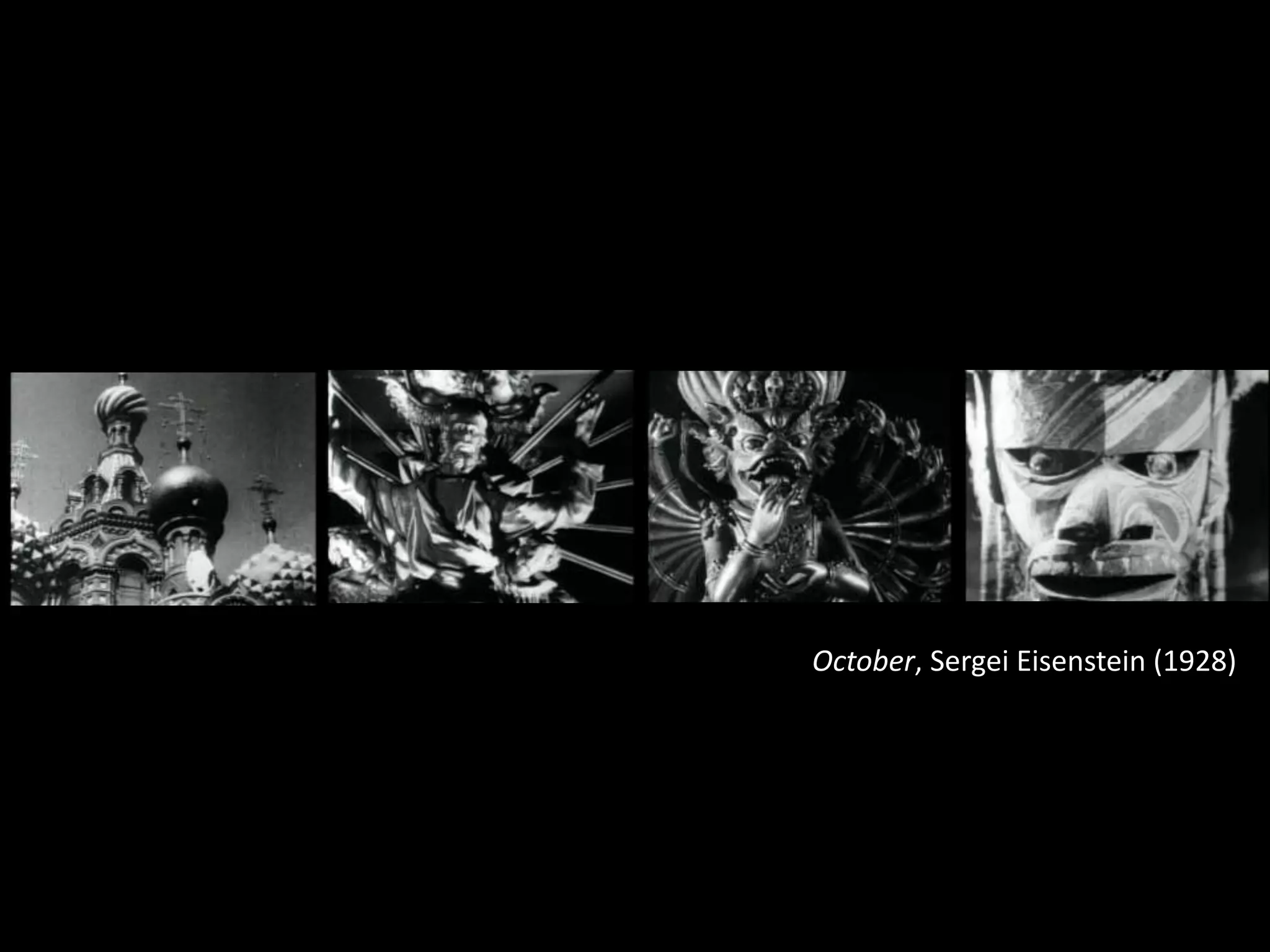


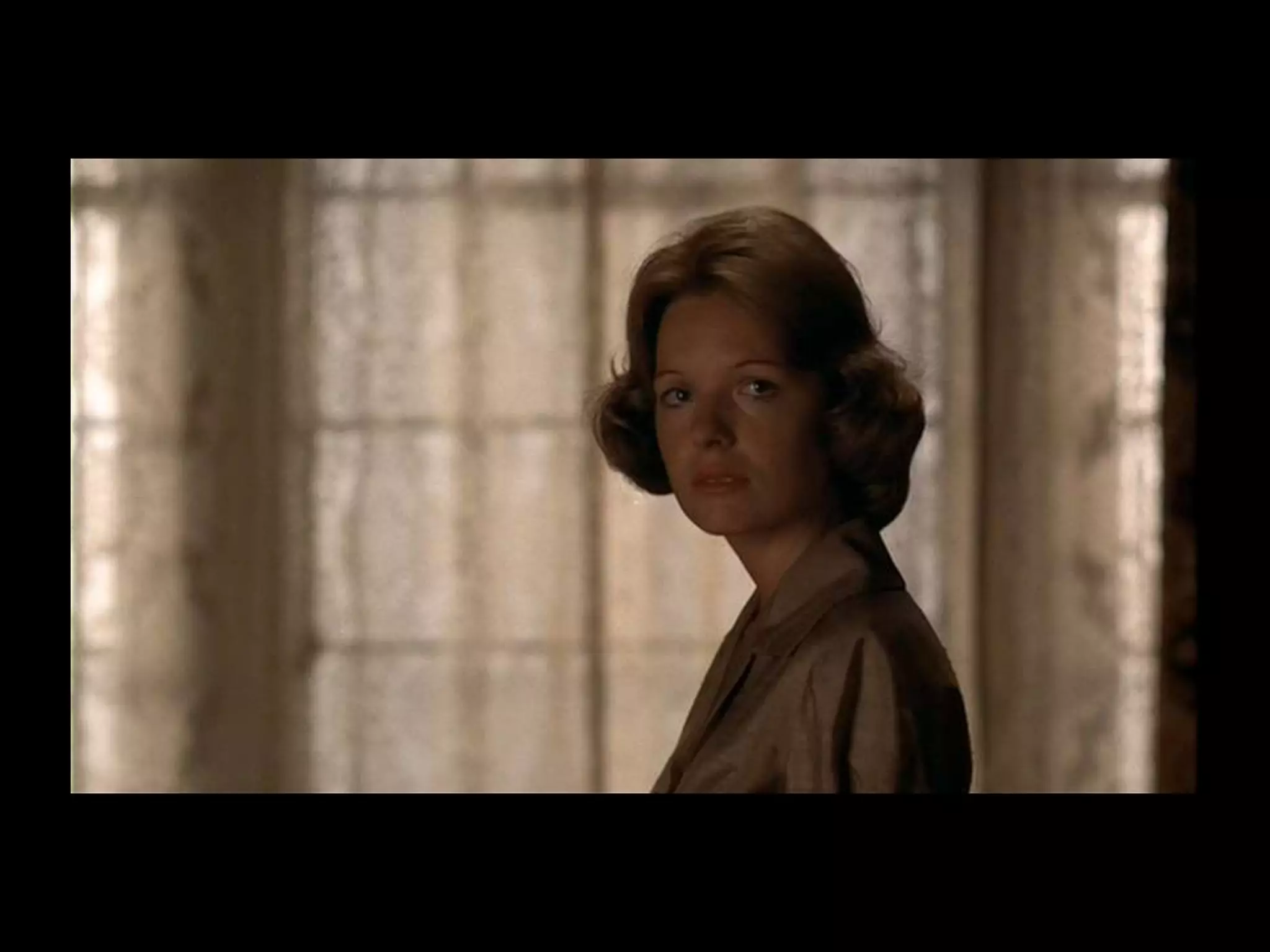


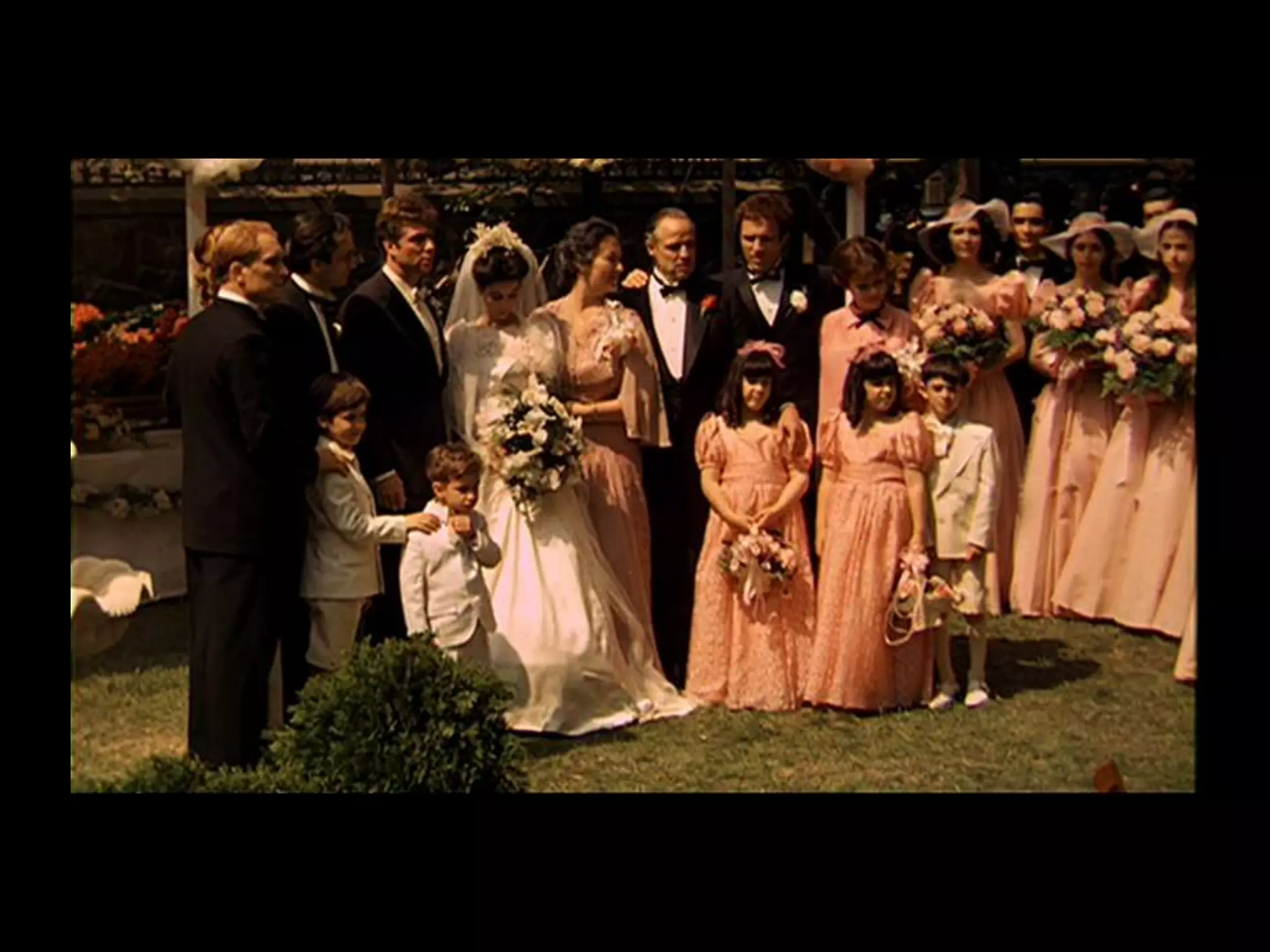

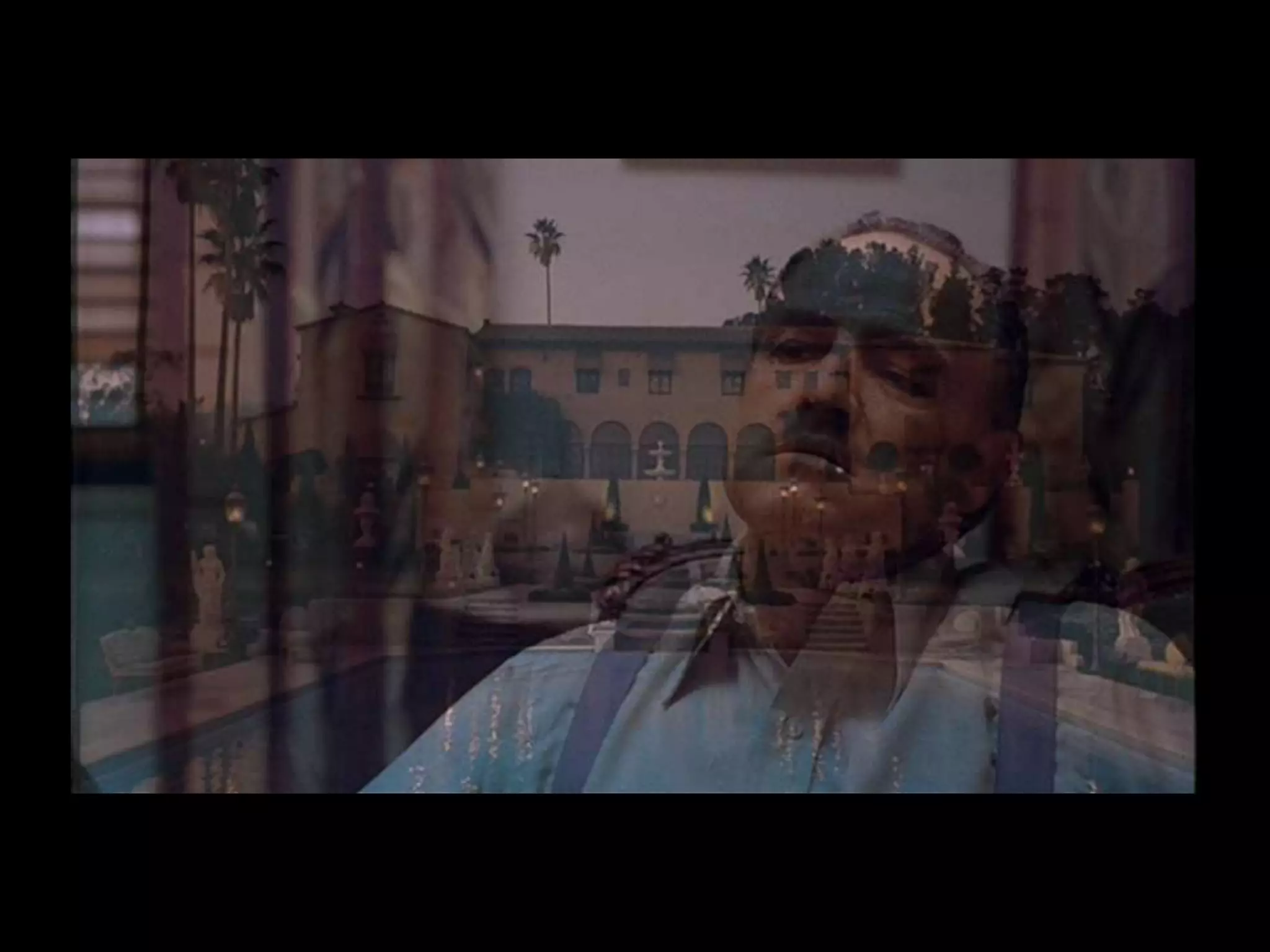
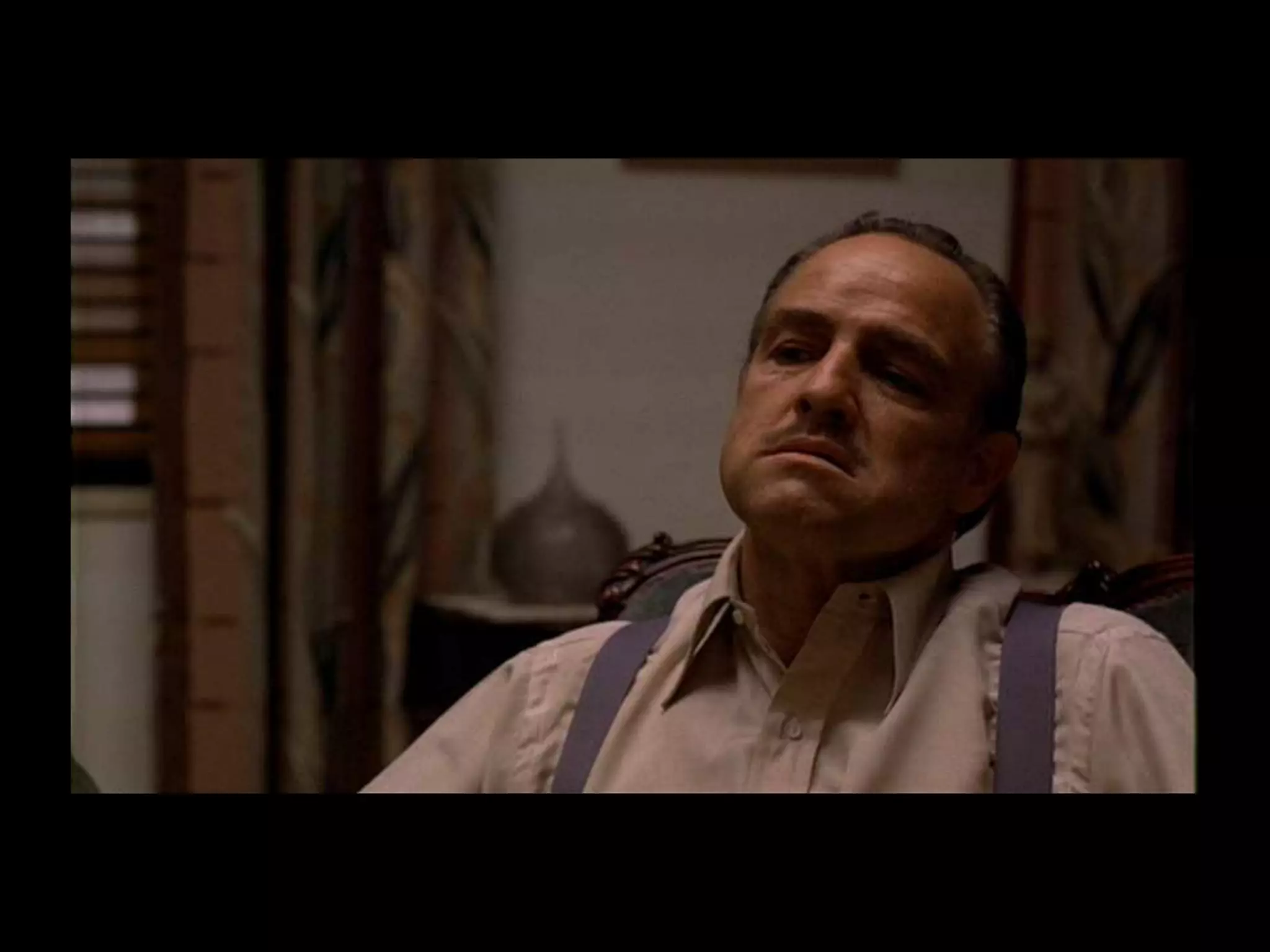

Montage editing involves juxtaposing different shots together to create a new meaning greater than the individual parts. Alfred Hitchcock said montage allows editors to create ideas and emotions by piecing film clips together. Examples of films that used montage editing techniques include October by Sergei Eisenstein and Modern Times by Charlie Chaplin. Point-of-view editing shows what a character is looking at by cutting between a shot of their face and what their eyes are focused on, sometimes followed by their reaction. The Godfather uses the Kuleshov effect and parallel editing techniques effectively.


