GLUCOSE
TOLERANCE
TEST
BY,
SRILOY MOHANTY
CONTENTS
 DEFINITION
 INDICATION FOR OGTT
 CONTRAINDICATION FOR OGTT
 PREPARATION OF THE PATIENT
 CONDUCTING THE GLUCOSE TOLERANCE TEST
 NORMAL VALUES ANND INTERPRETATION
 DIAGNOSTIC CRITERIA FOR DM
DEFINITION
 GTT is well standardised test, and is highly useful to
diagnose diabetes mellitus in doubtful cases
 Commonly referred to as oral glucose tolerance
test (OGTT)
INDICATION FOR OGTT
 Patient has symptoms suggestive of diabetics
mellitus
 Fasting blood sugar value is inconclusive
(between 110 and 126 mg/dl)
 During pregnancy, excessive weight gaining is
noticed, with a past history of big baby (more
than 4 kg) or past history of miscarriage
 To rule out benign renal glucosuria
CONTRAINDICATION FOR
OGTT
 There is no indication for doing OGTT in a person
with confirmed diabetics mellitus
 GTT has no rule in follow-up of diabetics
 It is indicated only for the initial diagnosis
 The test should not be done in ill patients
PREPARATION OF THE
PATIENT
 The patient is instructed to have good
carbohydrate diet for 3 days before to the test
 Diet containing about 30-50 gm of carbohydrate
should be taken on the evening before to the test
(otherwise carbohydrate may not be tolerated
even in a normal person)
 Patient should avoid drugs likely to influence the
blood glucose levels
 Patient should not do smoking during the test
PREPARATION OF THE
PATIENT(cont…)
 High effort exercise on the previous day is to be
avoided
 Patient should not take food 8 PM the previous
night
 Should not take any breakfast, this is to ensure 12
hours fasting
hours1 2 3
0
50
100
15
0
20
0
250
30
0
350
Renal
threshol
d
Normal person Alimentary glycouria
Impaired GT Diabetes mellitus
Plasmaglucose
mg/dl
CONDUCTING THE
GLUCOSE TOLERANCE TEST
1. AT ABOUT 8 am, a sample of blood is collected in
the fasting state, urine sample is also obtained
2. Glucose load dose: the dose is 75 g anhydrous
glucose (82.5 g of glucose monohydrate) in 250-
300 ml of water
1. When the test is done in
children, the glucose dose is
adjusted as 1.75 g/kg body
weight
3. Sample collection
4. WHO recommendation is to collect only for the
fasting and two hours post glucose load samples of
blood and urine, this is called as mini-GTT
NORMAL VALUES ANND
INTERPRETATION
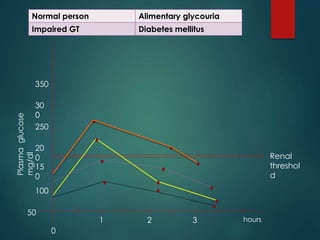
 In a normal person, fasting plasma glucose is 70-
110 mg/dl
 The glucose level rises and reaches a peak within
hour and come down to normal fasting level by 2-
2:30 hrs, this is due to secretion of Insulin in
response to the elevation in blood glucose
 None of the glucose sample shows the any
evidence of glucose
DIAGNOSTIC CRITERIA FOR
DM
 If the fasting plasma sugar is more than 126 mg/dl
or more than one occasion
 If two hour post glucose load value of OGTT is
more than 200 mg/dl
 If both fasting and 2 hrs values are above this level
 If the random plasma level is more than 200
mg/dl, on more than one occasion
THANK YOU…

Glucose tolerance test

  • 1.
  • 2.
    CONTENTS  DEFINITION  INDICATIONFOR OGTT  CONTRAINDICATION FOR OGTT  PREPARATION OF THE PATIENT  CONDUCTING THE GLUCOSE TOLERANCE TEST  NORMAL VALUES ANND INTERPRETATION  DIAGNOSTIC CRITERIA FOR DM
  • 3.
    DEFINITION  GTT iswell standardised test, and is highly useful to diagnose diabetes mellitus in doubtful cases  Commonly referred to as oral glucose tolerance test (OGTT)
  • 4.
    INDICATION FOR OGTT Patient has symptoms suggestive of diabetics mellitus  Fasting blood sugar value is inconclusive (between 110 and 126 mg/dl)  During pregnancy, excessive weight gaining is noticed, with a past history of big baby (more than 4 kg) or past history of miscarriage  To rule out benign renal glucosuria
  • 5.
    CONTRAINDICATION FOR OGTT  Thereis no indication for doing OGTT in a person with confirmed diabetics mellitus  GTT has no rule in follow-up of diabetics  It is indicated only for the initial diagnosis  The test should not be done in ill patients
  • 6.
    PREPARATION OF THE PATIENT The patient is instructed to have good carbohydrate diet for 3 days before to the test  Diet containing about 30-50 gm of carbohydrate should be taken on the evening before to the test (otherwise carbohydrate may not be tolerated even in a normal person)  Patient should avoid drugs likely to influence the blood glucose levels  Patient should not do smoking during the test
  • 7.
    PREPARATION OF THE PATIENT(cont…) High effort exercise on the previous day is to be avoided  Patient should not take food 8 PM the previous night  Should not take any breakfast, this is to ensure 12 hours fasting
  • 8.
    hours1 2 3 0 50 100 15 0 20 0 250 30 0 350 Renal threshol d Normalperson Alimentary glycouria Impaired GT Diabetes mellitus Plasmaglucose mg/dl
  • 9.
    CONDUCTING THE GLUCOSE TOLERANCETEST 1. AT ABOUT 8 am, a sample of blood is collected in the fasting state, urine sample is also obtained 2. Glucose load dose: the dose is 75 g anhydrous glucose (82.5 g of glucose monohydrate) in 250- 300 ml of water 1. When the test is done in children, the glucose dose is adjusted as 1.75 g/kg body weight 3. Sample collection 4. WHO recommendation is to collect only for the fasting and two hours post glucose load samples of blood and urine, this is called as mini-GTT
  • 10.
    NORMAL VALUES ANND INTERPRETATION In a normal person, fasting plasma glucose is 70- 110 mg/dl  The glucose level rises and reaches a peak within hour and come down to normal fasting level by 2- 2:30 hrs, this is due to secretion of Insulin in response to the elevation in blood glucose  None of the glucose sample shows the any evidence of glucose
  • 11.
    DIAGNOSTIC CRITERIA FOR DM If the fasting plasma sugar is more than 126 mg/dl or more than one occasion  If two hour post glucose load value of OGTT is more than 200 mg/dl  If both fasting and 2 hrs values are above this level  If the random plasma level is more than 200 mg/dl, on more than one occasion
  • 12.