BUS INTERCONNECTION
Ramakrishna Reddy
Assoc. Prof
Avanthi PG College
brreddy@avanthipg.ac.in
Interconnection Structures
A computer consists of a set of components
(CPU,memory,I/O) that communicate with ea
ch other.
The collection of paths connecting the various
modules is call the interconnection structure.
The design of this structure will depend on
the exchange that must be made between mo
dules.
Type of transfers
Memory to CPU
CPU to Memory
I/O to CPU
CPU to I/O
I/O to or from Memory (DMA)
Bus Interconnection
A bus is a communication pathway
connecting two or more device.
A key characteristic of a bus is that it is a
shared transmission medium.
A bus consists of multiple pathways or lines.
Each line is capable of transmitting signal
representing binary digit (1 or 0)
Bus Interconnection
A sequence of bits can be transmit across a
single line.
Several lines can be used to transmit bits
simultaneously (in parallel).
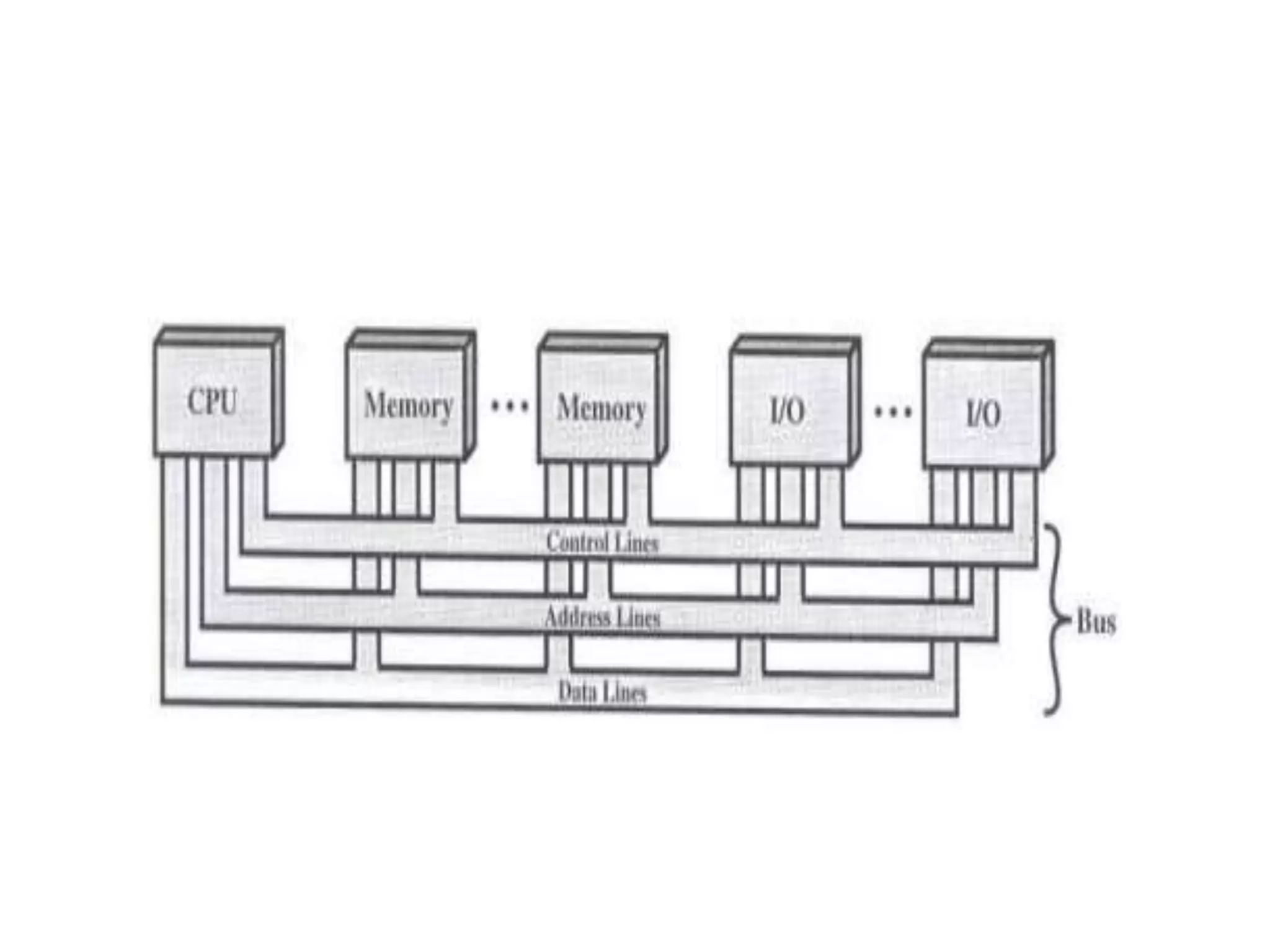
A bus that connects major components
(CPU,Memory,I/O) is called System Bus. The
most common computer interconnection
structures are based on the use of one or mor
e system buses.
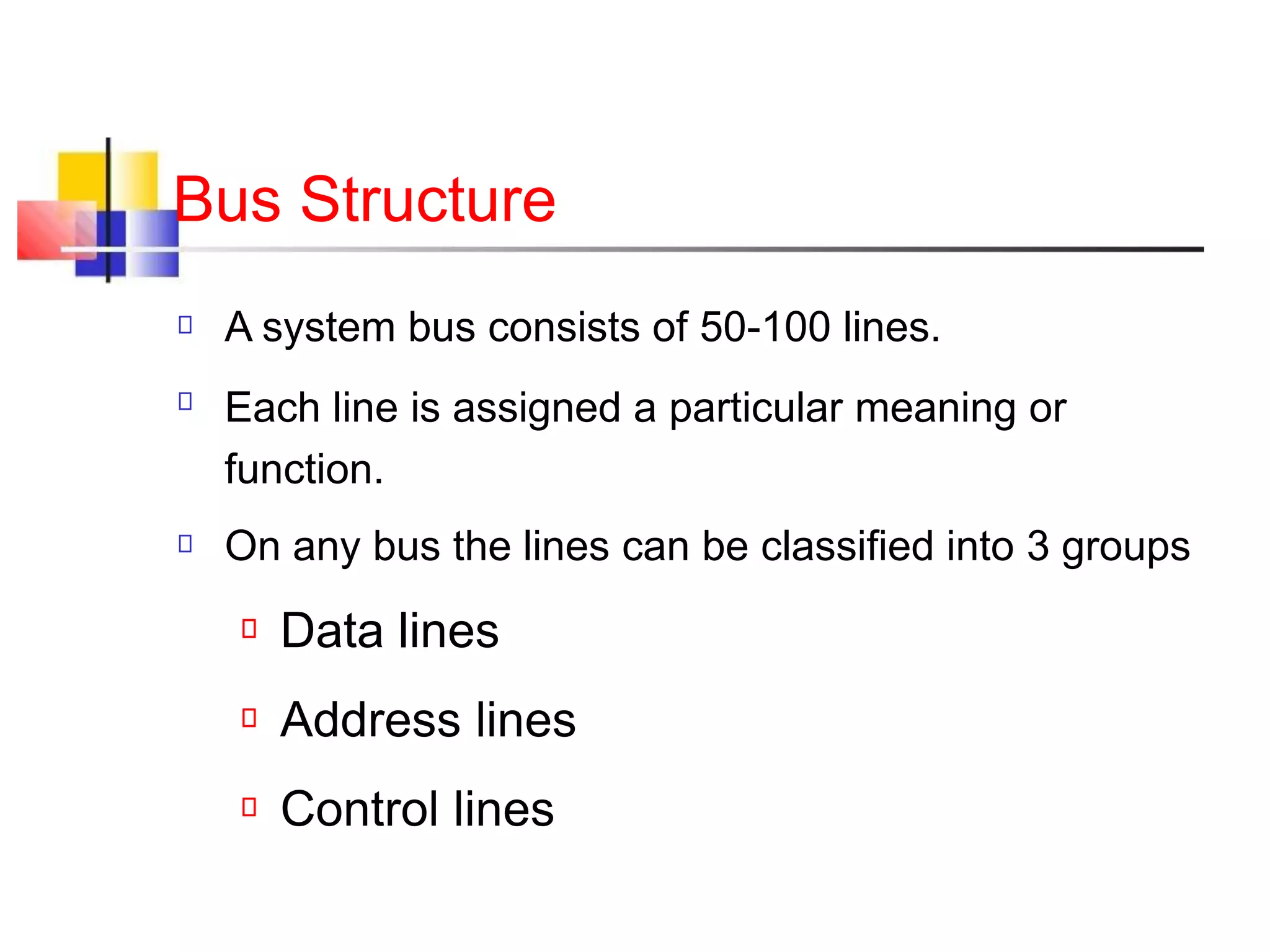
Bus Structure
A system bus consists of 50-100 lines.
Each line is assigned a particular meaning or
function.
On any bus the lines can be classified into 3 groups
Data lines
Address lines
Control lines
Data Lines
A
tt
a
c
k
s
o
n
cr
y
p
t
o
s
y
st
e
m
s.
Provide a path for moving data between system
modules.
These lines, collectively, are called the data bus.
The data bus typically consists of 8,16 or 32 separate
lines, the numbers of lines being transferred to as the
width of the data bus.
Each line carry only 1 bit at a time, the number of
lines determines how many bits can transferred at a ti
me - overall system performance.
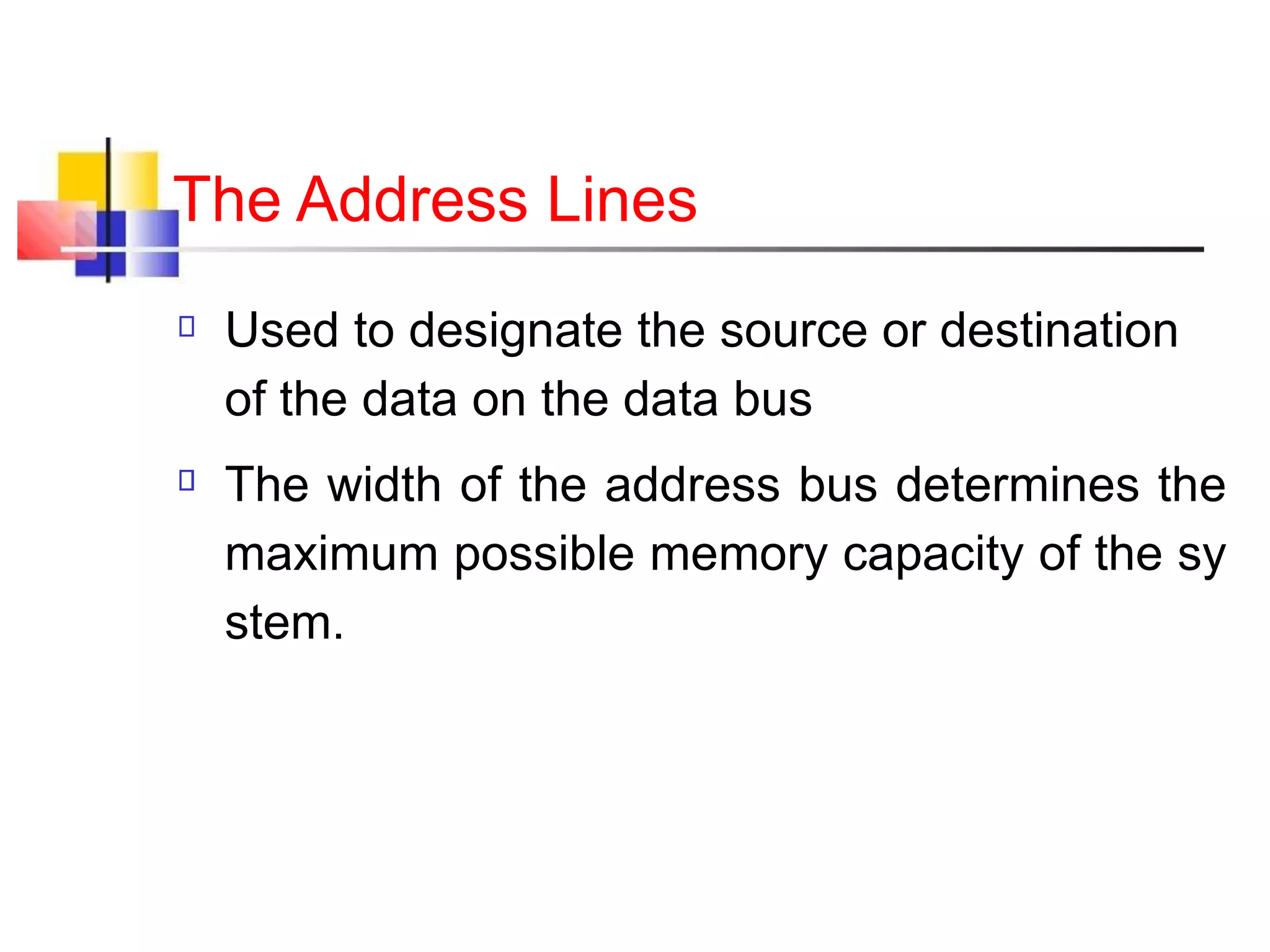
The Address Lines
Used to designate the source or destination
of the data on the data bus
The width of the address bus determines the
maximum possible memory capacity of the sy
stem.
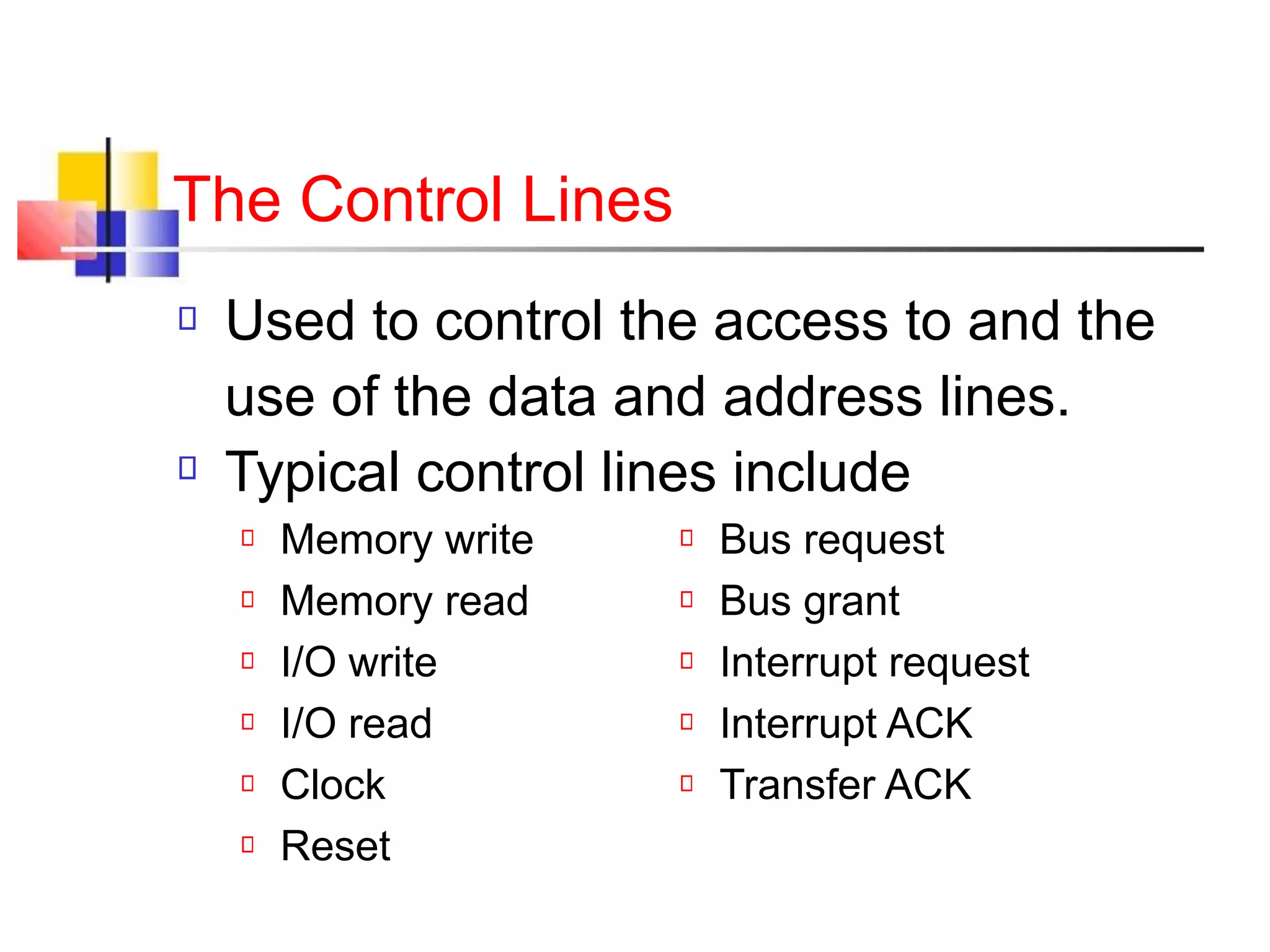
The Control Lines
Used to control the access to and the
use of the data and address lines.
Typical control lines include
Memory write
Memory read
I/O write
I/O read
Clock
Reset
Bus request
Bus grant
Interrupt request
Interrupt ACK
Transfer ACK
The operation of the bus If
one module wishes to send data
obtain the use of the bus
transfer data via the bus
If one module wishes to request data
obtain the use of the bus
transfer request to the other module over the
control and address lines, then wait for that second
module to send the data.
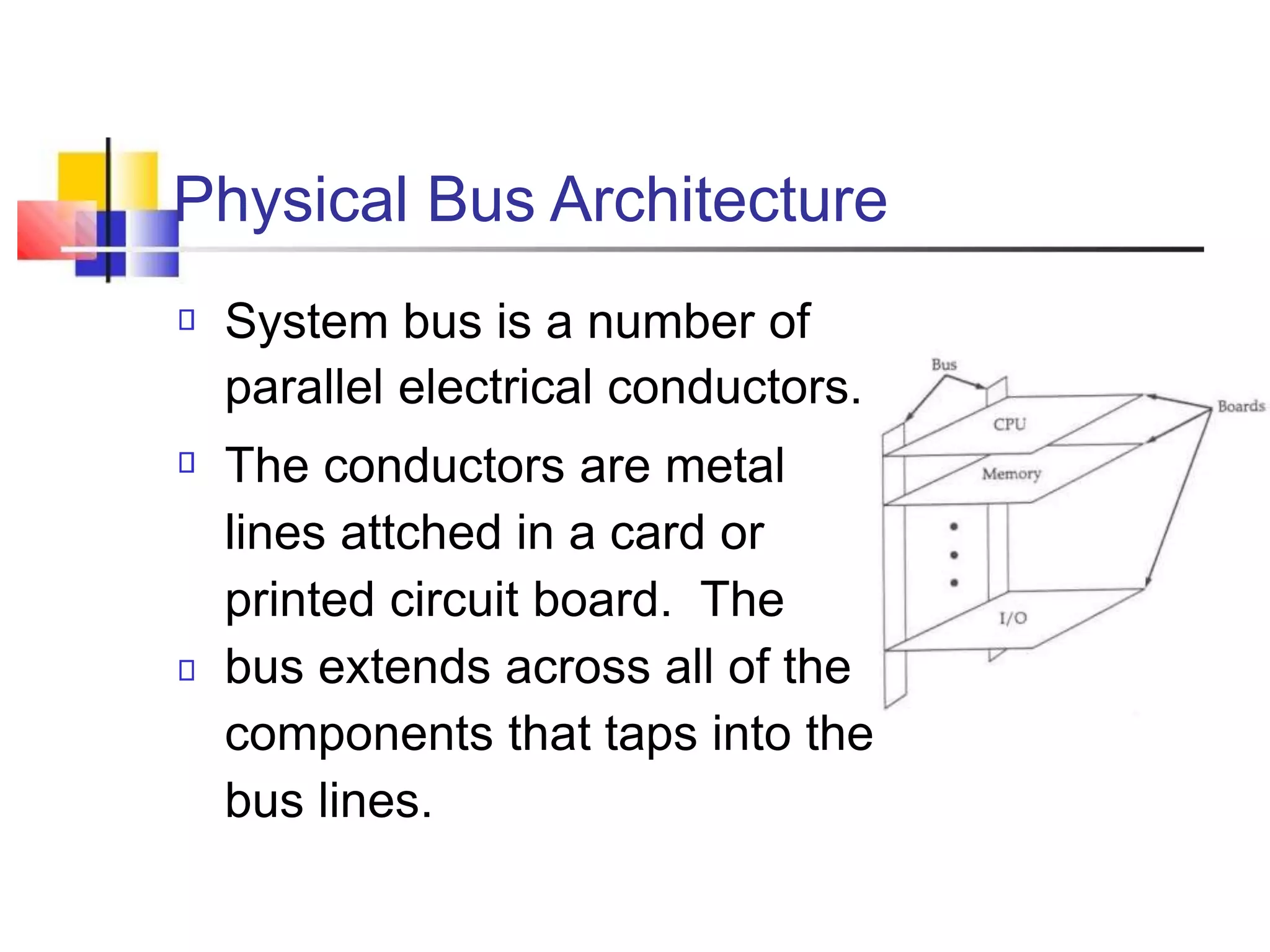
Physical Bus Architecture
System bus is a number of
parallel electrical conductors.
The conductors are metal
lines attched in a card or
printed circuit board. The
bus extends across all of the
components that taps into the
bus lines.
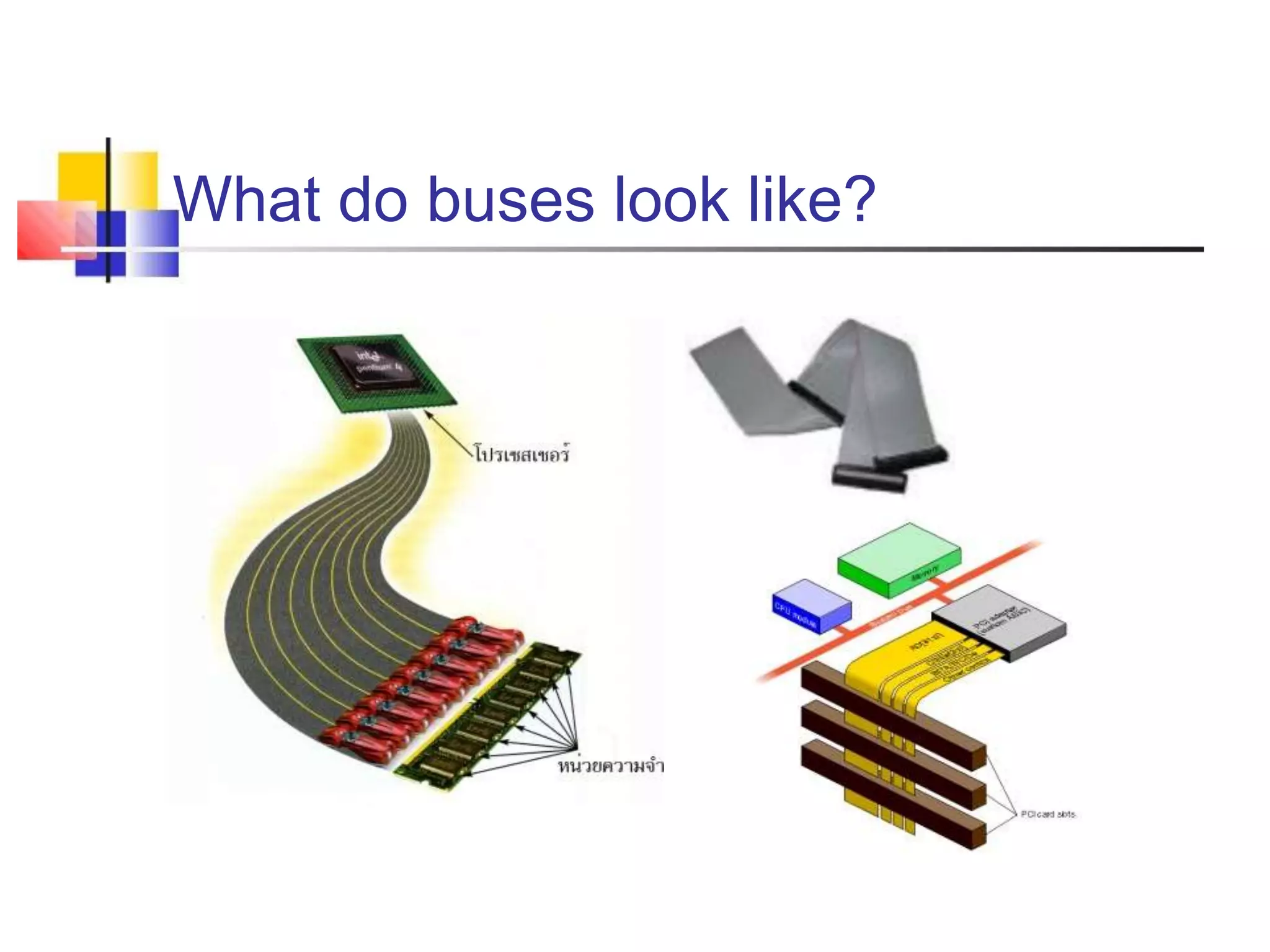
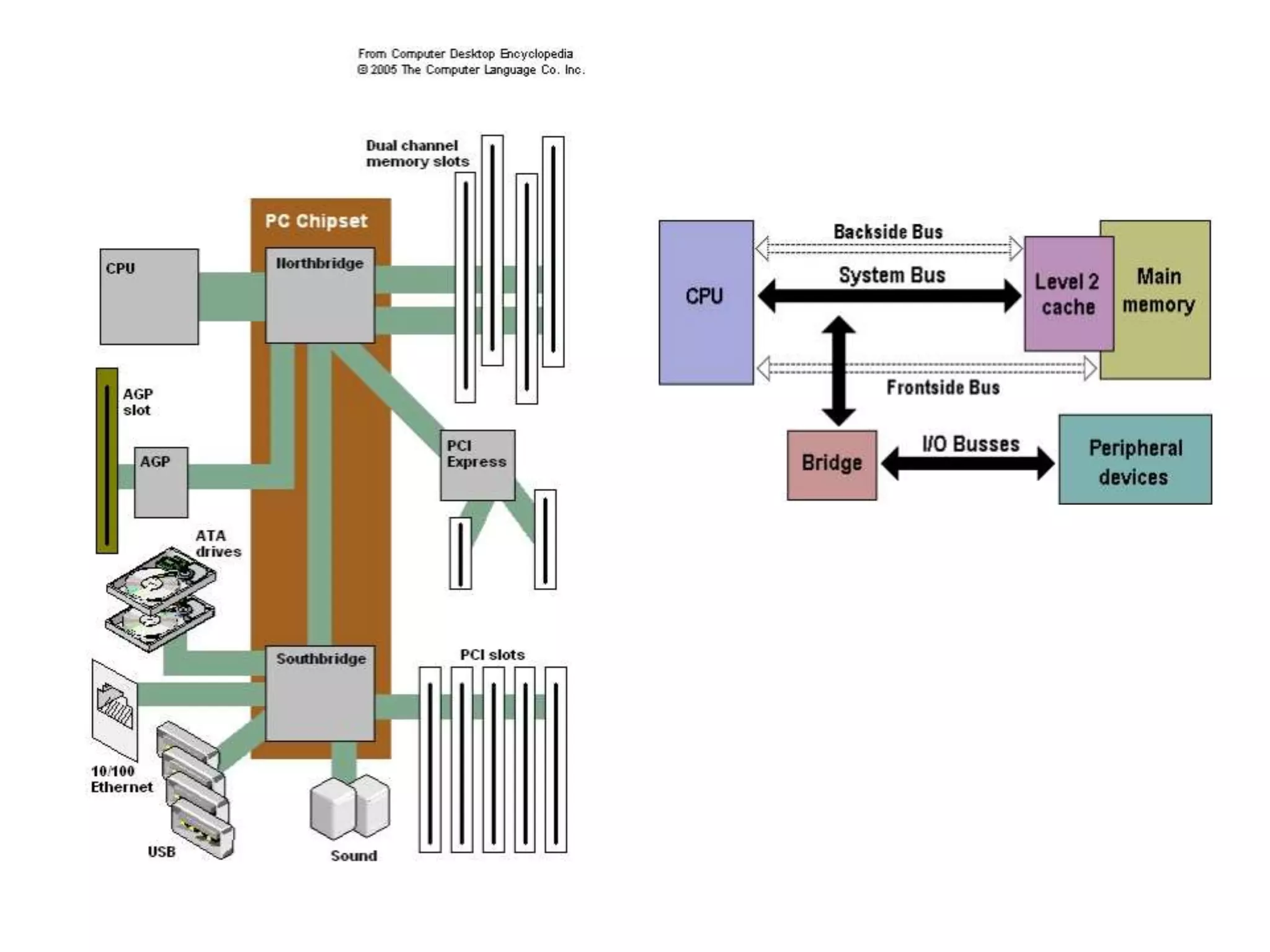
What do buses look like?
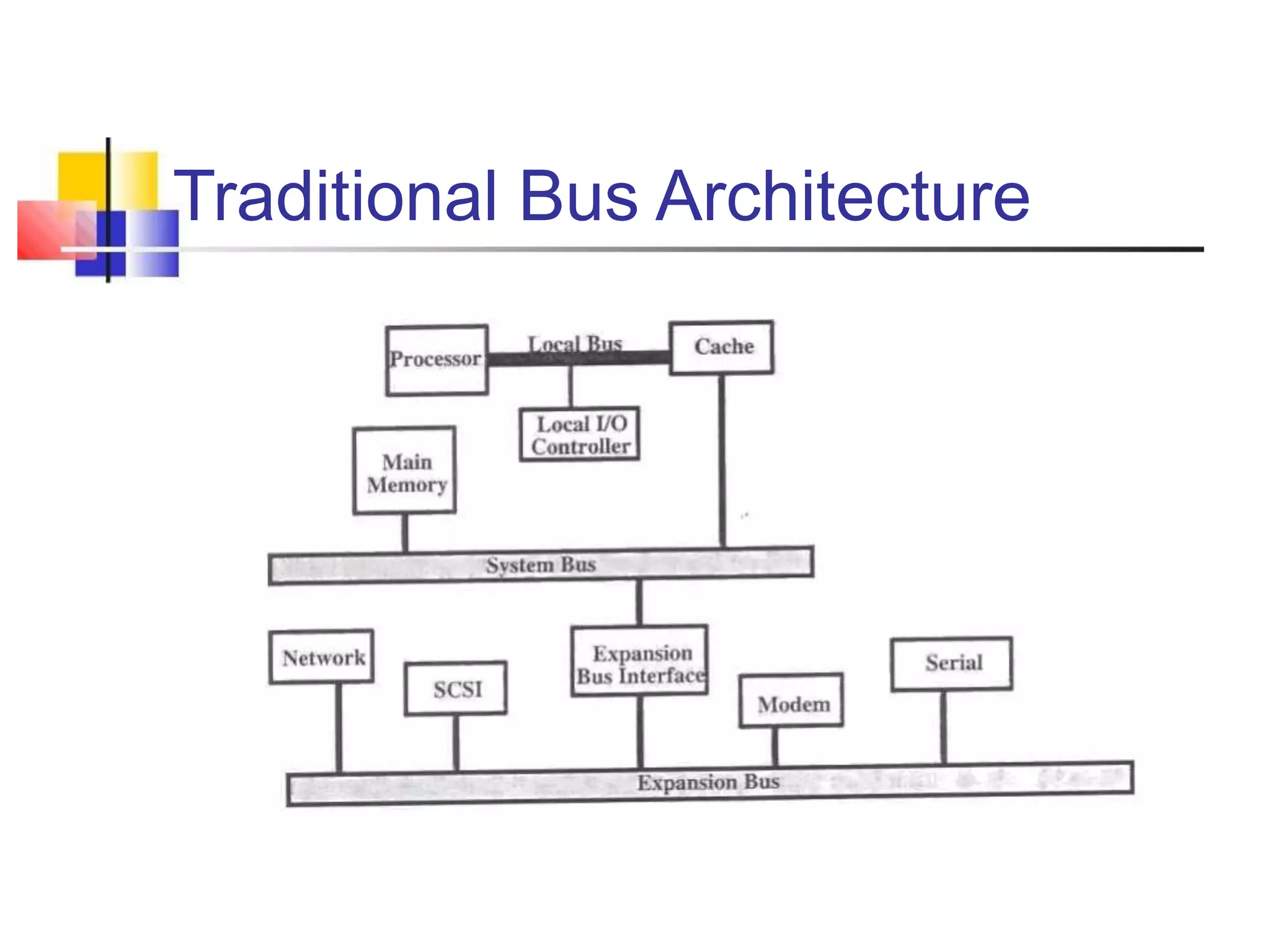
Traditional Bus Architecture
Local bus
CPU - Cache
System bus
Main memory - Cache
Expansion bus
I/O Modules - Main memory
Traditional Bus Architecture
High-Performance Architecture
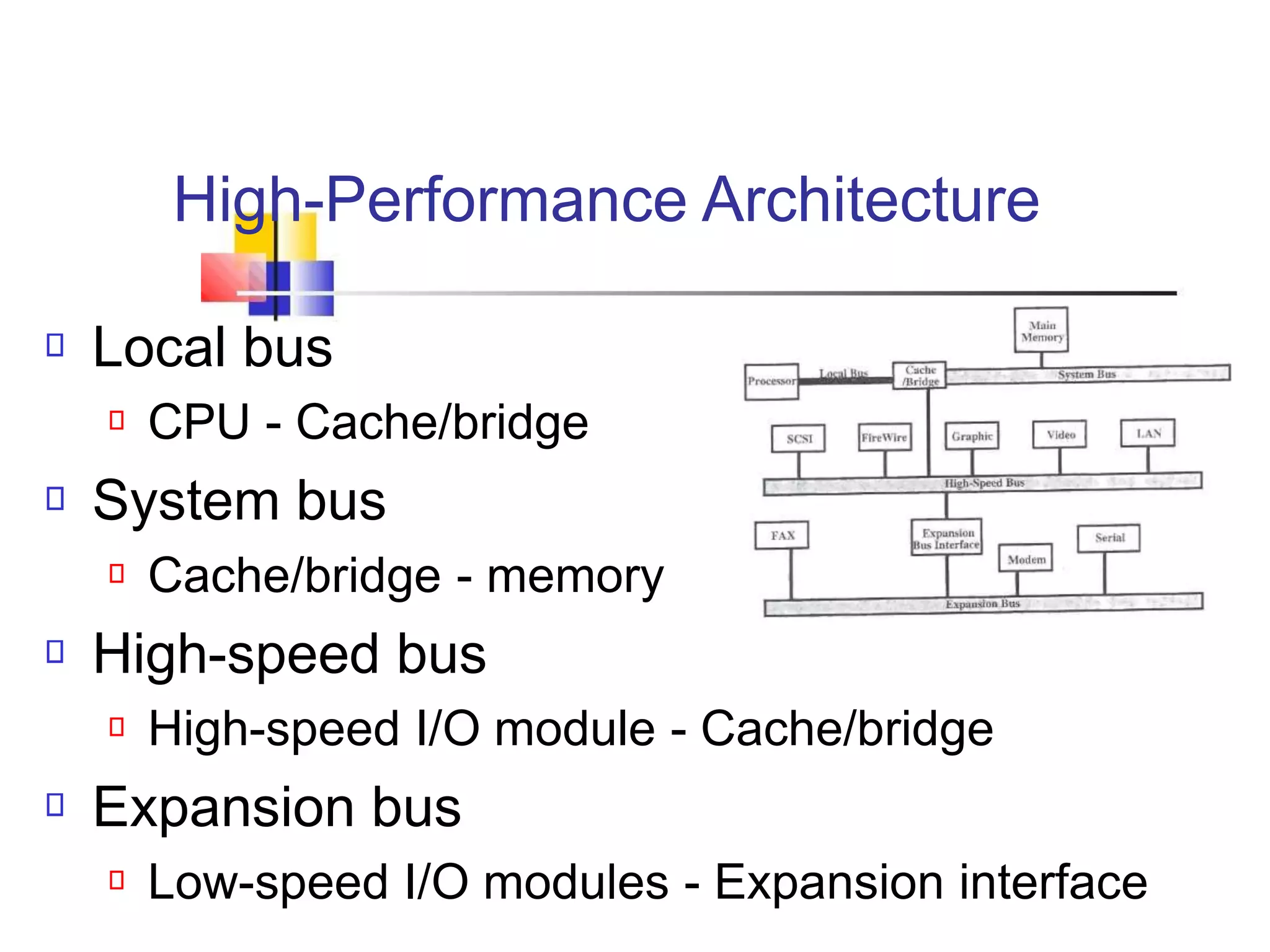
Local bus
CPU - Cache/bridge
System bus
Cache/bridge - memory
High-speed bus
High-speed I/O module - Cache/bridge
Expansion bus
Low-speed I/O modules - Expansion interface
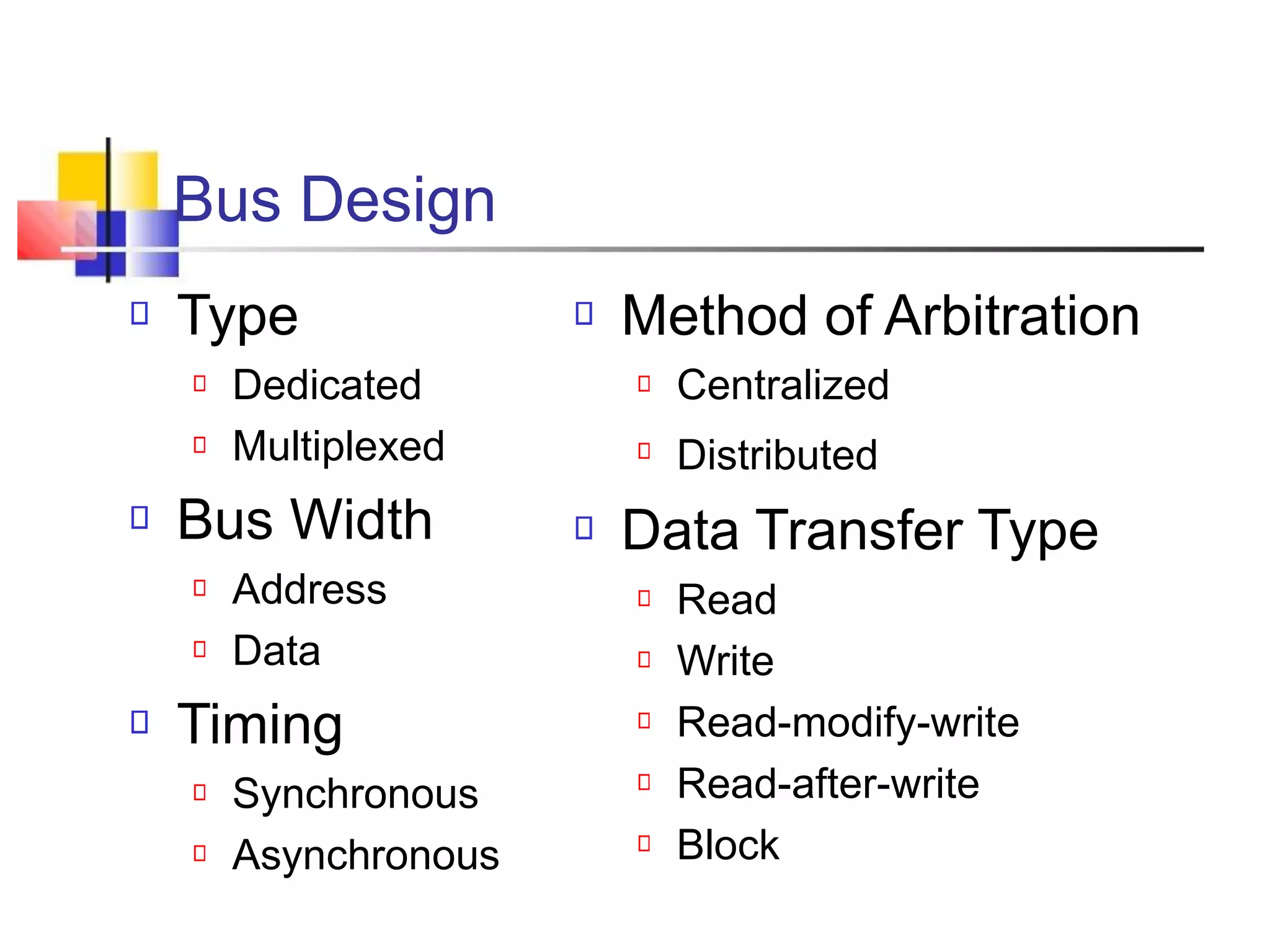
Bus Design
Type Method of Arbitration
Dedicated Centralized
Multiplexed
Bus Width
Address
Data
Timing
Synchronous
Asynchronous
Distributed
Data Transfer Type
Read
Write
Read-modify-write
Read-after-write
Block
Type
Dedicated
permanent assigned bus either to
one function or to a physical subset
of computer components
Multiplexed
use in the same bus for multiple
purpose (Time Multiplexing)
Bus Width
Address
the wider of address bus has an
impact on range of locations that ca
n be referenced
Data
the wider of data bus has an
impact on the number of bits transfe
rred at one time
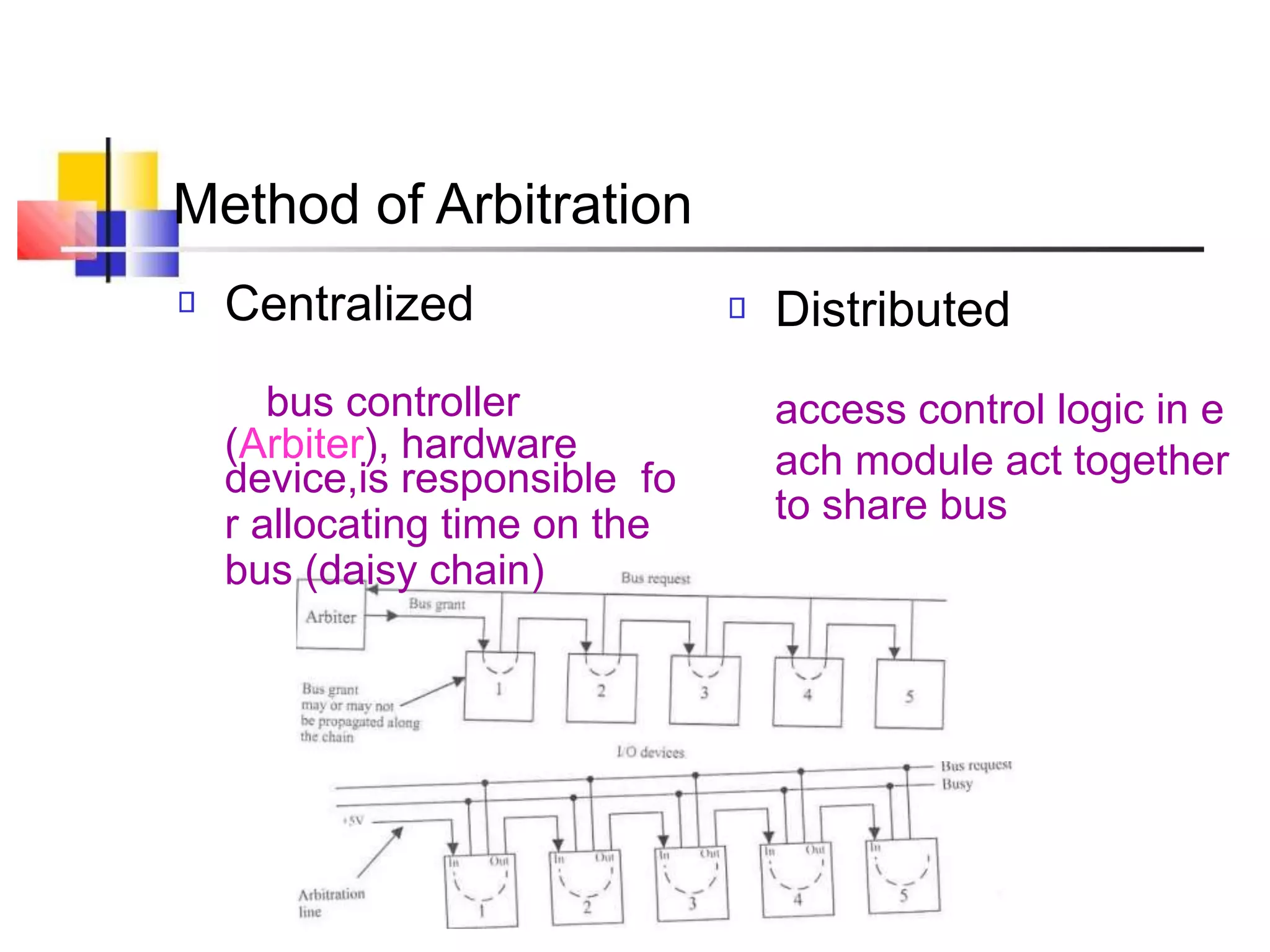
Method of Arbitration
Centralized
bus controller
(Arbiter), hardware
device,is responsible fo
r allocating time on the
bus (daisy chain)
Distributed
access control logic in e
ach module act together
to share bus
Data Transfer Type
Read Multiplexed
bus is used to specifying address
and then for transferring data after a
wait while data is being fetched
Read Dedicated
address is put on bus and
remain there while data are put on the
data bus
Data Transfer Type
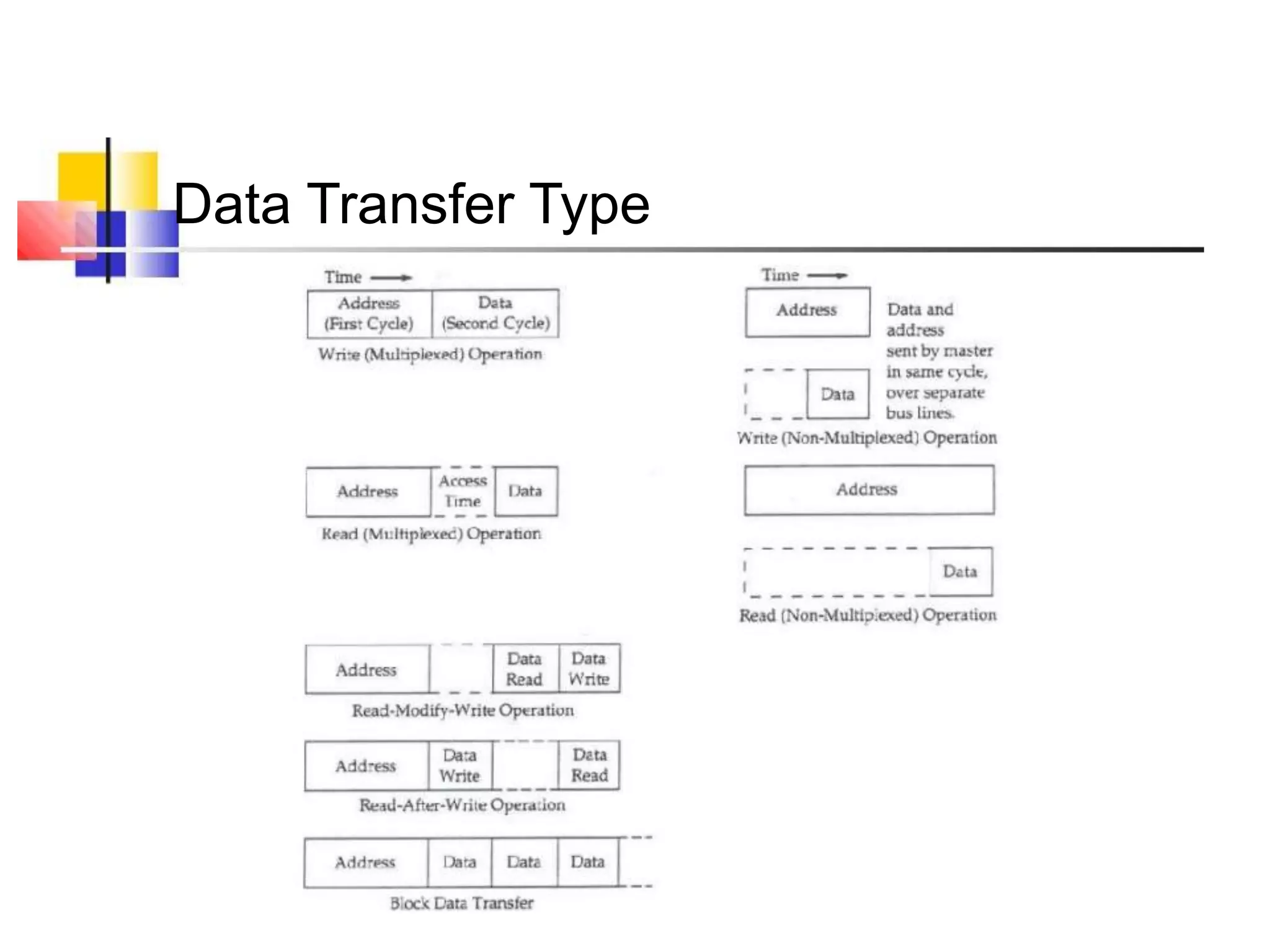
Write Multiplexed
bus is used to specifying address
and then transferring data (same as
read operation)
Write Dedicated
data put on data bus as soon
as the address has stabilized
Data Transfer Type
Read-modify-write
address is broadcast once
at beginning a simply read is followed
immediately by a write to the same addr
ess
Read-after-write
a write followed
immediately by a read from the same a
ddress,performed for checking purpose
Data Transfer Type
Block
one address cycle is followed by n
data cycles.
The first data item is transferred to or
from the specified address; remainder
data items are transferred to or from su
bsequent addresses
Data Transfer Type

businterconnection ppt.pptx

  • 1.
    BUS INTERCONNECTION Ramakrishna Reddy Assoc.Prof Avanthi PG College brreddy@avanthipg.ac.in
  • 2.
    Interconnection Structures A computerconsists of a set of components (CPU,memory,I/O) that communicate with ea ch other. The collection of paths connecting the various modules is call the interconnection structure. The design of this structure will depend on the exchange that must be made between mo dules.
  • 3.
    Type of transfers Memoryto CPU CPU to Memory I/O to CPU CPU to I/O I/O to or from Memory (DMA)
  • 4.
    Bus Interconnection A busis a communication pathway connecting two or more device. A key characteristic of a bus is that it is a shared transmission medium. A bus consists of multiple pathways or lines. Each line is capable of transmitting signal representing binary digit (1 or 0)
  • 5.
    Bus Interconnection A sequenceof bits can be transmit across a single line. Several lines can be used to transmit bits simultaneously (in parallel). A bus that connects major components (CPU,Memory,I/O) is called System Bus. The most common computer interconnection structures are based on the use of one or mor e system buses.
  • 6.
    Bus Structure A systembus consists of 50-100 lines. Each line is assigned a particular meaning or function. On any bus the lines can be classified into 3 groups Data lines Address lines Control lines
  • 8.
    Data Lines A tt a c k s o n cr y p t o s y st e m s. Provide apath for moving data between system modules. These lines, collectively, are called the data bus. The data bus typically consists of 8,16 or 32 separate lines, the numbers of lines being transferred to as the width of the data bus. Each line carry only 1 bit at a time, the number of lines determines how many bits can transferred at a ti me - overall system performance.
  • 9.
    The Address Lines Usedto designate the source or destination of the data on the data bus The width of the address bus determines the maximum possible memory capacity of the sy stem.
  • 10.
    The Control Lines Usedto control the access to and the use of the data and address lines. Typical control lines include Memory write Memory read I/O write I/O read Clock Reset Bus request Bus grant Interrupt request Interrupt ACK Transfer ACK
  • 11.
    The operation ofthe bus If one module wishes to send data obtain the use of the bus transfer data via the bus If one module wishes to request data obtain the use of the bus transfer request to the other module over the control and address lines, then wait for that second module to send the data.
  • 12.
    Physical Bus Architecture Systembus is a number of parallel electrical conductors. The conductors are metal lines attched in a card or printed circuit board. The bus extends across all of the components that taps into the bus lines.
  • 13.
    What do buseslook like?
  • 14.
    Traditional Bus Architecture Localbus CPU - Cache System bus Main memory - Cache Expansion bus I/O Modules - Main memory
  • 15.
  • 16.
    High-Performance Architecture Local bus CPU- Cache/bridge System bus Cache/bridge - memory High-speed bus High-speed I/O module - Cache/bridge Expansion bus Low-speed I/O modules - Expansion interface
  • 18.
    Bus Design Type Methodof Arbitration Dedicated Centralized Multiplexed Bus Width Address Data Timing Synchronous Asynchronous Distributed Data Transfer Type Read Write Read-modify-write Read-after-write Block
  • 19.
    Type Dedicated permanent assigned buseither to one function or to a physical subset of computer components Multiplexed use in the same bus for multiple purpose (Time Multiplexing)
  • 20.
    Bus Width Address the widerof address bus has an impact on range of locations that ca n be referenced Data the wider of data bus has an impact on the number of bits transfe rred at one time
  • 21.
    Method of Arbitration Centralized buscontroller (Arbiter), hardware device,is responsible fo r allocating time on the bus (daisy chain) Distributed access control logic in e ach module act together to share bus
  • 22.
    Data Transfer Type ReadMultiplexed bus is used to specifying address and then for transferring data after a wait while data is being fetched Read Dedicated address is put on bus and remain there while data are put on the data bus
  • 23.
    Data Transfer Type WriteMultiplexed bus is used to specifying address and then transferring data (same as read operation) Write Dedicated data put on data bus as soon as the address has stabilized
  • 24.
    Data Transfer Type Read-modify-write addressis broadcast once at beginning a simply read is followed immediately by a write to the same addr ess Read-after-write a write followed immediately by a read from the same a ddress,performed for checking purpose
  • 25.
    Data Transfer Type Block oneaddress cycle is followed by n data cycles. The first data item is transferred to or from the specified address; remainder data items are transferred to or from su bsequent addresses
  • 26.