
Welingkar’s Distance Learning Division
Business to Business E-Commerce
We Learn – A Continuous Learning Forum
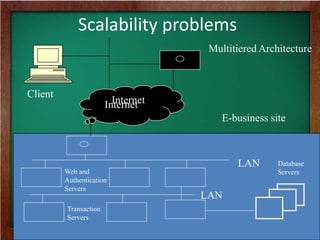
Scalability problems
Web and
Authentication
Servers
Transaction
Servers
LAN
LAN
Database
Servers
E-business site
Multitiered Architecture
InternetInternet
Client
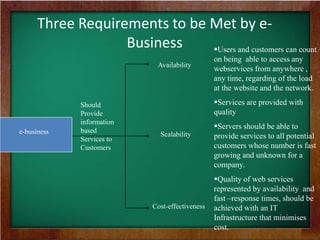
Three Requirements to be Met by e-
Business Users and customers can count
on being able to access any
webservices from anywhere ,
any time, regarding of the load
at the website and the network.
Services are provided with
quality
Servers should be able to
provide services to all potential
customers whose number is fast
growing and unknown for a
company.
Quality of web services
represented by availability and
fast –response times, should be
achieved with an IT
Infrastructure that minimises
cost.
Availability
Scalability
Cost-effectiveness
Should
Provide
information
based
Services to
Customers
e-business
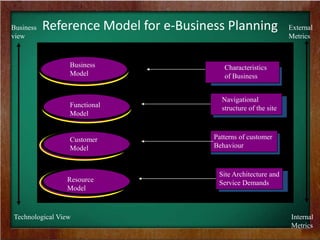
Reference Model for e-Business Planning
Business
Model
Functional
Model
Customer
Model
Resource
Model
Characteristics
of Business
Navigational
structure of the site
Patterns of customer
Behaviour
Site Architecture and
Service Demands
Technological View
Business
view
External
Metrics
Internal
Metrics
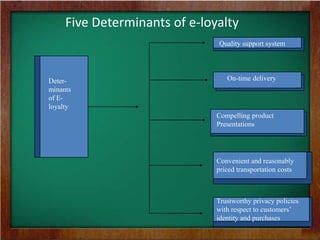
Five Determinants of e-loyalty
Quality support system
On-time delivery
Compelling product
Presentations
Convenient and reasonably
priced transportation costs
Trustworthy privacy policies
with respect to customers’
identity and purchases
Deter-
minants
of E-
loyalty
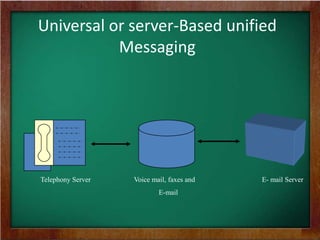
Universal or server-Based unified
Messaging
Telephony Server Voice mail, faxes and
E-mail
E- mail Server
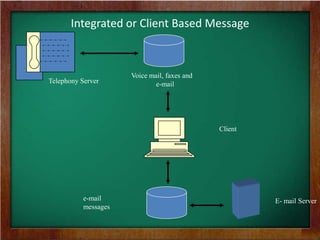
Integrated or Client Based Message
Telephony Server
Voice mail, faxes and
e-mail
Client
E- mail Servere-mail
messages
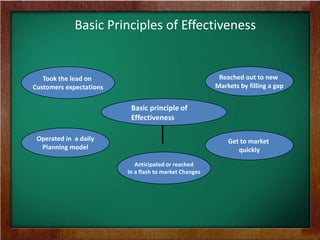
Basic Principles of Effectiveness
Basic principle of
Effectiveness
Took the lead on
Customers expectations
Operated in a daily
Planning model
Reached out to new
Markets by filling a gap
Get to market
quickly
Anticipated or reached
In a flash to market Changes
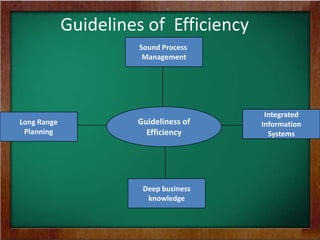
Guidelines of Efficiency
Guideliness of
Efficiency
Long Range
Planning
Sound Process
Management
Integrated
Information
Systems
Deep business
knowledge
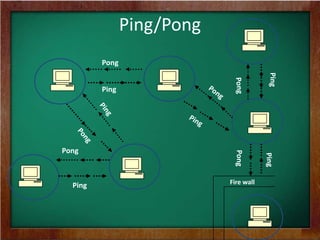
Ping/Pong
Fire wall
Pong
Pong
Pong
Ping
Ping
Ping
e-Enterprise
1995 1997 1999 2000
Business
Impact
e - b – Electronic Business
e – c – Electronic Commerce
e- e – Electronic Enterprise
Digital Nervous System-Enabled
Value chain
R & D
Engi-
nearing
Market-
ing
Customer
support
Sales
Logistics
&
Distribution
Internet Enabled by a Digital
Nervous System
Business
Internet
link to
Business
Partners
Orignal
Business
‘Intranet’
enabled by
a digital
nervous
system
Business
Internet
linked to
customers
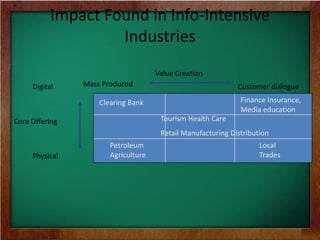
Impact Found in Info-Intensive
Industries
Clearing Bank Finance Insurance,
Media education
Tourism Health Care
Retail Manufacturing Distribution
Petroleum
Agriculture
Local
Trades
Core Offering
Physical
Digital Mass Produced
Value Creation
Customer dialogue
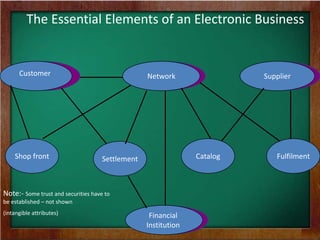
The Essential Elements of an Electronic Business
Supplier
Financial
Institution
Network
Shop front Settlement Catalog Fulfilment
Customer
Note:- Some trust and securities have to
be established – not shown
(intangible attributes)
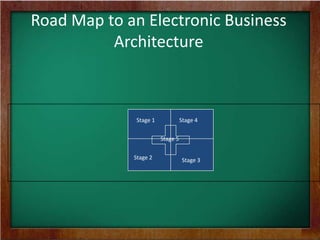
Road Map to an Electronic Business
Architecture
Stage 5
Stage 1 Stage 4
Stage 2 Stage 3
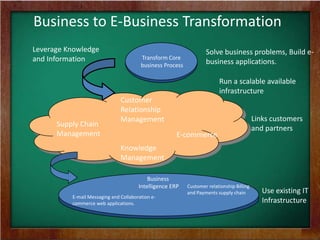
Business to E-Business Transformation
Transform Core
business Process
Business
Intelligence ERP
E-mail Messaging and Collaboration e-
commerce web applications.
Customer relationship Billing
and Payments supply chain
Supply Chain
Management
Customer
Relationship
Management
Knowledge
Management
E-commerce
Leverage Knowledge
and Information
Solve business problems, Build e-
business applications.
Run a scalable available
infrastructure
Links customers
and partners
Use existing IT
Infrastructure

Business to Business E- Commerce

  • 1.
    Welingkar’s Distance LearningDivision Business to Business E-Commerce We Learn – A Continuous Learning Forum
  • 2.
  • 3.
    Three Requirements tobe Met by e- Business Users and customers can count on being able to access any webservices from anywhere , any time, regarding of the load at the website and the network. Services are provided with quality Servers should be able to provide services to all potential customers whose number is fast growing and unknown for a company. Quality of web services represented by availability and fast –response times, should be achieved with an IT Infrastructure that minimises cost. Availability Scalability Cost-effectiveness Should Provide information based Services to Customers e-business
  • 4.
    Reference Model fore-Business Planning Business Model Functional Model Customer Model Resource Model Characteristics of Business Navigational structure of the site Patterns of customer Behaviour Site Architecture and Service Demands Technological View Business view External Metrics Internal Metrics
  • 5.
    Five Determinants ofe-loyalty Quality support system On-time delivery Compelling product Presentations Convenient and reasonably priced transportation costs Trustworthy privacy policies with respect to customers’ identity and purchases Deter- minants of E- loyalty
  • 6.
    Universal or server-Basedunified Messaging Telephony Server Voice mail, faxes and E-mail E- mail Server
  • 7.
    Integrated or ClientBased Message Telephony Server Voice mail, faxes and e-mail Client E- mail Servere-mail messages
  • 8.
    Basic Principles ofEffectiveness Basic principle of Effectiveness Took the lead on Customers expectations Operated in a daily Planning model Reached out to new Markets by filling a gap Get to market quickly Anticipated or reached In a flash to market Changes
  • 9.
    Guidelines of Efficiency Guidelinessof Efficiency Long Range Planning Sound Process Management Integrated Information Systems Deep business knowledge
  • 10.
  • 11.
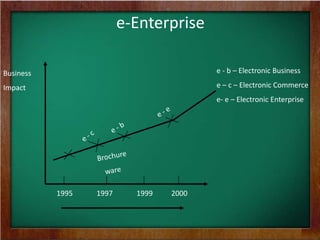
    e-Enterprise 1995 1997 19992000 Business Impact e - b – Electronic Business e – c – Electronic Commerce e- e – Electronic Enterprise
  • 12.
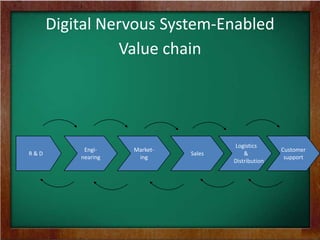
    Digital Nervous System-Enabled Valuechain R & D Engi- nearing Market- ing Customer support Sales Logistics & Distribution
  • 13.
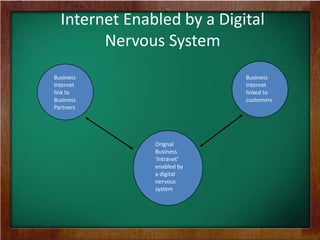
    Internet Enabled bya Digital Nervous System Business Internet link to Business Partners Orignal Business ‘Intranet’ enabled by a digital nervous system Business Internet linked to customers
  • 14.
    Impact Found inInfo-Intensive Industries Clearing Bank Finance Insurance, Media education Tourism Health Care Retail Manufacturing Distribution Petroleum Agriculture Local Trades Core Offering Physical Digital Mass Produced Value Creation Customer dialogue
  • 15.
    The Essential Elementsof an Electronic Business Supplier Financial Institution Network Shop front Settlement Catalog Fulfilment Customer Note:- Some trust and securities have to be established – not shown (intangible attributes)
  • 16.
    Road Map toan Electronic Business Architecture Stage 5 Stage 1 Stage 4 Stage 2 Stage 3
  • 17.
    Business to E-BusinessTransformation Transform Core business Process Business Intelligence ERP E-mail Messaging and Collaboration e- commerce web applications. Customer relationship Billing and Payments supply chain Supply Chain Management Customer Relationship Management Knowledge Management E-commerce Leverage Knowledge and Information Solve business problems, Build e- business applications. Run a scalable available infrastructure Links customers and partners Use existing IT Infrastructure