


Written by :
Alexander
Osterwalder &
Yves Pigneur
Presented by : Manpreet
Are you an entrepreneurial spirit?

Are you constantly thinking about how to
create value and build new businesses, or how
to improve or transform your organization?

Are you trying to find innovative ways of doing
business to replace old, outdated ones?
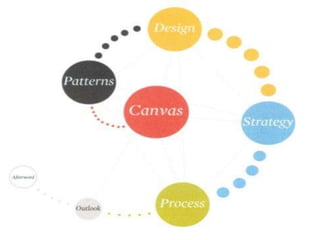
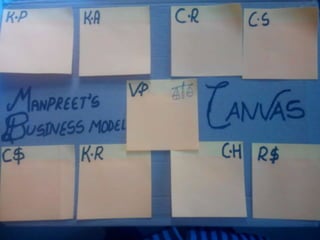
Canvas
The Business Model Canvas :
A shared language for
Describing, visualizing, assessing, and Changing
business models

•

The 9 Building Blocks

•

The Business model canvas template
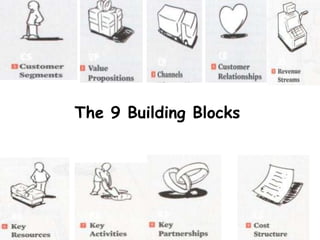
The 9 Building Blocks
1. Customer Segments
The Customer Segments Building Block defines the different groups of
people or organizations an enterprise aims to reach and serve.

There are different types of Customer Segments.
1. Mass Market
2. Niche Market
3. Segmented bank
4. Diversified amazon
5. Multi sided credit card, news paper
A Customer
2. Value Propositions
The Value Propositions Building Block describes the bundle of products
and services that create value for a specific Customer Segment
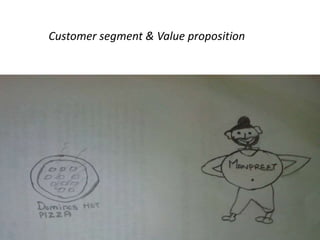
Customer segment & Value proposition
The Value Proposition is an aggregation, or bundle, of
benefits that a company offers customers.
Values may be
Quantitative (e.g. price, speed of service)
Qualitative (e.g. design, customer experience).
Following elements can contribute to customer value creation
1. Newness
2. Performance
3. Customization
4. Getting the job done
5. Design
6. Brand/Status
7. Price
8. Cost reduction
9. Risk reduction, 10. Risk reduction, 11. Accessibility, 12. Convenience
3. Channels
The Channels Building Block describes how a company
communicates with and reaches its Customer Segments to
deliver a Value Proposition
Channels serve several functions, including:
• Raising awareness
• Evaluate a company's Value Proposition
• To purchase specific products and services
• Delivering a Value Proposition to customers
• Post-purchase support
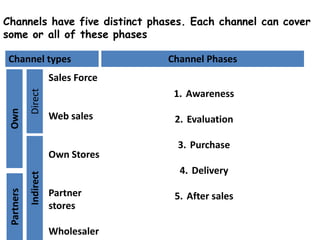
Channels have five distinct phases. Each channel can cover
some or all of these phases
Channel types

Channel Phases

Direct

Own

Sales Force
1. Awareness
Web sales

Indirect

Partners

Own Stores

2. Evaluation
3. Purchase
4. Delivery

Partner
stores
Wholesaler

5. After sales
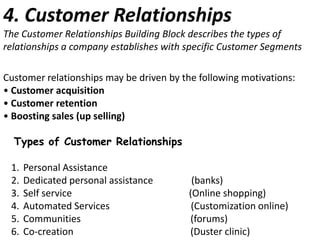
4. Customer Relationships
The Customer Relationships Building Block describes the types of
relationships a company establishes with specific Customer Segments

Customer relationships may be driven by the following motivations:
• Customer acquisition
• Customer retention
• Boosting sales (up selling)
Types of Customer Relationships
1.
2.
3.
4.
5.
6.

Personal Assistance
Dedicated personal assistance
Self service
Automated Services
Communities
Co-creation

(banks)
(Online shopping)
(Customization online)
(forums)
(Duster clinic)
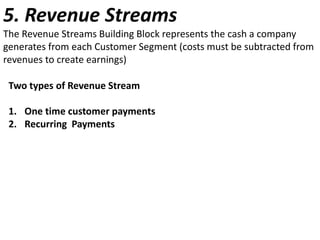
5. Revenue Streams
The Revenue Streams Building Block represents the cash a company
generates from each Customer Segment (costs must be subtracted from
revenues to create earnings)

Two types of Revenue Stream
1. One time customer payments
2. Recurring Payments
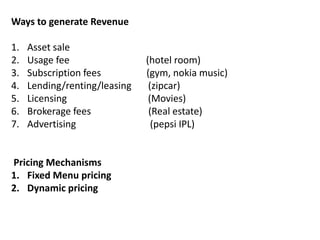
Ways to generate Revenue
1.
2.
3.
4.
5.
6.
7.

Asset sale
Usage fee
Subscription fees
Lending/renting/leasing
Licensing
Brokerage fees
Advertising

Pricing Mechanisms
1. Fixed Menu pricing
2. Dynamic pricing

(hotel room)
(gym, nokia music)
(zipcar)
(Movies)
(Real estate)
(pepsi IPL)
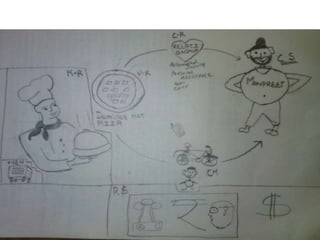
6.Key Resources
The Key Resources Building Block describes the most important assets
required to make a business model work

Depend upon the type of business model

Key resources can be categorized as follows:
1. Physical
(buildings)
2. Intellectual
(brands, Patents)
3. Human
4. Financial : to carry on operations
Key Activities
The Key Activities Building Block describes the most important things a
company must do to make its business model work

Key activities can be categorized as follows:
1. Production
2. Problem solving
3. Platform/network
8.Key Partnerships
The Key Partnerships Building Block describes the network of suppliers
and partners that make the business model work

We can distinguish between four different types of partnerships:
1. Strategic alliances between non-competitors
2. Coopetition : strategic partnerships between competitors
3. Joint ventures to develop new businesses
4. Buyer-supplier relationships to assure reliable supplies
Three Motivations for creating Partnerships
1. Optimization & economy of scale
(lays, coke)
2. Reduction of risk & uncertainty
(Blue ray)
3. Acquisition of particular resources
(micromax)
& activities
9. Cost Structure
The Cost Structure describes all costs incurred to operate a business
model

Two types of cost structures
1. Cost driven
2. Value driven
Characteristics of cost structure
1. Fixed costs
2. Variable costs
3. Economies of scale
4. Economies of scope
Brain

logic
Left

Emotion
Right
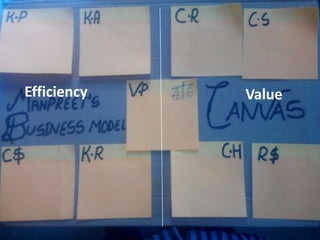
Efficiency

Value
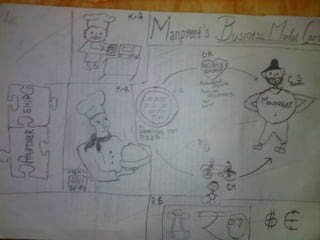
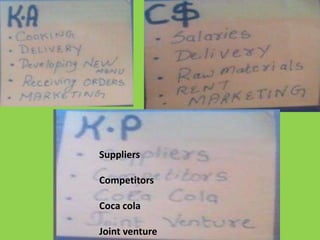
Suppliers
Competitors
Coca cola
Joint venture
Business model generation canvas By Manpreet singh digital

Business model generation canvas By Manpreet singh digital

  • 1.
    Written by : Alexander Osterwalder& Yves Pigneur Presented by : Manpreet
  • 2.
    Are you anentrepreneurial spirit? Are you constantly thinking about how to create value and build new businesses, or how to improve or transform your organization? Are you trying to find innovative ways of doing business to replace old, outdated ones?
  • 4.
  • 5.
    The Business ModelCanvas : A shared language for Describing, visualizing, assessing, and Changing business models • The 9 Building Blocks • The Business model canvas template
  • 6.
  • 7.
    1. Customer Segments TheCustomer Segments Building Block defines the different groups of people or organizations an enterprise aims to reach and serve. There are different types of Customer Segments. 1. Mass Market 2. Niche Market 3. Segmented bank 4. Diversified amazon 5. Multi sided credit card, news paper
  • 8.
  • 9.
    2. Value Propositions TheValue Propositions Building Block describes the bundle of products and services that create value for a specific Customer Segment
  • 10.
    Customer segment &Value proposition
  • 11.
    The Value Propositionis an aggregation, or bundle, of benefits that a company offers customers. Values may be Quantitative (e.g. price, speed of service) Qualitative (e.g. design, customer experience). Following elements can contribute to customer value creation 1. Newness 2. Performance 3. Customization 4. Getting the job done 5. Design 6. Brand/Status 7. Price 8. Cost reduction 9. Risk reduction, 10. Risk reduction, 11. Accessibility, 12. Convenience
  • 12.
    3. Channels The ChannelsBuilding Block describes how a company communicates with and reaches its Customer Segments to deliver a Value Proposition Channels serve several functions, including: • Raising awareness • Evaluate a company's Value Proposition • To purchase specific products and services • Delivering a Value Proposition to customers • Post-purchase support
  • 14.
    Channels have fivedistinct phases. Each channel can cover some or all of these phases Channel types Channel Phases Direct Own Sales Force 1. Awareness Web sales Indirect Partners Own Stores 2. Evaluation 3. Purchase 4. Delivery Partner stores Wholesaler 5. After sales
  • 15.
    4. Customer Relationships TheCustomer Relationships Building Block describes the types of relationships a company establishes with specific Customer Segments Customer relationships may be driven by the following motivations: • Customer acquisition • Customer retention • Boosting sales (up selling) Types of Customer Relationships 1. 2. 3. 4. 5. 6. Personal Assistance Dedicated personal assistance Self service Automated Services Communities Co-creation (banks) (Online shopping) (Customization online) (forums) (Duster clinic)
  • 17.
    5. Revenue Streams TheRevenue Streams Building Block represents the cash a company generates from each Customer Segment (costs must be subtracted from revenues to create earnings) Two types of Revenue Stream 1. One time customer payments 2. Recurring Payments
  • 19.
    Ways to generateRevenue 1. 2. 3. 4. 5. 6. 7. Asset sale Usage fee Subscription fees Lending/renting/leasing Licensing Brokerage fees Advertising Pricing Mechanisms 1. Fixed Menu pricing 2. Dynamic pricing (hotel room) (gym, nokia music) (zipcar) (Movies) (Real estate) (pepsi IPL)
  • 20.
    6.Key Resources The KeyResources Building Block describes the most important assets required to make a business model work Depend upon the type of business model Key resources can be categorized as follows: 1. Physical (buildings) 2. Intellectual (brands, Patents) 3. Human 4. Financial : to carry on operations
  • 22.
    Key Activities The KeyActivities Building Block describes the most important things a company must do to make its business model work Key activities can be categorized as follows: 1. Production 2. Problem solving 3. Platform/network
  • 24.
    8.Key Partnerships The KeyPartnerships Building Block describes the network of suppliers and partners that make the business model work We can distinguish between four different types of partnerships: 1. Strategic alliances between non-competitors 2. Coopetition : strategic partnerships between competitors 3. Joint ventures to develop new businesses 4. Buyer-supplier relationships to assure reliable supplies Three Motivations for creating Partnerships 1. Optimization & economy of scale (lays, coke) 2. Reduction of risk & uncertainty (Blue ray) 3. Acquisition of particular resources (micromax) & activities
  • 26.
    9. Cost Structure TheCost Structure describes all costs incurred to operate a business model Two types of cost structures 1. Cost driven 2. Value driven Characteristics of cost structure 1. Fixed costs 2. Variable costs 3. Economies of scale 4. Economies of scope
  • 29.
  • 30.
  • 36.