Brain stem Thai Ngo Quynh Vy – 10M
What is it? The brain stem is a small but important part of the brain that controls: - Breathing - Heart Rate - Blood Pressure …  and more !
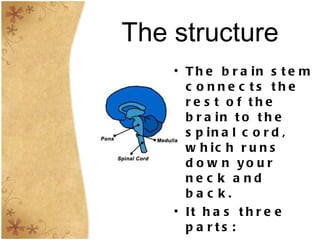
The position The brain stem sits beneath the  cerebrum  and in front of the cerebellum, between the thalamus and spinal cord.
The structure The brain stem connects the rest of the brain to the spinal cord, which runs down your neck and back.  It has three parts: - Midbrain. - Pons. - Medulla Oblongata.
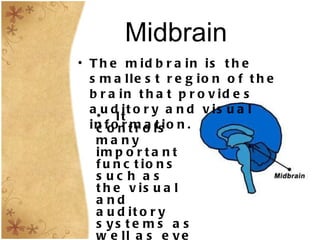
Midbrain The midbrain is the smallest region of the brain that provides auditory and visual information.  It controls many important functions such as the visual and auditory systems as well as eye movement.
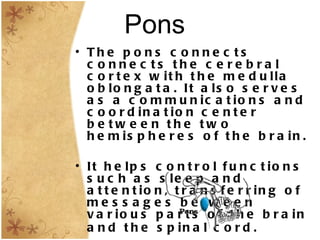
Pons The pons connects connects the cerebral cortex with the medulla oblongata. It also serves as a communications and coordination center between the two hemispheres of the brain. It helps control functions such as sleep and attention, transferring of messages between various parts of the brain and the spinal cord.
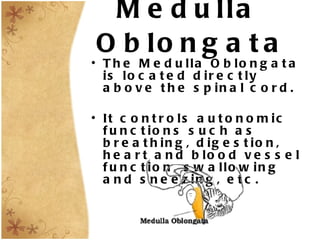
Medulla    Oblongata The Medulla Oblongata is located directly above the spinal cord. It controls autonomic functions such as breathing, digestion, heart and blood vessel function, swallowing and sneezing, etc.
Brain Stem Injury Injury to the brain stem is an acute brain injury. The brain stem is involved in attention and short-term memory, also a place where most of the cranial nerves come from. Brain Stem Injury Causes:  - Decreased capacity in breathing. - Swallowing food and water. - Difficulty with organization of the environment.  - Problems with balance and movement.  - Dizziness and nausea.  - Insomnia and sleep apnea.
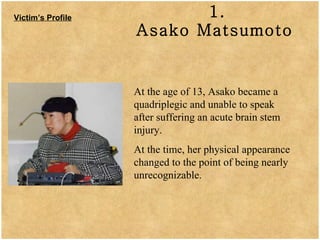
1. Asako Matsumoto   Victim’s Profile At the age of 13, Asako became a quadriplegic and unable to speak after suffering an acute brain stem injury.  At the time, her physical appearance changed to the point of being nearly unrecognizable.
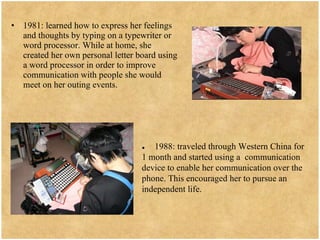
1981: learned how to express her feelings and thoughts by typing on a typewriter or word processor. While at home, she created her own personal letter board using a word processor in order to improve communication with people she would meet on her outing events.  ●   1988: traveled through Western China for 1 month and started using a  communication device to enable her communication over the phone. This encouraged her to pursue an independent life.
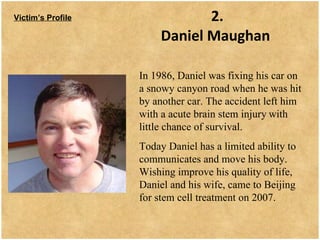
2. Daniel Maughan   Victim’s Profile In 1986, Daniel was fixing his car on a snowy canyon road when he was hit by another car. The accident left him with a acute brain stem injury   with little chance of survival.  Today Daniel has a limited ability to communicates and move his body. Wishing improve his quality of life, Daniel and his wife, came to Beijing for stem cell treatment on 2007.
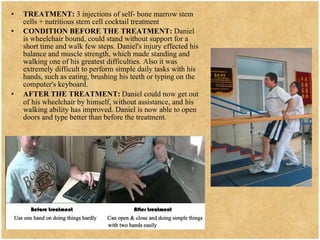
TREATMENT:  3 injections of self- bone marrow stem cells + nutritious stem cell cocktail treatment  CONDITION BEFORE THE TREATMENT:  Daniel is wheelchair bound, could stand without support for a short time and walk few steps. Daniel's injury effected his balance and muscle strength, which made standing and walking one of his greatest difficulties. Also it was extremely difficult to perform simple daily tasks with his hands, such as eating, brushing his teeth or typing on the computer's keyboard. AFTER THE TREATMENT:   Daniel could now get out of his wheelchair by himself, without assistance, and his walking ability has improved. Daniel is now able to open doors and type better than before the treatment.

Brain stem

  • 1.
    Brain stem ThaiNgo Quynh Vy – 10M
  • 2.
    What is it?The brain stem is a small but important part of the brain that controls: - Breathing - Heart Rate - Blood Pressure … and more !
  • 3.
    The position Thebrain stem sits beneath the cerebrum and in front of the cerebellum, between the thalamus and spinal cord.
  • 4.
    The structure Thebrain stem connects the rest of the brain to the spinal cord, which runs down your neck and back. It has three parts: - Midbrain. - Pons. - Medulla Oblongata.
  • 5.
    Midbrain The midbrainis the smallest region of the brain that provides auditory and visual information. It controls many important functions such as the visual and auditory systems as well as eye movement.
  • 6.
    Pons The ponsconnects connects the cerebral cortex with the medulla oblongata. It also serves as a communications and coordination center between the two hemispheres of the brain. It helps control functions such as sleep and attention, transferring of messages between various parts of the brain and the spinal cord.
  • 7.
    Medulla   Oblongata The Medulla Oblongata is located directly above the spinal cord. It controls autonomic functions such as breathing, digestion, heart and blood vessel function, swallowing and sneezing, etc.
  • 8.
    Brain Stem InjuryInjury to the brain stem is an acute brain injury. The brain stem is involved in attention and short-term memory, also a place where most of the cranial nerves come from. Brain Stem Injury Causes: - Decreased capacity in breathing. - Swallowing food and water. - Difficulty with organization of the environment. - Problems with balance and movement. - Dizziness and nausea. - Insomnia and sleep apnea.
  • 9.
    1. Asako Matsumoto Victim’s Profile At the age of 13, Asako became a quadriplegic and unable to speak after suffering an acute brain stem injury. At the time, her physical appearance changed to the point of being nearly unrecognizable.
  • 10.
    1981: learned howto express her feelings and thoughts by typing on a typewriter or word processor. While at home, she created her own personal letter board using a word processor in order to improve communication with people she would meet on her outing events. ● 1988: traveled through Western China for 1 month and started using a communication device to enable her communication over the phone. This encouraged her to pursue an independent life.
  • 11.
    2. Daniel Maughan Victim’s Profile In 1986, Daniel was fixing his car on a snowy canyon road when he was hit by another car. The accident left him with a acute brain stem injury with little chance of survival. Today Daniel has a limited ability to communicates and move his body. Wishing improve his quality of life, Daniel and his wife, came to Beijing for stem cell treatment on 2007.
  • 12.
    TREATMENT: 3injections of self- bone marrow stem cells + nutritious stem cell cocktail treatment CONDITION BEFORE THE TREATMENT: Daniel is wheelchair bound, could stand without support for a short time and walk few steps. Daniel's injury effected his balance and muscle strength, which made standing and walking one of his greatest difficulties. Also it was extremely difficult to perform simple daily tasks with his hands, such as eating, brushing his teeth or typing on the computer's keyboard. AFTER THE TREATMENT: Daniel could now get out of his wheelchair by himself, without assistance, and his walking ability has improved. Daniel is now able to open doors and type better than before the treatment.