Brain Death & Ethical
       issues
     Dr. Ashraf Hussain
overview
   What is death?
   History of death
   Clinical death, brain death
   Islamic perspective of death
   Ethical issues
   When a human being is dead?
   When the entity that integrates rest of
    the organism dies, the organism dies
    with it
Death is a process not an event
Mode of dying
   Human beings have a deep-seated belief that a
    person’s mode of dying is an important part of
    the totality that is his or her life.

   The moment of passing on from this world is,
    therefore, a very important point in the human
    life story.
History of death

   Before 1816, physicians were not well trusted
    in their ability to diagnose death
   Fear of being buried alive
In ancient Rome

   Call out deceased person’s name 3 times
   If no response-- finger amputated
   If no bleeding– declared deceased
Fear to be buried alive
In 14th century
 Duke of Lancaster left instructions to keep his

  body in bed for 40 days
 If doctors still believed he was dead then to be

  buried
Magic words (1790)

                   “I am dead”


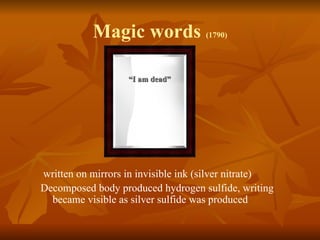
written on mirrors in invisible ink (silver nitrate)
Decomposed body produced hydrogen sulfide, writing
  became visible as silver sulfide was produced
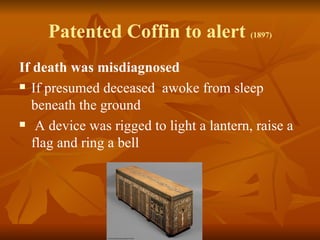
Patented Coffin to alert (1897)
If death was misdiagnosed
 If presumed deceased awoke from sleep

  beneath the ground
 A device was rigged to light a lantern, raise a

  flag and ring a bell
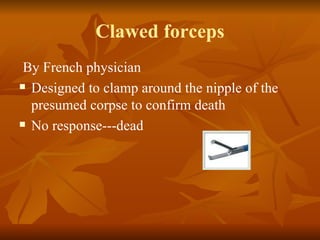
Clawed forceps
 By French physician
 Designed to clamp around the nipple of the

  presumed corpse to confirm death
 No response---dead
“…I know when one is dead, and when one
 lives. She is dead as earth. Lend me a looking
 glass. If that her breath will mist or stain the
 stone, why then she lives”

            King Lear; Act V, Scene III
            William Shakespeare
   Invention of stethoscope (1816)
    Physician were began to be trusted in their
    ability to diagnose death
Primary modes of confirming death
   Respiration
   Heart sound
   pulse
Death criteria
In beginning of 20th century
 Cardiorespiratory criteria


Clinical Death
   Cessation of blood circulation and breathing
Change
               MECH ANICAL VENTILATION

   Change started in 1952 with an outbreak of
    polio in Copenhagen, 12 year old girl under
    went tracheostomy & put on ventilator
   Pierre Mollaret (French) in 1957 reported on
    patients who had developed brain injury and
    were on mechanical ventilation
   No brainstem reflexes were present and post
    mortem examination revealed brain
    liquefaction
Factors for change
   Increasing availability of mechanical
    ventilation—legal implications of
    disconnection
   Rapidly advancing field of organ
    transplantation
   If we have a human body being ventilated
    on a respirator, but in which there is no
    sign of brain activity, ought we to regard
    that person dead or alive?
A new diagnosis of death
   In 1968 Harvard Brain Death Committee
    published report on how to diagnose death on
    new criteria
   Criteria proposed that patient could have no
    brainstem or spinal cord reflexes.
   A confirmatory test was also required i.e.
    EEG, absence of circulation to brain
   In essence, committee said a person is dead if
    the brain is dead
Death
   Clinical death
   Brain death
Clinical Death

Cessation of blood circulation and breathing
 When the heart stops beating in a regular

  rhythm. Condition is called cardiac arrest
 The absence of blood circulation and vital

  functions related to blood circulation was
  considered to be the definition of death
   “Clinical death is now seen as a medical
    condition that Precedes death rather than
    actually being death”
   During clinical death, all tissues and organs
    in the body steadily accumulate a type of
    injury called Ischemic injury
Death

   Permanent and irreversible cessation
    of vital functions of heart, brain and
    lungs
    (C.K. Parikh; Text book of forensic medicine and toxicology)
   How should we regard a person in permanent
    coma?
   When should we cease to persist with life
    prolonging treatment?
   Under what circumstances can patients decline
    life-saving measures?
TYPES OF BRAIN INJURY
   Coma
   Brain death
   Vegetative state
   Locked-in state
   Minimally conscious state
Coma
   Prolonged state of unconsciousness, in which
    patient is alive, but unable to move or respond
    to environment.
Coma
Most serious brain injuries begin with a coma
 “Eyes-closed unconsciousness.”

 It is as if the patient is sleeping but cannot be

  aroused.
 Coma is usually not permanent.

 Some patients go on to become brain dead;

  others enter the vegetative stage, become
  “locked in,” or enter the minimally conscious
  state; still others recover completely
Brain death
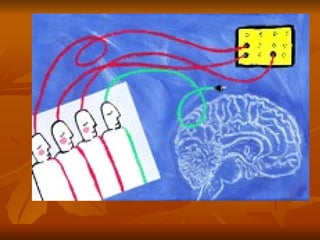
Irreversible loss of the clinical function of the whole
  brain:
 The cortex (responsible for motor and cognitive

  function)
 The midbrain (which might be thought of as

  integrating higher and lower centers in the brain)
 Brain stem (responsible for vegetative functions such

  as sleep-wake cycles and breathing).
   Brain death is a product of modern
    technology, made possible by mechanical
    ventilators and cardiopulmonary
    resuscitation
Brain death criteria
   Absence of eye opening
   Absence of verbal or motor response to pain
   Loss of brain stem reflexes (such as pupil
    response, corneal reflexes, caloric response to
    vestibular stimulation, cough reflexes and
    hypercapnia)
Brain death criteria cont;
   Total unresponsiveness to these tests,
    combined with good evidence that it is caused
    by irreversible structural damage to the brain
    means that person will never regain
    consciousness
Vegetative State:
   Refers to plant life i.e. without locomotion)


   It is a brain injury resulting from Trauma or
    Diseases, where higher functions of brain are
    lost while the non-cognitive functions, like
    breathing and heart beating are retained.
Vegetative state
   “Eyes-opened unconsciousness”
    There is a disassociation between wakefulness and
    awareness.
   While patients may appear awake, there is a lack of
    evidence that the upper brain receives or projects
    information.
   The upper brain and the midbrain are not integrated
    in function with the brain stem or the rest of the body,
    although the brain stem continues to manage the
    vegetative functions.
Vegetative state
 “Sustained and reproducible voluntary
  response” is important in the diagnosis
Prognosis is determined by the
 Cause of the injury

 Length of time the patient has been in the

  vegetative state
 Comorbid conditions.
Duration of the vegetative state also
       affects nomenclature
   A duration >1 month is said to be persistent.
   When the cause of the vegetative state is
    nontraumatic —such as an anoxic injury after
    cardiopulmonary resuscitation a duration >3 months
    is said to be permanent
                      BUT
   When the cause of the vegetative state is traumatic a
    patient must remain vegetative for >12 months before
    the condition is defined as permanent.
Locked-in state
   Consciousness is preserved but the patient is
    paralyzed except for eye movement and
    blinking.
Locked in Syndrome
   Paralyzed from head to toe, the patient, his mind
    intact, is imprisoned inside his own body, but
    unable to move or speak.
    “In my case blinking my left eyelid is my only
    means of communication….My heel hurt, my head
    weighs a ton, and something like a giant invisible
    diving-bell holds my hole body prisoner”

Jean-Dominique Bauby describing his experience in The Diving Bell and the
   Butterfly, a book dictated entirely by eye movements
Minimally conscious state
   Sleep-wake cycles exist, just as in the vegetative state.

   Arousal levels range from obtundation to normal arousal.

   There is reproducible but inconsistent evidence of
    perception, communication ability, and/or purposeful
    motor activity.

   Visual tracking is often intact but typically inconsistent.

   Communication ranges from none to unreliable, with
    inconsistent yes-no responses, verbalizations (typically
    fewer than six words), and gestures
Can we cease our medical efforts to
keep alive some one who is brain
dead?
Islamic perspective
   Unanimous approval of whole brain death
    criterion and its permissibility within Islam

                   (Acdemy of Islamic jurisprudence, Jordan1986}
PAKISTAN
   Brain death is widely accepted
   Legislation?
Famous cases for legal Battles
   Karen Quinlan 1975----- 1986
   Nancy Cruzan 1983----- 1990
   Theresa Marie Schiavo 1990 -----2005
Readings
   Bioethics for clinicians: 24 Brain death by
    Neil M. Lazar et al
   The final diagnosis of brain death: David C.
    Kaufman www.sccm.org
   Ethical & social dimensions of brain death.
    F.Moazam. Pakistan journal of neurological
    sciences

Brain death f

  • 2.
    Brain Death &Ethical issues Dr. Ashraf Hussain
  • 4.
    overview  What is death?  History of death  Clinical death, brain death  Islamic perspective of death  Ethical issues
  • 5.
    When a human being is dead?
  • 6.
    When the entity that integrates rest of the organism dies, the organism dies with it
  • 8.
    Death is aprocess not an event
  • 9.
    Mode of dying  Human beings have a deep-seated belief that a person’s mode of dying is an important part of the totality that is his or her life.  The moment of passing on from this world is, therefore, a very important point in the human life story.
  • 11.
    History of death  Before 1816, physicians were not well trusted in their ability to diagnose death  Fear of being buried alive
  • 12.
    In ancient Rome  Call out deceased person’s name 3 times  If no response-- finger amputated  If no bleeding– declared deceased
  • 13.
    Fear to beburied alive In 14th century  Duke of Lancaster left instructions to keep his body in bed for 40 days  If doctors still believed he was dead then to be buried
  • 14.
    Magic words (1790) “I am dead” written on mirrors in invisible ink (silver nitrate) Decomposed body produced hydrogen sulfide, writing became visible as silver sulfide was produced
  • 15.
    Patented Coffin toalert (1897) If death was misdiagnosed  If presumed deceased awoke from sleep beneath the ground  A device was rigged to light a lantern, raise a flag and ring a bell
  • 16.
    Clawed forceps ByFrench physician  Designed to clamp around the nipple of the presumed corpse to confirm death  No response---dead
  • 17.
    “…I know whenone is dead, and when one lives. She is dead as earth. Lend me a looking glass. If that her breath will mist or stain the stone, why then she lives” King Lear; Act V, Scene III William Shakespeare
  • 18.
    Invention of stethoscope (1816)  Physician were began to be trusted in their ability to diagnose death
  • 19.
    Primary modes ofconfirming death  Respiration  Heart sound  pulse
  • 20.
    Death criteria In beginningof 20th century  Cardiorespiratory criteria Clinical Death  Cessation of blood circulation and breathing
  • 21.
    Change MECH ANICAL VENTILATION  Change started in 1952 with an outbreak of polio in Copenhagen, 12 year old girl under went tracheostomy & put on ventilator  Pierre Mollaret (French) in 1957 reported on patients who had developed brain injury and were on mechanical ventilation  No brainstem reflexes were present and post mortem examination revealed brain liquefaction
  • 22.
    Factors for change  Increasing availability of mechanical ventilation—legal implications of disconnection  Rapidly advancing field of organ transplantation
  • 23.
    If we have a human body being ventilated on a respirator, but in which there is no sign of brain activity, ought we to regard that person dead or alive?
  • 24.
    A new diagnosisof death  In 1968 Harvard Brain Death Committee published report on how to diagnose death on new criteria  Criteria proposed that patient could have no brainstem or spinal cord reflexes.  A confirmatory test was also required i.e. EEG, absence of circulation to brain  In essence, committee said a person is dead if the brain is dead
  • 25.
    Death  Clinical death  Brain death
  • 26.
    Clinical Death Cessation ofblood circulation and breathing  When the heart stops beating in a regular rhythm. Condition is called cardiac arrest  The absence of blood circulation and vital functions related to blood circulation was considered to be the definition of death
  • 27.
    “Clinical death is now seen as a medical condition that Precedes death rather than actually being death”
  • 28.
    During clinical death, all tissues and organs in the body steadily accumulate a type of injury called Ischemic injury
  • 29.
    Death  Permanent and irreversible cessation of vital functions of heart, brain and lungs (C.K. Parikh; Text book of forensic medicine and toxicology)
  • 30.
    How should we regard a person in permanent coma?  When should we cease to persist with life prolonging treatment?  Under what circumstances can patients decline life-saving measures?
  • 31.
    TYPES OF BRAININJURY  Coma  Brain death  Vegetative state  Locked-in state  Minimally conscious state
  • 32.
    Coma  Prolonged state of unconsciousness, in which patient is alive, but unable to move or respond to environment.
  • 33.
    Coma Most serious braininjuries begin with a coma  “Eyes-closed unconsciousness.”  It is as if the patient is sleeping but cannot be aroused.  Coma is usually not permanent.  Some patients go on to become brain dead; others enter the vegetative stage, become “locked in,” or enter the minimally conscious state; still others recover completely
  • 34.
    Brain death Irreversible lossof the clinical function of the whole brain:  The cortex (responsible for motor and cognitive function)  The midbrain (which might be thought of as integrating higher and lower centers in the brain)  Brain stem (responsible for vegetative functions such as sleep-wake cycles and breathing).
  • 35.
    Brain death is a product of modern technology, made possible by mechanical ventilators and cardiopulmonary resuscitation
  • 36.
    Brain death criteria  Absence of eye opening  Absence of verbal or motor response to pain  Loss of brain stem reflexes (such as pupil response, corneal reflexes, caloric response to vestibular stimulation, cough reflexes and hypercapnia)
  • 37.
    Brain death criteriacont;  Total unresponsiveness to these tests, combined with good evidence that it is caused by irreversible structural damage to the brain means that person will never regain consciousness
  • 38.
    Vegetative State:  Refers to plant life i.e. without locomotion)  It is a brain injury resulting from Trauma or Diseases, where higher functions of brain are lost while the non-cognitive functions, like breathing and heart beating are retained.
  • 39.
    Vegetative state  “Eyes-opened unconsciousness”  There is a disassociation between wakefulness and awareness.  While patients may appear awake, there is a lack of evidence that the upper brain receives or projects information.  The upper brain and the midbrain are not integrated in function with the brain stem or the rest of the body, although the brain stem continues to manage the vegetative functions.
  • 40.
    Vegetative state  “Sustainedand reproducible voluntary response” is important in the diagnosis Prognosis is determined by the  Cause of the injury  Length of time the patient has been in the vegetative state  Comorbid conditions.
  • 41.
    Duration of thevegetative state also affects nomenclature  A duration >1 month is said to be persistent.  When the cause of the vegetative state is nontraumatic —such as an anoxic injury after cardiopulmonary resuscitation a duration >3 months is said to be permanent BUT  When the cause of the vegetative state is traumatic a patient must remain vegetative for >12 months before the condition is defined as permanent.
  • 42.
    Locked-in state  Consciousness is preserved but the patient is paralyzed except for eye movement and blinking.
  • 43.
    Locked in Syndrome  Paralyzed from head to toe, the patient, his mind intact, is imprisoned inside his own body, but unable to move or speak. “In my case blinking my left eyelid is my only means of communication….My heel hurt, my head weighs a ton, and something like a giant invisible diving-bell holds my hole body prisoner” Jean-Dominique Bauby describing his experience in The Diving Bell and the Butterfly, a book dictated entirely by eye movements
  • 44.
    Minimally conscious state  Sleep-wake cycles exist, just as in the vegetative state.  Arousal levels range from obtundation to normal arousal.  There is reproducible but inconsistent evidence of perception, communication ability, and/or purposeful motor activity.  Visual tracking is often intact but typically inconsistent.  Communication ranges from none to unreliable, with inconsistent yes-no responses, verbalizations (typically fewer than six words), and gestures
  • 45.
    Can we ceaseour medical efforts to keep alive some one who is brain dead?
  • 46.
    Islamic perspective  Unanimous approval of whole brain death criterion and its permissibility within Islam (Acdemy of Islamic jurisprudence, Jordan1986}
  • 47.
    PAKISTAN  Brain death is widely accepted  Legislation?
  • 48.
    Famous cases forlegal Battles  Karen Quinlan 1975----- 1986  Nancy Cruzan 1983----- 1990  Theresa Marie Schiavo 1990 -----2005
  • 51.
    Readings  Bioethics for clinicians: 24 Brain death by Neil M. Lazar et al  The final diagnosis of brain death: David C. Kaufman www.sccm.org  Ethical & social dimensions of brain death. F.Moazam. Pakistan journal of neurological sciences