

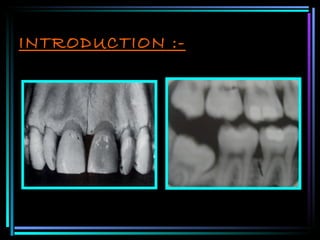



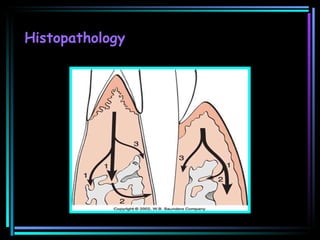



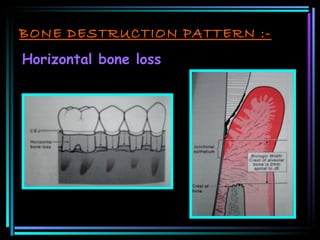
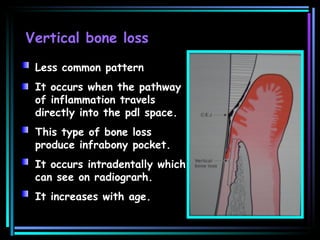
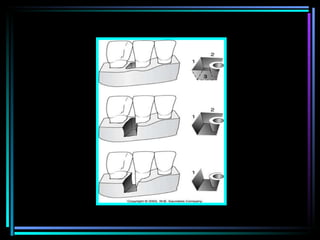
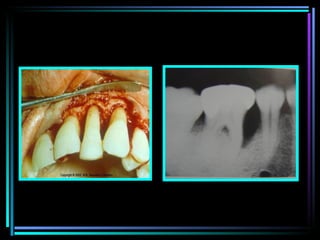
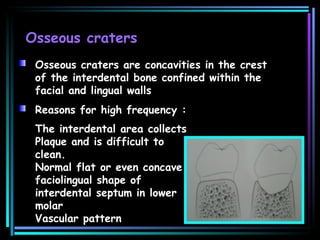
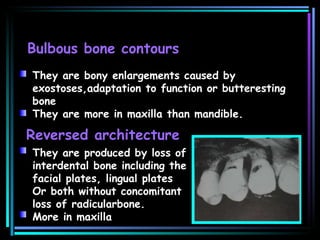
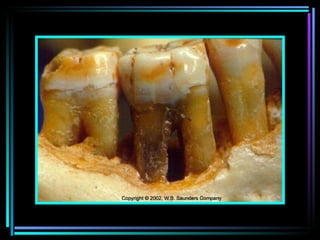

The document discusses bone loss patterns in periodontal disease. It notes that the balance between bone formation and resorption maintains bone height and density under normal conditions. The most common cause of bone destruction in periodontal disease is the extension of gingival inflammation into the supporting bone and tissues. This can lead to horizontal bone loss when inflammation travels along the bone crest or vertical bone loss when it travels directly into the periodontal ligament space. Bone destruction patterns include osseous craters in the interdental bone, bulbous bone contours, reversed architecture with loss of interdental bone, and furcation involvement in multi-rooted teeth.


