Mechanism Of Action of Fluoride in dental
                caries.
Mechanism of action of
         fluoride
• Florine is the most electronegative
  element and therefore highly reactive. It
  does not occur in the elemental state (F2)
  in nature but is widespread in nature,
  occurring in fresh water, vegitables, blood,
  milk and organic compounds.
• Since fluoride can affect both the
  inorganic tooth structure & the bacterial
  metaboloims in plaque, several mechanism
  of action have been proposed.
• Reduced enamel, solubility, improved
  crystallinity, promotion of reminerlization,
  lower free surface energy, desorption of
  protein and bacteria, reduced cariogenic
  flora & inhibition of bacterial enzymes
  systems.
• Many of these mechanisms probably work
  simultaneously     depending     on     the
  cnsentration and form of fluoride but the
  exact contribution of any one of the total
  careis reduction is unknown.
Systemic Effect of
           Fluoride
• The main in organic constituent of tooth and bone is
  hydroxy apatite (HAP)
• Hydroxy apatite on addition of fluorine results in the
  formation of flour apatite (FAP) or fluoridated
  hydroxy apatite becaue not all the hydroxyl groups
  are replaced by fluorides.
• A pure fluorapatite crystal would contain 38,000 ppm
  F but enamel form a fluoridated area contain only 500
  to 2000 ppm.
• And this leads to speculation on several possible
  mechanims of action of systemically ingested
  fluoride improved crystalinity, the void theory, FAP
  V/s HAP solubility in acid & iproved tooth morphology.
• Improved crystallinity :-
                             This theory is
 explained by x-ray diffraction method -
 Fluoride increases the crystal size and
 less produces, less strain in crystal lattice.
 This takes place through conversion of
 amorphous      calcium    phosphate       into
 crystalline hydroxy phosphate.
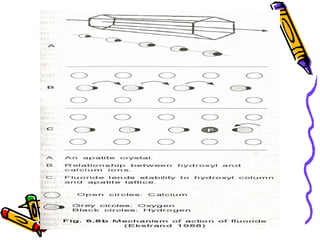
• Void theory :- void in the crystals
  decreases the stability and increases
  chemical reactivity. If fluoride fills
  these void in the hydroxy apetite
  crystals it will attain stable from with
  formation of more and stronger
  hydrogen bonds. Greater stability will
  leads to lower solubility and hence
  greater resistance to dissolution in
  acids.
• Acid Solubility (FAP V/s HAP) The simplest
  explanation for the decreased solubility of fluoridated
  enamel is that fluorapatite (with a solubility product
  constant of 10-60) is less soluble than hydroxyapatite
  (whose solubility product is constant between 10-55 and
  10-60) 46 However, the amount of fluoride in surface
  enamel from the teeth of persons living in a
  fluoridated area is only 500 to 2000 ppm F-. This is
  but a fraction of the theoretie amount of fluoride in
  fluorapatite (38000 ppm F in enamel). Obviously little
  of the enamel is composed of fluorapatite.
                   However the actual difference in the
  amount dissolving is usually so small that it is not likely
  to be factor in cariostasis.
• Tooth Morphology:-
                    Quantitative studies on
  the influence of fluoride in the morphology
  of human teeth showed that person living
  in a high fluoride areas shows smaller cusp
  height and less convexity
  According to Wallensus, tooth in a high
  fluoride area were 1.7% wider then
  control.
Topical Effect Of
          Fluoride
• Topical effect of fluoride may be due to
  either low or high concentration of
  fluoride and frequent or sporadic
  exposure.
• Bacterial Metabolism & fluoride:-
                           Once the teeth
  erupt into oral cavity, the systemic
  effects of fluoride on enamel ceases
  fluoride is relieved to have an effect on
  the glycolates pathway of oral micro
  organism.
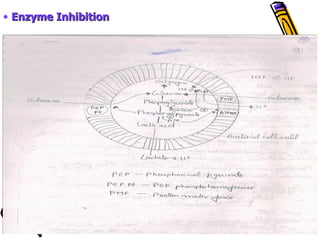
• Enzyme Inhibition
• Fluoride has enolase inhibition effect and it also
  inhibits glucose transport, enolase is a metallo
  enzyme that requires adjavalent cation for tis
  activity., fluoride due to its increased reactivity
  forms a complex with this cation. Thus inhibiting
  the enzyme. It also inhibits non-metallo enzyme
  like phosphatage thus leading to reduce acid
  production.
• Suppression of flora :- Stanous fluoride is a
  potent suppressor of the bacterial growth
  because it oxidizes the thiol group present in
  bacteria thus inhibiting bacterial matabolism.
• Antibacterial action:- The concentration of
  fluoride above 2 ppm in solution progressively
  decrease the transport of uptake of glucose into
  Cells of streptococci and also reduces ATP
  synthesis.
    Action of fluoride on tooth surface
•     Fluoride incorporation in enamel – Incorporation
    of fluoride into enamel through out development
    is not a principal mechanism of cario static's
    effect. It is believed that pre eruptive exposure
    to fluoride may produce teeth more resistance
    to caries by making pits and fissures shallower.
• Pre-eruptive in corporation – fluoride gets
  incorporated in the fluid filled sac, which
  surrounds the developing tooth. It then
  enters the developing enamel. Highest
  concentration of fluoride is seen in enamle
  crown located at or near the tooth
  surface.
• Post eruptive incorporation – fluoride
  continuous to enter the enamel surface,
  causing    crystal    to    change     from
  predominatly carbonated apatite and
  hydroxy apatite to flour apatite (FAP) and
  flour hydroxy apatite (FHAP) crystals.
  These fluoride rich crystals are less acid
  soluble then the original enamel apatite.
Remenerilization of Acid Dissolved enamel
Minerals of tooth enamel are continuously in
exchange with the minerals of saliva and thus
the balance is maintained. This Equilibrium
can get disturbed with the organic acid
produced by the metabolism of fermentable
carbohydrates by the microorganism. This
leads to drop in PH. of the plaque on the
enamel surface and in the sub surface.
Minerals, particularly calcium and phosphate
leave the dissolved enamel in their ionic form
an entrace the plaque fluid. This process is
called deminerilization this get reverrse with
the factor like fluoride and is terms
reminerilization.
Specific Plaque
          Hypothesis
• The use of topical fluoride as a cure for
  infection has been termed the specific plaque
  hypothesis     by    hoesche.     The  primary
  assumption in this theory is that dental caries
  results from a specific pathogen, S. mutans.
  Thus the elimination or reduction of this
  pathogen with provide a lasting cariostatic
  effect. Thus the specific palque hypothesis
  explains a persistant anticaries action of
  topical fluorides that is not seen with water
  fluoridation or fluoride dentifrices.
• References:
• Shobha Tondon
Text book of pedodontics

mechanism-action-of-fluorides pedo

  • 1.
    Mechanism Of Actionof Fluoride in dental caries.
  • 2.
    Mechanism of actionof fluoride • Florine is the most electronegative element and therefore highly reactive. It does not occur in the elemental state (F2) in nature but is widespread in nature, occurring in fresh water, vegitables, blood, milk and organic compounds. • Since fluoride can affect both the inorganic tooth structure & the bacterial metaboloims in plaque, several mechanism of action have been proposed.
  • 3.
    • Reduced enamel,solubility, improved crystallinity, promotion of reminerlization, lower free surface energy, desorption of protein and bacteria, reduced cariogenic flora & inhibition of bacterial enzymes systems. • Many of these mechanisms probably work simultaneously depending on the cnsentration and form of fluoride but the exact contribution of any one of the total careis reduction is unknown.
  • 4.
    Systemic Effect of Fluoride • The main in organic constituent of tooth and bone is hydroxy apatite (HAP) • Hydroxy apatite on addition of fluorine results in the formation of flour apatite (FAP) or fluoridated hydroxy apatite becaue not all the hydroxyl groups are replaced by fluorides. • A pure fluorapatite crystal would contain 38,000 ppm F but enamel form a fluoridated area contain only 500 to 2000 ppm. • And this leads to speculation on several possible mechanims of action of systemically ingested fluoride improved crystalinity, the void theory, FAP V/s HAP solubility in acid & iproved tooth morphology.
  • 5.
    • Improved crystallinity:- This theory is explained by x-ray diffraction method - Fluoride increases the crystal size and less produces, less strain in crystal lattice. This takes place through conversion of amorphous calcium phosphate into crystalline hydroxy phosphate.
  • 6.
    • Void theory:- void in the crystals decreases the stability and increases chemical reactivity. If fluoride fills these void in the hydroxy apetite crystals it will attain stable from with formation of more and stronger hydrogen bonds. Greater stability will leads to lower solubility and hence greater resistance to dissolution in acids.
  • 7.
    • Acid Solubility(FAP V/s HAP) The simplest explanation for the decreased solubility of fluoridated enamel is that fluorapatite (with a solubility product constant of 10-60) is less soluble than hydroxyapatite (whose solubility product is constant between 10-55 and 10-60) 46 However, the amount of fluoride in surface enamel from the teeth of persons living in a fluoridated area is only 500 to 2000 ppm F-. This is but a fraction of the theoretie amount of fluoride in fluorapatite (38000 ppm F in enamel). Obviously little of the enamel is composed of fluorapatite. However the actual difference in the amount dissolving is usually so small that it is not likely to be factor in cariostasis.
  • 8.
    • Tooth Morphology:- Quantitative studies on the influence of fluoride in the morphology of human teeth showed that person living in a high fluoride areas shows smaller cusp height and less convexity According to Wallensus, tooth in a high fluoride area were 1.7% wider then control.
  • 9.
    Topical Effect Of Fluoride • Topical effect of fluoride may be due to either low or high concentration of fluoride and frequent or sporadic exposure. • Bacterial Metabolism & fluoride:- Once the teeth erupt into oral cavity, the systemic effects of fluoride on enamel ceases fluoride is relieved to have an effect on the glycolates pathway of oral micro organism.
  • 10.
  • 11.
    • Fluoride hasenolase inhibition effect and it also inhibits glucose transport, enolase is a metallo enzyme that requires adjavalent cation for tis activity., fluoride due to its increased reactivity forms a complex with this cation. Thus inhibiting the enzyme. It also inhibits non-metallo enzyme like phosphatage thus leading to reduce acid production. • Suppression of flora :- Stanous fluoride is a potent suppressor of the bacterial growth because it oxidizes the thiol group present in bacteria thus inhibiting bacterial matabolism.
  • 12.
    • Antibacterial action:-The concentration of fluoride above 2 ppm in solution progressively decrease the transport of uptake of glucose into Cells of streptococci and also reduces ATP synthesis. Action of fluoride on tooth surface • Fluoride incorporation in enamel – Incorporation of fluoride into enamel through out development is not a principal mechanism of cario static's effect. It is believed that pre eruptive exposure to fluoride may produce teeth more resistance to caries by making pits and fissures shallower.
  • 13.
    • Pre-eruptive incorporation – fluoride gets incorporated in the fluid filled sac, which surrounds the developing tooth. It then enters the developing enamel. Highest concentration of fluoride is seen in enamle crown located at or near the tooth surface. • Post eruptive incorporation – fluoride continuous to enter the enamel surface, causing crystal to change from predominatly carbonated apatite and hydroxy apatite to flour apatite (FAP) and flour hydroxy apatite (FHAP) crystals. These fluoride rich crystals are less acid soluble then the original enamel apatite.
  • 15.
    Remenerilization of AcidDissolved enamel Minerals of tooth enamel are continuously in exchange with the minerals of saliva and thus the balance is maintained. This Equilibrium can get disturbed with the organic acid produced by the metabolism of fermentable carbohydrates by the microorganism. This leads to drop in PH. of the plaque on the enamel surface and in the sub surface. Minerals, particularly calcium and phosphate leave the dissolved enamel in their ionic form an entrace the plaque fluid. This process is called deminerilization this get reverrse with the factor like fluoride and is terms reminerilization.
  • 16.
    Specific Plaque Hypothesis • The use of topical fluoride as a cure for infection has been termed the specific plaque hypothesis by hoesche. The primary assumption in this theory is that dental caries results from a specific pathogen, S. mutans. Thus the elimination or reduction of this pathogen with provide a lasting cariostatic effect. Thus the specific palque hypothesis explains a persistant anticaries action of topical fluorides that is not seen with water fluoridation or fluoride dentifrices.
  • 17.
    • References: • ShobhaTondon Text book of pedodontics